 Trbusiness. The travel retail Trbusiness. The magazine for global retail and duty free professionals.
Travel Blue shares strategy to leverage travel essentials to build the basket
By Faye Bartle |
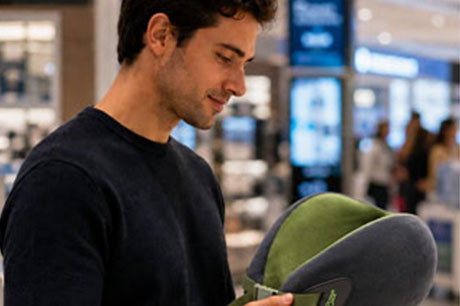
Pilots in Europe and India show the strategy is delivering results.
Travel Blue has shared an insight into its new category strategy that maps out how travel essentials can be best deployed in travel retail to help close the widening gap between footfall and conversion.
Following a preview of the strategy being revealed at the TR Consumer Forum in Geneva, TRBusiness met with Global Commercial Director, Alan Brennan, in London last week for a detailed briefing on the strategy, which is built on consumer research* carried out by m1nd-set on behalf of the company.
This is based on a sample of more than 200,000 passengers travelling through international airports around the world.
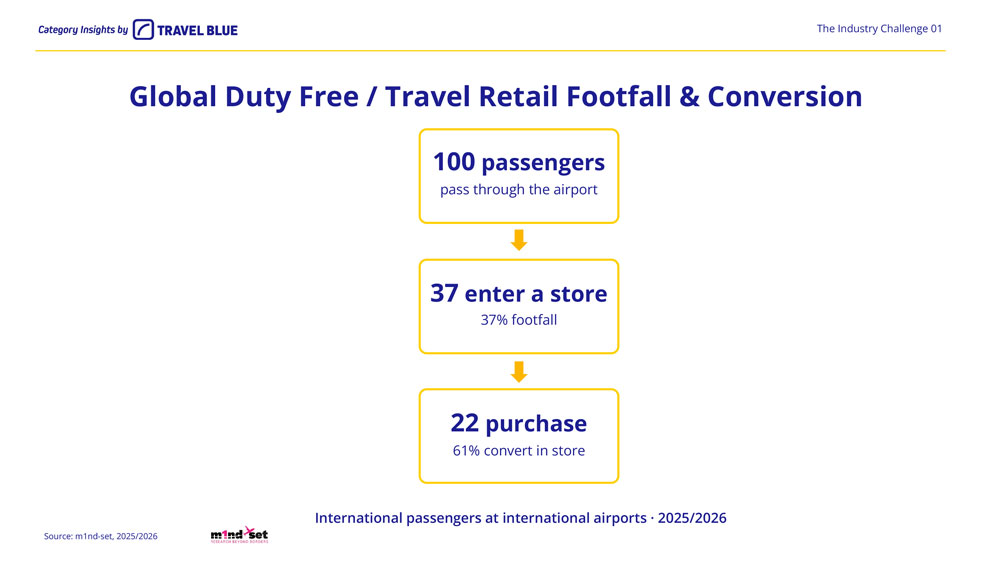
A key data point, which sets the scene for Travel Blue’s strategy, is that only 37% of travellers enter the duty-free store in airports and only 22% of total passengers are converting to buyers.
“The industry is facing the lowest footfall in the last 10 years, as well as reduced conversion in store, with 78% of passengers currently travelling through airports without purchasing anything,” said Travel Blue Managing Director, Daniel Levin.
“This presents a huge opportunity and we are calling on retailers to grasp the potential of travel essentials.”
A chance to reset?
Travel Blue argues that travel essentials are well placed to address the pain point of softening conversion rates for a variety of reasons.
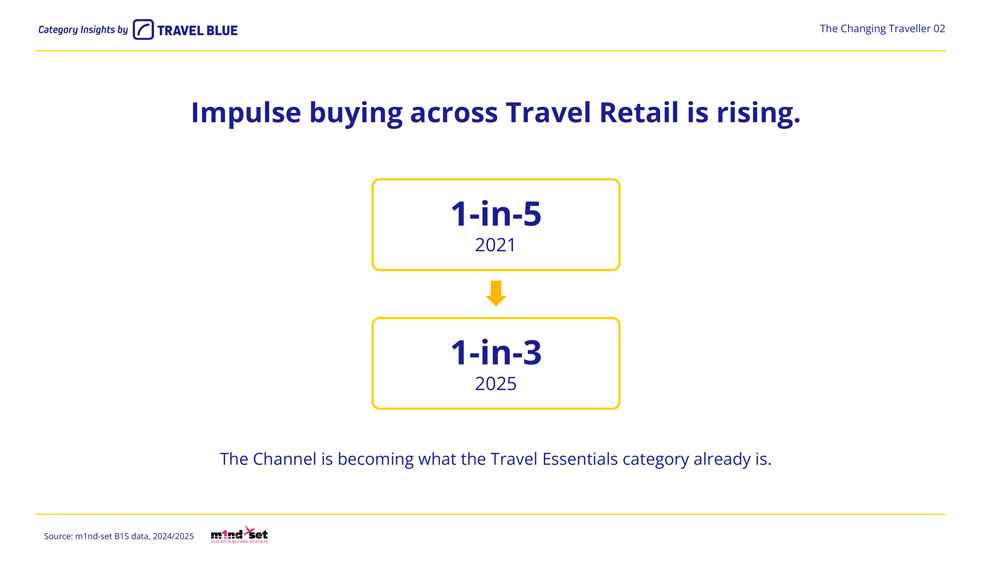
Chief among them is that it’s a high-impulse category with a universal appeal. This feeds directly into the global shopper shift away from planned purchases to impulse buys, with the research demonstrating one in five purchases were made on impulse in 2021 as opposed to one in three in 2025.
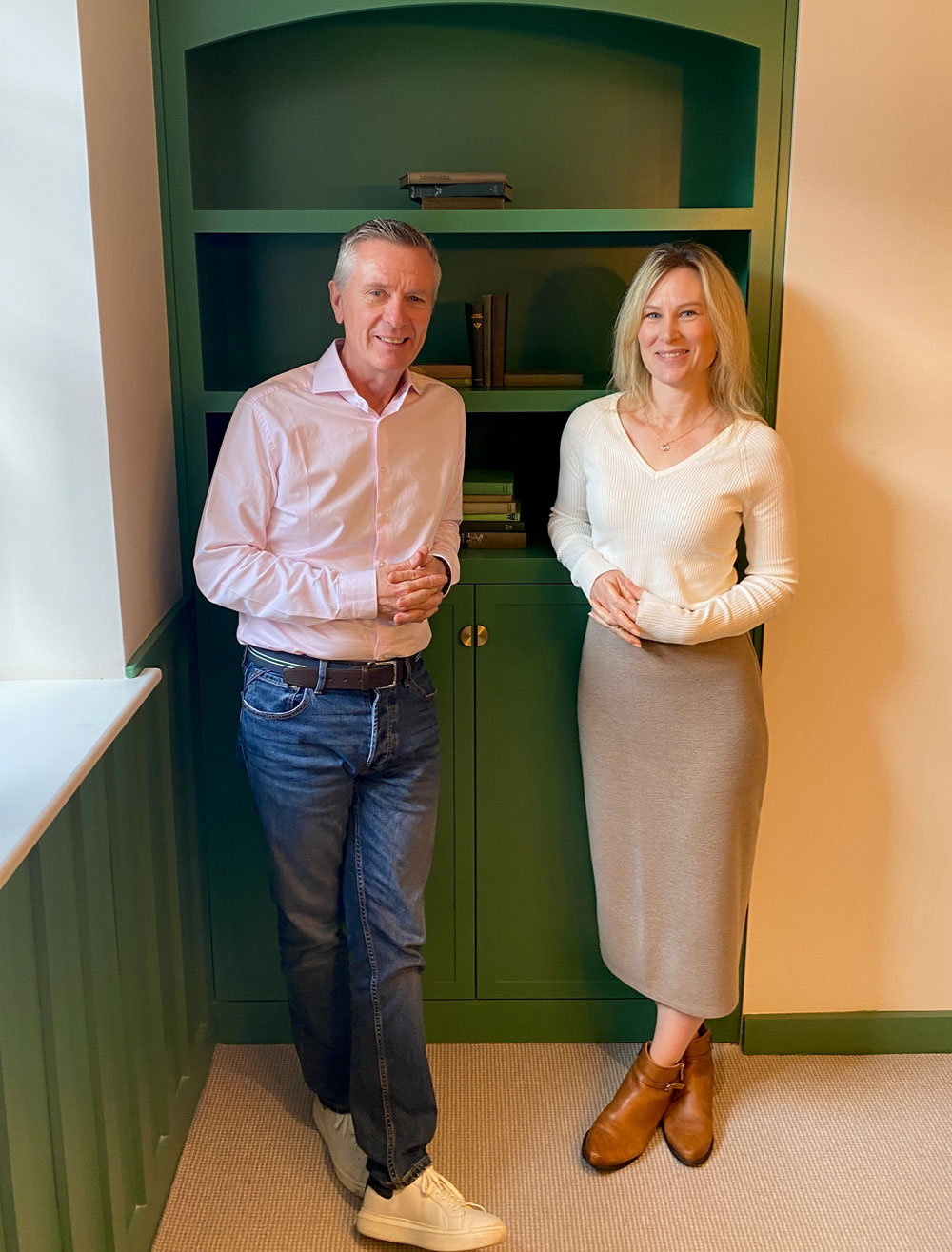
Travel Blue Global Commercial Director, Alan Brennan with TRBusiness Editorial Director Faye Bartle at the one-on-one briefing in London.
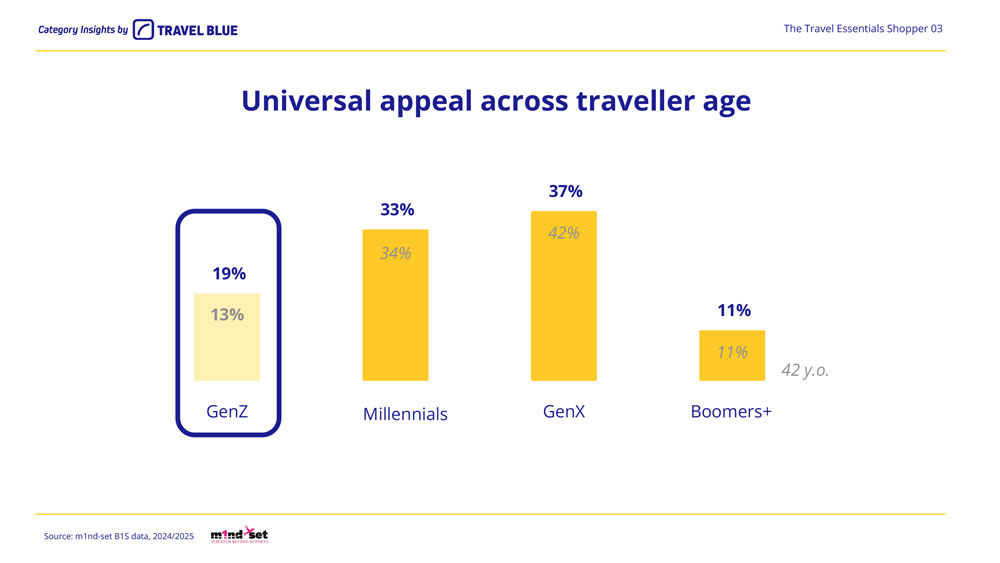
The category can also be a useful tool for engaging the younger generation. The insights show that Gen Z over-indexes in impulse shopping, have a limited attention span at the front of the fixture, look for experience over price and are predominantly (72%) first time buyers, with a preference for self-treating.
What’s more, they mainly buy travel essentials for themselves, with 76% of purchases for their own consumption rather than buying a gift.
“There has been a major shift in the last couple of years from planned to impulse purchase,” said Brennan.
“Impulse is the new gold and retailers and brands need to create the right retail environment to trigger impulse purchase behaviour in store to drive sales revenue and spend.”
Putting insights into action
On top of mastering the basics, such as having the most fitting range and assortment for each individual location, key pillars of the strategy include securing the right space in the right location, including within the duty-free store.
Examples of this are in transaction zones – think cables accompanied by simple ‘stay connected while you travel’ messaging – placing pillow towers font of store to help lure travellers in, and having displays adjacent to relevant categories such as eye masks near beauty zones.
To walk the talk, Travel Blue has conducted two airport pilots: one in a well-established market in Europe and another in India (though further details are being kept under wraps, for now).
The company reports that when these partners implemented its strategy (which involves a five-step process), sales revenue and spend per passenger increased, resulting in “high-double digit growth”, according to Brennan.
“We have evidence that Travel Blue’s category process works and proof that travel essentials can unlock great opportunities for the industry,” he said.
“The in-market pilots showed that, once in store, shoppers not only focus on buying into travel essentials but also buy into other categories. Travel essentials is facilitating purchase and building the basket – driving revenue and profit for retailers.”
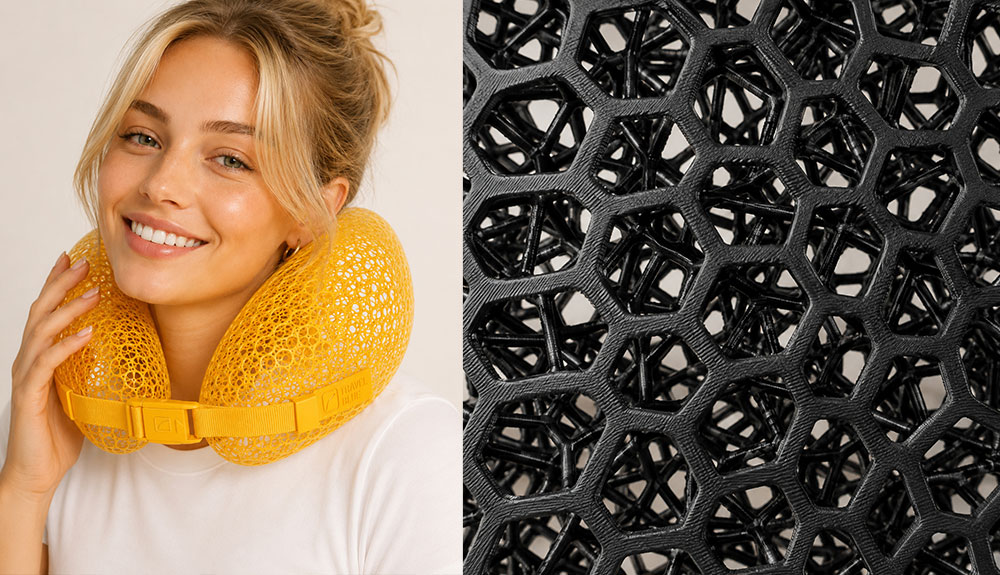
The company’s new 3D-printed structure of Airflow creates a breathable, lightweight, super-comfortable pillow.
He continued: “Travel essentials is a powerful enabler to address legacy challenges in the industry and it deserves a seat at the retailer’s core category table.
“By changing the mindset and giving the category more visibility, we believe travel essentials can move the dial and make a real difference for retailers across the channel.”
“We are asking for a real shift in attitude, a commercial reset for travel essentials to give the category more relevance and focus,” summarised Levin.
“We have 40 years’ experience in travel retail and have seen many changes. We invite our retail partners to adapt and evolve with us to ensure we maximise relevance for shoppers into the future.”
Data collected through M1ndset B1S Tracking Survey covering main travel regions 2024 / 2025. 200k surveys conducted.
READ NEXT: WHSmith stabilises FY26 headline profit, but down YOY
READ NEXT: Relay opens new store at Sunshine Coast Airport
READ NEXT: Heathrow brings more brands – and more formats – into the mix

Elizabeth Hurley on the power of ELC's Breast Cancer Campaign
Image Credit: The Estée Lauder Companies To mark Breast Cancer Awareness Month in October,...
NITR's KitKat and Formula 1 experience races to Madrid with Avolta
Image Credit: Nestlé ITR Nestlé International Travel Retail (NITR) and Avolta have...
Furla maps out travel retail expansion at TFWA Cannes
Image Credit: Furla Furla will return to TFWA World Exhibition & Conference for a second...

In the Magazine
TRBusiness Magazine is free to access. Read the latest issue now.