 Trbusiness. The travel retail Trbusiness. The magazine for global retail and duty free professionals.
China’s CDFG sees a new era as it moves from traffic to value
By Kevin Rozario |
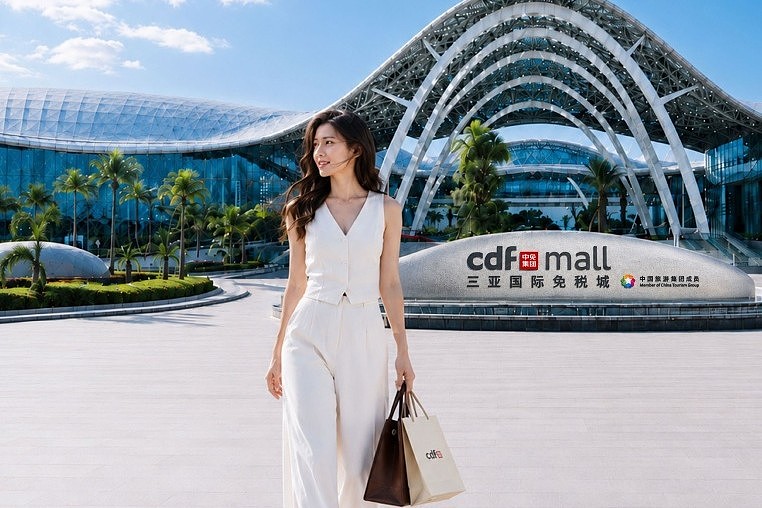
CDFG has done a deep dive into the future of duty-free.
China Duty Free Group (CDFG) has signalled it will become less reliant on traffic in the duty-free equation as it concentrates on better value and better targeting of its enormous, and predominantly Chinese, travelling-consumer base.
The world’s second-largest duty-free operator (stock-exchange listed as CTG Duty Free) had sales of RMB53.7bn ($7.48bn*) in 2025, a -4.9% year-on-year (YOY) drop. To grow again, the company says it has identified the trajectory of the duty-free industry’s future transformation – and is building long-term momentum accordingly.
CDFG confidently asserts that the “Chinese market is steadily becoming the growth pole with the strongest certainty in the global duty-free and travel retail market”. If that plays out, as the top player in the market controlling nearly 80% of China’s duty‑free business – and despite the arrival of major competitors like Avolta – the company believes it is best positioned to consolidate its competitive edge.
The retailer will leverage the spending data of 62 million loyalty members (three times more than Club Avolta); its partnerships with more than 1,600 global brands; and a mature omnichannel operation to drive growth as set out in its 2025–2026 consumption white paper. The report interprets consumer trends, category evolution landscapes, and how the duty-free channel is transforming.

Strong immersive activations like this one from Jo Malone will be a core part of the offer.
“A critical turning point of recovery”
This year marks the intersection of the completion of China’s 14th Five-Year Plan and the launch of the 15th. At the same time, CDFG notes: “The global duty-free and travel retail market has reached a critical turning point of recovery and quality upgrading. The underlying logic of industry growth is undergoing profound restructuring.
“Consumer experience is emerging as a new engine, and competition has escalated from single-dimensional price competition to an all-dimensional contest across customer operations, brand resources, supply chain efficiency, and scenario experience.”
CDFG believes that China’s travel retail sector is entering a decisive new cycle, driven not by passenger volume alone but by a structural shift toward value creation, experiential consumption, and AI‑enabled decision‑making – elements that are already apparent in several regions.
Macro indicators could make the difference
While China continues to suffer from employment issues and a continuing property downturn, the country’s economic recovery looks more sustainable, which is necessary for travel retail expansion given its reliance on domestic shoppers.
GDP surpassed RMB140 trillion (>$20 trillion) in 2025 for the first time, disposable income rose +5%, and consumer confidence has risen. Tourism has rebounded sharply with domestic trips reaching 6.52 billion, and outbound travel hitting 170 million, up +15% YOY. Foreign arrivals grew +30.5% in 2025, helped by more countries being added to the visa‑free list, which continues to be expanded.
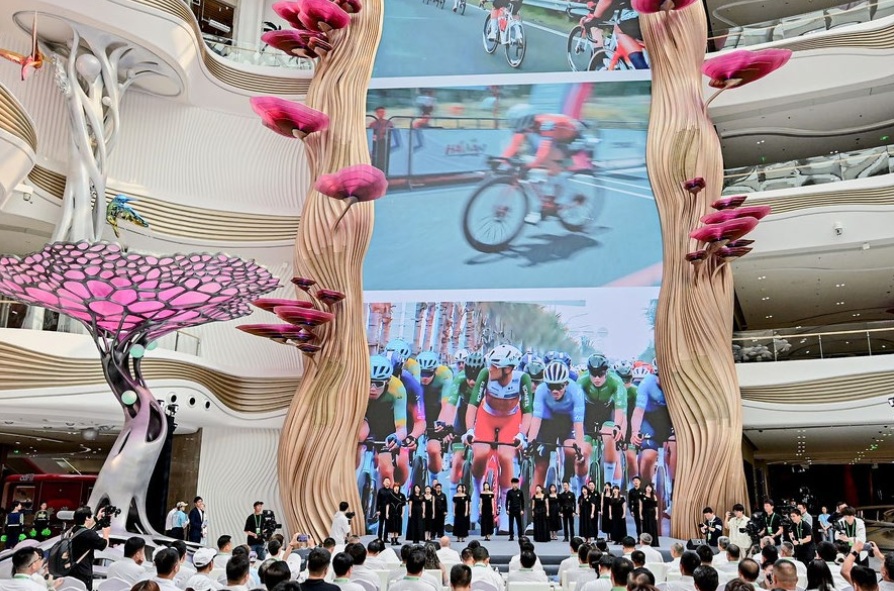
Sports events and sports brands have been identified as growth opportunities.
Hainan’s Free Trade Port is another growth engine, with visitor numbers exceeding 110 million and spending topping RMB225bn. The island’s customs‑closure operation and upgraded offshore duty‑free rules have unlocked new consumption from departing travellers and island residents.
These macro events have prompted CDFG to take stock and distill the three core forces reshaping consumption:
K‑shaped divergence – High‑net‑worth (HNW) customers remain resilient, anchoring luxury categories such as jewellery, watches and haute couture. Meanwhile, middle‑class consumers have become more rational, prioritising essentials, value, and trial experiences.
Experience as the new ROI – Emotional fulfilment and experiential value now outweigh pure price considerations. HNW shoppers demand exclusivity and privacy; younger consumers seek themed, interactive brand activations; and interest‑based groups want immersive spaces aligned with their passions. Retailers are responding with premium services, pop‑ups, and experiential zones such as CDFG’s Whisky Museum.
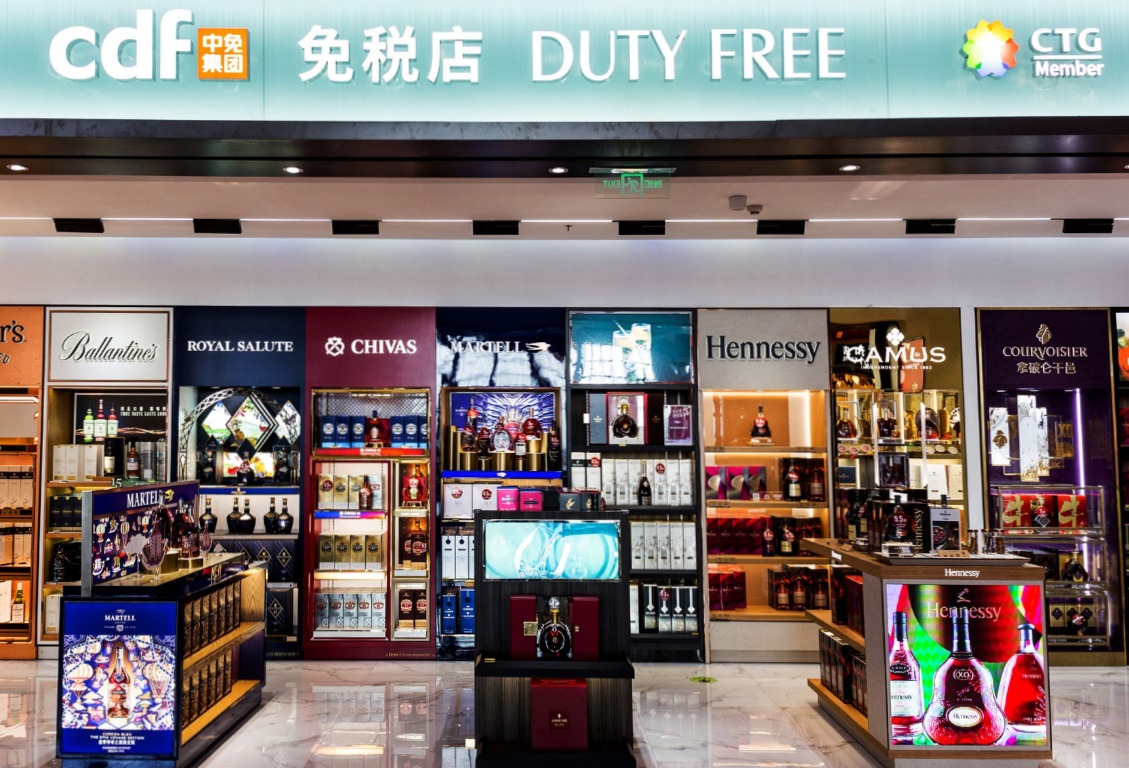
CDFG’s store at Sanya Phoenix Airport.
AI‑driven decision‑making – According to the paper, 64% of Chinese consumers have already used AI tools to assist with luxury purchases, shifting behaviour from search‑based to ‘conversational’ commerce. Virtual try‑ons and AI‑powered suggestions are also accelerating conversion.
A customer base that is changing
CDFG’s user base hit 120 million in 2025, half of whom are members and therefore supplying rich data to the retailer. High‑tier members remain the spending backbone: Gold Card and above members grew +12% YOY. Lower‑tier city penetration is accelerating, with new tier‑3‑and‑below members doubling in 2025. Foreign users grew +42%, with repeat purchases up +49%, signalling rising recognition of Chinese brands among international travellers.
At the category level, perfumes and cosmetics remain the anchor, but strong momentum is coming from jewellery and gold, accessible luxury, consumer electronics, outdoor sportswear, health and wellness, and whisky. CDFG is therefore expanding high‑potential categories, launching limited-edition merchandise, and incubating private labels.
Building a long-term “competitive moat”
CDFG believes its customer and channel reach is unmatched and that it will protect its advantage going forward, moat-like. The retailer claims to have the world’s most comprehensive duty‑free network with around 200 shops across nine formats.
In 2025–2026, the company has been strengthening every channel. For example, in Hainan, CDFG has deepened its ‘duty‑free + cultural tourism’ agenda with integrated shopping‑leisure‑experience spaces, and in airports it has had major concession wins at Beijing Capital (PEK)T3, Shanghai Pudong (PVG) T2/S2, and Hongqiao (SHA), plus a new cooperation model at Lanzhou Airport (LHW).
In downtown, the retailer is now active in 13 major cities, running hybrid ‘duty‑free + duty‑paid’ and ‘offline + online’ retail models, with each platform building its own online ecosystem to expand its orbit. Additionally, CDFG’s acquisition of DFS’s Hong Kong and Macau retail businesses in March 2026 will strengthen the company’s global capabilities, and more acquisitions should not be ruled out.
* FX conversion at the average rate in 2025 of RMB 7.1839 = USD1.00.
READ MORE: China Duty Free Group revenue falls -2% in first half
READ MORE: What is Hainan’s seal-off, why it’s good for duty-free sales, and what’s next?

Guerlain reimagines L’Heure Bleue for new fragrance launch
Image Credit: Guerlain Guerlain has revisited one of the best-known names in its fragrance...

Elizabeth Hurley on the power of ELC's Breast Cancer Campaign
Image Credit: The Estée Lauder Companies To mark Breast Cancer Awareness Month in October,...
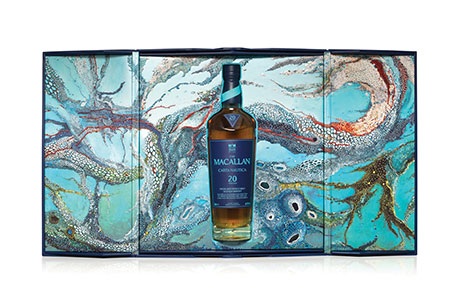
Edrington GTR returns to WOWS with single malts & Carta Nautica Experience
Image Credit: Edrington Global Travel Retail Edrington Global Travel Retail (GTR) is set to...
-
 Asia & Pacific,
Guerlain reimagines L’Heure Bleue for new fragrance launch
-
Asia & Pacific,
Elizabeth Hurley on the power of ELC's Breast Cancer Campaign
-

In the Magazine
TRBusiness Magazine is free to access. Read the latest issue now.