 Trbusiness. The travel retail Trbusiness. The magazine for global retail and duty free professionals.
TFWA: Human connection can help travel retail ‘win customers for life’
By Naomi Chadderton |
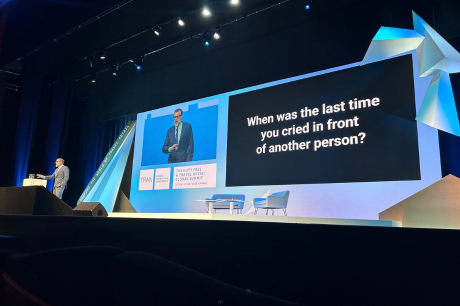
Charles Duhigg discussed the importance of emotion and excitement in travel retail.
Pulitzer Prize-winning journalist and bestselling author Charles Duhigg has urged the travel retail industry to harness the emotion and excitement associated with travel to build stronger connections with consumers.
Speaking at the TFWA World Conference in Cannes this morning (28 September), Duhigg explored the science behind human communication and behaviour, arguing that airports offer a particularly powerful environment in which retailers can create meaningful interactions.
“Travel is also these moments of incredible meaning when we’re seeing someone that we haven’t seen forever. It’s these moments of excitement and adventure,” he told delegates. “What I would suggest to you is that that’s the opportunity that we have – the opportunity to create connection inside airports and to use that to make not only travel, but travel retail, something that’s meaningful as part of our trip.”
Central to Duhigg’s presentation was what he described as the “matching principle”: the idea that successful communication relies on recognising the type of conversation another person wants to have, whether practical, emotional or social. For travel retailers, he suggested, this means moving beyond transactional interactions and encouraging frontline employees to understand how individual travellers are feeling and respond accordingly.
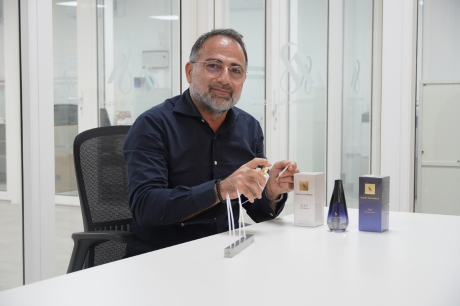
Duhigg used fragrance as a personal example, describing how his 15-year-old son heads to duty free whenever they travel and samples multiple scents. “For him, this is this moment of luxury. This is what travel is,” he said. “Travel is going into an airport and smelling these fancy, expensive colognes that you never get a chance to smell otherwise.”
At its best, he continued, travel gives consumers an opportunity “to become the people we hope we are, to break free of the old and do something new and exciting”.
Duhigg returned to this theme when discussing the commercial opportunity for retailers. He argued that when retail staff successfully connect with a traveller’s emotions, the relationship can extend beyond an individual transaction. “When I encounter someone in retail who connects with me, who matches with me, then it’s not just that I want to buy something from them; it’s that I like them, I trust them,” he said. “The more we can help our stores and our employees and our colleagues draw out that magic, to find a customer and help them see how wonderful this is, the more we not only make their travel better, the more we connect with and win over that customer for life.”
AI and the human experience
In a conversation with TFWA conference moderator Stephen Sackur following the presentation, Duhigg also addressed the growing role of AI and data in retail.
While acknowledging that data can provide valuable insight into consumer behaviour and AI can help businesses anticipate which products shoppers may want, he argued that technology alone cannot recreate the emotional element behind purchasing. “Data is fantastic. Data gives us this insight into what our customers want,” he said. “Oftentimes, through artificial intelligence, we can forecast what we should stock that people want, and yet there is not one person on this planet who says, ‘I bought this because AI told me to.’ We buy things that we love. We buy things that are beautiful. We buy things that make us excited because another person sells it to us.”
The greatest opportunity, he suggested, lies in bringing the two together: “It’s only when we merge the art and the science together. It’s only when we have the data alongside the sublime human experience that we really do something magical.”
Asked about a future in which travellers could use digital tools to choose and purchase products before arriving at the airport, leaving them simply to collect their purchases, Duhigg said this would suit some consumers but would not eliminate demand for physical retail experiences. “We travel because it’s exciting. We travel because it’s vital. Because the unexpected might happen,” he said. “There are some people in this world who will simply [order] on their phone and they’ll pick up their duty free, and that’s fine. You will be there to service them, but there’s going to be other people who come and say, ‘Okay, I’m ready to have an experience.’”
For those travellers, he added, duty free and travel retail can become part of what makes the wider journey “important and exciting”.
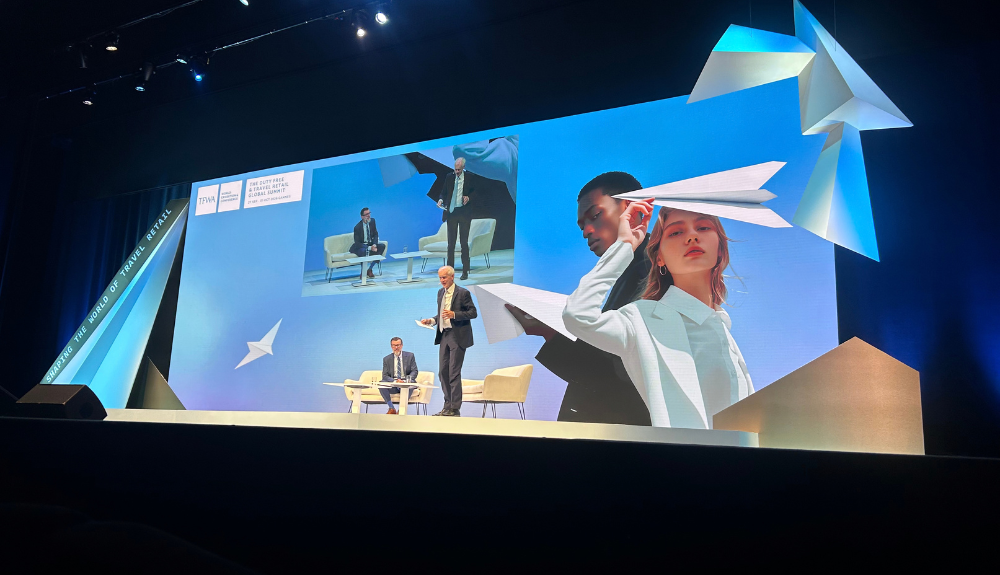
In a conversation with TFWA conference moderator Stephen Sackur following the presentation, Duhigg also addressed the growing role of AI and data in retail.
Turning browsing into a habit
Duhigg also drew on his research into habit formation to consider how retailers might encourage passengers to stop and engage with stores during relatively short airport encounters. He explained that habits are built around three components – a cue, a routine and a reward – and suggested travel retailers should think more closely about what reward they offer passengers for stopping.
“The reward can’t be simply, ‘We’re here’. The reward can’t be, ‘You never knew that you wanted a fancy bottle of cognac, and here we are to sell it to you’,” he said. Instead, this could be a sample, an experience or simply an employee asking a traveller what they are looking for and what might make their trip better. “The more that we focus on giving those rewards and choosing specific rewards, the more that we build the habits we want to see among our customers,” he said.
Duhigg stressed, however, that successful engagement depends on employees being able to judge when a traveller wants interaction – and when they do not. He encouraged retail teams to consider what a passenger might be feeling before approaching them, distinguishing between someone who appears frustrated and in a hurry and another who is browsing leisurely and potentially open to engagement. “That’s where our human capacity for evaluation comes in,” he said, arguing that employees can pick up on gestures, tone of voice and other signals in ways technology cannot. “When we give them permission to bring their full humanity to work, that is how we empower them to be great communicators.”
Duhigg’s presentation closed the speaker programme at the TFWA World Conference 2026, held under the theme Shaping the World of Travel Retail.
READ MORE: TFWA: Turning travel growth into sustainable growth for travel retail
READ MORE: TFWA: AI and frictionless travel reshape the battle for passenger attention
READ MORE: Ricola to debut refreshed travel retail identity at TFWA

Elizabeth Hurley on the power of ELC's Breast Cancer Campaign
Image Credit: The Estée Lauder Companies To mark Breast Cancer Awareness Month in October,...
NITR's KitKat and Formula 1 experience races to Madrid with Avolta
Image Credit: Nestlé ITR Nestlé International Travel Retail (NITR) and Avolta have...
Furla maps out travel retail expansion at TFWA Cannes
Image Credit: Furla Furla will return to TFWA World Exhibition & Conference for a second...
-

-
-
International,
Furla maps out travel retail expansion at TFWA Cannes

In the Magazine
TRBusiness Magazine is free to access. Read the latest issue now.