Archives

US airlines carried 823m pax worldwide for the first time

United Airlines smallUS registered civil airlines broke several new records in 2016 for the number of passengers carried, the distance they carried them and for the extra capacity used by airlines – according to the Bureau of Transportation Statistics (BTS) this month.


For the first year ever, US airlines carried more than 800m scheduled passengers (reaching 823m worldwide) a 3.1% rise on the 798m they carried in 2015.


Using the measure of revenue passenger-miles (RPMs), which includes both the number of passengers and the distance they travel, US airline operations grew even more with 933bn RPMs – a rise of 3.5% on 2015.


BTSAirline2016 airline pasx tabOVERALL LOAD FACTOR REMAINS HIGH

In addition, US airline scheduled service available seat-miles (ASMs) exceeded 1.1 trillion in 2016, a record thanks to a 3.9% increase on 2015.


The airline load factor declined to 83.4 from an all-time annual record of 83.8 in 2015, although it remains high compared to earlier years. A decade ago, the load factor was 79.2 and 10 years before that stood at 69.3 in 1996.


The BTS added that airlines carried 719m domestic passengers last year, a 3.3% increase from 2015 and the first time they have topped 700m. By contrast and internationally, US airlines carried 104m passengers, up 1.7% on 2015.


Revenue passenger-miles (RPMs) also grew faster on the domestic side, rising 4.7% to 660bn compared to international growth of 0.7% to 273bn. Meanwhile, international traffic generated 29% of US airline RPMs in 2016, even though fewer than 13% of their passengers travelled internationally.


Brexit’s possible bilateral rules comeback ‘raises questions’

ACIBrexit

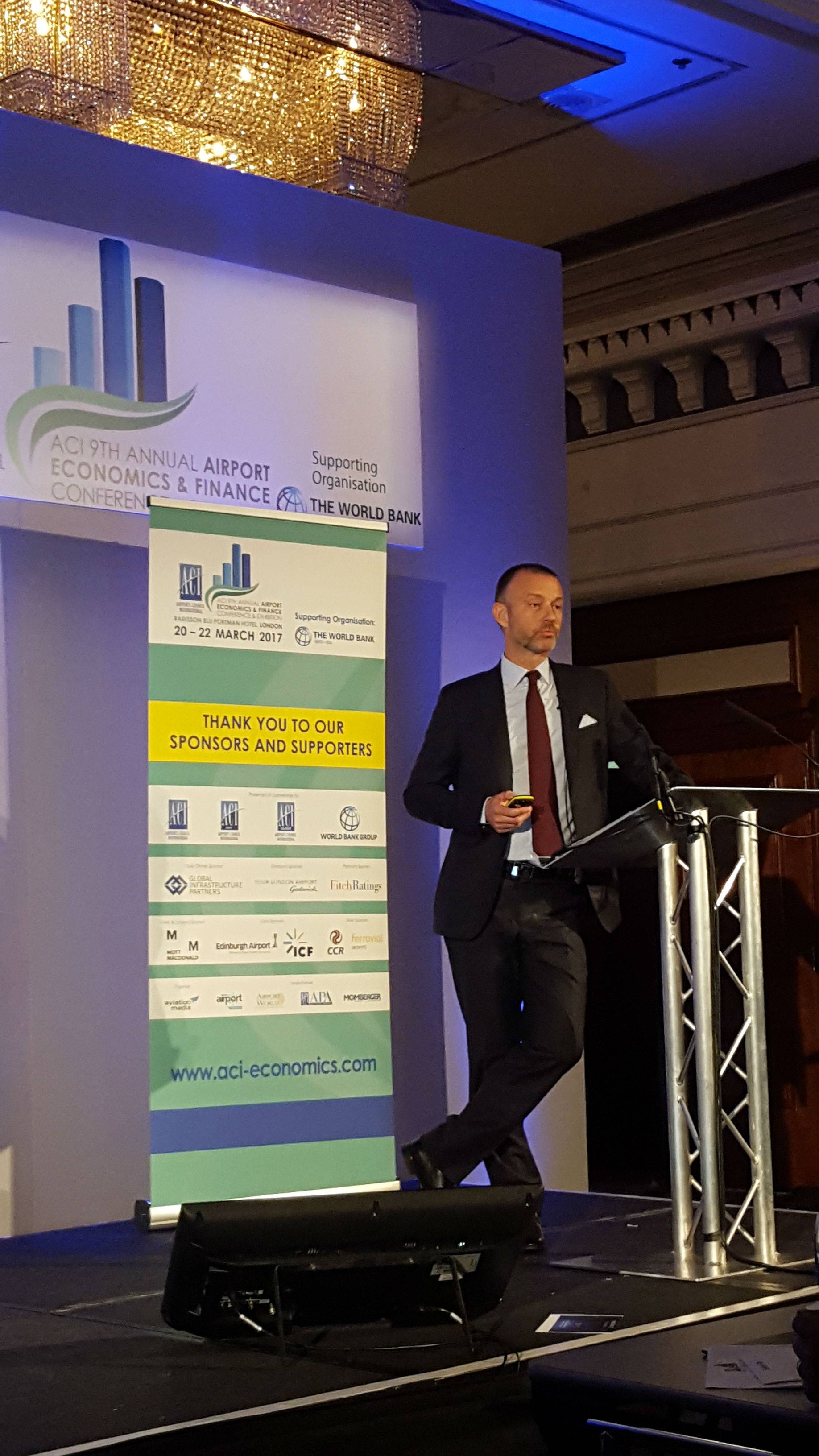
ACI Europe Director General Olivier Jankovec has refused to rule out a post-Brexit”cliff-edged scenario” for aviation.

ACI Europe Director General Olivier Jankovec has issued concerns over any potential return to previously existing bilateral air service agreements between Europe and the UK in the wake of Brexit.

Speaking to members of the press during a briefing at the ACI Economics and Finance Conference in London last week, Jankovec questioned the validity and execution of reverting to rules established at the time of Europe’s single aviation market formation.

“The problem for the aviation sector, contrary to other sectors, is we don’t have World Trade Organisation rules to fall back on,” he stated.

“When we’ve asked Brexit negotiators what we fall back upon, the assumption is we would fall back under old bilateral agreements.”

The question, Jankovec says, is whether these rules are still in force legally, and if so, do they have the legal basis to be reactivated.

NEGOTIATING MANDATE

Understanding what is contained within those agreements in terms of market access is another question.

ACIBrex“We would assume that they are much more restrictive than what we have today, which means that some of the air services operating today would lose their legal basis and would no longer be permitted based on these old bilateral agreements,” he said.

“What is clear is so far nobody has done the work of mapping this possibility in terms of what rights are in those old bilaterals.

“Of course we would prefer not to fall back on these and get some kind of transition agreement that somehow, what we have today can be safeguarded and continued, but I think realistically what we hear is there is no transitional agreement.”

Jankovec admitted he did not know whether all 27 member states of the EU want the UK to have unfettered access to Europe.

“I think the Brexit negotiating team has not asked that question yet. What they’ve told us is they are focused on negotiating exit terms, not on revising what could be the new relationship between the UK and the EU 27.”

ACI Europe  made clear that it is awaiting a negotiating mandate to be warranted by the European Council and agreed among the 27 member states before being passed to the European Commission as a ‘roadmap’ for objectives.

As reported earlier this month, UK Prime Minister Theresa May was given an effective mandate by the UK House of Lords to trigger Article 50 and commence Britain’s formal exit from the EU, the notification of which is due at the end of March.

Jankovec says the approval of the mandate should take place within weeks of the UK giving this notification.

GittensACI

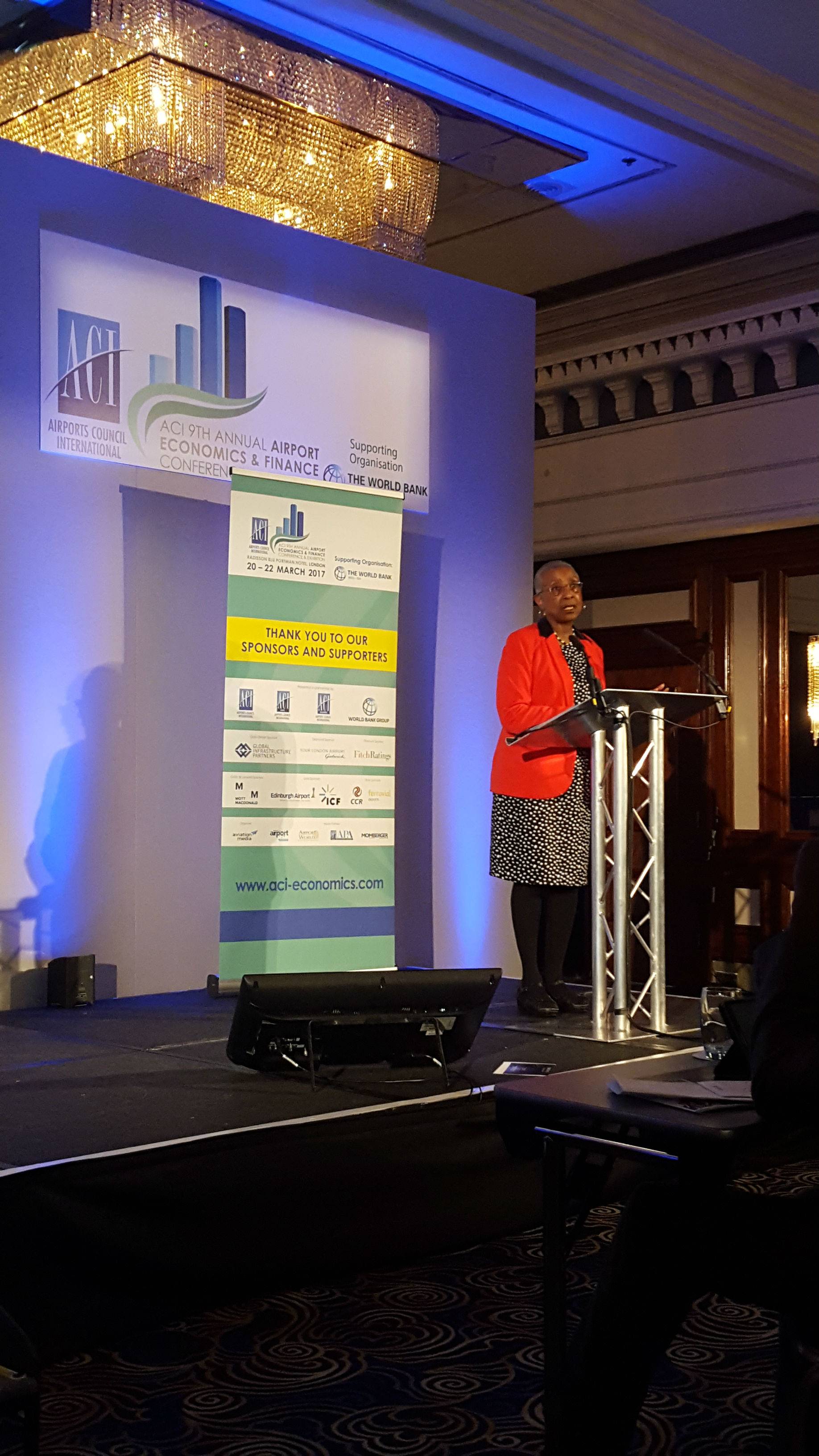
ACI World Director General Angela Gittens has questioned what Brexit means for airports and their carriers.

‘CLIFF-EDGED’ SITUATION ON 2-YEAR DEADLINE

During the conference, ACI Europe put out a formal statement expressing worries that a failure to negotiate exit terms between the UK and EU within the 2-year period could result in any aviation deal being hamstrung, leaving it to fall back on the old bilateral agreements.

The ‘sequencing’ of negotiations means talks will initially focus on agreeing exit terms before any new relationship between the UK and EU is defined in 2019.

ACI says this implication will leave aviation ‘in the dark’ for months to come before anything is resolved.

“As a responsible business, we simply cannot rule out a cliff-edged scenario for Brexit and aviation,” Jankovec said.

“The potential impact of this on air connectivity, consumers, and the wider economy needs to be addressed by Brexit negotiators – on both sides.

“This means that adequate contingencies need to be established promptly in case the UK would exit the EU without any agreement on its future relationship with the bloc.”

Grounded planes, Jankovec says, would be the “worst case scenario” in any outcome, but he says the association has received some assurances from negotiators on both sides.

ACI Europe previously pointed to its desire to have Britain fully integrated into the European aviation market following Brexit, but the UK’s government’s stance on breaking from the single market has raised doubts on the realism of such a move.

“If we can’t retain full integration, we want a solution where we remain as fully integrated as possible,” Jankovec added.

Angela Gittens, ACI World Director General asked:“For airports what does it mean for their carriers and what relationship with their alliances does this mean? That’s unclear.”

Watch out for a full conference report and exclusive interview with ACI Asia-Pacific Regional Director Patti Chau on intra-regional airport growth in the May print issue of TRBusiness.

To read a detailed report on the possible return of UK duty free allowances, be sure to read the March print issue.

Dufry/Hellenic/Fraport agree major 30-year 14-airport deal

Small THESAL Airport b F2 Hellenic Duty Free Shops and Fraport Greece have signed a 30-year contract covering 14 Greek airports.

 Both companies say that they also envisage an important expansion of the current retail space resulting in more than a doubling of the current shop area of 5,000sq m to more than 12,000sq m.


The two companies said today that this new agreement will take effect upon the commencement date of the concession agreement between the Greek State and Fraport Greece, which has been awarded the operation of several Greek airports.


 AIRPORTS INCLUDED IN THE NEW AGREEMENT

These include Thessaloniki (SKG), Aktion (PVK), Mykonos (JMK) Zakynthos (ZTH), Kavala (KVA), Corfu (CFU), Kefalonia (EFL), Kos (KGS), Lesvos (MJT), Rhodes (RHO), Samos (SMI), Santorini (JTR), Skiathos (JSI) and Chania (CHQ).


Dufry adds that this new agreement also adds considerable landside floor space, with the expansion and improvement of the retail spaces scheduled to commence this year, with completion in 2021.


Commenting on this new agreement, George Vilos, Executive Director of Commercial & Business Development of Fraport Greece stated: “The 14 airports are gateways to some of the most important Greek and world famous destinations.


“Fraport Greece’s investment plan for the development of the 14 airports includes a significant increase in commercial areas, as well as the improvement of the passengers’ overall travel experience.


THESAL Airport b F2

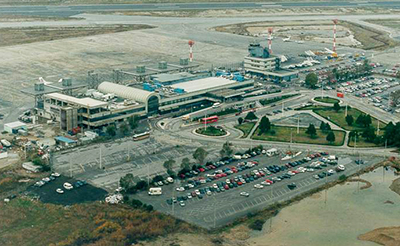
Thessaloniki Airport is just one of several airports included within the new agreement announced today.

A ‘VALUABLE PARTNER’

“Thus, the airports will respond to the expected increase in traffic and offer an experience equivalent to the value and image of the destinations. Towards achieving these goals, the Hellenic Duty Free Shops are a valuable partner.”


Adding his comments, Giorgos Velentzas, Managing Director of Hellenic Duty Free Shops, stated: “We are thrilled to partner with Fraport Greece on their goal to bring customer service at 14 airports to another level.


“The year-long presence of Hellenic Duty Free Shops in the Greek travel retail sector and our experience of the needs of the travelers in our country, combined with the know-how of Dufry, make us the ideal partners for Fraport Greece and their plans to upgrade the facilities and the commercial spaces of the airports.


Julian Diaz Dufry

Julian Diaz, CEO, Dufry.

DIAZ ‘PROUD’ OF LATEST TRUST IN DUFRY

“We are jointly planning the development of the airport’s retail areas aiming at significantly expand our shops to provide travellers with a completely new shopping and service experience.


“By introducing state-of-the-art retail concepts and shop designs we will increase the visibility of Greek products and provide a distinctive sense of place thus promoting the Greek culture throughout the world.”


Julian Diaz, CEO Dufry said: “I am very proud to announce this important extension agreement in one of the world’s most important tourist destinations and I would like to thank Fraport Greece for the trust in Dufry.


“This agreement fosters our long-standing cooperation and excellent relationship with Fraport, which spans across successful partnerships and operations in many countries around the globe.”


UK joins with US in airline ban on electronic devices

TSA checks passenger idThe UK has followed the United States’ lead by banning ‘inbound’ carriage of laptops, iPads and ‘some’ mobile phones in passenger hand luggage on flights between six countries to the UK.


This follows the earlier ban announced by the US government which now prohibits these items in hand luggage on flights between the US and eight countries (10 airports) – most of them Muslim-majority states.


The authorities in both countries stress that these items can still travel with passengers, as long as they are stored in the aircraft hold and nowhere else. The countries where the UK ban now applies include Egypt, Jordan, Lebanon, Saudi Arabia, Tunisia and Turkey.


Those countries where the US ban applies include Egypt, Jordan, Kuwait, Morocco, Qatar, Turkey, Saudi Arabia and the United Arab Emirates (Dubai and Abu Dhabi).


AIRPORTS IMPACTED BY THE US BAN…

The specific airports relating to the US ban include the following: Abu Dhabi International Airport (United Arab Emirates); Cairo International Airport (Egypt); Dubai International Airport (United Arab Emirates); Hamad International Airport (Qatar); Istanbul Ataturk Airport (Turkey); King Abdulaziz International Airport (Saudi Arabia); King Khalid International Airport (Saudi Arabia); Kuwait International Airport (Kuwait); Mohammed V International Airport (Morocco); and Queen Alia International Airport (Jordan).


As reported by TRBusiness, airlines were notified about these regulation changes yesterday from which time they – and airport security teams – have 96 hours to ensure that they all comply. At the same time, these new changes will remain in place until the threats are considered to be over and not before.


Considerable disruption and even potential delays may result from the new regulations imposed on both sides of the Atlantic, but the level of threat is clearly regarded as sufficiently serious to warrant these actions.
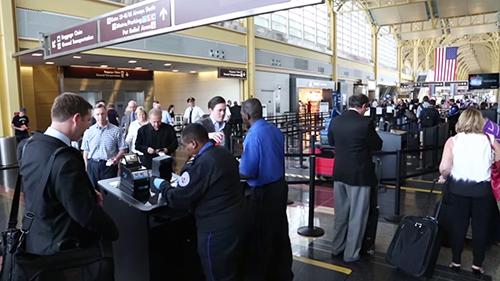
 

Baggage checks will take time to settle down with the new rules

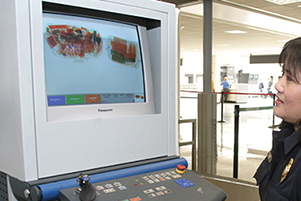
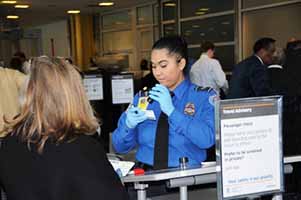
New baggage checks to ensure full compliance with the new carry on rules will obviously take time to settle down and delays may well occur. [Image Credit: TSA].

IATA ASSESSES POTENTIAL IMPACT

The International Air Transport Association (IATA) now calculates that the UK ban will impact about 393 scheduled passenger flights per week – which is effectively equivalent to around 2.7% of the total international scheduled passenger flights to the UK.


By contrast, IATA calculates that the US ban will impact about 350 scheduled flights a week, equivalent to about 2% of the total international flights to the US.


In a statement, US Homeland Security said: “Evaluated intelligence indicates that terrorist groups continue to target commercial aviation and are aggressively pursuing innovative methods to undertake baggage their attacks, to include smuggling explosive devices in various consumer items.


“Based on this information, Secretary of Homeland Security John Kelly and Transportation Security Administration Acting Administrator Huban Gowadia have determined it is necessary to enhance security procedures for passengers at certain last point of departure airports to the United States.”

 

TSA liquids and gels still on alert

Readers will be all too familiar with the chaos that was caused by the liquids and gels threat to airline security back in 2006 when all hand luggage was banned for a period by airlines on international flights. It was this incident that led to the strict liquids and gels regulations that are still in place at airports around the world today. [Pic credit: TSA].

UK SPELLS OUT DIMENSIONS OF BANNED ITEMS

Commenting on the UK’s decision to join the US in banning certain electronic devices yesterday, Department for Transport Minister Christopher Grayling told UK Parliament that the government was following the US lead after close consultation with Washington.


He said: “The House will be aware that the United States government made a similar announcement earlier today regarding flights to the United States and we have been in close contact with them to fully understand their position.


“In conjunction with our international partners and the aviation industry, the UK government keeps aviation security under constant review. The UK has some of the most robust aviation security measures in the world and at all times the safety and security of the public is our primary concern.


“We will not hesitate to put in place measures we believe are necessary, effective and proportionate. Under the new arrangements, phones, laptops and tablets larger than length 16.0cm, width 9.3cm, depth 1.5cm will not be allowed in the cabin on selected flights to the UK from the countries affected.

 

Department for Transport The Rt Hon Chris Grayling MP

UK Department for Transport Minister Christopher Grayling.

RECOGNISING THE CONSTANT EVOLVING SECURITY THREAT

“Most smartphones fall within these limits and will continue to be allowed on board. However, devices larger than these dimensions may not be carried in the cabin.”


[Importantly, these restrictions also apply to any purchases ‘of these aforementioned items’ that have been made in any shops in any airports – connecting or otherwise – and even if the passenger’s journey began in a country that is not on the ban lists. Passengers also need to make sure that those electronic items still permitted in hand luggage are charged and can be shown to work at security if requested. There are also some minor differences between the UK and US ‘ban lists, with Homeland Security citing the following banned items broadly as laptops, tablets, E-Readers, cameras, portable DVD players, electronic game units larger than a smartphone and travel printers/scanners-Ed].


TOP PRIORITY REMAINS SAFETY…

Grayling continued: “We understand the frustration that these measures may cause and we are working with the aviation industry to minimise any impact. Our top priority will always be to maintain the safety of British nationals.


“These new measures apply to flights into the UK and we are not currently advising against flying to and from those countries. Those with imminent travel plans should contact their airline for further information. More information can be found on the Department for Transport website and the travelling public should consult the Foreign and Commonwealth Office’s travel advice pages on GOV.UK.


“I know the House will recognise that we face a constantly evolving threat from terrorism and must respond accordingly to ensure the protection of the public against those who would do us harm. The update we are making to our security measures is an important part of that process. We remain open for business. People should continue to fly and comply with security procedures.”




Flybe reinstates inflight shopping on select routes

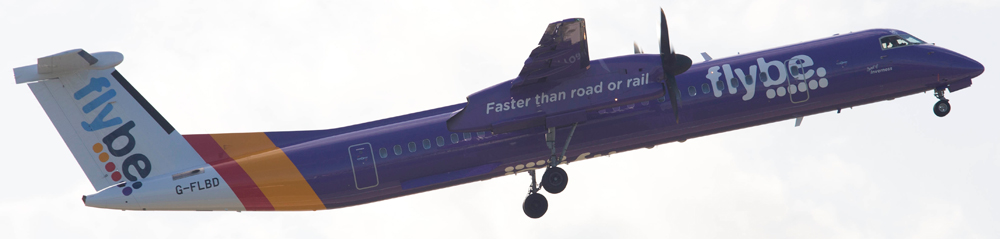
Flybe-leadDue to ‘popular demand’ Flybe, Europe’s ‘largest regional airline’, has reinstated duty free in-flight shopping onboard flights to and from Jersey, Guernsey and Geneva.


Passengers aged 18 years or over travelling in either direction on any of the Flybe-operated routes listed below can now purchase duty free onboard, subject to complying with the relevant personal allowances.


Inflight shopping will be available on routes from Jersey to Birmingham, Cardiff, Doncaster Sheffield, East Midlands, Exeter, Guernsey, Manchester and Southampton.


It will also be available on routes from Guernsey to Birmingham, Exeter, Jersey and Southampton as well as routes from Geneva to Birmingham, Cardiff, Exeter, Isle of Man, Jersey and Southampton.


Full details of Flybe’s schedule on the above routes can be found at www.flybe.com


Flybe-large

Flybe is ‘Europe’s largest regional airline’.

US set to ban electronics in hand luggage on some flights

SecurityThe US Department of Homeland Security is reported to be in the process of informing airlines flying into the country from some Middle East and North African airports that it will no longer allow passengers on these non-US airlines to carry laptops, cameras or iPads in carry-on luggage.


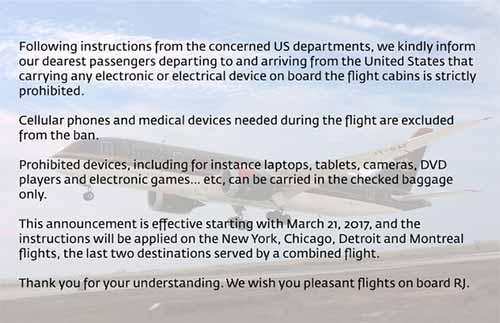
News of this ban was first broken when Royal Jordanian Airlines tweeted an information notice (since withdrawn) which said: “Following instructions from the concerned US departments, we kindly inform our dearest passengers departing to and arriving from the United States that carrying any electronic or electrical device on board the flight cabins is strictly prohibited.


BAN FOLLOWS CREDIBLE TERRORISM THREAT

“Cellular phones and medical devices needed during the flight are excluded from the ban. Prohibited devices, including for instance laptops, tablets, cameras, DVD players and electronic games… etc. can be carried in the checked baggage only.”


The Tweet from Royal Jordanian

Above is the withdrawn tweeted notice from Royal Jordanian Airlines which several airlines are expected to be carrying shortly.

The notice went on to give a March 21 deadline (today) for this new instruction, although as mentioned, this notice has since been taken down from its website, so whether this date still applies is unknown.


As of early this morning (UK time) there were no special notices on major airline sites in the Middle East as far as TRBusiness could determine.


BBC NEWS UPDATE…

However, the BBC claims to have spoken to US Government official who has indicated that this new measure will affect nine airlines operating out of ten airports. [See the BBC story here: http://www.bbc.co.uk/news/world-us-canada-39333424].


This widely reported ‘proposed ban’ has not been formally confirmed by the US Department of Homeland Security.


However, it will need to become public very soon if passengers are to be informed of these regulation changes before arriving at airport security.


001 aa homeland security logo


LAPTOPS WILL HAVE TO BE CHECKED IN…

No more information has been released by US government agencies. However, some respected news organisations are reporting that government officials in countries where this ban is expected to apply have been informed that this proposed change follows an identified safety threat.


This relates to a terrorist incident where a laptop bomb exploded onboard a Dubai-based airline called Daallo as it took off from Mogadishu. The bomber died, but the pilot was able to land the aircraft safely. A known terrorist organisation subsequently claimed responsibility for the incident.


LINKS TO OTHER REPORTS ON THIS STORY:


Washington Post: https://www.washingtonpost.com/news/tripping/wp/2017/03/20/report-u-s-to-ban-carry-on-electronic-devices-on-flights-arriving-from-certain-countries-beginning-tuesday/?hpid=hp_hp-more-top-stories_tripping-planeban750p%3Ahomepage%2Fstory&utm_term=.3bf4e190534e


CNN: http://money.cnn.com/2017/03/20/news/companies/middle-east-airline-electronics-ban/index.html


United announces the end of its inflight duty free service

United Duty Free is no moreThe Association of Flight Attendants at United Airlines has formally advised all members and employees that the airline will no longer offer duty free merchandise on any United Airlines flights.


This is due to take effect from 31 March, 2017. Duty Free World is the current concessionaire partner.


In a written statement, the AFI said last Friday: “United announced this week, effective March 31, 2017, we will no longer offer duty free merchandise on any United flights.


SERVICE TO END DUE TO ‘DECLINING SALES REVENUE…’

“United made this decision based on declining sales revenue for both United and Duty Free World. All Flight Attendant commission inquires must be reconciled by June 1, 2017.


United Airlines duty free no more“As well as if you were assigned a duty free key you should return the key to Inflight no later than April 30, 2017.


“While the retail catalogues will remain on board the aircraft through the end of June, there will be no sales onboard as of March 31, 2017.”


United Airlines now follows in the footsteps of both Delta Air Lines and American Airlines who have both discontinued their duty free programmes.


Judge blocks US travel ban on ‘questionable evidence’ basis

US President Trump and US District Judge Derrick WatsonUS District Judge Derrick Watson has blocked US President Trump’s latest proposed legislation to introduce a 90-day ban on visitors from six mostly Muslim countries, plus a 120-day restriction on granting refugees into the US.


Citing ‘questionable evidence’, the judge sitting in Honolulu ordered ‘a temporary stay’ in a highly critical 43-page ruling ahead of tonight’s originally proposed travel ban deadline.


JUDGE SAYS PROPOSED BAN WAS STILL DISCRIMINATORY

He also went further by stating that in his view, Trump’s proposed ban was still discriminatory against Muslims and would not stand up to scrutiny under the US Constitution.


US President Trump reacted strongly last night, describing it as ‘an unprecedented judicial overreach’ in an address to a rally of supporters in Nashville. He also vowed to mount an appeal to get yesterday’s judgment – overseen by three federal judges – overturned on appeal and promised to take the matter to the US Supreme Court if necessary.


Donald Trump (White House Photo)

US President Trump has vowed to appeal agaist the ban.

US PRESIDENT TRUMP HAS VOWED TO APPEAL

This latest case nevertheless represents another embarrassing defeat for Trump, after at least six US states declared their opposition to the proposed ban.


While Hawaii argued that the ban was still discriminatory, its lawyers also maintained that it would have a seriously negative impact on tourism into the US, as well as on recruitment of foreign workers.


At the same time, federal courts in both Washington and Maryland also engaged in hearings yesterday in relation to the proposed ban, while California, Maryland, Massachusetts, New York, and Oregon registered their continued support for the rejection of Trump’s new legislation.


US District Judge Derrick Watson

US District Judge Derrick Watson blocked the ban.

Commenting on yesterday’s judgment on Facebook, Bob Ferguson, Attorney General of Washington State said: “Today was another huge victory for the rule of law.


“While we were in court fighting President Trump’s travel ban, a federal judge in Hawaii issued a nationwide restraining order blocking implementation of the revised executive order. Great to have more partners in this fight…”


FOR MORE INFORMATION ON THE JUDGMENT

The official order granting the motion for the temporary restraining order represented the case of the plaintiffs – the State of Hawaii and Ismal Elshikh – versus Donald J.Trump, et al Defendants. Any readers wishing to obtain a copy of this latest ruling can do so at the following link: http://www.hid.uscourts.gov/files/announcement142/CV17-50%20219%20doc.pdf


600+ flights cancelled as airports’ strike is extended

Flughafen Berlin-Schönefeld 2012Berlin’s Tegel and Schönefeld airports recorded more than 650 flight cancellations yesterday as a strike by ground workers went into a second day today, with similar disruption expected for the duration.


The airport authority representing both airports said today: “Due to strike action of ground staff at Berlin’s airports Schönefeld and Tegel there is severe disruption of air traffic from 13 March approximately 4am, until 15 March approximately 5am.


“After the end of the strike action restrictions in air traffic may continue. We kindly request all passengers to enquire about the current status of their flights before travelling to the airport.”


Heinemann at Berlin Schoenefeld Airport

Heinemann at Berlin Schönefeld Airport.

HEINEMANN HAS SUFFERED REGULARLY FROM AIRPORT STRIKES

Once again, Gebr. Heinemann is the main retailer impacted by industrial action at both these German airports, after enduring several years of strikes at Frankfurt and other German airports during the long running Lufthansa pilots union dispute with the airline – now thankfully resolved.


As regards this latest dispute, the ground workers’ union Verdi says it is taking industrial action for increased wages for its members who it says are having to work harder due to increased passenger numbers at both ageing airports.


Airlines forced to cancel flights over the last few days include Lufthansa, Eurowings, Ryanair, easyJet and others.


UK EU Withdrawal Bill opens the door to invoke Article 50

Houses-of-Parliament webThe UK House of Lords last night effectively gave the UK Government the mandate to inform the European Union that it is to shortly invoke Article 50, ahead of its announced intention to leave the European Union.


This follows an overwhelming vote in favour for the EU Withdrawal Bill (by 274 votes to 118) within the House of Lords, after a period of what is known as ‘ping pong’, where proposed legislation passes between the House of Commons and the House of Lords until both agree on any given text.


As widely reported, the House of Commons had already approved the proposed legislation, but this was then challenged by the House of Lords, where there was initial support for whether or not the UK Parliament should have the power to dictate any EU exit terms.


UK IS NOW COMMITTING TO LEAVING THE EU

As indicated by the aforementioned vote, this faded yesterday with insufficient support emerging for this motion.


Body Theresa May Brexit

UK Prime Minister Theresa May.

UK Prime Minister Theresa May is now mandated to inform the EU that the UK will be seeking to leave the European Union. In turn, this will trigger the two-year negotiation period between the UK government and the European Commission over terms and conditions that each party believes to be appropriate to make this happen.


The initial consensus now is that the Brexit process will be initiated by May as soon as the Queen grants her royal assent approval. This could happen as early as today, so confirming that the EU Withdrawal Bill has formally passed into law and if not, then certainly by the end of this week.


May is then expected to send a formal withdrawal letter from the UK government, effectively notifying Brussels that it is marking the opening of the two-year negotiations process.


‘MOST IMPORTANT NEGOTIATION’ IN A GENERATION….

In a statement last night, David Davis, the Brexit Secretary said that Parliament has now ‘backed the government in its determination to get on with the job of leaving the EU and negotiating a positive new partnership with its remaining member states’.


Davis said that this places the UK ’on the threshold of the most important negotiation for our country in a generation’.


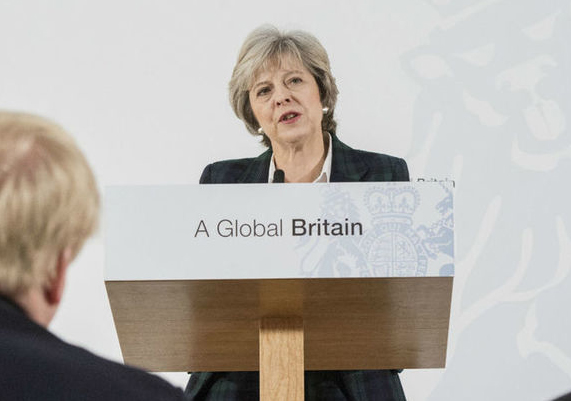
He added: “We have a plan to build a Global Britain, and take advantage of its new place in the world by forging new trading links. So we will trigger article 50 by the end of this month as planned and deliver an outcome that works in the interests of the whole of the UK.”


As is well documented, the formal agreement to leave the European Union may also open the door for the DF&TR industry to present its worthy credentials for the return of UK duty free allowances once the UK finally becomes ‘a third country’, although it is still very early days.


BRITISH GOVERNMENT ‘IN LISTENING MODE’ ON DUTY FREE

European Travel Retail Confederation (ETRC) President Sarah Branquinho2

ETRC President Sarah Branquinho.

In a press conference recently, the Duty Free World Council said it believes this is possible and it has already begun initial work on this, as John Hume, Managing Partner at Hume Brophy explained: “The British Government has been in listening mode for the last seven months and we have engaged on a number of levels with them. We have been engaging across the board where there are government stakeholders in the debate about duty free.”


Meanwhile, all of those present at this short press briefing emphasised the huge number of obstacles that still need to be overcome if the duty free prize is to realistically rematerialize on the negotiating table with UK government ministers and politicians. European Travel Retail Confederation (ETRC) President Sarah Branquinho (inset) also made it clear that the lobby wants to avoid raising hopes too high that duty free will return.


But it is also clear that all of those present had an air of excitement of what might truly be possible, even if there is still a tremendous amount of work to be done in this area.


A comprehensive report on this press conference will appear in the March print edition of TRBusiness.