Archives

IATA: 3.8bn passengers flew safely on 40.4m flights

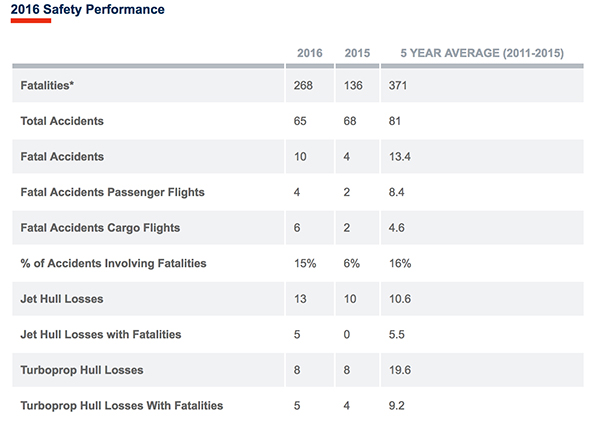
IATA Safety cardThe International Air Transport Association (IATA) reports that 3.8bn travellers flew safely on 40.4m flights in 2016, with a total of 10 fatal accidents and 268 fatalities.


While tragic in itself, the airline association says that this is nevertheless an improvement compared with an average of 13.4 fatal accidents and 371 fatalities a year recorded over the previous five-year period between 2011 and 2015.


IATA SAYS SAFETY RECORD CONTINUES TO IMPROVE…

IATA Director General and CEO Alexandre de Juniac said that these figures show that aviation safety continue to improve, although he added: “We did take a step back on some key parameters from the exceptional performance of 2015; however, flying is still the safest form of long distance travel. And safety remains the top priority of all involved in aviation.


“The goal is for every flight to depart and arrive without incident. And every accident redoubles our efforts to achieve that.”


IATA Safety record 2016IATA has released the following statistics in relation to both the safety and accident rates: “The all accident rate (measured in accidents per 1m flights) was 1.61, an improvement from 1.79 in 2015.


ONE MAJOR ACCCIDENT EVERY 2.56M FLIGHTS

“The 2016 major jet accident rate (measured in hull losses per 1m flights) was 0.39, which was the equivalent of one major accident for every 2.56m flights.


“This was not as good as the rate of 0.32 achieved in 2015 and was also above the five-year rate (2011-2015) of 0.36.


“There were 10 fatal accidents with 268 fatalities. This compares with an average of 13.4 fatal accidents and 371 fatalities per year in the previous five-year period (2011-2015). The 2016 jet hull loss rate for IATA member airlines was 0.35 (one accident for every 2.86m flights).


“While this outperformed the global hull loss rate, it was a step back from the 0.22 accidents per million flights achieved by IATA members in 2015.”


NYC joins with other major US States to fight Trump ban

Washington State Attorney General Bob Ferguson and Lori Swanson Minnesota AGNew York City’s Attorney General Eric Schneiderman announced yesterday that he is to join with Washington State Attorney General Bob Ferguson and Minnesota Attorney General Lori Swanson to try and overturn US President Trump’s second and latest executive travel order.


All three attorneys say they plan to file a motion on Monday 13 March arguing in support of a continuation of the national stay upheld last month by the 9th Circuit, arguing that this should also apply to the Trump administration’s new revised immigration ban. This is in addition to a separate restraining order, which the State of Hawaii has applied for.


In a statement supporting the first action, Schneiderman said: “President Trump’s latest executive order is a Muslim Ban by another name, imposing policies and protocols that once again violate the Equal Protection Clause and Establishment Clause of the United State Constitution.


STRONG ATTORNEY GENERAL ALLIANCE

“As the Trump White House has already said, the Administration’s latest Muslim Ban seeks to accomplish the same unlawful and unconstitutional outcomes as the original order.


Washington State Attorney General Bob Ferguson 12.34.51

Washington State Attorney General Bob Ferguson.

b. Schneiderman

New York City’s Attorney General Eric Schneiderman.

“Smart, aggressive litigation by state attorneys general and civil rights advocates across the country successfully torpedoed President Trump’s first Muslim Ban, and I am pleased that as state AGs, we are now marshalling our resources to fight Trump’s latest, unconstitutional decree in the Ninth Circuit.”


As reported, US President Donald Trump authorised his new executive order earlier this week, which effectively prohibits visitors from six predominantly mainly Muslim countries from entering the United States – from the 16 March date of implementation.


The six countries are: Iran, Libya, Somalia, Sudan, Syria and Yemen. This new order replaces its predecessor, which sparked protests at several leading US airports before it was successfully challenged and dismissed by a US federal court.


FERGUSON HOPING TO BLOCK TRUMP AGAIN

A major difference between this order and its unsuccessful predecessor is that this ‘new version’ now excludes the ban on visitors from Iraq. However, this is not deterring Washington AG Bob Ferguson, who was responsible for blocking Trump’s first travel ban.


He is now looking to argue that the original stop on Trump’s first ban should still apply to this updated second version and with support from the aforementioned states he is now applying to the federal courts for confirmation of the same.


Lori Swanson Minnesota Attorney General

Minnesota Attorney General Lori Swanson.

Meanwhile, Hawaii Attorney General Doug Chin has also announced that the State of Hawaii has filed a motion for a temporary restraining order in its federal lawsuit against President Donald Trump.


In a statement, he said: “We all want safety and security in our state. But discrimination against people based on national origin or religion is a very dark path we must never accept. Respectfully, the new order fails to fix the initial defect.”


ATTORNEY GENERALS SAY TRUMP’S NEW BAN IS NO DIFFERENT…

The State of Hawaii’s position has also been made clear: “Nothing of substance has changed: There is the same blanket ban on entry from Muslim-majority countries (minus one), the same sweeping shutdown of refugee admissions (absent one exception), and the same lawless warren of exceptions and waivers.


The courts did not tolerate the Department of the Attorney General Administration’s last attempt to hoodwink the judiciary, and they should not countenance this one.”


a Douglas Chin, Hawaii Attorney General

Hawaii Attorney General Doug Chin.

The state also argues: “Defendants have violated the establishment clause of the First Amendment. Defendants have violated the equal protection, substantive due process, and procedural due process guarantees of the Fifth Amendment.


“Sections 2 and 6 of the March 6, 2017 Executive Order violate the Immigration and Nationality Act by discriminating on the basis of nationality, ignoring and modifying the statutory criteria for determining terrorism-related inadmissibility and exceeding the President’s authority under the Immigration and Nationality Act.


“Defendants have violated the Religious Freedom Restoration Act by imposing a substantial burden on the exercise of religion.


“Defendants have violated the substantive and procedural requirements of the Administrative Procedure Act.”

TFWA China’s Century event attracts 412 to Guangzhou

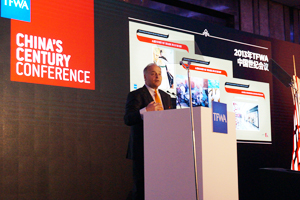
Top Four-Seasons-Hotel-in-GuangzhoujpgA total of 412 visitors from the duty free and travel retail industry attended this week’s third TFWA China’s Century Conference at the luxurious Four Seasons Hotel in Guangzhou.


The event was held in partnership with the Asia duty free association APTRA, as TFWA President Erik Juul-Mortensen spoke of the ‘need for agility’ if the industry is to maximise the opportunities of the market in future.


WELL ATTENDED EVENT

The 412 total visitors included an international attendance comprising duty free and travel retail industry executives from China and beyond and this number exceeded the 388 visitors who supported the last event in 2015.


In terms of numbers, delegates included representatives from 211 companies, an increase on the 2015 number of 197, as the TFWA ONE2ONE meetings event proved to be as popular as ever, comprising a total of 130 meetings and 123 different participating companies.


CDFG-President-Charles-Chen

China Duty Free Group (CDFG) President, Charles Chen addressing delegates at this week’s TFWA China’s Century Conference in Guangzhou.


GOOD CHINESE AIRPORTS’ REPRESENTATION

Several major Chinese airports were also represented at the event, including Beijing, Shanghai, Chongqing, Hangzhou, Xi’an, Xiamen, Liaoning, Qingdao, Yichang and Zhejiang – plus the host, Guangzhou Baiyun International Airport.


As usual, TFWA also organised a comprehensive social events programme throughout the duration of the three-day event, which began with an opening cocktail at W Hotel Guangzhou and also included a gala dinner at the luxurious Four Seasons Hotel.


The official host for this year’s was the Guangzhou Baiyun International Airport Company, which is exclusively featured and profiled, in the official China’s Century Conference delegate magazine, which was produced for TFWA by TRBusiness.


Click here for the China Duty Free Group presentation by President Charles Chen: [http://www.trbusiness.com/regional-news/asia-pacific/cdfg-confirms-rmb-290m-golden-week-sanya-sales/116558].


[http://www.trbusiness.com/regional-news/asia-pacific/cdfg-confirms-rmb-290m-golden-week-sanya-sales/116558]

China Southern issues open invitation to brands

Li-Jianhua,-President-and-CEO,-Guangzhou-China-Southern-Airlines-(CSN)-leadLi Jianhua, President and CEO, Guangzhou China Southern Airlines (CSN) Inflight Duty Free Co. Ltd says the carrier has enjoyed double-digit sales growth in recent years driven by innovation in its product portfolio as well as the introduction of duty free exclusives and a pre-order service.


“We have redeveloped our products and pricing for specific buyer groups,” said Jiianhua. “But we still need more luxury brands to enter the market to appeal to a new generation of consumers in China.”


She also implored brand owners in the audience to come forward to begin conversations with CSN, whilst promoting the huge potential of the China inflight market.


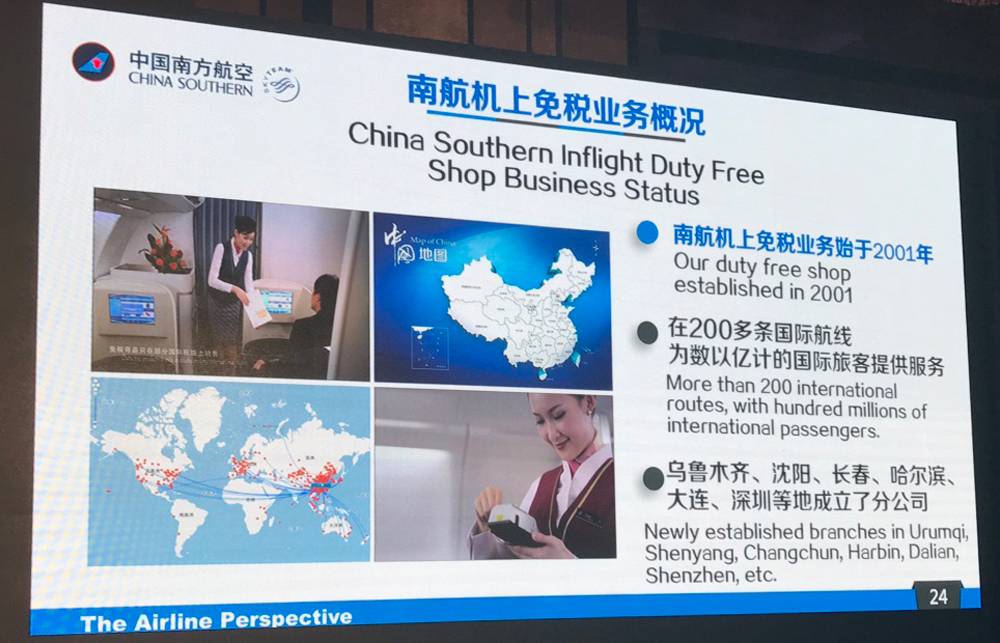
Jianhua charted the company’s rise to success to become ‘the largest airline in Asia by fleet and passengers’ as the carrier claims. Jiianhua highlighted that CSN launched its first inflight retail programme in 2001 and it very quickly began to play a very important role for the airline, not just from a customer engagement perspective, but from a revenue generation standpoint.


She pointed out that the company wants to extend its global reach, identifying that Southeast Asia represents 31% of the company’s current route quota with Japan & Korea accounting for 28%.


Li-Jianhua,-President-and-CEO,-Guangzhou-China-Southern-Airlines-(CSN)

Jianhua promoted the huge potential of the China inflight market.


She also pointed out that she believes the company has great potential, especially considering that Chinese overseas visitors reached 122m in 2016. As the company expands its route reach and takes advantage of the growing number of passengers Jianhua insists that inflight retail will be available on ‘every international flight’.


China-Southern-inflight-categories-slide

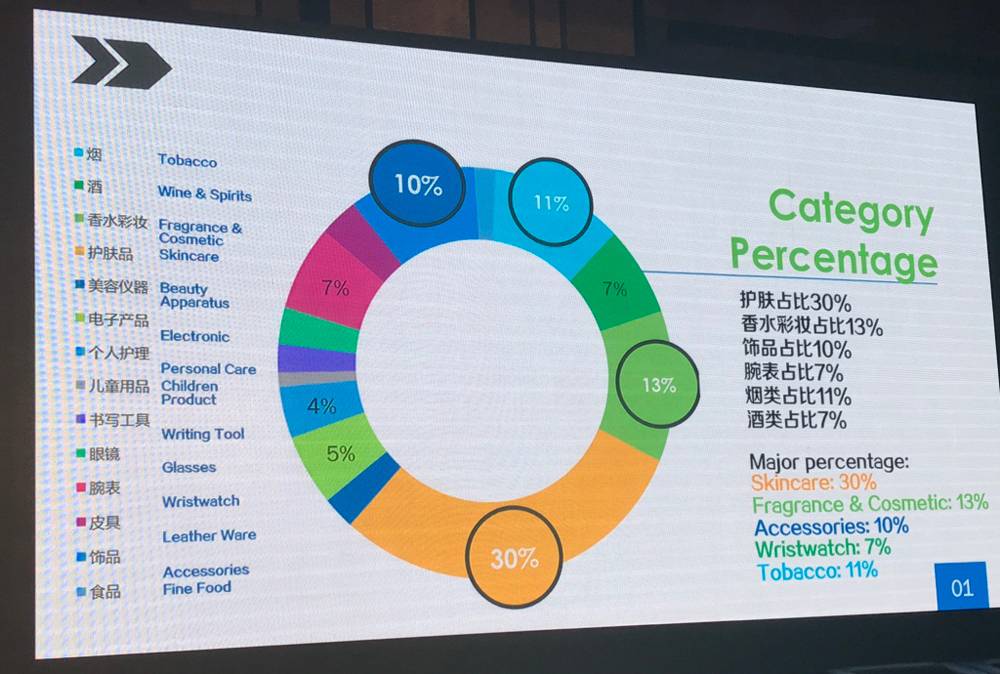
Skincare represents 30% of China Southern’s inflight business.


She noted that research from Fortune Character suggests that Chinese consumption continues, but has slowed down in recent years and high-end consumers now tend to make more ‘rational’ decisions.


China-Southern-Airlines-(CSN)-inflight-business-slide

Asia Pacific travel retail sales grow +11.5% in 9M 2016

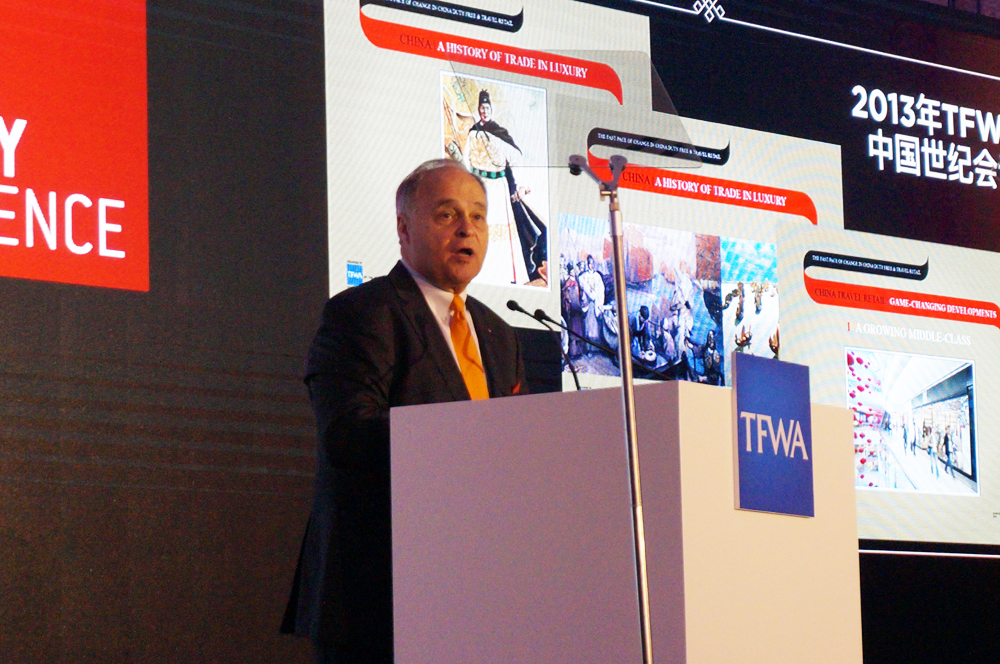
Erik-Juul-Mortensen-CCC-2017-leadIn the first nine months of 2016 DF&TR sales in Asia Pacific grew 11.5% yoy driven by huge growth in the beauty category, revealed the TFWA President, Erik Juul-Mortensen yesterday morning at the China’s Century Conference in Guangzhou. [Figures provided by Generation Research.]


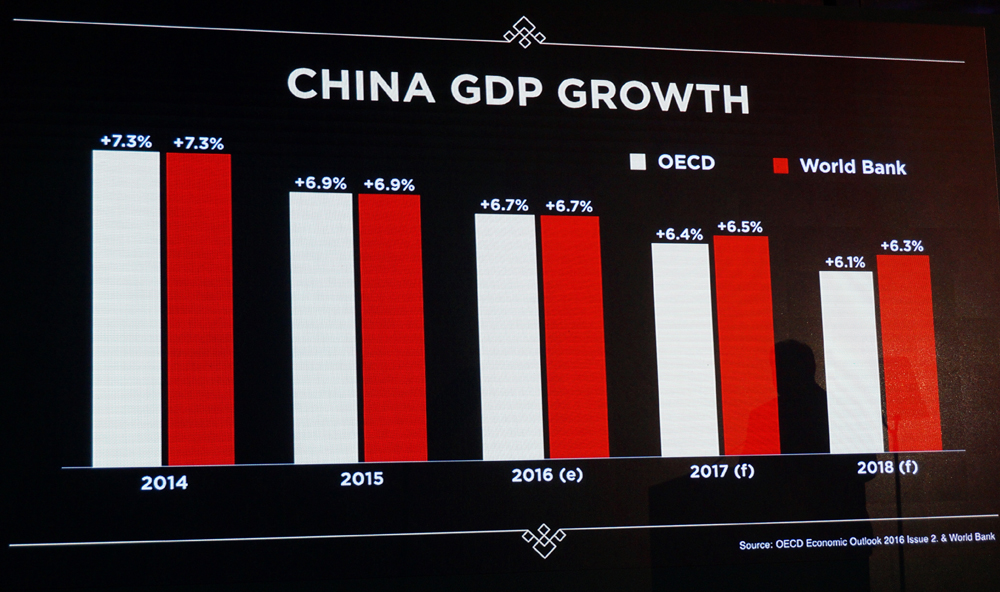
Juul-Mortensen talked about the importance and hope for sustainable economic growth in China; where the GDP is now forecast to grow 6.5% in 2017, slightly down from the 6.7% recorded in 2016. He talked about the expanding middle class in China as well as the huge investments in airports and aviation.


These include developments at Shanghai Pudong, Beijing Daxing airports and host airport Guangzhou Baiyun International among others, which will see the Chinese airport sector’s worth rise to $22bn by 2020.


Interestingly, Juul-Mortensen pointed out that since 2013 international passengers from China using low cost carriers have grown by +142%


LAND OF OPPORTUNITY

Unsurprisingly, the TFWA President called China the ‘Land of Opportunity’ referring particularly to relatively recent developments in the downtown and arrivals business, as reported by TRBusiness.


Erik-CCC-2017-large

Juul-Mortensen pointed out that since 2013 international passengers from China using low cost carriers have grown by +142%.


Like other speakers, Juul-Mortensen identified the Chinese millennials as those who will play a critical role for the duty free and travel retail industry going forward.


They are especially important when one considers that Chinese millennials in particular far outspend their Asian peers and 97% share their travel experiences online. As early adopters of technology, Chinese millennials are permanently in possession of their smartphones and connected to each other – most likely through Wechat – at all times.


E-COMMERCE GIANTS GROW STRONGER

Juul-Mortensen also highlighted the threat and opportunity of e-commerce, pointing out that in the first two hours of the biggest shopping holiday in China, Singles Day, world famous etailer, Alibaba, made $7bn in sales.


CCC-2017-China-GDP-slide

The TFWA President then moved on to talk about the cruise opportunity in China, revealing that the market has grown by +62% between 2005-2015.


However, having highlighted the obvious potential and many opportunities in China, Juul-Mortensen stressed that it is still very difficult for brands to enter market and it will require collaboration, communication and creativity to fully open up the market.


See a report on the presentation from China Duty Free Group President, Charles Chen here.

IATA says January showed strongest rise in five years

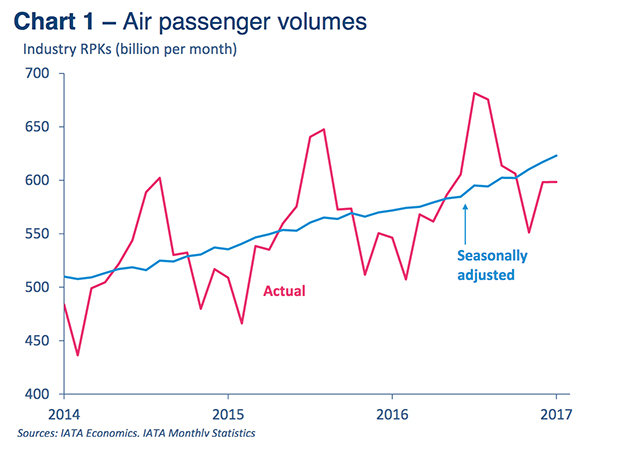
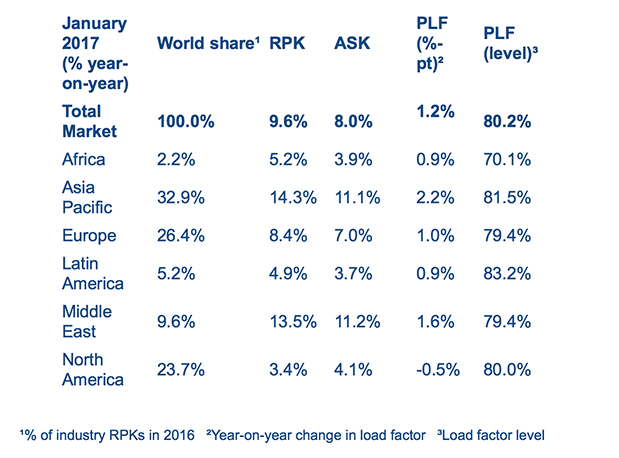
Top IATA-de-juniacThe International Air Transport Association (IATA) has reported that its global passenger volumes for January 2017 rose by 9.6% in the strongest rise recorded in more than five years.


Having said this, these results measured in revenue passenger kilometres (RPKs) and compared with January 2016 did benefit from this January’s Lunar New Year celebrations compared to February in 2016.


Taking this into account, IATA estimates that the holiday-related travel contribution represented up to one-half a percentage point in extra demand growth, while January capacity rose by 8.0%, and the load factor climbed 1.2 percentage points to 80.2%.


VERY STRONG START TO 2017

“2017 is off to a very strong start, with demand at levels not seen since 2011,” said Alexandre de Juniac, IATA’s Director General and CEO. “This is supported by the upturn in the global economic cycle and a return to a more normal environment after the terrorism and political ‘shock’ events seen in early 2016.”


Looking at international passenger markets, IATA notes that January traffic rose by a healthy 9.3% compared to the same period last year, with capacity up by 7.5% and the load factor rising by 1.3 percentage points to 80.3%. Encouragingly, IATA adds that all regions recorded year-over-year increases in demand, with the Middle East and Asia Pacific markets leading the way.


IATA Table 1 Jan 2017

APAC CARRIERS REGISTER +10.9%

The association said: “Asia Pacific carriers recorded an increase of 10.9% compared to January 2016, helped by the impact of Lunar New Year-related travel and solid growth on routes within Asia. Capacity rose 8.9%, pushing up load factor 1.5 percentage points to 81.4%.


“European carriers’ international traffic climbed 8.3% in January compared to the year-ago period against a backdrop of moderate momentum in the Eurozone economy. Capacity rose 6.7% and load factor was up 1.2 percentage points to 80.3%.


“Middle East carriers had the strongest year-over-year demand growth in January at 14.4%. Capacity climbed 11.4% and load factor rose against the year-ago period for a third consecutive month, up 2.1 percentage points to 79.8%.


“North American airlines had the slowest demand growth, with traffic rising 3.2% in January, compared to a year ago. Capacity climbed 3.1%, and load factor was flat at 80.3%. Traffic on the transpacific market has continued to trend upwards but North Atlantic traffic growth has weakened since the middle of 2016, reflecting softer demand on UK-US routes.


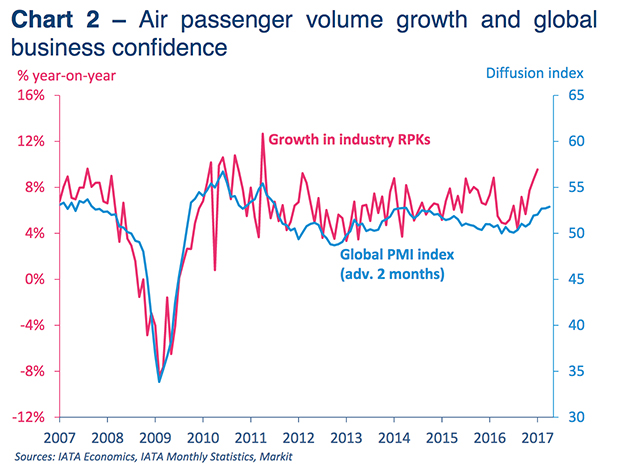
IATA chart 2 Janaury 2017


ENCOURAGING LATAM TRAFFIC +8.2%

“Latin American airlines’ traffic climbed 8.2% in January. Capacity rose 5.7% and load factor increased 1.9 percentage points to 83.7%, highest among the regions. Robust international demand within South America is offsetting weaker demand to North America.


“African airlines saw January traffic rise 5.6% compared to January 2016. This reflects a recovery on the key routes to/from Europe, despite continuing weakness in South Africa and Nigeria. With capacity up 4.5%, load factor rose 0.7 percentage point to 69.9%.”


Turning to domestic markets, IATA said air travel was also very healthy, rising by 9.9% in January year-on-year. Interestingly, all markets – with the exception of Brazil – showed growth, paced by double-digit increases in China, India and Russia. Capacity increased 8.7% and the load factor was 80.1% – up 0.9% percentage points.


January 2017 IATA regional traffic sharesEXPLOSIVE GROWTH IN INDIA AND CHINA

IATA said that India led all other domestic markets for the 22nd month in a row with January growth of 26.6%, ‘marking the 15th consecutive month of 20%-plus annual growth’. IATA added that this growth has been strongly stimulated by strong flight frequencies.


By contrast, China’s domestic traffic growth was also highly impressive at 23.2% compared to January last year with IATA noting that this was the strongest monthly growth recorded since June 2010.


Even though the timing of the Lunar New Year was a factor, IATA says that growth for the most part was due to undistorted robust expansion.


PATA APAC visitor arrivals hit 595m foreign arrivals in 2016

Top Chinese at Lotte World TowerThe Pacific Asia Travel Association (PATA) has released its latest analysis of present and long-term forecasts of international visitor demand for major destinations in the region, which also includes medium-term forecasts through to 2021 covering 39 regional locations.


PATA says that based on existing year-to-date data and its forecasting model for 2016 it is estimating that total inbound ‘foreign’ arrivals to these destinations exceeded 595m in 2016 – representing a 3.4% increase on historic 2015 results.


DRAMATIC 19.6M PASSENGER INCREASE….

Even more dramatic is its estimate that this total represents an annual volume increase of more than 19.6m additional foreign arrivals to all of these destinations last year.


Having said that, PATA points out that the level of growth ‘differs markedly across each of the Asia Pacific regions, depending on the metric used’. In support of this it says that the annual percentage growth rates varied from a high of 6.8% down to 3.2%.
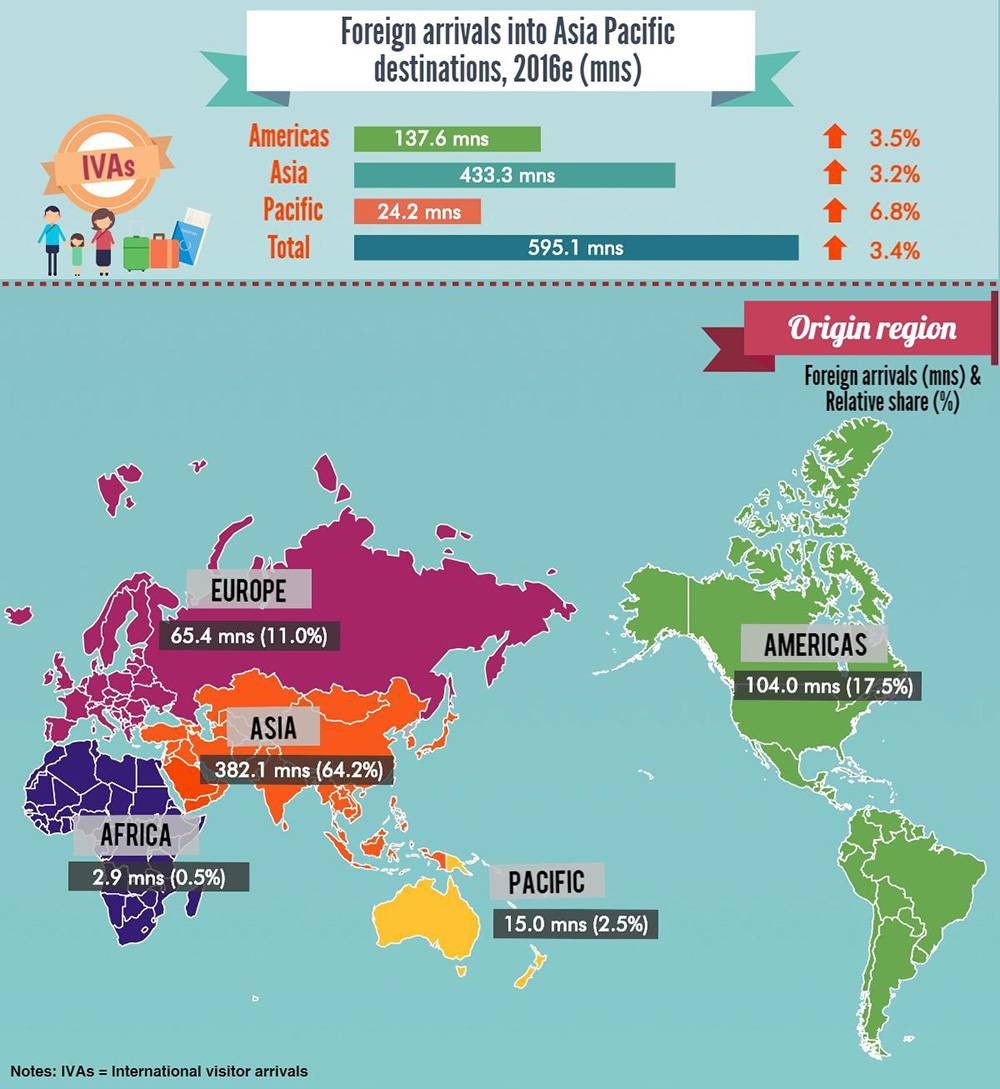
Foreign arrivals into APAC destinations 2016e

PATA said: “The origin market profile was dominated by the Asian source markets in 2016 (64.2% relative share), followed by the Americas (17.5%) and then Europe (11.0%).


“While the Pacific had the strongest annual growth rate as a supplier of foreign arrivals (6.1%), this was off a relatively small absolute base of arrivals; the conversion to an actual increase in volume a little over 861,000.
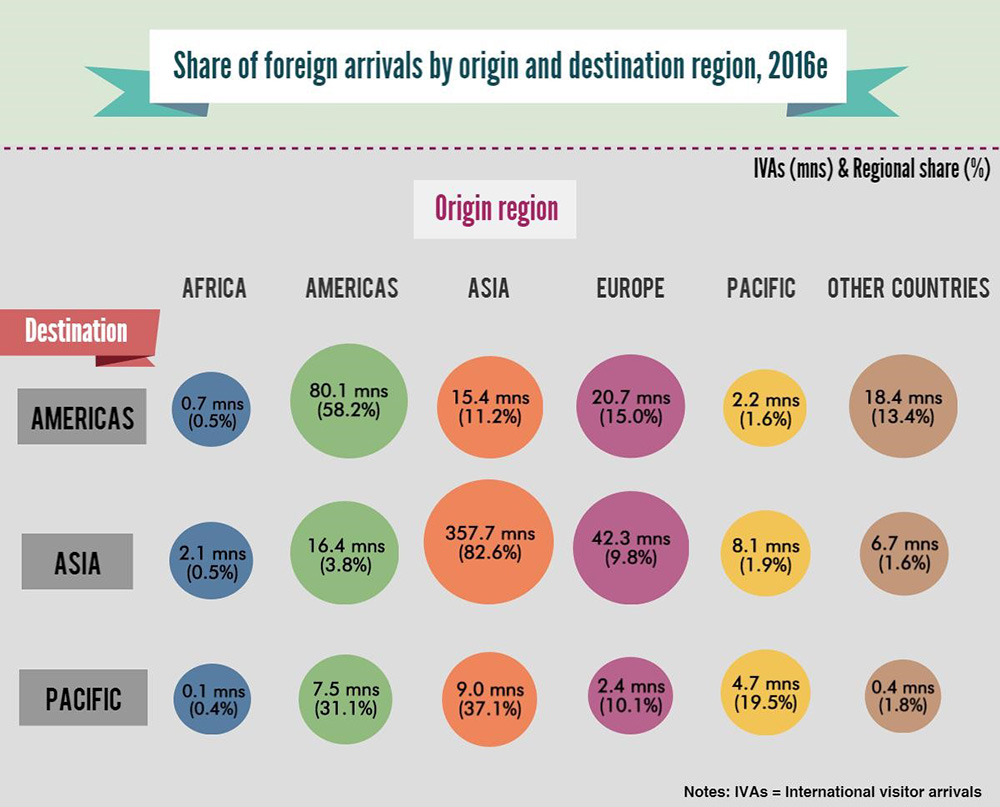
Shae of foreign arrivals by origin and destination 2016

“Asian source markets had both a strong annual growth rate (5.2%) and a large numeric base of arrivals so that the increase in foreign arrivals between 2015 and 2016 equated to more than 19m. This represents 97% of the net gain in additional foreign arrivals between 2015 and 2016.”


PATA adds that there was also a significant variation in the dominant suppliers into each of the Asia Pacific regions, with intra-regional flows accounting for 58% of arrivals into the Americas (Americas to the Americas), and 82.6% of arrivals into Asia (Asia to Asia). It adds that in both cases the intra-regional flows showed the strongest numeric gains in foreign arrivals in 2016, relative to 2015.


ASIA AND THE AMERICAS FUEL THE PACIFIC

Interestingly, PATA adds that the Pacific region was the exception, breaking this intra-regional dominance trend with the majority of foreign arrivals coming from Asia (37.1%), followed by the Americas (31.1%).


Both those origin regions supplied the greatest absolute increase in foreign arrivals into the Pacific in 2016, although the intra-regional gains were not far behind those of the Americas into the Pacific.
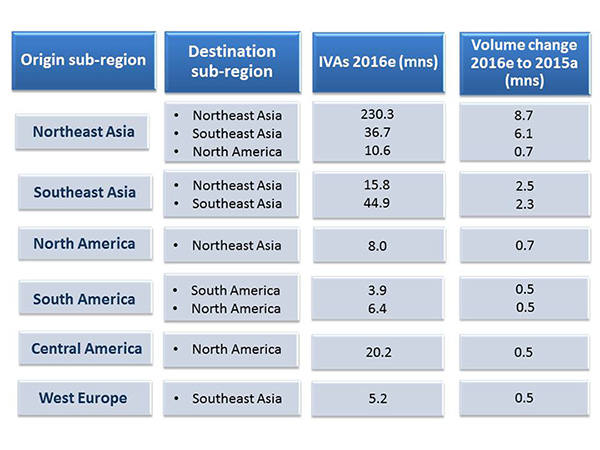
PATA arrivals by region 2016

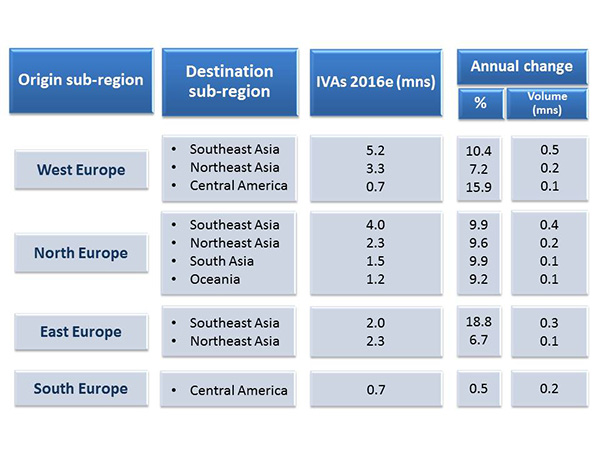
PATA said: “At the sub-regional level it was once again all Asia with intra-regional flows in each of Northeast and Southeast Asia generating significant increases in absolute volume of arrivals between 2015 and 2016 – as well as flows from Northeast Asia into Southeast Asia and vice-versa.


“The European source markets were generally strong into most of the Asia Pacific sub-regions with the obvious exception of West Asia, specifically Turkey.


The strongest European numeric growth came from West, North and East Europe into Southeast Asia, but these increases were only just sufficient to cover the loss in arrivals from Europe into West Asia (-7.331 million).”


EUROPEAN FLOWS TO APAC ‘MARGINAL’

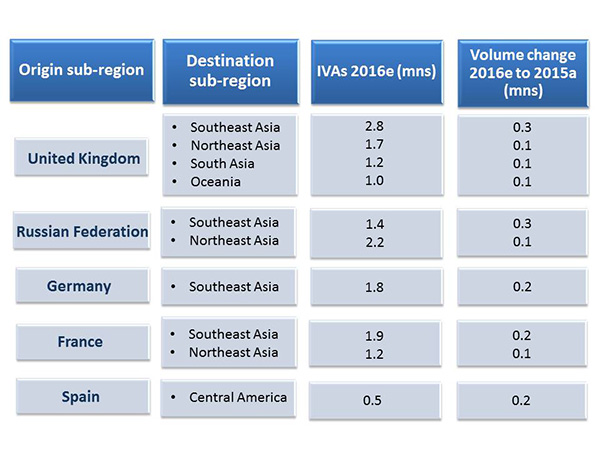
The travel association says that this resulted in the overall flows from Europe into Asia Pacific being marginal for the year, relative to 2015. Meanwhile, the strongest individual European markets in 2016 were the UK and the Russian Federation into Southeast Asia, both of which increased their relative arrivals count into the sub-regional destination by more than a quarter of a million.


“These were followed by Germany, France and Spain which increased substantially their arrivals into Southeast Asia and Central America.


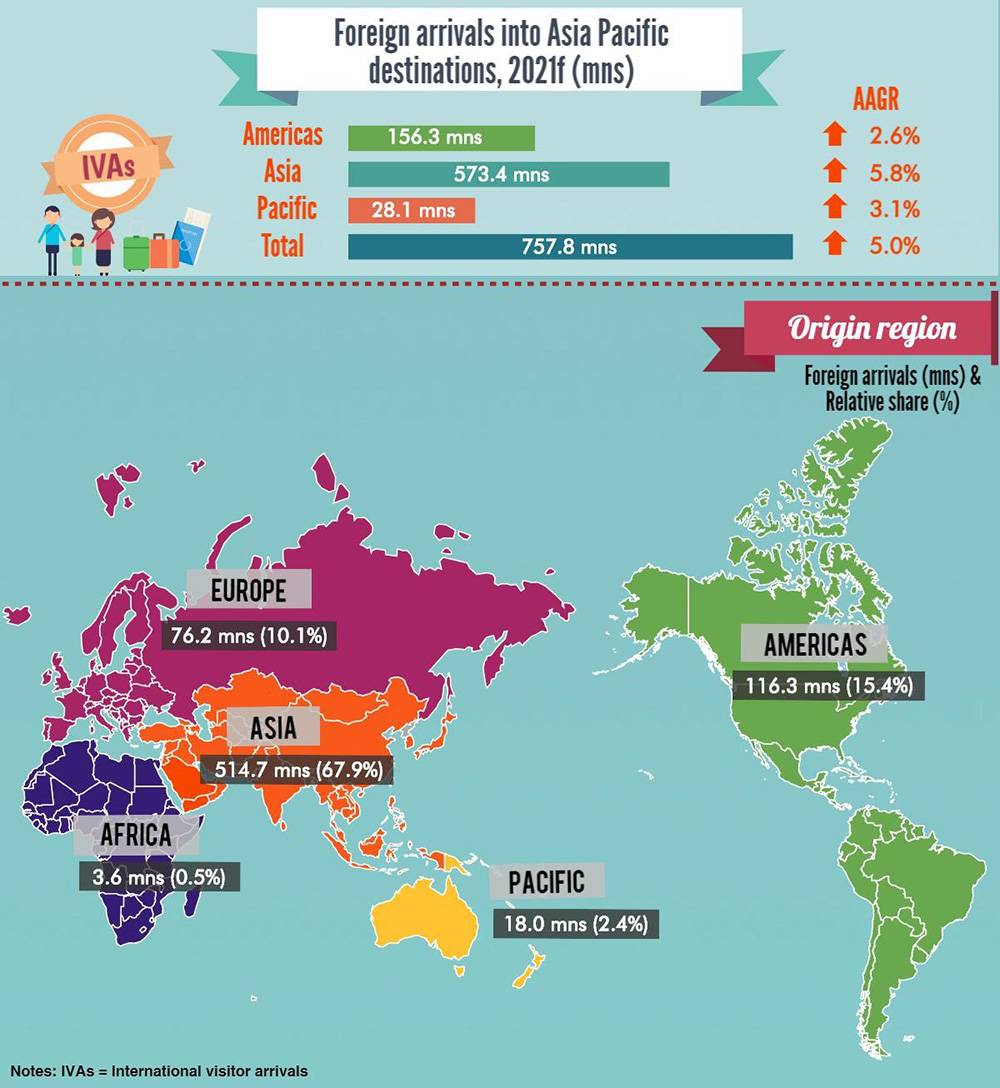
Looking forward over the five-year forecast period to 2021, PATA now expects foreign arrivals into Asia Pacific destinations to grow at an average annual rate of 5%, reaching a combined foreign inbound count of close to 758m.
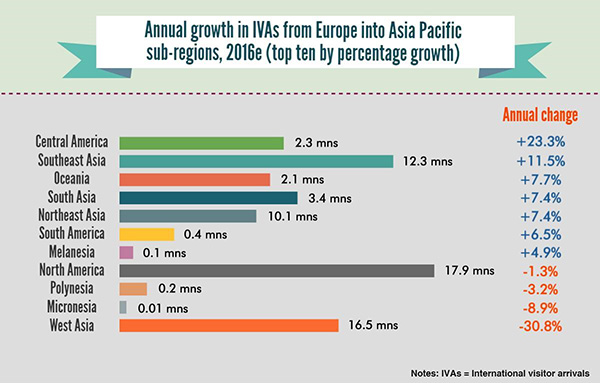
Europe to Asia Pacific 2016

It also believes that by the start of the next decade the Americas will receive 156m foreign arrivals annually, while Asia will receive more than 573m.


By contrast it predicts that the Pacific will receive more than 28m foreign arrivals annually.


PATA said: “The average annual growth rate of five per cent for Asia Pacific destinations is driven largely by the 5.8% average growth rate into Asia, which, by 2021, will account for over three-quarters of all foreign arrivals into the Asia Pacific destinations.


“At this time (2021), Asia will generate more than half a billion of the foreign arrivals into Asia Pacific, constituting more than two-thirds of the total, because of its consistently high average annual growth rate between 2016 and 2021.


AMERICAS AND EUROPE WILL REMAIN ATTRACTIVE

“The Americas and Europe will also be significant generators of foreign arrivals, the former numbering a little under 117m by 2021 and Europe totalling over 76m.


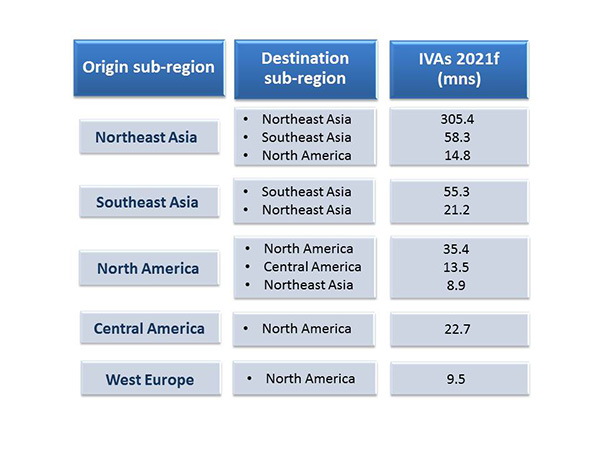
“The intra-regional flows within Northeast and Southeast Asia, as well as the bi-directional flows across these two sub-regions, will continue to dominate the growth pattern in 2021, with the Northeast Asia-to-Northeast Asia flows alone numbering in excess of 300m in that year.”
Europe to Asia 2016More Europe to Asia 2016

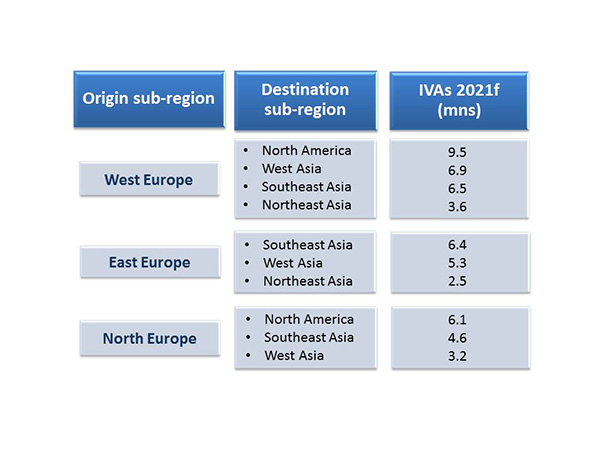
The association says that the origin markets of West, North and East Europe will also grow into the Asia Pacific region over the forecast period, although it expects Western Europe will lead the way and it estimates volume into the Americas of almost 9.5m arrivals in 2021.


West Asia is also expected to see a return to growth in 2021 with West, East and North Europeans showing substantial volumes into that destination in 2021.


(Note: Turkey is the only destination in the West Asia grouping for which PATA says that forecasts are available).


STRONG MOMENTUM PREDICTED

Commenting, Dr. Mario Hardy, PATA CEO said: “The importance of the Asia Pacific region, both as a receiver and a generator of international arrivals has been evident for some time and the momentum certainly appears to be holding over the next five years.


“With the maturing of many Asian source markets, destinations beyond the Asia Pacific region are also being increasingly explored.


However, these destinations need to be ready to deliver a service that the increasingly sophisticated Asian traveller has already experienced in Asia and is now seeking in destinations further afield.”
 

Foreigners into Asia 2021

Foreigners into Asiac 2021 Foreigners into Asia 2021b

MEADFA 2017 to be held in Beirut this November

Sean-Staunton-Meadfa-2016-leadThe Middle East & Africa Duty Free Association (MEADFA) President, Sean Staunton, has confirmed to TRBusiness that its annual conference event will take place in Beirut, Lebanon on 20-21 November 2017.


Staunton could not yet share the name of the venue and said that the organisers are yet to finalise speakers at this stage.


TRBusiness asked him why Beirut had been selected as this year’s host location: “MEADFA covers a wide geographical area across the Middle East and Africa. With this in mind we are conscious to support the industry across our region by rotating the conference location.


“MEADFA is very excited about this year’s location in Beirut. Beirut has always played a significant role in business and commerce across this region. Likewise, the duty free industry is strong and robust in Lebanon.


“We are in the working stages of this years conference and have yet to finalise speakers but will look forward to hosting another interesting MEADFA conference.”


500 ATTEND IN DUBAI

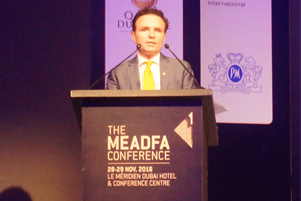
Last year, nearly 500 industry professionals met in Dubai for the 2016 MEADFA conference, ‘underlining the sustained interest in the region and its travellers’, said the association.

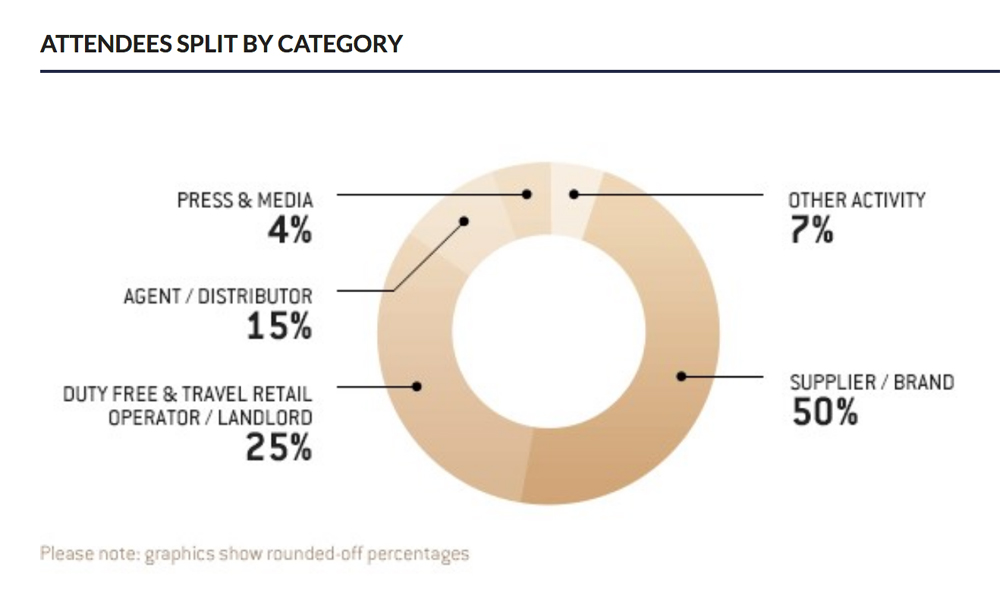
MEADFA-2016-attendees-by-category

This was quite a step up from the 342 recorded in Jordan the year before, but not as high as the number registered in 2014 [570 at the Jumeirah Creekside hotel in Dubai].


Suppliers accounted for around half of the participants, while one in four represented duty free and travel retail operators or landlords. Geographically, delegates based in the EU were the most numerous, marginally ahead of a strong Middle Eastern presence.


MEADFA-2016-attendees-regional

During a welcome address at last year’s conference Staunton revealed that DF&TR sales in the Middle East had declined by -2.6% YTD up to June 2016, whilst sales in Africa had declined by -3.7%. The conference organisers believed that the final delegate count was very positive in light of a particularly challenging trading year for the regions in 2016.

Trump signs new 90-day ban on visitors from six countries

Top John Kelly Homeland Security As expected, US President Donald Trump yesterday authorised a new executive order which effectively prohibits visitors from six predominantly mainly Muslim countries from entering the United States – from the 16 March date of implementation.


The six countries are: Iran, Libya, Somalia, Sudan, Syria and Yemen. In addition, this new order replaces its predecessor which sparked protests at several leading US airports before it was successfully challenged and dismissed by a US federal court.


A major difference between this order and its unsuccessful predecesor is that this ‘new version’ now excludes the ban on visitors from Iraq. The Trump admnistration says this is due to changes in visa qualification procedures that are said to be more stringent than before.


Donald Trump (White House Photo)LEGISLATION WILL STILL FACE OPPOSITION
Having said this, the new executive order is said to be a watered-down version of the previous version with the short delay in implementing apparently designed to allow those en-route – or with confirmed travel plans – to make their journeys without controversy.

The hope is that this will avoid the mayhem that surrounded the immediate days after the previous order was introduced – which caused chaos at US airports.


However, several groups have already vowed to use the legal system to block this new executive order, arguing that it still discriminates against Muslims.

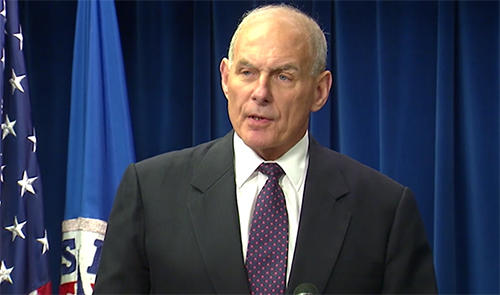
Meanwhile, Secretary of Homeland Security John Kelly told a White House press briefing yesterday that the new order is aimed at stopping ‘enemies’ who he says ‘will exploit our freedoms and generosity to harm us’.


RIGOROUS REVIEW OF VISA PROGRAMME IS PLANNED
In a statement, he said: “The Executive Order signed today by President Trump will make America safer, and address long-overdue concerns about the security of our immigration system.


“We must undertake a rigorous review of our visa and refugee vetting programmes to increase our confidence in the entry decisions we make for visitors and immigrants to the United States. We cannot risk the prospect of malevolent actors using our immigration system to take American lives.


John Kelly Homeland Security

Secretary of Homeland Security John Kelly briefs the press in Washington yesterday.

“The Executive Order signed today is prospective in nature – applying only to foreign nationals outside of the United States who do not have a valid visa. It is important to note that nothing in this executive order affects current lawful permanent residents or persons with current authorization to enter our country.


“If you have a current valid visa to travel, we welcome you. But unregulated, unvetted travel is not a universal privilege, especially when national security is at stake.
“The Department of Homeland Security has worked closely with the Department of Justice, the Department of State, and the White House to create an executive order that addresses our information concerns while protecting the homeland and our citizens.”

French air traffic strike leads to 1,000+ flight cancellations

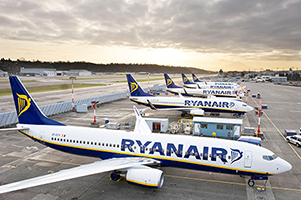
Top ryanair aircraftMore than 1,000 flights serving French air space have been cancelled following the commencement of a five-day strike by French air traffic controllers in the Brest and Bordeaux regions.


The severity of the strike is expected to intensify today as air traffic controllers from the south of France also join the strike which is set to run right through to the end of Friday this week (10 March).


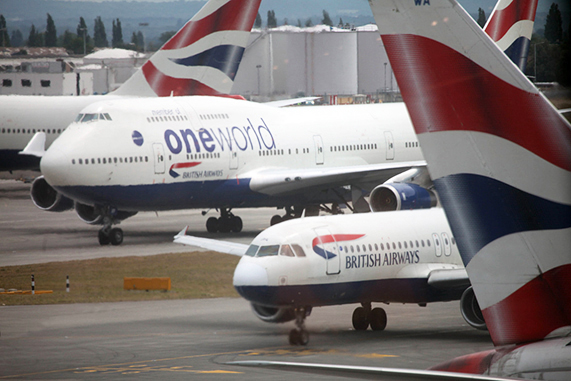
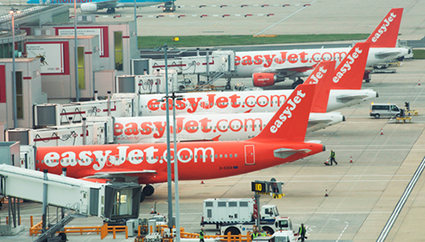
British Airways (80 cancellations), Ryanair (45), easyJet (38) and many other airlines cancelled more than 150 flights yesterday and it is expected to be a similar story for the next four days.


SEVERAL AIRLINES SEVERELY AFFECTED

Quite separately Air France has been particularly badly affected, although many airlines using French air space to reach other destinations are also being severely disrupted by cancellations, including services to airports in Spain, Italy and Switzerland.


BRITISH AIRWAYS taxi Heathrow

British Airways services have been severely impacted.

In a statement, Air France said: “Following the call for strike action issued by a union for French air traffic controllers from Monday 6 to Friday 10 March 2017, the French Civil Aviation Authority (DGAC) has asked airlines to reduce their flight schedule between west and south of France, the Iberian Peninsula, Italy and North Africa. Our flight schedule will be disrupted all week.”


The strike has been called by disgruntled French air traffic controllers who are demanding the same pay levels and working conditions as employees in similar positions in other European countries.


Europe’s largest airline association, Airlines for Europe (A4E), is predicting a week of disruption ahead following the request by French air traffic controllers that all airlines reduce flight numbers in France by 25%.


ATC STRIKES COST EU $12.7BN SINCE 2010…

Commenting on this latest action, Thomas Reynaert, Managing Director of A4E said: “Already during the first weeks of 2017 European travellers become victims of yet another ATC strike – unbelievably, not only for a day but for a whole week.


001 easyjet at gatwick

European airport shops always feel the cold chill whenever easyJet or Ryanair’s services are severely disrupted and this week is no different.

“A4E urges the Commission to protect the rights of European travellers and work together with Member States, Air Navigation Service Providers, unions and other stakeholders to minimise the impact on passengers.


“We cannot allow a small group of Europe’s 15,000 air traffic controllers restricting the rights of millions of European travellers. Following our Call for Action last year we have seen a positive reaction by some unions. It is now the right moment to build on that and minimise the impact of strike actions without questioning the individual right of workers to take industrial action.”


Airlines for Europe adds that during the 2010-16 period there were 217 ATC strike days in the EU – equivalent to one disrupted day every nine days and since 2010 it estimates the total impact of ATC strikes have cost the EU economy €12bn ($12.7bn).