Archives

Julie Lassaigne is ETRC’s new Deputy Secretary General

Julie-Lassaigne-ETRC-lead

Lassaigne’s appointment comes as ETRC confronts rising challenges and opportunities in travel retail.

The European Travel Retail Confederation (ETRC) has announced Julie Lassaigne as its new Deputy Secretary General.


She was formerly Head of Government and Industry Affairs at the industry association representing the interests of travel retail and duty free in Europe.


Since joining ETRC in 2012, Lassaigne has worked closely with ETRC Secretary General Keith Spinks to address key challenges affecting the channel, including the EU legislation on food information to consumers, alcohol policy, air passenger rights and aviation security.


REPRESENTING THE INDUSTRY

Alongside managing relations with ETRC members and organising its annual business forum, Lassaigne has also represented the duty free and travel retail sector on some important EU committees.


A French national based in Brussels, Lassaigne holds a Masters in Political Science and Communication of the Institute of Political Science of Bordeux, and has experience working with clients in the aviation, food and sport sectors.


ETRC President Sarah Branquinho said: “This is a well deserved recognition of Julie’s contribution to ETRC and comes at a crucial time as ETRC strengthens its capabilities to enable it to meet an ever growing number of challenges and opportunities, including the impact on the industry of Brexit.”

President Trump ‘travel ban’ rejected by US appeal court

Donal Trump official White House portraitUS President Donald Trump has suffered another defeat in his battle to have a 90-day visitor ban restored on visitors to the United States from mostly Muslim countries.


The US Justice Department representing the White House and President Trump yesterday failed to convince the Ninth US Circuit Court of Appeals that the President was within his rights to unilaterally impose the ban in late January.


The appeal court ruled against the motion by a unanimous 3-0 vote, basing its decision on its judgment that the threat to the security of the United States was unproven. They also refrained from getting into any constitutional arguments.


TRUMP MAY NOW GO TO THE SUPREME COURT….

This led to an angry tweeted Twitter response (in capital letters) from Trump yesterday afternoon, which read: “SEE YOU IN COURT, THE SECURITY OF OUR NATION IS AT STAKE!”


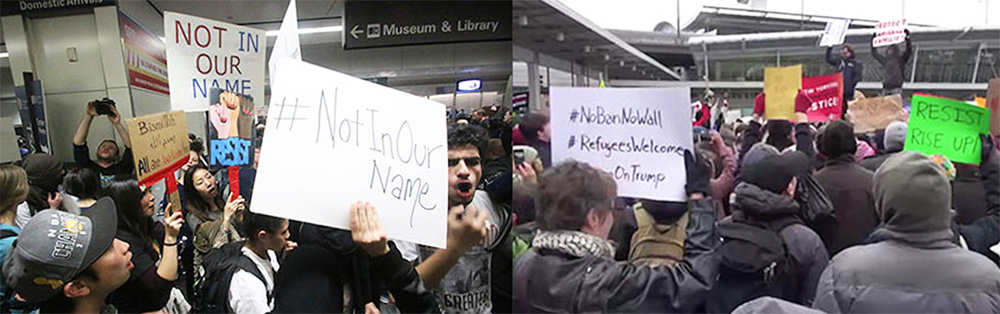
As reported, Trump’s original attempt to impose the ban led to huge demonstrations across the US in several prominent cities and US airports, which included Washington, New York, Los Angeles, Chicago, Atlanta, Seattle, Dallas and others. [Click here for full details: https://www.trbusiness.com/regional-news/the-americas/us-airports-caught-in-firing-line-over-trump-extreme-vetting/114653]


Anti Trump protests

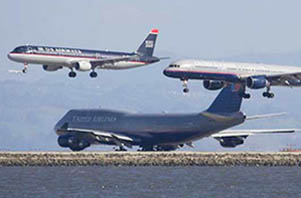
(Left) Mass protests were organised at San Francisco International Airport on 29 January after similar gridlock brought parts of New York JFK Airport to a grinding halt (right) just two days earlier.


Following this latest defeat, the Trump administration is now expected to take the case to the US Supreme Court in a final attempt to try to get its ban reinstated, although there may be some last redress which is still possible through lower courts.


Meanwhile, there is now evidence that Trump’s attempted ban has had a detrimental effect on other visitors to the United States.


US President Donald Trump signing the Protecting the Nation from Foreign Terrorist Entry into the United States order body

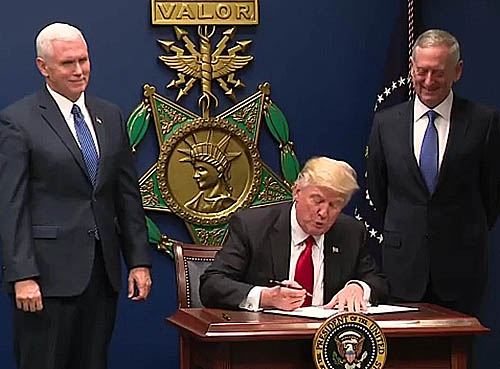
United States President Donald Trump signs the executive order to introduce the ban on 27 January. This was subsequently overturned within a week.

‘OTHER VISITORS’ NOW PUT OFF VISITING THE US…

As reported by TRBusiness, findings from travel intelligence analyst ForwardKeys indicate that after the initial travel ban was first imposed (27 January) net bookings issued from Iraq, Syria, Iran, Libya, Somalia, Sudan and Yemen between 28 January and 4 February fell by 80% on the same period last year.


More interestingly, ForwardKeys also looked at wider international trends in bookings to the US and discovered a 6.5% negative variation compared with the equivalent eight-day period the year before.


The travel retail analyst said: “It suggests the turmoil over his ruling is putting off people travelling to the US from many regions of the world, beyond the Middle East.”


[For more details on how international travel bookings to the US have been impacted since this episode unfolded, click here: https://www.trbusiness.com/regional-news/international/trump-ban-deters-travellers-to-us-beyond-middle-east/115155].


APTRA and Hume Brophy to team up on advocacy issues

Top APTRAThe Asia Pacific Travel Retail Association (APTRA) has announced today that it is to work closely with international communications agency Hume Brophy on important advocacy issues within the Asia Pacific region.


This follows a long period of proven expertise demonstrated by Hume Brophy, which has an excellent reputation in both advising and representing large global companies and industries working in highly-regulated sectors – including transport, financial services and technology.


The company also works closely with governments, journalists, the wider media and investors and has proved invaluable in its ongoing work and lobbying on behalf of the duty free and travel retail business – on a global basis in regard to sensitive issues, as well as working alongside the European Travel Retail Confederation (ETRC).


ADDRESSING THE MAJOR ISSUES…

Commenting on this important development, Jaya Singh, President of APTRA said: “APTRA was founded to nurture and protect the duty free and travel retail industry in the Asia Pacific region.


Jaya Singh big APTRA.

Jaya Singh, President of APTRA.

“A vital element of that work is to address – on behalf of our members and hand in hand with our sister organisations – major issues which will have a negative impact on the industry, particularly those which involve detailed liaison with regulatory authorities. In this regard, we will be able to draw on the considerable experience of Hume Brophy.


“The members of APTRA have clearly stated that they endorse investment in advocacy to address both immediate and future concerns as part of a long-term strategy and we welcome this collaboration which will help us to hone our arguments and refine our approach.”


BUILDING TRUST AND RELATIONSHIPS

As part of this new strategy APTRA will be looking to its new advocacy team to build relationships with Asian regional airport managements at industry events. It will also lobby airports in a new ambassadorial role to help them understand that duty free is a vital revenue source for airports, while also providing support to APTRA as the industry’s regional voice in discussions with legislators.


As part of this, the team will also be able to draw upon the Economic Impact Report for Asia Pacific, which the Duty Free World Council will be compiling in partnership with APTRA. This is expected to become a valuable source of the important facts and figures, which will be needed to reinforce and underpin quality dialogue with regulators.


John Hume, Hume Brophy

John Hume, Hume Brophy.

The industry and legislators will also be addressed on the unique nature of the duty free and travel retail market and the differences between domestic and duty free retail and why the latter is not normally subject to local laws and regulations.


NOW ABLE TO DRAW FAST ON LOCAL RESOURCES…

The new advocacy will also produce policy papers for the industry and help APTRA with the quality co-ordination of the working groups within the various core product categories.


Both parties have also agreed that they will also work in close proximity to each other and the markets they serves, with Hume Brophy set to support APTRA from its Asia Pacific hub in Singapore. As such, it will be able to routinely draw upon the full suite of the firm’s established services for clients in the region.


In addition, Hume Brophy will also be able to call upon its considerable office resources, which are also located in London, Brussels, Dublin, Frankfurt and Paris, as well as its ‘established network of agency partnerships’ in New York and across Europe and Asia.


Trump ban deters travellers to US ‘beyond Middle East’

ForwardKeys-Trump-ban-leadPresident Donald Trump’s ban on nationals from seven mainly Muslim countries entering the USA appears to be deterring travellers from other countries around the world too, according to data from ForwardKeys.


Findings from the travel intelligence analyst show that after Mr Trump’s initial travel ban (imposed on 27 January) net bookings issued from Iraq, Syria, Iran, Libya, Somalia, Sudan and Yemen between 28 January and 4 February were down 80% on the same period last year.


More interestingly, ForwardKeys also looked at wider international trends in bookings to the US and discovered a 6.5% negative variation compared with the equivalent eight-day period the year before.


“It suggests the turmoil over his ruling is putting off people travelling to the US from many regions of the world, beyond the Middle East,” says ForwardKeys. [It is important to note that the analysis excludes China and Hong Kong because of the seasonal effect due to the timing of Chinese New Year.]


BOOKINGS DOWN FROM EUROPE

Over the aforementioned eight-day period, bookings from Northern Europe were down 6.6%; from Western Europe -13.6% and from Southern Europe -2.9%. Travel from the Middle East was down 37.5% and from Asia Pacific -14%.


“If one analyses total outbound bookings from each of those regions to provide a benchmark, in every case the USA has lost market share,” adds ForwardKeys.


ForwardKeys-Trump-Ban-graph

Contrary to this trend, bookings from Central & Eastern Europe and The Americas were up 15.8% and 2.3% respectively.


“However, when one looks again at outbound travel from those two regions of the world, total travel was up substantially; +12% from Central/Eastern Europe and +4.8% from the Americas, so the increases in travel to the USA look less impressive in this context,” clarifies ForwardKeys.


DOWN -38% IN MID-EAST

For the Middle East as a whole – beyond the banned countries – during the last year bookings to the USA were already down 8.8%, but bookings issued from 28 January to 4 February fell a much more dramatic 38%.


“The eight-day period coinciding with the travel ban is the first time since before the presidential election in early November that there has been a consistently long run of negative variations compared with the equivalent period the year before,” concludes ForwardKeys. “For reference, inbound bookings to the USA for the whole of the past year were down 0.4%.”


Olivier Jager, CEO, ForwardKeys, said: “The data forces a compelling conclusion that Donald Trump’s travel ban immediately caused a significant drop in bookings to the USA and an immediate impact on future travel.


“As inbound travel is an export industry (it earns foreign currency), this is not good news for the US economy. However, one must bear in mind that this is just an eight-day snapshot from when the ban was put in place and we will continue to monitor what happens as the political situation develops.”

Ryanair may review carry-on bag policy again this year

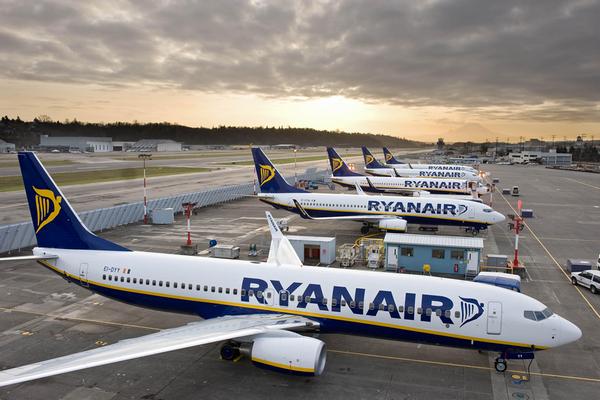
Ryanair-onboard-leadRyanair, Europe’s No. 1 airline, has reported that Q3 (FY2017) profits fell 8% to €95m (US$101m), prompting CEO Michael O’Leary and Finance Director Neil Sorahan to consider reviewing their carry-on bag allowance once again.


Ryanair has told TRBusiness that the airline has noticed that passengers are bringing ‘larger than permitted bags onboard’, which can cause delays, and the policy – currently permitting two free carry-on bags – ‘may be reviewed should this practice continue.’


On 6 February Sorahan spoke to BBC Radio 5 Live about the company’s results and mentioned that the airline had been a ‘victim of its own niceness’ in relation to the policy it introduced in 2015 [stretching the allowance to two free carry-on bags].


Passengers and the duty free industry positively received the amendment back in 2015, which meant that passengers could thereafter bring their airport shopping onboard as part of their new allowance.


However, Sorahan said earlier this week that passengers have been ‘abusing’ the policy and taking on board bags ‘up to three times the permissible size’.


“Customers are permitted to bring a standard cabin bag and a smaller bag onboard,” Ryanair confirmed to TRBusiness.

Inflight-sales-Ryanair-FY2016

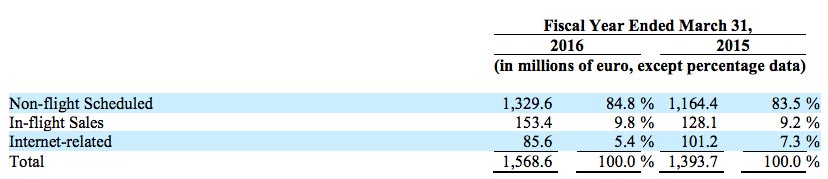
Interestingly, Ryanair posted growth in inflight sales of 9.8% to €153.4m (including food, beverage and merchandise sold onboard), in FY2016.


“We’ve noticed some customers are bringing larger than permitted bags onboard, which can cause delays, and the policy may be reviewed should this practice continue.”


Back in November 2016 at the Meadfa conference in Dubai, ETRC President Sarah Branquinho vehemently pleaded with airports to address the problem of carry-on restrictions in their agreements with air carriers.


“Things are getting confused between airlines driving ancillary revenue and common sense. And of course there’s a lot of confusion for travellers because, depending on each airline you fly with or even on which route, the instructions dictating what to do with carry-on baggage can be very different. We’re looking to create legislation in the European Union, which will allow passengers to bring their shopping onboard.”


ONBOARD SALES DRIVE RYANAIR’S ANCILLARY REVENUE

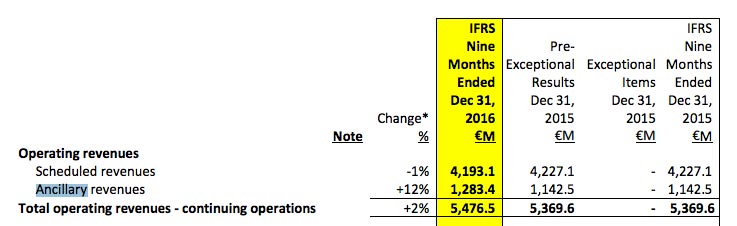
Interestingly, although total profits fell 8%, Ryanair’s ancillary revenues, which comprise non-flight scheduled operations, inflight sales and Internet-related services increased +15% to €394.5m (US$421.4M) in the third quarter of FY2017.


This was said to be driven by a ‘solid performance’ in reserved seating, priority boarding, onboard sales and car hire offset by lower travel insurance and hotels penetration.


Ryanair-nine-months-FY2017-table

“As previously guided, our fares this winter have fallen sharply as Ryanair continues to grow traffic and load factors strongly in many European markets,” said Michael O’Leary in a statement accompanying the Q3 results.


“These falling yields were exacerbated by the sharp decline in Sterling following the Brexit vote. Ryanair responded to this weaker environment by continuing to improve our “Always Getting Better” (AGB) customer experience, cutting costs, and stimulating demand through lower fares which has seen load factors jump to record levels.”


Ancillary revenues in the nine-month up to 31 December 2016 reached €1,283.4m, +12%.


INFLIGHT SALES UP 19.8% TO $163.8M

Ryanair did not provide a breakdown of its inflight sales revenues for quarterly reports, but did release FY2016 figures last year.


TRBusiness can reveal that revenue from inflight sales – including sales of beverages, food and merchandise – increased 19.8%, to €153.4m (US$163.8M) in the 2016 fiscal year, up from €128.1m in the 2015 fiscal year.


However, revenues from Internet-related services, primarily commissions received from products sold on Ryanair.com or linked websites, decreased 15.4%, from €101.2m in the 2015 fiscal year to €85.6 million in the 2016 fiscal year.

TFWA China sets out new Guangzhou programme

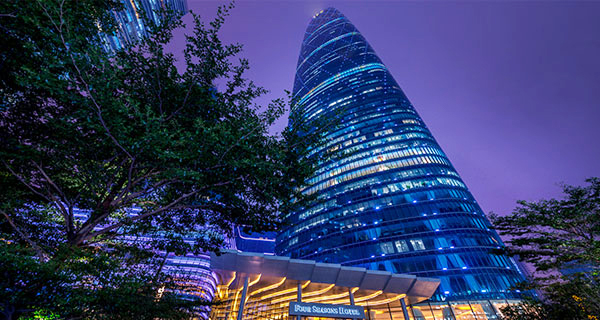
Top Guangzhou HotelTFWA has published the conference programme for its bi-annual TFWA China’s Century Conference (Guangzhou, 7-9 March 2017) due to be held at the Four Seasons Hotel in the Pearl River New City district.


This year’s theme will focus on the rise of ‘domestic’ duty free and the Chinese passenger preference for new destinations, moving on from the last Shanghai conference’s focus on ‘conspicuous consumption and ‘new’ leadership economic reforms in March 2015.


TFWA will also be hoping for a similar attendance at this year’s event, following on from the 400 delegates who attended the very worthy Shanghai event.


HOUSEKEEPING….

This year’s conference starts with registration between 14.00 to 18.00, followed by the traditional welcoming cocktail between 19.00-21.30, before the event itself opens on Wednesday 8 March with welcomes from TFWA moderators John Rimmer and Trevor Lai, TFWA President Erik Juul-Mortensen and APTRA President Jaya Singh.


Delegates will then be formally welcomed by Guangzhou Baiyun International Airport Co. Ltd Président Qiu Jiachen (the official host) before the first presentation – ‘Embracing change, unlocking potential’ – by China Duty Free Group’s new President Charles Chen, who will present his vision of the future market.
 

Four Seasons Hotel in Guangzhou,jpg

The luxurious Four Seasons Hotel in Guangzhou is the conference venue for this year’s leading Chinese conference event,jpg

CDFG VISION UNVEILED…

TFWA says this presentation from China’s market leading duty free operation comes at ‘a time of significant change in the Chinese duty free & travel retail market’.


This includes the extension of arrivals duty free at airports and land border points, plus the expansion of offshore duty free and new changes designed to stimulate spending by travellers within China itself.


This will then be followed by an address entitled ‘Reimagining travel retail in an age of individualisation’ from DFS Group Chairman & CEO Philippe Schaus.


He will explain how DFS is adapting its retail strategy ‘to better cater to an increasingly sophisticated clientele with changing tastes, behaviour and expectations’.


SO WHO’S READY FOR A BIT OF DISRUPTION…?

The next presentation from Lagardère Travel Retail Asia Pacific COO Emmanuel de Place promises to explore the emerging challenges to established forms of retail, and will ask the question whether the duty free & travel retail industry is ready for change.


Entitled, ‘Preparing for disruption: what’s next, and are we ready for it?’ this will examine how new business models (such as Alibaba, AirBnB and Uber) have changed shopping, booking holidays and travel in the last few years.


Erik Juul-Mortensen

TFWA President Erik Juul-Mortensen: still driving the association with positive dedication.

It will also ask the key question of how prepared the industry is for disruptive changes as witnessed in the marketplace alongside emerging challenges to established forms of retail.


The final session of the first morning will then take on the form of a panel discussion which will look at the recent fall in luxury goods sales amongst Chinese consumers and ask whether this ‘a temporary blip, or a durable trend?’


Questions promised to be posed include the extent to which perceptions of high-end brands have changed and is a fundamental change of approach required?


On duty for this discussion will be DFS Executive Vice President Strategy and Market Development Jim Beighley, Bally CEO Frédéric de Narp, Fortune Character Institute Executive Director Tina Zhou, as well as Xu Dongsheng, Managing Director of Fiyta, China’s leading watchmaker and distributor.


MEET THE WORLD’S LARGEST MIDDLE CLASS…

The next session (following the lunch break) will take a different turn, with a presentation from Helen Wang, author of the award-winning book The Chinese Dream: The Rise of the World’s Largest Middle Class and What It Means to You.

 

Jaya Singh President, APTRA

Jaya Singh, President of APTRA has helped to pull the Asia Pacific industry closer together with the help of TFWA in recent years.

Wang is described as ‘one of the world’s foremost experts on the emergence of China’s middle class, and the development of its spending power’. As such, she will explore how the speed of adoption of new trends and ways to consume are influencing spending behaviour – and also how brands and retailers can adapt their approaches.


A ‘Chinese Consumer Forum’ will then form the basis of the next session, which will explore how retailers, brands and landlords both outside and within China are catering to the Chinese traveller, looking at branding, marketing, promotions, online communication and other new initiatives.


This will feature contributions from Amsterdam Airport Schiphol Commercial Services Director Anne-Marie Zuidweg, Lagardère Travel Retail CEO Greater China, Eudes Fabre plus Luxottica Head of Global Channels Francis Gros and, Managing Director BBDO and Proximity Shanghai, Sharlene Wu.


M1ND-SET EXCLUSIVE ON EVOLVING RETAIL IN CHINA

Last but not least, day one will then wind up with a presentation entitled ‘China beyond Tier 1’, which will examine how shopping behaviour is evolving amongst Chinese travellers and whether it is necessary to look beyond the country’s Tier 1 cities towards the aspirations of consumers in China’s fast-growing provinces.


As part of this, m1nd-set Founder & CEO Dr Peter Mohn will present a study commissioned by APTRA, which is aimed at providing a better understanding of the dynamics shaping today’s Chinese travel retail market. Exclusive highlights of this study will be presented by Mohn in a session which will be moderated by APTRA Executive Officer Michael Barrett.

 

Lai and Rimmer

TFWA moderators John Rimmer and Trevor Lai make a good double act, asking probinq questions from a good knowledge base.

The remainder of the first day will then cover networking and ONE2ONE meetings between 16:30 to 18:30 before delegates are invited to the Gala Dinner function in the Onyx Ballroom at the Four Seasons Hotel.


After more networking and ONE2ONE meetings between 08.00 and 10.00 moderators Rimmer and Lai will welcome delegates back into the conference to hear the first session of the day, entitled ’Disrupting China’


This will look at the influence of the ’new wave of young entrepreneurs’ in China against the call from Premier Li Keqiang for ‘mass entrepreneurship and innovation’. This presentation will come from Dr Edward Tse, a leading business consultant and the author of ‘China’s Disruptors’.


DEDICATED AIRLINE RETAIL PERSPECTIVE

TFWA says this explores the rise of entrepreneurship in China and how it is changing both behaviour and modes of consumption among the country’s citizens.


This will then be followed by an important airline perspective with China Southern Airlines’ Chief Marketing Officer Guo Zhiqiang. China Southern is Asia’s biggest airline in both fleet size and the number of passengers carried and this session will examine how it is tailoring its passenger services for a changing clientele and the role that inflight retail can play in revenue generation.


It is then the turn of the event host – Guangzhou Baiyun International Airport Co – to present its ‘Guangzhou Baiyun: open to the world’ story, where it will unveil its ongoing ambitious expansion plan for its new Terminal 2 facility, which is scheduled to open in 2018.


NEW COMMERCIAL OPPORTUNITIES

This will look at the significant new investment in inbound tourism and how this is expected to translate into new commercial opportunities for both brands and retailers. Senior directors of the airport operating company Guangzhou Baiyun International Airport Co. Ltd, Guangzhou Aerotropolis Development District, plus Tourism Administration of Guangzhou Director General Liu Yumei will all participate in this session.


Charles Chen presenting at the original China's Century Conference in Beijing in 2013.

Recently promoted to President of the China Duty Free Group, Charles Chen seen presenting here at the TFWA’s original China’s Century Conference in Beijing back in 2013.

The pre-lunch session will then feature a presentation entitled ‘Travel retail under siege?’ from King Power Group (Hong Kong) Managing Director Travel Retail, Sunil Tuli.


This will study the challenges posed by a duty free and travel retail industry outside of China which is experiencing both a period of traffic growth and sales decline, with the influence of e-commerce ‘widely held to be one of the factors behind the fall in spend per head’.


As one of the pioneers of the Chinese travel retail market, King Power’s Tuli will offer his perspective on this scenario and look at how travel retailers respond.


The first post-lunch presentation will then focus on the significant investment being made in China’s tourism industry by the government aimed at attracting foreign visitors into the country and also encouraging domestic travel by Chinese citizens.


DEDICATED CHINA CRUISE MARKET SESSION

Addressing these subjects will be Dr Dai Bin, the President of the China Tourism Academy and an acknowledged expert on the development of Chinese inbound and outbound travel. He will then be followed by a presentation entitled ‘China’s cruise market sets sail, featuring Mike Feely, Vice President of research agency Horizon Consumer Science and Starboard Cruise Asia Vice President Emily Wong, representing the world’s leading cruise concessionaire.


Feeley will reveal highlights of a TFWA-sponsored study into the cruise market in East Asia, while Wong will address the opportunities alongside information from the China Cruise & Yacht Industry Association showing that the volume of inbound and outbound passengers calling at Chinese ports has increased more than 50-fold since 2006.
 

Philippe Schaus, CEO DFS Group

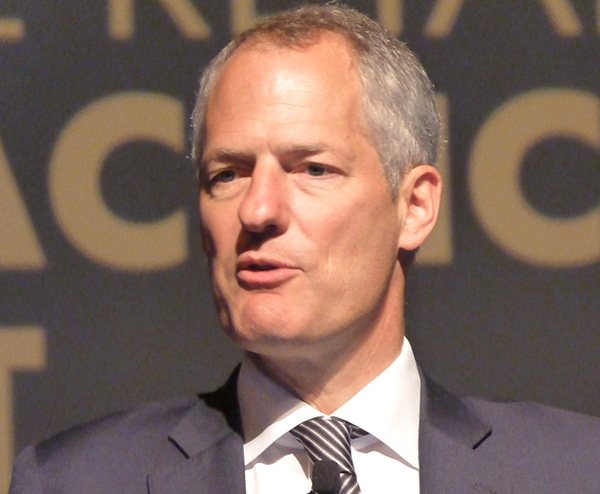
‘Reimagining travel retail in an age of individualisation’ is the address scheduled to be given by DFS Group’s Chairman & CEO Philippe Schaus.

‘Airports and e-commerce’ will then comprise the next session, featuring Xiamen Airport, which is not only one of China’s fastest-growing, but also a pioneer in harnessing technology to drive commercial revenues.


ONLINE & MOBILE TECHNOLOGY

As such, Han Tao, General Manager of the airport’s Shouli E-Commerce Co will explain how the airport is managing to gain new customers through its innovative use of online and mobile technology.


Last, but not least, will be a session entitled ‘Artificial intelligence, virtual reality: the future for retail’ and this will look at how augmented and virtual reality may revolutionise retailing – both in China and beyond?


It will also pose the question whether AI is the future of brand marketing? This session will be led by Alvin Wang Graylin who is described as ’one of China’s serial entrepreneurs, with over 20 years of business management experience in the technology industry, including 15 years in Greater China’.


His address will look at how technology developments are apparently ‘changing the rules of customer engagement in China’, with implications for all businesses.


The conference will then close with the traditional thanks and round-up remarks by TFWA President Erik Juul-Mortensen.


Luke Barras-Hill appointed TRBusiness Deputy Editor

Luke-Barras-Hill-leadTRBusiness is delighted to announce that it has appointed Luke Barras-Hill as Deputy Editor with effect from today.
 

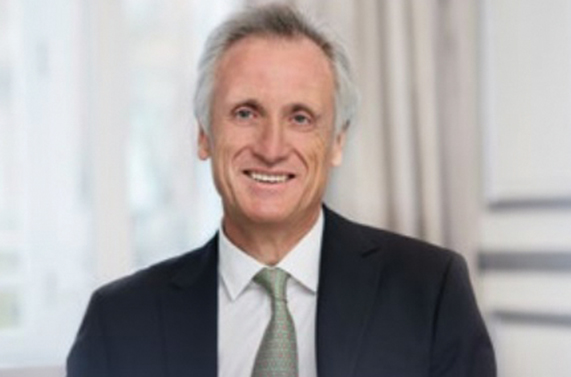
With more than seven years’ journalistic experience, Barras-Hill has held editorial positions across a variety of B2B publications covering the international luxury goods markets, in addition to public realm and built environment sectors.


Most recently, he was Managing Editor of African Review of Business Technology. Here he was responsible for overseeing strategic content delivery for the continent’s leading technical magazine dedicated to business, finance, construction, power and mining.


Barras-Hill previously served as Business and Finance Editor and Acting Editor for Frontier magazine, playing a pivotal role in enhancing its business coverage across all channels, in addition to re-launching Frontier Buyers’ Guide (formerly Frontier Brands) and co-hosting the Frontier Awards.


He has a BA (Hons) in History and Anthropology and a NCTJ preliminary certificate in newspaper journalism.


TIME OF PROFOUND CHANGE FOR THE INDUSTRY…

He will report to Managing Editor Charlotte Turner. Both Barras-Hill and Turner report to Editorial Director Doug Newhouse.


“I’m delighted to be joining TRBusiness and excited to be re-entering travel retail at a time of profound change in the global macroeconomic landscape, which continues to affect travel habits, spending and competition,” commented Barras-Hill.


“Alongside contributing to TRBusiness’ authoritative, timely and hard-hitting reporting, I look forward to reigniting friendships, forging new contacts, and helping support the magazine’s strong industry engagement, to ensure TRBusiness remains the indispensable source of market intelligence for travel retail.”


Editorial Director Doug Newhouse commented: “The quality of Luke’s writing and reporting is impressive and he clearly has integrity which is highly valued at TRBusiness. I would like to welcome him to the team where I am confident he will make an important contribution.”


Managing Editor Charlotte Turner said: “I’m very much looking forward to welcoming Luke back into travel retail; an industry for which he has a strong passion and in-depth knowledge. Having known him for several years now I am sure he will be a fantastic asset to the company and a great addition to our experienced team.”


Luke Barras-Hill can be contacted at the following:

[email protected]

Office Tel: +44 (0)207 6102782

Skype: LukeBH

US Federal court refuses Trump travel ban appeal

Donal Trump official White House portrait

US President Donald Trump [Source: official White House portrait].

The US Federal Appeals Court has upheld Federal Judge James Robart’s suspension of the Trump administration’s travel ban last Friday, so maintaining the ongoing rights of nationals from seven Muslim countries to enter the United States.


The court rejected the US Government application last night, alongside the White House’s submission that only the US President should be able to decide who can – and cannot – enter the US when it comes to matters of national security.


A further review of Judge Robart’s ruling is now expected on Monday (6 February) when legal arguments for and against the ban are expected to be heard. If the government’s appeal for reinstatement of the ban remains unsuccessful, then the case looks likely to go to review by the US Supreme Court.


This latest ruling effectively means that the original presidential order to impose a 90-day suspension on all visas for travellers wishing to visit the US has now been lifted, with Homeland Security, foreign airports and several major airlines now complying.


US President Donald Trump signing the Protecting the Nation from Foreign Terrorist Entry into the United States order body

US President Donald Trump signing the ‘Protecting the Nation from Foreign Terrorist Entry into the United States’ Executive Order 13769 at the Pentagon – flanked by Vice President Mike Pence (left) and Secretary of Defence James Mattis (right).


TRUMP AND WHITE HOUSE ‘NOT HAPPY’

The list of countries originally listed in the so-called ban originally included Iran, Iraq, Libya, Somalia, Sudan, Syria and Yemen, with the initial suspension causing huge confusion at both foreign and US airports.

The original suspension of President Trump’s ban on visitors from the seven countries entering the United States received the following statement response from the White House Press Secretary’s office last Friday.


It reads: “At the earliest possible time, the Department of Justice intends to file an emergency stay of this order and defend the executive order of the President, which we believe is lawful and appropriate.

“The president’s order is intended to protect the homeland and he has the constitutional authority and responsibility to protect the American people.

“As the law states, ‘Whenever the President finds that the entry of any aliens or of any class of aliens into the United States would be detrimental to the interests of the United States, he may by proclamation, and for such period as he shall deem necessary, suspend the entry of all aliens or any class of aliens as immigrants or non-immigrants, or impose on the entry of aliens any restrictions he may deem to be appropriate.’”

Adding his disappointment at the original reversal of his executive order, US President Trump stated on Twitter: “The judge opens up our country to potential terrorists and others that do not have our best interests at heart. Bad people are very happy!”


In a further tweet he added: “I have instructed Homeland Security to check people coming into our country VERY CAREFULLY. The courts are making the job very difficult! Just cannot believe a judge would put our country in such peril. If something happens blame him and court system. People pouring in. Bad!”

IATA counts 3.7bn pax in 2016 in ’good news story’

Lots of planesThe International Air Transport Association (IATA) has reported that global passenger traffic increased by 6.3% in 2016 and was significantly ahead of the 5.5% ten-year average annual growth, as industry capacity rose 6.2% and load factors edged up 0.1 percentage points to a 12-month average high of 80.5%.


IATA points to a particularly strong 8.8% increase in passenger numbers in December, with demand said to have outstripped the 6.6% capacity growth level.


Commenting on the results, Alexandre de Juniac, IATA’s Director General and CEO said: “Air travel was a good news story in 2016. Connectivity increased with the establishment of more than 700 new routes. And a $44 fall in average return fares helped to make air travel even more accessible.


“As a result, a record 3.7bn passengers flew safely to their destination. Demand for air travel is still expanding. The challenge for governments is to work with the industry to meet that demand with infrastructure that can accommodate the growth, regulation that facilitates growth and taxes that don’t choke growth.


Going nowhere.

Ryanair is the world’s biggest scheduled international carrier, having carried more than 100m passengers in 2016.

STRIKING A GOOD BALANCE

“If we can achieve that, there is plenty of potential for a safe, secure and sustainable aviation industry to create more jobs and increase prosperity.”


Looking at the international passenger market sector, traffic increased by 6.7% in 2016 and capacity by 6.9%, while the aggregated load factor fell by 0.2 percentage points to 79.6%. Nevertheless, all regions reported year-over-year increases in demand.


IATA said: “Asia Pacific carriers recorded a demand increase of 8.3% compared to 2015, which was the second-fastest increase among the regions. This pace is considerably ahead of the five-year growth average of 6.9%. Capacity rose 7.7%, pushing up the load factor 0.4 percentage points to 78.6%.


“European carriers’ international traffic climbed 4.8% in 2016. Capacity rose 5.0% and despite a decline of 0.1 percentage points to 82.8%, the load factor remains the highest among the regions.


“European carriers particularly benefited from an improvement in the second half of the year – passenger volumes have been increasing at an average of 15% year-over-year since June, easily compensating for a slight decline over the first six months of 2016.”


001 aa boeing aircraft

The business is in good shape at present in terms of passenger revenues, although many airlines are keeping a very watchful eye on world oil prices.

ENCOURAGING RESULTS IN LATIN AMERICA

IATA added that North American airline demand rose 2.6% in 2016, while Middle East carriers recorded the strongest regional annual traffic growth for the fifth year in a row. There was also further good news in The Americas as Latin American airline traffic rose by 7.4%.


Interestingly, IATA adds: “International traffic from Latin America remains very healthy despite some economic and political uncertainty in the region’s largest market, Brazil.”


African airlines also demonstrated their best growth performance since 2012, up by 7.4% with growth said to come from the strong demand on routes to/from Asia and the Middle East.


DOMESTIC TRAFFIC ALSO IN GOOD GROWTH….

Last, but not least, domestic air travel rose by 5.7% in 2016, as capacity rose by 5.1% and the load factor rose 5.5 percentage points to 82.2%.


IATA says that all major markets except Brazil showed growth, although it singled out India and China as the stand-out performers: “These markets have been underpinned by additional routes and increasing flight frequencies, with the latter looking set to continue in 2017,” it said.


[Brazil’s domestic air travel was the only market to show a decline in 2016 of -5.5%, reflecting the country’s economic situation].


TRBusiness Survey: Reasons for optimism in 2017

TRBusiness-Global-survey-2017-leadDespite the undeniably challenging trading environment in 2016, only 11% of respondents to the TRBusiness Global Industry Survey said that they believed 2016 to have been a ‘bad’ year for the DF&TR industry.
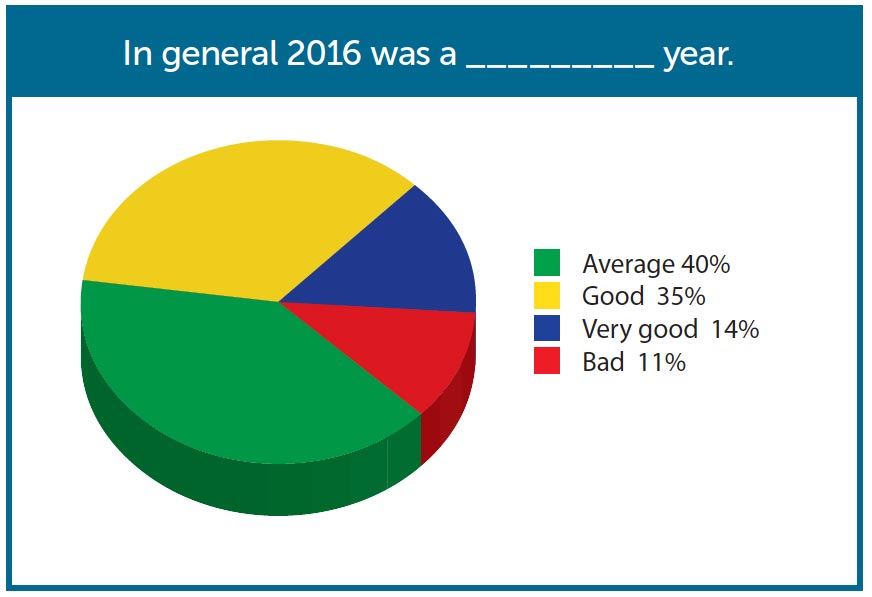
 

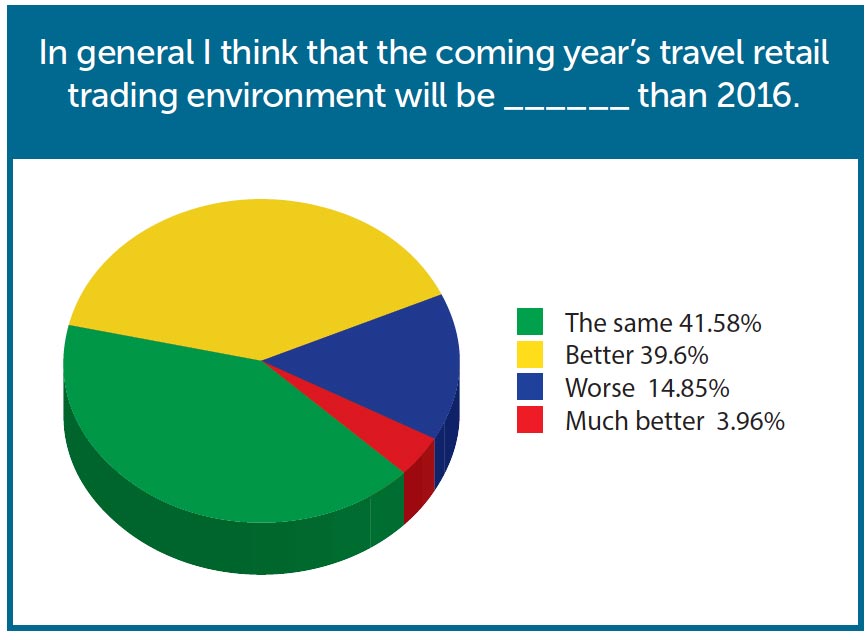
In fact, nearly half of respondents (49%) said that in general they thought the travel retail trading environment in 2016 was ‘good’ or ‘very good’. Forty per cent recalled last year as being ‘average’.


In terms of the global industry outlook for 2017, nearly 86% believe that the trading environment will be the same or better than 2016, which therefore means that almost 15% believe conditions will be worse.


Even those who believe that this year will be better than the last are well aware of the industry’s shortfalls and constructive criticism was offered by every single respondent this year.


EROSION OF TRAVEL RETAIL PROPOSITION

What was clear from the data collected on perceived threats to the industry, was an overriding concern that the travel retail proposition is currently being eroded, along with consumers’ perception of the DF&TR industry.


Survey-graph-2

Julian Diaz, CEO Dufry

Dufry CEO, Julián Díaz: ‘We need to be more efficient and competitive.’

Dufry CEO, Julián Díaz [p53] aired his concern in this year’s survey and said that the industry needed ‘to be more efficient and competitive for protecting the travel retail value proposition for our customers.’


DFS Group Chairman & CEO, Philippe Schaus [p54] passed on his similar sentiments: “A key topic to consider is the evolution of our industry’s value proposition to the end consumer.


“Travel retail as an industry depends on customers achieving a reasonable level of savings when they travel to certain parts of the world vs their home market, but also other shopping opportunities on their voyage; including digital ones.


TRBusiness-Survey-graph-1

“Especially in the context of ongoing disruptions caused by massive currency moves, it is absolutely critical that we [the travel retail industry] maintain or re-establish for our customers the value proposition they expect; be it in terms of outright pricing, product exclusivities, special services or by other means.”


Philippe Schaus, DFS

Philippe Schaus, DFS CEO: “It is absolutely critical that we [the travel retail industry] maintain or re-establish for our customers the value proposition they expect.”

OVER-RELIANCE ON STRONG PASSENGER GROWTH

Connected with this, many others mentioned low footfall, conversion/penetration rates and the over reliance on strong passenger growth to sustain travel retail sales.


Other threats or challenges mentioned by leading travel retail companies included the following: E-commerce giants/the Internet; decreasing power of Chinese customers; currency fluctuations; aggressive pricing strategies by competitors; consolidation of the market; increasing cost of raw materials; reduced margins; packaging or labelling regulation; decreasing hand baggage allowance; export taxes; decline in Russian passengers, among others.


But by far and away the two biggest concerns – that have been aired by almost every respondent – are linked to terrorism (along with safety and security) and the consequences of political events.


To read more responses from the world’s leading DF&TR companies subscribe to the magazine here: SUBSCRIBE HERE.


To receive a download link for the full digital edition of the January issue in its entirety, including the remaining 50 pages of the subscriber-exclusive TRBusiness Global Industry Survey, use promotional code ANNUALSURVEY when subscribing.


Kim Bum Ho, Deputy Executive Director of Incheon International Airport Corporation’s (IIAC) Commercial Marketing Group

Bum-Ho Kim, Deputy Executive Director of Concessions Development Group at Incheon International Airport Corporation (IIAC): “As we move into 2017, the decreasing buying power of Chinese customers…is concerning.”

Note from the Editor:

TRBusiness received responses from more companies than ever before* for its Annual Survey, conducted between November 2016 and January 2017, including many of the most influential duty free and travel retail companies in the world.


Once again TRBusiness would like to extend its most sincere thanks to all those who completed this year’s survey. We are always extremely grateful for your feedback, without which this survey would not be possible. If you’d like to share any further comments related to the survey contact [email protected].


*The TRBusiness Annual Survey was conducted during November, 2016 up to the first week of January 2017 and received responses from 104 duty free and travel retail companies. Many, though not all of these companies expressed that their views represented those of their
entire organisation.