Archives

BA crew vote to strike at Xmas on long/short haul

BA Mixed crew strike

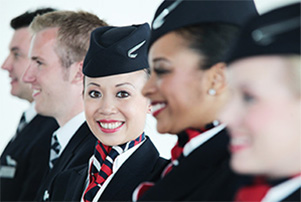
Happier days for some BA crew.

The Unite union representing British Airways ‘Mixed Fleet’ cabin crew of more than 2,500 members have voted to take strike action from 21 December over what it describes as ‘poverty pay and broken promises’.


According to Unite, more than 79% of the long and short-haul routes crews that took part in the ballot voted for strike action and the union says it is now calling on the airline to return to the negotiating table and engage with the union in a meaningful way.


[Currently, the ‘Mixed Fleet’ crew is said to account for an estimated 2,500 crew members and between 15% to 20% of the total. British Airways had not issued any comment in response to this development by press time –Ed].


In a statement, Unite said: “Since 2010 all British Airways new cabin crew employees have joined the ‘Mixed Fleet’. Earnings were advertised between £21,000 and £25,000 ($26,318 to $31,330) but in reality start at just over £12,000 ($15,038), plus £3 ($3.75) an hour flying pay.


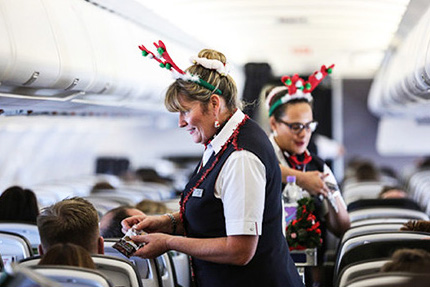
BA Cabin Crew at Xmas

British Airways’ management and its cabin crew have had a love-hate relationship with each other for several years now.

UNION CLAIMS BA CAN AFFORD RISE

“The crew have rejected a two per cent pay offer and on-board customer service managers are furious they do not have collective bargaining rights.


“The managers have also endured a six-year pay freeze. Meanwhile, Willie Walsh pocketed €8.8m ($11m). British Airways and the parent company IAG reported profits of €1.4bn ($1.7bn), up 64% on last year.”


Unite regional officer Matt Smith said: “Mixed fleet crew earn just over the minimum wage and below the national average.


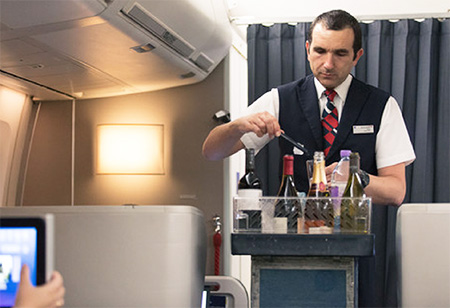
BA crew serving drinks

BA HAS YET TO COMMENT ON PROPOSED STRIKE ACTION

“Significant numbers of crew are taking on second jobs, many go to work unfit to fly because they can’t afford to be sick. British Airways bosses need to wake up to the anger and the injustice here.


“Not only are the pay rates indefensible but in aviation, low pay is a safety issue. 30 per cent of the Mixed Fleet crew have been with the company for just under a year. Crew simply can’t afford to stay. Inexperience, fatigue, and the fact that BA recently cut the length of crew training courses means Unite is genuinely concerned about the potential repercussions.”


Airports leverage High Street/online shopping days

Manchester-Airport-singles-day-leadStansted Airport says it saw a significant boost in retail spend during a two-day Black Friday shopping event at the end of November, as well as a 70% boost to the airport’s Shop & Collect service. However, as travel retailers struggle to compete with internet retailers and the High Street on price, some believe such heavy discounting and promotions may be damaging to the customers’ perception of value.


Retailers in the US, who sought to boost sales in the run up to Christmas following Thanksgiving, initiated a promotional shopping day (24 hours) back in the 50s.


The successful outcome of such a promotional period meant that many retailers effectively moved ‘in the black’; hence the name that followed.


The shopping extravaganza has now well and truly made its way to the UK and Black Friday promotional posters were highly visible this year on High Streets around the country.


“We ran Black Friday over two days (24-25 November) following a successful trial last year,” Stansted Airport’s Head of Retail – managing WDF – Kathryn Kindness told TRBusiness.

STN-Black-Friday-WDF-store

WDF ran a ‘10% off everything’ promotion for the two days and saw a significant increase in spend, says Stansted Airport.


BLACK FRIDAY ACROSS MAG AIRPORTS

“We teamed up with World Duty Free (WDF) and other retailers including Dixons, The Body Shop, Dune, Ted Baker, Rituals, Accessorize, Oasis and Hema.”


Black Friday promotions also ran at Manchester, East Midlands and Bournemouth airports (all owned by the Manchester Airports Group (MAG)).

Interestingly, Gatwick also participated in Black Friday promotions this year, however Heathrow and the two biggest airports in Scotland – Glasgow and Edinburgh – did not.
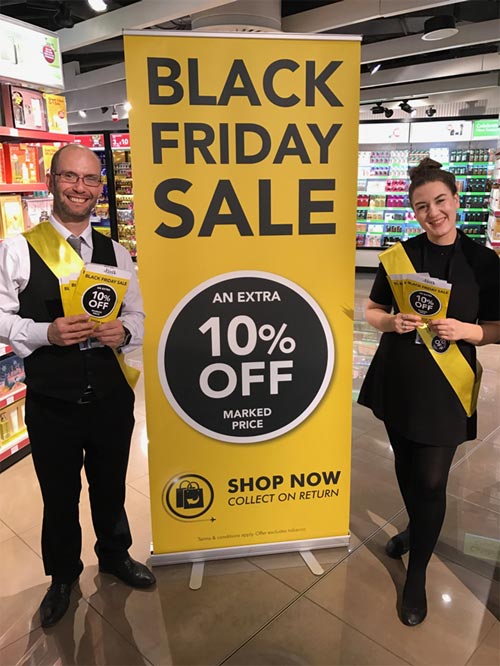
Black-Friday-STN-banner-and-staff

Black Friday was promoted heavily at the airport, on each MAG airport website and those who had signed up to receive newsletters from MAG airports also received notifications of the shopping event by email.

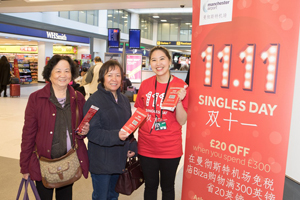
Due to the popular growth of routes to China, Manchester Airport (MAN) also imported another foreign shopping holiday in November; Singles Day or ‘Double 11’ from China.


This is now the world’s biggest shopping holiday and saw Chinese shoppers spend around $18bn this year in just 24 hours.


Manchester Airport launched direct flights to Beijing in June this year, and so far more than 40,000 passengers have used the service.


MANCHESTER TARGETS CHINESE PASSENGERS

“Manchester Airport [was] only one of a handful of Western brands to take part in the activity, with the majority just doing so online; by bringing it to the UK to its Chinese passengers is quite unique,” says MAN.


“In 2015, in under 10 minutes of Singles Day launching, Alibaba had more than £1bn of orders, and within and hour and a half it hit the £4bn mark. By the end of Singles’ Day the total sales were £9.4bn, up from £7.4bn in 2014.”


Although the evidence of a sales boom during these periods is clear to see, there has been much debate – particularly in the last year – about the effects of big discounting activity and promotions at airports and whether they can actually cause long lasting damage to the equity of brands in travel retail as a ‘race to the bottom’ ensues.


The travellers’ perception of price was discussed in length at the Trinity Forum in September (Mumbai) and the Meadfa conference in November (Dubai).


ARE THERE TOO MANY PROMOTIONS?

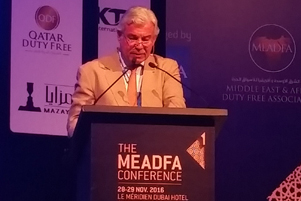
At the Meadfa conference in Dubai, ARI CEO, Jack MacGowan pointed out that on average, only 1 in 4 customers benchmark on price yet the industry is still focused on discounting as a key response to the decline in passenger spend.


“Are we doing too many price promotions? Could we have clearer and more compelling price messages?” he asked the audience (rhetorically).
 

Savings-at-Stansted-Airport

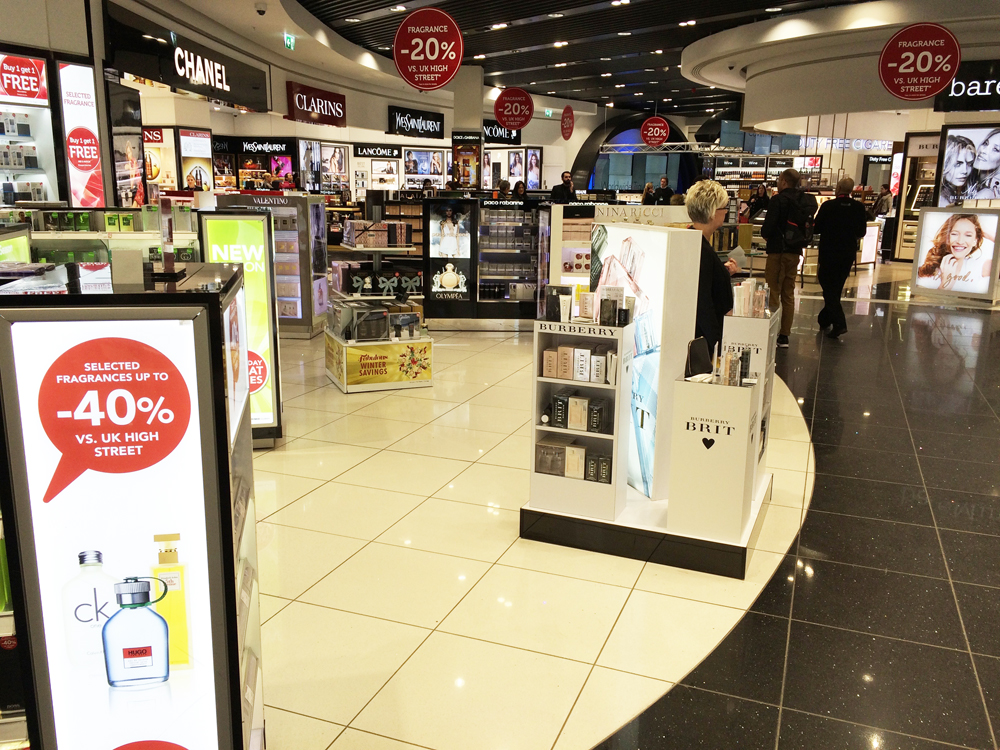
Savings messages are communicated clearly at Stansted Airport all year round.


During the Trinity Conference in Mumbai earlier this year Julián Díaz emphasised that ‘price is not everything’.


“There are enough elements in travel retail to make it a good value proposition…it’s not all about price…Value is a very relevant thing; exclusivity to duty free is a relevant thing…assortment is a relevant thing…it is not only price.”


However, Stansted would argue that Black Friday is not just about offering discounts to customers; it’s about engaging with travellers, drawing them into the shops and (hopefully) converting shoppers into buyers.

 

Stansted-Tax-free-shopping-logo

Tax free shopping and the price advantage attached is promoted on each of MAG’s airport websites.


“The aim was to create a buzz for passengers as they travelled through the airport,” adds Stansted’s Kindness. “WDF staff dressed up in sashes and encouraged customers to try a mini makeover or hand massage, sample chocolates and promote its shop and collect service.


“It was a great way to engage with customers and we were able promote the great prices on offer especially with the current exchange rate for non UK nationals.”


Beauty products performed best of all, particularly from Clarins, Estée Lauder, Jo Malone along with GHD hair stylers.
 

Singles-Day-Manchester-Airport-tall

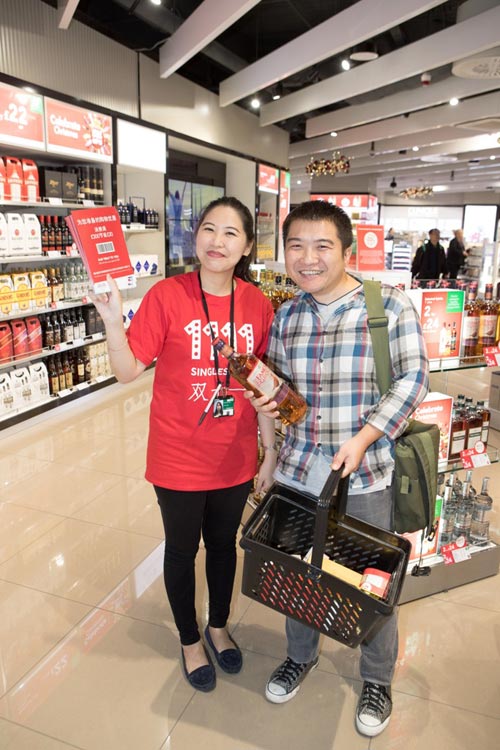
Due to the growth of popular new routes to China, Manchester Airport helped travellers to celebrate Singles Day.

SEVENTY PERCENT BOOST TO SHOP AND COLLECT

“WDF ran a 10% off everything for the two days and saw a significant increase in spend,” she said. “Our Shop and collect service enjoyed a 70% boost on the previous week.”


Ted Baker’s sales also increased ‘massively’ with its 25%/30% discount campaign.


Importantly, STN also points out that it’s not all about price-offs and over the Christmas period the airport is introducing a free personal shopper service (from mid-December) throughout the terminal.


WDF will also be offering a gift-wrapping service and the concierge team will be on hand to recommend gifts and book in passengers in for beauty services.


“To add some festive fun there will be a Christmas themed selfie booth in the departure lounge,” says Kindness.


UNWTO: MidEast tourism will outpace global growth

Amr-Ghaffar-Meadfa-2016-leadUNWTO Director Middle East Amr Abdel-Ghaffar had a positive message to deliver, particularly about the Middle East region, at last month’s Meadfa conference in Dubai and underscored the importance of the tourism business for ‘prosperity and peace’.


It is, he stated, ‘an exceptional time for travel and tourism’ with 1.2bn international tourists recorded last year.


He pointed out that travel is also becoming increasingly universal, and while in 1950 only a privileged elite travelled, today one seventh of the world’s population crosses international borders.


Tourism growth in the Middle East over the past two decades has been one of the world’s most notable success stories. Arrivals were up from 18m in 1990 to 78m in 2010.


Looking to the future, he confirmed that UNWTO forecasts a total of more than 1.8bn international tourist arrivals by 2030, with 43m international travellers entering the market each year.


MIDEAST TO OUTPACE GLOBAL GROWTH

“The industry will grow steadily in the second part of this decade at an average of 3% to 4%, and the Middle East’s average annual growth rate is estimated at 7% for the region by 2030,” he added.


However, this upbeat message was tempered with a call for development that is considerate to both people and the planet.


“Terrorism, the refugee crisis and poverty are all points for our collective action. Our sector can contribute to peace building – every traveller, every company can be a global ambassador for peace. While we build a competitive sector, we can build a better world.”

IATA points to international October pax demand +5.9%

Top Alexandre de Juniac IATAThe International Air Transport Association (IATA) has announced global passenger traffic results for October showing demand (measured in revenue passenger kilometres, or RPKs) up 5.8% compared to the same period in 2015. Capacity grew 6.3%, although the load factor slipped back 0.4 percentage points to 80.1%.


The association said that October’s performance was a slow-down on the 7.1% year-on-year growth rate recorded in September, but still broadly in line with 10-year averages.

Domestic and international travel growth are said to have been ‘largely in balance’, while international passenger demand rose by 5.9% in October, with Asia-Pacific traffic up 7%; Europe +5.7%; Middle East +7%; North America +2.4%; Latin American airlines +7.1%; and African airlines +5.8% for the month.


alexandre de juniac

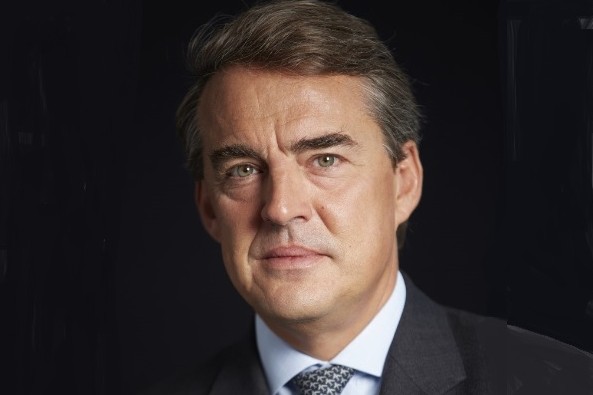
IATA’s Director General and CEO, Alexandre de Juniac.

“Passenger demand growth in October was consistent with long-term trends, but represented a deterioration compared to September,” said , IATA’s Director General and CEO, Alexandre de Juniac.


OIL PRODUCTION CUTS COULD RAISE COSTS…

“While the negative traffic impact from terror attacks and political instability in parts of the world has receded, the long downward trend in yield – which helped to stimulate travel – has levelled off. Furthermore, the recent OPEC agreement to restrict oil production suggests fuel prices have ended their slide.”


The good news for all international markets was obvious the fact that airlines in all regions recorded growth. However, as the total capacity rose at a faster rate of 6.6%, so the load factor slipped back 0.6% percentage points to 78.6%.


In addition to the aforementioned growth figures by region, IATA also made the following comments relating to the key performances/trends in each part of the world.


For example, the Asia-Pacific region’s airlines’ saw a slowing of the previous strong upward trend of recent months, although IATA notes that it is ‘too soon’ to determine whether this is an actual weakening or a mere brief pause. More positively, it says that the Asia-to-Europe market, ‘which is highly sensitive to shock events’, continues to recover.


IATA planes headerEUROPEAN TRAFFIC RETURNING TO ‘NORMAL’

By contrast, international demand for European carriers is said to be ‘returning to normal’ after the disruption caused by terrorism and political instability earlier this year.


Meanwhile, carriers in the Middle East saw the slowest pace of growth (+7%) for the region in 18 months, although IATA says this could be due to this year’s timing of regional celebrations keeping more travellers at home during the period.


Planes IATAThere was also a nominal 2.4% traffic rise for North American airlines in October which was the lowest amongst all the other regions, while Latin American carriers reported a welcome 7.1% traffic rise being driven by ‘robust demand for international traffic within the region’.


Lastly, African airlines’ traffic growth slowed to 5.8% year-on-year in October, from 9.1% in September, with IATA stating that ‘economic conditions in parts of the continent remain challenging’.


NPD Group acquires Counter Intelligence Retail (CiR)

CiR-NPD-logo-leadThe NPD Group, a global provider of information and advisory services, has signed an agreement to acquire the Counter Intelligence Retail (CiR) research and data analysis agency.


The acquisition is anticipated to be complete in early January, after which CiR will operate as Counter Intelligence Retail, an NPD Group Company. TRBusiness understands that CiR will remain in York, UK where it is currently based and no personnel changes will be made.


The company will be moving to new premises, but this was decided prior to signing the agreement with NPD and is necessary to accommodate CiR’s growing team.


“NPD’s global retail point-of-sale tracking experience and infrastructure combined with CiR’s industry expertise will facilitate the introduction of deeper insights and new types of information to address retailer and brand needs in today’s changing travel retail landscape,” says CiR in a statement released earlier today.


Stasiulevicuis takes a macro view of DF&TR with State of the Nation

Managing Director of CiR Garry Stasiulevicuis.

NPD says it offers data and analytic solutions for over 20 industries and partners with more than 1200 retailers, representing over 165,000 stores worldwide. As a result of the acquisition, CiR says it will be able to take advantage of NPD’s ‘expertise’ in such industries as food & beverage, foodservice, luxury, beauty, and accessories.


‘EXPERTISE IN NEW CATEGORIES’

This will, in turn, give CiR’s travel retail clients additional information and insight while ‘driving opportunities to leverage CiR’s expertise in to new categories’, says CiR.


Managing Director of CiR Garry Stasiulevicuis comments: “By joining the NPD family of companies, we will have access to a new level of point-of-sale-data tracking expertise and a new platform for improved advisory services, something we’re excited about bringing to travel retail to enhance our existing offer.


“We will have a platform for expansion into new categories, markets and in developing new products for our clients. Like CiR, NPD has a heritage of industry expertise, and we are looking forward to working together to help guide our clients, existing and new, through a period of unprecedented change in our industry.”


“We are excited to be adding travel retail to our portfolio,” said Michel Maury, Group President, Europe and Asia for NPD.


“Our clients are very interested in having more information on the industry, which we will now be able to offer through CiR. We are also looking forward to exploring new business opportunities, leveraging CiR’s knowledge and reputation in the industry along with NPD’s own retailer expertise and POS tracking infrastructure.”

Australia and China sign up to major new open skies treaty

Chinese in Sydney SmallUPDATED. The Australian Government has announced a ‘landmark’ agreement to open up the commercial aviation market between Australia and China in an effort to build tourism further between the two countries.

Minister for Infrastructure and Transport Darren Chester and Minister for Trade, Tourism and Investment Steven Ciobo both describe the ‘historic arrangement’ as a major step forward in strengthening the bilateral relationship between the two countries, with huge potential benefits for Australian tourism and trade.

“Significantly liberalising our air services arrangements with China has been one of my top priorities since I became the Minister for Infrastructure and Transport, and I am pleased to be making this announcement today in bringing this vision to reality,” said Chester.

Chinese vacation in Sydney

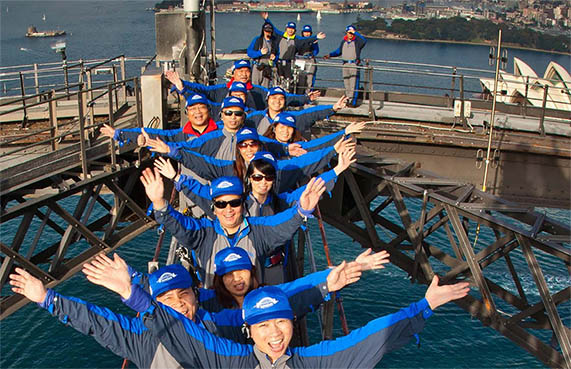
Australia has been very pro-active in encouraging Chinese tourism and has built very strong bonds with travel agents. (Above: A Chinese tour group has fun at the Sydney Harbour bridge).

ALL CAPACITY RESTRICTIONS TO BE REMOVED….

“These new arrangements will remove all capacity restrictions between Australia and China for each country’s airline which is an important enabler for increased trade and tourism.


“We have also liberalised traffic rights and code share arrangements, which are important for Australian airlines. This will enable Australian and Chinese airlines to service destinations between and beyond both countries and will allow them to take full advantage of their cooperative arrangements with their commercial alliance partners.

Official portrait Hon Hon Steven Ciobo MP

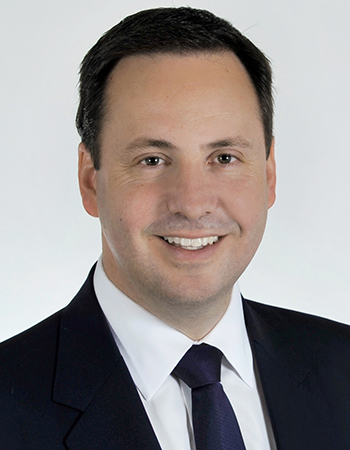
Australian Minister for Trade, Tourism and Investment, Steven Ciobo.

‘UNLIMITED’ TOURISM POTENTIAL

Ciobo added that there is ‘unlimited potential’ for Australian tourism following this historic agreement: “China is Australia’s fastest growing and highest spending international visitor market. More than one million Chinese tourists visited Australia in 2015-16 (up 22.3% from the previous year), and spent almost A$9bn ($6.6bn) during their stay,” he said.

“The outbound China market is predicated to double to over 200m travellers annually by 2020. This agreement will help Australia snare a larger slice of that, creating more Australian jobs and economic growth.

“China is our most valuable tourism export market. This agreement caps off a year of initiatives from the Coalition geared towards attracting more visitors from China, making our tourism sector well primed for the Australia-China Year of Tourism in 2017.”


SYDNEY AIRPORT EXPANDS CHINA SERVICES

Sydney Airport Managing Director and CEO Kerrie Mather

Sydney Airport Managing Director and CEO Kerrie Mather.

Adding her comments on this major new initiative, Sydney Airport Managing Director and CEO Kerrie Mather said: “We’ve announced six new routes from China to Sydney Airport in 2016 alone and from January next year we will be serving a total of 14 routes from Chinese cities.

“This announcement is extremely well timed in advance of the upcoming busy Lunar New Year period and is such a positive initiative ahead of the Australia-China Year of Tourism 2017.

“Congratulations to both the Australian and Chinese governments for negotiating such a ground-breaking agreement.”


Mather added that Sydney Airport would continue to work closely with Destination NSW, Tourism Australia and the broader tourism industry to capture new routes and services following the agreement.

From January 2017 the airport will have seven airlines serving 14 Chinese cities, while Chinese passengers already account for 15% of foreign resident passengers and represent the largest group of foreign inbound passengers.

At the same time, Sydney Airport has implemented a range of China ready initiatives to welcome Chinese passengers, including Mandarin speaking Airport Ambassadors, signage and information available in simplified Chinese, support of events such as Lunar New Year and appropriate retail, food and beverage offerings.


DFWC & TRT end DFWC Academy collaboration

2Duty Free Academy web copyChristine Martin of TRT (Travel Retail Training) and the DFWC (Duty Free World Council) have not been able to reach agreement on the vision for the proposed DFWC Academy, so discussions have ended, says the council.


“This is a disappointing outcome given the amount of time and commitment from all parties which have gone into the project to date, but the work done is not lost and will provide the basis to move forward again with the academy project in due course,” says the council.


“The DFWC is fully committed to making the DFWC Academy a reality and will now consider the options available.”


The DFWC says that much has been achieved, including the development of a sound legal basis for the academy and an initial set of draft Professional Standards ready for industry consultation.


“On behalf of the industry the DFWC would like to thank Christine and TRT for all the work to date and looks forward to other collaborative activities in the future,” adds the council.

Russia’s Federal Agency calls for inflight alcohol restrictions

Top FATA Russian CAA bodyRussia’s Federal Air Transport Agency (FATA) held a top level round table on the growing problem of dealing with unruly passengers last week, with FATA head Alexander Neradko calling for new rules, the creation of ‘black lists’ of problem passengers and stiffer other penalties for offenders.


The round table was also attended by representatives of state authorities of the Russian Federation, aviation industry organizations and the legal community, with participants agreeing to an urgent need for the introduction of a new ‘Air Code’ governing general rules for onboard passenger behaviour.


The meeting also agreed that the authority of the senior pilot onboard, plus the rights and duties of cabin crew members and security staff need to be formalised and unquestioned when it comes to their legal rights to ‘prevent, combat and document violations’.


CABIN CREW SHOULD HAVE MORE LEGAL POWERS

As such, the meeting agreed that the cabin crew’s abilities to apply countermeasures should be supplemented further to allow them to deal with the more difficult situations.


In a statement, the FATA said: “There remains the question of restricting the liquor proposals on board aircraft (including the interiors of first and business class). The vast number of offences on air transport due to being in a state of intoxication.”


[This is a problem that has been growing in recent years, with several UK airlines and other carriers now taking a zero-tolerance attitude, alcohol sales being restricted to certain hours of the day in some cases and police and security officers briefed to look for potential troublemakers within the terminals before they board flights-Ed]


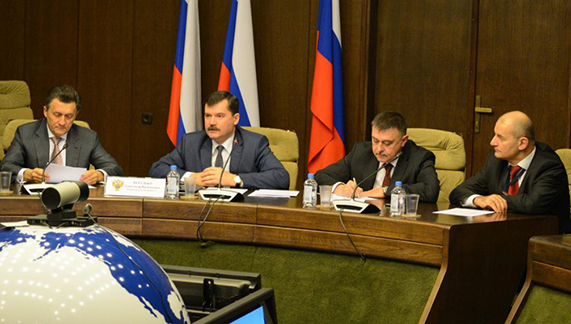
Federal Air Transport Agency Head Alexander Neradko

Federal Air Transport Agency Head Alexander Neradko (second from left) heads up last week’s important meeting. State authorities and the legal community are now pushing for a tough ‘new code’ of behaviour and strong legislation to back it up – to deter increasing levels of bad behaviour by a growing minority of passengers onboard Russian airlines. This is a problem shared by many other airlines, including several in the UK where the Jet2.com airline has been a pioneer in calling for greater awareness and prevention of alcohol-related bad behaviour.


CALL FOR TOUGHER LEGAL DETERRENTS

With this in mind, the meeting agreed that based on the advice of ‘experts’ gross violations of public security on board aircraft should be punishable under the offence of hooliganism and therefore fall under the full jurisdiction of criminal law. FATA also called for the establishment of a special administrative body to have responsibility for dealing with offences against public order committed onboard civil aircraft.


FATA’s Deputy Head Oleg Klim said that 95% of all conflicts onboard ‘typically’ take place after long flight delays of more than five hours, with some passengers clearly worse for wear from excessive alcohol consumption on the ground.


It was also noted that some other countries – notably Germany – have also tried to introduce tougher regulations to combat this problem, with penalties for offenders that go beyond the normal confines of civil law to act as a deterrent.


LEARNING FROM OTHERS WHERE POSSIBLE…

The committee also pointed to ‘a positive experience at British Airways’ where it was stated that the carrier has ‘pioneered’ a surveillance system using cameras on some ‘domestic flights’.


Concluding the round table, FATA’s Neradko said that the immediate task in hand for the association now is to determine who – under the law – provides and enforces public order on board an aircraft in the sky. He added that once this is confirmed from a formal legal standpoint then it will be possible to discuss the creation of ‘passenger black lists’ and stiffer penalties for offenders.


For more information, click on the links below:

http://www.trbusiness.com/regional-news/international/jet2-com-bans-all-early-morning-alcohol-sales/108230

http://www.trbusiness.com/regional-news/europe/jet2-com-and-wdf-act-on-behaviour-problems/97014


ETRC pleads with airports to protect commercial revenue

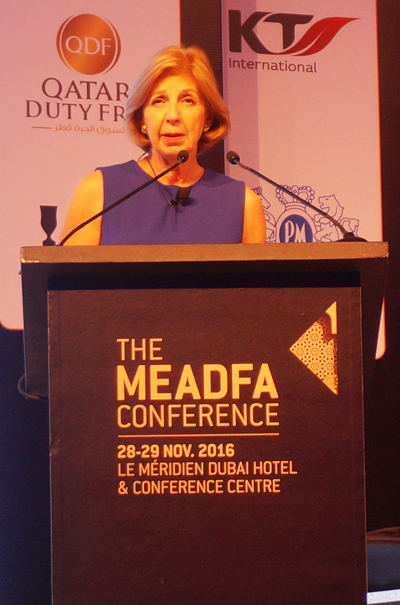
Sarah-Branquinho-Meadfa-leadIn a very important session updating the DF&TR industry on the most pertinent issues and threats to the business, ETRC President, Sarah Branquinho also pleaded with airports to better protect their commercial revenues and answered questions about the consequences of Brexit in the UK.


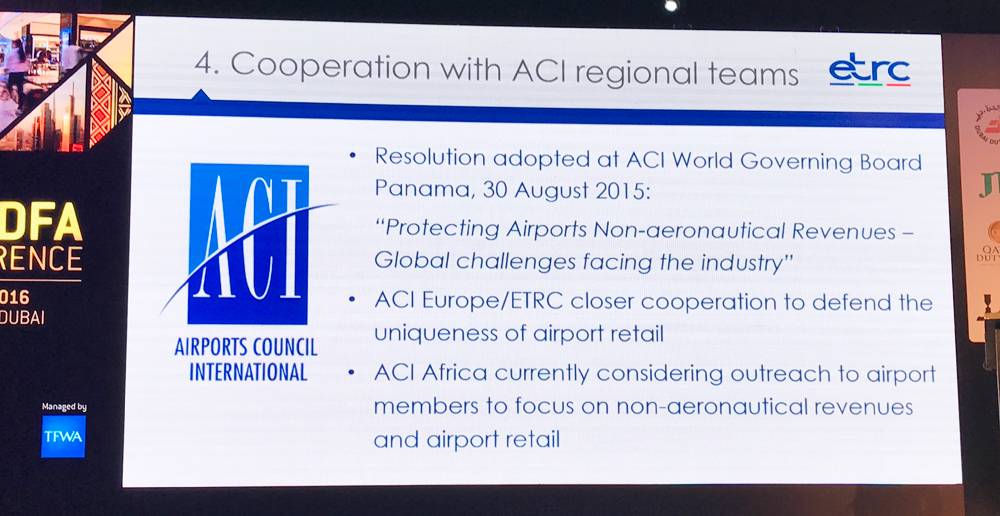
Branquinho, who is also the External Affairs Director & Head of Communication Europe & Africa for Dufry, covered four topics in her presentation this morning: Information to consumers and labelling; restrictions on carry-on baggage; tobacco and standardised packaging as well as cooperation with ACI regional teams.


See the TRBusiness Twitter feed and the following links for more on the 2016 Meadfa Conference.

Meadfa: Middle East DF&TR sales fell -2.6% in H1 2016

ARI: ‘We need to redefine the duty free promise’

Lagardère expects $320m a year in MidEast by 2018


Regarding the first topic on her agenda, she highlighted that there is now a greater demand for increased product information for consumers to make informed choices, but there is little category-specific legislation – at EU and national level – which recognises the uniqueness of DF&TR.


“We were mandated by the industry at the ETRC forum in January to find a solution whereby people can access information through their devices rather than putting it on the packaging,” Branquinho reminded the audience.


SCANNING BARCODES FOR INFORMATION

She revealed that the ETRC has progressed with this mandate and now needs to convince regulators that any new technology which is introduced can meet the same policy objectives. The ETRC ‘technology taskforce’ is currently reviewing whether the industry can implement the scanning of barcodes or QR codes on smartphones or tablets to avoid unreasonable and costly packaging requirements.


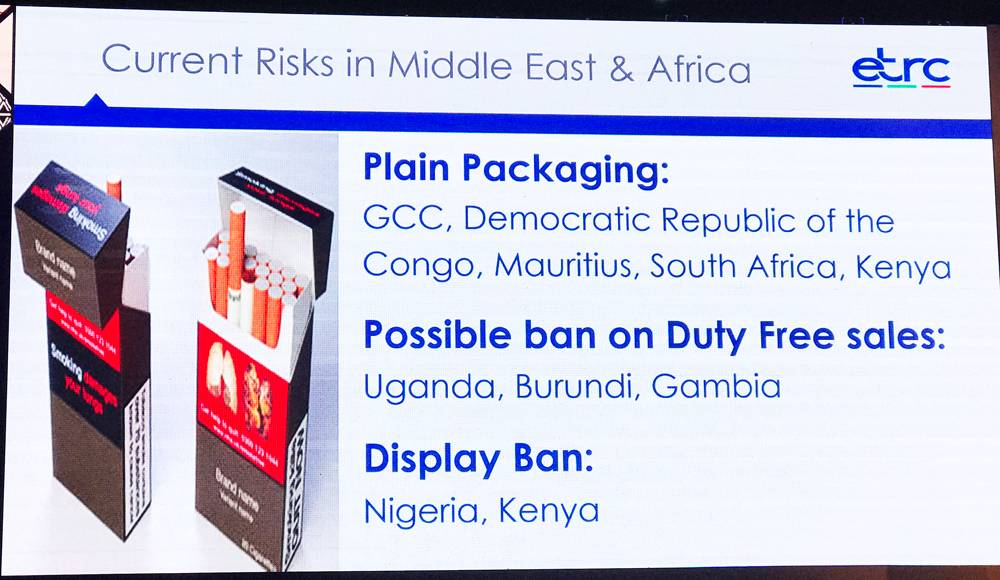
ETRC-plain-packaging-slide-meadfa-2016

Branquino reminded the audience that within the four markets where tobacco plain packaging has been introduced [Australia, France, UK and Ireland] disappointingly, there has been no exemption for duty free.

Branquinho said that the industry can expect a clear recommendation in early 2017 about ‘how we go forward’ with this.


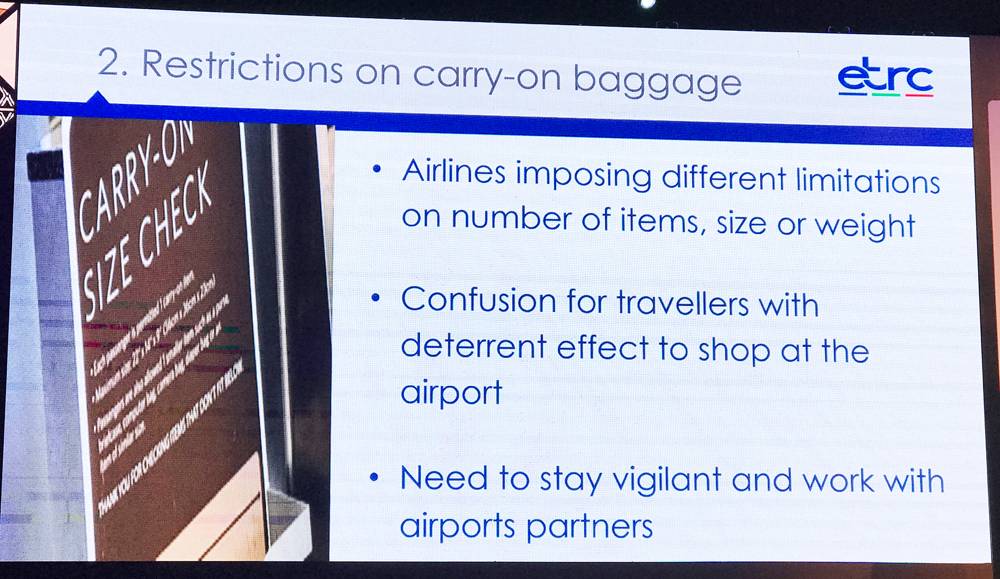
Moving on to the issue of restrictions on carry-on baggage Branquinho vehemently pleaded with airports to address the problem in their agreements with air carriers.


“Things are getting confused between airlines driving ancillary revenue and common sense. And of course there’s a lot of confusion for travellers because, depending on each airline you fly with or even on which route, the instructions dictating what to do with carry-on baggage can be very different. We’re looking to create legislation in the European Union, which will allow passengers to bring their shopping onboard.”


LEGISLATION DECISION HALTED

In fact the ETRC have had a significant breakthrough by way of a favourable court judgement, which will prevent airlines from charging passengers to bring airport shopping on board.


“There are a couple of ways to solve this [problem]. Obviously one is legislation, but it’s taking time. Due to an unrelated political issue, the whole legislation process has stopped for the moment within the European Parliament.


“The simplest solution of course is what some airports have already done in the agreements that they are making with the air carriers. They’re saying that the air carrier does not have the right to restrict the commercial activity of the airport. If all airports put that into their agreements with air carriers then we wouldn’t be facing this problem constantly.”


Both Branquinho and her colleague at the ETRC made the important point that the industry dodged a bullet recently, when they were able to prevent the French Government from implementing a ban on tobacco duty free sales.


ETRC-luggage-slide-meadfa-2016

Sarah Branquinho pleaded with airports to better protect their commercial revenues.


The major campaign included support from Lagardère Travel Retail and Paris Aéroport who visited the French President’s office, after which the proposal was taken off the table.


WE NEED DUTY FREE EXEMPTIONS

Referring to another topic outlined at the start of her presentation, Branquino reminded the audience that within the four markets where tobacco plain packaging has been introduced [Australia, France, UK and Ireland] disappointingly, there has been no exemption for duty free.


Sarah-Branquinho-ETRC-Meadfa-2016

Branquinho answered questions about the consequences of Brexit in the UK.

She also revealed that the following countries are ‘working on’ introducing plain packaging: New Zealand, Singapore, Hungary, Belgium, Norway, Romania, Canada, Turkey, Slovenia, Finland, Uruguay, Chile, Thailand and South Africa.


In a panel discussion [with Meadfa President Sean Staunton, moderated by The Moodie Davitt Report’s, Dermot Davitt], which immediately followed her presentation, Branquinho was asked if there will be a return to full duty free sales for the UK following Brexit.


“We have the greenlight from regulators in the UK to talk about Brexit. They have taken the stance that they won’t talk to individual companies, but instead through the UKTRF (UK Travel Retail Forum).


A RETURN TO FULL DUTY FREE SALES IN THE UK?

“The situation is that in two years after triggering Article 50, the UK will automatically become a third country and not a member of European Union. Therefore all travellers to the UK [theoretically] will be able to buy duty free as if they were travelling elsewhere in the world.”


ETRC-ACI-slide-meadfa-2016

The ETRC believes it is imperative to work more closely with ACI regional teams.


However, Branquinho pointed out that the excise and VAT wording needs work: “We’re looking for a return to 1993 [pre-abolition] – nothing more, but a lot of legislation has to be approved first by the UK Government in the next two years.”


Branquinho emphasised that the ETRC needs to work quietly and efficiently on regulation in the background and to get their ‘ducks in a row’ before communicating through the media.


“The consumer media can be savage [in attacking duty free], so we want to get our ducks in a row first.”


See more coverage on the Meadfa conference at the following links:

Meadfa: Middle East DF&TR sales fell -2.6% in H1 2016

ARI: ‘We need to redefine the duty free promise’

Lagardère expects $320m a year in MidEast by 2018


Lufthansa strike nightmare resumes for two more days

Lufthansa pilots topThe Vereinigung Cockpit pilots union at Lufthansa has called yet another strike for today and tomorrow, which brings the number of 24-hour strikes, called by the union to six in just seven days.


The union called the strikes yesterday from 00:01 to 23:59 today also tomorrow (Wednesday 30th November) with this latest action hitting all short haul flights today and tomorrow’s aimed at all Lufthansa flights scheduled to depart from German airports.


Once again, other Lufthansa group airlines, including Lufthansa CityLine, Germanwings, Eurowings, Air Dolomiti, Austrian Airlines, SWISS and Brussels Airlines are not affected y the strike action.


Lufthansa Airbus A320-200 mit dem Kennezichen D-AIZG

Going nowhere – for now...

HALF A MILLION PASSENGER JOURNEYS CANCELLED…

Lufthansa says it has now put special flight schedules into effect for the two days concerned, allowing travellers to verify whether their flight will be operating as scheduled on LH.com.


Including the next two days, a total of some 525,000 passengers will have been affected by the last six days of strike action (since last Wednesday) comprising a total of 4,461 flight cancellations. The impact on German airports and service providers such as retailers and others will also be severe.