Archives

UK Travel Retail Consortium reports successful fundraiser

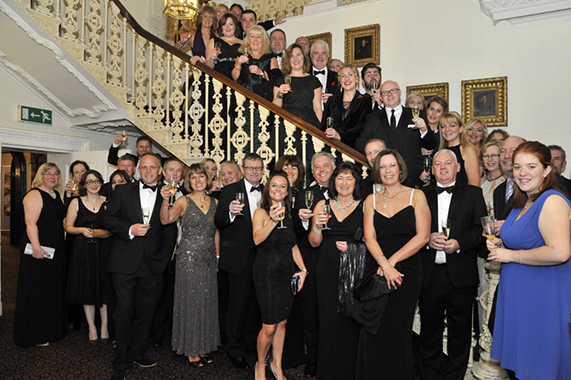
Top All together ConsortiumThe UK-based Travel Retail Consortium (TRC) has reported that 73 TRC members, customers, guests and partners attended this month’s ‘Winter Wonderland’ social event at the Ettington Park Hotel near Stratford Upon Avon in the UK earlier this month.


The weekend event included a drinks reception and outdoor German Festive Market welcome, followed by an ice sculpturing competition. A free afternoon then led into a pot charity draw where money as added from the previous Friday night’s fund raising.


A total of 80 raffle prizes raised around £900 ($1,117) for the TRC Chairman’s dedicated charity Guillain Barre Syndrome.


RECORD CHARITY DONATION

Commenting on the fundraiser, TRC Chairman Peter Ayling said: “Every year I think we do better than the year before, but this event really has surpassed them all by far. The hospitality from the Ettington Park Hotel has been truly amazing throughout the weekend and I must give TRC’s Tina Davies a huge thank you for all her hard work in making it all run so smoothly.
 

All together Consortium

Guests raise a glass at the recent Travel Retail Consortium event in the UK.


WEEKEND TO REMEMBER…

“Combined with the incredible enthusiasm that everyone put into the ice-sculpting and the generally fantastically friendly atmosphere, this weekend has truly been one to remember.


“I have particularly enjoyed seeing some new faces here this weekend, including guests who have come from overseas and do hope that they have all found the weekend to be unique in its friendly and relaxed format, where we are all here as friends.”


Attending this year’s TRC event were representatives from: British Airways, Condor Ferries, DFASS, DFDS, Dufry, Jet2, MSX, Newrest, Overseas, P&O Ferries and Tallink.


Current TRC members comprise: Aeon, Accolade Wines, Aurora World, Coty Prestige, Guinness, Heineken, Imperial Tobacco International, Invu, Mars, Morgan & Oates, Rémy Cointreau, Sekonda, Taittinger Champagne and Twinings.


Meadfa: Middle East DF&TR sales fell -2.6% in H1 2016

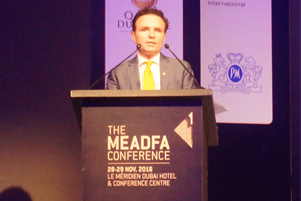
Sean-Staunton-Meadfa-2016-leadDuring a welcome address at this year’s Meadfa (Middle East & Africa Duty Free Association) conference in Dubai, the association’s President, Sean Staunton revealed that DF&TR sales in the Middle East declined by -2.6% YTD up to June this year, whilst sales in Africa declined by -3.7%.


Set against a back drop of plunging oil prices, currency fluctuations, decline in Russians travelling and acts of terrorism as well as restrictions on hand baggage, Staunton pointed out that the results certainly could have been worse.


“On a positive we’re seeing a real growth in airports and travel in our region,” he said during the opening session of this year’s Meadfa conference, which is being held in Dubai at Le Méridien Dubai Hotel & Conference Centre today and tomorrow.


Prior to this, conference moderator from the TFWA, John Rimmer [The Moodie Davitt Report’s Dermot Davitt is his partner in crime for the two-day conference] revealed that close to 500 members of the industry are in attendance this year.


This is quite a step up from the 342 recorded in Jordan last year, but not as high as the number registered in 2014 [570 at the Jumeirah Creekside hotel in Dubai].


Meadfa-2016-conference-hall

Sean Staunton addresses close to 500 delegates.

HUGE INFRASTRUCTURE INVESTMENT IN AFRICA

Both moderators agreed that this was still a very positive result considering the various challenges facing the region, mentioned above.


“Africa has seen a surge in development of its airports with $8.5bn being injected over the coming eight years,” continued Staunton. “The new Addis Ababa Airport with an investment of $4bn; an $800m investment in Bugesera International Airport in Rwanda; a $550m investment in Entebbe International Airport in Uganda are just some examples of airport investment taking place.”


Meadfa-2016-conference-cocktail

Yesterday evening’s cocktail event, sponsored by Dufry and Pernod Ricard was very well attended and continued long into the night.


He also pointed out that aviation in the Middle East continues to show real growth, in tandem with a rise in low cost carriers as their networks and flight duration expand.


“We’ve seen the maturity of Chinese shoppers over the last two years,” added Staunton. “Our Chinese customer is now more sophisticated in their tastes. While they are still brand conscious they are now greatly influenced by price and the actual experience itself.”


Meadfa-2016-Sean-Staunton

Staunton was keen to get across just how imperative it is for the industry in the region to work together.

REGIONAL PRICING IS A PERMANENT AND DAMAGING ISSUE

Staunton was keen to get across just how imperative it is for the industry in the region to work together, and identified the issue of regional pricing, which he said has been ‘detrimental to our business in this region’.


“Over the last year I’ve heard the terms such as ‘temporary pricing’ and ‘tactical promotions’, which are all temporary measures introduced by some brands.


“Trying to explain to a passenger that a recommended retail price of a duty free item in this region is higher than the recommended retail price of a duty free shop in Europe is a no-win conversation. I don’t think we’re experiencing a downturn purely due to pricing, but I do feel that it’s a significant contributor and a totally unnecessary problem.


“Regional pricing is not a temporary issue, but a permanent and damaging one for both operators and suppliers. I feel this issue needs a permanent solution of removing regional pricing.”

Shanghai Pudong’s new $400m DF arrivals focus

Top Shanghai Pudong Sunrise DF T1Shanghai Pudong Airport Authority is to substantially enlarge its duty free arrivals retail space by 500sq m in Terminal 1 and by 800sq m in T2, with a brand new 500sq m arrivals store in the middle of the baggage collection hall.


This is to reflect the fact that these shops operated by Sunrise Duty Free currently comprise around 20% of the retail space, but account for 50% of all sales, with duty free as a whole expected to account for RMB6bn ($870m) this year alone, according to Shanghai Pudong Airport General Manager Qu Yi Bing.


As one part of a major exclusive interview with TRBusiness, he said the plan is to open these enlarged shops in mid-2017, with the main sales emphasis on perfume, cosmetics and tobacco products. As around 40% of arrivals sales are also made through preorder, he confirmed that a brand new collection counter is also planned.


Shanghai Pudong Sunrise DF T1c

Sunrise Duty Free in Shanghai Pudong Airport Terminal 1. ©.


MUCH BIGGER ARRIVALS OPERATION

Having said this, Qu added that both the airport authority and Sunrise Duty Free expect that since the arrivals shop offers will be much bigger in future, pre-order sales will probably proportionately decrease, since there has only ever been a limited selection of physical products available on the shelves in the smaller arrival shops up to now.


Savvy Chinese customers in particular have previously pre-ordered within the larger departure shops for arrival on collection to avoid the inconvenience of carrying around these purchases on their overseas trips.


Shanghai Pudong Sunrise Duty free T2 b

Sunrise Duty free at Shanghai Pudong Airport Terminal 2. ©.


Meanwhile, Qu also confirmed to TRBusiness that the airport authority’s sales forecast this year for the combination of duty free and duty paid retailing, plus food and beverage at Shanghai Pudong Airport is RMB6.4bn ($930m) of which RMB6bn ($870m) is duty free alone.


At the same time, he confirmed that airport management is forecasting 35m arriving and departing international passengers for calendar year 2016.


TUI, Etihad and airberlin in talks to create 15m pax JV

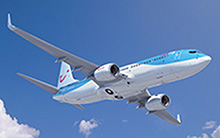
TUIfly (Photo credit TUI)In a major development, TUI AG‘s Supervisory Board agreed yesterday to move closer towards taking its German leisure airline subsidiary TUI fly GmbH into a new joint venture company with the Etihad Aviation Group and the majority owning party consisting of the NIKI Privatstiftung foundation.


At the same time, Etihad is currently in negotiations with airberlin to acquire its tourist operations – primarily in Southern Europe and North Africa – plus airberlin’s participation in NIKI to add into the new joint venture.


TUI BROADENS AIRLINE EXPOSURE WITH PARTNERS

This proposal is significant, since TUI has been talking about reducing its direct financial exposure to the airline side of its business for some time.

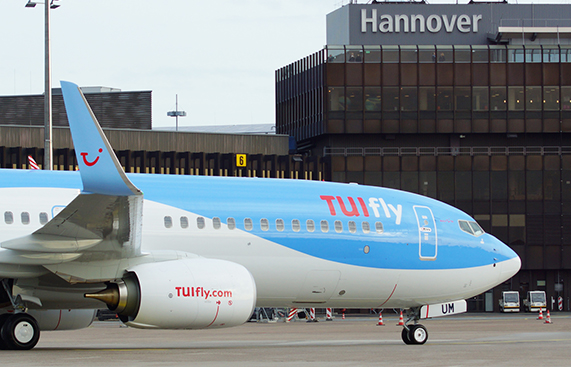
TUIfly Hanover (Photo credit TUI AG)

TUI has already given job assurances to its staff in Germany.


Subject to approval by the relevant anti-trust and aviation authorities, it is proposed that the new joint venture will be based in Vienna and serve a broad route network with its two airlines – TUI fly and NIKI.


Together they will utilise a total fleet of around 60 aircraft, while offering a seat capacity of 15m seats per year, operating from key departure airports in Germany, Austria and Switzerland.


In terms of shareholdings, it is currently being proposed that TUI AG will hold 24.8%, with Etihad holding 25%, while the remaining 50.2% will sit with NIKI Privatstiftung.


TUI AG says that the contractual negotiations between all involved stakeholders are expected to be finalised in the next few weeks.

Lufthansa pilot’s VC union extends strike for third day

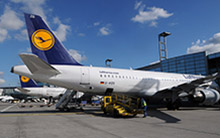
Top lufthansa-airlineAfter extending what was originally a one-day strike to two covering yesterday and today, the Vereinigung Cockpit (VC) pilot’s union yesterday announced that this current action will now also cover tomorrow – 25 November.


The airline says that ‘approximately 1,800 flights on Wednesday and Thursday have already been cancelled due to the strike, with more than 215,000 passengers affected’.


While the VC union says it regrets the impact on passengers, cabin crew and ground staff, it has also confirmed that tomorrow’s extension of this industrial action will see all flights within Germany and Europe ‘affected’, excluding medium and long haul flights, which will be allowed to operate as scheduled.


001 aa lufthansa

UNION SAYS IT WILL NOT MOVE

In addition, Lufthansa says it is formulating a special flight schedule for Friday and hopes to have it available by midday today.


For its part, the airline has condemned this second extension of this week’s strike as ’completely incomprehensible’, pointing out that a third consecutive day will once more hurt business travellers, tourists and commuters.


The airline has appealed to the union to call off the strike tomorrow and return to a mediation process, but VC says there will be no concessions as long a ‘Lufthansa management is still showing no movement’ and it refuses to make ‘a negotiable offer’ for the airline pilots.


Meanwhile, Lufthansa emphasises against that its group airlines Eurowings, Germanwings, SWISS, Austrian Airlines, Air Dolomiti and Brussels Airlines are not affected by the strike.

Lufthansa cancels 900 flights as strike hits 100,000 pax

UPDATED: Lufthansa cancelled nearly 900 flights at midnight impacting on an estimated 100,000 passengers in Europe and beyond, as the airline’s pilot’s union Vereinigung Cockpit (VC) called a full short and long haul services strike for today (23.11.16) and subsequently extended it through tomorrow.


The union originally announced the strike late on Monday calling out all Lufthansa pilots today (23.11.2016 from 00:01 hours to 23:59) on all long and short-haul flights departing from Germany during this period. However, the union has now extended the strike to last another day (24.11.16) so compounding the misery for travellers to and from German airports – and beyond.


[This strike is not currently impacting on other Lufthansa group airlines, including Air Dolomiti, Austrian Airlines, Brussels Airlines, Eurowings, Germanwings, Lufthansa CityLine or SWISS. However, a separate industrial problem is understood to have caused the cancellation of several Eurowings flights yesterday-Ed].


The pilots strike action at Lufthansa has now reached marathon proportions.

UNION SAYS IT REGRETS IMPACT ON OTHERS

In a statement, the pilots union said: “The VC regrets the impact on the passengers, cabin crew and ground staff concerned.


“Passengers may contact Lufthansa directly for their planned flights, as not all flights from the Group’s subsidiaries will be punished and only the company itself will be able to tell which flights are being carried out.”


Lufthansa management added: “This call for [a] strike is not the right way. Several times, Lufthansa offered the VC a mediation to solve the collective labour agreement conflict with the help of a third person.


“This was always rejected by the VC. Instead, the VC is now calling for strike action, which will mostly affect customers and colleagues.


AIRLINE CLAIMS UNION IGNORING MEDIATION OPTION

“The VC is ignoring the option of a mediation and is thereby not taking care of its responsibility as a collective bargaining partner. Unfortunately, this strike brings many inconveniences for our customers, for which Lufthansa is apologising in advance.”


Spare a thought for the airline’s long suffering ground crew over the next couple of days.

As reported, this will be the fourteenth incidence of industrial action in a two-year marathon dispute which is estimated to have cost the airline more than €300m ($323m) without counting the cost for German airports and their concessionaire partners.


The demands of the pilots and its union and the response from the airline have been well documented in the past by TRBusiness and can be referenced here: http://www.trbusiness.com/regional-news/international/lufthansa-pilots-declare-strike-action-again-as-latest-talks-fail/112021


[This story was first written on November 22, 2016 and published at 07:24. It was updated today at 05.00 hours-Ed].

Global lux sales fall as Chinese share slips to 30%

Chinese tourists (Global Blue)

Chinese shoppers have curbed their spending.

The global personal luxury market is expected to contract this year at the same time as the share of sales from Chinese shoppers slips below 30%. The contraction is the first since the global financial crisis.

According to the 15th edition of the Bain Luxury Study in association with Fondazione Altagamma, the personal luxury goods market will shrink slightly this year from €251bn/$266bn to €249bn/$264bn in what consulting group Bain refers to as a ‘new normal’ following the 2010 to 2015 period of very high growth, which Bain describes as a ‘Chinese Bulimia’ phase.

D’Arpizio: 'Relentless price increases over the last decade, aimed at creating a more exclusive position in the market and maximising touristic flows are now starting to backfire on luxury brands'

D’Arpizio: ‘Brands can no longer rely on low-hanging fruit’.

“The luxury market has reached a maturation point. Brands can no longer rely on low-hanging fruit.  Instead, they really need to implement differentiating strategies to succeed going forward,” says Claudia D’Arpizio, a Bain partner in Milan and lead author of the study.  “We are already starting to see clear polarisation when it comes to performance with winners and losers emerging across product categories and segments.”

‘FIRST TIME IN HISTORY…’

Another worry for the duty free and travel retail channel is that “for the first time in history” according to Bain, Chinese consumers have decreased their contribution to the total luxury market from 31% in 2015 to 30% in 2016.

2016 sees the first downward trend since the global financial crisis.

2016 sees the first downward trend since the global financial crisis.

Better news is that this share contraction is mostly happening at the domestic/internal level, driving down volumes and average ticket sales at home compared to Chinese consumers’ purchases overseas – although DF&TR operators have noted lower per head spends by travelling PRC nationals in 2016.

Bain also has a positive outlook for DF&TR operators. “Over the longer-term, Chinese luxury spending and the country’s contribution to total personal luxury goods consumption are expected to trend upward, due in large part to a growing middle class with more disposable income to spend on luxury purchases,” the company says.

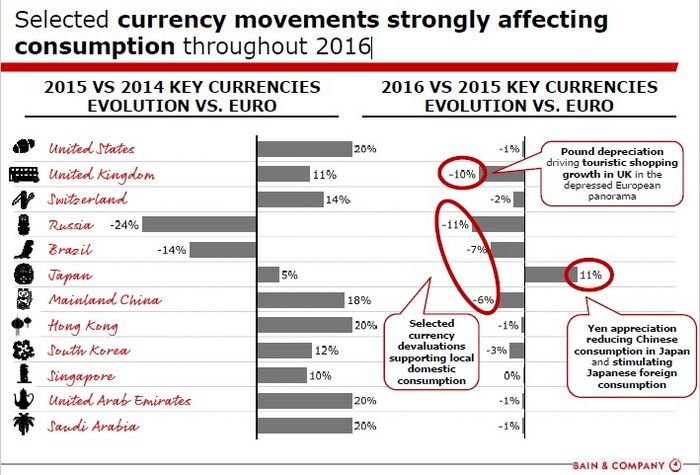
In 2016, selected currency movements affected luxury consumption to a high degree. Brexit, the US presidential election, and European terrorism all impacted consumer confidence, tourist flows and spending.

While luxury spending among tourists contracted across Europe, the depreciation of the UK pound drove shopping growth in the UK – a bright spot in an otherwise depressed pan-European market, especially as Germany and France were negatively hit by terrorism.  Spain and northern Europe fared better, due to a perceived lower threat risk, says Bain.

Currency flux is having a big impact on travel shopping,

Currency flux is having a big impact on travel shopping,

The Americas turned in an uneven performance, down -2% at constant exchange rates. In the US a strong dollar hampered tourism spending while in Latin America, luxury shoppers were focused on local spending

In Asia, Hong Kong and Macau continued their big decline, down -15% at constant rates while Chinese flows returned to South Korea (following MERS concerns last year), up +13%. Chinese spending is also boosting Thailand and Malaysia’s performance while Southeast Asia has generally been positive at +3% and Singapore is said to be attracting spending from China’s tier 2 and 3 cities.

Looking ahead, D’Arpizio anticipates the personal luxury market will reach €280-285bn by 2020 (CAGR of +3-4% from 2017), but she cautions that it will not be an easy road. “Luxury brands need to adjust their expectations and their strategies as we enter an era in which growth is no longer a given,” she says.  “We’re now on a level playing field. Brands that adapt their business and take an omni-channel, customer-centric approach will rise to the top.  Those that lag behind are sure to lose market share.”

Selfie generation to keep make-up ahead in beauty TR

Fabiano says that acceleration in make-up will come from new consumers.

Fabiano says that acceleration in make-up will come from new consumers.

L’Oréal Travel Retail says that make-up will continue to be the fastest growing segment in the beauty category in duty free and travel retail in next half decade due to demand from a selfie-obsessed Millennial generation, and from emerging markets.

Speaking at the TFWA Cannes show last month, Stefania Fabiano, LTR Consumer Product Division General Manager, said the make-up category was a bright star in the beauty firmament. “Make-up will remain the fastest growing category in travel retail in the coming five years and acceleration in this category will come from new consumers,” she noted.

With the ‘selfie generation’ of Millennials now a big part of the DF&TR passenger profile, the idea of looking good in front of the camera at all times also gives make-up a huge leg up. Fabiano says that this generation also loves to experiment and try new products, which makes make-up their ideal category. “They are also ultra-connected and they love tutorials so they are becoming more expert as make-up users,” she added.

The plus side for beauty players with make-up portfolios is that penetration of this segment in Asia, and China especially, is still underdeveloped compared to other regions – but it is growing fast.

PRICE ACCESSIBILITY

“Face products are still leading the market but the huge phenomenon across Asia is lipsticks,” said Fabiano who pointed out that, for the emerging middle classes, lipsticks also represent an accessible sub-segment of make-up.

L’Oréal's make-up portfolio spans a wide variety of price points.

L’Oréal’s make-up portfolio spans a wide variety of price points.

L’Oréal has a portfolio that spans all price points: from couture brands such as YSL and Giorgio Armani; luxury brands like Shu Uemura, Lancôme or Helena Rubinstein; to professional brands such as Urban Decay or the new Nyx line; and more competitively-priced lines L’Oréal Paris and Maybelline, and Essie in nailcare.

From a retailer perspective, L’Oréal believes that colour is key. “Colour drives shop penetration, creates impact and is playful. It is also often an impulse buy,” Fabiano said. She argued that colour products should therefore be at the centre of any retail design to act as a penetration driver – with fewer brands but a kaleidoscope of shades.

Top airline chiefs urge UK to abolish high air pax tax

APD has been rising fast.

APD has been rising fast.

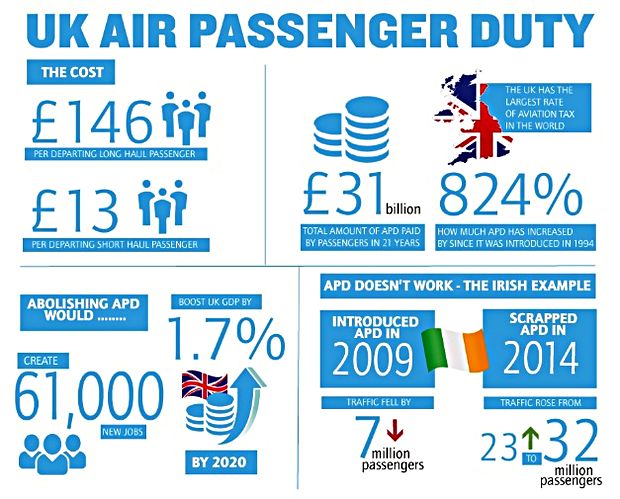
CEOs of three of the biggest airlines in Europe are urging the Theresa May government to scrap the UK’s Air Passenger Duty (APD), which at £146/€181 and £13/€16 per departing passenger for long-haul and short-haul flights respectively, is the highest in world. The higher fee is set to rise up to £150 next April.

Ryanair CEO, Michael O'Leary

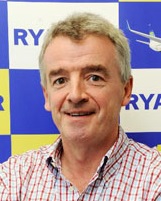
An influx of high-spending tourists was one benefit of Ireland scrapping its air pax tax says Ryanair’s O’Leary.

Ahead of the UK’s Autumn Statement on Wednesday, IAG’s Willie Walsh, easyJet’s Carolyn McCall and Ryanair’s Michael O’Leary have warned that APD is hampering Britain’s economic growth, business and tourism, at a time when global business links post-Brexit would need to be strengthened.

According to these CEOs – all part of Airlines for Europe (A4E), Europe’s new and largest airline lobby group – the removal of APD would boost GDP by +1.7% and create 61,000 new jobs by 2020. It would also increase passenger traffic – based on the example of Ireland’s scrapping of its APD in April 2014. It would also boost duty free and travel retail prospects.

There is evidence that travellers on multi-stop, long-haul trips avoid the UK because of its high APD. Willie Walsh, CEO of International Airlines Group (IAG), says: “It’s a revenue raising tax designed to suppress air transport growth which is exactly what the economy does not need right now.

“Britain spends many millions of pounds attracting people to the country only to charge them up to £146 when they leave. Other countries which have scrapped their aviation taxes have seen an immediate boost to their GDP and tourism.”

APD 2

In 2015, APD raised over £3bn from nearly 110m passengers, but other European countries, for example the Netherlands and Ireland have both reported strong passenger growth after scrapping their taxes (see infographic above).

“The Irish government scrapped its travel tax in April 2014, which resulted in immediate traffic and route expansion at Irish airports and an influx of high-spending tourists to Ireland, with passenger numbers reaching record levels (23m in 2012 to 32m in 2016),” says Michael O’Leary, CEO of Ryanair.

Carolyn McCall, CEO of EasyJet, adds. “Removing APD, a tax on passengers that suffocates demand, would certainly stimulate economic growth and make travel easier and more affordable. There is so much evidence to support this in other countries.”

For more information on the economic impact of APD based on a study by PwC, click here.

Transformulas gains more new airline TR business

Top Big Transformulas Marine Miracle EzeZoneUK ‘cosmeceutical brand’ Transformulas is pointing to ‘another year of success’ in the anti-ageing treatments business, with its claim to be ‘one of the top brands in this segment selling on many UK and European airlines and with ‘stockists nationwide’.


The company reports that it remains strong on UK airlines with top sellers including Transformulas Lip Volume, Transformulas Eye Lifting Gel, Transformulas Marine Miracle Crème and the recently introduced Marine Miracle Eye Zone.


MULTIPLE NEW AIRLINE LISTINGS

In its latest news and following success in the Nordic region, Inflight Services (now part of gateGroup-Ed) has listed Transformulas EyeLifting Gel, while SAS has taken the company’s Transformulas LipVolume (since May of this year-Ed).


In addition, the skincare specialist says: “Norwegian Air has had huge success with the Transformulas Marine Miracle Crème 50ml and have now confirmed they are adding the newly launched Marine Miracle EyeZone to the collection.


Big Transformulas Marine Miracle EzeZone

Beauty without surgery’ is the mantra at Transformulas.


MOSTLY EUROPEAN AIRLINE PRESENCE…

“Thomas Cook has had huge success with the brand after listing the Transformulas EyeLifting Gel, Transformulas Lip Volume, Transformulas Marine Miracle Crème, Transformulas Youthful Hand, Transformulas Marine Miracle EyeZone Cream and Transformulas Face Contour on pre order and the airline’s Webshop.


“Brand new listings for Transformulas include new airline Tap Air (based in Lisbon) who has just launched the Transformulas Eye Lifting Gel, Transformulas Lip Volume and Transformulas Marine Miracle Crème.”


The company adds that new Airline SunExpress (Turkish Airline based in Antalya) has also just listed its Transformulas Eye Lifting Gel, while the brand also holds listings with the following European carriers: Air Baltic, Condor, TUIfly, Germania, Premiera Air, Niki Airlines, Transavia Air, Edelweiss, Air Lingus, Virgin, Jet 2 and Monarch Airlines.


Transformulas says that its ‘success’ is due to the brand’s ‘affordability, cutting-edge technology and expertise of a team of hardworking and hands-on professionals working alongside founder Rosi Chapman.”