Archives

Monarch gets new $202m Greybull capital injection

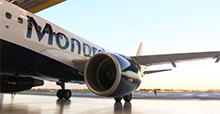
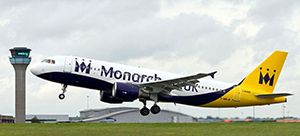
MonarchAny concerns about The Monarch Group’s future as the UK’s longest serving independent airline were put to rest today, as its majority owner Greybull Capital agreed a new £165m ($202m) capital injection into the London Luton Airport-based carrier.


A sizeable investment was deemed necessary to successfully renew the airline’s ATOL licences from the Civil Aviation Authority (CAA) to meet all the airline’s necessary guarantees over the next 12 months.


Monarch inflight magazine Jan April 2016

Monarch’s inflight duty free magazine for January-March 2016 produced by Alpha LSG.

THE AIRLINE’S BIGGEST INVESTMENT

News of this investment – the biggest in the carrier’s 48-year history – follows last October’s announcement that the airline has ordered 30 Boeing 737 MAX-8 aircraft, with options for a further 15 planes, with the first of these due for delivery in 2018.


Monarch management says that the arrival of these ‘state-of-the-art, fuel efficient aircraft’ in less than two years’ will enable Monarch to continue to provide passengers with a best in class inflight experience and allow the company to enjoy significant operational cost savings.


Andrew Swaffield, CEO at The Monarch Group commented: “It is testament to the extensive effort by all parties over the past weeks and months that we are able to announce the largest investment in our 48-year history, as well as the renewal of our ATOL licences.


Monarch Airlines“I’d like to thank the CAA, our shareholders, partners, loyal customers and the team at Monarch for helping us to achieve this successful outcome. We are now firmly focused on the future as a stronger Monarch.”


The airline’s management added that the Seabury Group LLC and Seabury Securities (UK) Ltd. served as the financial advisor on the recapitalisation.


Monarch’s onboard duty free programme and catering is currently handled by Alpha LSG Ltd.


PATA reports continued APAC visitor arrivals growth in 2016

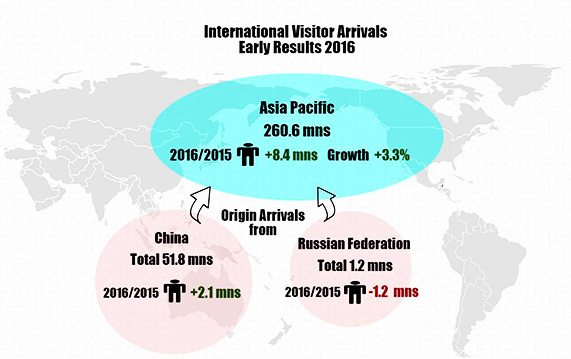
The Pacific Asia Travel Association (PATA) said today that APAC destinations continued to see encouraging visitor arrivals in the ‘early part of this year’, with a collective rise of 8.4m international arrivals across 35 destinations, according to its latest research.


This follows a very strong 2015 calendar year period where these destinations attracted nearly 577m international visitors – an impressive rise of 24m arrivals compared to 2014.


DATA ON 44 APAC DESTINATIONS

All of these historic and latest figures are contained in PATA’s Annual Tourism Monitor 2016 Final Edition, which contains statistics on 44 Asia Pacific destinations. It also provides ’a comprehensive perspective on the shifts and changes occurring within the Asia Pacific international travel sector over the past five years’, according to the organisation.


This includes a section on the early part of this year where China continued to dominate the growth pattern in Asia Pacific, while Japan, Thailand and South Korea recorded ‘significant increases of between 800,000 and almost one million additional arrivals from China’.
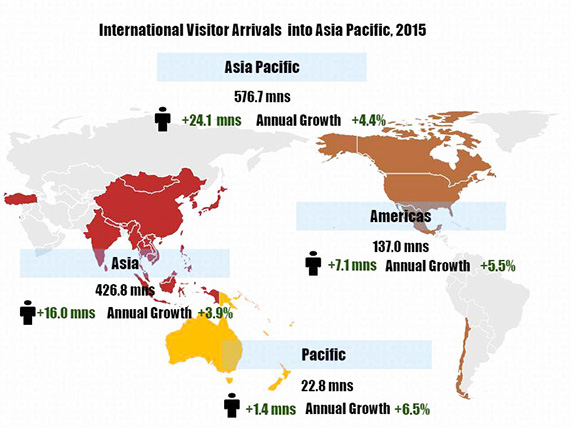


PATA 2016a revised

The Annual Tourism Monitor 2016 Final Edition covers 44 destinations in 2015. In order to eliminate double counting, the Asia Pacific total excludes international visitor arrivals to Guam and Hawaii, as they are already included in the count for the USA. SOURCE: PATA Annual Tourism Monitor 2016 Final Edition.


RUSSIA TREND STILL ‘WEAK AND NOT UNIFORM’

Still referring to the period earlier this year, PATA CEO Dr. Mario Hardy said: “Russia has shown a degree of positive growth into some destinations, but the trend is weak and not uniform. Thailand and the Republic of Korea, for example, reported increased arrivals numbers of 84,700 and 20,700 respectively.


“However, of the arrivals counts to date this year from Russia into 24 Asia Pacific destinations, less than half are positive. Indeed, the losses far exceed the gains from this source market, resulting in a net loss into Asia Pacific of almost 1.2m arrivals so far in 2016.
 

PATA 2016b

SOURCE: PATA Annual Tourism Monitor 2016 Final Edition.

Dr. Hardy added: “International arrivals patterns are moving constantly through different cycles at various points of the year and it is important to understand where these are happening and to adjust market activity and resource allocations to those that are showing the strongest gains.


MOVERS AND SHAKERS

“In other words, destinations must engage in data-driven marketing. This is where the PATA Annual Tourism Monitor, together with other PATA forecasts supported by these data, becomes so critically important in today’s volatile marketplace.”


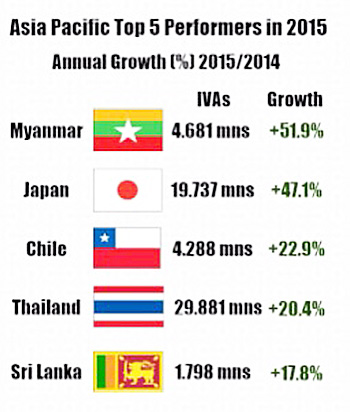
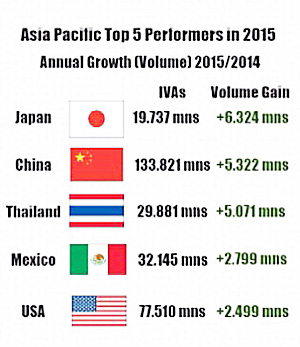
This early data, follows PATA’s tourism arrivals tracking in the region last year where the top five ranked performing destinations measured by annual percentage growth were (in order) Myanmar with nearly 52%, followed by Japan, Chile, Thailand and Sri Lanka.


PATA’s Annual Tourism Monitor says Japan was the dominant destination thanks to its 2015 increase in absolute numbers, adding more than 6.3m foreign inbound arrivals.


By contrast, China and Thailand added more than five million additional foreign arrivals each to their respective inbound counts in 2015 – as compared to 2014.


FIVE KEY DESTINATIONS…

In fact, these top five destinations are said to have added 91% of the net increase in foreign arrivals into the 44 destinations covered in this report between 2014 and 2015.
 

PATA 2016c

SOURCE: PATA Annual Tourism Monitor 2016 Final Edition.

The tourism organisation said that across Asia Pacific in total, six destinations added more than one million additional foreign arrivals to their respective inbound counts in 2015 relative to 2014; seven added between 500,000 and just under one million.


Meanwhile, a further seven destinations welcomed between 100,000 and 500,000 additional foreign arrivals to their annual inbound counts.


Just to underline the strength of the year, across the 44 destinations covered in the report, 32 are said to have shown positive increases in foreign arrivals in 2015.


PATA’s Dr. Mario Hardy added: “The constant positive performance of the Asia Pacific region, as covered in this Annual Tourism Monitor, continues to highlight the diversity of products and services on offer, as well as the demand for those experiences by international travellers.


INFRASTRUCTURE IMPROVEMENTS ARE VITAL

“That brings with it a forewarning of the need for constantly improving tourism management procedures and protocols if we are to maintain delivery of a superior product and service.”


Interestingly, but perhaps not entirely surprisingly, PATA also reports substantial differences in both growth rates and growth volumes at the sub-regional and destination levels.


PATA 2016D revised

Early results 2016 cover 35 destinations which released international visitor arrivals data for the period of January-June 2016, except for Chile (Jan-Mar); French Polynesia (Jan-May); Lao PDR (Jan-Mar); Myanmar (Jan-May); Philippines (Jan-May); USA (Jan-Mar); and Vanuatu (Jan-April). SOURCE: PATA Annual Tourism Monitor 2016 Final Edition.


CHINESE SPEND BIG IN THAILAND AND JAPAN

Across the Asia Pacific region generally the dominant origin-destination pairs were led strongly by the Greater China flows. By contrast, Thailand and Japan recorded annual increases of 3.3m and 2.6m Chinese tourist arrivals respectively.


Interestingly, while their own inbound tourism markets have been under severe pressure, visitors from the Special Administrative Regions of Hong Kong and Macao also added substantially to the overseas inbound count into Mainland China. Both added 3.3m and 2.2m arrivals respectively between 2014 and 2015.


For more information on PATA and this report, please contact: Pacific Asia Travel Association, Unit B1, 28th Floor, Siam Piwat Tower Building, 989 Rama I Road, Pathumwan, Bangkok 10330, Thailand. Tel: +66 (02) 658-2000. Fax: +66 (02) 658-2010.


Invu sunglasses top on SAA and Kenya Airways

Invu Tourvest B1612AInvu, the eyewear brand from privately-held Swiss Eyewear Group, has been the number one selling sunglass for four months running on both South African Airways (SAA) and Kenya Airways (KQA) whose inflight business is run by concessionaire Tourvest.

The model leading the pack is B1612a (pictured) and has encouraged both airlines to add a second sku – B2628c, that includes a free gift-with-purchase bracelet – from this month. Both models also went onboard Ethiopian Airlines from 1 September.

Buyer at Tourvest Inflight Retail Services, Carole Clarke, comments: “Sales of Invu B1612a have been superb and it makes sense, therefore, to offer an additional sku – and extend the offer to other airlines. Invu has more than lived up to our expectations, delivering exactly what it claims with every model.”

Rebecca Harwood Lincoln, Swiss Eyewear Group’s Director Travel Retail International Markets, adds: “The success of Invu on South African Airways and Kenya Airways reflects the good results we are seeing on the domestic market in Africa, where the demand for great quality, impulse purchase sunglasses is equally high.”
B1612a is a classic rimless aviator style in matt gunmetal with green gradient lenses while B2628c is a frame for women whose bracelet is made in the same acetate material used to create Invu’s range of sunglasses. The entire range comes with ultra-polarised lens technology from SEG with retail prices starting at €50.

SEG is represented in duty free and travel retail by UK-based agency New Thing.

TFWA confirms new Board and committee posts

Erik-TFWA-leadUPDATED: At the closing press conference on Thursday last week, new elections to the TFWA Board and management committee were confirmed, including the appointment of Interparfums’ Frédéric Garcia-Pelayo as the Vice-President of Finance.


New board members comprise Bacardi Global Travel Retail’s Aude Bourdier-Rocourt as Vice President Commercial, Gerry Munday from Furla SPA as Vice-President Marketing, and Luxottica Group’s Francis Gros as Vice-President Conferences & Research. They join Frédéric Garcia-Pelayo from Interparfums and Alessandra Visconti from Reflecta SAS, who retain their respective positions as Vice-President Finance and Vice-President Corporate.


TFWA President Erik Juul-Mortensen thanked the members of the board and management committee who are moving on this year, in particular Thom Rankin, Carla Guiducci, and Patrick Bouchard.


“All have contributed to the continued development and success of the association,” said Juul-Mortensen. “Thom joined the board in 1991 as vice president conferences and research and has served the association with dedication and distinction.


“In his 25 years as a member of the board, Thom has helped to steer the association as the duty free and travel retail industry has evolved and grown. He has played a very significant role in making TFWA the relevant, contemporary and dynamic organisation it is today.


“Carla has served as vice president marketing, and Patrick in the capacity as vice president commercial, since 2012. I also offer them my sincere thanks.”
 

DIVERSE EXPERTISE AND FRESH THINKING
Commenting on the new team, he said: “Our new management committee and board will bring diverse expertise and fresh thinking to our association and our plans for the future. I thank them all for their commitment and dedication to our industry.”
 

Erik-TFWA-WE-2016-large

TFWA president Erik Juul-Mortensen thanked the members of the board and management committee who are moving on this year, in particular Thom Rankin, Carla Guiducci, and Patrick Bouchard.


The election of the 37 members of the management committee took place this week at TFWA World Exhibition & Conference, and their election or re-election was approved unanimously at the Annual General Meeting on Thursday 6th October.


The new board and management committee will hold their positions for two years from October 2016 to October 2018.

The full committee is as follows:

The representatives of the wine and spirits category are Patrick Bouchard, Albert Bichot; Aude Bourdier-Rocourt, Bacardi Global Travel Retail; Nick Mogford, Brown Forman; Jean-Luc Lebault, H. Mounier; Damien Bertrand, Maison Boinaud SAS; Donatienne de Fontaines-Guillaume, Moët Hennessy; Franc Kopatin, Stock Spirits Group; Rajiv Bhatia, William Grant & Sons.


Representing the tobacco category are Jennifer Cords, Imperial Tobacco, Gemma Bateson, JT International SA, and Martin Kaufmann, Oettinger Davidoff AG.


The fragrances and cosmetics category is represented by Jean-Guillaume Trouvin, Chanel SAS; Damien Tonneau, Clarins; Paolo Bevegni, Collistar; Philippe Margueritte, Coty; Susan Fox, Estée Lauder Companies; Frédéric Garcia-Pelayo, Interparfums; Jérôme Desouches, La Colline; Richard Cymberg, L’Oreal Produits De Luxe International, Priscilla Beaulieu, Kaloo, Clayeux, Kokeshi by Millennium Fragrances; Antoine Lafourcade, Puig International, SA; Neil Ebbutt, Rituals Cosmetics.


The representatives of fashion, accessories and leather goods are Romina Cortegiani, Bally; Emanuele Mazziotta, Coccinelle; Silvia Santin, Etro; Gerry Munday, Furla SPA; Francis Gros, Luxottica Group; Massimo Barzaghi, Salvatore Ferragamo.


The jewellery, watches and clocks category is represented by Nadia Skouri Garcia-Pelayo, Buying The Sky, and Alessandra Visconti, Reflecta SAS.


Representing gifts, home decoration, pens and electronics are Thom Rankin, Capi Global BV, Ralph Bou Nader, Genie-S International, and Sam Gerber, Worldconnect AG.


Confectionery and fine foods representatives are Patrick Dorais, Al Nassma Chocolate LLC; Steven Candries, Chocolaterie Guylian; Philip Geeraert, Neuhaus; Eric Carlier, Valrhona.


AWARDS FOR THE TFWA

During the closing press conference the TFWA also revealed the following awards which it picked up during Cannes:


  • Singapore Tourism Awards: TFWA voted Best Exhibition Organiser of the Year for TFWA APE&C 2015 by STB (Singapore Tourism Board)
  • Frontier Awards: TFWA Care wins Charity Initiative award
  • Frontier Awards: Erik Juul-Mortensen awarded Outstanding Contribution to the Industry

TFWA still positive despite decline in Cannes visitors

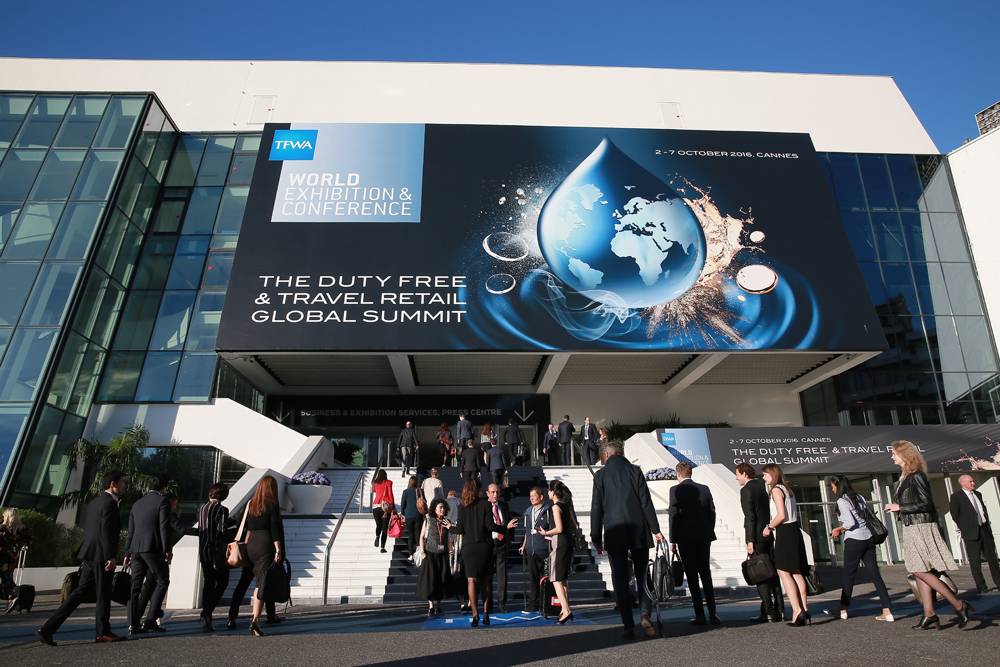
TFWA-WE-2016-leadUPDATED: TFWA President Erik Juul-Mortensen told the press that he still felt the same ‘buzz’ during last week’s TFWA World Exhibition & Conference, despite a slight reduction in visitor numbers by -2% (115 visitors).


At Thursday afternoon’s closing press conference Juul-Mortensen said that the association had anticipated an impact on the total number of visitors as a result of various issues including the show’s conflicting dates with Jewish and Chinese holidays.


The TFWA President said that ‘of course there had been an impact’, but this had not been significant.


The association registered a total of 6,443 visitors vs 6,558 in 2015 (-115, -2%) from 2,948 companies (-3%).


DF&TR OPERATORS -2%

The number of representatives from duty free and travel retail operators also dropped by -2% (52 people) to 2,097 vs 2,149 in 2015  [as of the end of Wednesday last week], but the number of companies registered was the same (636) as last year.


TFWA-WE-2016-large

There were 59 new or returning companies registered this year, which represented 12% of the total number of exhibiting brands.


The number of visitors who identified themselves as ‘agents’, reached 2,472 vs 2,379 in 2015 (+93 people, +4%), from 1,154 companies (+22 people, +2%).


The conversion rate of pre-registered visitors into those who actually attended was 80.5% this year vs 78.1% in 2015.


Exhibition space grew by 2.9% to 22,475.55sq m in 2016, accommodating 492 exhibiting brands on 472 stands – +2.1% vs 482 exhibiting brands on 462 stands in 2015 – including 10 official boats in Harbour Village.


TFWA-WE-2016-large-2

The association registered a total of 6,233 visitors vs 6,376 in 2015 (-143, -2%) from 2,826 companies (-3%) [as of the end of Wednesday last week].

There were 59 new or returning companies registered this year, which represented 12% of the total number of exhibiting brands.


OPENING CONFERENCE NUMBERS

The Opening Conference was one of the best-attended since the event began, with 1,634 (+8.6% vs 2015) being reported.


The Market Watch: Russia workshop on Tuesday 4 October registered 153 attendees vs 145 at last year’s Market Watch Korea in 2015 (+5.5%). The Inflight Focus Workshop on Wednesday 5 October registered 174 attendees vs 159 in 2015 (+9.4%).


Erik-TFWA-WE-2016-large

The Opening Conference was one of the best-attended since the event began, with 1,634 (+8.6% vs 2015) being reported.


The TFWA Research Workshop on Wednesday 5 October registered 89 attendees vs 87 in 2015 (+2.3%).


Regarding social events, the TFWA Charity Run, in its third year saw 111 particupate this year resulting in €1,765 in donations to TFWA Care/Samu Social Cannes.


Interestingly, the Opening Cocktail, which relocated to the Carlton Hotel beach front was the best ever attended with 1,737.

IATA: pax growth slowed down to +4.6% in August

Planes IATAThe International Air Transport Association (IATA) has reported that global passenger traffic data for August shows that demand in revenue passenger kilometres or RPKs) climbed 4.6% compared to the year-ago period – down from 6.4% in July.


At the same time, August capacity rose by 5.8% and the load factor slipped by 0.9 percentage points to 83.8%.


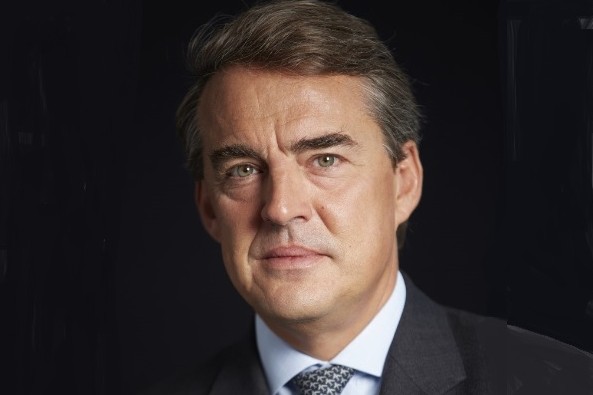
“Growth in passenger demand dipped to 4.6%. While that’s disappointing compared to the previous month’s performance, it is still healthy growth. And although terrorist attacks in Europe have dampened demand, the impact is ebbing,” said Alexandre de Juniac, IATA’s Director General and CEO.


air france-klm ceo alexandre de juniac

Alexandre de Juniac, IATA’s Director General and CEO.


INTERNATIONAL DEMAND +4.7% IN AUGUST

In terms of international passenger markets, August saw demand rise by 4.7% compared to August 2015. All regions recorded increases, but growth was dominated by airlines in the Middle East. Capacity climbed 6.5%, causing the load factor to slide 1.4 percentage points to 83.9%.


Asia-Pacific airlines’ August traffic climbed 5.6% compared to the year-ago period. Capacity rose 6.8% and load factor slipped down 0.9 percentage points to 81.9%. IATA says there are signs of Asian travellers continuing to be put-off by recent terrorism in Europe.


Traffic on Europe-Asia routes grew just 1.5% in July, the most recent month for which route-specific figures are available, while international traffic growth on routes within Asia accelerated to 9.9%.


IATA adds that European carriers saw August demand climb 3.3% year-on-year. European traffic continues to be affected by the impact of terrorism, however, it says there are indications this may be easing. Capacity rose 5.1%, which caused load factor to drop 1.6 percentage points to 86.6% – which was still the highest among regions.


Middle Eastern carriers posted a 10.3% traffic increase in August, while capacity climbed 13.7%, resulting in a 2.5 percentage point fall in load factor to 81.2%.


britishairways planes


WELCOME BOOST FOR LATIN AMERICAN CARRIERS

North American airlines’ international demand rose 1.8% compared to August a year ago. However, seasonally-adjusted traffic has risen at an annualised rate of 7% since March, supported by transpacific demand and leisure routes to Central America and the Caribbean. Capacity rose 3.8%, causing load factor to drop 1.7 percentage points to 85.3%.


Latin American airlines experienced a 6.7% demand rise compared to the same month last year, helped by strong demand on international routes within the region, spurred in part by the 2016 Summer Olympics in Brazil. Capacity increased by 4.0% and load factor rose 2.1 percentage points to 84.0%. Carriers in this region were the only ones to see a rise in load factor compared to the year-ago period.


African airlines’ traffic climbed 1.8% in August. International growth has tracked sideways since the start of the year, reflecting challenges in the major economies. Capacity rose 3.1%, with the result that load factor slipped 1.0 percentage point to 75.6%, lowest among regions.


By contrast, demand for domestic travel climbed 4.3% in August compared to August 2015, which IATA says was slightly exceeded by a 4.4% increase in capacity. Load factor slid 0.1 percentage points to 83.6%.


All markets reported demand increases with the exception of Brazil and Russia, with India and China reporting double-digit rises.


JAL sales +4% as ‘tough year’ envisaged ahead

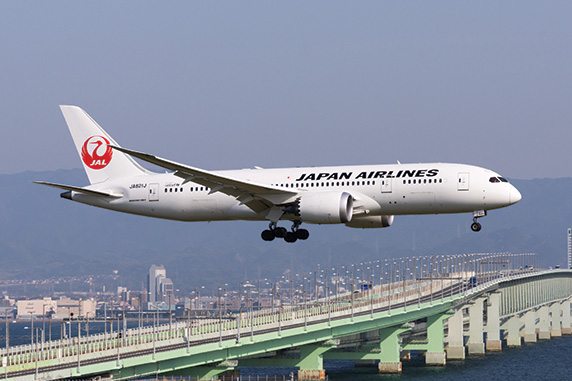
Top Japan AirlinesJapan Airlines’ inflight duty free management reports that sales rose by 4% in the year ending 31 March, 2016, (FY2015) lifted by the country’s economy last year. However, Takamasa Sasaki, JAL’s Inflight Sales Merchandising Team Chief Manager in Jalux Inc’s Direct Marketing Department expects it will be tougher this year.


“Almost all categories went well last year, but this year in Q1 FY2016, sales were down about 10% year-on-year, so maybe the whole year’s sales will be flat. for 85% of all inflight duty free sales in 2015, but the strengthening Japanese yen is a big concern, says Sasaki.


Body Japan Airlines


He says the airline is trying to address this by introducing more exclusive ‘JAL only items’ to the airline’s inflight brochure – an important step, considering 85% of all sales were made to Japanese passengers last year.


COSMETICS ACCOUNTS FOR 50%

JAL inflight sales magazine

“We have 125 items in our international JAL Shop brochure; perfume and cosmetics are 50% of these items,” he said. “About 30 of our items are exclusive to JAL. Usually we list exclusive items for a minimum of four months.


“Perfume and cosmetics is the largest category and represents a stable 45% share of JAL’s inflight revenue,” he said, adding that Japanese cosmetics sales are also rising.


Sasaki says watch sales also have more potential and he is considering increasing the number of listings to include models priced around JPY40,000 to JPY50,000 ($390 to $488).


[See TRBusiness’ October edition for the most comprehensive review of the Japanese duty free business, plus an in-depth interview with Japan Airlines-Ed].


Cannes: Randi Zuckerberg and the fear to fail

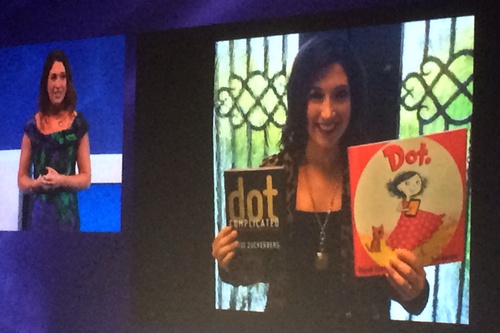
Zuckerberg with two of her books.

Zuckerberg with two of her books.

Following some good news on Q1 duty free growth from TFWA President Erik Juul-Mortensen and Julián Díaz González, CEO of Dufry, on the key issues facing the industry – social media pioneer Randi Zuckerberg [sister of Facebook’s founder Mark] and former UK Foreign Secretary, David Miliband, took on very different topics.

Zuckerberg – who ran Facebook’s social media marketing programmes from 2005-2011 and is the Founder & CEO of boutique marketing firm and production company Zuckerberg Media, and host of Dot Complicated on SiriusXM Business Radio – gave a very entertaining presentation which was lapped-up by her audience.

In her style of deprecating humour she described herself as ‘height-challenged’ but also offered up the tongue-in-cheek reference to the fact that she has a degree from Harvard University – unlike her more famous sibling.

“My home address often feels like JFK Airport,” she said, linking in to the world of travel retail. Thereafter she pointed out some of the reasons why Facebook had so spectacularly succeeded as the go-to social media website when there were so many other rivals at the time such as MySpace.

“It was launched with exclusivity (and) encouraged real identity of the user which changed the nature of the Internet,” she said. By that she implied ‘for the better’, as people were nicer and friendlier whereas anonymity led to a tendency for indiscriminate comments, often unnecessarily negative.

COMPANY CULTURE

She also made an interesting point that – unlike many companies today which are totally driven by customer demand – Facebook started out with a focus on its internal culture. “Your company culture bleeds out,” she says, assuming it is one that is liked and is infectious enough.

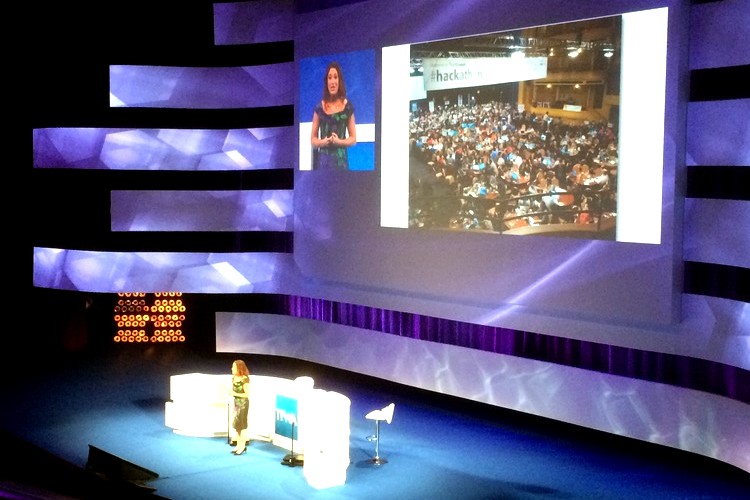
Zuckerberg was a hit with the audience.

Zuckerberg was a hit with the audience.

As part of that, she described the ‘hackathons’ held by Facebook to encourage staff to engage in project they had always wanted to work on – however bizarre: note the concept of using a specific jump on a trampoline rather than a pin code to unlock an iPhone, as one example.

The idea was to allow creativity to flow through and for people to not be afraid of failure – something that is increasingly not allowed to happen in corporate culture today.

Hackathons always came up with a couple of good ideas says Zuckerberg and one of her own – a 24/7 news-within-Facebook concept which morphed into Facebok Live with Randi Zuckerberg –is now a big hit used by the likes of pop stars to President Obama to make major announcements.

THE DARKER SIDE & ON-DEMAND

She acknowledged, however, that “our relationship with technology is not always 100% healthy”. Her examples included Google’s self-drive cars that encourage other drivers to stare at them and potentially have an accident, or young children who Skype so much that they think the other person actually lives in the computer.

At the same tech has opened the door for new, and sometimes implausible, ‘on-demand’ businesses. Uber is now fairly widespread globally while Manservant.com offers a service where you get a personal assistant who compliments you every 10 minutes, while EazeUp.com helps patients receive medical marijuana in California.

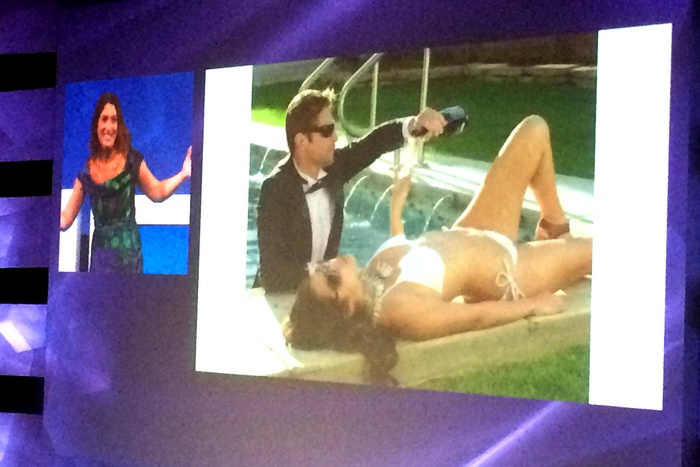
Technology has opened up some rather niche services like ManServant.com.

Technology has opened up some rather niche services like ManServant.com.

The move and expectation for on-demand satisfaction, means that travel retailers should be thinking about such services inside their stores or in the business class lounge argues Zuckerberg. “Airports have physical space so should be able to accommodate more services,” she said.

She also talked about the ‘make movement’ where people were buying kits to put together themselves, and 3D printing for services from initialling the bottom of shoes to building whole houses in a day which she said was happening in China.

Virtual reality was another area where retailers could get more involved. Oculus headsets now make it possible to experience a wide range of VR from cooking to a concert orchestra and she saw no reason why a passenger could not get the airport duty free store experience on the way there in a taxi.

In a final Q&A session with BBC journalist and presenter of current affairs programme, HardTalk, Stephen Sackur, she reiterated here stance on creative input. “We can’t be afraid to fail. If we don’t try new things that’s when we fail. Companies should throw some version of a hackathon…if even to look at one problem and reflect on it.”

[TRBusiness will bring you David Miliband’s ‘big picture’ presentation very soon so please check back for updates.]

Juul-Mortensen and Díaz upbeat at conference

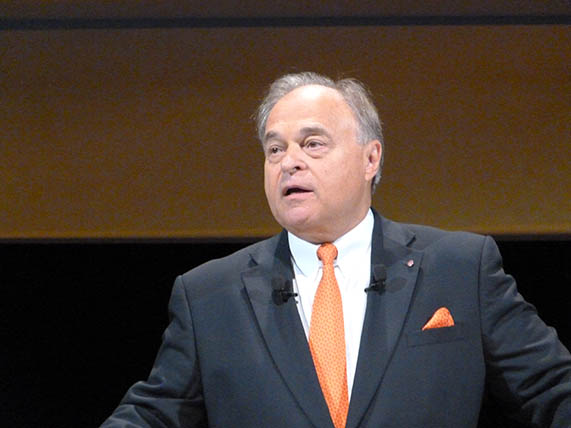
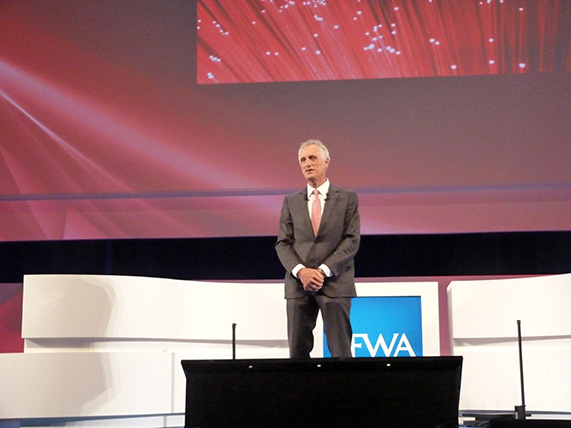
Top Erik Juul-MortensenThe annual Tax Free World Exhibition conference began in Cannes this morning with Tax Free World Association President Erik Juul-Mortensen and Dufry CEO Julián Díaz in positive form.

Both gave very focused views of the future as they see it – short and medium term – while pointing to multiple challenges along the way.

Juul-Mortensen began by offering his sympathies to the town of Nice, following the terrible act of terrorism last July, before launching into his presentation where he chronicled several issues that have impacted on the industry.

Despite one of the toughest environments in recent years, he declared that he still remains upbeat, with his optimism based on encouraging signs and not just wishful thinking.


Erik Juul-Mortensen

Tax Free World Association President Erik Juul-Mortensen.

He described the year gone by as ‘momentous’ for many reasons and pointed to Brexit in tn the UK, growing calls for membership referendums in other member states and the growing disconnect between politicians and the people they are supposed to represent.

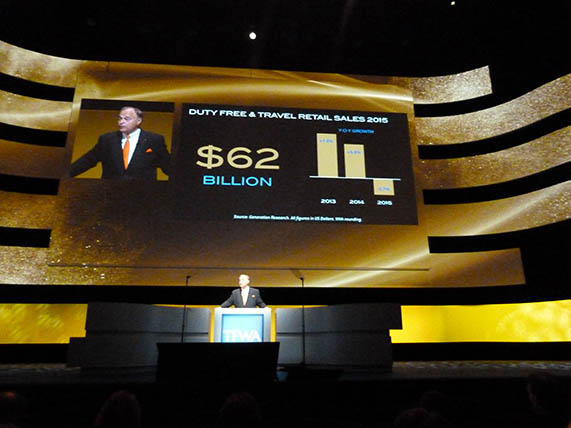
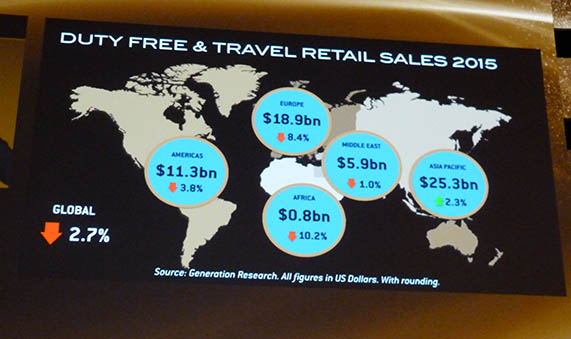
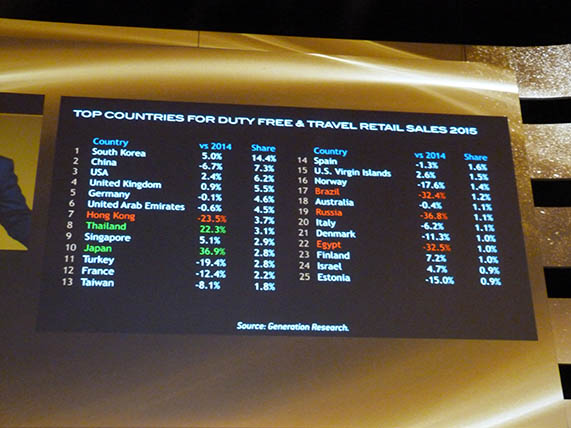
He then pointed to the 2015 -2.7% sales decline in the DF&TR industry as the first drop in sales for six years. He described this as ‘a climate of uncertainty’ with only fragrances and cosmetics emerging as one the single category in positive territory.

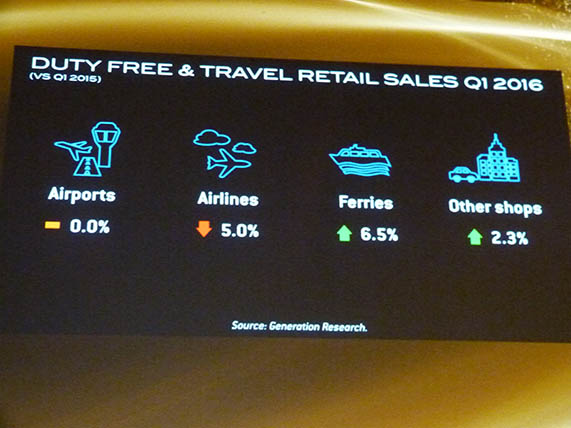
In his slide presentation he also catalogued the falls in DF&TR sales in several markets and the strong growth in others such as Thailand and Japan, while pointing to the more encouraging news from industry experts Generation that seems to indicate that the business is inching its way back into growth again.

He then gave a picture of the world economic outlook and talked about consumer confidence, spending, traffic growth and the increasing middle class, while pointing to the 4% increase in tourism arrivals to 1.2bn as reported by the World Tourism Organization in 2015.

Juul-Mortensen also singled out cruiselines as one fast growing segment with numbers up to 24m a year now, while Boeing and Airbus continue to invest in new technology alongside airports.

Retailers and brandowners continue in the same vein, he said, as companies in both sectors undergo change and continue to diversify. With this in mind, he said the DF&TR industry must also continue to invest if it is to earn the loyalty of travellers.

As such he said the business is under pressure on a number of fronts from regulatory changes
and the whole industry is impacted by these changes. Confectionery, alcohol, fragrances and cosmetics are all affected and there are no exemptions for the DF&TR business, he said.

He also warned that failure to face up to these challenges will harm the interests of everyone in the conference room.

On the good news front he also pointed to good progress with the Duty Free World Council Academy and the meaningful research and development taking place there, before unashamedly plugging TFWA’s involvement in next month’s MEADFA Conference (November 28-29) and the China Century Conference (7-9 March) next year.

(A selection from Juul-Mortensen’s slide presentation can be seen below and will be added to in the next day along with the presentation from Julián Díaz).

Erik 2

Erik3 Erik 5 Erik6Erik3


DUFRY PRESENTATION:

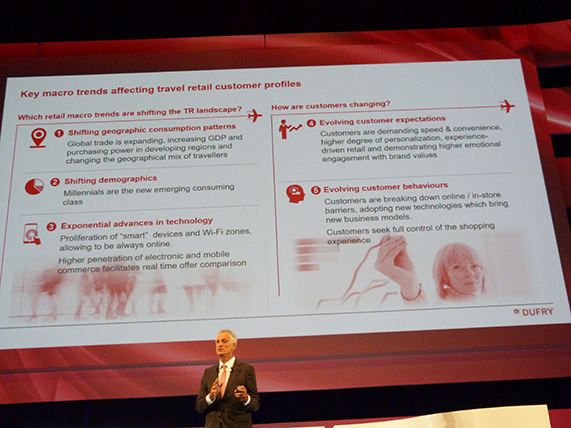
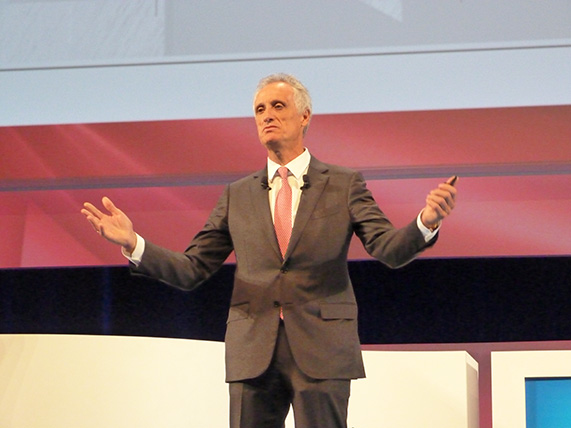
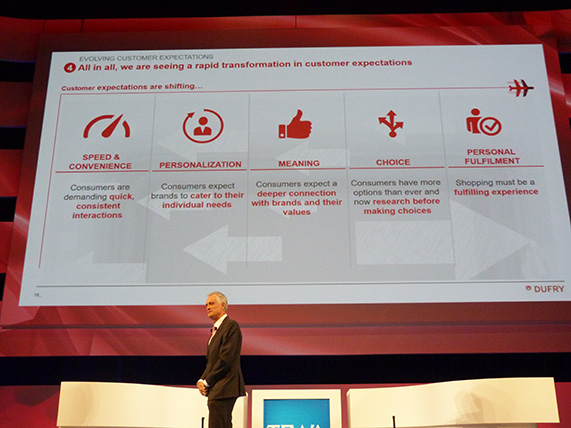
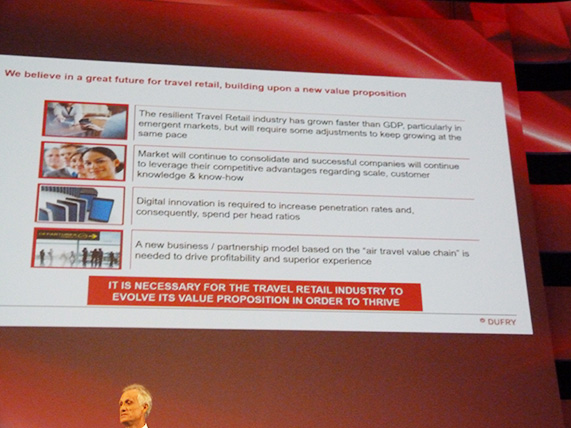
Julián Díaz started his presentation by saying that the travel retail environment is changing, so raising questions on the current proposition to the customer.


Diaz 1

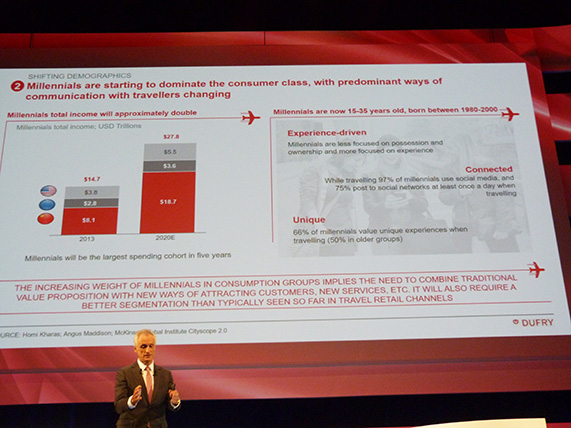
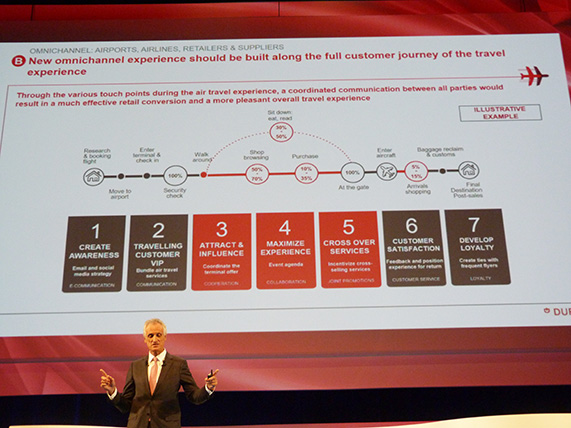
The moving factors in the travel retail environment include a changing customer profile and their expectations, plus evolving ways of travelling, technology offering new opportunities and changes to Operator/Supplier environments.


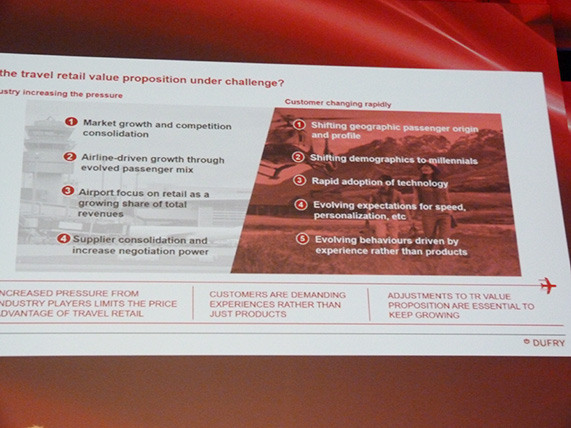
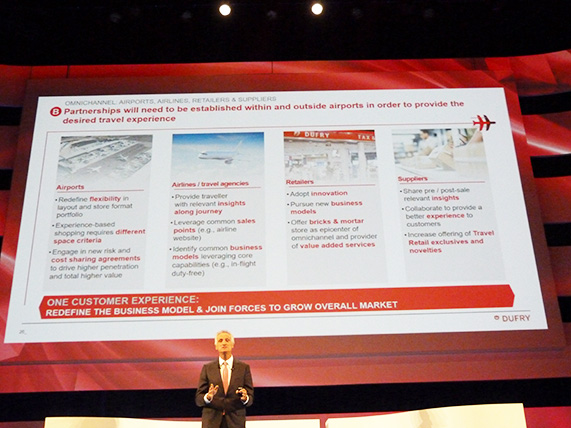
He then posed three questions of where does the industry stand; is the travel retail value proposition under challenge and what will the future value proposition be for travel retail customers?


Diaz 2


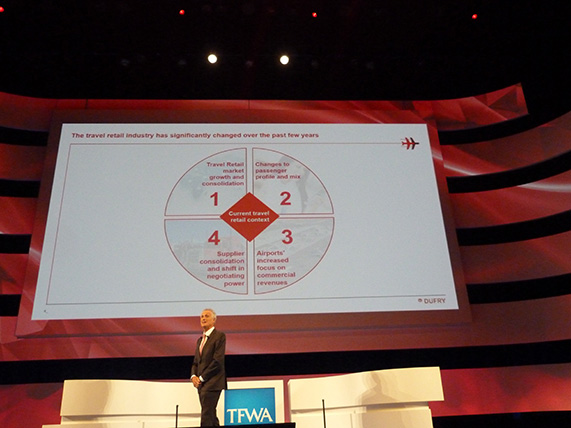
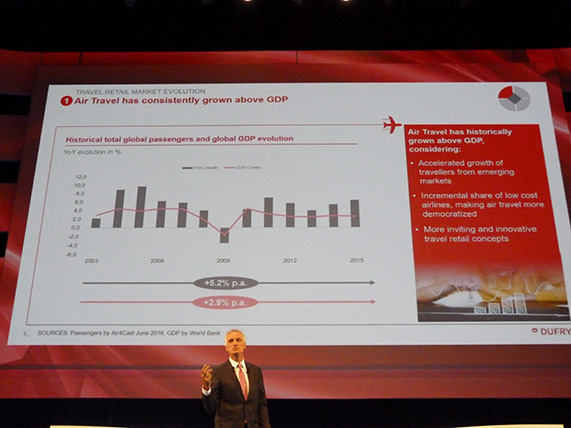
Díaz pointed to travel retail market growth and consolidation, changes to the passenger profile and mix, airports’ increased focus on commercial revenues and supplier consolidation and the shift in negotiating power.


He said that air travel has historically grown above GDP with accelerated growth of travellers from emerging markets and the incremental share of low cost airlines making air travel more democratized.


Diaz 3


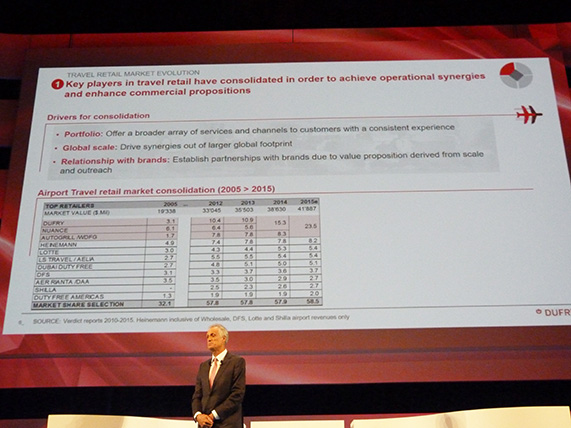
Key players in travel retail have consolidated in order to achieve operational synergies and enhance commercial propositions.


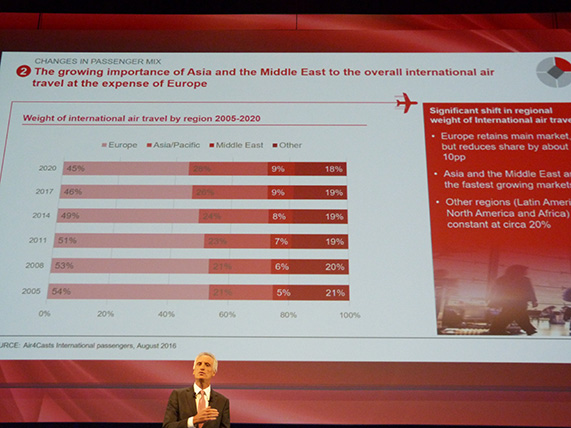
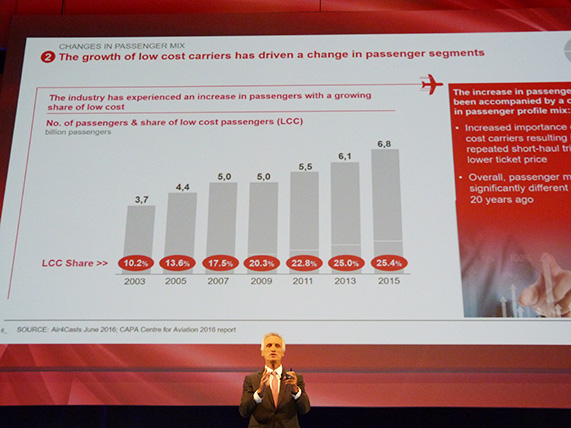
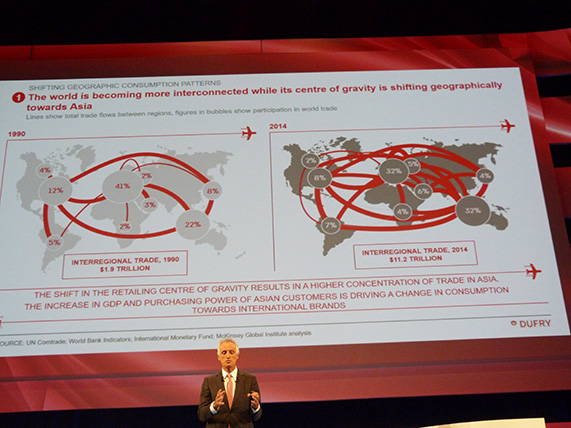
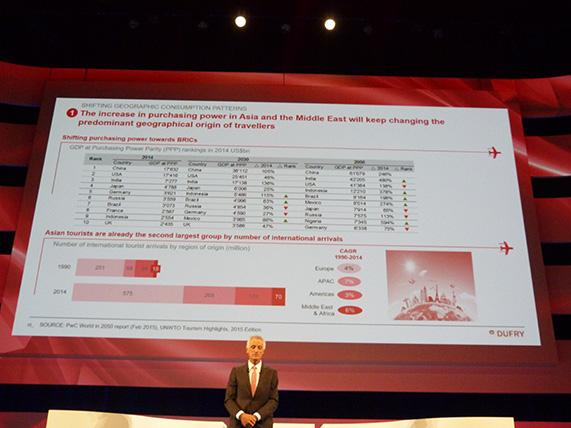
Díaz then highlighted the growing importance of Asia and the Middle East to the overall international air travel at the expense of Europe. At the same time, the growth of low cost-carriers has driven a change in passenger segments, while airports have increasingly focused on commercial revenues, so placing more pressure on travel retailers.


Diaz 4


He then took the airport acquisition records of Fraport and Vinci as examples of two active players to show how this part of the business has also been consolidating, before doing a similar exercise with suppliers. Díaz quoted Generation’s figures to show that in tobacco, Philip Morris, BAT, JTI and Imperial Tobacco hold an 81% share of the market and he pointed to other sectors in the same vein.


He said 55% of the fragrances and cosmetics category is dominated by L’Oréal, Estée Lauder, LVMH and Chanel; 52% of liquor by Diageo, Pernod Ricard, LVHM and Bacardi; and 50% of confectionery by Mondelez, Mars, Ferrero and Nestlé (all Generation July 2016 numbers).


Diaz 5


Díaz’s point was well made that consolidation has actually been taking place in all sectors of the business and not just retail and charted some of this activity in the supplier sector in particular.


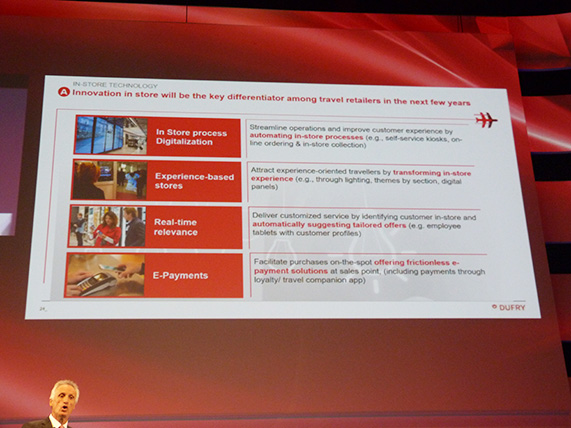
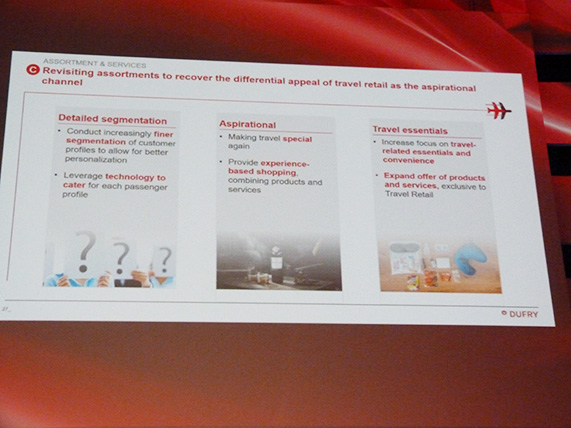
The rest of Díaz’s slide presentation is self-explanatory as it follows in order here:


Diaz 6

Diaz7

Diaz 8

Diaz 9

Diaz 10

Diaz 11

Diaz 12

Diaz 13

Diaz 14


Diaz 15

Diaz 16

Diaz 17

Diaz 18

Top 10 operators up +7.6% to $28.6bn in 2015

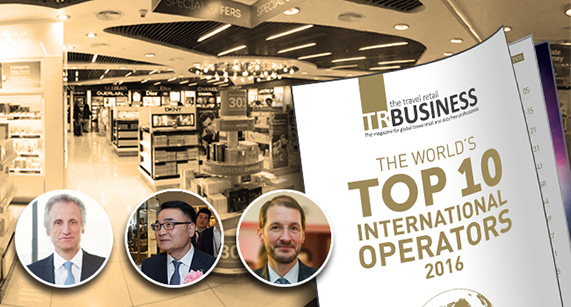
Top 10 operatorsThe world’s Top 10 international duty free and travel retail operators achieved total sales of $28.65bn in 2015, a +7.6% increase on 2014 as they collectively outperformed 2014 and outpaced the global industry, where sales fell back by -2.7% to $62bn.


All Top 10 Operators as ranked here accounted for 46.2% of the entire $62.00bn total sales generated by the DF&TR industry in 2015.


The ranking – which is noted for its accuracy over a period of several years – saw Dufry come in at number one with sales of $6.20bn (+47.6%), followed by Lotte Duty Free with $4.20bn (+4.5%) and Lagardère Travel Retail in third place, with $3.98bn (+10.6%).


RANKINGS THROUGH TO TEN

The subsequent rankings from fourth to tenth were as follows: DFS Group $3.50bn (-14.6%); Heinemann $3.10bn (+19.2%); Shilla Duty Free $2.20bn (+4.8%); King Power International Group/new entry $2.00bn; Duty Free Americas $1.30bn (+4.0%); China Duty Free Group $1.20bn; and Aer Rianta International $0.97bn (+12.8%).


Top-10-Operators-2016 copy 2

The Top 10 Operator’s sales reached $28.65bn in 2015, a +7.6% increase on 2014. The report was written by Charlotte Turner, Kevin Rozario and Doug Newhouse.


These are the top line findings in the exclusive TRBusiness Top 10 Operators Report 2016 where sales were based on average exchange rates from 2015 for the first time since the report has been published every year since 1998.


NEW METHODOLOGY

This new methodology serves to help smooth out currency fluctuations and provide what we believe is a better reflection of each company’s ‘real’ performance. Even so, this does not negate all the real impacts that fluctuating currencies had on some retailers in this year’s report.


Various operators endured sustained negative currency impacts on corporate earnings. For example, companies reporting in euros saw the dollar continue its 2014 rally against the Eurozone currency into this year.


In 2015, volatility was not merely isolated to the euro; after an early fight-back devaluation of the Russian rouble continued, while the Brazilian real saw a steady weakening in 2015 – with some far-reaching consequences, especially for Dufry.


The world’s biggest DF&TR operator said it faced ‘a tough economic environment impacted by considerable FX volatilities’ last year. In an exclusive interview with TRBusiness, the company’s CEO, Julián Díaz, said the volatility last year was the ‘strongest’ he had seen in his career.


Top 10 retailers pic A

From left to right: Julián Díaz, CEO, Dufry; Seung Kook Lee, MD of Lotte Duty Free’s Merchandising Division 1; Dag Rasmussen, CEO, Lagardere Travel Retail; Philippe Schaus CEO DFS Group; and Gunnar Heinemann, Co-Owner Gebr. Heinemann.


ALL TOP 10 RETAILERS FACE CHALLENGES

Meanwhile, the world’s biggest duty free market in South Korea certainly felt the pain, although this was not directly related to currencies but more to the MERS virus, which kept high spending Chinese tourists at home for several months in 2015.


Fortunately, this lasted just a few months, allowing Lotte Duty Free and Shilla to go on to post impressive total sales of $4.2bn and $2.2bn respectively.


Third-place Lagardère Travel Retail also made some good progress in 2015, despite the tragic November 2015 Paris attacks which dented sales.


Both LTR’s Chairman and CEO Dag Rasmussen; Ambroise Fondeur the CEO of Aelia and Frédéric Chevalier, LTR’s Chief Business Officer were all seemingly reasonably confident about the future in the face of very real threats to the broader DF&TR market.


This report was written by Charlotte Turner, Kevin Rozario and Doug Newhouse, with all of these retailers mentioned so far interviewed on a one-to-one basis at the highest management levels for this 94-page analysis – as were nearly all of the remaining seven.


Top 10 operators B

From left to right: Younghoon Kim, Vice president, Shilla Duty Free Shop; Susan Whelan, Senior Executive Vice President, King Power International Group; Leon Falic, President, Duty Free Americas; Peng Hui, Chairman of China Duty Free Group; and Jack MacGowan, CEO, Aer Rianta International.


UNRIVALLED DETAIL

All of the individual retailer reports in this analysis also cover detailed commentary on each and every company in greater performance detail than any other single report produced anywhere on the planet.


As such, this report can be accessed on a very limited ‘first-come, first serve’ basis within the publications area of the Palais de Festivals at the Cannes TFWA World Exhibition between 2-7 October.


Thereafter, it can only be accessed only as a subscriber to TRBusiness magazine, or on a one-off purchase basis.


For more information contact Janice Hook at: Tel: 44 (0) 208330 9444, or by email at: [email protected]