Archives

Hong Kong retail sales plunge for 17th month in a row

HK retail sales 07 16

Things are not exactly looking up.

The bad news continues for Hong Kong’s downtown duty free and travel retailers such as DFS as the latest retail sales statistics show another month-on-month decline.

July government data provisionally indicate that the value of total retail sales in July fell by -7.7% to HK$34.6bn/$4.46bn, compared with July 2015. This means that for the first seven months of 2016, the value of total retail sales decreased by -10.1% compared with the same period in 2015.

The trend in department stores was slightly better: in July they fell by -6.9% and by -8.7% in the first seven months of the year.

The graph above (click to enlarge) shows the rate of change on a monthly basis for all retail sales in Hong Kong and it suggests that since the second quarter of 2015 there has been continuous downward, negative pressure on sales [the spikes reflect the timings of Chinese New Year].

HIGH-VALUE ITEMS HAMMERED

By those product categories most relevant to duty free, the figures showed a very mixed performance in July. Value sales of jewellery, watches and clocks, and ‘valuable gifts’ took a beating, decreasing by -26.2% as did electrical goods and photographic equipment (-21.8%), while footwear, allied products and other clothing accessories held their ground at (-1.1%).

The tourism trend this year looks worse than in 2015.

The tourism trend this year looks worse than in 2015 which is a worry.

Positive growth came from apparel (+1.8%); medicines and cosmetics (+9.0%); food, alcoholic drinks and tobacco (+1.3%); and books, newspapers, stationery and gifts (+2.8%).

The overall negative trend has been attributed to the depressed tourist traffic coming to Hong Kong, particularly from China. While the July figures are not yet available, in the half-year to June visitor arrivals fell by -7.4% to 27.16m, with mainland Chinese traffic falling by over -10%.

This follows an inbound decline of -2.9% to 59.3m in 2015, but a spending decline of -7.5% to HK$332.3bn. Of the 59.3m, Mainland China continued to be the largest visitor source market accounting for 77% of total arrivals.

ISG and CSG form major China Inflight Services JV

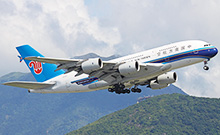
Top China Southern Airlines A380Inflight Sales Group (ISG) founder and CEO Jean-Marcel Rouff has signed a landmark joint venture airline agreement with the China Sales Group (CSG) to create China Inflight Services – a new company where both parties will work together on supplier negotiations and new business ventures.


As the clear market-leading concessionaire in China, ISG is forming China Inflight Services from September 2016 with the China Sales Group. This company operates all of China’s major international airline inflight retail programmes and it is now headed by newly-appointed CEO, Mr Zhang James.


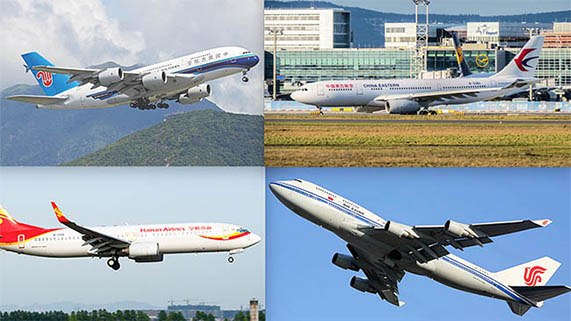
CSG also has more than 20 years experience in the market – currently holding contracts with Air China, China Eastern, China Southern, Hainan Airlines and others. Along with ISG it also expects that the new China Inflight Services company will be able to generate real growth in inflight sales revenue, benefitting airline customers and ISG and CSG.


Jean-Marcel Rouff

Jean-Marcel Rouff outside his central Paris home.

NEW MANAGEMENT TEAM

Zhang James and Marcel Rouff will head the company as Co-Chairmen, while Patrick Garreau will be the new Director of Purchasing Services working on day-to-day operations. Meanwhile, CSG’s new offices will be located in CSG’s Hong Kong Tsim Sha Tsui Centre headquarters.


In a statement, both companies said that this new joint venture will streamline and improve procurement for both ISG and CSG by synergising the marketing, sourcing and logistics capabilities of both entities.


Both parties are also promising to pool their expertise to deliver better services to brandowners and provide greater image enhancement for their brands and products – thanks to increased training of airline crew and better inventory management.


The new partners also add that China Inflight Services (CIS) will be better equipped to meet the expectations of both airlines and passengers with ‘the best possible selection of products’ and improved customer experience, through ‘preferred collaborations with brands and more relevant marketing programmes’.


Chiinese Carriers

All of these Chinese carriers and many others will fall into the portfolio of the new joint-venture company, whose customers will potentially represent some of the most premium high spending passengers in the inflight business anywhere in the world.


A VERY STRONG ALLIANCE

Commenting, ISG CEO Jean-Marcel Rouff said: “I am very pleased to be deepening our partnership with CSG, which has been a very important one for me. We are confident that together, our synergies will allow both our companies to benefit in today’s environment.


“ISG has recently completed extensions with several major customers, and is well-placed to focus on improving both sales and terms with key suppliers.”


CSG’s Mr ZHANG added: “We are particularly pleased to be working with ISG to reinvigorate our airline inflight retail programmes. CSG has just been awarded a new long-term contract with Air China and with contracts of similar duration already in place for China Eastern, China Southern and Hainan Airlines.


“This allows us to focus on strengthening our position within the market, and working with ISG to advocate for the airline sector in Greater China and APAC.”


Updated: DF at Jakarta T3U to gain from up to 25m pax

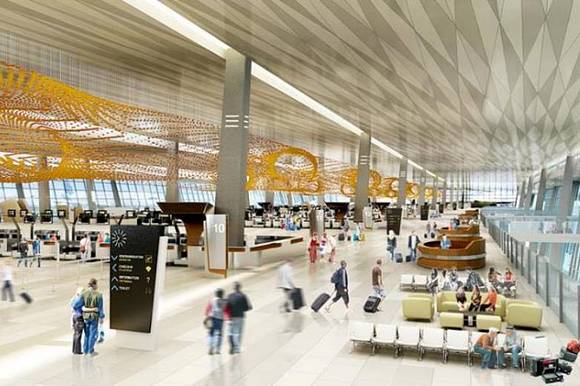
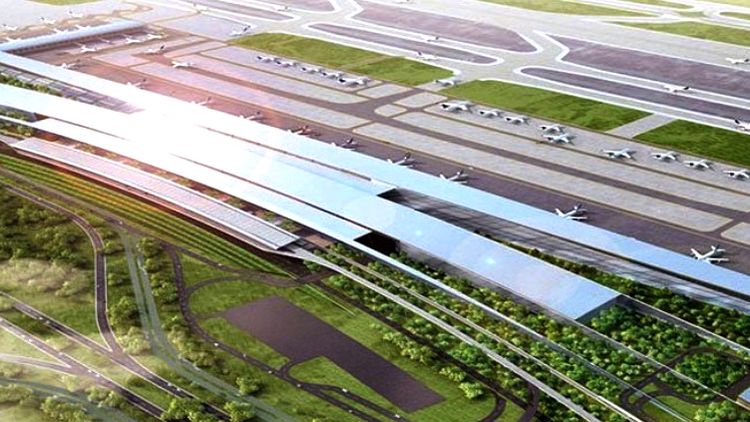
T3U inside (impression).

T3U inside (impression).

Indonesia’s busiest airport, Soekarno–Hatta International (CGK) in Jakarta, is ready for a step change in its service and performance with the opening of the $380m ‘Terminal 3 Ultimate’ on 9 August. The winners of the two duty free and travel retail concessions at the terminal – announced in early July – will also benefit from its use as the core international transfer terminal, led initially by airline Garuda Indonesia.

The current exclusive use of T3U by the national carrier will be followed by other Sky Team members, and then the other alliances: Oneworld, Skyteam and Star Alliance – plus other airlines flying internationally. This will ensure a high number of connecting passengers and lead to potentially better dwell times in airside commercial areas – as well as easing the heavy congestion at CGK, which handles 54m passengers annually.

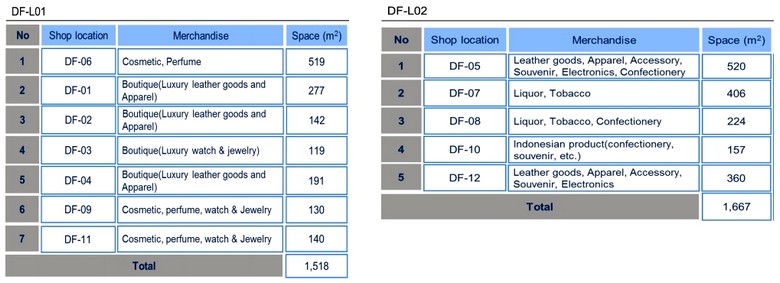
The respective winners of the two five-year master concessions available – essentially for beauty and luxury goods; and liquor, tobacco and confectionery (see tables below) – were DF&TR operators, Aura Cantik (which partnered with Aer Rianta International), and Dewataagung Wibawa (which operates Plaza Bali Duty Free), according to CGK operator, Angkasa Pura II. The state-owned operator [which runs another 12 airport in Indonesia] released a statement to this effect on 1 July.

Jakarta T3U lots

Aura Cantik has taken Lot 1 and Plaza Bali has Lot 2.

INTERNATIONAL OPS NOT YET READY

Plaza Bali told TRBusiness last week that it will operate five shops with a total area of 1,667sq m, slightly bigger that the other concession. “Our sales rights are within the categories of liquor, tobacco, confectionery, souvenir, electronics, leather goods, apparel and accessory,” a spokesperson said.

He added: “Based on the original plan, we are going to open the shops in stages starting from the beginning of next year. However it depends on the readiness of the operation of the international section of T3.”

Aura Cantik and Aer Rianta International – which have both, so far, declined to comment on the award of the second concession – are set to operate the DF&TR retail across seven stores covering beauty, watches/jewellery, and leather goods at the terminal over an area of 1,518sq m.

T3U is claimed to be bigger than Changi T3.

T3U is claimed to be bigger than Changi T3.

T3U [not connected to the old T3] is currently only serving Garuda Indonesia domestic flights, with 80% of the F&B outlets also now open in the domestic area only. It has 10 international gates, 20 domestic gates, and 10 bus gates and is designed to be larger than Singapore Changi Airport’s terminal three when completed.

Garuda’s international flights are expected to move into the terminal in a phased way in the coming months with completions by March 2017. By then the terminal should be capable of handling 25m passengers on its own.

Flemingo partners Wild Tiger in Chennai and Kolkata


Wild Tiger RumThe first Indian premium dark rum brand, Wild Tiger Special Reserve, is set to enter Chennai and Kolkata airports through a deal with duty free and travel retailer Flemingo International.

Wild Tiger is currently available in duty free at Bangalore and shortly at Mumbai too, with Chennai and Kolkata expected “in the weeks ahead” claims the brand.

Wild Tiger had a trade launch in the UK in November last year and has expanded the domestic markets of seven countries including the US, UAE, Czech Republic and Denmark.

Menon's tiger-stripe branding has on-shelf presence.

Menon’s tiger-stripe branding has on-shelf presence.

Since the brand’s foray into DF&TR earlier this year, Tiger Air Singapore – which added the product in July – is extending the listing into 2017 on the back of promising on-board sales.

Gautom Menon, the Keralan drinks entrepreneur behind “Asia’s first sipping rum” as he describes it, says of travel retail: “The ‘sixth continent’ is not easy for new brands but we are slowly seeing some favourable results. Tiger Air has worked out great for us and we are soon being listed with one of the largest duty free operator’s in Asia, and also on board two leading full-service air carriers.”

Driving DF&TR sales is Wild Tiger’s novelty factor and tiger-print look, as well as pricing ($23 in Asia). The brand is planning a promotional campaign ‘Roar this Diwali’ for the key Indian festival.

Global tourism to grow +3.1% despite terrorism and turmoil

Top David Scowsill, President & CEO of the WTTCThe World Travel & Tourism Council (WTTC) is forecasting +3.1% ‘long-term growth’, despite the major macro-economic challenges posed by terrorism, political turmoil, exchange rates and issues such as Brexit.


Within its updated WTTC Economic Impact Report 2016, the global tourism body says that despite the many challenges faced by the travel and tourism industries over the first six months of 2016, the sector is still expected to grow by 3.1% and now set to outpace the previous global economic growth forecast at 2.3%.


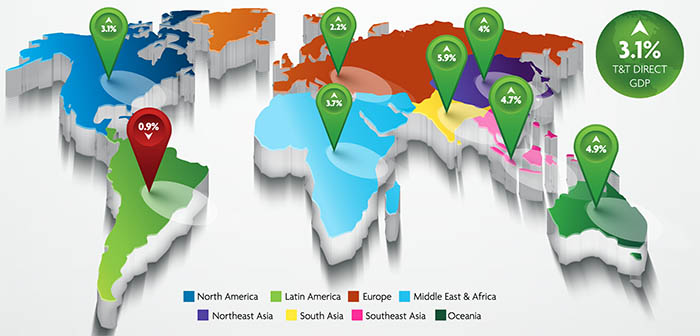
The WTTC says the regional outlook for direct Travel & Tourism GDP in 2016 points to South Asia as leading  growth at 5.9%, driven by strong economic prospects in India. However, it believes that Latin America will be the worst, with an expected 0.9% decline. It adds that this will be driven by continuing ‘weakness in Brazil’.


ASIA REMAINS POSITIVE

More positively, the Northeast and Southeast Asian regions are both expected to show solid growth at 4.7% and 4% respectively, stimulated by growth in Mainland China of 6.3%. North America is also predicted to perform well, with forecast growth of 3.1%, while Europe will be challenged by lower visitor spend, but will nevertheless still grow by 2.2%.


Despite this mostly positive global picture, the WTTC admits that the outlook for some countries has deteriorated since its last March 2016 forecast – mostly due to terrorism incidents.


Tourism growth exected in 2016

The forecast direct impact on travel and tourism (T&T DIRECT GDP) by region in 2016. [Source: World Travel & Tourism Council (WTTC).


COUNTRIES AND MARKETS THAT ARE SUFFERING

In France, the sector’s direct contribution to GDP is still growing, but the forecast has been reduced from 2.9% to 1.1%, due to macroeconomic downgrades in other European countries, and compounded by the recent incidents in the country, including the atrocity in Nice.


In Turkey, the lack of growth in travel and tourism’s direct contribution to GDP has also been reduced further from -0.2% to -3.2%, due to several tragic terror attacks, a massive downturn in tourism revenues following the  diplomatic dispute with Russia – plus a failed coup and the country’s perceived proximity to the Syrian conflict.


Unfortunately, Brazil is also expected to continue to contract, despite a minor boost in positive perception from the recent Olympic Games. The WTTC now says that its growth prospects have been downgraded from -0.9% to -1.6% as a direct result of political turmoil and weak macroeconomic performance.


Meanwhile, back in Europe (so to speak) the UK is expected to ‘hold up well in 2016’ with growth of 3.6%, with weaker domestic spending growth and a projected 3% decline in UK outbound holidays expected to be offset by higher spending in the UK by international visitors – thanks mostly to the favourable exchange rate. [The report also includes a focus on the impact of the Brexit decision-Ed].


David Scowsill, President & CEO of the WTTC

David Scowsill, President & CEO of the WTTC.


TOURISM OUTPACING ECONOMIC GROWTH BY 1%…

Commenting on the findings, David Scowsill, President & CEO of the WTTC said: “Our update report highlights the resilience of travellers and the robustness of our sector, as tourism continues to outpace global economic growth by nearly 1%.


“Whilst we should not downplay the impact of incidents or turmoil at individual country level, on a macro-economic level we continue to register strong growth. It is important to remember that tourism is a force for good.


“It brings tremendous social and economic benefits to countries and connects people from different cultures and backgrounds. We call on governments to continue to focus on the economic and social benefits of Travel & Tourism, and to work together with the private sector to combat some of the challenges we face.”

DFASS launches new duty service on Royal Jordanian

Royal_Jordanian A330-200Jordan’s national flag carrier Royal Jordanian (RJ) has introduced its new inflight duty free programme operated by the DFASS Group to its international fleet – operating principally out of the country’s main airport base at Queen Alia International Airport in Amman.


Jordan’s flag carrier is operating the new programme in partnership with DFASS, as reported back in March of this year [click here for reference: http://www.trbusiness.com/regional-news/middle-east/dfass-partners-with-restructuring-royal-jordanian/102838].


In a statement from the airline which was also released by the Petra News Agency yesterday, the airline says this new programme will now allow passengers to select products from ‘a vast range’ of prestigious brands on most RJ aircraft, particularly those on long- and medium-haul routes.


It also adds that ‘under the agreement signed with DFASS Group’ it will have access to its large network of product resources to formulate a unique programme for its passengers.


THE NEW PRODUCT MIX

The product mix now includes fragrances and cosmetics, watches, jewellery, tobacco, sunglasses, RJ-branded items and other items, with payment taken in Jordanian dinars, euros, US dollars or British pounds, using cash or credit cards.


Royal Jordanian Airbus A330-223 (Ohoto credit Konstantin von Wedelstaedt

A Royal Jordanian Airbus A330-223 prepares to land at London Heathrow Airport. [Photo credit: Konstantin von Wedelstaedt].

‘ADDED VALUE’ FOR BOTH AIRLINE AND PASSENGERS….

Commenting on the new arrangement, RJ’s President/CEO Captain Suleiman Obeidat said: “Royal Jordanian’s objective to sell duty free goods on board is an added value to the customer service it offers its passengers. This time-saving shopping experience will enable our passengers to buy their needs during their journey time.”


He added that the programme will support the airline’s ancillary revenues, creating an additional opportunity to generate revenues. [Revenue management is the third pillar of the latest Royal Jordanian business plan covering 2015-2016 which is focused on several measures to boost revenues – including ancillary revenues which the airline lists as its fourth pillar in its plan-Ed].


Adding his comments, DFASS VP Operations-EMEA Mario Mouarbes said: “DFASS is excited to commence operations in Jordan and will leverage its global reach to ensure that Royal Jordanian is bringing first-class services to its passengers through state-of-the-art systems.”


Repeating the earlier statement made after it was appointed back in March, DFASS said that Royal Jordanian chose DFASS ‘after a rigorous request for proposal (RFP) process’, with several factors taken into the evaluation, including information technology, creative sales and marketing plans, plus access to various products, as well as a global operational infrastructure.


Royal Jordanian

Royal Jordanian Airlines is credited with making some tough decisions in recent years to get itself back into profit and it now has a six-pillar plan, including more emphasis on ancillary revenues to help keep the airline in profit.


ROYAL JORDANIAN’S SIX PILLAR BUSINESS PLAN

As mentioned, Royal Jordanian is now implementing its business plan for 2015-2019, which consists of six pillars. The first focuses on the route network and the fleet with the airline deciding to close eight destinations due to ‘poor feasibility’ in Delhi, Mumbai, Colombo, Accra, Lagos, Milan, Al Ain and Alexandria.


It also suspended operations to eight other cities for security reasons, including Damascus, Aleppo, Mosul, Tripoli, Benghazi, Misurata, Sanaa and Aden, while phasing out a number of aircraft and introducing five new Boeing 787s.


The second pillar of the plan involves boosting the local market share and growing by directly increasing the number of passengers from and to Jordan, while increasing transit traffic via the kingdom.


The third is revenue management and the fourth is the aforementioned ancillary revenue generation. Last, but not least, the fifth pillar concentrates on the more efficient and cost-effective use of aircraft fuel.


This all follows the return to profit by Royal Jordanian last year. According to the airline, it now operates direct services to 55 destinations spread over four continents, and reaches more than 1,000 cities onboard its 14 oneworld partners, with only one stop from Amman.


 

Huge 3m-pax boost for LTR/Dufry at Italian airports

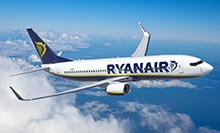
Ryanair AircraftThe world’s number one international scheduled airline Ryanair is to buy 10 aircraft worth plus-$1bn to operate 21 new routes out of Rome and Milan and 23 out of Italy’s regional airports, which it expects to deliver 3m additional passengers in 2017 (+10%).


The airline estimates that more than 35m passengers will fly to and from Italian airports in 2017, with a further 2,250 new jobs expected to arise from this new initiative.


HUGE BOOST FOR AIRPORTS AND OPERATORS

The news will obviously be welcomed by Lagardère Travel Retail (Aelia Duty Free), which operates the main airport duty free duty free concessions at Rome’s Fiumicino and Ciampino, while Dufry is the operator at Milan Malpensa.


This imminent huge traffic increase follows Ryanair’s immediate and positive response to initiatives taken by Prime Minister Matteo Renzi to reverse the €2.50 ($2.82) municipal tax increase from 1 September 2016, and Minister Graziano Delrio’s revised airport guidelines.


These open the door to allow Italy’s regional airports to compete on a level playing field with those in Rome and Milan, provided they are in line with the EU’s rules.


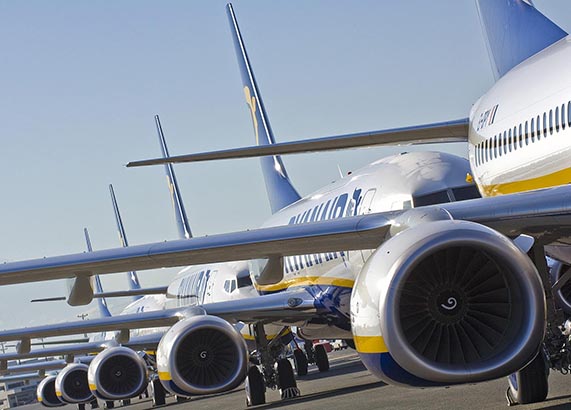
Ryanair stacked airraft

An additional 3m passengers will provide a huge boost to the retail shops operated by Lagardére Travel Retail At Rome Fiumicino and Ciampino airports and Dufry at Milan’s Malpensa.


RYANAIR THANKS ITALIAN PRIME MINISTER RENZI…

As a test initiative, this new agreement now allows the small airport of Pescara to reach a new growth agreement with Ryanair, which will now reverse its previously announced closure of its Pescara base last November.


This has proved to be the catalysts for Ryanair’s huge new initiative, according to Ryanair CEO Michael O’Leary: “We are extremely grateful to Prime Minister Renzi and Transport Minister Delrio for taking these initiatives to grow Italian tourism.


“All of this growth would have been lost to other EU countries if the Municipal Tax increase had not been reversed and the airport guidelines had not been redrafted to comply with EU rules.


“Minister Delrio has challenged the airlines to respond with growth if his Government acted to improve the competitiveness of Italy’s airports – and Ryanair is pleased to be the first airline to announce this record $1 billion investment in new aircraft, new routes, new traffic and job growth in Italy in 2017.


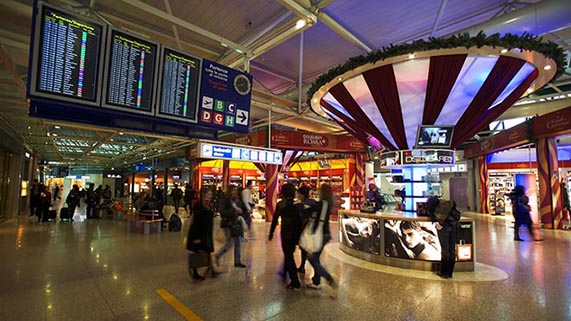
Rome Airport

Lagardére Travel Retail At Rome Fiumicino Airport trading under the ‘Good Buy Roma’ fascia. [Top two images on the left: LTR at Rome Fiumicino; and top two right: Dufry at Milan Malpensa Airport. Photo credits: Aeroporti Roma].


“We will also reverse our previously announced base closure in Pescara for W16 and these flights will go on sale later this week on www.Ryanair.com.”


O’Leary added that by opening over 40 new routes and by investing more than $1bn in new aircraft and new jobs next year, Ryanair expects to deliver record traffic growth, up from 32m in 2016, to over 35m.


Commenting on the new initiative, The Italian Minister for Infrastructure and Transport, Dr. Graziano Delrio said: “The Italian Government keeps on working on the compliance with the EU rules, we are committed to develop services to citizens and to foster opportunities for investors.


PRIMARY OBJECTIVE IS PAX GROWTH IN ITALY

“We welcome the 2017 industrial plan of Ryanair setting up more flights, increasing opportunities for tourism in Italy and especially new job opportunities.”


Meanwhile, the President of ENAC (Italian Civil Aviation Authority) Vito Riggio said: “The development of air transport represents a primary objective for the economic growth in our country. The times we are living in require a European perspective rather than a national one, especially for air transport and its regulations, always respecting fair competitiveness and passengers’ rights.


“The development plans of Ryanair and any other air carrier operating in Italy always represent to ENAC a significant opportunity to grow and further efforts to guarantee safety and high standards of quality.”


Global Shopping Forum in Hamburg to double in size

GSF logo 2016 3x2The third annual Global Shopping Forum (GSF) is set to double the numbers of attendees at this year’s event in Hamburg, Germany thanks to its focus on the hot topic of digitalisation in airport retail.

Following last year’s successful gathering in Frankfurt, which placed the emphasis on how to usefully target Chinese travelling shoppers, this year’s GSF is entitled: Travelling Shoppers in Times of Digitalisation.

The forum, which takes place on 20 October at the Empire Riverside Hotel, will host headline speakers from Facebook and Tripadvisor – both major draws for duty free and travel retailers wanting to know more about the link between social media, online marketing and DF&TR. The next day will feature a session devoted to real estate companies investing in airports.

Eli Fel from Global Blue developed the forum to bring key stakeholders together

Eli Fel from Travel Blue expects Facebook and Tripadvisor to be a big draw for DF&TR stakeholders. 

As well as the two online giants, more familiar industry names will be present including Lufthansa, Hainan Airlines, Air China, Hamburg Airport and Lagardère Travel Retail.

GSF Facebook Gultzow

Markus Gueltzow, Client Partner at Facebook.

BEST MOBILE STRATEGIES

Organiser, Eli Fel, Partner and Managing Director at travel accessories supplier Travel Blue Germany, says that this year’s event should attract about 120-130 delegates and will show them how to emulate the best connected strategies from airports, DF&TR operators, and retail and transport companies.

Facebook and Tripadvisor will offer guidance on best practices for positioning mobile strategies while the event will also examine ways to approach partnerships that will help grow distribution and expand the customer base.

Kian Gould from AOE.

Kian Gould from AOE.

Tripadvisor's Tom Breckwoldt.

Tripadvisor’s Tom Breckwoldt.

At this stage, confirmed speakers include Markus Gueltzow, Client Partner at Facebook; Tom Breckwoldt, Tripadvisor’s Territory Manager Germany, Austria and Switzerland; Marc Mangold, Marketing Director at Value Retail; and Lutz Deubel, Hamburg Airport’s Commercial Director and Head of Center Management.

Also expected to speak is Kian Gould, CEO and Founder of omnichannel, e-commerce and digital transformation company AOE. Frankfurt Airport (FRA) has used AOE’s services to expand its duty free revenue sharing model in the area of multi-retail, multi-channel solutions to offer pre-order and delivery tied in with its retail partners such as Heinemann, as well as F&B partners.

In April, FRA owner, Fraport, and AOE were given the Imagine Excellence Award for Best Omnichannel Experience for its new online shopping platform. Imagine in Las Vegas is one of the largest e-commerce conventions in the US.

For further information, programme and registration details about the GSF, please click here. Subscribers to the TRBusiness newsletter [subscribe here for free] can also get a -10% discount on Early Bird registration until 31 August using the code 8520.

BA cabin crew are yet to decide on industrial action

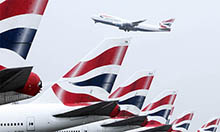
Top British Airways tail finsBritish Airways cabin crew are considering industrial action following the proposed introduction of a new ‘Dashboard Performance Management’ scheme, which its union claims is unfair.


Members of the 8,800-strong British Airlines Stewards and Stewardesses Association (BASSA), a section of Unite – the country’s largest union – have already voted by 91% majority for industrial action if necessary. However, British Airways has informed and corrected TRBusiness’ earlier report today, emphasising that the Unite ballot was only for industrial action and ‘strike action is not, and never has been on the cards’ and this ‘will not affect BA customers’.


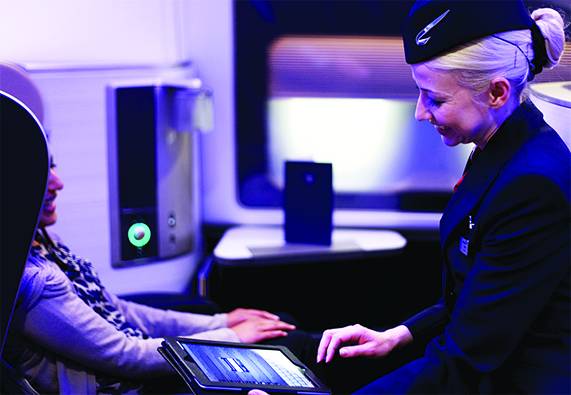
Meanwhile, cabin crew claim that the new performance management scheme is a needless replacement for the existing functioning system, adding that they have real concerns that its introduction ‘masks a hidden agenda’ of future job losses which could also impact on BA’s passenger service.


‘NO STRIKE ACTION…’

However, British Airways also offered its side of the story this morning: “We can reassure our customers that they will experience no inconvenience as a consequence of this ballot result. Unite has been clear from the start that it would not take strike action.


“The system we have recently introduced includes feedback from customers about how they are looked after onboard. This sort of feedback is common in all industries and enables us to commend cabin crew who perform well and support those that need to improve. A similar system already exists for many crew. Its allows us to offer our customers the very highest standards of service.
“We remain open to discussions with our cabin crew and their union representatives about this new system.”


Industrial relations at BA have been reasonably good over the last few years, until now

Industrial relations at BA have been reasonably good over the last few years.


FURTHER DISCUSSIONS DUE…

Meanwhile, for its part the union said it would not be announcing the dates of any industrial action until discussions take place with its BASSA representatives. It adds that immediate actions will include ‘non-completion of specific performance management processes’.


Commenting on the issue, Unite regional officer Matt Smith said: “A perfectly adequate performance management policy already exists.


“Our members have already overwhelmingly indicated they want this Dashboard system suspended until their worst fears have been allayed through meaningful consultation, with guarantees over job security.


“In its current form this new Dashboard system means, as an employee, you are constantly given red, green, and possibly amber based on a never ending ‘continual improvement’ score which, we believe, eventually year-on-year will become impossible to achieve. This would then give the BA management an excuse to get rid of dedicated long serving staff.”


Lufthansa and pilots union talks in total collapse again

Lufthansa pilots topTalks, which were expected to end the four-year long dispute between Lufthansa and the Vereinigung Cockpit pilots union, have once again broken down, with the union issuing a statement that it cannot make ‘sense [of this] in further talks’.


So far, the airline management has made no statement from its side, while onlookers such as Fraport, every German airport, passengers and Lufthansa’s service providers will all be bracing themselves for yet another painful round of disruptive strikes.


So far, the four-year dispute has led to more than ten strikes costing an estimated €500m ($566m) with the last action taken by pilots in September 2015. [There are 5,400 pilots at Lufthansa and subsidiary Germanwings-Ed].


Pilots walkout for safety

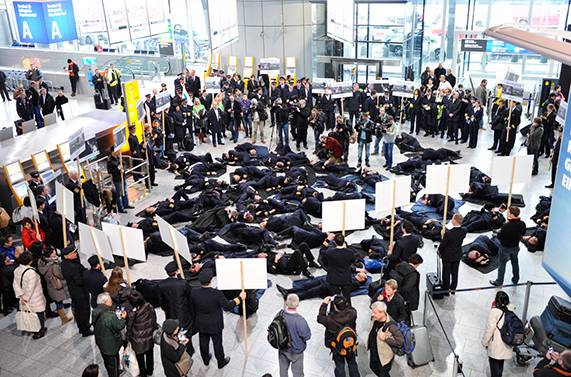
Lufthansa’s pilots have been unhappy about pension arrangements and manning levels for some time and staged several protests, such as this airport sit down strike to highlight claimed safety concerns. Until this week’s recent statement, it had been hoped that the heat had been taken out of this dispute and services might return to some normality.


DISPUTE HAS BECOME A MAJOR NATIONAL CONCERN

Hopes that some meaningful agreement might be reached were high earlier this year – as has been the case with cabin crew contracts – but they have simply not materialised.


Frankfurt Airport, Gebr. Heinemann and many other companies working with airports serving Lufthansa flights have all been adversely impacted by the sudden drops in passenger numbers, with many now making almost ‘routine references’ to these actions as reasons for slower growth in their financial results.


In a statement released after the talks broke down, the pilots union said: “After intensive talks in which there was initially a hopeful rapprochement between us and the Lufthansa management, we now have to regret to say that we cannot make sense [of this] in further talks.”