Archives

China invests billions in civilian aviation airports

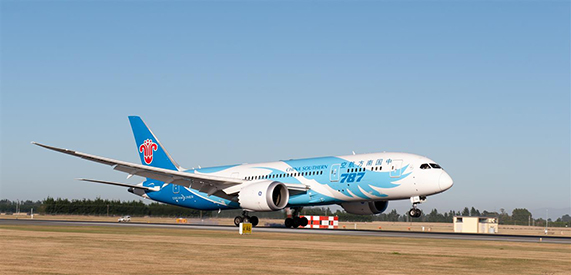
China Southern Dreamliner ChristchurchThe Chinese Government has confirmed it is planning to invest around CNY77bn ($11.7bn) in civil aviation projects this year, including new airports and airports-related infrastructure, according to the Civil Aviation Administration of China (CAAC).


Last month, the CAAC said it will engage this investment with around 11 key construction projects and 52 aviation-related upgrades as the government acknowledges the urgent need to expand and upgrade to meet ever-growing demand.


IMPROVED AIRSPACE ALLOCATION

This news comes at the same time that the CAAC has reported that the country’s ‘civil licensed’ airports handled 915m passengers in 2015, with 206 of these airports operating scheduled flights to 204 cities – excluding Hong Kong, Macao and Taiwan.


[Click here for more details: http://www.trbusiness.com/regional-news/asia-pacific/caac-counts-915m-pax-10-at-chinese-airports/105793#sthash.EIPaZNCQ].


China Southern

A China Southern jet heads home from Christchurch Airport in New Zealand.


In addition, the State Council also issued more policy guidelines last month on the development of the general aviation industry. This is based on government data which shows that the general aviation industry consists of more than 300 airports today, along with 1,874 commercial aircraft.


To meet future demand, the CAAC has released new guidelines which propose increasing the number of commercial airports to more than 500, serving some 5,000 commercial aircraft by the end of 2020. This will include smaller-capacity aircraft in rural areas where the demand is not so concentrated.


MORE SMALLER AIRCRAFT

Last, but certainly not least, the country’s planners are also working towards relieving the horrendous congestion that exists at major airports around the country where delays have long become the norm for long suffering passengers.


This has mostly been caused by the heavy demands of military aircraft on air space corridors, so restricting the number of civil aircraft that utilise certain routes and certain flying heights.


As a result, China’s State Council has announced it is considering opening up lower altitude corridors to smaller commercial aircraft, turboprops and helicopters to take some of the pressure off the major commercial sector.


IATA finally confirms senior leader changes

IATA planes headerThe International Air Transport Association (IATA) has confirmed that International Airlines Group CEO Willie Walsh has succeeded Andres Conesa, CEO of Aeromexico, as Chairman of the IATA Board of Governors and Alexandre de , Chairman and CEO of Air France-KLM is to succeed Tony Tyler as IATA’s Director General and CEO from September 1.

The announcements were fully expected, coming at the end of IATA’s recent 72nd Annual General Meeting (AGM) in Dublin, Ireland.

IATA said that Walsh has served on the IATA BoG continuously since 2005 and is now the 75th Chair of the IATA Board of Governors and the sixth to fulfil that function while representing BA or its predecessor airlines.

Walsh said: “I’m honoured to serve in this important role at such a critical time. Our top priority is getting governments’ agreement on a global market-based measure to manage aviation’s carbon emissions at the 39th Assembly of the International Civil Aviation Organization later this year.

tfwa13 02 willie walsh 313 small

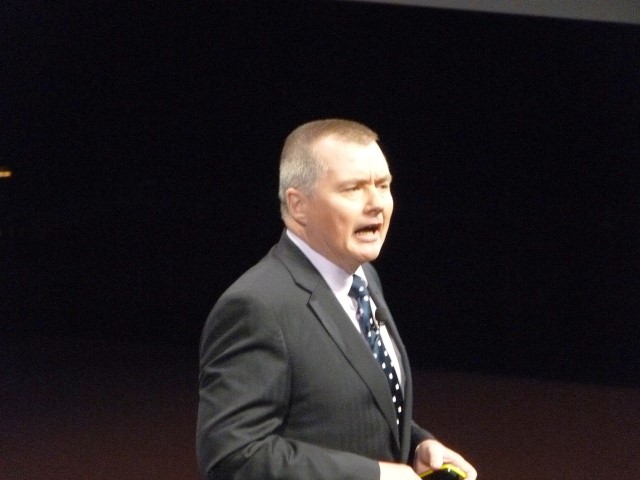
International Airlines Group CEO Willie Walsh has succeeded Andres Conesa, CEO of Aeromexico, as Chairman of the IATA Board of Governors.

RARE OPPORTUNITY
“This is a once-in-a-generation opportunity which is vital if our industry is to achieve carbon-neutral growth from 2020,” said Walsh, who added that governments too often limited the aviation industry’s ability to be a catalyst for economic growth and development.

He added: “Excessive taxes rob our industry of its vitality, while costly and ineffective infrastructure constrains our ability to support rising demand for connectivity. Regulation often comes with negative consequences for both passengers and airlines.


Tony Tyler and Alexandre de Juniac

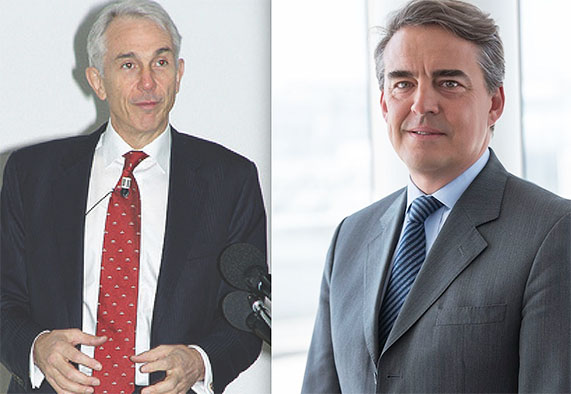
As reported, Tony Tyler, IATA’s Director General and CEO hands over the reins to Alexandre de Juniac, Chairman and CEO of Air France-KLM from September 1 of this year.

WALSH POINTS TO TEAMWORK…
“I look forward to supporting Alexandre de Juniac as he takes the reins at IATA. Together we will ensure that IATA has an even stronger voice of leadership on these issues.” said Walsh.

Meanwhile, the IATA Board has also appointed Goh Choon Phong, CEO at Singapore Airlines to serve as Board Chair-elect for a one-year term (as of the close of the 2016 AGM) and he will take office from June 2017 following Walsh’s term.

At the same time, Alexandre de Juniac acknowledged that he has ‘big shoes to fill’ as Tony Tyler’s successor after five years at the helm: “I know how challenging it is to run an airline and how much airlines depend on IATA to support their business – to safely process industry money, to deliver effective advocacy, to lead global initiatives and to provide relevant products and services.

“My aim is to help airlines to be even more successful businesses creating even greater economic and social value. I want all of our members to have a future that is even safer, more efficient, sustainable and increasingly profitable,” he said.

Sweet surprise at CPH from Anthon Berg

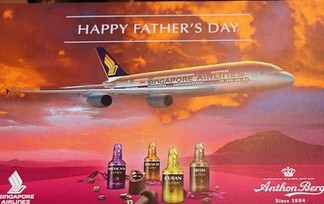
A Berg SQ1On Sunday at Copenhagen Airport (CPH), Danish chocolate brand Anthon Berg and Singapore Airlines (SQ) surprised male passengers in celebration of Father’s Day in Denmark.

At check-in, travelling fathers from Copenhagen to Singapore were given a greeting card and a chocolate treat of Chocolate Coffee Liqueurs by Anthon Berg Travel Retail.

International Brand Manager, Karina Fogh Terkildsen, comments: “We are pleased about this collaboration. In certain ways, our brands build on the same purpose: generosity. We want to give our consumers something extra; an unexpected experience, an extra treat without expecting anything in return.”

Travellers from Copenhagen to Singapore can expect more events from this partnership. “Our activation on Father’s Day was a success. It was great to see how positively the passengers reacted. We are definitely looking forward to celebrating other special occasions together with Singapore Airlines,” says Fogh Terkildsen.

A Berg SQ2

US State Department issues European alert

US Dept of State sealThe US State Department yesterday issued a renewed ’potential terrorist attacks’ alert to all US citizens travelling ‘throughout Europe’ and particularly those visiting major locations and events, such as tourist sites, restaurants, commercial centres and also using transportation.

In a statement it said: “The large number of tourists visiting Europe in the summer months will present greater targets for terrorists planning attacks in public locations, especially at large events. This Travel Alert expires August 31, 2016.

“France will host the European Soccer Championship from June 10 to July 10. Euro Cup stadiums, fan zones, and unaffiliated entertainment venues broadcasting the tournaments in France and across Europe represent potential targets for terrorists, as do other large-scale sporting events and public gathering places throughout Europe.

John Kerry in Belgium

Solidarity: On March 25, 2016 Belgian Foreign Minister Didier Reynders looks on, as Prime Minister Charles Michel shakes hands with US Secretary of State John Kerry at the Prime Minister’s Residence in Brussels – just weeks after the terror attacks on Brussels Airport.


“France has extended its state of emergency through July 26 to cover the period of the soccer championship, as well as the Tour de France cycling race, which will be held from July 2 to 24.”

In addition, the State Department points out that the Catholic Church’s World Youth Day event is expected to draw up to 2.5m visitors to Krakow, Poland, between July 26 and July 31 nd US citizens should be aware that local infrastructure may be strained due to the large number of visitors.

It added: “Poland will impose border controls at all of its national borders from July 4 to August 2, and visitors to Poland during this period should be prepared to show their passport and undergo stricter security screening throughout Poland.

In addition to the above, the State Department also repeated its usual common sense cautions relating to the use of public and crowded places and mass transportation which have been part of an advisory that has been in place since last March.

Artisan launches drive fragrance growth

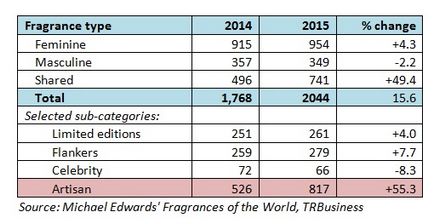
FOTW16 close-upArtisan and niche lines were the strongest part of the fragrance market last year with growth of new launches stepping up by +55% (on 2014), well ahead of the overall market’s respectable +15.6%. For the first time, over 2,000 new fragrances were launched in 2015.

Michael Edwards.

Michael Edwards.

The data come from the 32nd annual edition of Fragrances of the World, the global guide to fragrance launches from distinguished scent expert Michael Edwards. It was released last month and shows that the artisan and niche segment is booming (see table below), with shared fragrances also a key trend at +49%.

vimal-rai

Rai at ISG is going after more niche brands.

More duty free and travel retail buyers are also increasingly turning to niche brands in order to keep shoppers interested in their beauty assortments. Vimal Rai, Executive Director at airline concessionaire, Inflight Sales Group (HK), tells TRBusiness: “Our strategy is to change the mix that we carry, to go after more of the up and coming niche brands that are looking to particular markets, and not worldwide.”

Two segments saw decreases in launches last year: men’s scents (-2.2%) and celebrity scents (-8.3%) according to the Fragrances of the World data.

FOTW16 dataThe bilingual English and French scent guidebook is said to be the most comprehensive and accurate scent classification.

Dubbed the ‘perfume experts’ expert’, Edwards’ guide is impartial and independent as it makes no charge for listing new fragrances. He also declines both advertising and sponsorship.

This year’s guide includes a foreword by critic Luca Turin and consolidates feminine, masculine and shared fragrances into one index, with their gender indicated by colour. Discontinued fragrances are now listed in a separate index for easy reference. For more information on the guide contact Margaret Khoury at: [email protected].

CAAC +915m pax (+10%) at all Chinese airports

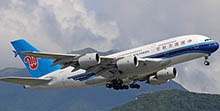
small China Southern Airlines A380The Civil Aviation Administration of China (CAAC) has reported there were 2010 ‘civil licensed’ airports which handled 915m passengers in 2015, with 206 of these facilities operating scheduled flights to 204 cities – excluding Hong Kong, Macao and Taiwan.


The CAAC adds that all the major performance indicators at Chinese airports showed ‘steady growth’, including the precise total of 914.773m passengers – up 10.0% on 2014. In addition, airports and airlines handled a total of 14.094m tons of cargo, up 3.9% from a year earlier, plus 8.566m aircraft movements (+8).


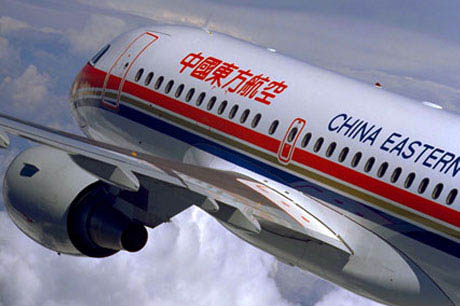
china-eastern-airlines26 AIRPORTS HANDLED +10M PAX

In terms of geographical breakdown of passenger volume across the country, China’s northern region accounted for 15.8%, followed by the north-eastern region (6.0%); eastern region (29.1%); south-central region (23.7%); south-western (16.8%); northwest (5.9%); and Xinjiang (2.8%).


A total of 26 airports all reported 10m-plus passenger totals, accounting for nearly 80% of China’s total airport traffic, with Beijing, Shanghai and Guangzhou alone accounting for more than 27%.


In the first quarter of 2016, the CAAC issued licenses for international route operations to 16 domestic airlines (47 licenses/53 international routes) and 37 foreign airlines (40 licenses/53 international routes).


IATA: Brussels attacks hit global pax growth

Planes IATAThe International Air Transport Association (IATA) says global passenger traffic data for April indicates that the demand (in total revenue passenger kilometres/RPKs) rose by 4.6% – the slowest since January 2015, with capacity up by 4.9%, while the load factor edged back 0.3% to 79.1%.


Without the ‘disruptive impact of the Brussels Airport attack’, IATA says that that April demand growth would have been around 5%.


Commenting on the disappointing result, Tony Tyler, IATA’s Director General and CEO said: “The disruptive impacts of the Brussels terror attacks will likely be short-lived. There are some longer-term clouds over the pace of demand growth.


“The stimulus from lower oil prices appears to be tapering off. And the global economic situation is subdued. Demand is still growing, but we may be shifting down a gear,” he said

iata-525

INTERNATIONAL DEMAND

In terms of international passengers, demand rose by 4.8% compared to April 2015, the slowest in two years although carriers in all regions registered growth, led by the Middle East, where total capacity climbed grey 5.6%, although the load factor fell back 0.6 percentage points to 77.8%.


By contrast, Asia-Pacific airlines’ April traffic rose 6.4% compared to the year-ago period. Slower economic growth in many of the region’s economies was ‘partly offset’ by an increase in direct airport connections that helped to stimulate demand. Capacity rose 6.8%, while the load factor dipped 0.3 percentage points to 77.3%.


European carriers saw demand rise just 1.8% in April, which was well down on the 6.0% growth recorded in March. This reflects the impact of the Brussels terror attacks, which closed the airport for nearly two weeks. Capacity climbed 2.4% and load factor slipped 0.5% percentage points to 80.2%, which still was the highest among the regions.


Middle Eastern carriers posted a 12.7% traffic increase in April, the only region to see a double-digit percentage increase in demand. Capacity growth of 14.8% outstripped this rise, however, which caused load factor to fall 1.4 percentage points to 75.6%.


Tony Tyler IATA

Tony Tyler, IATA’s Director General and CEO says there are some longer-term clouds over future growth.


NORTH AMERICAN GROWTH THE SMALLEST…

North American airlines’ traffic rose 1.1% compared to April a year ago, the smallest increase among regions. Capacity climbed 0.9%, causing a 0.1 percentage point rise in load factor to 78.3%. While the recent downward slide in international traffic growth paused in April, traffic levels remain below July 2015 on a seasonally-adjusted basis.


Latin American airlines experienced a 3.1% rise in April demand compared to the same month last year. Capacity increased by 2.9% and load factor edged up 0.1 percentage points to 77.7%. The upward trend in international traffic growth that characterised 2015 has halted, even as the downward trend in domestic traffic for the region’s carriers has accelerated.


African airlines’ traffic climbed 9.9% in April. Capacity rose 11.1%, with the result that load factor slipped 0.7 percentage points to 66.3%, lowest among regions. The continued turnaround of the carriers coincides with expansion of long-haul networks by the region’s airlines.


IATA planes headerDOMESTIC DEMAND +4.1%

Meanwhile, demand for domestic travel climbed 4.1% in April compared to April 2015, while capacity increased 3.8%, causing the load factor to rise 0.3 percentage points to 81.4%. All markets reported demand increases with the exception of Brazil, which showed a 12.1% decline, reflecting the country’s ongoing economic recession and political turmoil.


China’s airlines recorded 9.5% domestic traffic growth, a strong rebound from the 3.3% increase recorded in March. Fears about slowing economic growth in the country have eased somewhat and increased growth in frequencies is helping stimulate demand.


IATA said: “India’s domestic traffic soared 21.8%, marking the 20th month of double-digit traffic growth and the 13th consecutive month it has led the domestic markets. Growth is being propelled by the comparatively strong economic backdrop as well as by substantial increases in service frequencies”.


Last ditch talks to avoid Thomas Cook strike

Thomas-Cook-smallThomas Cook Airlines’ UK cabin crew moved closer to strike action yesterday after an estimated 50% of its Unite Union members voted in favour in its ongoing dispute over ‘health and safety concerns’.


Unite – the UK’s largest union – announced yesterday (25 May, Wednesday) that 74.4% of the airline’s cabin crew who voted backed strike action yesterday, over what they regard as ‘dangerous’ changes to rest breaks. The union also continues to maintain that the airline’s new Airshoppen preorder duty free service is part of the problem.


Thomas-Cook-2015-2016-catalogueFormal talks are continuing today and next Tuesday (31 May) between the union and management to try to resolve the dispute at the UK’s official conciliation service ACAS.


DISPUTE HAS ESCALATED

First reported earlier this month, the dispute has since escalated with the union claiming that prior to recent rule changes, cabin crew were routinely entitled to 20-minute breaks every six hours. In an earlier statement, the union said: “A member of cabin crew will typically work 10 to 15-hour shifts and up to 60 hours a week.


“Shifts include pre-flight preparations, safety and security checks, boarding, inflight service of headsets, drinks, food, duty free sales and other promotions, such as scratch cards.”


“On short-haul flights this process is repeated for in-bound flights after a turnaround of usually less than one hour, which includes restocking and preparing the aircraft while under extreme time pressures.”


The union also claims that the airline’s relatively new ’Airshoppen’ preorder duty free service is a major contributor to the problem, with crew taking up to two hours to sort and bag orders prior to take off and subsequently collect the relevant payments from passengers inflight.


Good-are-waiting-on-pax-seat-when-they-board

The new pan-European pre-order service.


LAST-DITCH RESOLUTION TALKS

Commenting yesterday, Unite national officer Oliver Richardson said: “We hope that the company take note of this strong vote in favour of action and work with us constructively to resolve the dispute and avoid any potential industrial action.”


Thomas Cook Airlines carries around 6.7m passengers to around 60 tourist destinations in the US, Europe Africa and Asia and operates from 10 airports across the UK. As reported, there have also been rumours that Thomas Cook might be considering selling its 91-strong aircraft fleet.


For more information on the background to this story, see TRBusiness’ initial report on this dispute dated May 7 by clicking here: http://www.trbusiness.com/regional-news/international/thomas-cook-crew-in-strike-vote-over-rests/105067


Li Keqiang: ‘travel is no luxury – it is a necessity’

Top Chinese PM talks tourism“After 2000, with increases in household consumption, travel is no longer a luxury for the few, but rather a consumption of necessity for the average Chinese…”. according to Chinese Premier Li Keqiang, speaking at the First World Conference on Tourism for Development held in Beijing last Thursday.


In a keynote address he said that Chinese tourists made more than 4bn domestic visits last year, with expenses on travel accounting for 10% of total household spending: “Over 120m outbound visits were made by Chinese tourists and China received 130m inbound tourists from abroad.


“A total of over 4 trillion RMB yuan in revenue was generated. Forecasts show that by 2020, the number of per capita travel times by Chinese tourists and the amount of tourism revenue will both double on the current basis.”


TOURISM: CHINA’S NEW GROWTH DRIVER

He added that the Chinese Government now regards tourism as a new driver of growth in China, although he admitted that it currently falls short of satisfying people’s demand, lacking ‘premium and creative tourist programmes and services’.


In an address that clearly signals the government’s intent to build its tourism industry from the inside out, Premier Keqiang said: “In the past five years, investment in tourism has grown by 40% annually to exceed one trillion RMB yuan last year. Modern day tourism integrates the primary, secondary and tertiary industries.
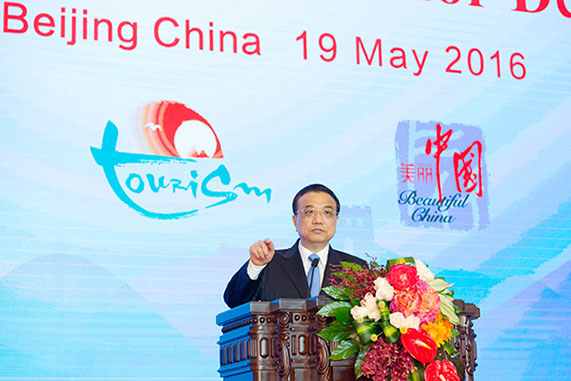
 

Chinese Premier on tourism

“THE GOVERNMENT’S TARGET IS TO LIFT 12 MILLION PEOPLE OUT OF POVERTY IN THE NEXT FIVE YEARS THROUGH DEVELOPING TOURISM.” CHINESE PREMIER LI KEQIANG.


“It is a new economy that increases the consumption and added value of agricultural products. It also drives the development of needed industrial goods. It is associated with more than 110 industries and contributes to more than 80% of businesses like catering, accommodation, civil aviation and railway passenger transportation. Booming tourism drives up other businesses.


“In 2015, direct contribution and aggregate contribution of tourism to China’ s GDP was 4.9% and 10.8% respectively. That said, tourism is not contributing as much to the economy in China as it does in many other countries. We have drawn plans to make tourism a major part of structural reform, supply-side structural reform in particular, to spur growth.
 

global blue chinese shopper


CHINA’S MAJOR INVESTMENT PLAN

“We will implement tourism promotion and investment promotion plans, increase market access for private capital and deepen external cooperation to provide more impetus for tourism to grow. We will improve the infrastructure for transportation facilities, scenic spots, self-drive tour camps and digital installations.


‘We will strengthen market regulation and oversight to offer richer, more convenient and safer travel experience to both Chinese and foreign tourists. Besides, we will encourage holistic tourism destinations development and the ‘tourism plus’ programme and vigorously develop rural tourism, industrial tourism, culture tourism, and seniors and health tourism.


“Those programmes, combined with the ‘Internet plus’ initiative, are designed to promote the integrated development of the primary, secondary and tertiary industries through tourism growth. To upgrade tourism will be a good way to improve the economy, both in efficiency and in quality.”


Premier Keqiang added that in 2015, China’s tourism industry directly employed 28m people, while it is estimated that the total number of jobs created – directly or indirectly – was 80m. He said that was equivalent to approximately 10% of all the jobs in the country. Tourism is the new game in town ‘within China’ as many have been warning for some time, as Premier Keqiang left the distinguished gathering in no doubt.


001 aa chinese tourism research australia


POVERTY ALLEVIATION FACTOR…

He said: “Tourism is a main avenue for poverty alleviation and eradication. Rural poverty alleviation is probably the biggest task for China if it is to become a moderately prosperous society in all respects. Most poor people in China live in former revolutionary bases, ethnic group-inhabited areas, border areas and poverty-stricken areas, where constraints hold back industrial and agricultural development.


“These places, however, tend to enjoy unique strengths for developing tourism, and many of them have in fact got rid of poverty as a result of tourism development. Tourism opens a door to the outside world. It broadens people’s horizon, improves their mind-set, lifts their spirit and contributes to social progress. The government’s target is to lift 12m people out of poverty in the next five years through developing tourism.


Turning to international horizons, Premier Keqiang added that the Chinese government highly values the role of tourism in facilitating cultural exchange. He said: “We have identified over 150 countries as approved destinations for Chinese tourists and have held ‘Year of Tourism’ activities with countries like Russia, the ROK, India and the United States.


“We stand ready to work with more countries to enhance tourism cooperation. Joint tourist activities of diverse forms may be organised for people to take part in, which will sow the seed of friendship among them.”
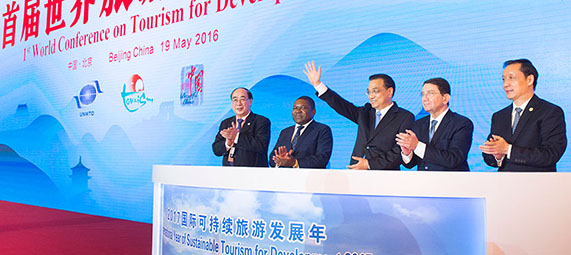
 

Chinese premier Li Keqiang

“FOR FOUR YEARS IN A ROW, CHINA HAS TOPPED THE GLOBAL LIST OF OUTBOUND TRAVELS. LAST YEAR, CHINESE TOURISTS SPENT MORE THAN US$200 BILLION ON OVERSEAS TRIPS.” CHINESE PREMIER LI KEQIANG.


He added that four years in a row China has led the global list of outbound travel with Chinese tourists spending more than US$200bn on overseas trips. He said: “To facilitate the development of tourism globally, the Chinese government proposes that international tourism cooperation programmes be carried out to foster a more convenient travel environment.


“Countries are advised to make visa policies easier, streamline entry procedures, open more direct flights, provide more professional and people-oriented services for sightseeing and shopping and act to protect the rights and interests of consumers.”


Interestingly, he also said that over the next five years, the Chinese Government will conduct 50 international tourism cooperation programmes with foreign countries, including programmes on tourism resources development and protection, expert consultancy in tourism planning, training of Chinese-speaking tour guides and management personnel and will offer 1,500 training opportunities in China for foreign countries.


Chinese account for third Tax Free


IMPROVED FACILITIES FOR DUTY FREE SHOPPING

He also called on all countries to assume shared responsibilities to take effective measures to tackle emergencies, protect the safety of tourists and oppose terrorism. Acknowledging the positive role already played by the UNWTO, Premier Keqiang added: “Let us act to foster a freer, safer and more convenient and more comfortable travel environment for all people in the world.”


[‘Tourism, a Ship of World Peace and Development’, was delivered by Li Keqiang, Premier of the State Council of the People’s Republic of China at the Opening Ceremony of the First World Conference on Tourism for Development on 19 May 2016-Ed].


Wang Yang

Chinese Vice Premier Wang Yang. (Photo credit; Xinhua).

Meanwhile, in a separate address at the same event co-hosted by the China National Tourism Administration CNTA and the World Tourism Organization last Friday, Chinese Vice Premier Wang Yang called on G20 countries to relax visa restrictions, simplify entry and departure procedures.


He also advocated improved policies on customs clearance, duty free shopping, tax refunds and currency exchange to expand the tourism market and ‘add impetus to the world economic recovery’.


Wild Tiger captures its first inflight listing

Wild Tiger Gautom

Easy Tiger: Gautom Menon (right) wants to take his brand global in travel retail.

Wild Tiger is set to go on board budget airline, Tigerair, from July opening up the inflight duty free and travel retail channel for the Indian-made premium dark rum. This is also the first time an Indian beverage brand is available for on-board sales internationally, claims the Kerala-based company.

Wild Tiger Special Reserve Rum will be available on all routes operated by the Singapore-headquartered carrier and follows the product’s successful trade launch in the UK last November, official launch in UAE markets, as well as entry to DF&TR stores at Bangalore and Mumbai airports. It will retail at $23 on Tigerair.

Wild-Tiger-Rum-tallThe brand was created by Indian drinks entrepreneur, Gautom Menon, and is India’s first rum to be produced from a blend of molasses and cane juice, giving it aromatic notes and flavour depth. The bottle is distinctive as it is wrapped in a tiger-print jacket, no two being the same. This unique packaging won it a special prize at the Indspirit awards held recently in Delhi, the Indian capital.

Menon says of the Tigerair deal: “We believe the connection is ideal given the similar imagery both our brands have in common. Passengers on Tigerair Singapore now have a great option for not just a unique rum label, but also to get their hands on a great collectors or gifting item. We are starting our inflight sales journey with Tigerair before other leading carriers in Europe and Asia.”

As a part of its core CSR policy, Wild Tiger donates 10% of profits towards Tiger Conservation in South India where the brand has started a non-profit entity called WTF (Wild Tiger Foundation) which works with other established wildlife establishments on the ground and with prominent tiger experts to save the species and its habitat.