Archives

‘We are preparing for the future of inflight,’ declares Qatar Duty Free

QatarmainimageQatar Duty Free (QDF) Vice President Operations Thabet Musleh has told TRBusiness that flag carrier Qatar Airways’ partnership with the travel retailer and Hamad International Airport represents a ‘huge opportunity’ to leverage retail synergies throughout the entire customer journey [see below video].

In an exclusive video interview conducted during the TFWA Asia Pacific Exhibition & Conference, Musleh addressed directly speculation that Qatar Airways has stopped its onboard duty free business entirely, clarifying it has instead been ‘suspended’.

“We have the customer at each touchpoint of their journey and believe inflight, as it was, is not the future. We are preparing for the future.”

A CUSTOMER ‘INJUSTICE’

Musleh was reticent to reveal further details on what exactly this would mean and merely stated: “In true Qatar Airways style we will be coming back with a five-star offer for the customer. It is all about leveraging the fact we are part of the airline, airport and retailer.”

Speaking more generally about the current state of inflight duty free, he added: “Digital is taking effect, by the end of next year a lot of planes in the Qatar Airways fleet will have super-wifi onboard and we have a lot already.

“When you’ve got over 50,000 products on the ground you are almost doing the customer an injustice just by offering them 150 or 160 products from the inflight cart.”

QDFgroundsinflight

Qatar Airways and Qatar Duty Free have suspended the inflight duty free service. Source: Qatar Airways.

CORE CATEGORY RENOVATIONS

Elsewhere, he reflected on QDF’s strong financial year in 2018 and enthused about the business in the first five months of 2019.

QDF customers have become accustomed to witnessing wave after wave of new, predominantly luxury, brand openings, with Penhaligon’s and Pandora just two of the most recent.

These enhance a staple of more than 90 luxury boutiques and outlets, including the likes of Tiffany & Co. Swarovski, Bulgari, Gucci, Hermes, Aigner and a Samsung Experience Zone.

Despite the heavy onus on luxury, Musleh tells TRBusiness that this won’t necessarily be the travel retailer’s raison d’être moving forward.

“We have a high number of transit passengers and what makes us really unique is our diverse portfolio; we have to cater for everyone. This year alone, we’re undergoing major refurbishments to our core categories, which should start in the next few months and should be completed by the end of this year.

“It will totally refurbish the whole area and we will continue to look at our offer and make sure it delivers for everybody.”

Stay close to TRBusiness for more insight on the Qatar Duty Free business.


‘One Too Many’ returns; DF awaits Gov findings

OneTooManynewcampaign19

The ‘One Too Many’ campaign re-launches for the summer season today (7 June).

Passengers to UK airports this summer are again being warned on the consequences of disruptive behaviour due to irresponsible drinking at terminals and inflight.

The ‘One Too Many’ campaign, which draws support from airport operators, travel retailers and airline stakeholders in reinforcing the UK Aviation Industry Code of Practice on Disruptive Passengers, re-launches today at *14 airports.

First rolled out by IATA in July at an initial 10 airports, the ‘One Too Many’ campaign is the first-of-its-kind to bring together the Airport Operators Association (AOA), UK Travel Retail Forum (UKTRF), Airlines UK and the International Air Transport Association (IATA).

Digital screens, point-of-sale displays and notices in retail and F&B areas will be visible to passengers, backed by a targeted social media campaign that last year reached more than eight million across Facebook, Snapchat and Instagram.
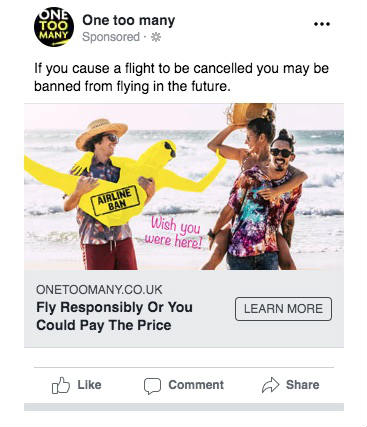
Flightban_OneTooMany‘PROMISING GAINS’

Those that engage in disruptive behaviour can be denied boarding, face fines of up to £80,000 ($101,000), or custodial sentences in the most serious cases.

Backed by Aviation Minister Baroness Vere, the scaled-up initiative has been highlighted by Government as an example of industry best-practice in its Green Paper, Aviation 2050 – the future of UK aviation.

Since last year’s call to action, disruptive passenger incidents have recorded a marginal drop from 417 to 413 year-on-year, according to Civil Aviation Authority (CAA) figures.

However, this can be viewed positively in light of a 2.7% rise in departing passengers for full-year 2017 across the UK aviation network.

It is worth pointing out though that disruptive behaviour on certain leisure routes has increased, with 31% of reported incidents directly linked to alcohol – something that has attracted the ire of the UK press.

Francois-Bourienne-UKTRF

François Bourienne, Chair, UKTRF.

On the other hand, the campaign has augmented with more local and bespoke approaches to tackling unruly behaviour linked to alcohol abuse with some notable successes.

Glasgow Airport’s ‘Campus Watch’ initiative resulted in a 52% drop in outbound alcohol-related offences since the beginning of the campaign, while Manchester Police reported a 23% decline in incidents at Manchester Airport.

François Bourienne, Chair of the UKTRF said: “The results of the campaign so far have been incredibly promising and there has been a great response from the partner airports who have reported decreasing numbers of disrupting passengers on last year.

“The numbers have always been low but passengers that are disruptive ruin the experience of others on their flight, cause stress for staff and additional expense for airlines.

“As ‘One Too Many’ makes clear, this is unacceptable, and all offenders will face consequences much worse than a hangover.”

Karen Dee, Chief Executive, AOA added: “The One Too Many campaign has returned to remind passengers of the penalties they face.

“However, the industry itself needs no reminder. Airport and airline staff are always ready to act to prevent or deal with a disruptive incident and will not hesitate to action the deserved penalties. We hope those departing from the UK’s airports this summer fly responsibly and start their party at the destination, not onboard.”
Licensing_EnglandWales

The Call for Evidence on airside alcohol licensing ended in February. Source: Gov.uk.

WAITING GAME ON CONSULTATION FINDINGS…

The unveiling of the new campaign and overriding message that airlines, airports, retailers and other aviation stakeholders are ready to tackle unruly behaviour linked to alcohol abuse is timely.

In November, the UK Government issued a call for evidence on extending alcohol licensing to airside environments at airports.

This arose from a House of Lords Select Committee recommendation in April 2017 to revoke existing airside exemptions at 24 international airports in England and Wales under the Licensing Act 2003.

The consultation, designed to ascertain the scale of disruption caused by drunken airline passengers; the implications of airside alcohol consumption on crime, disorder and public safety; and the current use of statutory powers to tackle the problem, concluded in February.

A spokesperson from the UK Home Office this week was unable to provide TRBusiness with further information as to when the findings are due to be published.

It goes without saying that the UK aviation sector will expect any decision taken by Government to be made on consensus, but the issue undoubtedly splits opinion.

Airlines UK, the trade body for UK registered airlines and ‘One Too Many’ partner, has made clear that while carriers do not want to prevent passengers from enjoying alcohol, it supports airside bars and retailers falling under the jurisdiction of the Licensing Act.

CEO Tim Alderslade has previously said alcohol consumed or bought in the airport is the most common causal factor for more than half of disruptive incidents in the air and has called on ministers to remove the current ‘outdated exemption’.

Speaking to TRBusiness this week, UKTRF Secretary General Cameron Gray made clear that while the Forum fully supports any measures that would make a difference to addressing disruptive passenger numbers, it rejects the Home Office’s proposal to extend the licensing regime on a policy and logistical level.

“From a logistics perspective we think there are some real challenges for taking a regime designed for the high street and dropping it directly into an airside environment; from the way airports function, their security and highly-regulated environments, and the fact that licensing is dealt with on a region-by-region basis makes it very hard to apply it in a uniform sense across the entire UK aviation network,” he said.

Passengertravellingairport

Incidents of disruptive passenger behaviour fell to 413 in 2018 from 417 the year prior, according to the UK Civil Aviation Authority (CAA).

“There are also some real questions as to how it would apply to onboard sales. On a policy level, we just don’t think telling people when they can and can’t purchase alcohol is going to stop people who choose to drink to excess and behave badly in the airside environment.

“Disruptive behaviour is not just an issue for the aviation network, but an issue across all of society. We think what is needed is better education and understanding from passengers of what their obligations are. More important is to drive behavioural change.

“The ‘One Too Many’ campaign is about reminding people there are consequences to actions and the existing penalty scheme will be strong if you don’t comply with the rules.”

Echoing his comments, Julie Lassaigne, Secretary General, European Travel Retail Confederation (ETRC) said: “The ETRC and UKTRF – as well as a number of individual airports, retailers and brand members of ETRC and/or UKTRF – both sent their input to the call for evidence.

“They argued that the extension of the alcohol licensing regulatory regime to airside environments at airports is not the appropriate tool to achieve the Government’s objective of reducing disruptive passengers’ incidents, which is linked to a small number of routes and limited number of passengers.

“Such a proposal would apply a disproportionate regulatory intervention in an attempt to address an issue that is more effectively dealt with through existing and ongoing consumer education and industry-led actions.”

Indeed, some would argue there are already a number of tools in place – both legal and action-based – that demonstrate practical approaches to self-regulation in a way that renders more far-reaching regulations at airside unnecessary.

This includes the aforementioned ‘One Too Many’ Campaign and the UK Aviation Industry Code of Practice on Disruptive Passengers, which Gray describes as ‘great examples’ of the industry identifying a problem and galvanising support to achieve results.

This is not to mention the various checks and balances already employed in airside environments such as ‘Challenge 25’, which is in theory meant to be enforced by licensees.

“From a UKTRF perspective we really believe we have demonstrated that we take this issue seriously; we’re working really hard on it and starting to see some signs that the message is getting through and encourage the Government to recognise that the industry is doing a good job on this by itself,” asserted Gray.

UKTRFCameronGray

Cameron Gray, Secretary General, UKTRF.

DUTY FREE: PROTOCOLS IN PLACE

For duty free in particular, one question contained within the call for evidence is likely to have alerted attention.

This is as follows: “What, if anything, prevents airlines, airports, airside businesses and other relevant entities to jointly introduce further and stricter measures to tackle the problem of drunk and disruptive passengers at international airports in England and Wales (e.g. banning the sale of “miniatures” in airside shops, limiting the availability of alcohol to passengers at certain hours, data sharing on drunk and disruptive passengers, replicating best practice schemes etc.)?”

Asked directly about the potential implications for alcohol duty free sold at airside shops excluding bars and restaurants, Gray reinforces the ‘copy and paste’ threat of transferring a high-street style licensing regime to an airside environment.

Essentially, as licensing rules fall under the remit of local authorities it means product sales could be restricted during certain hours, potentially depriving retailers from generating revenue from vast swathes of international passengers transferring through the airport at any given time who buy, mostly for gifting purposes.

“We think [the license extension] is a tremendous disadvantage not just for retailers but for consumers,” he said. “Let’s not forget that the vast bulk of passengers travel responsibly, do not misbehave, are able to purchase alcohol at any point and do not have any problems. We don’t see the justification in hampering their ability to do that as part of their travel experience.”

Gray says retailers adopt responsible stances when it comes to the sale of alcohol, dovetailing with the ‘Challenge 25’ strategy and other internal protocols to authorise the sale.

TRBusiness points out travel retailers such as World Duty Free already sell alcohol in sealed bags with affixed labels clearly stating that passengers should not open these until they reach their final destination.

‘MORE DATA NEEDED’

Additionally, the ETRC and others remains committed to the responsible retailing of alcohol products and are already strong advocates of the Duty Free World Council’s (DFWC) Alcohol Code of Conduct, which sets out best practices for the promotion, marketing and sales of products in duty free.

Currently, the DFWC is understood to be working on a specific online training module for the responsible retailing of alcohol based on the Asia Pacific Travel Retail Association’s popular programme.

LiquorWDFN

Travel retailers such as World Duty Free already sell liquor in sealable bags to prevent immediate consumption. Pictured is the Gatwick North Terminal store.

Gray added: “You are seeing a lot of measures; sealable bags and retailers moving miniatures to other locations in the shop are a couple of good examples of the industry again identifying a solution on a self-regulatory basis and getting on and doing them.

“If we’d like to see one thing that comes out of the consultation, it’s a clear, unified data set on disruptive passengers. We can use the CAA information and airlines and LCCs are happy to put out their own information, but there is no place where everyone is sharing the type of information to get a handle on this. We would say to Government, ‘how do you regulate something that you don’t fully understand’?

“For the first step, it would be really useful for there to be an agreed way forward for the industry to align its data and metrics to take a look at this. We don’t think the industry – and Government – has been given a chance to fully understand this issue and on that basis we can’t support further regulation.”

Stay close to TRBusiness for further developments on this story.

For further information on the ‘One Too Many’ campaign, click here.

*Manchester Airport Group (Manchester, Stansted and East Midlands); AGS Airports (Aberdeen, Glasgow and Southampton) Heathrow, Newcastle; Bristol; Birmingham; Gatwick, Belfast International; Liverpool John Lennon; Leeds Bradford.


SAS is latest to halt inflight tax free sales; prioritises ‘modern solutions’

SAStaxfreepull

Source: SAS.

Tax free sales onboard Scandinavian Airlines (SAS) will cease from this autumn as the flag carrier seeks to cut aircraft weight in a bid to slash fuel burn and reduce emissions.

The combination of changing buying behaviours and a heightened focus on sustainability – for passengers and the airline – influenced the decision. SAS is aiming to reduce its emissions by at least 25% by 2030.

A number of changes are due to be implemented on its flights in the coming months to achieve these aims.

“SAS will develop solutions to offer passengers more modern ways of buying and receiving goods in connection with their journey,” read a statement.

The decision by SAS is the latest in a string of carriers announcing in recent months they are either diversifying their inflight operations or pulling the plug altogether.

These include KLM, TAP Air Portugal and Qatar Airways, which has decided to ‘suspend’ its inflight programme to focus on alternative solutions.

Travel Retail Data Innovation Group takes commitment to new level

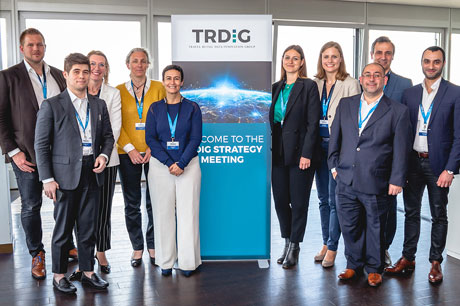
TRDIG-second-meeting-group-pic-leadOn Tuesday (28 May), five travel retailers comprising Gebr. Heinemann, Dufry, DFS, Lagardère and Kappé held the second global Strategy Meeting of the Travel Retail Data Innovation Group (TRDIG) in Hamburg to discuss the evolution of the industry’s global master data exchange.


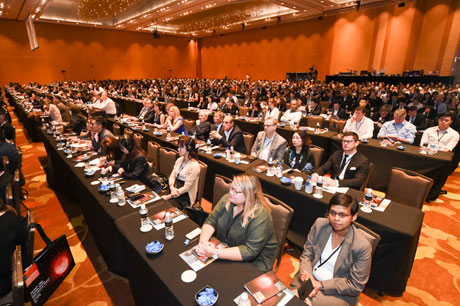
More than 90 supplier representatives from all product categories, together with those from data companies and the standardisation organisation, GS1 Global Office, attended the event.


The first TRDIG Strategy Meeting was held in Hamburg in June 2018 with around 100 participants from 35 suppliers. At the end of the meeting, decision-makers, master data experts and IT managers added their signatures to a large ‘commitment wall’.


“With this symbolic gesture they highlighted their joint commitment to connect to the TRDIG data pool by 2019 and to use it for master data exchange,” says Heinemann.


The aim of this year’s Strategy Meeting was to take this commitment to the next level by engaging all parties to shape and promote the standard together as a community.


“The data pool is now live,” says Inken Callsen, Director Fulfilment at Gebr. Heinemann. “Numerous suppliers from across all categories are connected and contribute their master data into the data pool. Some suppliers are already exchanging master data exclusively via the data pool.


TRDIG-second-strategy-meeting-May-2019-wide

Representatives from five travel retailers comprising Gebr. Heinemann, Dufry, DFS, Lagardère and Kappé held the second global Strategy Meeting of the Travel Retail Data Innovation Group (TRDIG) in Hamburg on Tuesday 28 May.

“Our target is to integrate more than 80% of our Perfume & Cosmetics (P&C) and of our Liquor, Tobacco, Confectionery and Fine Food (LTCF) assortment, as well as the first suppliers in the categories Fashion & Accessories and Watches & Jewellery (FAWJ) to the data pool by the end of the year.


Sophie Boasson, Supply Chain Director at Lagardère Travel Retail, adds: “Lagardère is, by now, in the process of establishing the data exchange via the pool with eight suppliers. When we first heard about the project from Gebr. Heinemann, we immediately identified a huge potential, both for the brands and the retailers, as we had a similar project launched at that time.”


On stage at the TRDIG Strategy Meeting 2019, key players of the travel retail sector as well as industry representatives explained their current project status and emphasised the great advantages that result from the data pool.


Small working groups subsequently kicked off the development of initial solution approaches for pending topics such as pricing, non-sellable materials and digital assets, among others.

TRDIG-second-strategy-meeting-May-2019-audience-pic-wide

More than 90 supplier representatives from all product categories, together with those from data companies and the standardisation organisation, GS1 Global Office, attended the event.

“We are looking forward to transform these topics into specific measures during workshops that we and the other retailers will host in the upcoming months,” says Alessia Poveromo, Global Head of Master Data at Dufry. “This builds a solid foundation for the digital future of the entire travel retail industry.”


In the course of 2020, the TRDIG expects all suppliers for whom the automated master data exchange is appropriate, to exclusively use a data pool.


“Our joint project continues to gain momentum and everyone is really keen to get involved,” adds Heinemann’s Callsen.


“We will continue to promote our vision for the standardised and automated exchange of master data across the industry.


“Our common goal is to prove that we in travel retail have a different mindset to all other industries because we understand that collaboration in this aspect of the business is not a competition but a real advantage for the whole market. After all, the more partners we have in the global data pool, the better.”

3Sixty Duty Free to release KrisShop omnichannel platform at end of May

Grazianiweb

Roberto Graziani, Executive Vice Chairman, 3Sixty.

3Sixty Duty Free (formerly known as DFASS Group) is to release its new KrisShop omnichannel platform at the end of May.

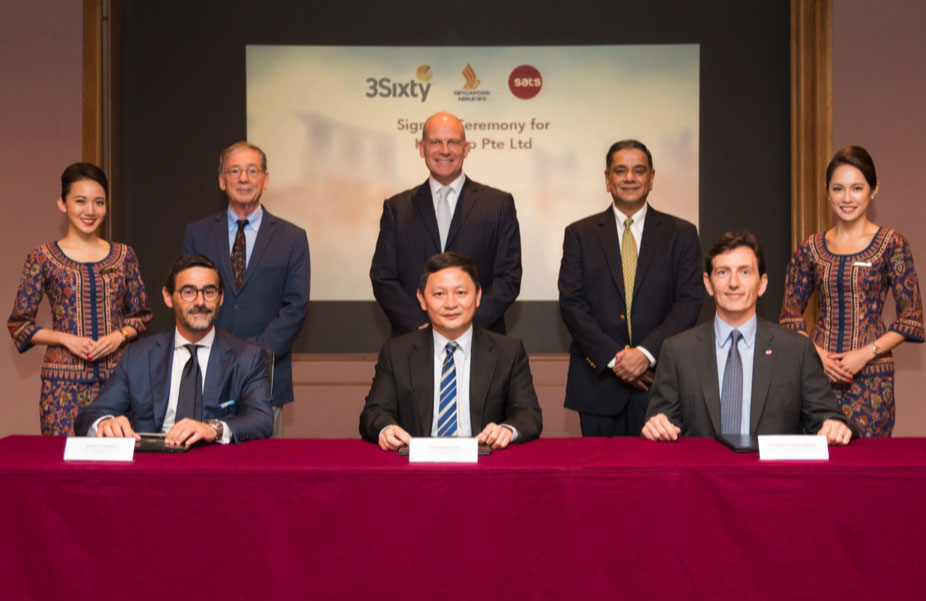
News of the joint venture between Singapore Airlines (SIA), 3Sixty and SATS to run the retail programmes on SIA (KrisShop) and low-cost subsidiary carrier Scootalogue was first announced in March 2018.

The shareholder’s agreement confirming the establishment of the partnership was finalised in November 2018.

FURTHER PARTNERSHIPS

Other partnerships have since been announced including an agreement with Avianca for the development of an online retail platform. This covers airlines such as Aerogal (Ecuador), TACA (Peru) and LACSA (Costa Rica).

3Sixty-Sats-Parntership

Last November, Singapore Airlines (SIA), 3Sixty (formerly DFASS Group) and SATS finalised a shareholders’ agreement sealing the establishment of a partnership to operate KrisShop and Scootalogue retail programmes in Singapore.

Regarding the omnichannel business as a whole, which is the company’s main focus, Roberto Graziani, Executive Vice Chairman, 3Sixty told TRBusiness: “This is not an airline business. It is a business that leverages the airline partnership and is much more than an airline business.”

He added: “I believe this is a new way of approaching retail and starting this kind of business in travel retail is very important. The most successful retailers offer integrated choices, touch-points and services to consumers.

Should all go according to plan  this business could be the ‘leader in our industry’, according to Graziani.

“Thanks to partnerships with the airlines we will have data on customers’ journeys. As soon as they book a flight, the airline will know who they are, when they are flying and from where to where they are going.

“We can leverage this data to actively contact passengers digitally and not wait for them to come to us,” he explained.

The use of the term ‘inflight’ to describe 3Sixty’s operations is no longer applicable, Graziani reiterated. “It is not inflight. For us, our business is an omnichannel one. Once we have the consumer data our main objective is to keep the customer at the centre of our strategy.”

With carriers such as KLM Royal Dutch Airlines and Tap Air Portugal recently announcing they will terminate their inflight retail offers, industry stakeholders can be forgiven for predicting a bleak outlook as far as the traditional onboard retail model is concerned.

Avianca

3Sixty has also signed an agreement with Avianca Group for the development of an online retail platform.

“I believe the traditional inflight business is going to die sooner or later. Today, customers must be followed in a different way.

“You cannot wait for a customer to enter a plane and order a bottle of cognac, perfume or cream, for example. You need to engage with the customer in a completely different way.

“This is why we have started to transform the inflight business into what we call the omnichannel business.”

Graziani is in no doubt that 3Sixty’s omnichannel business will prompt an evolution that will eventually lead to the dismissal of the cart.

He explained: “We are very confident and committed to this omnichannel development and are investing a substantial amount of money into the deployment of this platform. We are also investing strongly in data analytics.

“This concept is definitely the way forward, not only from an airline point of view. Businesses outside travel retail are developing this way. You can’t just wait for the customer to enter your shop.”

GROUND-STORE BUSINESS

In addition to operating onboard concession for airlines such as Singapore Airlines, Air Canada, Virgin Atlantic and Avianca, 3Sixty runs duty free/duty paid concessions in several high-profile international airport locations. These include Chicago O’Hare, Charlotte Douglas, Ottawa and Philadelphia.

Developing this omnichannel business in partnership with airlines will be easier than doing so with its ground-store counterparts. “We do not have the data of the customers visiting the ground-stores which makes things more difficult.

“We will try to transform our brick and mortal stores from an omnichannel perspective, but at the end of the day it is the same business.”

While strongly focusing on the development of its omnichannel business since the company re-brand in 2018, 3Sixty has been busy working on evolving its ground-store business.

DFW-3Sixty-Terminal-C-Rendering

The first 3Sixty branded stores specifically designed with the entire new branding components will open at DFW Terminals A and C later this year.

Since exclusively announcing to TRBusiness that its Dallas Fort Worth (Terminals A and C) shops will be the first outlets designed specifically to incorporate the entire new 3Sixty branding, the company has modified its Charlotte Airport store to reflect the re-brand. Modifications will gradually take place across its entire ground-store portfolio.

Looking back on the rebrand to 3Sixty, Graziani commented: “The re-brand to 3Sixty was not a marketing exercise and not just a name change.

“The new name was the result of a cultural re-shuffle which was necessary in the company to be consistent with the highly evolving retail environment we are having to contend with.

“We needed to have a new way of approaching things and new way of not only dealing with the end consumer but with our internal customers to.”

3Sixty-Charlotte

The company’s Charlotte Airport store was designed and opened prior to the announcement of the new branding.

He added: “We need to be much more active and much more innovative. This is why we changed the name to 3Sixty. We want to tackle the business at 360-degrees.”

On the prospect of new opportunities on the ground, Graziani remarked: “We have bid for the duty free/duty paid contract at Newark, where we are currently operating and have also bid for Houston. We are waiting for the result.

“I believe we have presented reasonable proposals to both airports. If neither of these opportunities materialise there will be others in the market quite soon. We are really interested in developing the business.”

Pressed by TRBusinesson the possibility of operating ground-stores at Asian airports, he concluded: “I am not excluding Asia development, but you need to be competitive when bidding for something and I don’t think currently, alone at least, we have the ability do so.

“If there is a situation where we can partner with a company to leverage our expertise, we would be more than happy to consider it.”

TFWA Asia Pacific exhibition attracts record 3,367 delegates in 24th year

TFWA-Asia-Pacific-show-2019-conference-audience-leadVisitors to the 24th TFWA Asia Pacific Exhibition & Conference increased by +5% year-on-year to reach a total of 3,367 delegates, up from 3,194 who attended the event in 2018.


This figure included representatives from 1,426 companies; a rise of 10.5% from 1,290 in 2018. The association registered 2,567 delegates from duty free and travel retail operators, landlords and agents, up from 2,534 last year.


Exhibition floor space increased by +5.5% to reach over 11,000sq m with a total of 314 companies exhibiting, up marginally by 1.6% from 309 the previous year. Sixty-six of these companies were new exhibitors, which included a mix of well-known international brands and regional favourites. 436 meetings were arranged through the TFWA ONE2ONE meeting service this year.


Monday’s conference was also well attended, with 1,481 delegates hearing from a range of keynote speakers from the duty free and travel retail industry and the wider geopolitical landscape.


POSITIVE FEEDBACK RECEIVED

Alain Maingreaud, TFWA President, said: “Of course it’s gratifying to see our numbers up yet again, but it’s not just about the quantity of visitors – quality matters too.


TFWA-Asia-Pacific-2019-Asia-Pac-bar

The TFWA Asia Pacific Bar was popular once again this year.

“We certainly had a substantial number of important decision makers in our exhibition halls this week, which is a great reflection of the dynamism of this region. We were delighted with the positive feedback we received from our delegates during the week, and we’d like to thank all exhibitors and visitors for taking the time out of their busy schedules to be with us.


“We’ll now be seeking the views of delegates and listening to their feedback to build on the platform we have created for next year.”


The TFWA Product Showcase, which contains press information on exhibitors’ products, will remain live until a month after the show.

TFWA-ASPAC-2019-registration-desks

Exhibition floor space increased by +5.5% to reach over 11,000sq m.

ETRC’s off-product labelling solution gains exposure at CODEX meeting

ETRC-cocktail-in-Brussels-leadA labelling solution piloted by the European Travel Retail Confederation (ETRC) for the duty free and travel retail industry gained additional exposure at the meeting of the Codex Committee on Food Labelling, which took place last week in Ottawa, Canada.


An initial discussion on the use of technology in food labelling was on the agenda at the 44th Session of the Codex Committee on Food Labelling (CCFL44).


Jointly established by the Food and Agriculture Organisation of the United Nations (FAO) and the World Health Organisation (WHO), Codex Alimentarius sets up internationally recognised standards, codes of practice, guidelines, and other recommendations relating to foods, food production, and food safety.


“Notably, the discussion paper (prepared by Canada) for this agenda item referred to the ETRC digital platform pilot as one of the four initiatives listed at global level,” Julie Lassaigne told TRBusiness.


Julie_ETRC19

Julie Lassaigne, ETRC’s Secretary General.

Examples of a variety of technological tools to enhance off-product labelling were provided. These include the Australian Made, Australian Grown web platform and the Smart Label suite of digital tools.


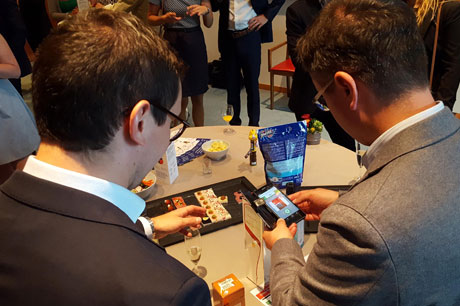
As mentioned, ETRC’s digital platform – which is being piloted to provide information in many languages to consumers in duty free and travel retail – which involves scanning a barcode with a smartphone or in-store scanners to retrieve additional product information.


“This is the first time that the issue [has been included in] the agenda of Codex, so there is still a long way to go before it materialises into something concrete,” ETRC’s Secretary General, Julie Lassaigne told TRBusiness.


“However, achieving this acknowledgement at this stage is a fantastic opportunity for ETRC, and for the duty free and travel retail industry worldwide, to showcase our initiative and prove that it is getting traction amongst policy-makers.”

ACI’s Patti Chau: ‘All will be affected by China’s Belt & Road development’

Patti-Chau

Patti Chau, Regional Director, ACI Asia-Pacific.

Addressing opportunities for the DF&TR industry connected with China’s Belt and Road initiative (BRI), ACI Asia-Pacific Regional Director Patti Chau tells TRBusiness that the scheme will bring about astounding growth in infrastructure and people exchange with airports being a critical component.

“In this day and age of connections, we will all be affected by this major development,” she told TRBusiness recently.

“In 2018, according to the CAA (Civil Aviation Administration) of China, over 100 new international routes were developed in relation to the Belt and Road Initiative.

“The overall sea/land/air connectivity along the BRI countries will be greatly enhanced to provide many new transport and business opportunities between the West and the East.”

XiJinpingBeltandRoad

Chinese President Xi Xinping attended the Second Belt and Road Forum for International Cooperation in Beijing last month. Source: BRF/Xinhua/Huang Jingwen.

OPPORTUNITIES ABOUND

Riding on China’s ‘One Belt One Road’ initiative to connect countries together for mutual cooperation, ACI Asia-Pacific believes there are plenty of opportunities worth exploring in Central Asia.

“Benefitting from its strategic geographic location, airports in Kazakhstan and its neighbours are well-positioned to develop themselves as the Eurasian hubs for the forecasted thriving growth in transcontinental traffic,” she continued.

In addition to the multi-billion dollar BRI, Chau says that the recent Qatar-EU aviation agreement to increase mobility, tourism and trade exchange is a ‘great example of a state finding its footing in the whirlwind of a complex global economy’.

“This agreement will translate to the development of new air services, providing more choices for consumers and supporting the economy,” Chau added..

Find the full-length interview with Patti Chau in the May edition of TRBusiness. Click here to subscribe.

ETRC’s Julie Lassaigne updates TRBusiness on regulatory threats

Julie_ETRC19ETRC’s Secretary General, Julie Lassaigne tells TRBusiness that the association is currently battling numerous threats to the confectionery category such as the restriction of volume-based price promotions of HFSS (high in fat, salt or sugar) food and drink as well as costly impacts of labelling regulations.


Commenting on the latter, Lassaigne clarifies ETRC’s position: “ETRC fully supports the principle that consumers should have access to relevant and meaningful information on products they wish to purchase and consume.


“However, the specific characteristics of our industry need to be taken into account and to be relevant to an international audience, while still meeting policy objectives and regulatory requirements.”


The Julie Lassaigne interview can be found in the May issue, forming part of the TRBusiness ‘Confectionery Conversation’ column, which shines a spotlight on the confectionery category in a 12-part series, sponsored by Mars Wrigley International Travel Retail. In the fifth edition of this initiative, Charlotte Turner explores the topic of responsible retailing within duty free & travel retail, with a special contribution from ETRC’s Lassaigne.


The ever-increasing demand from legislators for additional product content information – not only for confectionery – is creating enormous challenges for the global DF&TR industry. “All leading product categories in our retail channel are, or will at some point in the future be subject to demands for the labelling of ingredients and allergens and additionally for consumables, nutritional information and health attributes,” insists Lassaigne.


Product-information-is-accessible-directly-from-the-barcode-on-the-packaging-which-can-be-scanned-using-a-smartphone,-instore-scanning-facilities,-or-accessible-via-a-website

ETRC has performed some off-product labelling trials – where travellers scan information directly from the barcode on the packaging – which have been successful.

JEOPARDISING TRAVEL RETAIL EXCLUSIVES

The legal requirement to provide information ‘on pack’ creates substantial problems for the DF&TR industry, particularly when national language requirements or specific national/regional labelling rules are incorporated in regulatory initiatives, she adds.


“If applied to our channel, it would make it extremely difficult to have only one global product for our retail channel, therefore jeopardising travel retail exclusives and reducing consumer choice.”


Trade associations such as ETRC and ASUTIL, along with suppliers and retailers, are equally concerned about the development of front-of-pack labelling schemes for HFSS foods as witnessed recently in Latin America or Israel.


Other threats to the confectionery category include the UK Government’s proposal to restrict volume-based price promotions of HFSS food and drink (for example, ‘buy one, get one free’).


ETRC SEEKS EXEMPTION

It is also looking to restrict placement of HFSS food and drink at prominent areas of stores, such as checkouts, aisle ends and store entrances.


“ETRC, together with our members, UKTRF, brands and retailers active in the UK, is currently seeking an exemption from the proposal for operators in the duty free and travel retail channel, as we believe our channel falls clearly out of scope from the policy objectives outlined in the consultation (i.e. fight against childhood obesity),” says Lassaigne.


“We are confident that with the right engagement, we can get our voice heard. We have seen this in Ireland where the recently adopted Public Health (alcohol) legislation allows for specific conditions for the provision of consumer information on alcohol sold at airside airport duty free and travel retail shops. These can be met through the use of instore signage and notices instead of on-pack labelling.”


To read the full interview with Julie Lassaigne, pick up a copy of the TRBusiness May issue at TFWA Exhibition & Conference in Singapore.

Cathay Pacific confirms Retail inMotion to operate inflight retail programme

CathaymainRetail inMotion (RiM) has been appointed as Cathay Pacific’s onboard retail and technology solutions provider.

The inflight retail arm of LSG Group will manage the boutique and duty free programmes for Cathay Pacific and Cathay Dragon, taking over from long-term incumbent Inflight Sales Group (ISG).

The contract covers product procurement, management, warehousing, distribution, crew training and engagement, catalogue design and customer service.

RiM will utilise its in-house proprietary retail platform Vector In-Flight to handle payment processing and fulfilment alongside other backend systems such as reconciliation, inventory and warehouse management.

Retail inMotion DublinLONG TENDER PROCESS

The airline told TRBusiness in October it was deep into a tender process for an inflight and technology solution partner.

Its onboard retail programme has been operated by ISG for a number of years, who is understood to have supported Cathay throughout the process while it undertook a study of its business and technology functions.

A Cathay source said at the time that the traditional ‘bricks and mortar’ style of selling was not sustainable in the long term, with the carrier seeking a partner to provide a 360-degree service; from technology, to inventory management to duty free.

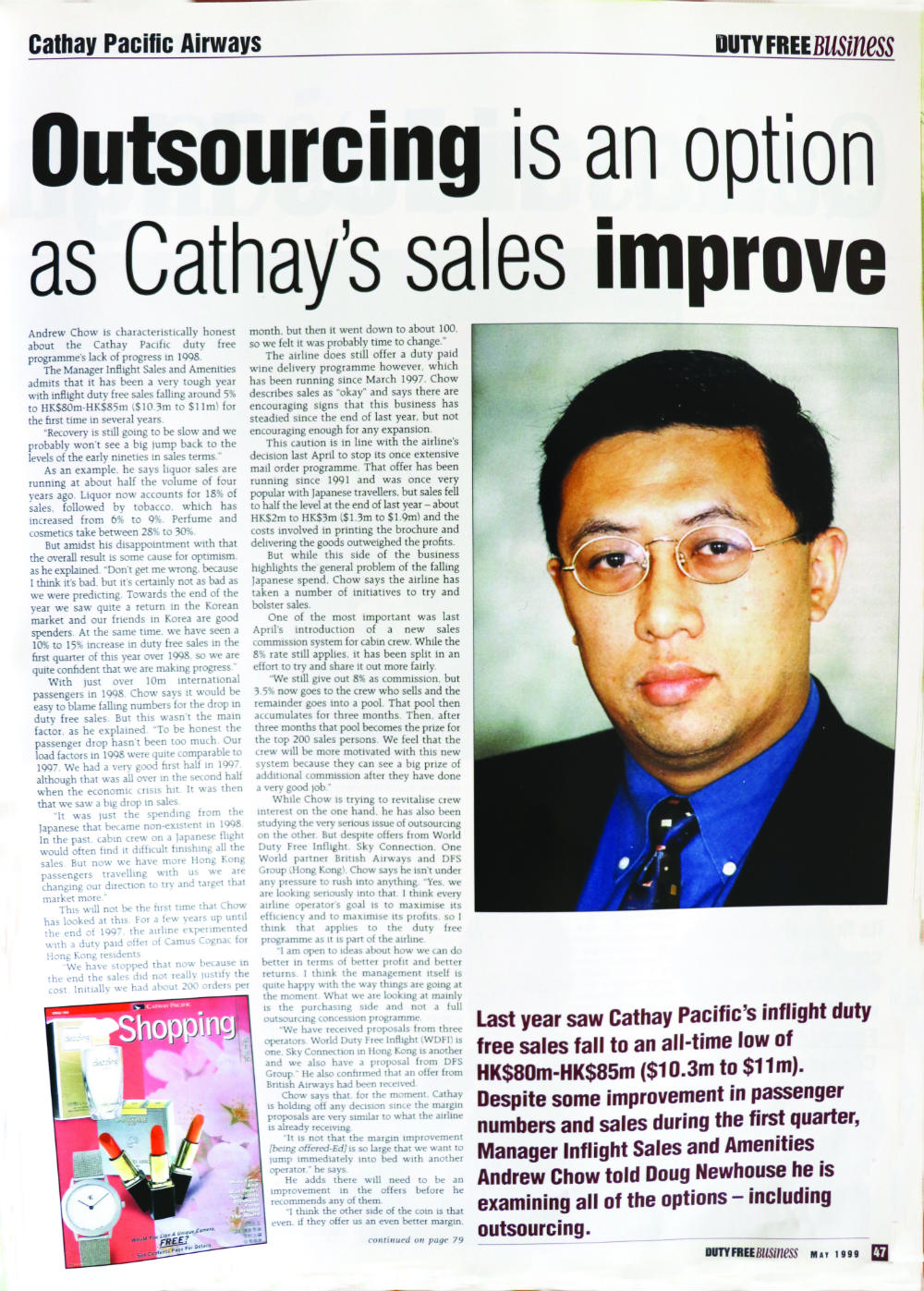
Cathay_outsource

Cathay first considered outsourcing its inflight retail programme more than 20 years ago. Source: TRBusiness Now & Then.

This is designed to provide a targeted retail offer to passengers pre-trip and during the journey for pre-order and home delivery.

The chosen partner would also be responsible for streamlining efficiencies in payment processing, particularly as momentum for digital wallet services such as WeChat Pay and Alipay continues.

Ronald Lam, Cathay Pacific’s Director Commercial and Cargo said: “Retail inMotion and the LSG Group impressed us with their in-depth understanding of the travel retail industry and ability to leverage on technology to improve our customers’ shopping experience.

“We look forward to building a strong partnership with Retail inMotion to take our travel retail business to new heights.”

Stefan Patermann, CEO, RiM called the deal a ‘very important milestone’ in the Dublin-headquartered firm’s development.

He added: “We feel honoured by Cathay’s decision and are now preparing intensely for the successful launch of a market-leading and ground-breaking programme for customers’ shopping pleasure, whether on the ground or in the air.”