
 Trbusiness. The travel retail Trbusiness. The magazine for global retail and duty free professionals.

Olivier Jankovec, Director General ACI EUROPE.
ACI Europe says selective comments by the Airlines for Europe (A4E) group of carriers in relation to airport charges contained in a new study were ‘media-friendly, highly selective and simplistic’ and ‘not about benefiting consumers’.
Clearly angered by the comments made yesterday at the A4E CEO Forum in Brussels, ACI Europe said: “Asked directly by the moderator at their own event, whether lower airport charges would genuinely result in lower air fares – none of the airline CEOs on the airport charges panel would confirm.
ACI POINTS TO A4E AIRLINE GROUP’S OWN AGENDA...
“A4E’s campaign on airport charges is all about boosting the bottom line of the major European airlines – which A4E represents. This, at a time when these airlines are actually posting record profits – on the back of improving pricing power and contained oil prices – which they do not pass onto consumers.”
 ACI Europe Director General Olivier Jankovec also took exception to A4E’s alleged description of airports as ‘connectivity disruptors’, which he said was not only ‘insulting’ but also ’a massive lie’.
Jankovec said: “Developing diverse air connectivity is at the very core of airports’ social and business mandates. We aim to provide air travellers with more choice. This is precisely why airports in Europe are perpetually chasing airlines, offering incentives such as rebates on airport charges and marketing support to entice them to develop new routes and add more frequencies from their own location.”
The airports group adds that it works extensively on measuring airport connectivity to give its members a set of industry indexes allowing them to track their own connectivity performance over time,” and he adds that the figures ’speak for themselves’.
AIRPORTS’ ANNUAL SUBSIDY TO AIRLINES IS $12.2BN
“Europe’s airports already subsidise airlines to the tune of €10.4bn ($12.2bn) every year. This is because of the gap between airport revenues from charges paid by airlines/passengers and airports’ total costs.
“In fact, airlines and passengers only finance airports’ costs of operating. The totality of the cost of maintaining and expanding airport infrastructure comes from other sources – essentially from the margins on airports’ commercial activities. This is a model that benefits all airlines and that some of A4E’s members have abused extensively.”
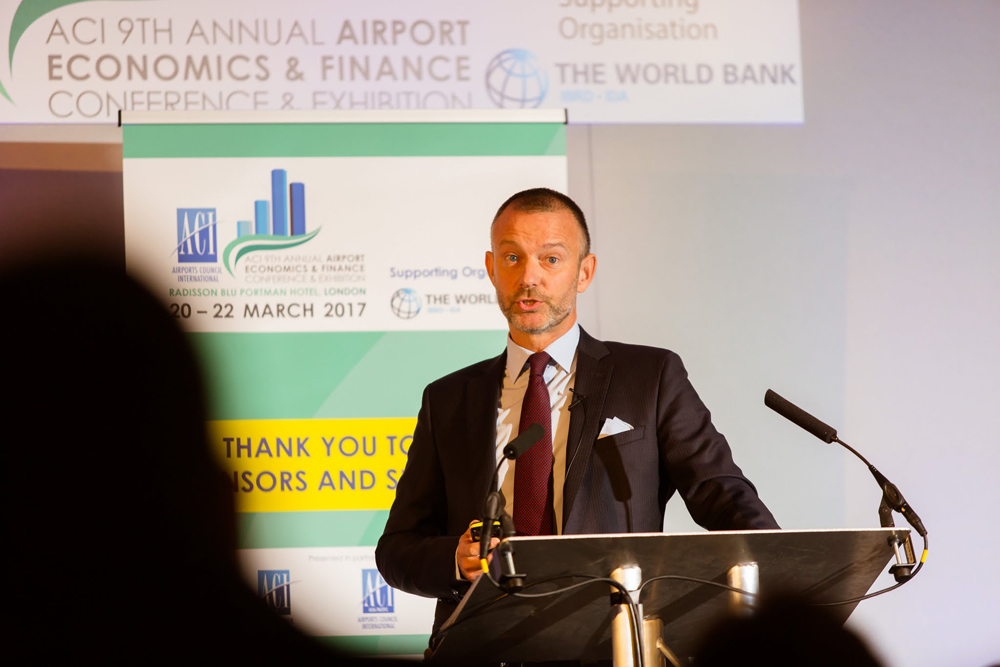
Jankovec says Europe’s airports already subsidise airlines…
ACI Europe also stated that A4E is also basing its ‘allegations’ on EBIDTA margins and for a capital intensive sector like airports, EBDITA is ‘rather selective’ and ‘a not necessarily appropriate way of measuring financial performance’.
The airports body also claims that global airline association IATA has already acknowledged this when it stated …“airports are relatively capital intensive, with the level of capital invested (e.g. land) higher than the level of annual revenues. As such, operating profit margins will need to be relatively higher than other sectors in order to generate an equivalent return on capital.”
ACI therefore maintains that ‘a more appropriate indicator for capital-intensive industry is ROIC (Return On Invested Capital). It says that at European airports this currently stands at 7.2% – broadly in line with the cost of capital.
ACI: THERE IS NO SYSTEMIC REGULATORY FAILURE
ACI adds that ’it should be noted’ that EU airports are actually underperforming other European airports based on this indicator – ‘not to mention airports in other emerging markets where the ROIC is routinely well above 10%’.
Concluding his comments, Jankovec described the A4E comments as ‘shallow’ in nature and ‘typical of how some European airlines have decided to lobby for a revision [of the] EU airport charges directive’.
He said: “But a closer look only reveals that there is no systemic market nor regulatory failure that justifies such a revision. In the end, it comes down to realising that there is a clear distinction between the interest of the passenger and the wider economy on the one hand – and the interest of airlines on the other.
“Just consider the fact that most airlines do not even effectively refund airport charges and other ticket taxes to passengers who do not take their flight. Airport charges should be about airport investment and connectivity – not about boosting airlines’ bottom line”.
EARLIER IATA REPORT REBUTTAL
ACI Europe’s latest response to A4E follows an earlier reaction to IATA claims that the passenger component relating to airport charges has doubled in the past 10 years.
As reported by TRBusiness last month, IATA issued a call to Europe’s aviation policy makers to ‘significantly strengthen’ the regulation of what it sees as European airport ‘monopolies’ in a bid to protect ‘consumer interests’.
Within the reports findings, IATA says that consumers could have saved on average €17 ($20) on a one-way trip basis should airport charges have remained consistent between 2006-2016, with suggestions that the freezing of airport charges would lead to lower air fares and more traffic branded ‘ludicrious’ by ACI Europe.
To read the original report, click here.
With additional reporting from Luke Barras-Hill

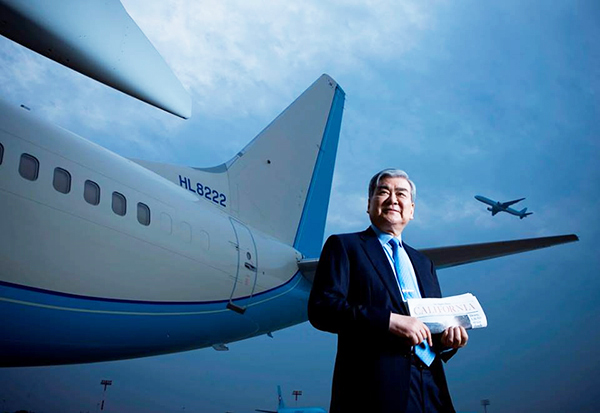
 The Irish Duty Free Alliance (IDFA) will hold its very first meeting at the Dublin Hilton Hotel this Friday with the primary objective aimed at supporting the re-introduction of duty and tax free sales on routes to and from the UK when it leaves the EU on March 30, 2019.



 The International Air Transport Association (IATA) has released global industry performance statistics for 2016 confirming that airlines carried 3.8bn passengers on scheduled services last year, a rise of 7% on 2015 – equal to an additional 242m air trips.


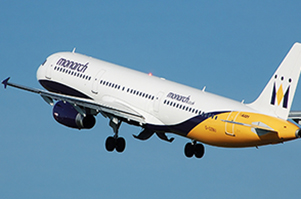
 The Unite union is launching legal action on behalf of more than 1,800 Monarch airline workers who lost their jobs when the airline folded recently.


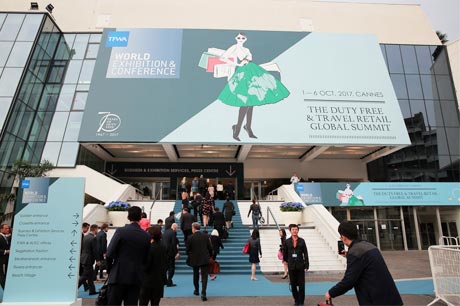 The TFWA World Exhibition & conference, which took place this week in Cannes, drew a record number of trade visitors – 6,517 compared to 6,443 – representing an increase of 5% [provisional figures], said Erik Juul-Mortensen, TFWA President at a closing press conference held in Cannes on Thursday.




 The International Air Transport Association (IATA) has announced that August global passenger numbers measured in total revenue passenger kilometres (RPKs) rose by 7.2% compared to the same month last year.
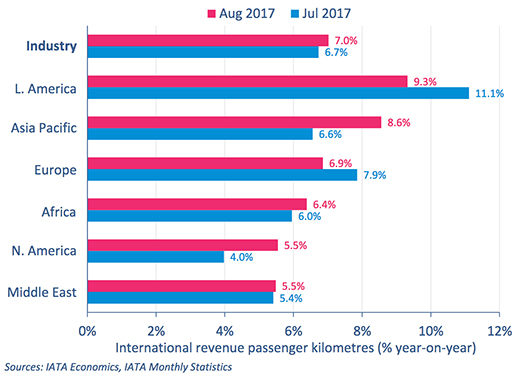 Similarly, European carrier numbers climbed by 6.9% although this represented a slowdown from the 7.9% growth recorded in July. IATA said international traffic on routes within Europe has slid in recent months, in seasonally adjusted terms, despite a strengthening regional economic backdrop.
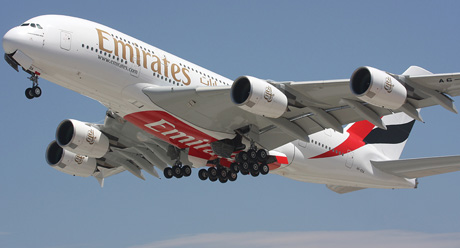 Traffic growth on the segment was already slowing in early-2017, in conjunction with an easing in the pace of growth of nonstop services flown by the largest Middle Eastern airlines. Capacity increased 5.1%, with load factor rising 0.3 percentage points to 81.4%.
