Archives

Alcohol companies commit to new DFWC code of conduct

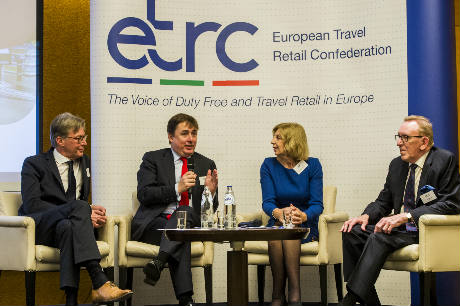
ETRCforumAll members of the European Travel Retail Confederation (ETRC) active in the manufacturing or retailing of alcohol have now confirmed their commitment to the Duty Free World Council (DFWC) Self-Regulatory Code of Conduct for the sale of alcohol in duty free and travel retail.


This follows the decision at the June 2017 AGM to replace the former ETRC Alcohol Code of Conduct with the DFWC Code, developed by DFWC in close cooperation with its regional associations.


In addition, ETRC is engaging with its national and regional associations to ‘spread the spirit and values’ of the DFWC Code across Europe and to actively promote its adoption by their own members.


“ETRC is confident its members will take a proactive and responsible approach in their endeavours to comply with the provisions of the DFWC Code,” says the confederation.


Erik Juul Mortensen

Erik Juul-Mortensen, Vice President Brands of ETRC and Vice President of DFWC.

“The alcohol category is under increasing scrutiny by regulators in Europe, with calls for textual and pictorial health warnings, structural separation in shops and restrictions on sales to name a few.”


DEFENDING THE INDUSTRY

ETRC says that the new code of conduct has been designed to respond to those challenges and to complement any existing codes and guidelines being followed by individual alcohol manufacturing companies and other bodies.


“We strongly believe that the DFWC Code will be a valuable tool when defending any future challenges to the industry both regionally and globally and will help demonstrate the unique nature of duty free and travel retail,” said Erik Juul-Mortensen, Vice President Brands of ETRC and Vice President of DFWC.


Frank O'Connell DFWC

Frank O’Connell, President of DFWC.

“It will also show that efficient self-regulatory rules are already in place in our retail channel, hence the importance of strict compliance by the industry.”


“The DFWC Code is now the only code of conduct for the sale of alcohol in the duty free and travel retail industry globally providing a unique standard for the promotion of responsible retailing and demanding the highest degree of responsibility and ethics from both retailers and suppliers operating in this channel,” added Frank O’Connell, President of DFWC.


“In addition, DFWC is currently in discussion with APTRA with a view to adapting their Responsible Training Programme for use by a global audience and providing additional support for the implementation of the Code within our industry.”


The DFWC Self-Regulatory Code of Conduct for the Sale of Alcohol Products in Duty Free & Travel Retail, can be obtained at this link:

http://dfworldcouncil.com/wp-content/uploads/2017/09/DFWC-Global-Code-of-Conduct-Alcohol-final.pdf

Canadian duty free store sales jump +17% in March

canadian-flagDuty free sales at Canadian airports grew an impressive 17% year-on-year to reach $41m (USD 32m) in March, just outpacing border stores, which also posted double-digit growth of 14% to $9.8m (USD 7.65m).


For the first three months of the year, airport sales grew 8.6% to reach $113m with border stores registering $24.7m (+3%).


The categories that dominated sales in land border duty free shops for March included alcohol (liquor, liqueur, wine, coolers) and tobacco (cigars, loose tobacco) which sit in first and second position respectively. The remaining categories are ranked highest to lowest below:


Perfume, Cosmetics, Skincare; Food; Beer (beer, malt-based coolers); Jewellery, Watches, Clocks; Accessories (purses, wallets, sunglasses, etc.); Clothing (including hats, fur, leather); Souvenirs; Office and Travel Supplies Other; Electronics, Cameras, Binoculars, etc.; Glassware, crystal, china, figurines, porcelain and finally Crafts/Arts.


canadian border

Stores on the Canadian border also performed well in March with sales up 14%.

Breaking down border sales by region, shops in the Pacific grew by nearly 25% to reach $1.8m March. Between January and March 2018, sales in this region exceeded $4.4m – up almost 11% year-on-year.


The Prairie region registered sales of $663,000 in March – an increase of nearly 8% year-on-year and for the first three months of the year sales exceeded $1.7m – up almost 5% compared to the same period in 2017.


Ontario sales hit nearly $5.8m, growing by 13% year-on-year and for the first three months the total sales figure was $14.5m, up 2.5% yoy.


Finally, the Atlantic/Quebec region registered sales of $1.5m, and an increase of over 6% year-on-year. For the first three months, total sales actually slid by 2% to just over $4m.

Dufry: Gross margin improves after supplier negotiations

Dufry-CFO,-Andreas-Schneiter-lead

Dufry CFO, Andreas Schneiter. Source: Dufry.com

Dufry’s gross margin improved 30 basis points in the first quarter of 2-18 which was “mainly driven by negotiations with suppliers and additional promotion activities,” according to Dufry CFO, Andreas Schneiter.


Schneiter also revealed during a press conference call with analysts and journalists earlier this week that the retailer’s concession fees had improved by almost 20 basis points. The main drivers being shop mix changes as well as an improvement in some of the concession contracts.


“For the full year we continue to expect a small increase in concession fees as a percentage year-on-year, but even so, those numbers illustrate concession fees can improve in certain situations,” reiterated Schneiter.


Schneiter was also tasked with answering numerous questions on both currency exchange rate impacts and cash flow. Addressing currency impacts formerly he said: “The FX translation effect in the first quarter was -0.5%.


Julian-Diaz-Dufry-lead

Dufry CEO, Julián Diaz.

“The strong US dollar against the Swiss franc resulted in a negative FX effect, which could not be fully compensated by the positive FX effect on the Euro and the British pound vs the Swiss Franc. Based on the current exchange rate, translation FX will turn positive in the second quarter.”


Staying with currency, the company’s CEO, Julián Diaz added that the devaluation of the Russian rouble, along with the prices on the domestic market – which have risen significantly – contributed to a healthy performance in Russia in Q1.


Moving on to the topic of cash flow, Schneiter confirmed that free cash flow was -CHF 45m ($44.8m) in the first quarter, which is actually an improvement of CHF 32m ($31.9m) compared to last year.


“As in 2017 we invested a substantial amount in networking capital in the first quarter of 2018,” added Schneiter. “This year in 2018 it was CHF 131m compared to the CHF 137m last year. “

Diaz: ‘Low-cost passengers are not a threat to travel retail’

Julian-Diaz-Dufry-leadDufry CEO, Julián Diaz, says that he believes low-cost passengers will be significant contributors to the company’s success as they continue to increase in number on a global scale, prompting the company to deliver commercial concepts that better target these travellers.


During a press conference call with analysts this afternoon, Diaz was keen to point out on more than one occasion that he does not see the increase of low-cost passengers as a threat to travel retail, but actually the opposite.


“We’ve seen a very healthy increase in passengers,” he said. “In the places we are operating it was around 9%. This was driven by an increase in the low-cost passengers and British passengers.


“The low-cost passenger is a very good passenger…I have read in many locations that low-cost passengers are a threat to travel retail…it’s completely the opposite.


“Low-cost has seen a significant increase in passengers, so we need to really deliver what these passengers are expecting. We have different commercial concepts that will accelerate sales based on low-cost passengers. Maybe the average spend per passenger will drop but…we believe these passengers will be big contributors to the company’s sales.”


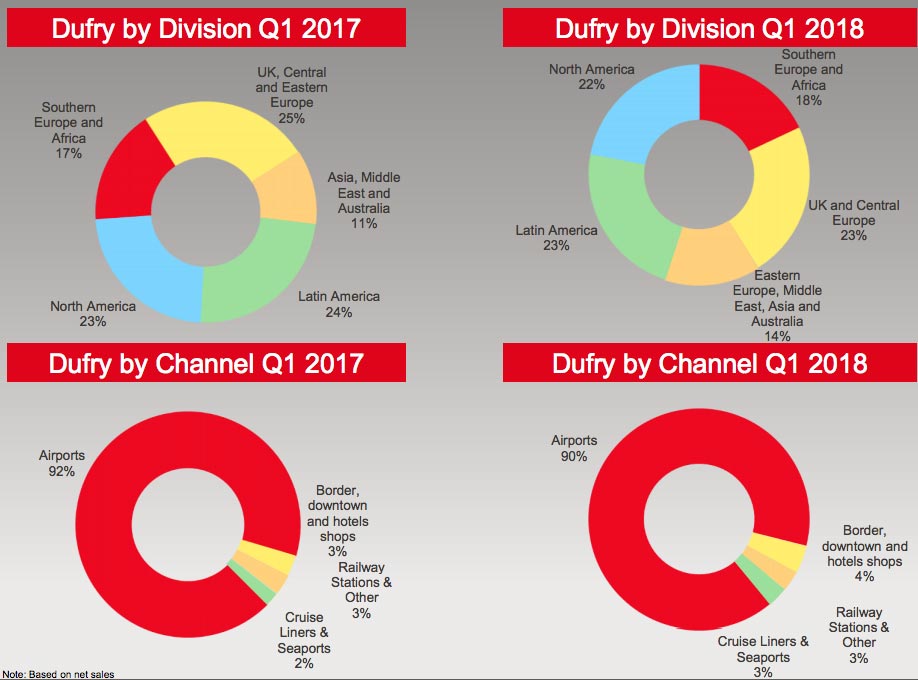
Click to enlarge graphs


Dufry-Q1-2018-breakdown


BRITS ABROAD

Unfortunately, British passengers – which Diaz cites as one of the company’s most important customer groups – were not able to bolster revenue for the company’s Spanish operations in Q1 2018, as the devalued pound continued to put off travellers purchasing in the comparatively strong Euro.


“A significant percentage of the passengers to Spain are British and what we’ve seen recently is a devaluation of the pound. This is important because in Spain we nominate the prices in Euros and as a consequence British passengers are not contributing to the growth in Spain. But in any case performance in Spain for the first quarter was positive.”


Supporting the company’s continued turnover growth has been its aggressive expansion – which has been gargantuan in recent years – and in Q1 2018 alone the company opened 4,500sq m of retail space across 57 shops. New contracts were signed in Q1 that will add 13,900sq m to the Dufry portfolio in the remainder of 2018 and 2019.


One analyst asked Diaz if the company expected any significant loss to overall square metres with the expiry of any contracts this year.


 LONG CONCESSION CONTRACTS

“We are not expecting any significant impact or square metres loss during the second, third and fourth quarters of 2018. We have a concession portfolio with an average duration of 8.5 years…so this is supporting the growth in terms of square metres.


Dufry-Q1-2018-shop-space


“The second one is the renegotiation of different contracts. We have renegotiated two contracts last year that started to impact in the second half of the year.”


“I commented last year on a couple of contracts; one in Australia and one in America…we started to pay the new rent in January when the new shops were open with the new configuration and renovation in the second and third quarter.


“As a consequence, as the year goes on what we will see is that the savings we have seen in the first quarter will be mitigated. By year-end, the result will be an increase in concession fees by around 20 basis points.”

New business nudges Dufry’s Q1 top-line over $1.8bn

Dufry-Gatwick-North-Nov-2017-lead

Dufry opened a new store at Gatwick Airport at the end of last year.

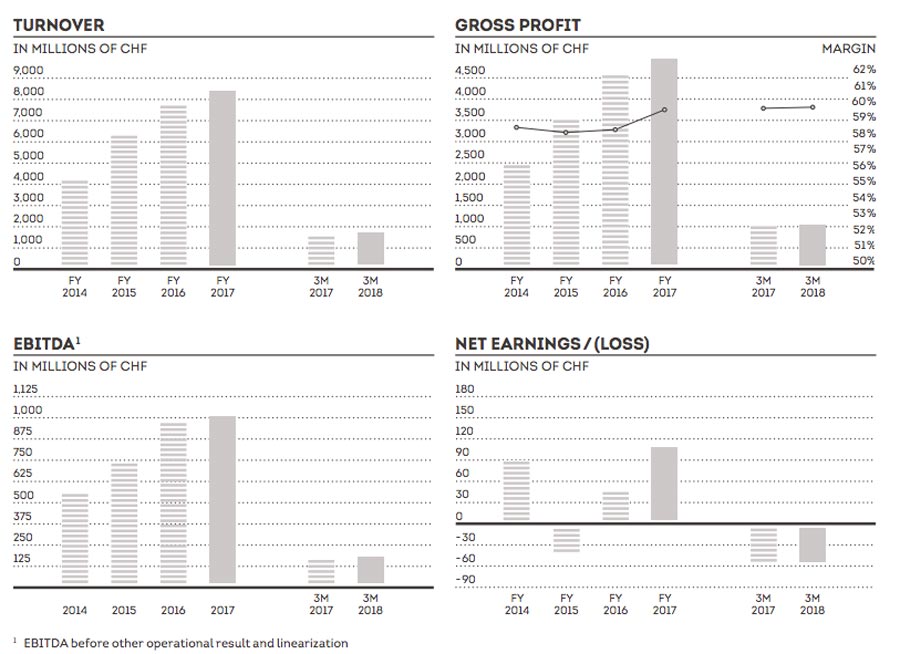
Dufry Group says it enjoyed ‘strong’ first quarter 2018 results with turnover reaching CHF 1,820.0m ($1,814m) up 6.6% year-on-year and its Business Operating Model (BOM)/efficiency plan positively impacted EBITDA, which grew by 18.4% to CHF 183.1m ($182.5m).


Whilst it was the UK, US and Spain which boosted Dufry’s results this time last year (Q1 2017) – thanks to the return of Brazilian and Russian travellers – it was Eastern Europe, Middle East, Asia and Australia to which Dufry attributed this year’s strong results (Q1 2018), along with new concessions. The world’s largest duty free and travel retailer also noted that it expanded its EBITDA margin by 100 basis points to 10.1%.


Dufry’s organic growth accelerated from an already healthy 5.7% seen in the final quarter of 2017 to 7.1% (like for like at 4.9%) with ‘good’ performances being recorded in Eastern Europe, Middle East, Asia and Australia. This division as a whole posted remarkable growth of 21.1%. However, Latin America and North America also posted growth of 9.0% and 8.4% organic growth, respectively.


New concessions added 2.2% percentage points to the overall organic growth recorded, the highest quarterly contribution since 2011 and the foreign exchange had a slightly negative impact to the tune of -0.5% over the period, due to the devaluation of the US dollar.


LOWER CONCESSION FEES

As mentioned, Dufry is happy to report that its EBITDA margin expanded by 100 basis points to 10.1% in the first quarter of 2018; a result of lower concession fees and the initial efficiency contributions of Dufry’s Business Operating Model (BOM)/efficiency plan, it said.


Click to enlarge tables
 

Dufry-Q1-2018-overview

Gross Profit rose 7% year-on-year to reach $1.089bn.


“The BOM aims at implementing best practices as well as common processes and procedures across the group, generating additional efficiencies,” says Dufry. “The BOM is expected to be completed by the end of 2018.”


In the first quarter the company completed 7,100sq m of refurbishments and plans to work on an additional 41,000 m2 in 2018. Dufry also opened and expanded 4,500sq m of gross retail space and already signed contracts for opening further 13,900sq m in 2018/19.


Breaking down Dufry’s performance by region, Southern Europe and Africa turnover’s grew by 11.2% and reached CHF 321.1m in the first quarter of 2018, from CHF 288.8m one year before.


SPAIN: PERFORMANCE WAS HARD TO BEAT…

Organic growth in the division reached 3.7% with France, Malta and Africa achieving double-digit growth, “the latter following a recovery in tourist numbers in the region, especially in Morocco,” adds Dufry. Italy and Greece also performed well while Spain managed to improve slightly year-on-year, following an outstanding performance in Q1 2017.


Turnover in the UK and Central Europe rose to CHF 397.4m in the first quarter of 2018, versus CHF 384.2m in the previous year, however, organic growth in the division was -1.4%, impacted by the closing of operations in Geneva in October 2017.


Dufry-Q1-2018-break-down


Operations in the United Kingdom grew in mid-single digits as did Finland whist Sweden and Switzerland (excluding Geneva) also performed well.


As mentioned, the Eastern Europe, Middle East, Asia and Australia division produced some remarkable results with turnover increasing to CHF 256.5m in the first quarter of 2018, against CHF 219.8m in the same period in 2017.


What was most encouraging across the group’s performance was the organic growth achieved by this division at 21.1%, following the positive momentum of Q4 2017.


DOUBLE-DIGIT GROWTH IN ASIA AND MID EAST

In the Middle East, Jordan, Kuwait and Sharjah sales grew in double digits. In Asia, most operations performed well, such as South Korea, Indonesia, Macau and Cambodia. In Australia, sales grew double digits after the renovation and implementation of the ‘New Generation Store’.
 

Sharjah Dufry ribbon cutting

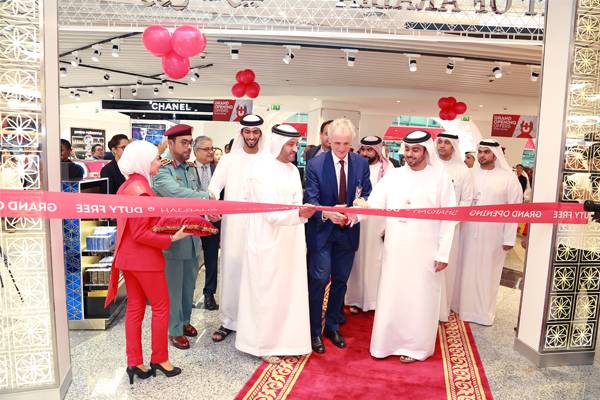
Dufry completed extensive store renovations at Sharjah International Airport at the end of last year.


Dufry’s Latin American operations saw turnover reach a combined CHF 408.1m in Q1 2018 from CHF 400.2m one year earlier and organic growth reached 9.0%.


Operations in Mexico and the Caribbean performed very well generally with double-digit growth in a number of locations. South America also reported an acceleration in growth, with Ecuador and Peru ranking best and Brazil delivering a good performance.


Dufry was also happy to report that its cruise business delivered strong double-digit growth driven by a combination of like-for-like growth and new project wins.


Turnover reached CHF 404.4m compared to CHF 392.1m in the first quarter of 2017. Organic growth reached 8.4%, as a result of solid performance in the United States and Canada, in both duty free and duty paid businesses.


Julian Diaz Dufry

Julián Díaz, CEO of Dufry Group.

SHARE BUYBACK LAUNCHES 11 MAY

Dufry commented on its Q1 2018 results: “Dufry has a very seasonal business: most of our businesses are located in the Northern hemisphere and the third quarter has highest passenger flows.


“Consequently, the first quarter is the least important period of the year for turnover, profitability and free cash flow is typically negative. In 2017, the first quarter accounted for 20% of turnover and 15% of EBITDA.”


“The share buyback program for the purpose of capital reduction as already announced by Dufry AG on April 5, 2018, will be launched on 11 May, 2018. The program with a volume of up to CHF 400 million will run over a period of up to 12 months. The execution and the volume of the share buybacks will depend on market conditions.”


Further details on the program will be disclosed as of 9 May, 2018, on https://www.dufry.com/en/sharebuyback.


Julián Díaz, CEO of Dufry Group, commented: “The strong operational performance with an organic growth of 7.1% as well as the impact of the Business Operational Model/efficiency plan have supported the increase in profitability and the EBITDA margin in particular, which has expanded by 100 basis points and reached 10.1% in the first quarter compared with 9.1% one year ago. And we also saw a remarkable cash generation, although Q1 is not relevant in that respect.


NEW CRUISE VESSELS

“The strong top line growth was generated through a combination of an overall more efficient operation, like for like growth, and the contribution of new concessions added to the portfolio namely in the UK, Colombia, Mexico, the Caribbean and Asia as well as new vessels in the Dufry Cruise Services.


“From a profitability perspective, we have started to see the first impacts from the Business Operating Model/efficiency plan implementation. Last but not least, there are also slightly over CHF 10million of savings in the financial result mainly due to the refinancing of our debt along 2017.


“In terms of business development, we added 4,500sq m of gross retail space and already signed 13,900sq m to be opened in 2018 and 2019 in existing and new locations across the globe; while at the same time we also successfully extended existing contracts. Moreover, we have refurbished 7,100sq m of retail space in the first quarter and plan to revamp further 41,000sq m along 2018.


“Our priorities for 2018 remain intact. We will continue to focus on completing the implementation of the BOM and generating further efficiencies, while accelerating the development of our digital strategy and expanding our growth outside the airport channel.


“All these activities will contribute to further improve organic growth and spend per passenger, which will ultimately result in an enhanced cash generation and deleveraging of our balance sheet.


“The positive market conditions seen throughout 2017 have continued in the first months of 2018 in all divisions, with similar organic growth performance as in previous quarters, thus providing a good base for the start into the high season. We will continue to focus on the execution and development of our operational capabilities to ultimately create another long period of sustainable growth.’’


India still a ‘sleeping giant’ for TR, says Juul-Mortensen

Erikmain17India’s nascent travel retail potential is ready to be exploited as new markets open up to the industry, according to TFWA President, Erik Juul-Mortensen.


“Japan continues to develop and has opened up for foreign investment, plus there are the smaller markets, which I keep mentioning, such as Vietnam and Cambodia,” he outlines in a wide-ranging interview for TRBusiness’ Asia Pacific edition (May), which can be picked up at the TFWA Asia Pacific exhibition in Singapore next week.


“These destinations are really beginning to live up to their early promise. Another market I’ve talked about a lot is India, which is a sleeping giant for our industry.


“There are lots more people travelling to and from India and a better duty free offering, so this is an area to watch out for in terms of development opportunity, especially when you consider the numbers of Indians now travelling for the first time.”


While Juul-Mortensen admits there is ‘plenty of reason for optimism’, he says the industry must ensure it is ready to adapt and evolve to the world around it.


SOUTH KOREA: ‘PERIOD OF ADJUSTMENT’

“South Korea is clearly going through a period of re-adjustment and there’s evidence of the need for greater flexibility and understanding between stakeholders,” he added.


“There is also reason to look at the business model we have been using for a long time. I’m not saying it is broken.


“It perhaps just needs a rethink to be made more fit to today’s rapidly changing market; a greater level of acceptance and consideration from all sides – not least airport landlords – and understanding things must be more balanced.


“We must build trust between all stakeholders so that knowledge, insights and data can be shared better.”

Breakthrough: Brazil approves land border duty free stores

Fagundes

Dufry General Manager Brazil and Bolivia and ASUTIL President Gustavo Fagundes.

The first Executive Conference session took place place yesterday (March 19) in Orlando at the inaugural Duty Free and Travel Retail Summit of the Americas.

Motta International CEO and International Association of Airport Duty Free Shops (IAADFS) Chairman of the Board Erasmo Orillac began by welcoming delegates to the conference.

ASUTIL President and Dufry General Manager Brazil and Bolivia Gustavo Fagundes then delivered significant news regarding the border situation on Brazil’s side.

Following the submission of a draft bill to the Brazilian government back in 2012, Fagundes confirmed regulation had finally been approved to open land border duty free stores in Brazil.

As reported in the March edition of TRBusiness, customs had already laid out guidelines for the regulation of Brazil’s long-awaited land border shop arrivals business.

This took place at a meeting of key South American duty free stakeholders convened by the National Union of State Legislators in the presence of the Receita Federal (Brazil’s federal revenue service).

BRAZIL BORDER BREAKTHROUGH

Under the now approved guidelines, border stores can be established in any of the 32 border twin cities in either special areas or determined by each city.

These include Colombia, Venezuela, Argentina, Paraguay, Bolivia and Peru (See below map).

Brazilbordermap

Contrary to speculation that the new duty free stores could expect to begin trading in August, José Luis Donagaray, Secretary General, ASUTIL had previously told TRBusiness that such a scenario would be more likely to occur by the end of 2018.

According to Fagundes, border shops already exist in some of the neighbouring countries and some cities have more demographic density than others, which represents greater market opportunities.

On the flip side, the “very low” density of some cities could present challenging operating conditions.

He said: “This is a very important change from an industry point of view. It opens several opportunities for operators and suppliers.

“We have been working for a long time to get this act to be issued and believe the design of the act is challenging in that it is very open. It will represent an important learning curve for everyone.

“The industry must be able to drive this opportunity in a united manner and do so as successfully as possible.”

Document

The official document indicating the approval of legislation to open land border duty free stores in Brazil.

ALLOWANCE SITUATION

On the subject of allowances, currently, Brazilians will be able to purchase up to $300 per month without having to prove that they travelled, nor are they obliged to buy all items in one place or on the same day.

A 50% tariff will apply to imported products exceeding $300 (although there are limitations on quantities for alcohol and tobacco).

Importantly, Brazilians will still be able to take advantage of a $300 allowance to purchase in duty free shops in neighbouring countries.

But a document seen by TRBusiness outlines Receita’s intention to reduce this threshold to $150 unless a global Mercosur agreement is struck.

Meanwhile, the prospect of Brazil raising its inbound duty free allowance for citiziens in a similar move to Uruguay and more recently Argentina – which raised its threshold from $300 to $500 earlier this year – is something the association is working on, with Donagaray hoping a move could be achieved this semester.

Speaking about the allowance increases in LATAM countries, Fagundes remarked: “Two very important countries in the region have already improved the quota. In Argentina it has increased from $300 to $500 and Uruguay from $500 to $650.

“This is key for the region and the sustainability of duty free and is a very important issue. The industry has been working hard on that.”

DFA to create new DF ‘mega store’ in Washington

Pac

DFA will build a brand new duty free store in Blaine, Washington having bought out nearby operator Pac Can Duty Free.

Duty Free Americas (DFA) has confirmed to TRBusiness it has ‘bought out’ rival operator Pac Can Duty Free, which is located on the Pacific Highway connecting the towns of Blaine, Washington and Surrey on the Canada-US border.

Pac Can Duty Free is running the store close to the DFA shop in Blaine, Washington, with the retailer planning to demolish the existing structure and build a brand new ‘mega duty free’ store.

DFA president Leon Falic revealed to TRBusiness: “We are planning a major renovation there, which will include both lots. We will build a brand new duty free store. Details will follow in the next couple of months.”

DFA has plenty to look forward to in Latin American countries such as Panama in 2018, where it is creating something ‘transformational’ following the capture of two of the three Panama Tocumen Terminal One tenders last year.

Things are also looking up in Brazil, where the economy is coming back and its stores have been completed.

Leon-Falic-social

Leon Falic, President, DFA.

STRONG START

The year has certainly started well elsewhere, particularly in Macau where DFA unveiled a new and extended store at the Venetian Resort Hotel in January.

The outlet, which welcomes around 50,000 people daily, offers a wide selection of fragrances, elegant dress and casual watches, gifts, jewellery, travel-related merchandise and liquor and tobacco.

Falic said: “We have just built a huge store in Macau and it is up crazy numbers from when we refurbished it quite recently. It is an incredible story. We sell more per square foot in the Venetian than anybody else.

“We bought in a lot of different brands and really made it for the region. My brother Jerome runs the operation and has really built on it.

“We have bought in a lot of Korean brands, which are very strong, and created big partnerships with the likes of Lancôme and Dior. Our main business there is beauty and we have partnerships with a lot of the [beauty] companies.”

Falic, who told TRBusiness DFA is building a 10,000sq m multi-category duty free mall in Uruguay set for completion in July or August, says the challenge is to be more competitive.

“We are sometimes very close to local market pricing. We need that differential which sometimes the brand owners need to realise, especially in the US which is a very cheap market. We have to compete with that.

“Currencies are another big issue and tenders are expensive, but this is the nature of the business we are in. It is the business we chose to be part of and we have to deal with that.”

As a Panama resident, Falic has strong belief in Latin America, where DFA has a massive opportunity to continue expanding and growing.

“I am not an expert on China or some of the other markets. This is the market I know. We are obviously the player with the most stores in the region. I believe there is Dufry and us.”

See TRBusiness’ Leading Americas Operators Report, available in the forthcoming March print issue of TRBusiness,  for the full interview with DFA President Leon Falic. 

Main satellite image courtesy of DFA.

To receive a copy of the magazine, subscribe here.


Canadian retailers warn on cross-border DF changes

Canadamain

NAFTA discussions surrounding raising the de-minimis threshold is a complex one. Source: Wikimedia.

Adjusting Canada’s ‘de minimis threshold’ to match the US’s $800 duty free allowance for cross-border shipments could impact Canadian land border duty free’s competitive advantage, TRBusiness understands.

US policymakers are pushing Canada to up its duty free de minimis threshold from the current $20 limit [applied to international goods that consumers can purchase online without paying import duties] as part of ongoing North American Free Trade Agreement (NAFTA) talks, the latest round of which is scheduled to conclude on Monday.

COMPLEX ISSUE

Canadian duty free retailer sources have indicated to TRBusiness that the debate surrounding de minimis is a complex one.

One source said any changes to regulation should consider the complex differences governing tax laws between online and offline businesses in a way that does not adversely affect the competitive advantages gained by traditional retailers.

“We already face tremendous price competition from the US for our core products in bricks and mortar stores, and there is no doubt online retail is a threat for any non-controlled products (i.e liquor) that can easily be sold and distributed online,” they commented.

“As with domestic retail, we have to ensure that the high costs of operating a duty free shop do not become a weakness where less controlled domestic retailers, online or offline, have great advantages. It is a changing world, so change is unavoidable to some degree and there is a threat to duty free.”

Trump2

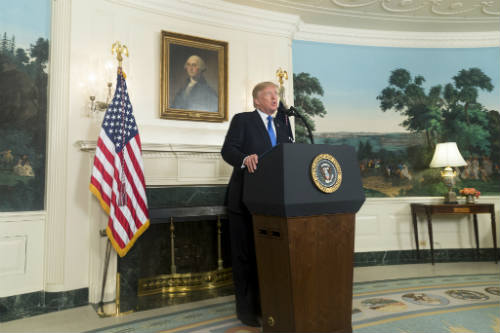
President Trump has been quoted in the past calling NAFTA a ‘disaster’, and has threatened to walk away from the $1.2bn free trade deal with Mexico and Canada unless changes are made. Source: Whitehouse/Flickr.

Separately, they said pegging the allowance level to the US’s could prove ‘damaging’ to Canada, where tax revenues can efficiently leverage different tax and social policies.

Another source commented: “We have heard only that the US side would like Canada to raise its limit from $20 to $800, but we have not heard how they propose to go about doing this.

“If the proposal is simply that Canada grant US-based e-retailers a tax and duty free sales threshold forty times greater than it currently is, it would of course come at the cost of Canadian retailers. The Retail Council of Canada has been very clear explaining this to policy and decision makers in Ottawa.”

The Retail Council of Canada recently commissioned a PwC study that claims the move could lead to a dent worth billions of dollars the loss of jobs in Canada’s retail industry.

There have also been claims that raising the threshold could unfairly benefit online giants such as Amazon and eBay, who are able to avoid some of the taxes and costs that Canadian retailers have to pay.

“In the US there are definite tax loopholes for online retailers that give them a price advantage over bricks and mortar retailers,” confirmed a source.

“There are some offsetting factors such as freight costs and depending on the documentation and monitoring required for cross-border shipments, this may drive up shipping costs to offset some of the advantages e-retailers have.

“However, it is a legitimate concern since many e-retailers have lower overheads than traditional retail.”

Amazon

Plans to boost cross-border retail sales could benefit leading US online retailers like Amazon. Source: Amazon.

SILVER LINING?

Conversely, reports from some quarters have argued that rather than increasing their wallet’s share of online purchases, consumers could instead choose to increase spending at bricks and mortar stores in reaction to an anticipated drop in prices.

One source agreed that to some extent the increase in competition might benefit consumers shopping in stores.

However, another source stated that altering de minimis would change the physical requirement provision, as currently goods entering Canada classed as tax and duty free must accompany the traveller that purchased them, apart from in rare instances.

“This could theoretically be a significant boon for Canadian Duty Free operators who may have an opportunity to ship tax and duty free goods south into the US without a customer ever needing to come into one of our stores – the logic being that if it works in one direction it must also work in the other,” the source added.


ASUTIL and IAADFS open for business in Orlando in March

IAADFS-2017-day-one-lead

The 2017 IAADFS Cocktail Party at the Orlando World Center Marriott was packed as usual.

Michael Payne, IAADFS President & CEO and José Luis Donagaray, ASUTIL Secretary General have jointly extended their invitation to the industry to attend next March’s first joint ASUTIL and IAADFS event between March 18-21, 2018 at the Orlando World Center Marriott.


As has been well documented by TRBusiness, both organisations have very sensibly agreed to work together at one venue in a joint event to help improve efficiency and reduce costs for visitors and exhibitors alike.


MORE THAN 300 RETAIL COMPANIES FROM 60+ COUNTRIES

In a joint statement notice, they said: “We are collaborating to bring together the best of our two former events to create the Summit of the Americas, the only event to focus on the duty free and travel retail industry in the Americas and Caribbean.


iaadfs_exhibit_hall_2

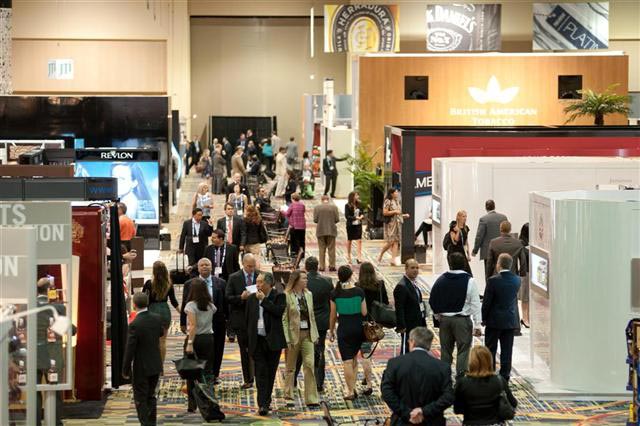
The IAADFS Show as seen at the Orlando World Center Marriott two years ago.


“The 2018 Summit allows suppliers, buyers, and other industry stakeholders to save money and time by participating in a single event to meet, network, and conduct business.


“The highly-qualified buyer audience represents more than 300 duty free and travel retail store operating companies from over 60 countries, and participating suppliers come from all major categories of products.”


Power of the Americas 2018


Both associations point to ‘Executive Conference Sessions on Monday, Tuesday, and Wednesday mornings’, which they say will provide ‘informative presentations’, while adding ‘even more value’ for participating attendees.


Jose-Luis-Donagaray-IAADFS

José Luis Donagaray, ASUTIL Secretary General.

There will also be all of the usual opportunities for attendees to network and connect with colleagues and associates during the Opening Cocktail, the Gala Evening, La Movida Club and various other exhibitor-hosted events.


‘SPECIAL’ HOTEL RATE OF $270 A NIGHT

The joint information announcement by both IAADFS and ASUTIL says that the registration fee includes access to the three-day exhibition, plus all Summit-sponsored social events and the Executive Conference Sessions on Monday, Tuesday, and Wednesday mornings.


IAADFS's Michael Payne master

Michael Payne, IAADFS President.

Those registering by January 26 can save $150 per attendee, after which attendance increases by the corresponding amount.


Both organisations are also encouraging potential delegates and attendees to book their rooms at the Orlando World Center Marriott Hotel early to take advantage of the special $270 a night rate.


For more details related to this event, click here: http://www.2018summitoftheamericas.org/