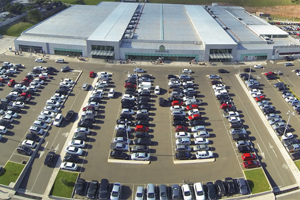
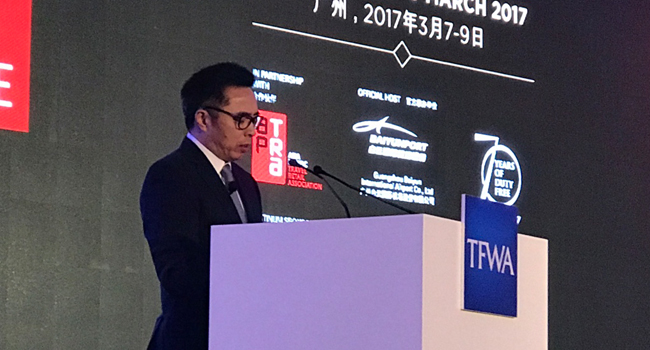
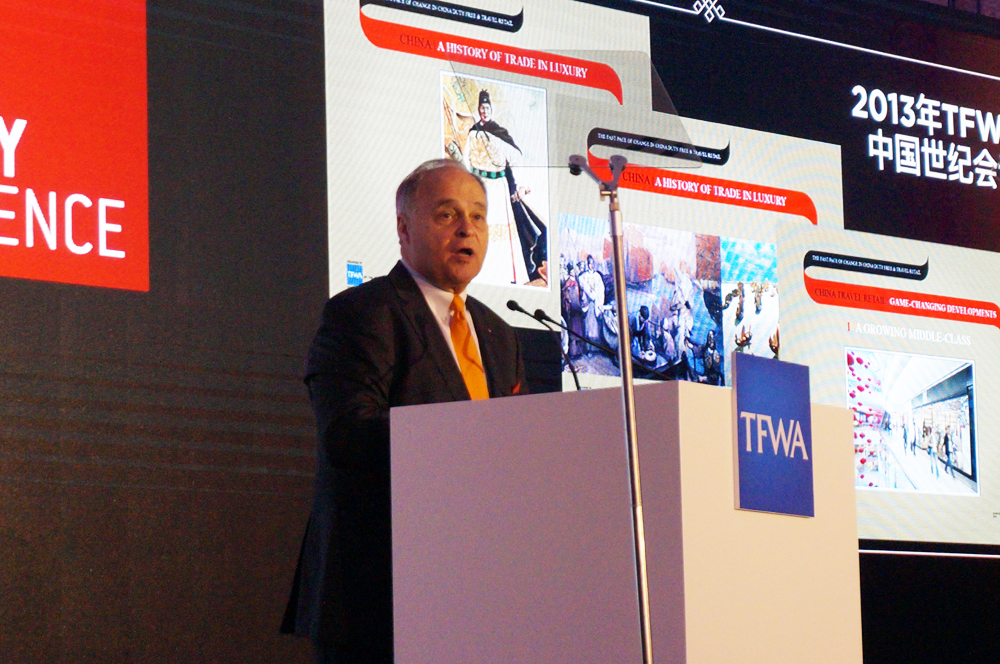
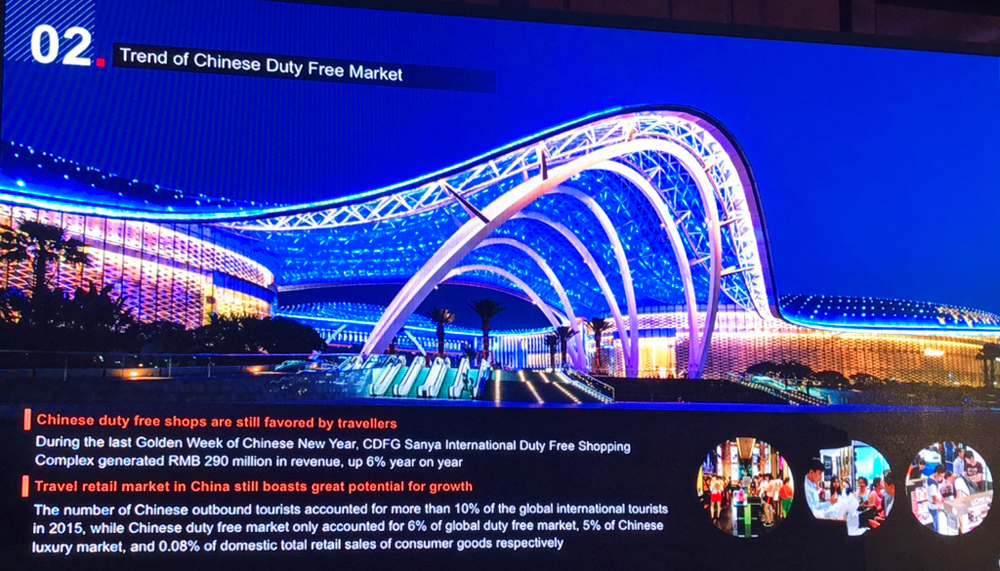
This morning, China Duty Free Group (CDFG) President, Charles Chen told delegates at the China’s Century Conference in Guangzhou that during the last Golden Week of Chinese New Year (2017), CDFG’s Sanya International Duty Free Shopping Complex generated RMB 290m ($42m) in revenue, up 6% year-on-year.
The company adds in an official statement, that during CNY’s golden week holiday this year, the city of Sanya received 957,300 tourists up +14.07% year on year and saw tourism revenue climb to RMB 9.064bn, up 19.6% yoy.
The Sanya complex registered more than 250,000 customers, up 26% year on year with duty free sales revenue reaching RMB 290m, as Chen revealed earlier today.
TRBusiness is reporting live from the China’s Century Conference in Guangzhou, China.
Follow the live stream here.
During his presentation on CDFG’s strategy in China and beyond, he also said that the merger between CDFG’s parent company CITS and Hong Kong-based China National Travel Service (CNTS) – previously known as CTS – in recent months has seen the whole group become ‘the largest tourism company’ in China.
CHINESE GROUPS TO ‘LEAD FROM THE FRONT’
As reported in the official China’s Century Conference delegate magazine published by TRBusiness, the merger is part of the government’s plan to encourage several large business groups to lead from the front when running China’s growing duty free industry.
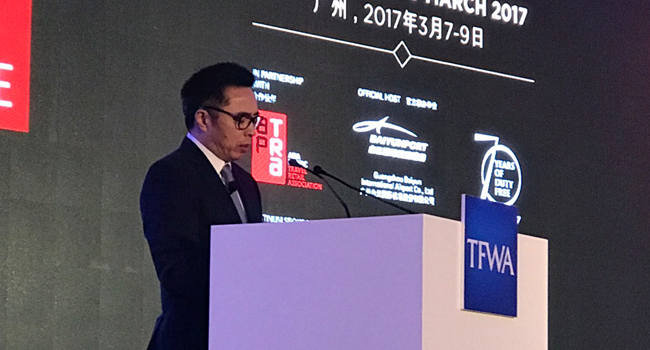
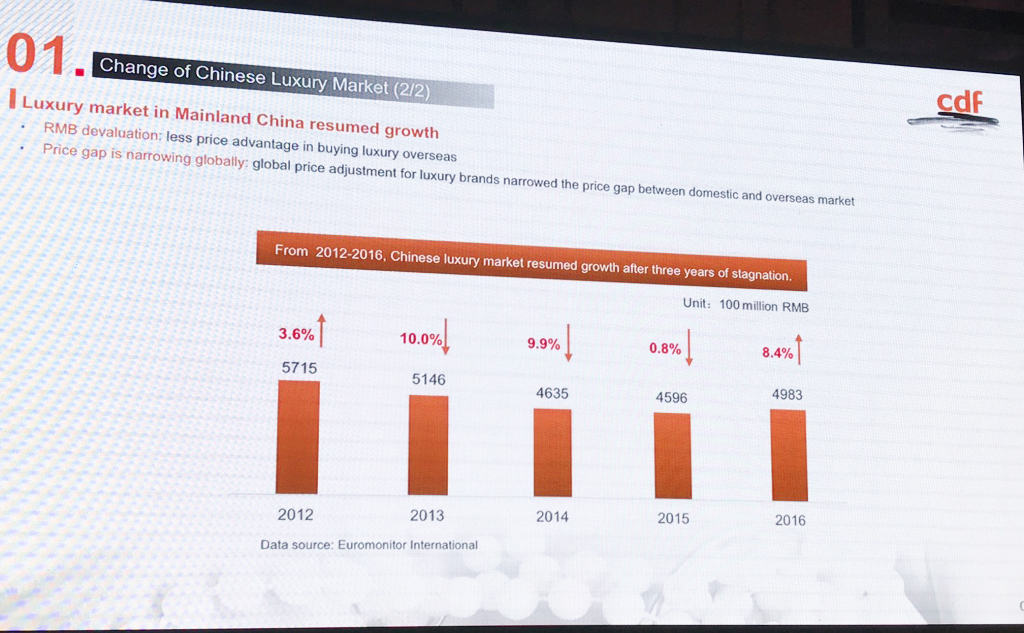
Chen’s presentation also highlighted and explained in detail the changes that have taken place in the Chinese luxury market in recent years and 2016 in particular, referring to the government-promoted ‘consumption backflow’ in China.
Chen pointed out today that CNTS is connected to 2,125 travel agencies across the globe and owns or manages 140 hotels with nearly 30,000 guest rooms.
All this will open up an enviable list of opportunities for CDFG in China – and abroad – adding real ammunition to the retailer’s quest for international expansion. The company already boasts a 247-strong duty free shop network with a license to operate downtown duty free shops in five cities.
Chen also revealed this morning that CDFG’s new online shopping platform will provide the ‘best channel for brands to enter e-commerce in China’ – the biggest market for Internet users in the world at 720m.
Click to enlarge all slides.
However, Chen made it clear that local brands are also important and using ‘big data’ analysis of consumption, CDFG has introduced new brands favoured by Chinese consumers and has also delisted brands that have performed poorly with this nationality of consumers.
THE RISE OF ‘SELF-GUIDED TRAVELLERS’
Through its careful analysis of the China market, the company revealed that ‘self-guided travellers’ or free independent travellers (FIT) represent 93%, 82% and 61% respectively in domestic, inbound and outbound travel markets in China.
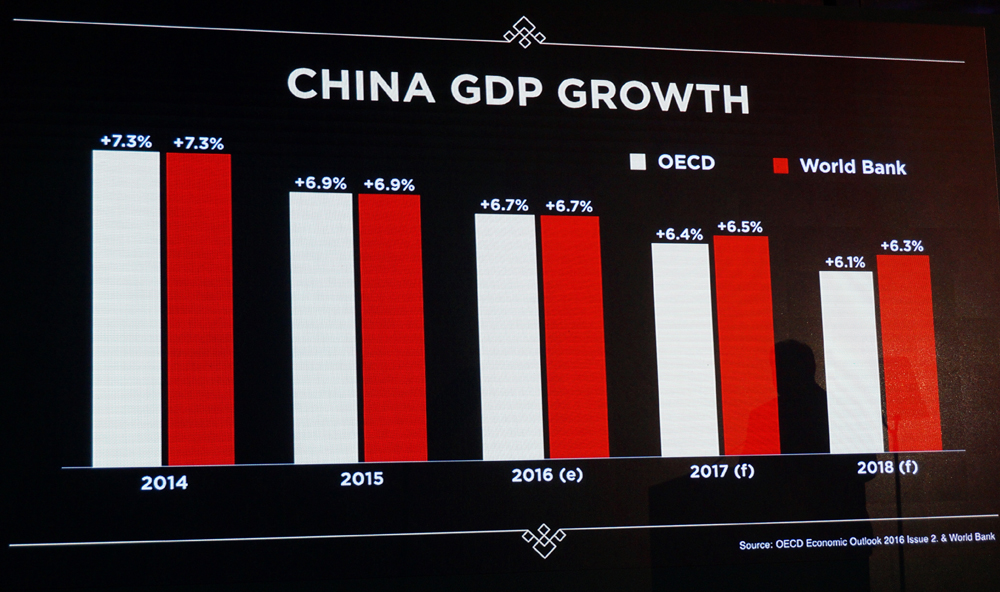
Sharing other interesting figures, he said that the number of Chinese outbound tourists accounted for more than 10% of global international tourists in 2015, while the Chinese duty free market only accounted for 6% of the global duty free market. The Chinese DF market also represents just 5% of the Chinese luxury market and 0.08% of domestic total retail sales of consumer goods.
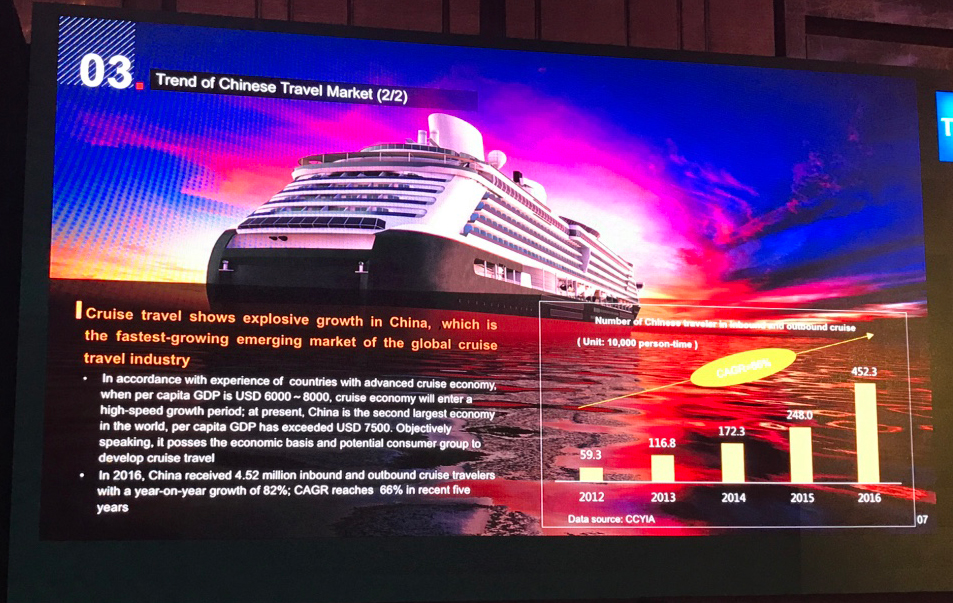
Interestingly, in 2016 China received 4.52m inbound and outbound cruise travellers with a year-on-year growth of 82%; CAGR reached 66% in the last five years.
Chen’s presentation also highlighted and explained in detail the changes that have taken place in the Chinese luxury market in recent years and 2016 in particular, referring to the government-promoted ‘consumption backflow’ in China.
As has been extensively reported, in 2016 the Chinese government granted the extension of arrivals duty free shops at 19 inbound locations and also increased inbound duty free allowances to RMB 8,000.
OFFSHORE DUTY FREE EXPANSION
The government also brought about the expansion of offshore duty free – extending product categories and loosening restrictions on eligible consumers.
“From 2012-2016, the Chinese luxury market resumed growth after three years of stagnation,” said Chen today.
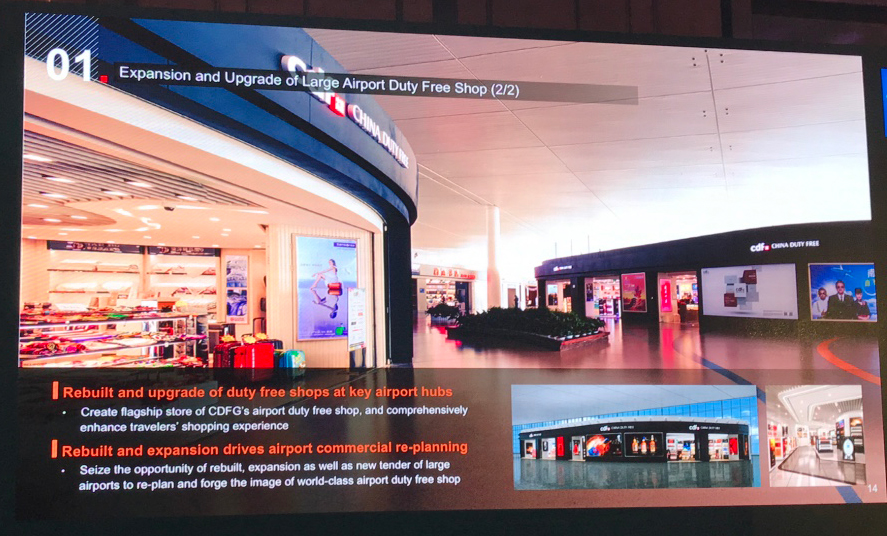
As well as providing analysis of the growing and changing luxury market, Chen importantly highlighted the tremendous growth in China’s airport infrastructure – highlighting the construction of the new Chengdu Tianfu International Airport with a completion date of 2020.
He also noted the construction of Guanzhou Baiyun’s new T2, to be finished by 2018; expansion at HKIA and Beijing Daxing airports at well as the construction of two new airports in Qingdao (completion expected in 2019) and Xiamen (completion expected 2018).
CHINA TO BE THE LARGEST LUXURY MARKET IN NEXT FIVE YEARS
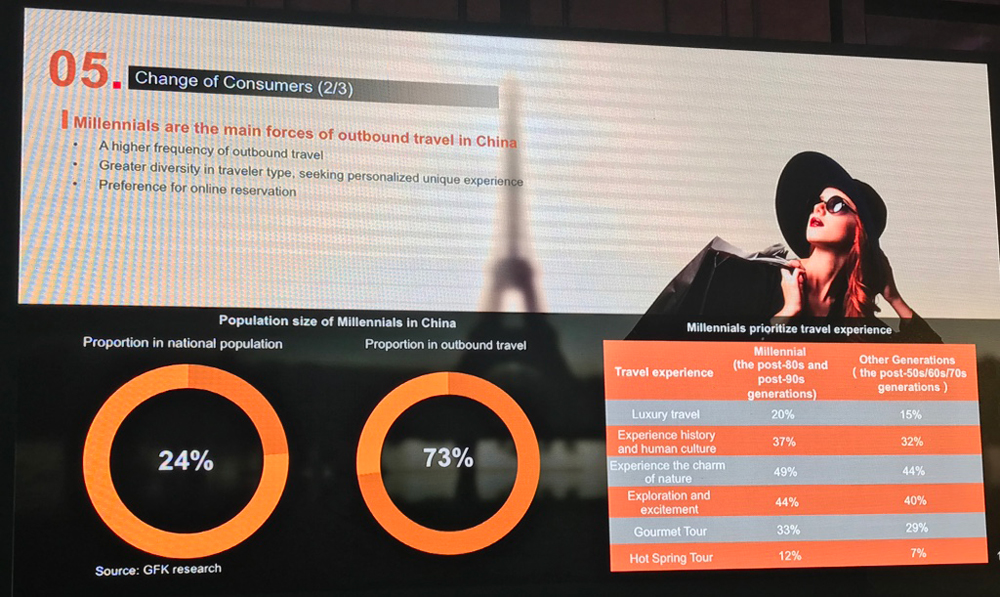
He also noted that China is forecast to be the largest luxury market in the world within the next five years. Of course, as was mentioned on many occasions during the day by various speakers, China’s millennials lead future consumption trends in luxury and other categories in DF&TR; especially in China.
“The population of millennials in China accounts for 24% of the whole population, yet they make up 73% of outbound travellers,” said Chen today. “They favour personalised brands and commodities – prefer online shopping, they are active in social media and they prioritise value of commodities.”
Returning to the theme of his presentation, ‘Embracing change and unblocking potential’, Chen revealed CDFG’s own ambitions, making clear that the company is interested in entering other markets outside of China should the opportunities arise (the company already operates in Cambodia).
Regarding the opportunities posed by the government’s issuing of new arrivals licenses, CDFG pointed out that the company already operates eight arrivals duty free stores in China and ‘will continue to occupy more market share of the arrivals DF business at large Chinese airports in the future’.
TRBusiness is reporting live from the China’s Century Conference in Guangzhou, China.

 Trbusiness. The travel retail Trbusiness. The magazine for global retail and duty free professionals.
 As many debate the outcome of the less-than-cordial exchanges between the administrations of the US and Mexico, businesses at the border have been airing their concerns, as highlighted in an article published at the end of January by the UK’s Business Insider publication.