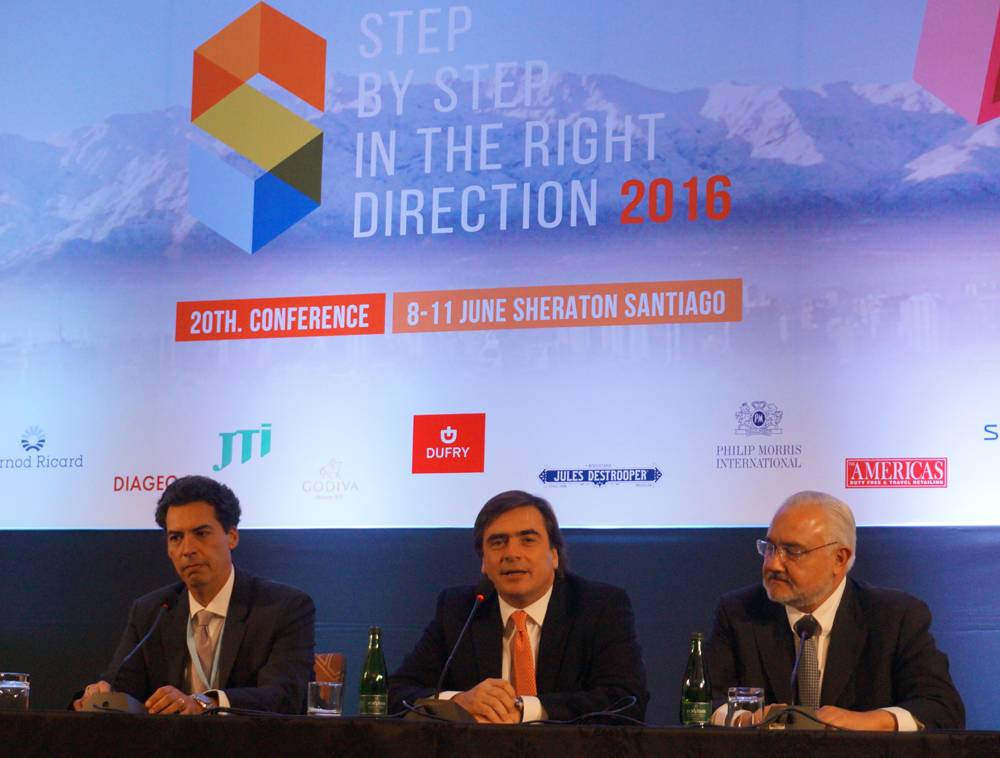
ASUTIL President and Dufry’s COO of Region America II (Brazil and Bolivia), Gustavo Fagundes, delivered some hard truths about the Brazilian economy at the 20th ASUTIL conference today, but claimed that there may be a light at the end of the tunnel; even if it is just a flicker at present.
As reported, this morning ASUTIL Secretary General, Jose Luis Donagaray revealed some sales figures for Central & South America and the Caribbean, which have evidently been impacted by Brazil’s current economic and political landscape.
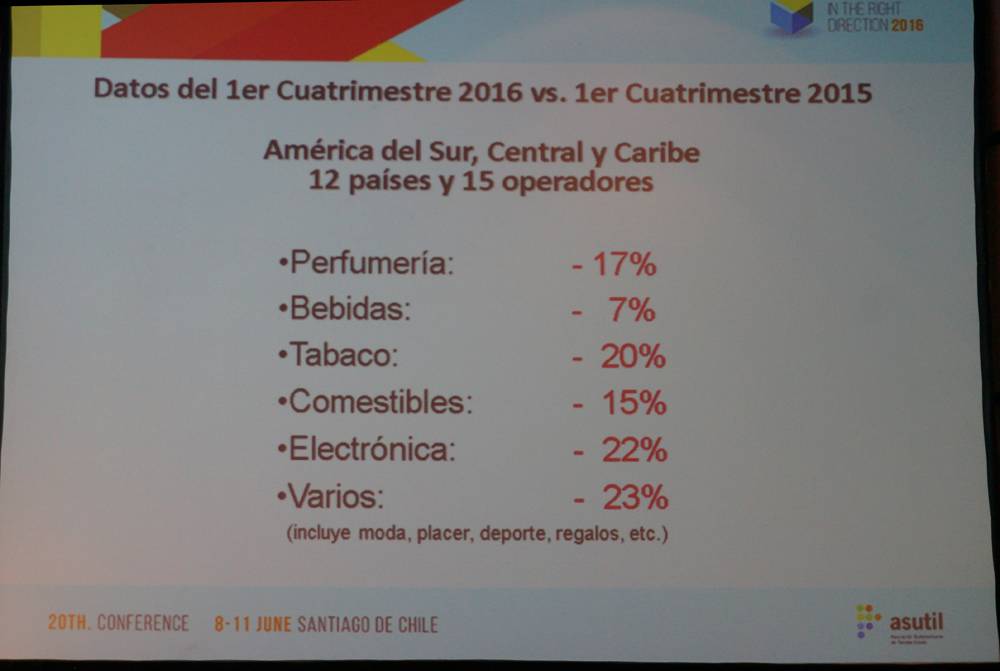
As in previous years, Donagaray gave the industry a run down of the sales results for the region, revealing that in the first quarter of 2016 – across 12 countries in Central & South America and the Caribbean, including 15 operators – the channel registered a -19% decrease in total. However passengers in the region grew 3%.
Sales for the perfume and cosmetics category decreased by -17%; liquor -7%; tobacco -20%; food products -15%; electronics -22% and finally, ‘other’ including fashion, sport and gifts saw a marked decline of -23%.
BRAZIL’S GDP DROPS -5.4% IN Q1 2016
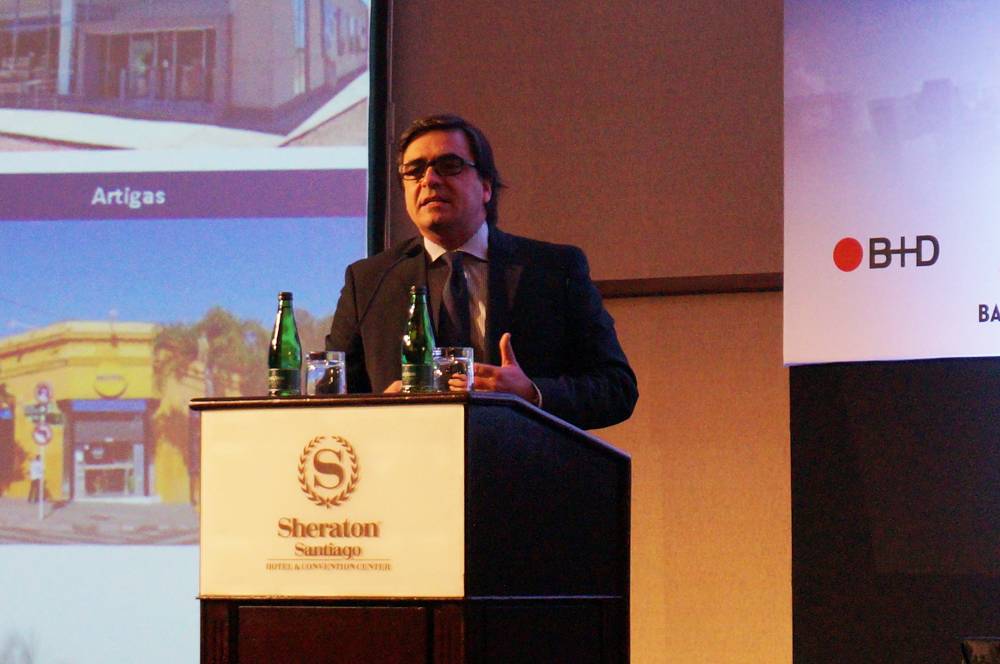
Fagundes, who is the son of the very first ASUTIL president, opened the conference by revealing some important economic indicators for the region, which impacted consumer confidence. He told delegates that Brazil’s GDP ranking in the first quarter dropped -5.4%; along with family consumption, which is very closely linked with GDP.
He spent some time exploring the problems connected with politics in the region, highlighting that the now suspended President, Dilma Rouseff [who is currently facing impeachment] had a below 10% approval rate for more than one year when in power. He also spoke about the numerous corruption scandals connected to Rouseff’s presidency.
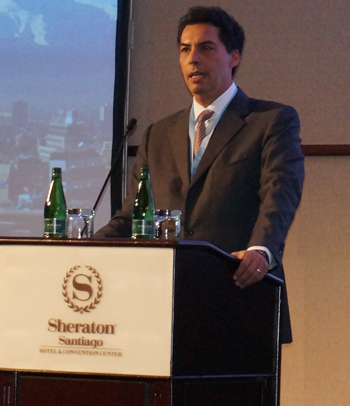
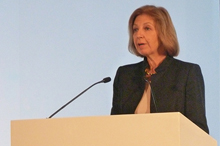
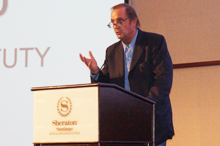
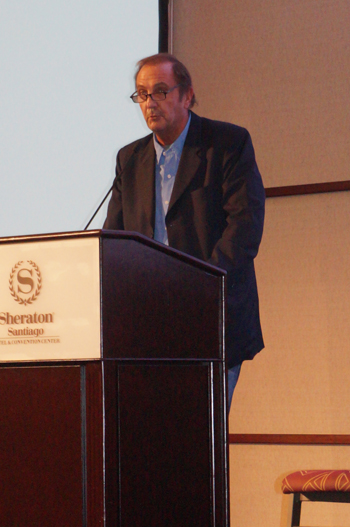
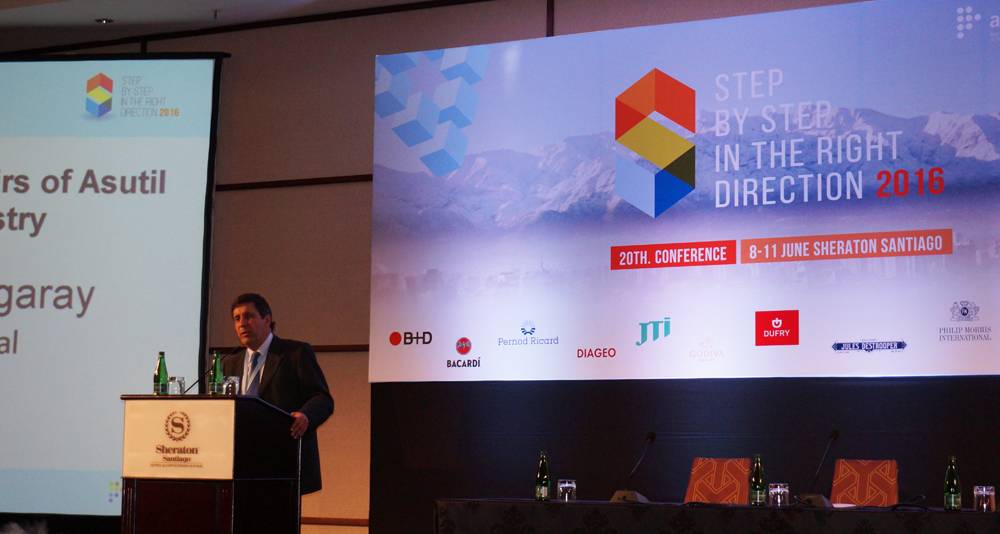
ASUTIL President and Dufry’s COO of Region America II (Brazil and Bolivia), Gustavo Fagundes.
“The Lava Jato (Car Wash) operation was and is still disrupting the credibility of the political parties in power,” said Fagundes.
ALL WASHED UP…
The Car Wash operation is an investigation being carried out by the Federal Police of Brazil. Initially a money laundering investigation, it has expanded to cover allegations of corruption at the state-controlled oil company Petrobras.
“The economic model was showing already strong signals of disruption, but the Lava Jato has frozen the investment sector…the level of confidence of all economic players is very low.”
Fagundes also pointed out that the international price of commodities has been impacted strongly, especially regarding the pre-salt oil project of Petrobras.
He said that bureaucracy continues to plague Brazil, and that companies spend huge amounts of time (and money) to meet Government compliance, because the tax system is so complex.
He said that companies spend a lot of time trying to claw back tax, to make sure that their bottom lines remain healthy. “The society has to focus on fiscal structure,” he said. “It’s not just about political leadership, but also the framework…Brazil is in need of various reforms.”
LOW LEVELS OF POSITIVISM
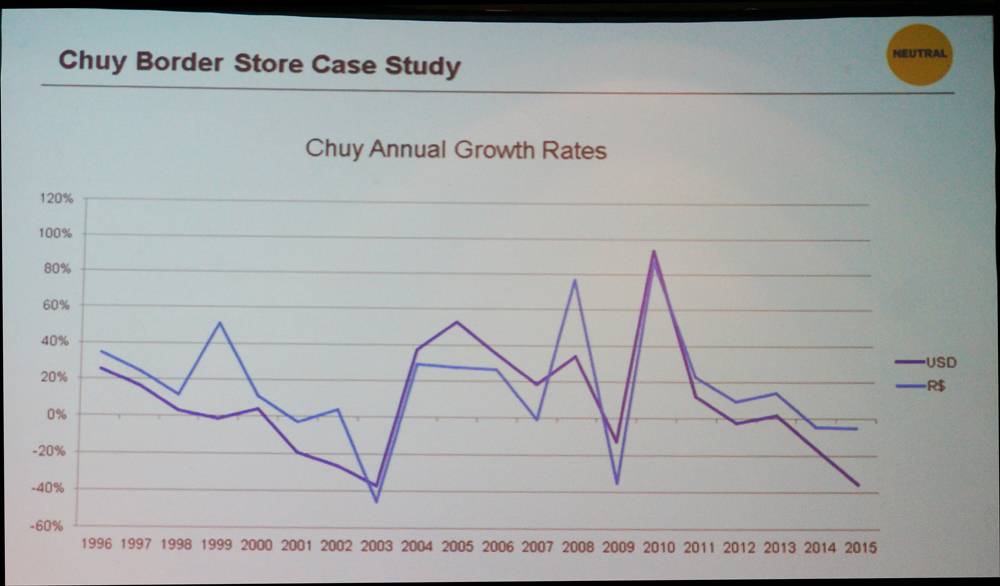
In a McKinsey survey conducted in 2016, optimism was lowest in Brazil out of 26 countries, which was of course linked to the strong devaluation of the BRL against the US dollar.

Fagundes, who is the son of the very first ASUTIL president, opened the conference by revealing some important economic indicators for the region.
“Companies that had loans in US$ suffered,” said Fagundes. “The Brazilian industry is very integrated to other countries and had to increase prices. The export sector did not leverage the opportunity because of the commodities price drop.”
However, Fagundes did say that in the short term at least, the country has seen a lift in some economic pressure. “The US dollar/real exchange rate is stable…the real has now reached 3.45,” he said. “Some economists believe that the level of economic activity is already too low to keep on diminishing.”
He concedes that the political scenario is still unpredictable, but the government’s new economic team now in place is experienced and is looking for ‘a new model’.
Click to expand all graphs.

PARTNERING WITH THE PRIVATE SECTOR
“There is an intention to accelerate in the infrastructure area, partnering with the private sector to avoid making mistakes from the past,” he added. “We will have a long road to surpass these obstacles but at least we have a new agenda.”
He highlighted that there has been huge developments in airport infrastructure including the expansion of retail space to 30,000sq m. Ahead of the Rio Olympics all major Brazilian airports have been revamped.
“World class business practices are now in place and there has been a shift from a landlord to concessionaire relationship to a truly business partnership,” said Fagundes speaking from Dufry’s experience.
Fagundes urged that the industry has to take advantage of the upcoming games in Rio during which more than one million are forecasted to visit the region.
LONG-TERM VIEW
“We need to focus on a collaborative and win-win relationship in all phases of the business lifecycle and look to a long term view. We need transparency in operations and financial aspects, speeding up the learning curve.
“Infrastructure legacy from the 2016 Olympic Games will generate more tourism in the future…for the industry, failure is not an option.”
The games will naturally attract a great deal of international travellers, which Fagundes says the industry needs to tap into.
“Brazilians felt the impact on the forex and the economic recession very strongly…The industry is now having to learn how to depend more on foreigners.”
FOCUS ON FOREIGNERS
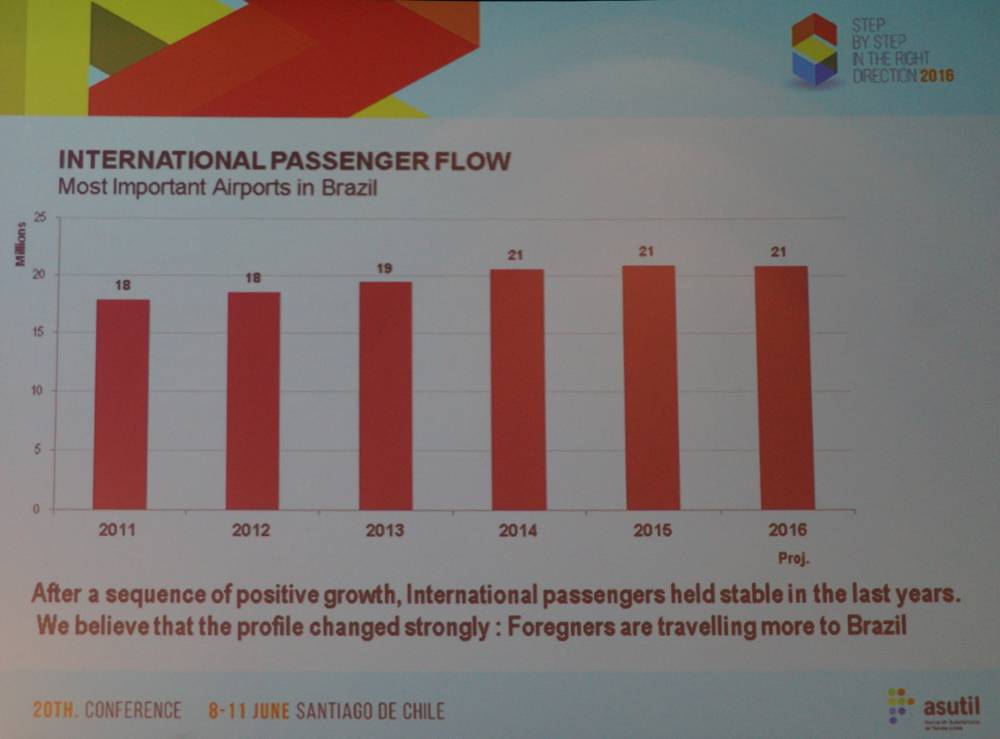
After a period of positive growth, international passengers held stable in the last few years. “We believe that the profile changed strongly,” added Fagundes. “Foreigners are travelling more to Brazil.
“For every three dollars Brazilians spend abroad, we have foreigners spending one dollar. Foreigners will be much more important to our business than they used to be. Why can’t we duplicate the number of foreigners spending in our region?”

‘DIGITAL IS KEY’
Talking about the positive changes to the industry, Fagundes said that it is becoming more customer-centric. It is investing in understanding the traveller and delivering better value.
“Digital is key for fostering this effort,” said Fagundes. “Relationship programmes offer a customised package for key clients.”
He said that the industry needs to work on breaking down barriers to purchase and that relationships with airport partners is key; focusing less on the short term gains and more on the middle to long term.
“The data exchange has to happen faster and has to be more detailed,” he added. “The only way to operate properly is to use and act through information.”
Fagundes importantly highlighted the role played by suppliers, who he described as ‘the main drivers of the industry’.
“We see ourselves as an important channel to bring together suppliers and customers, generating a unique and very pleasant experience of interaction among both,” he surmised.
“Our success depends on the ability of the value chain to bring innovation to it…Our business model has very little space for mistakes. The industry has to operate at a world class level in order to deliver the returns required by investors.”

 Trbusiness. The travel retail Trbusiness. The magazine for global retail and duty free professionals.