Archives

ACI Europe: ‘reinforce Schengen outer borders’

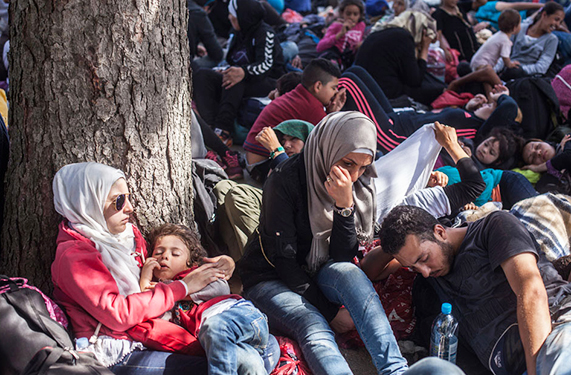
Balkans, migrants rest in Croatia

Migrants resting in Croatia.

With the ‘open borders’ Schengen system under increasing pressure from the migration crisis and terrorist activity after the Paris attacks, airports association ACI Europe has stressed that its continuity “must be ensured” to prevent hub airports having to spend millions of euros each in infrastructure revamps.

ACI Europe – which represents close to 500 airports in 45 European countries – wants tighter control of the European Union’s external borders in order to safeguard free movement within the 26 Schengen states. The agreement was signed on 26 March 1995, originally by just five countries.

EU states with an opt-out include the UK and Ireland while Croatia, Bulgaria, Romania and Cyprus are not yet participating but are obliged to join.

‘HUNDREDS OF MILLIONS OF EUROS AT STAKE’

ACI Europe claims that dismantling Schengen would cost airports “hundreds of millions of euros” and is supporting the swift implementation of the European Commission’s agenda to reinforce Schengen’s external borders. The body also wants Schengen states to commit adequate resources to airports in this effort.

The Schengen are (in blue) is vast

The Schengen area (in blue) needs reinforcing says ACI Europe.

Jankovec: 'A reinstatement of air border controls between Schengen states is not on the cards – and it should never be'.

Jankovec: ‘A reinstatement of air border controls between Schengen states is not on the cards – and it should never be’.

Olivier Jankovec, Director General of ACI Europe, comments: “A reinstatement of air border controls between Schengen states is not on the cards – and it should never be as the impact would be quite devastating. This would require a difficult restructuring of airport facilities, involving investments easily reaching hundreds of millions of euros for each of the largest Schengen airports.

Jankovec goes on to predict “unprecedented levels” of congestion and flight disruptions, with potential spill-over effects across the entire European airport network, in the immediate aftermath if the Schengen system did end.

CALL FOR MORE ‘EXTERNAL’ BORDER CONTROL 

He adds: “The Council of Ministers last week endorsed the Commission’s Border Package which provides for systematic document and security check at airports of all persons – including citizens of Schengen states – against relevant databases, whenever they exit or enter the Schengen common area. This is an essential step to reinforcing Schengen’s external borders and it should be implemented as soon as possible.”

“But it requires the deployment of additional police and border control staff at airports – resources over which airports have no control, but with whom we work in constant partnership. With current border control staffing levels under stress at many airports, we are deeply concerned. Maintaining passenger service levels is already a challenge, and if we do not get adequate staffing, the situation will get worse.”

APTRA: Governments still don’t understand TR

APTRA Incheon Airport SmallMichael Barrett, Executive Officer for APTRA is hoping to see a marked increase in the recognition of the travel retail industry in 2016 – not the least for the important contributions it consistently makes to airport, airline and tourism revenues.


Barrett contributed to the TRBusiness Global Industry Survey, which appears in the January issue of TRBusiness magazine.


From the association’s perspective 2015 was a good year in terms of membership growth and increased commitment to supporting its work on behalf of the industry. However, there are some issues which still give much cause for concern.


“The first is the lack of understanding among government decision-makers about the importance of duty free revenues to the overall economic model of airports and the lack of consultation with airports, airport retailers and the trade associations, when introducing legislation,” says Barrett.

aptra-rrtp-2

APTRA is looking forward to seeing a much more widespread uptake of the APTRA responsible retail training programme.


“This will have a significant negative impact on those revenues. The second cause for concern is the lack of understanding among some industry stakeholders of the importance of the trade associations and the need to support them to ensure the sustainability of their business.”


NOT JUST ABOUT FINANCIAL SUPPORT…

Barrett is happy to report that APTRA enjoys a strong and growing membership, but says it is quite surprising that some companies still do not see the need to support the association’s work. “It’s not just about the financial support, but also about the legitimacy of the industry bodies when talking to government decision-makers,” he says.


As mentioned above, he says it’s the lack of understanding about airport economics and the importance of duty free and travel retail revenues to aviation and tourism that is the major threat.

001a michael barrett

Michael Barrett, Executive Officer for APTRA

“Another threat which is of concern is the way in which governments can easily copy and paste legislation to make short-term positive headlines, without appreciating the long-term implications for legitimate businesses.


“We are looking for a marked increase in the recognition of our business and its importance to airport, airline and tourism revenues generally.”


RESPONSIBLE RETAIL PRACTICES

Closer to home he also says that APTRA is also looking forward to seeing a much more widespread uptake of the APTRA responsible retail training programme.


“We would welcome the acknowledgement among all companies operating in the industry of the importance of supporting and joining their regional trade associations and being more proactive in seeking how – as well as through financial support – they can be of assistance, whether in our advocacy mission or other areas of our work.”


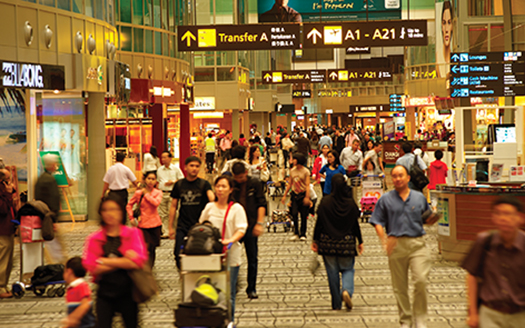
001 aa changi transit mall 1

“…we believe traveller numbers will continue to increase (around 5-6% per year in Asia Pacific over the next five years according to industry analysts),” says Barrett.


Looking forward, Barrett says the industry can never be certain about circumstances that aren’t within its control; whether they be economic, environmental or geopolitical. However, he believes that the constantly improving airport retail environments, increased knowledge of customer needs and desires and, as a result, better service will continue to drive sales growth.


ASIA-PACIFIC TRAVELLERS STILL ON THE UP

“If you combine this with the sheer size of the market and positive demographics in Asia, we believe traveller numbers will continue to increase (around 5-6% per year in Asia Pacific over the next five years according to industry analysts).


“This is all good news for travel retail. As long as we can ensure the industry and decision-makers understand our business – as mentioned earlier – it should hopefully be a much better year.


“Obviously, given the numerous crises we are seeing from conflict and terrorism in the Middle East spreading to other regions – whether through refugee migration or terror attacks – we will no doubt see some markets affected on a (hopefully) short-term basis.”

Furla TR up +36%, now present in 48 markets  

furla-headerItalian luxury goods house, Furla, grew its duty free and travel retail turnover by +36% in 2015 year-on-year and pushed its presence into 48 out of the 100 markets where the brand is present globally.  

DF&TR outperformed the company’s consolidated sales as a whole which grew by +30% to €339m/$373m (+25% at constant exchange rates). The DF&TR division now has a total of 195 airport doors under its belt, versus 174 in 2014.

Furla’s like-for-like growth in the global retail distribution channel registered a strong +23% rise and 2015 was marked by strong retail growth across all regions: Asia Pacific +53%; US +30%; EMEA (excluding Italy) +28%; Japan +24%; and Italy +21%.

By turnover the regions have the following shares: EMEA (excluding Italy) 29%, Japan 23%, Italy 20%, Asia Pacific 19%, US 9%.

NEW & EXPANDING PRODUCT CATEGORIES

Poletto is optimistic about fast-growing new lifestyle categories.

Poletto is optimistic about fast-growing new lifestyle categories.

Furla says its 2015 performance was driven by all product categories, including a newly-launched men’s collection, women’s footwear and eyewear [the licence with De Rigo was renewal earlier this month]. A corner dedicated to the men’s collection has been installed at Galeries Lafayette in Paris, underlining Furla’s belief that it can be a credible player in this area.

“Furla is closer to becoming a true lifestyle brand thanks to its partnerships with major players in the textile and watch sectors such as Ratti and Morellato respectively,” states the company.

“The positive 2015 results are a testament of our vision, investments and of the excellent performance registered in all our regions, departments and categories, from distribution to marketing to style. We remain optimistic about the future when we will also see the benefits of our fast-growing new lifestyle categories,” comments Eraldo Poletto, CEO of Furla.


Free Duty parent NWS is ‘cautiously optimistic’

Macau AirportHong Kong’s ’persistent downturn of the retail and tourism industries coupled with rising operating costs’ stalled duty free company Free Duty’s recovery in the first six months ended 31 December, according to its NWS Holdings divisional parent.


Free Duty falls into the Facilities Management segment of the NWS Holdings business, which was 19% down in the reporting period. This is all ultimately owned by the Chow Tai Fook conglomerate, which says Free Duty now faces a ‘challenging market going forward, despite rising patronage at Lok Ma Chau Station.’


NWS Holdings’ Facilities Management division includes the Free Duty company’s duty free retail business in the Macau Ferry Terminal and at Macau International Airport in joint venture Sky Shilla Duty Free company.


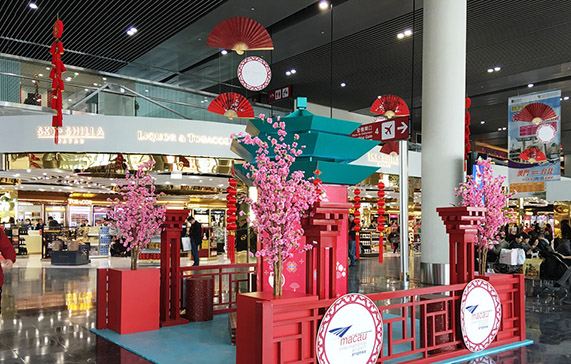
Macau Airport Sky Shilla

The Sky Shilla joint venture duty free shop at Macau International Airport in the background behind the airport authority flower display in the terminal building. (Source: Macau Airport).


Free Duty also operates the Lo Wu, Lok Ma Chau and Hung Hom duty free railway station businesses owned by the MTR railway corporation [the next contract is also out to tender – albeit early – as reported-Ed].


In its report statement to the Hong Kong Stock Exchange, the parent company said: “A reduction in the number of high-spending visitors from Mainland China and the continued contraction of inbound tourism have negatively impacted Free Duty’s business.


GROUP BUOYED BY FERRY TERMINAL CONTRACT RENEWALS

“Coupled with rising operating costs, the profit contribution from this business declined. However, in light of the promising growth potential at the Lok Ma Chau terminal and the Macau International Airport and the successful renewal of concession contracts at Macau Ferry Terminal and China Hong Kong Ferry Terminal to 2018, the Group remains cautiously optimistic on the sales outlook, despite the headwinds.”


Free Duty began operating the duty free railway business in July 2007 in Lok Ma Chau Railway Station, which was extended to the Lo Wu and Hung Hom stations in January 2008.


The retailer also runs two departure and two arrivals shops at the Lok Ma Chau Terminal Building, selling perfume and cosmetics, general merchandise, confectionery and general merchandise.


China moves to capture ‘overseas duty free spend’

Top Peng Hui, Chairman CDFG and VP-Zhao-Feng at TFWA China Conference Shanghai March 15 copyAs predicted, the Chinese Government has made its move to capture a bigger share of high duty free spending levels by its Chinese nationals abroad by authorising multiple duty free arrivals shop openings at leading airports and border points.


This move is in direct line with the government’s drive to boost the slowing domestic economy, as well as stimulate existing airport retail sales revenues and reduce overseas shopping expenditures by Chinese travellers – as reported last December.


[Click here for more details: http://www.trbusiness.com/regional-news/asia-pacific/china-approves-30-duty-free-arrivals-shops/99035].


While the 2015 traffic total still being counted, the size of the business at stake is huge, considering that no less than 116m Chinese travelled overseas in 2014 (+17%), spending more than RMB 1 trillion ($157bn) during their overseas trips (according to China’s Ministry of Commerce).

Xi Jinping official picture

Chinese President Xi Jinping is predicting that the number of Chinese overseas travellers will reach 500m by 2020.

RAISED INCENTIVE TO SPEND IN CHINA

These latest new regulations will allow Chinese citizens returning from abroad to spend up to CY8,000 ($1,227) on duty free and tax free products.


This new arrivals allowance compares with the existing CY5,000 ($768) personal tax free entitlement (per traveller) for purchases made at ‘foreign’ duty free shops.


These changes are also being put into place against Chinese President Xi Jinping’s prediction that the Chinese President number of Chinese outbound tourists will exceed 500m by 2020.


Formal confirmation of the expansion of this business was announced jointly last week (February 18) by the Ministry of Finance, Ministry of Commerce, the General Administration of Customs, State Administration of Taxation and the China National Tourism Administration (CNTA).


China Duty Free2 at Haitang Bay

The China Duty Free Group has proved to the government it can operate huge duty free outlets such as the Haitang Duty Free Mall.


As reported, details of this new arrivals shopping initiative were also formulated in a meeting of the ruling State Council, presided over by Premier Li Keqiang last November.


This only reinforced the clear earlier indications that the Chinese Government has long been keen to incentivise its travelling nationals to spend their discretionary vacation money within their homeland and not abroad.


This change in policy is now expected to open the previous shut door for the China Duty Free Group (CDFG) to make its airport debut in the duty free arrivals shop business in China.


Zhao Feng CDF

China Duty Free Vice President Zhao-Feng presents at Tax Free World Association’s China Conference in Shanghai in March 2015.


Currently, it operates duty free departure shops at all of China’s international airports, with the exceptions of Beijing Capital, Shanghai Pudong and Shanghai Hongqiao, where Sunrise Duty Free holds the duty free concessions for both arrival and departure shops.


[These airports were originally granted licenses to open arrival duty free shops in 2008 under a special State dispensation to improve tourist facilities for foreign visitors attending the Beijing 2008 Summer Olympic Games – Ed].


MAJOR NEW REVENUE STREAM FOR CHINESE AIRPORTS…

As reported last December, it is the Chinese airports with the most international traffic that will now take on duty free arrival shop status, along with a few border shop locations – so ending the previous government policy of operating arrivals shops solely at Beijing and Shanghai airports with the Sunrise Duty Free company.


Besides several other locations, the main airports where arrivals shopping will be introduced include Guangzhou Baiyun International Airport; Kunming Changshui; Shenyang Taoxian; Nanjing Lukou; Xiamen Gaoqi; Qingdao Liuting; and Hangzhou Xiaoshan International Airport.


Peng-Hui-CDF-Trinity-Forum-2015

As reported, Peng Hui, the Chairman of the China Duty Free Group (at last year’s Hong Kong Trinity Forum) suggested that the Chinese Government was looking at introducing more duty free retail opportunities for Chinese overseas travellers to spend their money at home.


This news also follows the prediction from  the Chairman of China Duty Free Group at the Trinity Forum last year that the Chinese Government was looking to bring in a new initiative to try to retain more spending within the country.


Peng Hui explained then that China’s offshore policy has actually been revised twice to increase the quota of purchases and Hainan Island has now become the favourite domestic destination for Chinese travellers – and for their shopping – with 50m visitors expected last year [more than visit Hong Kong-Ed] and 80m expected by 2020.


CDFG IS THE BIG WINNER HERE…

The 120,000sq m China Duty Free Haitang CDF Mall officially opened on September 1, 2014 and is now the largest single duty free shopping centre in China and the world.


Meanwhile, CDFG looks to be the big winner in this new arrivals shop development to add to its more than 200 duty free and duty paid outlets it already operates across China.


In addition to airport, seaport, border shops and its Hainan Haitang Bay offshore flagship duty free shop, it also runs diplomatic stores, high-speed railway and bus station travel retail shops, plus duty free shops onboard cruise ships and seaport shops.


Over 50% of SthAm pax cut back on duty free

cir-logo-bigAmong travellers from the four leading nations for duty free and travel retail spending in South America, more than half say that they are cutting back.

A survey by duty free and travel retail analyst, CiR, of 4,000 online respondents from Brazil, Argentina, Chile and Colombia – conducted between December 2015 and January 2016 – shows that in every nationality, individuals are curbing their DF&TR budget in order to divert more funds to their holidays.

The findings show that among the four nations, 59% of Colombians, 57% of Argentinians, 55% of Brazilians and 53% of Chileans were planning to spend less. All the respondents had travelled in the past six months and had visited a duty free store in a major airport in the South America region.

CiR LatAm report

Four key markets are analysed in depth by CiR.

The report also states that Brazilians, who despite the falling value of the Brazilian real [in the past 12 months it was down by -29.6% against the US dollar], remain the main shopping group in the region.

However, the Brazilian economy is set to contract by a large -3.5% this year according to the International Monetary Fund which will, in turn, drag down the whole region of Latin America and the Caribbean into negative territory at -0.3%.

CiR notes that even though Brazilians have reduced purchasing power, DF&TR is expanding in advance of the 2016 Olympics. The research group says: “Despite ongoing economic challenges faced by Brazil and Argentina, renovation and expansion of duty free stores are being seen across the whole region.”

SAVVY PRICE CHECKERS

Brazilians are the savviest in terms of online price planning. When it came to checking DF&TR prices online before their last trip 56% of Brazilians did so, compared to 46% of Argentinians, 37% of Colombians, and 32% of Chileans.

In airport retail, Brazilians are also the top nation for their magnet attraction to gifts with purchase, sampling products and for noticing travel retail exclusives – well ahead of other Latin American nations.

Rio © Kevin.Rozario.UK@gmail.com (hero)

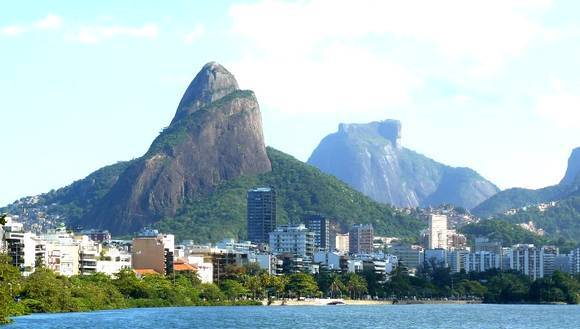
Brazil is banking on the Summer Olympics to improve its performance. (pic © Kevin Rozario)

Elsewhere in the survey, CiR notes that Chile was among the leading growth markets for DF&TR in Latin America in 2015, while Colombians – whose economy has performed strongly – are continuing to show high demand for travel and shopping in DF&TR.

The survey finding are available in separate country reports which also investigate buyer and non-buyer behaviour in each of the core duty free categories in both arrivals and departures duty free stores, as well as a range of other factors. For further details click here.

Travellers and shoppers prefer apps to browsers

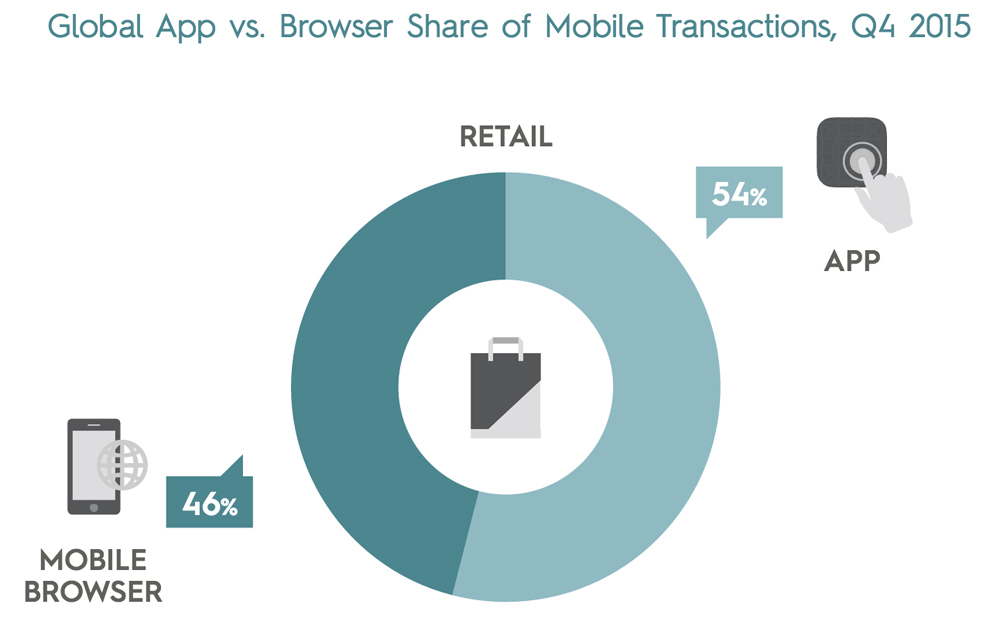
Criteo-report-leadCriteo’s analysis of shopping data from Q4 2015 demonstrates that mobile is an established channel for retail transactions and that apps have overtaken mobile browsers for the very first time as a vehicle for purchasing. 

Interestingly, the number of mobile transactions carried out on travel apps (58%) outstripped those made via travel mobile browsers in this period (42%). The figure rose from 42% in Q2, to 49% in Q3 and the balance finally tipped in Q4 to 58% of mobile transitions. This should be of interest to travel retailers as it is indicative of how travellers are purchasing.

Having a fully functioning website may no longer be enough, as travellers increasingly prefer to make transactions via applications instead. Thankfully these are relatively easy to set up in tandem with an existing retail website.


Criteo-q4-2015-report-1

Continuing the trend from past quarters, the overall share of app transactions consists of half or more of all transactions.

“Nearly four-in-ten transactions occurred on multiple devices and were completed on a mobile device almost a third of the time,” says Criteo. “Dedicated shopping apps dwarf the mobile web at all points on the path to purchase, from browsing products to the sale itself.

“Retailers whose apps focus on providing shoppers relevant and useful products and remove barriers to purchase drive a higher share of transactions than mobile web.”

Continuing the trend from past quarters, the overall share of app transactions consists of half or more of all transactions.


Criteo-q4-2015-report-2

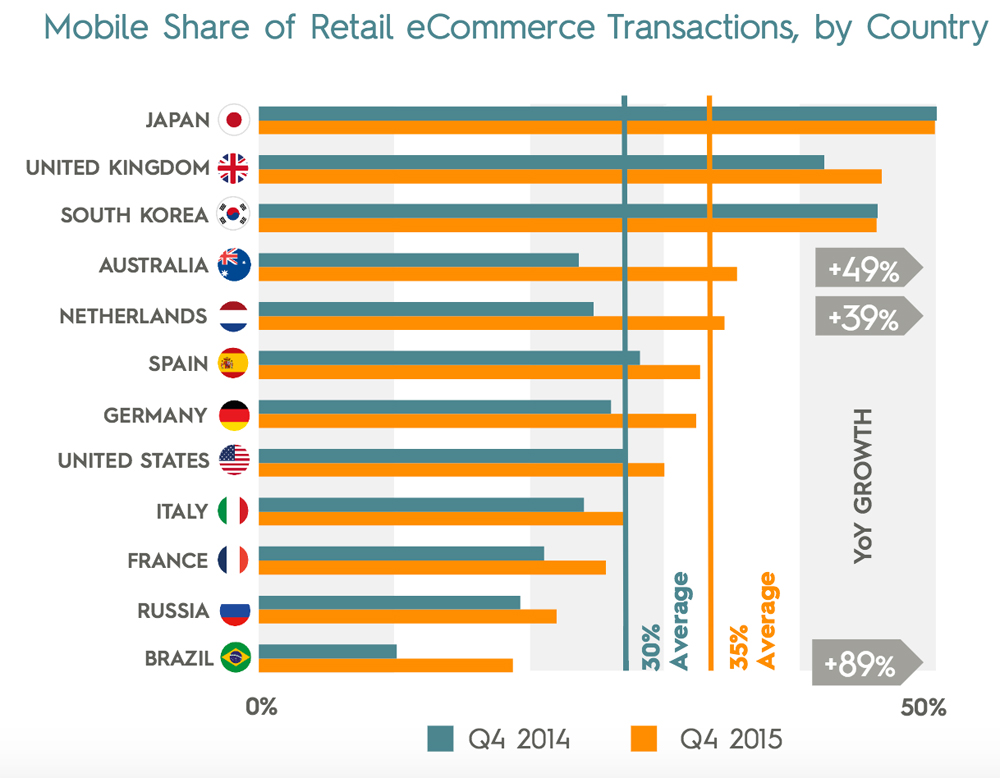
Japan, UK and South Korea make up the top three countries ranked by mobile share of transactions, globally. Advanced mobile countries remained constant while others are catching up.

Due to the native environment and additional control of the purchase path, retailers see a higher conversion rate on their apps than both mobile web and desktop.

“Technologies like deep linking and mobile re-targeting can help retailers drive sustained engagement and transactions in their apps,” says Criteo.

“Not only do apps convert a higher percentage of your customers, they also bring in more revenue per transaction. Controlling the environment allows retailers to give customers engaging product content (i.e. videos, images, reviews) targeted to things like buying history and browsing behavior. This is more effective than generic targeting signals found on mobile web and desktop sites.”

In terms of overall transactions made on mobiles – whether through apps or browsers – Japan, UK and South Korea make up the top three countries ranked by mobile share of transactions, globally. Advanced mobile countries remained constant while others are catching up.

The biggest gainers were UK, which passed South Korea for second, and Australia, which leapfrogged five countries to land in fourth.The US remains in the middle of the pack, but trails the global average along with Germany, France and Spain.


Criteo-tablet-use-generic

Tablet transactions were the most likely to have multiple devices in the path to purchase, indicating that tablet buyers are most likely browsing on devices like desktops and smartphones before purchasing.

“For retailers with a strong mobile shopping experience, mobile transactions neared parity with desktop in 2015. They successfully met consumers on their devices and shifted browsers into buyers.”

In Q4 2015, mobile hit 30% of transactions versus 27% in 2014. Top quartile retailers, as ranked by percentage of transactions occurring on a mobile device, increased mobile’s share of all transactions even faster – from 35% to 44%


Criteo-q4-2015-report-4

Japan, UK and South Korea continue to lead the globe in mobile transactions, and smartphones lead tablets in most countries.

“Mobile is becoming an integral part of the shopping experience, particularly for verticals such as fashion and mass merchants,” adds Criteo. “Health & beauty transactions saw the largest increase in mobile share at 38% year over year, followed by home and mass merchant categories.”

Smartphone’s share of mobile transactions grew by more than 15% year over year, now accounting for 60% of all mobile transactions in the US. The combination of better transaction channels, ubiquity, more phone models with big bright screens and fast wireless broadband is giving retailers better options for displaying their goods on mobile devices – ultimately leading to more transactions.

Registration opens for 2016 TFWA Asia Pacific

TFWA Asia Pacific 2014 smallRegistration for the 2016 TFWA Asia Pacific Exhibition & Conference, which will take place once again at the Marina Bay Sands Expo and Convention Centre between 8th and 12th May 2016 in Singapore, opens today.


Featuring what the TFWA classes as an ‘outstanding line-up of speakers’, the conference hopes to be a platform for ‘cutting-edge thinking on the key issues that really matter to the Asian duty free and travel retail sector from leaders across business and beyond’. Full details of the conference and workshops will be announced soon. More than 296 exhibiting companies are expected to attend the show in May.


This year’s social events programme will include a golf tournament, a traditional opening cocktail reception at the iconic Raffles hotel, the chance to relax at a chill-out party at the Mandarin Oriental, and fun on the beach at a Singapore Swing party on the holiday island of Sentosa.


TFWA-Conf-2015

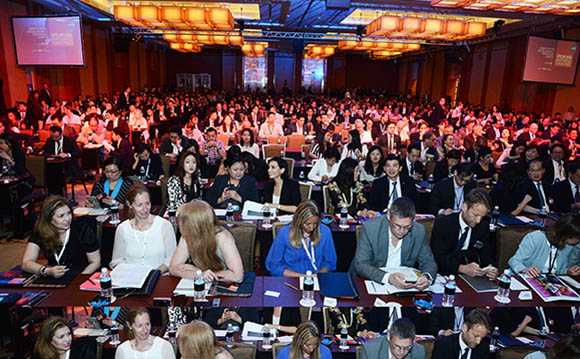
Last year, over 2,600 people attended the exhibition, and over a third of these were described as ‘key buyers’. Over 300 meetings were arranged via TFWA’s One2One meeting service, and visitors had the opportunity to meet decision-makers from over 30 airports and more than 30 airlines.


Marina Bay Sands

The Marina Bay Sands Expo and Convention Centre.

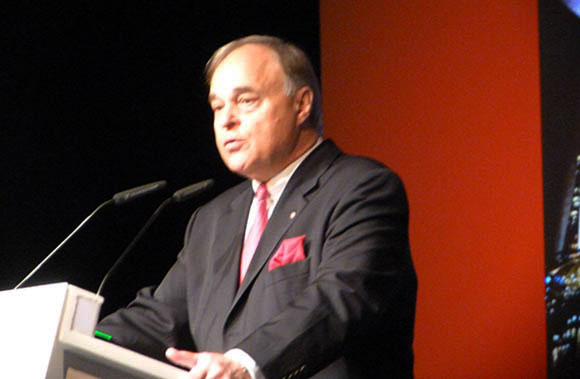
Commenting on the event, TFWA President Erik Juul-Mortensen said: “The speed of evolution in the Asian duty free and travel retail sector has always been brisk, but in recent months it has accelerated at an even greater speed.


“In the last few months alone, lower growth, currency depreciation and an uncertain investment climate have transformed the way Chinese travellers think and shop.


“Concession changes have radically altered South Korea’s downtown market, while the world’s largest standalone airport duty free shop is soon to open in Australia.


Erik-TFWA-ASPAC-2015-Hero-image

TFWA President Erik Juul-Mortensen said: “The speed of evolution in the Asian duty free and travel retail sector has always been brisk, but in recent months it has accelerated at an even greater speed.


“Keeping abreast of these developments is no easy task. The TFWA Asia Pacific Exhibition & Conference will equip those attending with the essential facts and understanding they need to thrive in business in Asia.”


The exhibition will be held at the Marina Bay Sands Expo and Convention Centre between 8th and 12th May 2016.


For more about the event, including full information on how to register see www.tfwa.com.

TRBusiness Global Industry Survey 2016 Highlights

Global-Survey-2016-leadTRBusiness readers have responded guardedly to our annual survey on industry prospects for the next 12 months – which is hardly surprising considering the very eventful and challenging 2015. We examine some of the reasons readers are offering for their rather cool outlook on 2016.


[To read the full 65-page TRBusiness Global Survey 2016, please subscribe to TRBusiness magazine.]


In 2015 the duty free and travel retail industry began the year with an air of caution. The menace of the Ebola virus was still ever present while the shocking news of journalists being murdered by terrorists at Charlie Hebdo’s editorial office in Paris was still being digested.


This start to the year was also a sign of even more challenges to come for the DF&TR business in the subsequent months that followed.


Growing socio-political and geopolitical uncertainties such as global fundamentalist terrorism – highlighted by a second, highly orchestrated attack on Paris in November; the loss of three passenger airliners; a European migration crisis [which continues to test the Schengen ‘borderless system’ to breaking point]; and a collapse in relations between Russia and Turkey, are just some of the events that have taken their knock-on toll on travel and tourism.
 

Survey-2016-graph-1

Meanwhile, business aspects such as serious currency fluctuations – on a worldwide scale that TRBusiness has not seen since the magazine’s inception – have played havoc with sales and reporting; China’s economic slowdown has also dented the economies of many markets – though not the DF&TR channel so far; consolidation has continued unabated; while the industry waits to see how the world’s biggest duty free market of South Korea absorbs the impact of a radical shift in the domestic operator landscape, as Lotte Duty Free faces the prospect of losing a large share of the market.


Many of these and other factors [such as falling oil prices, and more jolts on the Chinese stock market] have impacted severely on economies in 2015, although one huge enduring plus for the DF&TR industry is that air traffic forecasts remain very robust.


As usual, the 2016 Global Industry Survey attracted some strong responses from the movers and shakers in the industry – among them the CEOs, chairmen and board members of DF&TR operators representing the majority of the sales in the channel.


In addition, the DF&TR heads of some of the leading suppliers to the market, plus retail departments of leading airport authorities provided their points of view.

 

Survey-2016-female-iconAmong the retailers we have input from are: Dufry’s CEO Julián Díaz [also covering World Duty Free and Nuance]; Gebr. Heinemann’s Executive Director Raul Spanger; Colm McLoughlin, Executive Chairman of Dubai Duty Free; Lagardère Travel Retail CEO Dag Rasmussen; Garry Stock, Chairman of JR/Duty Free; and ARI’s Global Buying & Merchandising Director, Paul Neeson. Disappointingly, DFS Group senior management declined to respond this year.


We also had a selection of opinions from trade associations, research analysts and small/ medium-sized players from both the retail and supply side, whose views are just as important.


Over the 67-page survey document our readers’ answers, comments and analysis of how the market has performed in 2015 – and how they expect it to perform this year – are laid bare. [To read the full 65-page TRBusiness Global Survey 2016, please subscribe to TRBusiness magazine.]


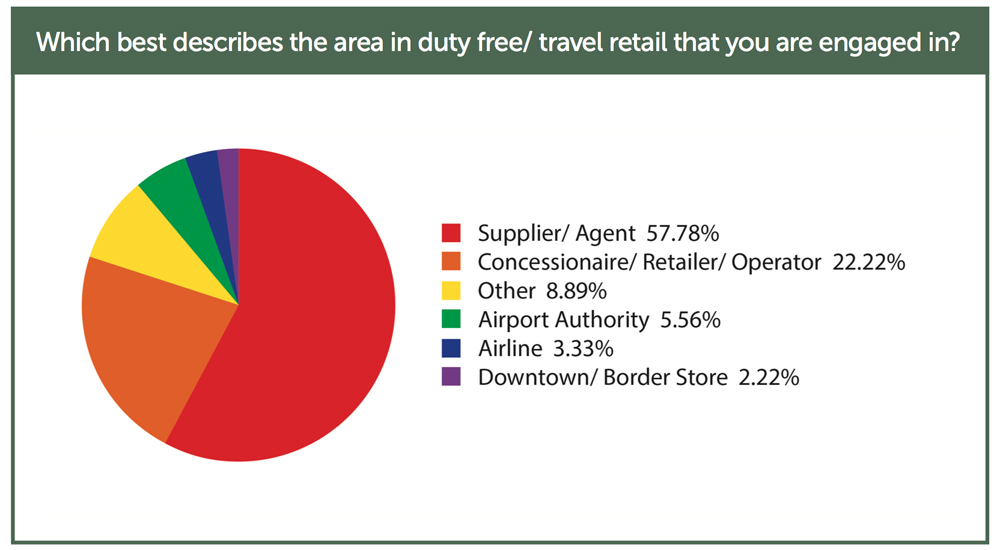
The breakdown of the survey respondents was as follows: 57.1% suppliers, 23.1% concessionaires/ retail operators, 5.5% airport authorities, 3.3% airlines, 2.2% downtown/border stores and 8.8% other [which also includes distributors and agents].

 

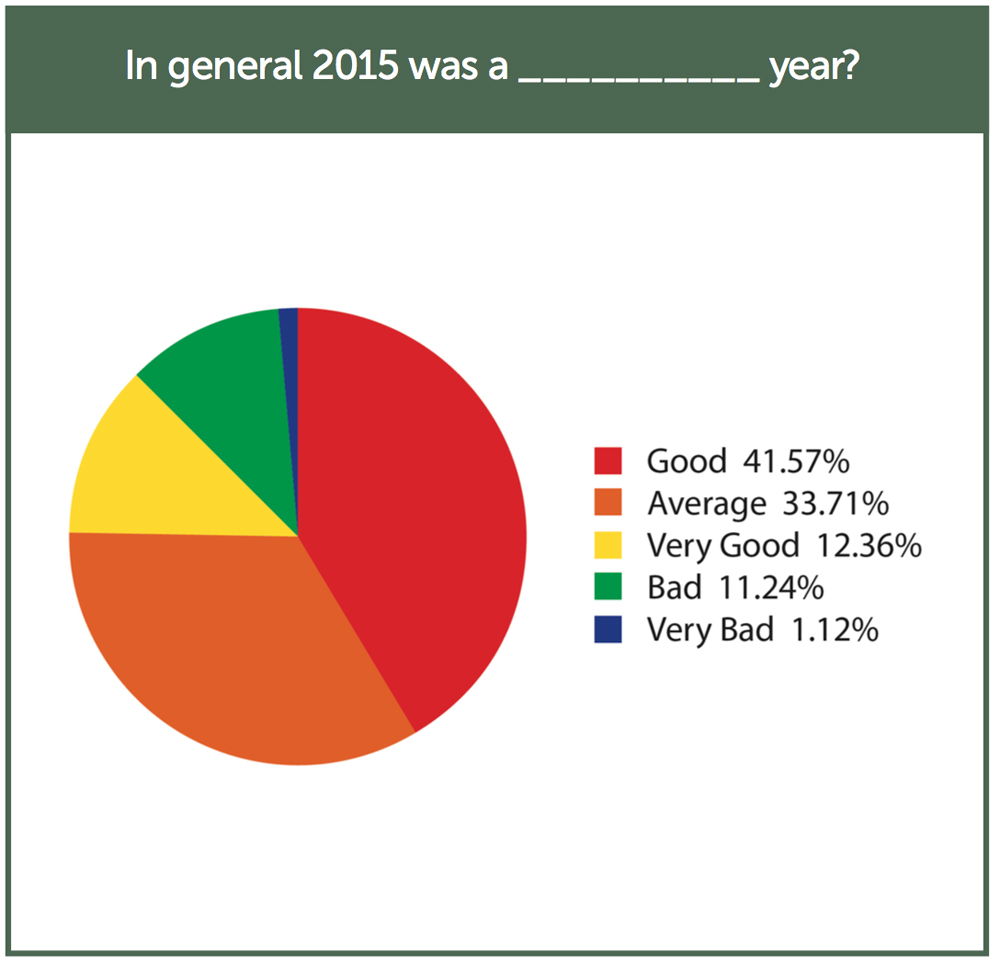
Survey-2016-male-iconThe most notable change here was that retailer participation was up from last year’s 19.5%, to almost one in four of the replies. Regarding 2015’s performance, provisional data from Generation Research has already confirmed that the first half was flat for the DF&TR business at-0.2% and this is reflected in reader responses.


Just 54.4% reported the year as either good or very good (42.2% and 12.2% respectively) and that is markedly down on 2014’s 61.1%, which in turn was also well below 2013’s 70%.


A solid one third – slightly up on 2014 – reported an average year, suggesting that, despite the worries about how 2015 would turn out, there was stability to be had over the period for a sizeable part of the market. However, more than one in 10 readers also described the year as bad (11.1%), which is concerning.


When it comes to 2016, the industry is divided on how it will turn out, but the sentiment remains cautious, or perhaps unsure.


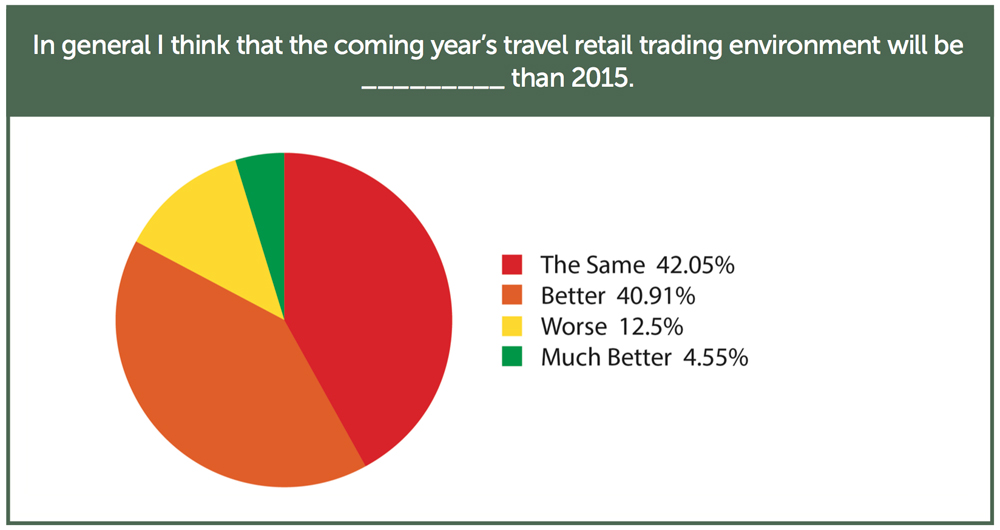
A large number (42.7%) believe it will be the same as 2015–up very significantly from 32% in last year’s survey–while 40.5% believe it will be better (down from 50% last year).
 

Survey-2016-graph-2

Just 4.5% believe 2016 will be much better than 2015 (down from 6.5%) while 12.4% believe 2016 will be worse. These responses underline just how uncertain the DF&TR market continues to be.


Having been through a problematic and hard-to- read year – as TRBusiness predicted in this survey 12 months ago – many of the issues that made 2015 difficult are still there.


However, some players remain very positive, based more on their own, rather than market, circumstances. For example, Paul Neeson, Global Buying Director at ARI, says: “In general I believe the industry will see moderate growth, typically 3-4%. Given ARI’s programme of investment and recent wins we expect to trade well in excess of that.”


The fate of the DF&TR market is not universally the same; there are different scenarios depending on the region. This year we have added an extra region – the Indian subcontinent – which means that all percentages will be diluted so a direct comparison with last year is not directly possible.
 

Survey-2016-graph-3


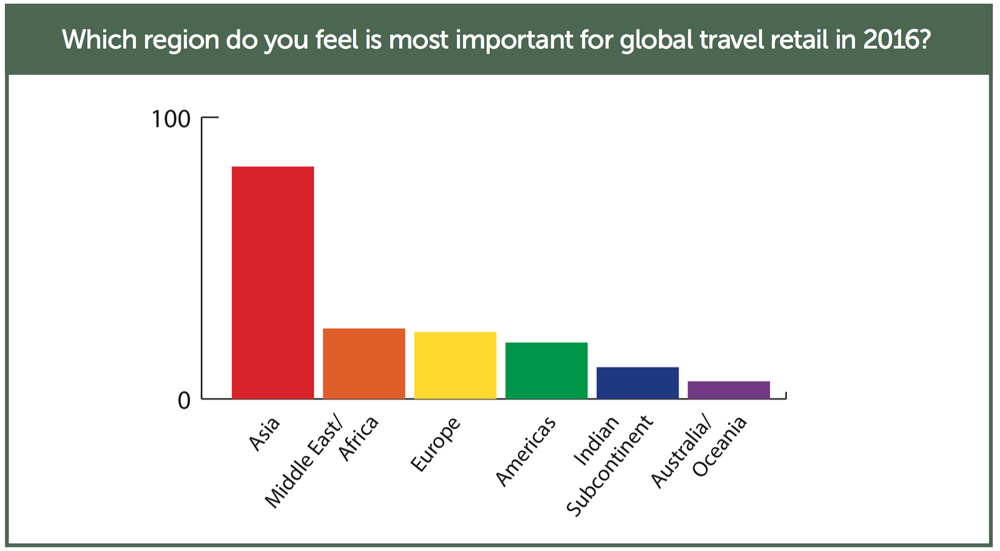
Nevertheless, given the economic weaknesses seen in Europe last year (including the frail euro) and the currency impacts in the Americas market, it should be no surprise that Asia Pacific is where the industry is once again pinning its hopes.


The Asia region remains the firm favourite as most likely to drive growth, according to 72.5% of respondents (slightly below last year’s 74.0%). The drop will have been affected by the split-out of an extra region, but it is also perhaps indicative that the region has started to lose some lustre.


Falling sales in Hong Kong, a flattish Singaporean traffic market and all the DF&TR changes in South Korea – not to mention China’s still slowing economic growth – are factors to contend with.


Susan Stiene, Director Commercial Services at Vancouver Airport also rightly points out: “It depends how hard the Chinese government entices spending in the homeland versus abroad.”


The next most promising region is the Middle East/Africa with 22% of the vote (down from 28.6%) which may reflect the escalating turmoil in and around Syria, as well as widening terrorist activity in Africa, particularly hard-hit Egypt.
 

Survey-2016-graph-4


On that latter point, Peter Zottl, Vice President, Travel Retail at Swarovski says: “Tourism in southern Europe will take up the slack of North Africa [while] the strong US dollar will bring more outbound US travellers to Europe.”


That transatlantic trend is already underway, but the Middle East/ Africa, nevertheless pushed Europe with 20.9%, into third place. This was a large drop of almost -10% on last year’s 29.9% share of the vote.


Clearly while the European Union bailout woes in markets like Greece have subsided [possibly not for too long] migration issues have now come to fore – and in DF&TR, the lack of Russians continues to hurt the continent, coupled with moderating Chinese spending levels.


The Americas had the backing of 17.6% of respondents (down from 22.1% last year) while Australia/Oceania received a 5.5% vote of confidence (up from 4.0%). Meanwhile, the Indian subcontinent newcomer could be a dark horse in 2016 with 9.9% believing the region has strong possibilities. [Note: percentages do not round up to 100% because there were multiple responses].


Whereas at the start of 2015, specific threats were not consistently mentioned by respondents, by December several had become clearly identifiable (as mentioned above) – and perhaps currently top of mind is terrorism’s ugly threat to tourism and travel.


In his outlook, the Head of Commercial Development & Category Management Duty Free at Fraport, Christian Sültemeyer, summarises this situation rather well: “I am afraid the currency situation will, again, be one of the most influential factors in 2016. The other factor will be international terrorism which will have an impact on people flying, one way or the other.


“Still we have positive expectations for 2016, since our industry has always proven to be a very robust one. Additionally we will see that digitalisation will start to change our channel more and more, and airports will have to have an answer to that.”


TRBusiness would like to thank all the respondents to this year’s survey. We appreciate that your time is precious and we hope that both the individual and pooled answers in the following pages, from across the channel, will give you a snapshot of the global DF&TR business – and some useful insights into 2016.

Charlotte Turner, Managing Editor.


April’s IAADFS 2016 exhibition 95% sold out


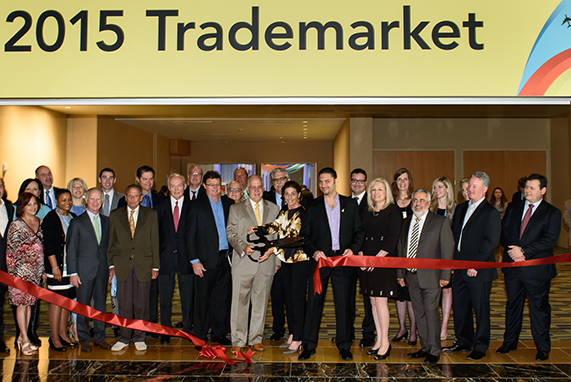
The IAADFS ribbon cutting ceremony
In the February issue of TRBusiness magazine, IAADFS Executive Director Michael Payne tells Doug Newhouse that he is optimistic that this year’s Duty Free Show of the Americas will be a great event, but he is also realistic.


“Well the numbers look good, but I think we are going to feel it this year…I don’t know exactly what that will mean in terms of final numbers, but I know that the space we are selling is 95% sold.”


IAADFS show organisers say that the 2016 event will bring together nearly 200 exhibitors with hundreds of buyers from duty free and travel retail stores throughout the world.


Scheduled for 3-6 April at the Orlando World Center Marriott in Orlando, Florida, the show features a three-day exhibit hall complemented by several social events that provide valuable networking opportunities, as well as a sports day programme that includes golf, tennis, and a fun run/walk.


As previously reported, new this year, IAADFS is adding an education session on Monday morning featuring Angela Gittens, Director General of Airports Council International (ACI World), and Peter Mohn, Owner and CEO of m1nd-set.


IAADFS-Opening-Cocktail-large-bright

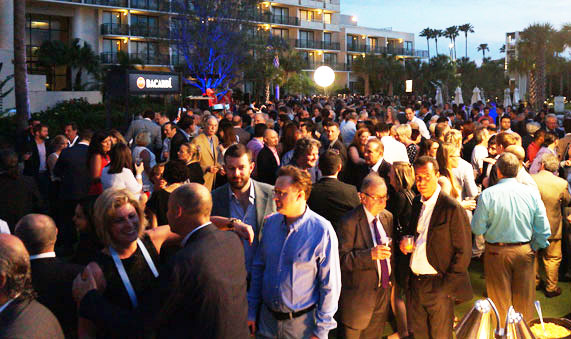
The show features a three-day exhibit hall complemented by several social events that provide valuable networking opportunities, as well as a sports day programme that includes golf, tennis, and a fun run/walk.


Gittens will share her insights about the state of the travel industry and ramifications for the duty free and travel retail industry. Mohn will provide an overview of new research findings conducted just prior to the IAADFS show concerning traveler buying habits in North America and the Caribbean, and his Monday morning presentation will be followed by a more in-depth workshop presentation of the new research data on Tuesday morning.


Early indicators point to a very successful show, with approximately 95% of the available space already booked – as Payne says. Most of the exhibitors from 2015 have returned for this year, and the show will also feature a variety of first-time exhibitors.


Angela Gittens IAADFS

Angela Gittens, Director General of Airports Council International (ACI World).

“We are fortunate to have such a dedicated and supportive base of exhibitors returning year after year,” commented IAADFS Executive Director Michael Payne, adding, “At the same time, it is great to welcome so many new exhibitors whose unique products and services add value to what is already a very vibrant industry.”


The most current floorplan and exhibitor list can be found www.iaadfs.org/2016floorplan.


As in 2015, IAADFS offers a single registration option that includes access to the exhibit hall plus all IAADFS-sponsored social events – the Opening Reception, Gala Evening, and Club Americas. This registration structure maximizes participation in all social events, making these events even more valuable networking opportunities for attendees.


Sunday’s Sports Day programme will feature a golf tournament sponsored by American Caribbean Gateway/Macanudo Cigars, tennis, and a fun run/walk sponsored by Essence Corp that will benefit a worthy charity.


IAADFS fun run 3

Essence Corp will once again sponsor a fun run/walk that will benefit a worthy charity.

Pre-registration for the show remains open until the beginning of on-site registration on the morning of Saturday, 2 April. Visit http://www.iaadfs.org/dutyfreeshow to find additional information about the 2016 Duty Free Show of the Americas and to register.


List of new exhibitors:


750 Brands Corp.; 98 Coast Av USA Inc.; Ariki New Zealand, Baron Philippe de Rothschild; Bijoux Nouveau Inc.; BMC Imports Inc.; C&A Marketing / Polaroid, Chewpod USA Inc.; Choya Umeshu USA Inc.; CIDF OL FZCO-China International Duty Free; Costa Sunglasses; Daron Worldwide Trading Inc.; Domaines Francis Abecassis; Global Premium Vodka SA; H Mounier; Harry and David; Hydro-Photon, Inc.; Laboratoires Paris Elysees; Ladoga Group; Les Grands Chais de France; Licorec; Life Plus Style Gourmet LLC; Minhas Micro Distillery and Brewing; MJM/CITRA; Scojo New York; Sprayground; TeaVert; The Gold Bar Bottling Company; and United States Distilled Products.


Exhibitors returning for 2016 after an absence include Churchill’s Confectionery; Latin American Wine & Spirits; Luxe Brands,

Inc.; and Thomas Sabo.