Archives

IMF: zero growth in 2016 in Brazil and Argentina…

Top Alejandro WernerThe International Monetary Fund (IMF) is predicting negative growth in Argentina, Brazil, Ecuador, Venezuela and the Caribbean for the second year in a row – only the second time this has happened since the debt crisis of 1982-’83.


This is the conclusion of both the IMF and its Director of the Western Hemisphere Department, Alejandro Werner, writing in this month’s iMFdirect blog.


He asserts that this ‘regional recession’ nevertheless hides the fact that ‘most countries continue to grow modestly’, although big problems still plague the region’s biggest economy of Brazil.
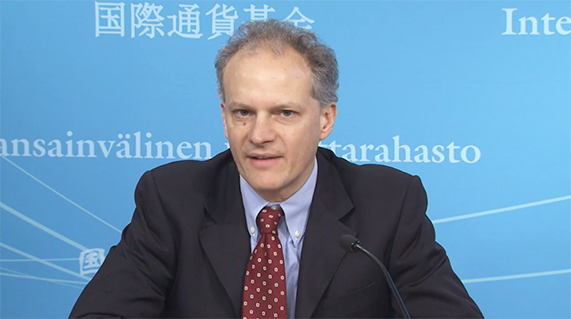
 

Alejandro Werner

“Indeed, our negative growth projection is driven by four countries – Argentina, Brazil, Ecuador, and Venezuela…” Alejandro Werner, Director of the Western Hemisphere Department, International Monetary Fund.


“In particular, country specific developments are being determined by the interplay between external shocks and domestic fundamentals,” said Werner. “While countries with strong policy frameworks have been adjusting to external shocks smoothly, countries with weaker domestic fundamentals are experiencing significant downturns.”


Werner says that the ‘sizeable decline in commodity prices’ of between 30% to 50% depending on the country has badly hurt export revenues – estimated at circa $200bn for the seven listed economies: “However, the sizes of the terms of trade shocks relative to the sizes of these economies (less than 1% of GDP for Argentina, Brazil, and Mexico in 2015 and 2016) are not enough to explain the severity of contraction in some cases,” he says.


“Indeed, our negative growth projection is driven by four countries (Argentina, Brazil, Ecuador, and Venezuela), as the decline in commodity prices in combination with macroeconomic imbalances and microeconomic distortions has led to sharp declines in private investment.”
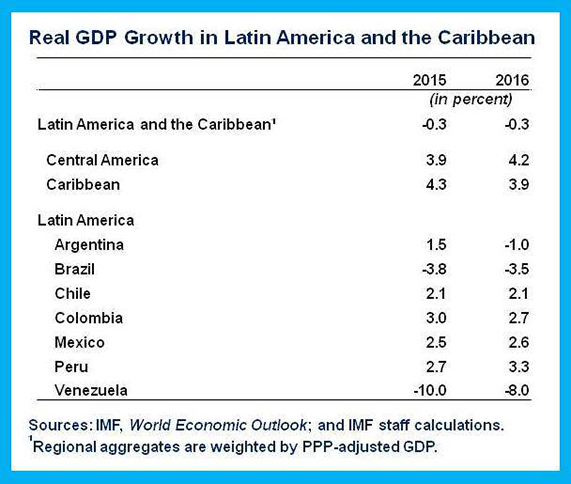
 

Real GDP LATAM and Caribbean 2016


Werner admits that this initial commentary on the regional outlook for the region does hide important sub-regional differences however.


For example, he says rightly that while South America is heavily affected by the decline in commodity prices, so Mexico, Central America, and the Caribbean are beneficiaries of the strengthening US economy and – in the majority of cases – the oil price decline.


Within his economic assessment of all the region’s major countries and prospects ahead, Werner says that Chile, Colombia and Peru are adjusting pretty well compared with some of their bigger neighbours.


‘ORDERLY ADJUSTMENT PROCESS…’

He points to ‘a relatively orderly adjustment process’, where a policy mix of large exchange rate depreciations, gradual fiscal consolidation and accommodative monetary policies have staved off economic contraction.


In approving fashion, he notes: “The foundations for growth remain in place, including sound policy frameworks, credible institutions, healthy financial markets and favourable foreign borrowing costs.


“However, potential growth is expected to be lower, given that the transition to more diverse sources of growth will likely take time. In Bolivia, growth also remains strong, but faces risks from rising public debt and the current account deficit.
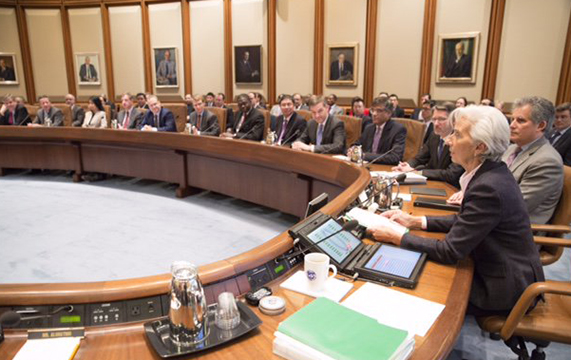
 

Christian Lagarde addresses a meeting at the IMF.

Christine Lagarde, Managing Director addresses a recent meeting at the IMF.


By contrast, Werner says that Brazil is suffering from a heady cocktail of fundamental problems that have put off investors. He said: “In Brazil, a combination of macro-economic fragilities stemming from slow domestic adjustment, a wide-reaching scandal involving government and corporate officials and political problems have paralyzed investment and dominated the economic outlook.


“Following a sharp contraction of 3.8% in 2015, output is expected to fall a further 3.5% in 2016 – the largest total contraction since 1981-’83. Unemployment has risen sharply, and inflation is in double digits.


“Political dysfunction continues to delay the adoption of a credible fiscal strategy to keep public debt on a sustainable path, which has prompted rating downgrades and increased financing costs. Although exports are now beginning to show signs of strength with the real depreciating sharply, resolution of political and policy uncertainty is essential to an eventual return to positive growth.”


 ‘POSITIVE’ VIEW OF ARGENTINA

By contrast, Werner is much more positive about the prospects for Argentina under the new government which he has embarked on ‘an important transition’ to correct macroeconomic imbalances and microeconomic distortions.


“Significant steps towards this transition have been taken by eliminating restrictions on the foreign exchange market, removing several constraints on international trade, and announcing the main guidelines of the macroeconomic framework, and the partial removal of energy subsidies.


“The new approach has improved prospects for growth in the medium term, but the adjustment is likely to generate a mild recession in 2016,” he adds.
 

BF3-A002

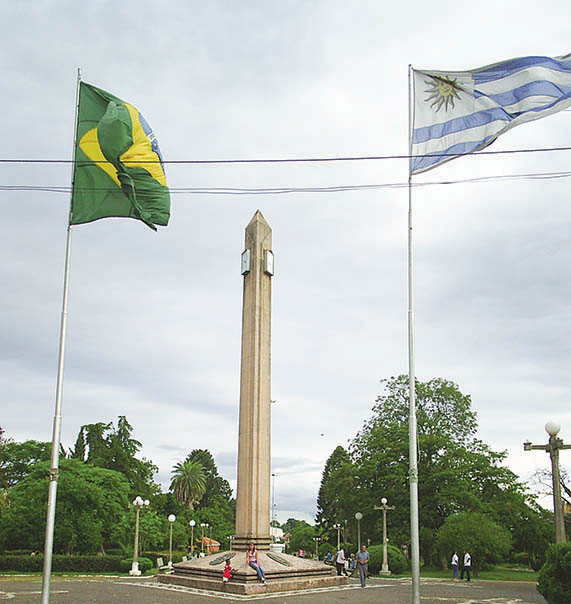
Uruguay-Brazil border. Talks about establishing border shops on the Brazilian side facing Uruguay and other countries have gond quiet for the time being.


Meanwhile, Werner says that he IMF is expecting the recession to continue in Ecuador this year, thanks to the continued decline in the price of oil and real exchange rate appreciation.


Having said that, Werner’s prognosis for Venezuela this year makes the other three markets look positively healthy. As he notes, long-standing ‘policy distortions and fiscal imbalances’ were already big problems prior to the collapse in oil prices.


Werner maintains that these problems have been the cause of the country’s ‘economic crisis’ with an expected fall in output of almost 18% over 2015 and 2016, which he adds is the third sharpest decline for any country in the world.


VENEZUELA IN TURMOIL…

“A lack of hard currency has led to scarcity of intermediate goods and to widespread shortages of essential goods – including food – exacting a tragic toll,” said Werner. Prices continue to spiral out of control and we expect inflation to rise to 720% this year, from a world-high inflation of about 275% in 2015.”


More happily there is much better news in terms of the IMF’s predictions for Mexico, Central America and the Caribbean. Werner says Mexico appears to be recovering ‘at a moderate pace’ supported by healthy private domestic demand and spillovers from what has been a strongly performing US economy.


“The depreciation of the peso and lower electricity prices should boost manufacturing production and exports,” said Werner. “The recent decline in oil prices will have only a limited effect on public finances in 2016, as oil price risk has been hedged for that year. However, if the oil price shock is persistent, it would increase the fiscal consolidation burden in the medium term.”
 

Rio Galeao Airport

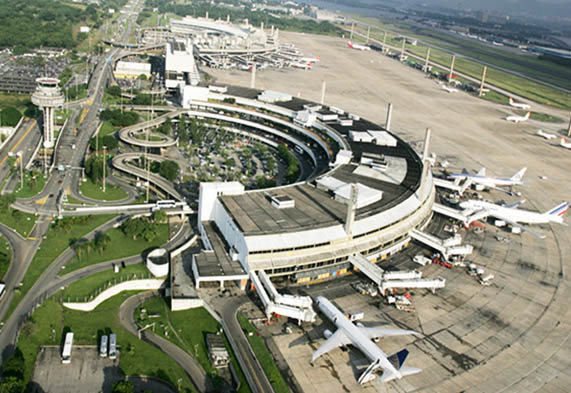
Rio Galeao Airport where a new satellite is being built in time for the Olympic Games.


Turning to Central America and the Dominican Republic, Werner says that both areas have benefited from the oil price decline, stronger US growth and higher export earnings, although the recent softening of global food commodity prices remains a threat.


Werner adds: “While tourism-based Caribbean countries also benefit from the low energy costs and recovery in the US, declining prices for oil, gold and alumina have worsened the outlook for commodity-intensive countries in the Caribbean.”


INTEREST RATES CRUCIAL TO STABILITY

Looking ahead and top of the list of potential threats which could derail recovery in some Latin American countries is any sudden or unexpected rise in interest rates.


Werner also believes that the region is ‘particularly vulnerable’ to any further slowdown in the Mainland China economy, now that this giant has become one of the main trading partners for the region. Declines in commodity prices are also a huge threat.


Werner adds: “Closer to home, a further deterioration of the situation in Brazil could lead to a sudden re-pricing of regional assets, as well as reduced demand for exports among trading partners in MERCOSUR.
 

Dufry Sao Paulo

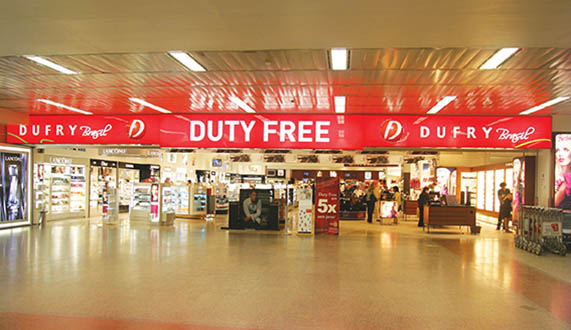
Dufry at Sao Paulo Airport.


“The recovery in investment could be delayed given high corporate leverage in the region. With medium-term growth expected to remain low, corporations may need to adjust their balance sheets, weakening prospects for private investment.”


Concluding his assessment of the region’s prospects, Werner says that the IMF is expecting growth to be slower paced for an extended period: “In a global environment that is expected to remain subdued, 2016 will be a time for regional policymakers to err on the side of caution: adjustment should be allowed to continue and buffers should be preserved.


“The regional outlook will only start to look more promising when the domestic challenges facing the contracting economies have been resolved.”


[‘iMFdirect’ features views by IMF economists and officials about pressing issues in the global economy. Alejandro Werner assumed his current position as Director of the Western Hemisphere Department of the International Monetary Fund in January 2013. The views expressed above do not necessarily represent the views of the IMF and its Executive Board].


Canadian duty free sales reach $524m in 2015

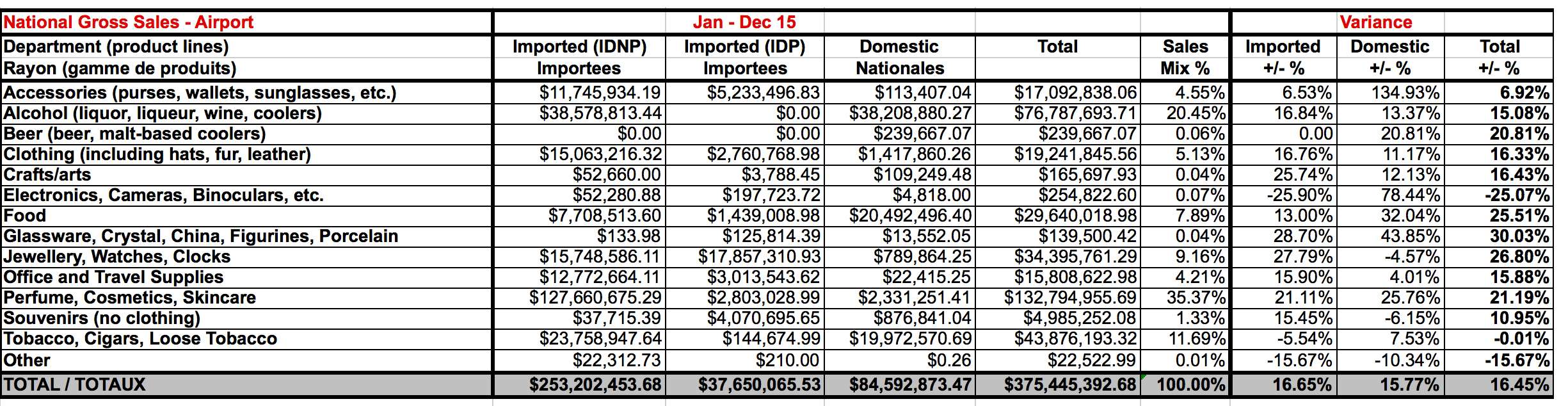
canadian-flagAirport duty free shops in Canada registered a 16% year-on-year increase in sales to reach $375m in 2015 and the Frontier Duty Free Association (FDFA) says that this figure is only likely to continue growing this year.


Although the Canadian land border duty free shops didn’t see such a dramatic sales increase, they did register growth in sales of 4% to $149m and overall, the combined airport and land border sales for Canada reached a total of $524m for 2015.


“With the current exchange rate, and key tourism initiatives taking place, we are well positioned especially for this upcoming high season in 2016 to exceed sales expectations and traffic numbers,” says the FDFA.

Click to enlarge table on sales breakdown.

Canadian-Airport-duty-free-sales-2015

Canadian Airport duty free sales in 2015. The final column in this table show the percentage change vs 2014.

The FDFA also says it is currently pursuing the ‘Road TRIP’ initiative – with all government officials, both federally and in communities across the country – to allow Americans a 5% rebate on all goods purchased, to be claimed at land border duty free shops.


“We know that over 60% of the time, customers, if given a cash rebate will spend that money in our stores and our suppliers products,” says FDFA. “We will keep the membership informed of our lobbying progress to have this initiative approved in the Federal Budget.”

Click to enlarge table on sales breakdown.

Canadian-border-sales-2015

Canadian Land Border duty free sales in 2015. The final column in this table show the percentage change vs 2014.

The main categories that dominated sales in land border duty free were as follows (in order of sales highest to lowest – based on December 2015 numbers). The only change for the month of December in sales category order was glassware leading sales over the “other category:

  • Alcohol (liquor, liqueur, wine, coolers)
  • Tobacco, Cigars, Loose Tobacco
  • Perfume, Cosmetics, Skincare
  • Food
  • Beer (beer, malt-based coolers)
  • Jewellery, Watches, Clocks
  • Accessories (purses, wallets, sunglasses, etc.)
  • Clothing (including hats, fur, leather)
  • Souvenirs
  • Office and Travel Supplies
  • Other
  • Glassware, crystal, china, figurines, porcelain
  • Crafts/Arts
  • Electronics, Cameras, Binoculars, etc.

REGIONAL SALES BREAKDOWN:

Land border shops in the Prairie region registered sales of $9.4m, which represented a decrease of 11% year-on-year in 2015. Shops in the Pacific region registered total sales of $23.2m, which was a slight decrease of 2.27%.

Ontario registered sales of $84m, which was an increase of 6.5% in 2015, year-on-year and finally the Atlantic/Quebec region saw sales of $31m up 6%.


DFWC/m1nd-set launch GTR Shopping Monitor

DFWC-m1nd-set-KPI-survey-leadAs part of a continuous project to measure perceptions of the duty free & travel retail industry among travellers, the Duty Free World Council (DFWC) initiated a Global Shopping Monitor of duty free shopping trends in the fourth quarter of 2015.


DFWC is conducting the quarterly Global KPI Monitor in partnership with the respected research & consulting company m1nd-set. TRBusiness was also able to submit some exclusive questions to a similar KPI survey conducted by m1nd-set and will shortly be able to reveal the results.


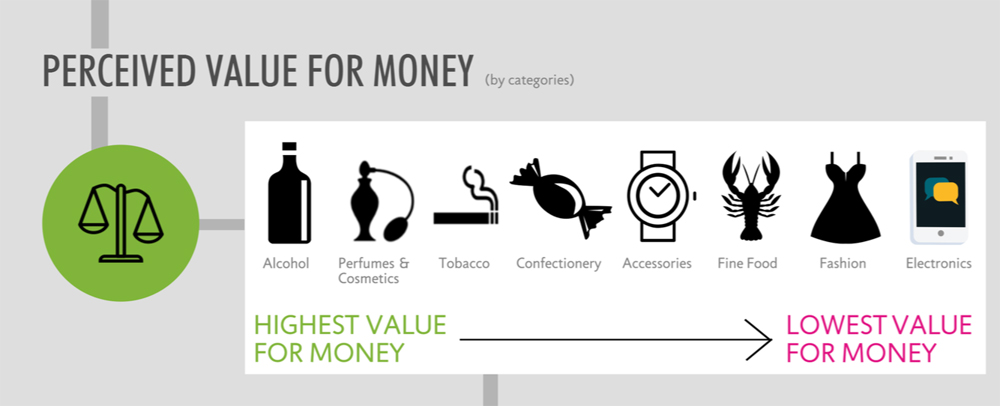
According to the current DFWC report the most important aspect of the travel retail shopping experience for travellers is the ‘uniqueness of products and services’, followed by the ‘perceived value for money’ and the ‘variety and range of products’ on offer.


DFWC-m1nd-set-1

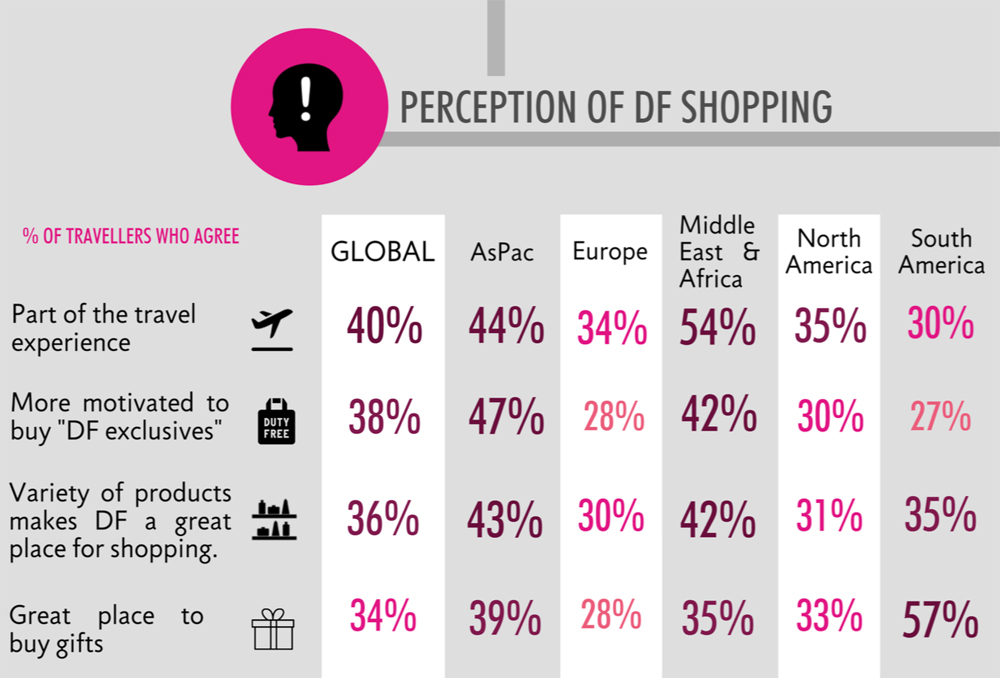
The current DFWC Global KPI Monitor also shows that globally 40% of the international travellers see duty free & travel retail as part of the travel experience. However, there are significant differences in traveller perceptions between the regions.


Another aspect covered in the DFWC Global KPI Monitor is the information on customs regulations and the impact on the actual shopping behaviour. The current report suggests that only half of international travellers feel well informed about the regulations, which has a negative impact on purchase behaviour.


The use of electronic devices to receive or look for information regarding duty free and travel retail shopping is also covered in the analysis; the first report indicates that today, still only a minority of travellers use electronic devices for information about shopping on the ‘sixth continent’.


Another area the reports will cover is the macro-economic impact on the business, linking the global economic crises and fluctuations and the duty free and travel retail business. The DFWC Global KPI Monitor will illustrate the impact of the current economic situation on the actual travel and shopping behaviour, both globally as well as in each of the regions.


etrc frank oconnell

Frank O’Connell DFWC President.

Commenting, Frank O’Connell DFWC President said: “This is an exciting research innovation which the DFWC is delighted to bring to our industry and which over time will give industry players in every region the ability to monitor customer trends and behaviours and adjust the shopping offer accordingly.”


The KPI Monitor covers all key elements with regard to consumer perceptions of the DF&TR market, such as satisfaction with various aspects of the shops, product range, differentiation from the domestic channel and perceived value for money, among other topics.


DFWC-m1nd-set-KPI-survey-2

The findings are based on interviews with over 4,000 people who have travelled internationally in the previous quarter, with the sample split per region based on industry sales figures from m1nd-set partner Generation Research.


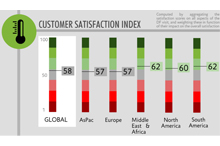
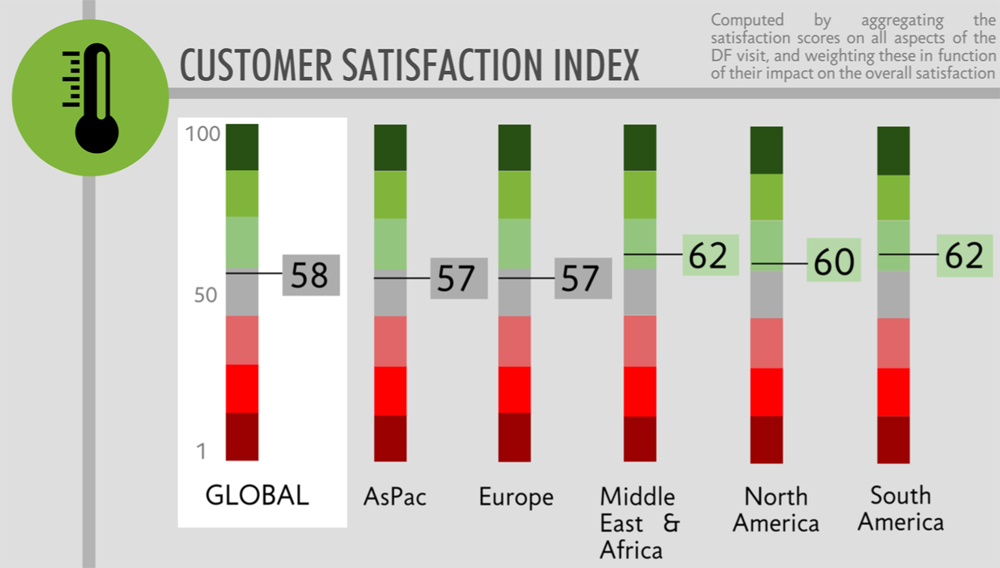
Based on a formula defined by m1nd-set, a Customer Satisfaction Index (CSI) is shown in the DFWC Global KPI Monitor on a global level as well as for each of the five regions covered.


DFWC-m1nd-set-KPI-survey-3

The CSI is generated using the ratings for each respective element, analysed and weighted based on their impact on overall traveller satisfaction. The current report illustrates the findings from the first Index; future quarterly reports will show the evolution over time.


M1nd-set Owner & CEO Peter Mohn comments: “Working with brands, retailers, airports, airlines and the trade associations in the industry, we see a constant thirst for data and in particular recent data on duty free and travel retail shopper behaviour.


“This Customer Satisfaction Index will be an important and timely barometer for the duty free & travel retail industry, given both the recent and freshly collated data used to compile the reports and the frequency of their publication.


DFWC-m1nd-set-KPI-survey-4

“The evolutional nature of the data is also a highly sought after aspect of the research demanded by stakeholders today. A one-shot spotlight doesn’t give a rounded enough picture of the reality. Companies need to evaluate trends, which this global index will allow.”


Peter Mohn 2015

M1nd-set Owner & CEO Peter Mohn.

Mohn adds: “The quarterly monitor reports cover a vast range of data. The aim is to provide as holistic an overview as possible of the situation and its evolution by identifying the key trends and divergences between regions.


“Of course the quarterly reports give a good birds-eye view of these various elements and there is considerably greater detail in the full reports, which cover both the global as well as the regional results in more depth. We believe the quarterly Monitor will be a useful tool for the industry and we are delighted to provide this service to the DFWC.”


For more information and to find out more about the full report, contact m1nd-set at info@m1nd-set. The cost of the quarterly report is 5,000€, with the yearly subscription priced at 15,000€.

TSA finds 2,198 loaded guns in luggage in 2015

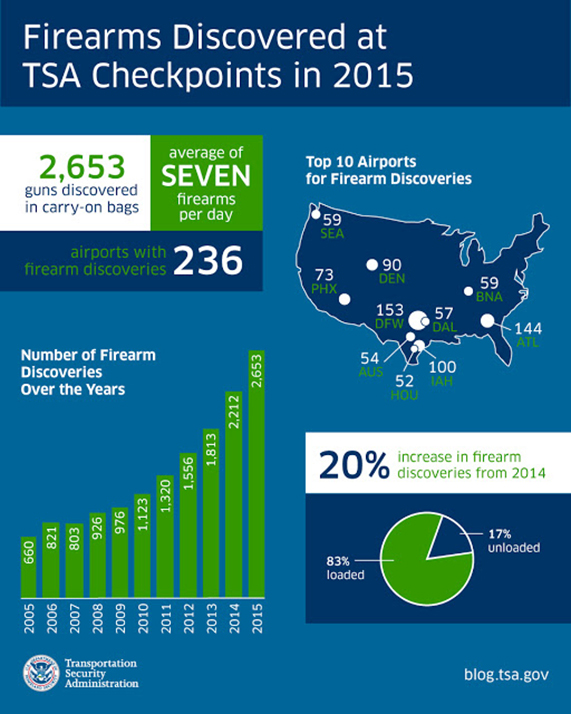
TSA hand baggage scanningTransportation Security Administration (TSA) officials discovered a total of 2,653 firearms in carry-on bags at checkpoints across the US in 2015, averaging more than seven firearms per day. Of those, 2,198 (83%) were loaded. Firearms were also intercepted at a total of 236 airports; 12 more airports than last year.

Despite all the warnings and publicity surrounding permitted hand luggage items, TSA also reported a 20% increase in firearm discoveries from 2014’s total of 2,212, without counting the huge number of knives, replica weapons and explosives (mostly inert) that were also confiscated.

Eagle-eyed TSA officers published their top 10 league for ‘gun catches’ in 2015 recently, with Dallas/Fort Worth International Airport taking the dubious honour with 153.

The other nine (in order) were as follows: Hartsfield-Jackson Atlanta 144; George Bush Intercontinental Houston 100; Denver 90; Phoenix Sky Harbor 73; Nashville 59; Seattle-Tacoma 59; Dallas Love Field 57; Austin-Bergstrom 54; and William P. Hobby Houston 52.


2016 TSA firearm seizures

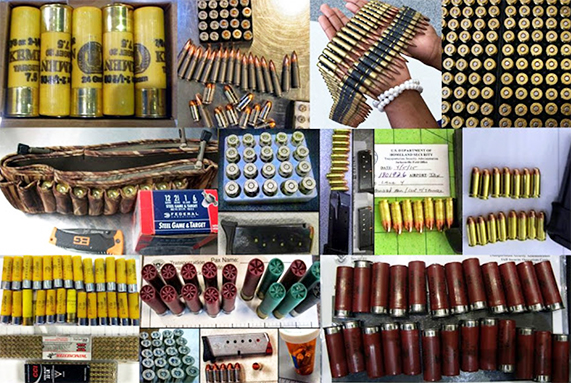
Just a few of the guns seized at airports and border post security in 2015. There were so many that we could never fit them into this picture-Ed

Just a few of the guns seized at airports and border post security in 2015. [There were so many that we could not fit them into this picture-Ed].


TSA added that in addition to firearms discovered this year, there were many other hazardous snd prohibited items that passengers attempted to travel with this year through both domestic and international airports, plus land border crossings.

Just taking a handful of examples, TSA officers report that they discovered replica sticks of dynamite at Las Vegas, a  scale model of an explosive drilling device at Houston Intercontinental, an inert 120mm tank round at Reno and an inert artillery round at Washington-Dulles.

Just a few of the items of live ammunition confiscated from airline carry-on bags.

Just a few of the items of live and imitation ammunition confiscated from airline passenger carry-on bags.


Many other inert replica explosives, grenades, mortar shells, mines and anti-tank projectiles were confiscated, with TSA pointing out that even though they are not functional, each and every one has to be checked to ensure this is the case – so causing big security delays – while most of the items are also confiscated.

In its report, TSA added that one of its most infamous passengers at Orlando Airport was actually caught concealing two handguns, one unassembled rifle, and an unidentified amount of ammunition inside three amplifiers within a checked bag.

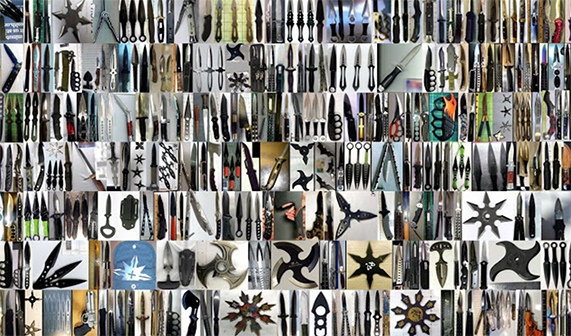
Madness- Just a tiny 'handful' of the knicves and confiscated from airline passengers in 2015 across the US

Madness: Just a tiny ‘handful’ of the knives and ‘weapons’ confiscated from passengers in 2015 across the US at both domestic and international airports.


Just to underline the colossal job that TSA faces across the huge number of airports and border posts where it works, the body reports that its officers screened no less than 708,316,339 million passengers (more than 1.9m a day), which is 40,780,330 million more passengers than for the same time frame in 2014.

In addition to screening more than 708m individuals, TSA officers also screened 1.6bn carry-on bags, 432m checked bags and 12.9m airport employees.

Despite these huge numbers, TSA claims that nationwide less than two per cent of passengers waited in line longer than 20 minutes.

UNWTO: 2015 arrivals up +4% but outlook weakens

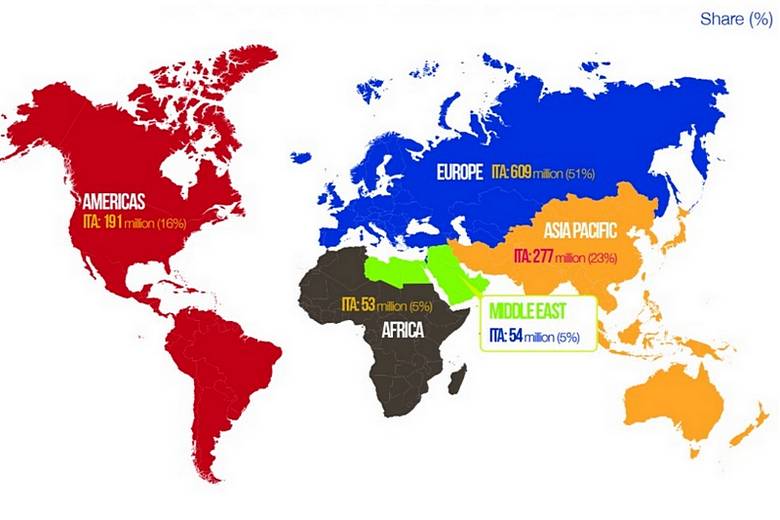
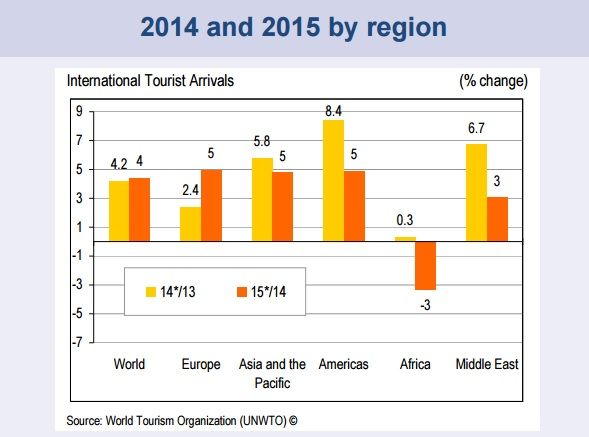
unwto-logoDespite currency issues and the impact of escalating terrorism, international tourist arrivals were up +4% to reach a record 1,184 million in 2015 but one region, Africa, saw a contraction. And the outlook for 2016 is lower than at any time in the past six years.

The data from the UN World Tourism Organisation (UNWTO) show that some 50m more tourists (overnight visitors) travelled to international destinations around the world last year compared to 2014.

This marked the sixth consecutive year of above-average growth, with international arrivals increasing by +4% or more every year since the post-crisis year of 2010.

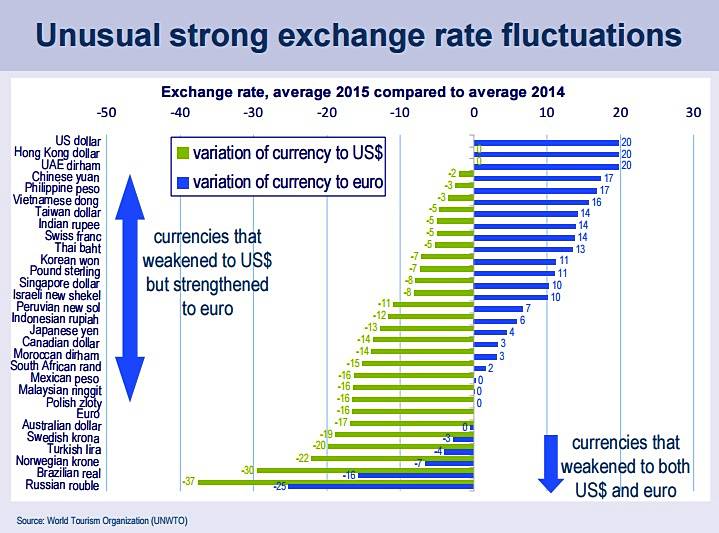
WTO notes overall strong demand “with mixed results across individual destinations due to unusually strong exchange rate fluctuations, the drop in oil prices and other commodities which increased disposable income in importing countries but weakened demand in exporters, as well as increased safety and security concerns”.

wto arrivals 2015

Growth to destinations in advanced economies (+5%) exceeded that of emerging economies (+4%), boosted by the solid results of Europe (+5%), helped substantially by the weak euro [which might not play such a key role in 2016, making conditions tougher for duty free and travel retail players].

wto regions 2015By region, Europe, the Americas and Asia Pacific all recorded around +5% growth in 2015. Arrivals to the Middle East increased by +3% while in Africa, the limited data available points to an estimated -3% decrease, mostly due to weak results in North Africa (see chart right and click to enlarge). This area accounts for over one third of arrivals in the region.


SAFETY AND SECURITY ON THE AGENDA

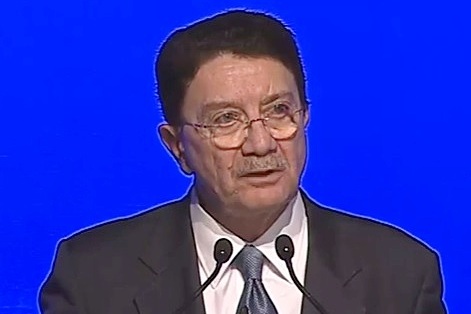
Without mentioning terrorism directly, UNWTO Secretary-General, Taleb Rifai, comments: “Results in 2015 were influenced by exchange rates, oil prices and natural and man-made crises in many parts of the world. As the current environment highlights in a particular manner the issues of safety and security, we should recall that tourism development greatly depends upon our collective capacity to promote safe, secure and seamless travel.

Rifai: 'this is not an attack on France, it is an attack against us all'

Rifai wants governments to improve security… easier said than done. 

“In this respect, UNWTO urges governments to include tourism administrations in their national security planning, structures and procedures, not only to ensure that the sector’s exposure to threats is minimised but also to maximise the sector’s ability to support security and facilitation, as seamless and safe travel can and should go hand in hand.”

CONFIDENCE WEAKENS FOR 2016

While the UNWTO Confidence Index remain positive for 2016, it is lower than in the previous two years and the +3.5% to 4.5% forecast (at the lower-point) is below all annual growth rates seen since the global financial crisis (08/09).

wto fx rates 2015THE SOURCE MARKETS DRIVING SPENDING

A few leading source markets have driven tourism expenditure in 2015 supported by a strong currency and economy.

China, with double-digit growth in expenditure every year since 2004, continues to lead global outbound travel, benefitting Asian destinations such as Japan and Thailand, as well as the US and various European destinations.

By contrast, expenditure from the previously very dynamic source markets of Russian and Brazil declined significantly, reflecting the economic constraints in both countries and the depreciation of the rouble and the real (see currency table) against virtually all other currencies.

As for the traditional advanced economy source markets, expenditure from the US – the world’s second largest source market – was strongly up  by +9% thanks to a rising dollar, and the UK by +6% [for a similar reason with respect to sterling]. Spending from Germany, Italy and Australia grew at a slower rate (all at +2%), while demand from Canada and France was rather weak.


DFI predicts challenging retail outlook ahead

DFI Malaysia SmallMalaysian duty free retail company Duty Free International (DFI) which trades as ‘the Zon’, has reported that the ’volatility’ of the Malaysian Ringgit (MR) against the US dollar ‘is expected to remain challenging’ into its last quarter ending 29 February 2016.


The listed operator generated total sales up 12.5% to nearly MR153m ($34.9m) in its third quarter, with this growth due mainly to a rise in demand and higher selling prices for certain products, plus seven new retail outlets at Kuala Lumpur International Airport 2 (KLIA 2).


[The first of these stores commenced operation in July 2014, with the remaining six opening in stages in November 2014, January 2015 and August 2015-Ed].


Duty Free International

‘the ZON Duty Free’ at Kuala Lumpur International Airport.


At the same time, the group reported profit before income tax of MR55.8m ($12.6m) for the first nine months of fiscal year 2016, representing an increase of 15.7% or MR7.6m ($1.7m) as compared to MR48.2m ($10.9m) recorded over the same period a year prior.


DFI said that the increase in profit was mainly due to the increase in revenue, with the favourable impact partially offset by a net foreign exchange loss of MR6.7m ($1.5m) as compared to the MR1m ($0.2m) net foreign exchange gain in the first nine months of fiscal 2015.


As Malaysia’s largest local duty free retailer, DFI says the company aims to improve its operational efficiency further, whilst building both its product range and services to maintain its competitive and profitable status.


Currently, DFI claims to operate 36 retail outlets (34 duty free/two duty paid P&C) at all of the country’s entry and exit points in Peninsular Malaysia, including airports, seaports, downtown, border towns and popular tourist destinations.


TFWA confirms new timing for future Cannes shows

TFWA-World-Exhibition-2015TFWA has said the announcement of the new timing of the first week in October for its World Exhibition and Conference in 2016 (and the following years), has met with ‘widespread approval’ from across the duty free and travel retail business.

TFWA President Erik Juul-Mortensen said: “The TFWA Management Committee studied all the options in much detail, and gave careful consideration to the implications, both positive and negative, of moving the date to the first week in October. The conclusion is that the new date is the preferred choice of the vast majority of our members, visitors and exhibitors.”

small tfwa president erik juul-mortensen

TFWA President Erik Juul-Mortensen.

Two years ago TFWA carried out an ‘extensive survey’ of members to canvass their views on a change of date. According to the association, the review established that, in addition to business considerations, holding the event in the same week at the beginning of October each year would avoid overlap with school holidays in many parts of Europe and the potential disruption of strike action, which is often planned for the later part of October.

“The likelihood of better weather will also provide more opportunities for TFWA and exhibitors to safely set up temporary structures and stage larger or outdoor events, as well as allowing all to enjoy more of the sunny climate of the Côte d’Azur,” the association adds.

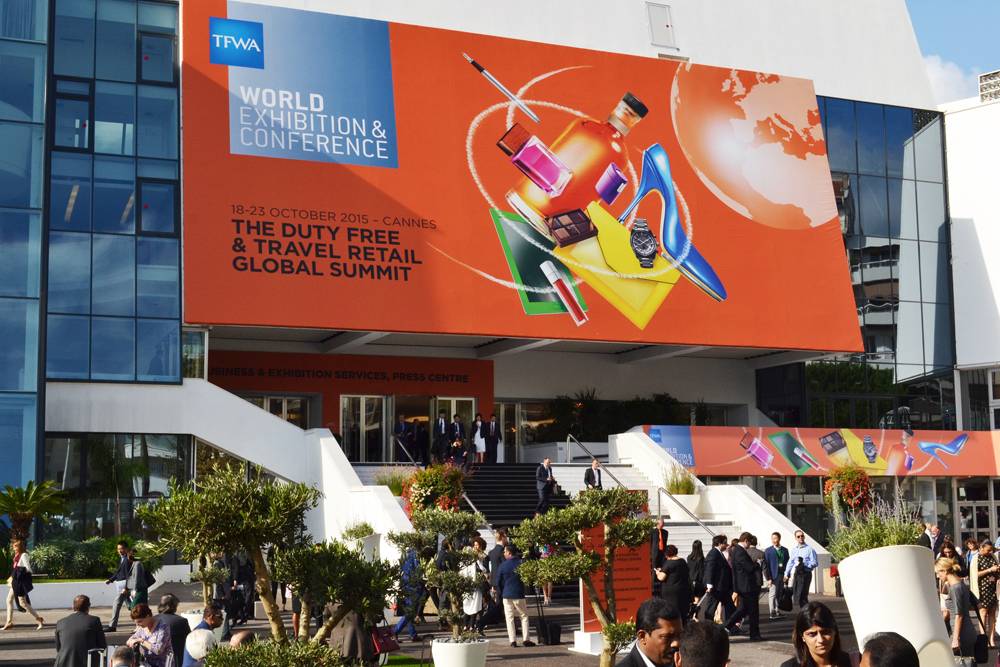
The TFWA World Exhibition & Conference will take place at the Palais des Festivals et des Congrès, Cannes between 2nd and 7th October in 2016 and between 1st and 6th October 2017.

Visitors to US spending $265m less a month

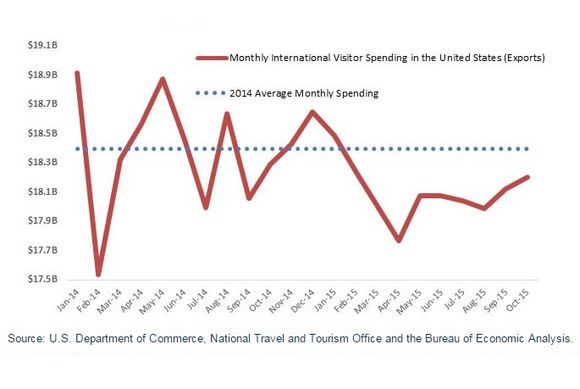
US visitor spending 2015International visitors to the US were spending nearly $265m less a month in 2015 compared to 2014 as the US dollar continued to rise against foreign currencies, making the US a less attractive place to shop (see end chart for currency comparisons).

The US Department of Commerce recently announced that international visitors spent an estimated $18.2bn on travel to, and tourism-related activities within, the United States during the month of October.

This marked the seventh month this year in which monthly travel and tourism-related exports were lower than the previous year (see chart below) and does not augur well for duty free and travel retail sales.

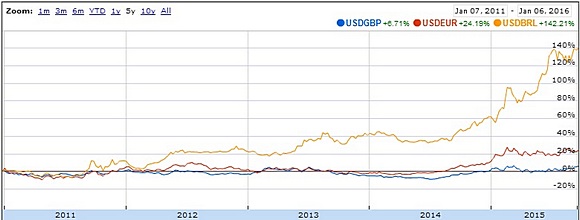
The monthly falls look to be related to the weakening of currencies, with the euro and Brazilian real being particularly affected, as the end chart shows.

US visitor spending 2015

US visitor spending has been dampened throughout 2015.

Previously, passenger fares exports (what international visitors spend to get to the US) were pulling down total tourism-related exports – largely a function of declining fuel prices and thus lower fares – but now lower-than-average travel receipts (what international visitors spend while in the US) have turned downward, too, says the department.

OCTOBER NUMBERS

Purchases of travel and tourism-related goods and services by international visitors to the US totalled $11.1bn during October, a decrease of -0.1%) when compared to the same period in 2014. These goods and services include food, lodging, recreation, gifts, entertainment, local transportation in the US, and other items incidental to foreign travel. These travel receipts accounted for 61% of total US travel and tourism exports during October 2015.

Passenger fare receipts – or fares received by US carriers from international visitors totalled $3.2bn for the month, a decrease of nearly -12% when compared to October 2014. These receipts accounted for 18% of total US travel and tourism exports during October.

Year-to-date international visitor spending totalled $181bn (January through October 2015), a decrease of -1% when compared to same period last year. Conversely, US residents have spent $129.4bn travelling abroad in the year to October, an increase of more than +7%.

Over a five-year period the US dollar has appreciated by +142% against Brazil's real, +24% against the euro and +7% against the UK pound (source: Google Finance).

Over a five-year period the US dollar has appreciated by +142% against Brazil’s real, +24% against the euro and +7% against the UK pound (source: Google Finance).

The end of ‘Schengen’ as Europe once knew it?

Oresund Bridge smallAs of midnight last night, all passengers from Denmark travelling to Sweden by boat, train, or bus are now required to produce a valid photo identity card or passport document.


Those who cannot do so will be refused entry and the travel operator – if relevant – fined for not checking their paperwork.


The tight new regulations follow temporary controls introduced last November and an approved bill first presented to the Riksdag [national legislature body in Sweden-Ed] on December 9 last year. This was created as ‘an act of special measures’ on serious danger to public order and/or domestic security in the country.


As of today, these new regulations are now in place for six months, after which a new similar extension period can be automatically granted for as long as the government sees fit.


[The Swedish Government has been forced to obtain a temporary opt out from the European Union’s cross border Schengen agreement to allow the imposition of these new border controls-Ed].


Justifying the basis for these tighter controls, the Swedish Government said in a statement: “The assessment is that these checks will lead to a reduction in the number of people who seek asylum in Sweden.


“These measures are expected to have a positive impact on the possibility of maintaining order and security and reduce the general pressure on public services.”


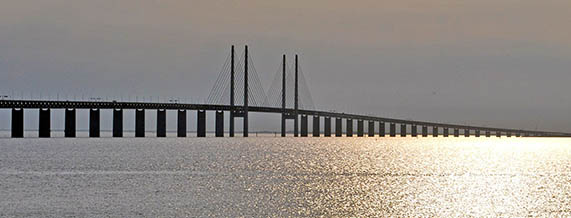
Oresund Bridge (Photo credit Henry von Platen).

The 16km Oresund bridge and tunnel link between Sweden and Denmark. (Photo credit: Henry von Platen).


The government also readily acknowledges that these changes will cause delays at some border points. In a statement, it says: “Some delays will inevitably occur. However, depending on the various solutions, these can be mitigated. For example, more staff can be used or cooperation can be arranged with station managers.


“It is also possible for carriers to adjust traffic operated according to a timetable. It could also mean that the planned travel times are lengthened. It can therefore be wise for travellers to allow plenty of time.”


Meanwhile, the Danish train operator DSB has estimated that these new border security checks on all passengers heading for Sweden from today – will cost it around DKK1m ($146,086) a day.


In Denmark, DSB said that on Monday it will start emptying all trains at Copenhagen Airport, the last stop before the 16km Oresund bridge/tunnel link to Sweden.


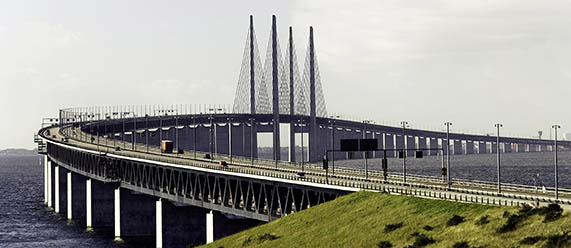
Øresund Bridge (Photo credit Soerfm)

Another view of the impressive Oresund bridge which combines both road and rail links between Sweden and Denmark. (Photo credit: Soerfm).


A temporary fence has already been erected separating the international line between Sweden and Denmark and the domestic line to prevent asylum seekers from jumping the tracks. Passengers will now have to disembark at Copenhagen Airport and pass through security and show ID cards or passports before boarding another.


At the same time, SJ, the largest train operator in Sweden is now advising that it no longer runs trains to Denmark. As of today, it states: “Due to the introduction of a new law that requires ID border checks on all travellers crossing the border into Sweden, no SJ trains will be running between Denmark and Sweden as of 4th January 2016.”


[Since late November, all travellers departing or entering non-EU Norway by ferry – or via the Swedish land border points – have had to show valid identification – principally a passport–Ed].


Scandlines’ first branded wine area in Puttgarden

Multiple floors of wines and spirits

Multiple floors of wines and spirits.

German-Danish ferry operator, Scandlines, has opened its first dedicated branded wine area at its ‘border shop’ at Puttgarden in Germany, a ferry crossing point to Denmark.

The shop – popular with Scandinavians en route home after European vacations by car – is a permanently-docked converted ferry which offers several floors/decks selling a large selection of beer, wine and spirits, to candy, snacks and chocolate – much of it bought in bulk.

Distell Nederburg logoSince October, Nederburg – a flagship brand for South Africa’s drinks group Distell – has had its own store/shop-in-shop on the wine floor where there is also has a fine wine section. Pricing can vary from £10/$15 at the brand’s core, to more expensive lines at around £16/$24.

“We built the Nederburg space at Puttgarden in early October and it is the first branded wine store there,” Distell’s Managing Director of Global Duty Free, Richard Trimby, tells TRBusiness.

Distell launched wine into the duty free and travel retail channel about 18 months ago and it has been a very fast growing segment. It is now big in Europe, particularly in Nordic markets where Markus Habermann, Distell General Manager DF&TR Europe, has spearheaded the expansion.