Archives

MTR opens Hong Kong duty free bid ‘early’

Lo Wu stationUPDATED. Hong Kong’s MTR Corporation has published its duty free prequalification tender invitation(s) for Hung Hom and Lo Wu railway stations and/or Lok Ma Chau – either as separate bids, or as part of a three-strong station package.


The current MTR duty free railway agreement is nearly approaching year three of a five-year contract held by Anway/Sky Connection, which covers Hung Hom Station serving the Guangzhou-Kowloon through train service; Lo Wu, which is the primary connection for rail travellers between the two territories and Lok Ma Chau which ultimately connects with the Longhua Line leading into Shenzhen.


The existing MTR contract commenced on January 1, 2013, with the Lo Wu duty free shop historically accounting for more than 90% of combined gross revenues as far back as 2010, although this share has since changed.




HK station commercial HY1 2015

Hong Kong MTR DF ad


Right now, MTR is requesting that qualified bidders should apply for the prequalification process before the end of January 2016, with invitations to tender expected to be issued ‘tentatively’ in April 2016.


There have been no ‘official’ reasons given for the two-year lead time that is being provided for the new expanded duty free contract by MTR, but various sources in Hong Kong tell TRBusiness that it is taking no chances, since the Guangzhou-Shenzhen-Hong Kong rail link is still to be fully completed ahead of the contract award.


The Hong Kong Government is known to have come under strong criticism from Beijing for the delay to this project and it is understood to be ‘sharing this pressure’ with MTR Corp – the project manager – to get the project fully finished. As a result, MTR is understood to be providing long lead times on contracts as a precautionary measure.


The various requirements for each offer can be found at the MTR site here [http://www.mtr.com.hk/en/corporate/tenders/Q043332.html]


Otherwise, the basic requirements for interested parties wishing to participate in the tender are seemingly straightforward. Bidders are required to submit their shareholding and financial information, along with audited financial statements for the past three years, references from landlords and annual gross sales turnover data spanning the last six years.
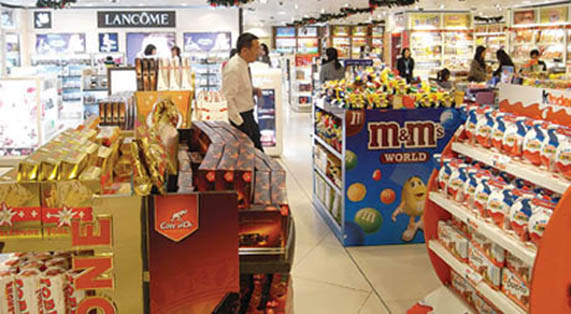
 

Exif_JPEG_PICTURE

The Lo Wu duty free railway station shop run by Anway has been substantially improved, with a wider range of merchandise on offer than ever before.©


MTR is also asking for information relating to the number of years in duty free; number of sales outlets in Hong Kong and/or elsewhere; and operational capability and relevant experience of operating duty free businesses involving cross-boundary and international borders.


As reported many times before, Lo Wu and Lok Ma Chau stations feed railway services directly into Mainland China as part of the estimated 100m-plus cross-boundary travellers who use these facilities each year.


According to very well informed sources based in Hong Kong, around 300,000 passengers use the railway services on these international stations each day, of which 70% are daily commuters, 30% are Mainland Chinese and 70% are Hong Kong residents. But these numbers have been impacted by the withdrawal of multiple visas for many Mainland Chinese visitors who are now restricted to one visa visit per week.


STRAINED RELATIONS

This government action follows the angry protests against Mainland visitors coming into Hong Kong earlier this year, buying up local provisions at supermarkets and returning home to sell the same goods on the parallel or grey market at a profit, so leaving many Hong Kong shops empty of goods for locals.


In addition, the austerity measures introduced by the Chinese Government and the anti-corruption laws aimed at discouraging gift purchasing have also taken their toll on the duty free railway business. Although despite these pressures there have been no moves by the MTR Corporation to renegotiate its retail contract and adjust the financial guarantees downwards. In fact, revenues are up, according to its latest financial filings.


Revenue from its Hong Kong station commercial businesses in the half year ended 30 June 2015 up 8.5% to HK$2,579m ($332m) while the cross-boundary service to Lo Wu and Lok Ma Chau grew by 3.2% to 56.2m passengers for the six-month period to the end of June 2015.
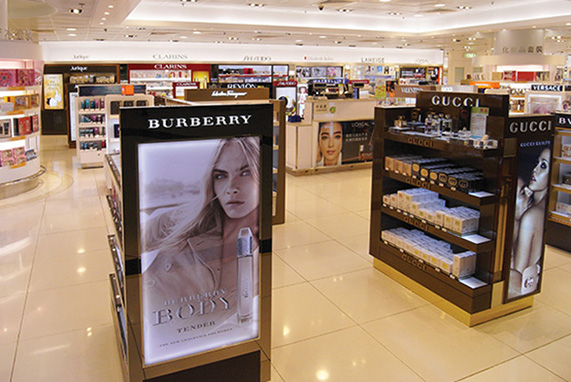
 

Exif_JPEG_PICTURE

Lok Ma Chau Station duty free shop.©


According to MTR’s accounts, the increase was directly driven mainly by higher rental income from station shops, resulting from rent renewals and increased turnover rents.


Station retail revenue for the period increased by 11.2% to HK$1,743m (224.8m). MTR says that the increase reflected rental increases and higher turnover rent, particularly from the Lok Ma Chau Station Duty Free Shops, as well as rent earned from shops in the new stations of the Western extension of the Island Line.


It should also be noted that historically tobacco has accounted for a very big slice of the railway shops’ business and for many years in the past the Lo Wu duty free railway shop was actually the highest-selling outlet in the world for Marlboro cigarettes from Philip Morris.


TOBACCO ‘LOSS’ WAS A BIG BLOW

However, this business received a massive blow in August 2010 when the Hong Kong SAR Government’s cigarette allowance entitlement for ‘incoming’ travellers to Hong Kong was cut from three packs to 19 cigarettes as part of its public health programme.


Tobacco sales to Hong Kongers have collapsed since the allowance change and its arrivals shops at the Hong Kong stations now no longer sell tobacco. [Macau’s duty free arrivals shops followed suit earlier this year by ceasing to sell tobacco products-Ed]. Duty free border shops based in China continue to sell a huge quantity however, where tobacco is still the leading product sales category.


Following this, Anway has done a remarkable shop in trading customers up at Lo Wu and Lok Ma Chau shops and mitigating the huge tobacco losses by pushing more spirits and other alcohol beverages – including offerings below 30% alcohol content like wine, where excise duties in Hong Kong were abolished in 2008.


The retailer also made very positive efforts – along with MTR – to try and find ways to increase the retail space at Lo Wu in particular to help the operation. As a result of these efforts, Anway/Sky Connection Ceo Baker Salleh told TRBusiness at the time that the loss of tobacco sales actually proved surprisingly less damaging than the company had originally envisaged.
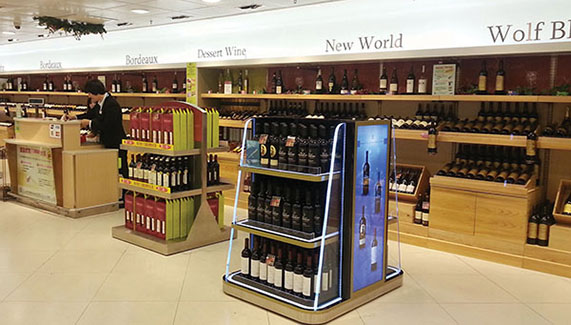
 

Lok Mau Chau Anway

Anway/Sky Connection have upgraded the retail offer impressively and substantially in recent years. Shown here: the quality wine offer at Lok Mau Chau.©

Baker Salleh CEO Anway and Sky Connection

Anway and Sky Connection CEO Baker Salleh and his team have improved Hong Kong’s railway duty free business impressively in recent years, despite significant challenges, including developing the Lok Mau Chau business from its infancy.©


Interested operators are being asked to express interest by submitting the relevant correspondence to the MTR Corporation Limited, 20/F, MTR Headquarters Building, Telford Plaza, Kowloon Bay, Hong Kong.


Correspondence should be addressed to the Purchasing Manager – Property & Marketing, quoting ‘Expression of Interest for the Tender no. Q043332 – Operation of Duty Free Business at Hung Hom Station, Lo Wu Station and Lok Ma Chau Station” – on or before 15 January 2016.


All other enquiries should be made or sent to Ms Phyllis Tong, Senior Purchasing Officer, MTR Corporation Limited at tel (852) 2993 8419, by fax (852) 2993 7775 or email [email protected].

 

Jordanian PM to open Meadfa conference

Jordanian PM Abdullah Ensour

Jordanian PM Abdullah Ensour

Jordanian Prime Minister and Minister of Defence, Dr Abdullah Ensour, will officially open the Middle East & Africa Duty Free Association Conference next week when members of the duty free and travel retail industry gather for the annual regional event.

Ensour, appointed Prime Minister by King Abdullah in 2012, will welcome delegates to the King Hussein Bin Talal Convention Centre on the shores of the Dead Sea.

meadfa-logo-headerMeadfa President Sean Staunton says: “We are truly honoured that H.E. the Prime Minister has agreed to become official patron of the conference. It is further evidence of the Jordanian government’s strong support for the travel and tourism industries, and for sectors such as ours that depend on them. We would like to sincerely thank H.E. Dr Ensour for his patronage.”

The event is still open for registrations. For details contact Catherine Fily on +33 1 41 44 98 73 or email: [email protected]. The programme can be seen here and a dedicated event app will be available to download shortly.

World Duty Free is delisted today in Milan

tobacco-issues-headerAs previously reported, shares in World Duty Free are being delisted from the Milan stock exchange today, after they had been suspended from trading yesterday and Wednesday by Borsa Italiana.

Dufry new logoSwiss duty free and travel retailer, Dufry, which has bought its rival, took control of the company with a majority holding on 7 August after EU competition clearance.

Dufry has subsequently taken its shareholding up to 96.67% and also initiated a major integration process and management revamp across the group which also includes previously purchased Nuance.

CiR: health is a burning issue for DF&TR

CiR State of the Nation 1The latest State of the Nation report from Counter Intelligence Retail (CiR) – available from 16 November – points to health concerns as a continuing issue for governments as they aim to change consumer behaviour through legislation and public awareness. Meanwhile wifi is set to revolutionise inflight.

These are two key aspects of the report – now in its fifth year of publication – which examines global factors that will shape the strategic direction of the duty free and travel retail business.

CiR’s team of insight specialists notes that health is firmly at the top of the agenda for governments, with the categories of tobacco, alcohol and confectionery in the firing line. The research house says: “The longer-term effect of this is likely to lead to a shift in consumer preference for products that are perceived as being healthier and more nutritious.”

TOBACCO THE TOP CONCERN

As expected, the tobacco category leads the political health agenda, with plain packaging and the reduction in duty free allowances already seen across many markets.

CiR says: “Once tobacco has been exhausted, alcohol and confectionery are likely to be considered for similar legislation. Brands may well need to reconsider their pack branding and in-store visibility – and suppliers and retailers will need to be mindful of the increased cost and logistical implications of such regulations.”

WIFI TO REVOLUTIONISE INFLIGHT

The report also states that air passengers are forecast to spend $1.5bn on inflight connectivity by the end of this year. As 82% of travellers will carry a smartphone when on-board an aircraft, more access to wifi will give airlines further opportunities to revolutionise the inflight retail experience, says CiR. The topic was covered by the research group at a presentation during the TFWA Cannes Inflight Workshop.

The study also touches on the ageing global population and shifting structure of the traditional family demographic. The family unit has become more diverse with multi-generation households leading to multi-generation holidays and an increase in the trend for ‘in-holiday’ gifting.

Strong traffic continues to power DF&TR

Strong traffic continues to power DF&TR.. and that’s set to continue

1.5BN MORE PEOPLE IN A POSITION TO TRAVEL

Stasiulevicuis takes a macro view of DF&TR with State of the Nation

Stasiulevicuis: ‘ an insight into global opportunities and challenges’

Other findings address the emergence of the ‘new world middle class’, which equates to 1.5bn more people now in a position to travel. CiR says the report presents new opportunities for the industry to target these shoppers effectively and suggests ways of maximising commercial prospects.

Garry Stasiulevicuis, Managing Director of CiR, comments: “Our latest State of the Nation report provides an insight into the global opportunities and challenges for the travel retail industry. We’ll continue to work with our brand and retail clients to translate these findings to positively impact the shopping experience.”

The data from this report will also be used to help outline CiR’s forthcoming 2016 Global Shopper Study which has been tracking the evolution of the travel retail shopper since 2008. The new edition will have analysis across 35,000 travellers.

To obtain a copy of the State of the Nation report contact [email protected] or click here for more information.

DFS Ventures’ Resch inducted to Hall of Fame

DFS Ventures ReschThe Tourism Industry Association of Canada has inducted Michael Resch, the owner of DFS Ventures (Emerson Duty Free – Manitoba) into its Hall of Fame in recognition of his achievements for tourism in Canada and the land border duty free and travel retail industry.

Michael is one of only two inductees this year and he will be officially honoured at a national tourism congress in Ottawa on 2 December.

Laurie Karson, Executive Director at the Frontier Duty Free Association, says: “For anyone within the industry that knows Michael Resch, this award comes as no surprise as Michael’s passion, dedication and lifelong work to ensure Canada is a premiere destination is exemplary. We are very proud of him and his work.”

fdfa-logoDUTY FREE PIONEER

Resch is a pioneer of the Canadian Duty Free industry. He was the recipient of the first Canadian land border duty free licence in 1982 and is the owner of the longest operating duty free store in Canada.

In Manitoba, Resch helped the customs department to develop the duty free regulations/liquor licensing programme and he also founded the Frontier Duty Free Association, which is celebrating its 30th anniversary this month. The FDFA represents Canada’s land border business which was worth C$144m/$110m in 2014.

In the late 1990s, Resch spearheaded and lobbied the federal government for the Visitor Rebate Programme. While this programme was cancelled in 2006, the FDFA continues to lobby for a re-instatement of a newer, streamlined form, as a much needed tourism incentives to US visitors.

Forum tackles Chinese missed opportunities

GSF logoStakeholders in duty free and travel retail, one major airline, and a host of influential online players in the fields of payments, social media marketing, and sales and logistics platforms, gathered at Frankfurt Airport on Friday for an in-depth discussion about ways to tap sales from Chinese travellers.

DF&TR operators present included global entities World Duty Free (Dufry) and Gebr. Heinemann plus Aeorotrade [from Russia], along with Turkish Airlines, which now has one of the world’s largest international networks, serving roughly 230 destinations in over 100 countries.

The event, the Global Shopping Forum [the second installation after one in Berlin in 2014] set out to open up dialogue between online players and the travel channel including DF&TR – a challenging issue for many in the industry – in order to drive more Chinese traffic to stores (whether actual or online).

The aim was simple: to generate higher spending from this crucial nationality which is already a core DF&TR revenue driver. The meeting, which attracted 60 attendees, was an eye-opener in terms of how to market to the mainland Chinese – and it brought to light a number of misconceptions and misreadings of Chinese shoppers.

Eli Fel from Global Blue developed the forum to bring key stakeholders together

Eli Fel from Travel Blue developed the forum to bring key stakeholders together

Eli Fel, Managing Director of travel accessories supplier Travel Blue Germany, masterminded the GSF and he opened proceedings with an anecdote which nicely summed up an often wasted opportunity.

He talked about Mr Wong, a Chinese tourist he met in Europe who had bought a bulky item to take home but who would have bought eight if there had been a delivery service available. That story set the scene for an all-day discussion about new or novel ways of better meeting Chinese expectations at every step of their journey.

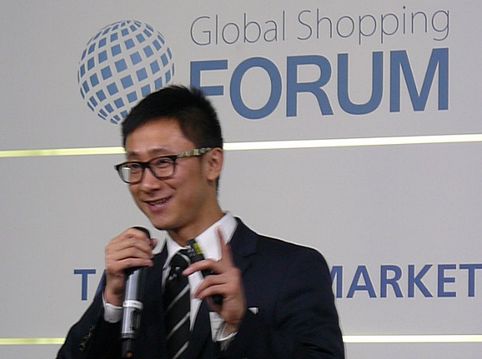
Xing Deng talks up Chinese social media

Xing Deng from China Smiling talks up Chinese social media

It quickly became clear that having Mandarin-speaking staff, in-store translations or promotions at key Chinese holidays are only a starting point for communicating with the Chinese.

‘CHINSUMERS’ CAN BE DEMANDING

“They like to ask lots of questions – lots,” says Xing Deng, Managing Director of China Smiling Digital Marketing Solutions, and these can’t all be second-guessed he argues. Retailers are generally not prepared for this.

“Chinese consumers also have a high consumption capacity and a strong faith in brands,” he adds. “We like price comparing, and we love negotiation.”  These are also factors that DF&TR operators are often not prepared for.

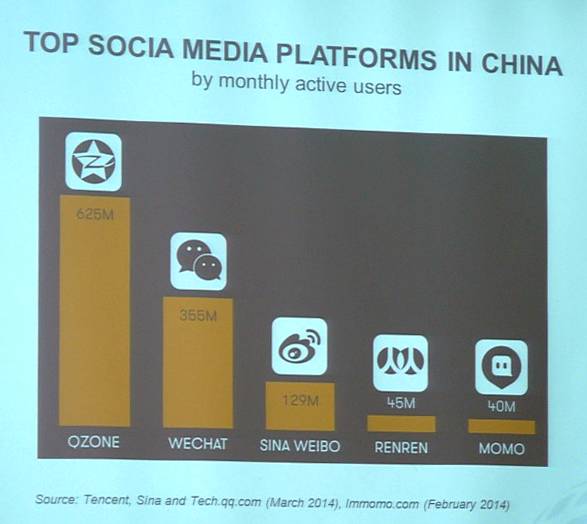
Chinese language social media platforms are strong in China

Chinese language social media platforms are strong in China

To develop an edge against competitors, Chinese consumers – or Chinsumers as Deng refers to them – need to be marketed to in their own language, online, before they leave the country he believes. Which is why he launched China Smiling; so that key messages about brands or retail offers can be explained, and these travellers are ‘primed’ before they leave.

The Chinese are often considered among the most web-connected nations, with 400m using mobile devices to access social networks – and that is set to rise to 745m by 2017. However Deng notes that only 0.73% of the population have English literacy which means that traditional western social media such as Facebook, Twitter, Youtube, and Google have limited capacity to be effective.

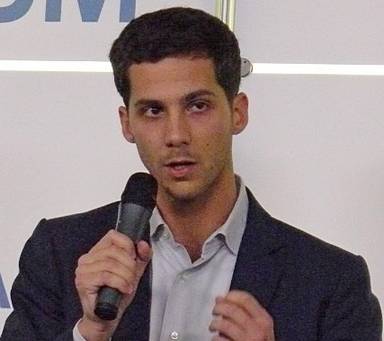
Ediole's Eduardo Calvi Musini believes tour groups are on the way out

Edaole’s Edoardo Calvi Musini believes tour groups are on the way out

China Smiling leverages Chinese language social media like WeChat (similar but more sophisticated than WhatsApp), Sina Weibo and Baidu to communicate with mainland travellers who, Deng claims, use these online sites and services to get information before they travel.

CROSS-BORDER BENEFIT

A start-up, Edaole, whose services launched just three months ago is also going to the heart of the market. It already has a large number of luxury brands signed up including Hermès, MCM, Bulgari and YSL, along with some key retailers such as Germany’s KaDeWe and Galleries Lafayette, plus Munich Airport.

The company is a marketing partner, essentially integrating websites from these players to its cross-functional web platform to create – in Chinese – what it calls a “highly exclusive brand environment”. Discount coupons (typically -8%) incentivise cross-border shoppers – and iBeacons help to target app users as they approach stores and alert them of offers.

The service was developed because the company believes the way Chinese travellers shop, will change fast. Chief Sales Officer, Edoardo Calvi Musini says: “There is a massive shift in the way the Chinese travel abroad. This business of tours guides bringing groups from one store to the other and over again will die.

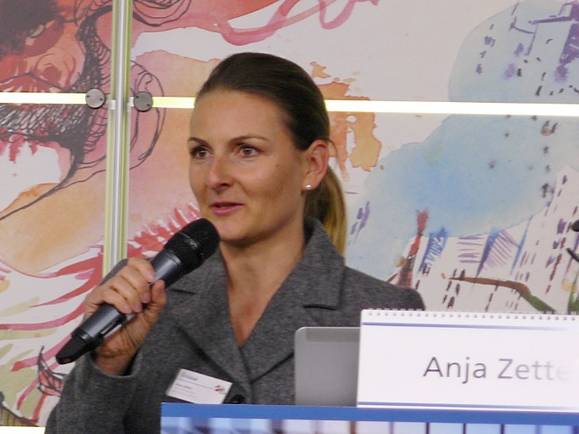
Heinemann's Zettel wants to get closer to Chinese consumers

Heinemann’s Zettel wants to get closer to Chinese consumers before they start their journeys

“Retailers and merchants still do not understand how to attract Chinese travellers. They do not know how to harness China’s potential and to treat Chinese customers correctly – the language and cultural barriers are both huge.”

RETAILERS VIE FOR CHINESE EARLIER ALONG THE CHAIN

One DF&TR operator that is trying hard to communicate better with the Chinese and break down these barriers is Heinemann. Anja Zettel, Head of Trade Marketing at the company says: “Chinese passengers are hugely important to our business and we need to build a consistent dialogue but it is a challenge.”

In doing that, Heinemann has decided to create a Chinese-language website hosted in China using WeChat and/or Weibo accounts to drive traffic to it in order to build awareness before rival retail formats such as luxury brand outlet shopping villages get their full attention.

This might be a slow process given that one of the biggest of these shopping village operators, Value Retail, has much of this traffic tied up through tour visits.

Mangold from Value Retail believes online is an opportunity

Mangold from Value Retail believes online is an opportunity, not a threat

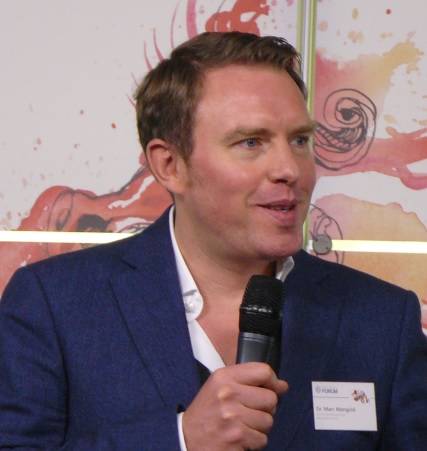
Speaking at the event, Marc Mangold, Value Retail’s Marketing Director for Germany revealed a startling fact about the company’s most successful location, Bicester Village in the UK. “Seventy per cent of Chinese visitors to London go there. It has the highest yield per square metre of shopping destinations worldwide,” he says.

Value Retail welcomes more than 32m shoppers to its villages and has seen 38 quarters of double-digit growth for tax free sales, driven by the Chinese, mostly travelling as groups, and only 10-20% as free individual travellers (FITs).

With FITs on the rise, some would say that luxury shopping villages might be most under threat from online sales, especially of luxury brands. Mangold disagrees, saying: “We do not see it as a danger or challenge but as an opportunity. The winners will be those that understand online and offline are complementary to each other. Customers are empowered and the companies creating the best experience at the various touch-points will succeed. Those who are thinking in silos will vanish.”

KEYNOTE PRESENTATIONS

The above were some of the more intriguing insights and views about Chinese buyer behaviour and ways to capitalise on it. The two keynote speeches focused on different aspects: wider travel platforms, and the often thorny relationship between airports and airlines.

Ctrip's Xiang Gao: '33% of Chinese don’t set a budget'

Ctrip’s Xiang Gao: ‘33% of Chinese don’t set a budget’

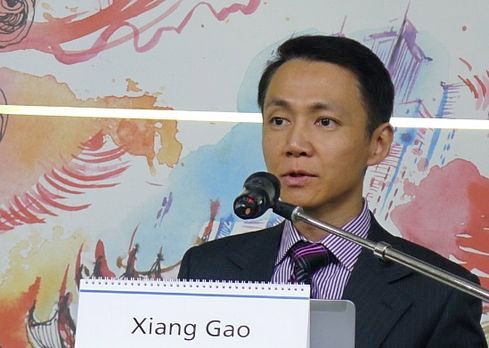
Xiang Gao, the Chief Technical Officer of Innovative Finance and Global Shopping at Ctrip [the one-stop China travel service with an 80% market share] gave his audience an overview of just how big the market is. “We sell 200,000 air tickets each day,” he says, adding that the Chinese outbound market has grown annually by +17% from 2002 to 2014.

Ctrip is embedded in the minds of Chinese travellers because it is so pervasive, offering everything from discount hotel reservations, cheap airline tickets, package tours and shopping offers. Its app has had one billion downloads and the shopping page is searchable by market and city and users can get push notifications and coupons for deals at nearby stores.

He notes too that the Chinese are not shy to spend when they cross a border. “33% don’t set a budget –if they like it they will buy it. They don’t really control the expenditure,” says Gao. But at the same time, Chinese travellers love a bargain and tax free shopping is increasingly important for them he adds, especially in European markets.

In the second keynote, Jonathan Smith, Director of Travel Retail at Travel Blue, took up the cause for cooperation between airlines and airports. “How do we entice the airport shopper away from online shopping,” he asks.

In the face of the online threat to the DF&TR channel, Smith argues that airlines and airports will have to work more closely to build a credible bricks-and-mortar shopping offer to compete. Airlines could use the data they hold on passengers to help DF&TR stores to better target individuals. Airlines could then get a share of the sales achieved as a result says Smith. “Everyone can share in the profit,” he adds.

Tamer Uysal, Marketing Manager at Turkish Airlines pointed to frequent flyer cardholders as possibly the group with the most potential for developing retail sales and stressed that the process relied on permission marketing.

BORDERLESS DELIVERY?

Also in the room was Hermes, the logistics and delivery group making 531m shipments per year. The company has launched a separate start-up company called BorderGuru to take advantage of the demand for international shopping delivery.

The idea sounds simple but it is riddled with issues around differing importation taxes and customs rules for every market.

Martin Kreiter, Division Manager for Marketing and E-Commerce Business Development at Hermes says that BorderGuru has been designed for brands and retailers. “We calculate and include all duties and taxes for international delivery at the point of purchase, avoiding surprise costs to the customer,” he adds.

Griffin Peng notes that Alipay has 400m active users

Griffin Peng says Alipay has 400m active users

The system works for retailers with brick-and-mortar stores and web-shops, as well as purely online retailers. For example, in a store if a customer wants to order a number of items for delivery to China, the store staff will transfer that order to the retailer’s online web portal where BorderGuru can then take over the transaction.

The final link in the chain is one of the most important: payment. Here Alipay has dominance in the Chinese market and has already infiltrated the international tax free refund business through a tie-up with Global Blue.

Alipay’s user base is vast with 400m active customers according to Griffin Peng, Head of the EMEA region, and it processes 100m transactions daily. Like Ctrip, Alipay has created an online lifestyle ecosystem for all kinds of activities including shopping, focused on Chinese users.

DRAGON’S DEN SCENARIO

Aleksandar Dimitrov from Novalogy

Aleksandar Dimitrov from Novalogy

As well as Edaole, two other start-ups also gave presentations and then were quizzed by five travel experts. Novalogy has developed Ayo: blue-light emitting glasses ($299 retail) that are claimed to counter the effects of jetlag. Aleksandar Dimitrov, Founder & Chief Marketing Officer of the company says the product is based on chrono-biological research but still has to undergo clinical trials and could eventually find a place in DF&TR stores.

SimpliFly meanwhile is a shopping app that allows passengers to buy products from an airline or duty free shop while on the move. In short, the app allows the user to select their departure and arrival airports, search for product offers in the selected locations(s) via an online catalogue with detailed descriptions, and collect from dedicated collection points at departure or on arrival.

Simplyfly's Fernández: 'We’ll be the Amazon of duty free'

SimpliFly’s Fernández: ‘We’ll be the Amazon of duty free’

Igor Fernández, the Co-founder and Chief Design Officer says confidently: “We’ll be the Amazon of duty free.” The app is still in beta test however but the plan is to launch it in 50 airports in North America and Europe by the end of the year.

THE END-TO-END JOURNEY

Overall, this second annual forum offered up some tangible solutions to the issues raised. GSF looks to have set itself up convincingly as a though leader in actively promoting Chinese shopping sales and services by bringing together parties that have a place in the end-to-end journey of the Chinese consumer.

With several overlapping platforms/ecosystems, as well as airport/journey apps, competing for business, travelling consumers will separate the winners from the losers simply through their usage. Before that happens, however, it will be interesting to see what DF&TR operators make of these systems – if anything – and just how quickly some of the solutions and/or options discussed at GSF will be followed up by them in the coming 12 months.

TFWA President reviews Cannes World Exhibition

Erik-and-Char-TFWA-video-leadTFWA President Erik Juul-Mortensen gives his review of the TFWA World Exhibition and Conference which took place in Cannes two weeks ago.

As previously reported a total of 6,558 visitors from 3,026 companies attended TFWA World Exhibition & Conference 2015, which ran from Sunday 18th to Friday 23rd October, compared with 6,701 visitors (-2%) from 3,105 companies (-3%) last year.

Of the total, 2,183 people (33%) were key buyers – duty free & travel retail operators and landlords of airports, airlines, ferry, cruise, border and downtown concerns – up +2% on the previous year’s figure of 2,132, from 643 companies vs 618 in 2014 (+4%).

Adding the 2,401 agents and distributors (1,145 companies) to this figure produces a total of 4,584 (1,788 companies) of the most influential trade executives in the industry who were present at this year’s event.

Kappé on top at fifth Sunglasses Awards

Luxottica-Sunglasses-Awards-2015Over 170 people attended the Sunglasses Workshop and Awards 2015 which took place during the TFWA World Exhibition in Cannes last month.The seventh edition of the category workshop and fifth awards ceremony were organised and sponsorsed by Luxottica, Marcolin, De Rigo, Marchon, Maui Jim and Safilo.

Retailers were invited to submit awards entries through a dedicated portal www.sunglassescategory.com and were assessed by the following six judges: Francis Gros, Head of Global Channels, Luxottica; Chiara Polverini, Duty Free & Travel Retail Manager, Marcolin; Giles Marks, Director Duty Free Sales, Maui Jim; Elena Marconato, Travel Retail Marketing Manager, Safilo; Erwan Le Guennec, International Travel Retail Director, Marchon and Enrico Molin, Boutiques & Duty Free Manager, De Rigo.

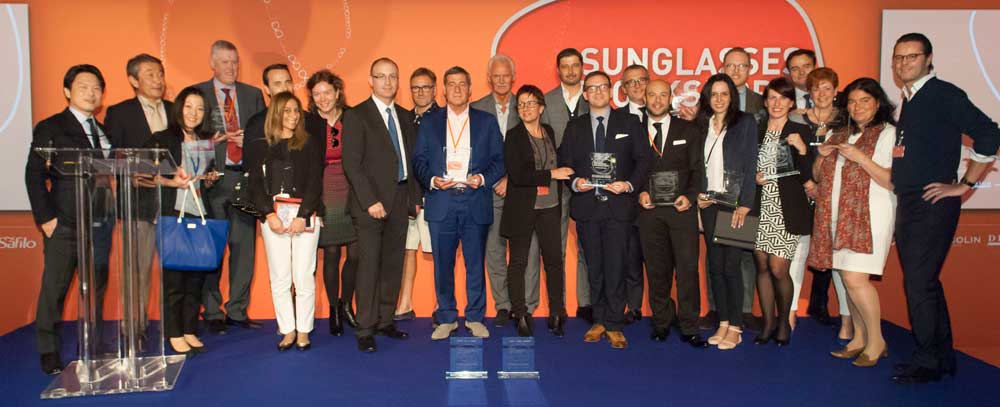
Gebr Heinemann and Kappé International were named ‘Sunglasses Retailer of the Year’ at the 2015 Sunglasses Awards, emerging top among travel retail operators with annual turnover of above and below US$2bn respectively.

Luxottica-Sunglasses-awards-2015-wide

The workshop, moderated by The Moodie Report Founder & Chairman Martin Moodie, opened with a category performance update from Fredrik Lindh and Peter Mohn of m1nd-set Generation.

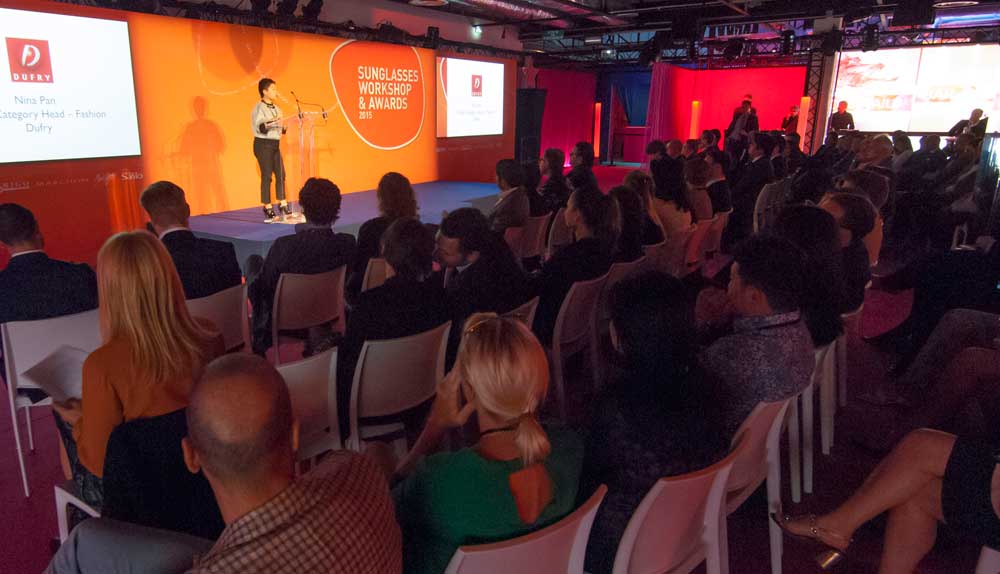
This was followed by presentations from Dufry Global Category Head of Fashion Nina Pan, who gave her insights on the future of the sunglasses category from the retailer perspective, and Elena Galifa of Greek fashion blog Cool UR Style (www.coolurstyle.com).

Nina-Pan-Dufry-Sunglasses-awards-2015

Dufry Global Category Head of Fashion Nina Pan, gave her insights on the future of the sunglasses category from the retailer perspective.

The acclaimed fashion blogger provided a consumer perspective, offering insights into how companies can leverage the influence of bloggers and social media to reach

The full list of award winners is as follows:

Best New In-store Environment for Sunglasses (above US$2 billion)
Winner: DFS Group – Abu Dhabi International Airport Terminal 3
Highly commended: World Duty Free Group – Sunglasses Boutique, Heathrow Terminal 3

Best New In-store Environment for Sunglasses (below US$2 billion)
Winner: Classic Group – HEBE, Malta International Airport
Highly commended: Sunrise Duty Free – Beijing Capital International Airport

Best Marketing of Sunglasses (above US$2 billion)
Winner: World Duty Free Group – Spanish Airports Summer 2015

Best Marketing of Sunglasses (below US$2 billion)
Winner: Beirut Duty Free

Best Dedicated Sunglasses Sales Team (above US$2 billion)
Winner: DFS Group – T Galleria, Tsim Sha Tsui East, Hong Kong

Best Dedicated Sunglasses Sales Team (below US$2 billion)
Winner: JAL-DFS – Haneda Airport

Best Off-Airport Sunglasses Retailer (above US$2 billion)
Winner: Lotte Duty Free

Best Off-Airport Sunglasses Retailer (below US$2 billion)
Winner: Starboard Cruise Services

Best Airport for Sunglasses Retailer
Winner: Heathrow Airport

Sunglasses Retailer of the Year (above US$2 billion)
Winner: Gebr Heinemann

Sunglasses Retailer of the Year (below US$2 billion)
Winner: Kappé International

Kappe-Sunglasses-awards-201

Sunglasses Retailer of the Year (below US$2 billion) Winner: Kappé International. The company’s President and Owner, Jacques Parson, (middle) accepts the award.


Lifetime achievement award for Paul Topping

Paul-Topping-Frontier-Awards-leadPaul Topping, Director and Board Member of Flemingo International received the lifetime achievement award at the 2015 Frontier Awards during the TFWA World Exhibition in Cannes almost two weeks ago.


Topping first began to gather his retail experience by selling mangos outside his minister father’s Presbyterian church in Livingstone Zambia at the age of five.


Many years later he joined the retail chain British Home Stores (BHS) in the UK, moving across ten different locations in ten years, undertaking various responsibilities including managing stores, shop development/planning, catering and shop opening.


At the age of 28, he joined Hornes Menswear, a premium UK brand and played a key role in repositioning the company, expanding locations as well as implementing the new look.


Topping later joined Trust House Forte as the Operations Director of the company’s travel retail division and went on to become the Managing Director three years later, playing a key role in the listing of the company on the UK stock market as Alpha Airports Group.


His responsibilities included driving location growth across the UK in travel retail locations, creating new retail brands such as Books plus, Glorious Britain, The Drug Store and the Beauty centre, etc.


His focus later turned to the international market. Alpha was the first international travel retailer to win and operate a retail contract in India by way of a unique three-way arrangement [airport, travel retailer and active local partner] at Cochin airport, which won the Frontier award for best partnership worldwide.


Further expansion under Topping’s supervision included Orlando Sanford Airport with an exclusive twenty-year contract soon followed by business in Sri Lanka with an exclusive ten-year contract, which was extended for a further five years.


This was followed by the opening of Delhi Duty Free, Maldives, Nepal, Labels (domestic distribution business) and Inn On The Green (Sri Lanka’s first English pub).

Paul-Topping-Frontier-Awards-2015

Topping was then appointed President Asia Aldeasa, following the purchase of The Alpha Group by Autogrill. He later joined the Heinemann group for a one-year assignment as Director, Asia to help establish the retailer in the region.


In 2012 Topping joined Flemingo International as a main Board Director to assist in repositioning the brand and expanding into many new emerging markets. The company has grown from 126 operations to over 200 over the last three years.


Topping known as ‘the wine man of Sri Lanka’ has spent over 18 years expanding wine sales in the region and now is a partner in Bangalore Soma Winery, a vineyard/winery/tourist business in India.


He has taken the Island of Sri Lanka as his home country and has been involved in a number of projects supporting tourism and local initiatives. He writes under the name of ‘the whinging pome’ and has many published articles covering his local and international travel experiences.


Known for his leadership in the inspirational Travel Retail Tsunami village project, Topping has also been high profile with the Flemingo Foundation.


Flemingo operates a number of programmes, but its ‘Educate to Protect’ initiative to stop child abuse in Sri Lanka is the company’s key activity. To date over 35000 children/adults have been reached through the awareness /support sessions.

Luxury Chinese and US shoppers opt for Europe

Bain + AltagammaGlobal currency fluctuations are becoming highly influential in determining where Chinese luxury brand buyers travel to shop – with Europe [and the Eurozone in particular] emerging as a hot destination for both Chinese and US travellers.

According to management consultancy Bain & Company’s 2015 worldwide luxury report, globetrotters have boosted sales of personal luxury goods to over €250bn/$273bn, which equates to +13% growth at current exchange rates, while real growth is significantly slowing to 1-2%. However, certain regions, and individual markets or channel, are getting big benefits as others lose out spectacularly.

the-fashion-gallery-changi-t2

The Fashion Gallery at Changi: part of a high-end luxury boom at airports

AIRPORTS NOW 6% OF GLOBAL LUXURY

Airport retail is one of the gainers, posting a +29% growth rate at current exchange rates (+18% in constant exchange rates) according to Bain, and now accounting for 6% of the global luxury market.

“Undoubtedly, Chinese consumers play a primary role in the growth of luxury spending worldwide,” says Federica Levato, Principal at Bain and co-author of the report. “For years, we have known that they spend far more abroad than in Mainland China, but what’s changing is that they’re spending little money in historically popular destinations, such as Hong Kong and Macau, and are instead gravitating to new locales, such as Europe, South Korea or Japan, to benefit from currency fluctuations that drive favourable price gaps.”

BORDERLESS CONSUMERS

Levato: 'the Chinese are spending little money in historically popular destinations, such as Hong Kong and Macau, and are instead gravitating to new locales, such as Europe, South Korea or Japan, to benefit from currency fluctuations'

Levato: ‘the Chinese are spending little money in historically popular destinations, such as Hong Kong and Macau, and are instead gravitating to new locales, such as Europe, South Korea or Japan, to benefit from currency fluctuations’

An analysis of European tax-free shopping data, conducted in partnership with Global Blue, shows Chinese tax-free purchases increased by +64%, particularly among the accessible and aspirational luxury segments, thanks to a weak euro.

Americans also increased their tax-free spending in Europe by +67%, aimed largely at the high end of the luxury spectrum. Meanwhile, Russians cut their European spending by -37%, and spending among the Japanese in Europe also withered by -16%. In both cases this was due to their weak national currencies.

Bain says that global currency fluctuations and continued jet-setting of what it calls ‘borderless consumers’ has led to the personal luxury goods market ballooning to over €250bn euros. Chinese consumers continue to make up the largest portion of luxury purchases (31%) globally, followed closely by Americans (24%) and Europeans (18%).

THE BAD NEWS IS IN ASIA

However it is not all rosy: while global tourists have flocked to Europe and Japan to capitalise on a weak euro and yen, Asia registered the worst historical performance (at constant exchange rates), driven by the lacklustre trend of Mainland China and the sharp drop in sales in Hong Kong and Macau.

The personal luxury goods market in Hong Kong and Macau has fallen victim to a number of government measures aimed at regulating the grey market in China not to mention new visa limitations, creating a -25% contraction in real terms.

Also, the Americas region was stagnant in real terms but was strongly inflated by the rising dollar, thus it is expected to capture more than a third (34%) of the global market in 2015.

These are key findings from Bain in its 14th edition of its Luxury Goods Worldwide Market Monitor just released by the Milan office in collaboration with Fondazione Altagamma, the Italian luxury goods manufacturers’ foundation.

D’Arpizio: 'Relentless price increases over the last decade, aimed at creating a more exclusive position in the market and maximising touristic flows are now starting to backfire on luxury brands'

D’Arpizio: ‘Relentless price increases over the last decade, aimed at creating a more exclusive position in the market and maximising touristic flows are now starting to backfire on luxury brands’

Under huge pressure from currencies Bain says that luxury brands will need the right pricing model to win against hard-to-predict currency volatility which has hit the share price of many leading players.

“For several years, we’ve referenced ‘luxury’s new normal’ with a deceleration of the personal luxury goods market. Now, we are starting to feel the impact of that slowdown,” says Claudia D’Arpizio, a Bain Partner in Milan and lead author of the study.

“The challenge for luxury brands in this environment is how to successfully navigate through hard-to-predict volatility.

“Relentless price increases over the last decade, aimed at creating a more exclusive position in the market and maximising touristic flows are now starting to backfire on luxury brands. They face the long-term challenge of re-building credibility and trust among consumers, rather than simply making short-sighted, tactical pricing adjustments to benefit from market fluctuations.”

OVERALL LUXURY REACHES €1TR

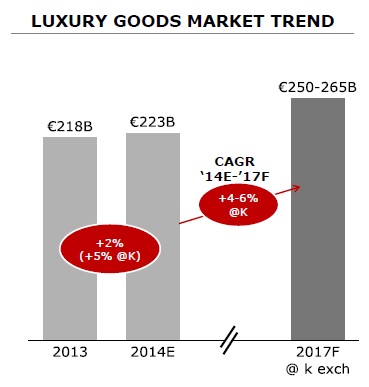
In its 2014 report Bain forecast that the personal luxury market could reach €265bn by 2017

In its 2014 report Bain forecasts that the personal luxury market could reach €265bn by 2017

The overall luxury industry – which as tracked by Bain comprises 10 segments, led by luxury cars, luxury hospitality and personal luxury goods accounting for 80% of the market – is expected to surpass €1 trillion in retail sales value in 2015.

The market delivered healthy growth of +5% year-on-year (at constant exchange rates), driven primarily by luxury cars (+8%), luxury hospitality (+7%) and fine arts (+6%). Personal luxury– including leather accessories, fashion, hard luxury and fragrance & cosmetics – reached €253bn in 2015.

US FINDING IT HARD TO DELIVER

In terms of constant exchange rates, the US market did not deliver says Bain. The ‘super dollar’ was too expensive for many global tourists and though local consumption is growing, it was barely sufficient to offset the lost tourism revenue.

Nevertheless, the US is the largest luxury market in terms of global luxury value, reaching €79bn. Bain claims, New York City alone outweighs the whole of Japan which is somewhat surprising given that Japan is the number two luxury market globally.

Nevertheless Bain notes that Japan “has proven to be a consistent champion in both real and nominal terms, driven by a sound base of local consumers and the emergence of Chinese shoppers looking to capitalise on currency fluctuations”.

HK skyline

Hong Kong has lost its sparkle

While local spending in China continued to slightly contract, the appreciation of the yuan has boosted the country to the number three spot in terms of global luxury value, overtaking Italy and France and trailing only the US and Japan.

PRICING WARNING & MARK-DOWNS

From a distribution point of view luxury is not it used to be. While the growing middle class in economies such as China continues to seeking out quality and value, the off-price channel has more than doubled to nearly €26bn says Bain.

“Mark-downs are also increasing in prevalence across more than 35% of the luxury market, with a strong relevance in department and specialty stores, as well as online,” says the consultancy.

Price differentials across channels and markets has become a problem

Price differentials across channels and markets have become a problem

It adds: “The number one challenge facing most luxury brands is establishing the right pricing model. The rise of e-commerce and global tourism growth create greater transparency around international price differentials. Additionally, price-conscious luxury shoppers are struggling to reconcile the price of luxury products with their real value.

“As a result, luxury brands must assess how to mitigate volatility and how best to deliver at local and global levels. This includes managing inventory to accommodate fluctuations in tourism and coordinating pricing and mark-downs across markets and channels.

“Luxury brands also face a host of tough issues such as rethinking their store footprint and the role of their stores in a world of growing digitalisation, as well as figuring out how to delight local customers even as masses of tourists flock to stores in mature markets.”