Singh: on regulation alert
At today’s TFWA Asia Pacific Conference – celebrating its 20th year – two high-profile corporate leaders in Asia presented with their views on business in the region.
The two men were Liew Mun Leong, founding President and CEO of CapitaLand Group, and Chairman of Changi Airport Group; and Andrew Wu, LVMH Group President, Greater China.
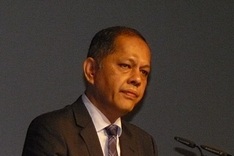
Before the two keynote addresses began, Jaya Singh, President of the Asia Pacific Travel Retail Association (APTRA), followed TFWA President Erik Juul-Mortensen’s snapshot of the industry with an appeal to the industry to be vigilant about regulatory hurdles if the industry was to continue to blossom in the region.
‘IGNORANCE OR MISGUIDED POLICY’
Singh told the audience that APTRA was doing this already “by engaging with regulatory authorities and institutions, which through ignorance or misguided policy, set hurdles in our path”.
APTRA has built advocacy, research and training platforms in order to allow the regional industry to develop and it has swelled its membership to 115 companies, from airports and retailers to landlords and distributors, in the five year of its existence.
Singh pointed out that APTRA had developed a code of conduct for the sale of alcohol in DF&TR to show that the industry “was keeping its own house in order”. “Integrity is our cornerstone,” he added.
Leong: ‘will supply generate demand?’
The association is also creating a detailed picture of consumers in Asia with research from consumer analyst, M1nd-set, including data on barriers to purchase and practical ideas on how this can be overcome.
AIRPORT SERVICE & INFRASTRUCTURE
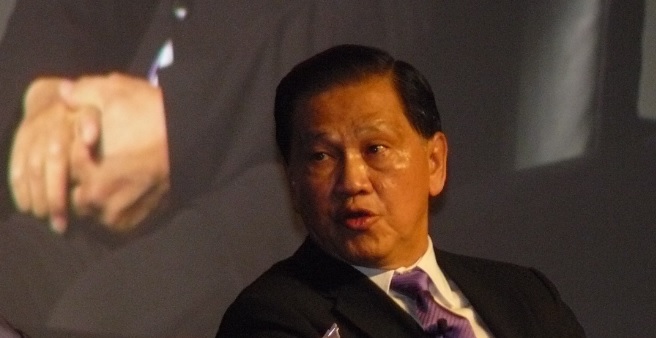
Next up was Leong who has over 40 years of experience in construction and commercial real estate with projects such as the Ion mall in Singapore’s Orchard Road under his belt. He has also been instrumental in the development of Changi Airport. Leong took the opportunity to focus on the aviation market and on Changi Airport in particular.
The hub – widely revered as one of the best in the world – is currently suffering a downturn in traffic [-0.9% in the quarter to March] but Leong talked up the airport’s continuing infrastructure developments on the basis of expected long-term traffic gains. He was also adamant that service quality had become a mantra in the company underpinning its success including its DF&TR offer which has 350 retail and 160 F&B outlets over 76,000sq m.
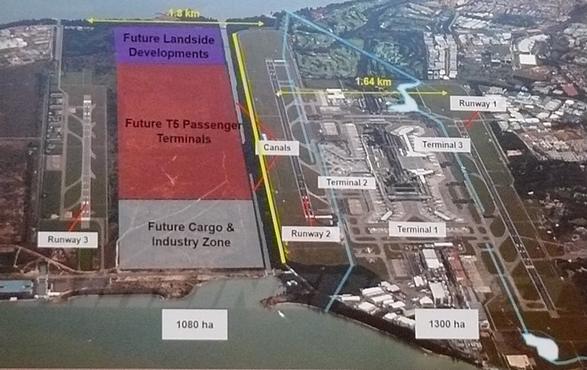
T5 will be like a whole airport in itself
The four-terminal airport has a fifth much larger terminal in its sights [effectively the size of the others put together] for the 2020s and Leong said that it is the case that airports are being upsized everywhere. “Airport terminals are the largest building in the world,” he said, “but will this increase in supply generate demand?”
To ensure that is the case, Changi Airport Group is making the airport a destination in its own right as exemplified by the Jewel retail project which is turning a car park in front of T1 into a 134,000sq m shopping and entertainment mall with gardens. It is costing S$1.7bn/$1.3bn and will be ready in 2018.
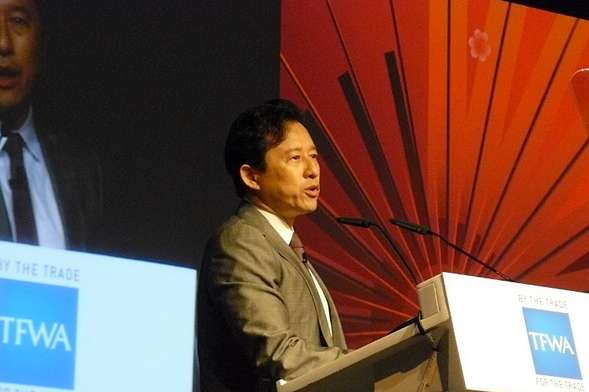
Wu: ‘don’t look at the book cover’
CHINESE BEHAVIOUR & CULTURAL ROOTS
While many DF&TR conferences have drilled down into changing Chinese consumer behaviour, Andrew Wu, LVMH Group President for Greater China, presented a fascinating insight into the historical, political and cultural events that have shaped the shopping trends of the Chinese across the different generations.
Wu – a former Managing Director of Parfums Christian Dior in China in the 1990s after several years with Sony Entertainment Group – described China as “a book whose cover had not really changed, but whose content has”.
His first point was that the speed of change in China was, and continues to be, very fast. A slide of Shanghai Pudong in 1990 [with hardly a tall building in sight] was contrasted with today’s skyscrapers illustrating that pace of change.
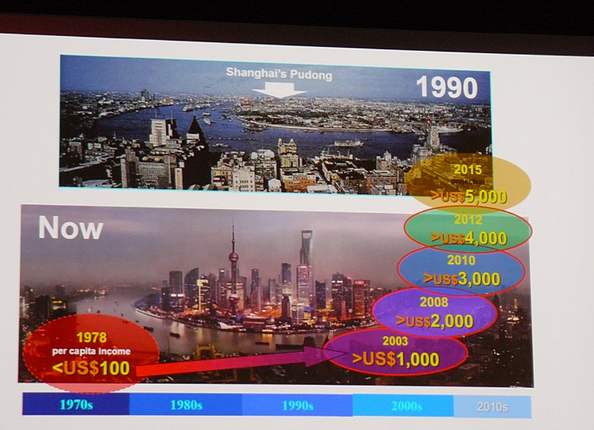
Then and now: Shanghai’s dramatic transformation
Wu also alluded to the country’s fight against its feudal past and believes this is one explanation why Chinese “aim for better and higher”. It was as recently as the 1990s that the country suffered from material depravation and led to people queuing for basic foods, partly a factor of the government being the only ‘consumer’ and allocator of goods.
But today all the Fortune 500 companies are in the PRC and Wu asserts: “China is probably the most competitive place in the world; it’s not just the Americans or the French or the Singaporeans… it’s everyone in the world competing in China.”
China’s open door policy since 1979 has also enabled a change in the mind-set of people. In 1978, less than 1% of the population were in non-state employment but by 2015 this figure has reached more than 90%. With the simultaneous movement from business-to-government to business-to-consumer, Chinese consumers have been ‘liberated’ and their aspirations let loose. Initially they looked to Hong Kong “because it symbolised modernity… and even though they did not speak Cantonese they were all singing Cantonese songs”.
EVERY BAG TELLS A STORY…
Now, says Wu, the Chinese have become more self-confident and a new nationalism is emerging. While there continues to be an escalation of Chinese aspirations these are now more sophisticated – and also more austere in many cases as the Chinese crackdown on extravagant consumption attests.
Wu showed a telling slide of a female official at a formal event in 2012 through to 2015. In 2012 she was carrying a Bottega Veneta bag, in 2013 she was only carrying ‘naked’ paper documents and on the past two occasions she has carried a non-descript bag. “This reflects the fact that extravagant consumption by officials is no longer politically correct,” Wu says.
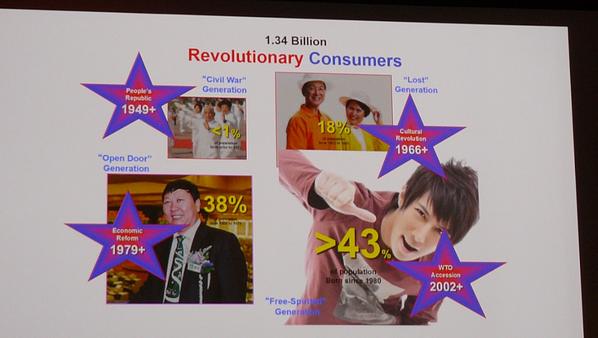
Four-way thinking: the generation gap is an opportunity
But Wu claims that while this is affecting about one-third of the consumption story for luxury, the other two-thirds is growing well. “However the two-thirds growth is not enough to compensate completely for the shrinkage of the one-third,” he adds.
The LVMH chief was not overly worried by this issue as the market in the PRC had also become diversified. It now offered brands four distinct generational groups to target going back to those from the People’s Republic days of the mid-20th century whose population had required permission to do almost everything, to post-1990 free spirits who are less mentored and give free rein to their preferences.
In this respect, Wu argued that there remain plenty of opportunities there for the taking – if brands can read their customers correctly and can react to the pace of their changing requirements.

 Trbusiness. The travel retail Trbusiness. The magazine for global retail and duty free professionals.
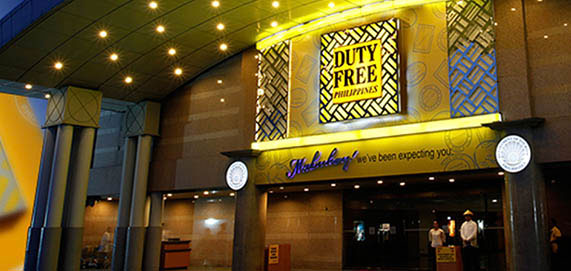
 Duty Free Philippines (DFP) and the Regent Asia Group are to jointly finance and open a 4,500sq m new luxury duty free store in downtown (dwt) Manila in 2016.
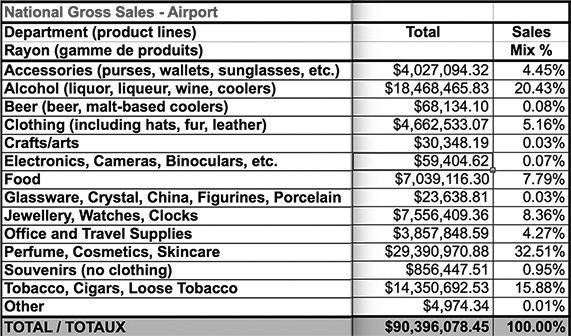
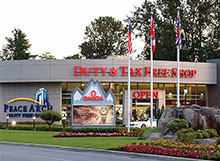 Canada’s duty free airports and land border businesses recorded sales of C$113,356,730 ($94,050,985) between January-March 2015, according to the Canadian Government Programs Branch of the Border Services Agency.


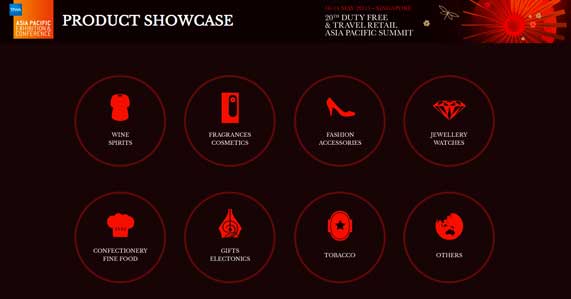
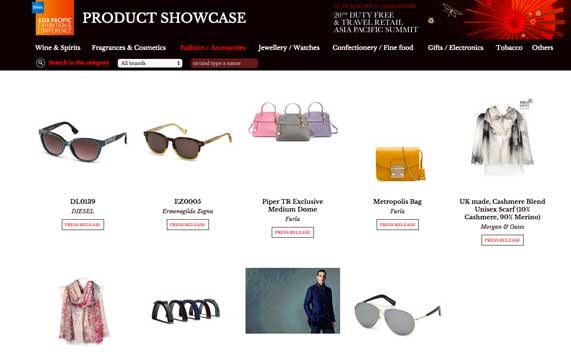
 The TFWA has made its online ‘Product Showcase’ available once more for those planning to attend the TFWA Asia Pacific Exhibition & Conference – from 10th to 14th May 2015. Via the website, some of the latest and the best products, which will be showcased at the upcoming show, can be viewed, prior to delegates leaving for Singapore.
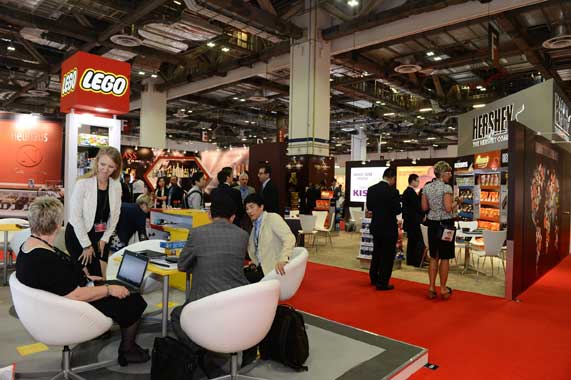
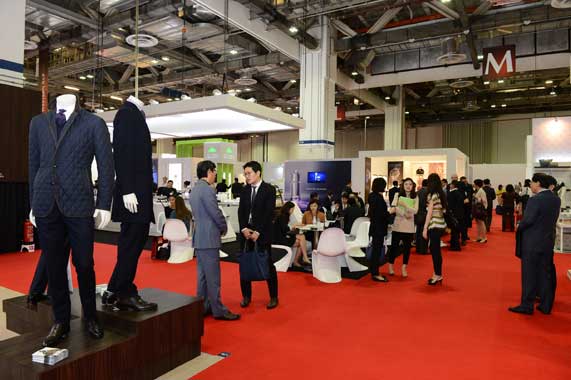
 The purchasing behaviour and motivations of Chinese travelling consumers will be the focus of a seminar organised by the Asia Pacific Travel Retail Association (Aptra) during the TFWA Asia Pacific event in Singapore.
 Flemingo International has appointed Carlo Bernasconi as its new Group Chief Operating Officer with immediate effect.

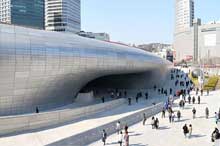 The IDutyFree Exhibition, which held its inaugural event at Songdo Convensia in Incheon, last November, will hold its second event at the Dongdaemun Design Plaza (Aliml) on the 16th and 17th of September.
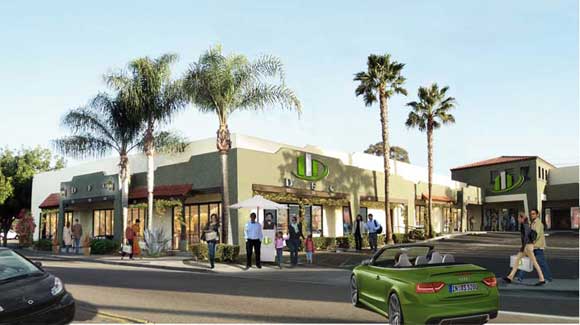 In an ambitious growth strategy, Duty Free City plans to open four new stores in Texas in June and another 10 on the US northern border in 2016. Charlotte Turner talked to the company in the US recently.