Archives

Duty free execs uneasy over Dufry’s power grab

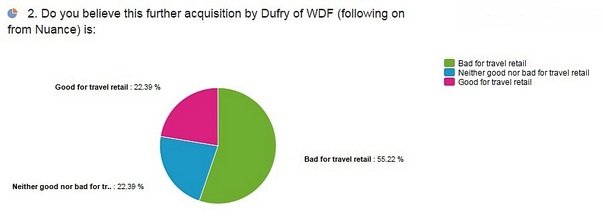
A flash survey* by TRBusiness about Dufry’s planned purchase of a controlling stake in rival World Duty Free reveals that more than 55% of respondents believe this further acquisition (following the Nuance deal last year) is bad for travel retail.

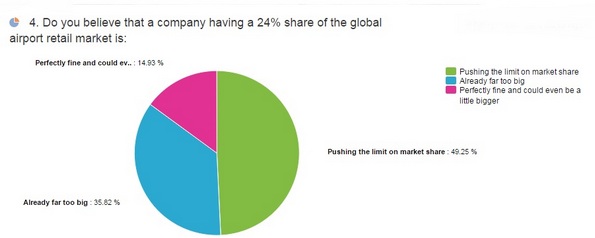
Furthermore, 85% say that a company with a 24% share of the global DF&TR airport market [which Dufry claims it will have as an integrated Dufry/WDFG/Nuance entity], is either pushing the limit on market share (49.3% believe this), or is already far too big (35.8%). Only 14.9% of respondents feel that a company holding such a large share of the channel is perfectly fine and could even be increased.

CONCENTRATION OF MARKET POWER

Concerns over the concentration of market power have risen in the few months since last summer. The majority of people (55%) who feel the WDFG acquisition is bad for DF&TR is much higher than when TRBusiness poled executives over the Dufry/Nuance deal in June 2014.

Then, 45.4% said it was bad for the industry while more than a third (36.1%) said it was good. This time, just 22.4% believe it is good for the industry. And on general consolidation in the DF&TR marketplace, 44.8% think it has gone too far, 34.3% believe it is proceeding at the expected pace, and one in five (20.9%) feel it can still go further.

FEARS LAID BARE

This survey elicited some strong comments from the industry – particularly on the negatives rather than the positives – for the channel.

Among the biggest concerns were the further squeezing out of smaller suppliers; higher margins, potentially tighter relationships with ‘big portfolio’ brand owners at the expense of other competitors, and undifferentiated airport stores.

One North American fashion agent/distributor comments: “Dufry will now squeeze suppliers even further. Payment terms, pricing, margins will be more difficult for some suppliers. With this ‘annexing’ of operators by Dufry, there are fewer buyers with whom to work. This ultimately hurts the regionalisation of many products, and Dufry will be like the McDonald’s of duty free.” [Presumably that reference is to the ubiquity of the retailer, and not its positioning-Ed].

Another North American wine and spirits supplier adds: “Everyone loses… it no longer is an exciting channel; travellers will be bored with the static offerings; margin requirement will be pushed up, so there will be either higher prices or less-engaged suppliers.”

‘IT’S A BIT SCARY…’

A wine and spirits supplier in Europe says: “Smaller companies might, most probably, not be considered anymore; assortments will be more global and mainly an opportunity for multinationals. Customers might find the same offer at most duty free shops with less individual assortments or local products.”

Also in Europe, a jewellery/accessories supplier says: “It is a bit scary to have one super power in DF&TR: there is too much power in one hand. Basically if you are on Dufry’s good side it’s great as there are more opportunities for the brand, but if it’s the other way around it could lead to some big loss.”

In the Baltic, Magnus Skjorshammer, Head of Business Development at Tallink Duty Free, says: “With fewer operators to deal with, this is not necessarily an advantage for smaller suppliers. Larger suppliers will benefit as global deals can easily be made. Losers in the end may well be the passengers who could find the same products no matter where they go.”

A European fragrance supplier agrees, saying that the winners will be the biggest brand owners, adding: “The smallest suppliers will have more and more difficulties accessing the industry (due to) the operator’s requirements.”

ON THE PLUS SIDE…

The survey also produced some views in favour of further consolidation in DF&TR in the broad belief that a streamlining of the channel would bring efficiencies and potentially change the power balance between operators and airport landlords.

Abhijit Das. Head Marketing at Delhi Duty Free Services [but commenting in his own personal capacity] says: “If the M&A process is smooth, I do not think it will be bad for anybody and 75% of the market is still there, leaving ample potential for growth of others individually or through further M&A. Of course pitching for new business will be tougher. The only downside can be if the M&A is not handled smoothly especially while the Nuance process is underway.”

One landlord, also in Asia, comments: “Consumers may benefit from lower prices of products and services if Dufry chooses to pass on the savings from economies of scale and bulk purchasing to end users. But I feel this is unlikely. Any savings from the above will likely flow to Dufry’s bottom line.”

At specialist fashion & accessories supplier Blue Storks, which admits it “prefers to work with few but high quality operators”, Managing Partner, Frederik Westelinck, says of the acquisition: “Important economies of scale can be made. But the most important thing is that the travellers win something from this deal. Satisfying their needs is key for the whole industry. This is the challenge. They need, in the end, a better retail environment with the right products at the right price and at the right place.”

GLOBAL, BUT ALSO LOCAL

“To get the benefits of this merger, we believe there should be a mix of a strong integration with an ability to fit local tastes. Local brands could have some difficulties to penetrate this market since the priority for global operators will be elsewhere,” Westelinck adds.

In Europe, a Wine & Spirits player comments: “It should make retail a better experience on the whole as Dufry has been committed to driving good retailtainment. I hope it will provide some logic in the bidding processes for concessions that have left too much of the value chain with the airports.

“It will rationalise the channel a bit further which will be a good thing. The channel is a difficult one to run well so it needs to have players committed to long-term development.”

But the same person notes: “If Dufry choose to, then suppliers will find themselves stretched over a bigger barrel. There is a risk that the consumer will have the same experience.”

Suppliers made up the majority of responses at 44.8% followed by retailers/operators at 22.5% and unclassified ‘others’ at 19.4%. Almost two thirds of the answers (65.7%) came from Europe-based readers, followed by North America (20.9%), Asia (7.5%), South America (4.5%) and Africa (1.5%).

For fuller details of the survey, and a wider range of replies, read the May issue of TRBusiness, out soon.

[*The survey was emailed to DF&TR executives in the lead-up to the Easter weekend with a three-day time frame for replies. In total 67 individuals responded. Please note that the views expressed in the article above are entirely those of the respondents, and not TRBusiness.]

CDFG to target more duty paid airport shops

The China Duty Free Group plans to target more duty paid airport retail opportunities within China where it can, according to a spokesman for the country’s leading duty free shops operator.

Talking exclusively to TRBusiness earlier this year and also referring to this briefly and separately at last month’s China’s Century Conference, the retailer said there are only so many airports with sufficient international traffic who can offer duty free retailing and with the exception of Beijing and Shanghai – where Sunrise Duty Free operates for the time being – China Duty Free Group operates shops at all of these remaining airports.

He said: “Guangzhou Baiyun International Airport, Kunming Changshui International Airport, Shenyang Taoxian International Airport, Nanjing Lukou International Airport, Xiamen Gaoqi International Airport, Qingdao Liuting International Airport, and Hangzhou Xiaoshan International Airport are the big airports for duty free,” he said, adding: “In most of them passengers are increasing because the travel industry is expanding.”

CDFG is looking to operate more domestic duty paid shops in future as it is attracted by the growing number of new domestic terminals that are being built. The CDGF source added: “Many want to offer passengers luxury branded shopping facilities to increase their non-aeronautical revenues.”


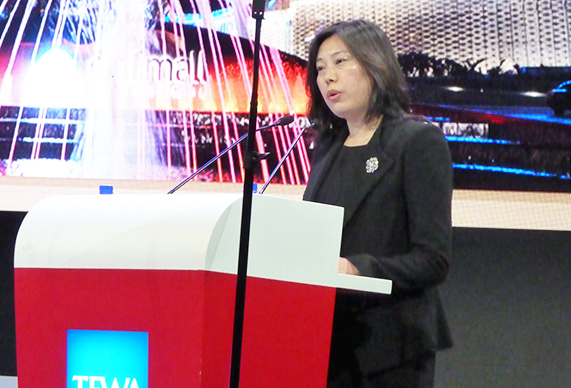
China Duty Free Group Vice President Zhao Feng says that young people are becoming major consumers of luxury goods in China and both the young and middle aged consumer populations are increasing rapidly. The real potential of the luxury and travel retail market in Northern China is also opening up, she says. [Zhao Feng pictured here at last month’s China’s Century Conference in Shanghai-Ed].


HUGE OUTBOUND MARKET POTENTIAL
Having said that, the outbound duty free market also still offers huge potential, even though there are clear signs that the Chinese Government is keener than ever to try and incentivise Chinese tourists to spend their money in their homeland and not abroad.

Despite this, it was only at last November’s Asia-Pacific Economic Cooperation meeting in Beijing that Chinese President Xi Jinping predicted that the number of outbound tourists from China will exceed 500m in the next five years.

“Chinese people are becoming richer and richer,” said the CDFG source. “More Chinese people want to take a holiday abroad. The consumer base is growing here; it’s business people and professional people who want to travel.”

This comment is clearly backed by the fact that Chinese passengers took 70.9m international air trips from Chinese airports last year, a rise of 11.7%, according to official figures released by the Civil Aviation Administration of China (CAAC).

This compared with 760.6m domestic air trips between Chinese airports, which increased by 10.1% in the calendar year period. [See story, this link: http://www.trbusiness.com/regional-news/asia-pacific/china-records-70-9m-international-trips-in-2014/75488]

Interestingly, there are some who are hoping that there could also be other duty free opportunities ahead if Beijing International Airport chooses to test the market later this year, although there is no news on this so far.


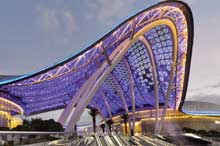
The 120,000sq m China Duty Free Haitang CDF Mall officially opened on September 1, 2014 and is now the largest single duty free shopping centre in China and the world. It has attracted more than 2.8m people since it opened and CDF says that during the Spring Festival, the highest daily sales figure was recorded at more than RMB.50m ($8m), with daily visitor numbers in the store reaching a new record 36,000. The store is known as the ‘New Landmark of the City of Sanya’ and won the ‘Best Tourism Product Award’ in 2014, plus an award amongst the ‘Top Ten Commercial Real Estate Projects in China’.


LUXURY MARKET IN CHINA IS DOWN
The airport signed a contract with Sunrise Duty Free for 10 years from 2006 to the end of 2015 to operate duty free shops and boutiques in T2 and T3, but this obviously expires later this year. Currently, Beijing and Shanghai are the only ‘airport facilities’ in China that are allowed to offer duty free arrivals shops.

For its part, CDFG now operates more than 200 duty free and duty paid outlets across China. In addition to airport, seaport, border shops and the huge 120,000sq m Hainan Haitang Bay offshore flagship duty free shop that opened last September, the company also runs diplomatic stores, high speed railway and bus station travel retail shops, plus duty free shops onboard cruise ships and seaport shops and supplies ships’ crews.

Everything is not perfect in the Chinese market at present however, with China Duty Free Group Vice President Zhao Feng pointing to a downturn since 2012, where she told delegates at last month’s China’s Century Conference in Shanghai that the double-digit growth rate of the luxury market in mainland China ‘plummeted’ by 7% in 2014.

But this is hardly a disaster, since she also pointed out that although the Chinese mainland luxury market is in negative growth, overall Chinese luxury consumption has continued to grow rapidly. She said Chinese consumer behaviour has become mature, while their selection of channels has increased and outbound shopping and online shopping remain popular.

She added that further expansion of China’s middle class will be the main driving force behind future luxury and travel retail market development, while with the steady growth of China’s economy, the per capita income of urban residents will continue to rise. She said China’s middle class will be the main driver of the growth of China’s luxury and travel retail market in the future.

Heinemann targets 5-10% sales increase in 2015

A €2.4bn ($2.5bn) global turnover plus a 20% share of the European duty free market in 2014 and a 30% increase in investment funds to €130m ($140m) were the key messages at Gebr. Heinemann’s annual press conference in Hamburg yesterday.


Sales turnover fell slightly in 2014 as pressure was felt in two of the retailer’s three main markets of Norway, Turkey and Germany. These are critically important to Heinemann, since they accounted for combined sales of €1.535bn ($1.653bn) last year – equivalent to nearly 64% of the total retailer’s €2.4bn ($2.5bn) turnover.


Following on from the welcome precedent set last year, the company was once again completely transparent with journalists at yesterday’s conference, declaring that it has been a difficult start to the year in Turkey due to political turbulence.


The German market has also been ‘flat’ and hardly helped by numerous Lufthansa strikes (as Fraport reported in TRBusiness only recently, in relation to its own results at Frankfurt Airport-Ed).


Underlining the importance of these three markets, the retailer reported sales of €575m ($620m) in Norway last year, €560m ($603m) in Turkey and €400m ($431m) in Germany.
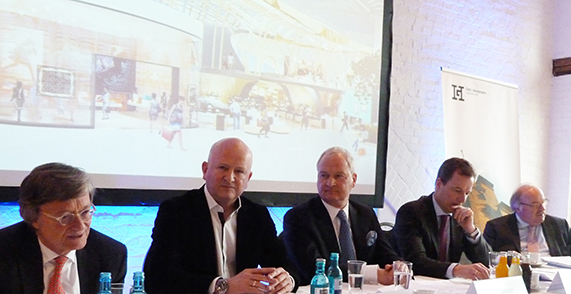
 

Left to right: Claus Heinemann, Co-Owner; Raoul Spanger, Executive Director Retail and HR; Kay Spanger, Executive Director, Purchasing and Logistics; Peter Irion, Executive Director, Distribution; and Gunnar Heinemann, Co-Owner.


HEINEMANN PREDICTING +5-10% in 2015

As Managing Director of Finance and IT Stephan Ernst commented in Heinemann’s annual ‘Highlight’ review distributed at the meeting: “We managed to achieve a modest level of growth in 2013, but we couldn’t repeat it in 2014.


“Because of political factors especially, consumers in the important Russian market have been reluctant to spend and passenger numbers at international airports have been adversely affected.


“This general reticence to spend applied to other markets as well. In Turkey, the weak lira has impacted us and suppressed consumer spending. People arriving at Turkish airports are proving rather reluctant to buy duty free purchases.”


Company Co-Owner Claus Heinemann agreed: “A whole series of pilot strikes in Germany has somewhat diminished our customer base at airports, but I should stress at this stage that despite all of these external obstacles, we are set to record a satisfactory result.”


Having said this, the only family-owned independent global DF&TR company in the business forecasts that it certainly expects to reverse these fortunes in 2015 by increasing its turnover by between five to 10%.
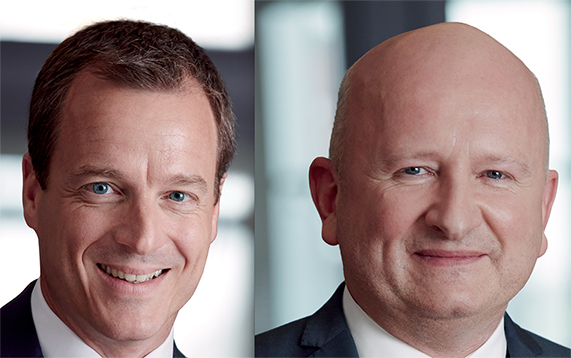
 

Gebr. Heinemann’s Peter Irion, Executive Director Distribution and Raoul Spanger, Executive Director Retail and HR.


 NEW BUSINESS WILL ADD $1.5BN A YEAR IN 2017

Heinemann points positively to four major contracts won last year, including its Sydney Airport duty free business which began last February; the recent 60% share taken in the €85m ($95m) 2014 sales turnover Schiphol Airport Retail business at Amsterdam Airport (beginning May/June 2015); and its valuable contract at the new Istanbul Airport (scheduled to open in 2017).


The retailer also won a presence at five Tunisian airports in joint venture with its ATÜ partner with an expected 2015 annual sales turnover of €100m ($107m) from a total of 5,400sq m.


Interestingly, it estimates that all of this new business should expand its total retail footprint to around 100,000sq m in 2015, compared with the present 85,000sq m, which, in turn, exceeded the 70,000sq m of retail coverage in 2013. [The Tunisian airports referred to above include Tunis-Carthage, Djerba-Zarzis, sfax-Thyna; Tozeur-Nefta, Tabarka-Ain Draham-Ed].


Breaking its new businesses down, Heinemann points to 53,000sq m of space at Istanbul New Airport, with an expected sales turnover of €1bn/$1bn in the first full business year. Added to that will be another 9,000sq m at Sydney Airport from the end of January 2016, with €221m ($237m) covering the ten and a half months from mid-February 2015 through to December.


Then there are the six stores at Amsterdam Schiphol Airport where Heinemann estimates sales to the JV should reach €85m ($91m) in the first business year (the same level as achieved in 2014). Very significantly, all of this new business together should contribute an additional €1.4bn ($1.5bn) a year after 2017, according to Heinemann’s forecasts.


The Heinemann Board also confirmed its ‘major’ priority investments this year will include the aforementioned concessions, plus a new additional office for 300 staff in Koreastrasse, Hamburg (next to its present office), plus its Logistics Centre in Eriensee. E-commerce will be a huge investment for the company in future and it is totally committed to taking a leading position in this area.


It is also working hard on consolidating and strengthening its home delivery business which now has 300,000 customers. In addition, Heinemann will also be bringing digital language assistance into its shops with iPad translators for the staff to help with foreign language-only customers.
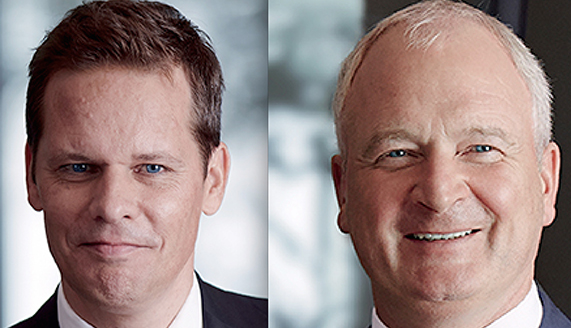
 

Stephan Ernst, Director Finance and IT and Kay Spanger, Executive Director Purchasing and Logistics at Gebr. Heinemann.


80% LONG-TERM CONTRACT SECURITY…

The Heinemann business today comprises some 78 concessions compared to 61 in 2014 and the company estimates this will rise to 90 by 2020. Most significantly, it adds that 80% of its retail turnover is ‘secured’ by long-term concessions and the long-term partnerships with TAV, ATÜ and other companies around the world.


Not surprisingly, Heinemann is also acutely aware of the benefits of spreading its risks and the company’s relatively recent expansion into Asia and the Americas should help, according to Raoul Spanger, Executive Director, Retail and Human Resources.


He says purchasing in four currencies – including euros, plus US, Singaporean and Australian dollars – should also help to counter balance currency fluctuations’ in future as the US and Asian businesses grow.


Meanwhile, Kay Spanger, Executive Director Purchasing and Logistics argues that the travel retail market is approaching the point of saturation. He said: “Even if current developments on the Russian market were not taking place, stagnation would have resulted in the next few years because consumers are now familiar with the product range and the market.”


He continued: “There is potential for continued growth of the travel retail product range, provided we focus on expanding categories, travel retail exclusives, premium brands, wines, gin, fine foods, niche brands and especially sub-categories. To achieve this, however, the traditional categories and our partners must be prepared to break new ground with us in their own interests.


“The duty free sector is subject to price pressure: after all, thanks to e-commerce, customers can now shop globally and compare prices by themselves with a high degree of transparency. However innovative we may be, price continues to constitute one of the most important elements on our market.”


Oslo Gardermoen Airport where more than 50% of the total business is in the arrivals shops. Most Norwegians take up their full personal quota of six bottles and on average Heinemann sells 12,000 (…yes…12,000) bottles of wine a day. Wine is now a bigger category than beauty at Heinemann’s shops in Oslo. It is also a big major draw at one of Heinemann’s other new concessions at Sydney Airport, where the retailer and Treasury Wine Estates are planning to install the biggest and most comprehensive wine offer the airport and its passengers have ever seen.


SUPPLIERS NEED TO CHOOSE FOR THE LONG HAUL

Bearing this in mind, Kay Spanger says that while Heinemann will continue to invest extensively, it will also be looking for support from its suppliers in both retail and distribution channels and some will have to make choices. He said: “Against the background of consolidation on the market in particular, suppliers need to consider who to invest in and who to collaborate with for the long haul.”


He was also equally straight talking about suppliers being truly globally organised, as he explained: “With the purchasing power it possesses, the company intends to pursue a strategy of negotiating globally and acting locally. In this, we also anticipate the dedication and commitment of our suppliers. Although they might refer to a global market, some of them are not globally organised and equipped in full measure.


“The industry may talk about addressing global shoppers, yet in order to support this group, we still need to contribute more in partnership as regards data, quality, labelling and marketing information in various languages.”


Strong and determined stuff from Heinemann, which has always been a hallmark of the company. For its part, the company also points to its own future commitment with its new Logistics Centre at Erlensee near Frankfurt which opened last May and which now operates in tandem with the Hamburg-Allermöhe facility.


Kay Spanger says the retailer has now built the capacity for the future needs of its retail and distribution businesses and is ready.


An important part of Heinemann’s business that will continue to rely on this logistics engine room is the Wholesale and Distribution division, and Peter Irion, Executive Director Distribution says there are still expansion plans in several markets, despite a challenging environment in some locations. This business generated €800m ($861m) but was flat last year, with airports and border stores accounting for 40% each, ships and ferries 20% and airlines and caterers the rest.

He said the company has been looking to increase its market share in Russia and has fought back with special offers, after the company adapted its strategy for Russia and the CIS three years ago. He said one notable trend is that regional airports are growing fast in Russia with direct international flights and this is an opportunity for Heinemann.
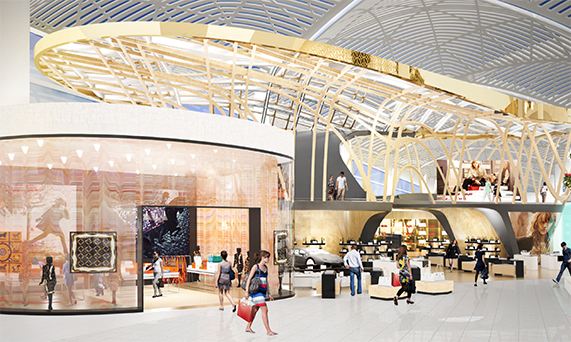
 

Gebr. Heinemann and its partner Unifree hold a 25-year duty free departures and arrivals concession for the €10bn ($10.7bn) New Istanbul Airport, which management is understandably excited about. It also has 70 boutiques and the option to operate or rent these out. Raoul Spanger says it will be tight to complete the construction by 2017, but fortunately Turkish builders do have a reputation for fast construction.


WELL POSITIONED FOR A RUSSIAN COME BACK

He said: “ Gebr. Heinemann is seeking to expand in Russia and maintains a strong presence on the Russian market. Although the Russian market is likely to remain a tough environment this year, we expect our earnings to remain constant, or even increase marginally as we increase our market share.


“In 2012, Gebr. Heinemann was operating retail space of 3,850sq m in Russia. By mid-2015, this will rise to 12,000sq m at ten airports. At the present time, the company is active as a distributor or shop operator at 20 of Russia’s 22 main airports. Gebr. Heinemann won a number of tenders in Russia in 2014 and plans to bid on further tenders this year.”


He said the travel retail market is also developing well in Africa where Heinemann already has a significant joint venture in South Africa with the Big Five company at Johannesburg and two other airports.


All these markets and others are also benefiting from the company’s ‘distribution plus customised services’ drive and its ability to operate a secure supply chain, he said.


The Inflight & Catering supply division has also been expanded to include customers such as Finnair and easyJet concessionaire Gate Retail Onboard. A new agreement has also been struck with Retail in Motion to exclusively supply Sun Express and Europe Airport. With Finnair, Heinemann has redesigned the inflight and pre-order offers and also introduced measures to greater motivate staff, including an exhibition to bring them up to speed on new brands.


Irion and Kay Spanger both added that the company must get a lot more involved in the snacking business for the airline supply business, which demands it. Here, it has also secured important and continuing business by extending its supply contract with the world’s largest scheduled international airline – Ryanair and currently Heinemann is supplying Ryanair with goods at around 50 different airports in Europe.


Frankfurt Airport, where Fraport, its passengers and businesses such as Heinemann have all suffered from the lightning strikes called by Lufthansa’s pilots union.


PROUDLY FAMILY OWNED AND INDEPENDENT

Last, but certainly not least, company co-owner Gunnar Heinemann took time to emphasise that the company is still a family-run business with strong values and a presence on all five continents.


He said that the fifth generation is now involved, with Max Heinemann CEO of Heinemann Asia Pacific working well with his team and Raoul Spanger to deliver the Sydney Airport duty free contract.


Gunnar Heinemann said: “As a family-run business that has been active on the market for more than 135 years, we can lay claim to far more sustained credibility than listed companies that operate from one quarter to the next.


“We are a dependable partner to airports, airlines and international brands because we maintain close proximity to the customer. We believe in organic expansion and local partnerships. We do not rule out looking into the possibility of acquiring smaller competitors in certain cases – for example, to accelerate entry onto a market. However, this is unlikely where the European market is concerned.”


[This report will be followed by a substantially more in-depth analysis of Heinemann’s global business in the May print issue edition of TRBusiness-Ed].




ETRC backs Euro alcohol and health reform

The European Travel Retail Confederation (ETRC) has underlined its ongoing total commitment to the promotion of responsible retailing of alcohol products in duty free and travel retail channels by renewing its membership to the European Alcohol and Health Forum (EAHF).


 

This is the European Commission-created stakeholders’ platform, which is charged with dealing with all aspects of harm caused by alcohol at European level.


In a statement, the ETRC emphasises that as ‘one of the few organisations in the Forum with both retailers and brand manufacturers amongst its members’, ETRC participates closely with other members to meet common overall objectives.


These include providing ‘a common platform’ for all interested stakeholders at EU level that are committed to stepping up actions relevant to reducing alcohol-related harm. Significantly, this includes the promotion of responsible commercial communication and sales of alcohol.


ETRC says it initially tabled its first commitment to the EAHF in 2012 by launching the Self-Regulatory Code of Conduct for the Sale of Alcohol Products in Duty Free and Travel Retail, setting out best practices for the sale, promotion and marketing of alcohol products in the unique retail channel.


Keith Spinks, Secretary General of the European Travel Retail Confederation (ETRC) keeps journalists in the loop at a recent ‘off the record’ briefing in London. ©


ETRC CODE REFLECTS DF&TR ‘DIFFERENCES’

It adds: “The Code of Conduct is designed to be consistent and complementary to other existing codes and policies, whilst reflecting the unique conditions of this distinct, transparent and highly regulated retail environment and differentiating the duty free and travel retail channel from the domestic market.”


ETRC continues that it will capitalise on the success of its previous commitment when it actively promoted the adoption of the Code of Conduct by the full spectrum of members active in the retailing of alcohol. This will involve the continued adoption promotion, implementation and compliance with its corporate members – as well as through the national and regional associations.


ETRC Vice President and Alcohol Retailing Regulatory Working Group Chairman Erik Juul-Mortensen (left) commented: “ETRC is proud to demonstrate the commitment of our industry to promote responsible retailing of alcohol products via self-regulation at a European level.
 

“The Code of Conduct seeks to address all the aspects of duty free and travel retail alcohol sales from commercial communications to labelling, staff training as well as sampling. ETRC will continue to secure the adoption, implementation and compliance with the Code of Conduct under our commitment to the EAHF.”


The ETRC Self-Regulatory Code of Conduct for the Sale of Alcohol Products in Duty Free and Travel Retail can be downloaded from the website of the European Alcohol and Health Forum. For more information, contact Keith Spinks, Secretary General, Tel: +34 (0) 932 051 276. Email: [email protected]

IAADFS 2015 attracts 2,740 visitors – full imagery here

UPDATED: IAADFS Executive Director, Michael Payne has told TRBusiness that the number of visitors to this year’s IAADFS Duty Free Show of the Americas is in line with last year at 2,740.
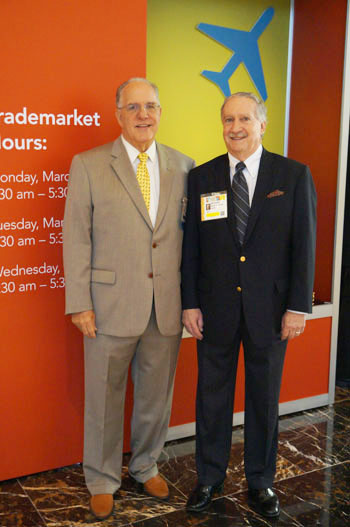
 

Payne told TRBusiness that he is ‘very pleased with the response to the show’. “The number is right at 2,740. That is in line with last year, but given the challenges in some geographic areas, I’m very pleased with the response to the show.”


To put the numbers into context the TFWA’s Asia Pacific show recorded 2,683 visitors last year and the TFWA World Exhibition saw a record 6,701 in Cannes.


IAADFS’ Alberto ‘Pancho’ Motta and Michael Payne.


Earlier this week Alberto ‘Pancho’ Motta, IAADFS President told TRBusiness he was pleased with the pre-registration figures, especially considering the current economic climate in the Americas, which he said would make 2015 a ‘difficult’ year.


He listed Brazil, Argentina, Venezuela as well as Ecuador – where protesting has broken out in major cities against the government – as countries that are currently experiencing difficulties. “All these factors – like the currency, protesting etc – all affect the number of travellers,” he said.


The show took place at the Orlando Marriott World Center hotel in Florida this week, closing with an evening of musical entertainment at last night’s gala dinner. The audience was treated to performances from an 11-piece orchestra and Beatles tribute band, British Invasion.


With the exception of the image on the left, the following picture gallery below captures a lot of the spirit of the various sports and fun activities, functions and the exhibition itself in image form and TRBusiness would like to thank IAADFS’ Executive Director Michael Payne and Associate Executive Director Steven Antolick for making these available so quickly after the event.

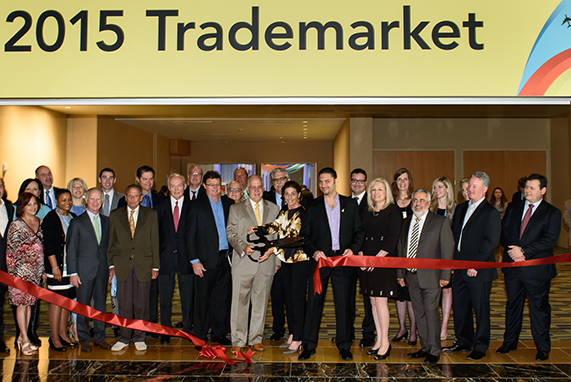
The formal opening of the 2015 IAADFS Trademarket took place with the traditional ribbon cutting ceremony, headed up by IAADFS President Pancho Motta (centre) who is firmly in charge.


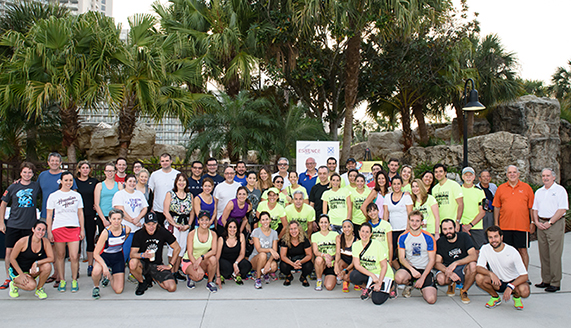
The Sunday morning Fun Run/Walk. For each person who participated in the 3km event, IAADFS said it would donate $50 to Escuela de la Calle (EDELAC), with a minimum contribution of $3,500.


As mentioned above, this year’s fun run/walk was in aid of Escuela de la Calle (EDELAC) which is a worthy Guatemalan-registered non-profit organization dedicated to lessening the number of children living and working on the street.


Giving something back: The early morning Sunday Fun/Walk heroes. This event was sponsored by Essence Corp.


IAADFS ‘golfers’ wait to tee-off at the traditional Sunday morning tournament which was sponsored by American Caribbean Gateway/Macanudo Cigars.


Great Net Result: tennis players prepare to do battle at the IAADFS tournament sponsored by Essence Corp on the Sunday.


Welcome to the Duty Free Show of The Americas! IAADFS President Pancho Motta (centre, glasses) leads the informal welcome meeting for around 30 new exhibitors, prior to the Opening Cocktail.


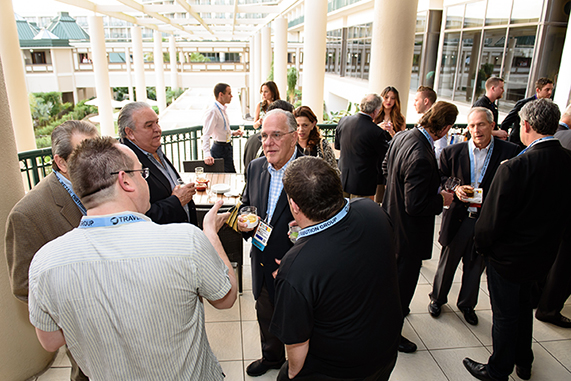
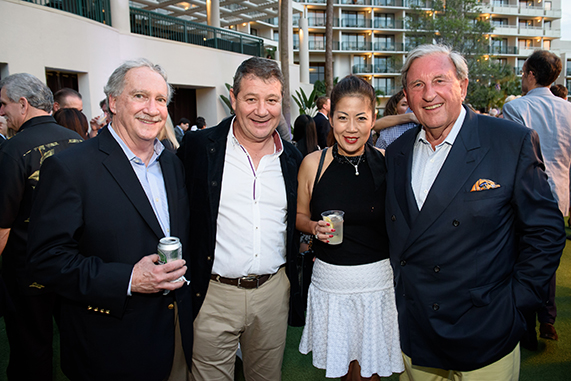
As usual, IAADFS traditionally holds the Opening Cocktail in the grounds of the Marriott Orlando Hotel when the sun shines – which is virtually all of the time.


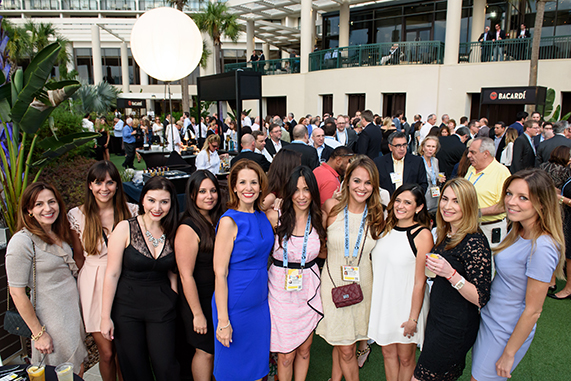
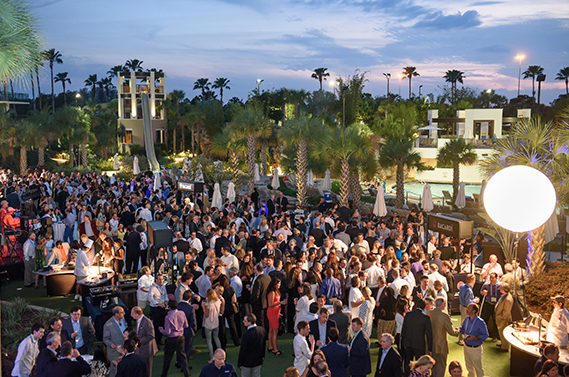
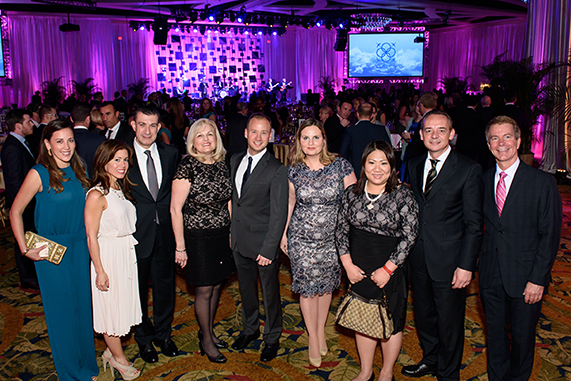
The Opening Cocktail event was extremely well attended, as this image shows.


IAADFS Executive Director Michael Payne (left) with a few very familiar faces.


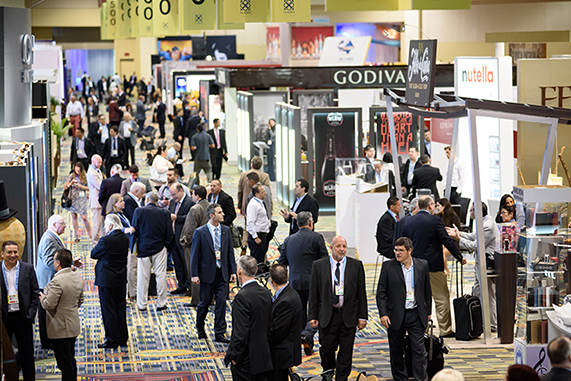
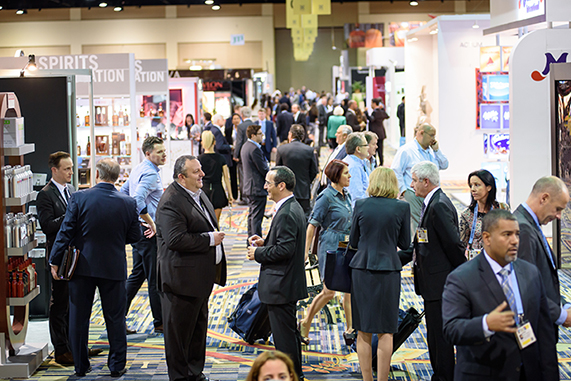
Down to work: The exhibition opens after the official ribbon-cutting ceremony is completed on the Monday morning (see previous photo above).


The exhibition hall looks busy here, but there were times when it was not so crowded, although IAADFS said numbers were comparable to to the 2014 event when 2,740 visitors attended.


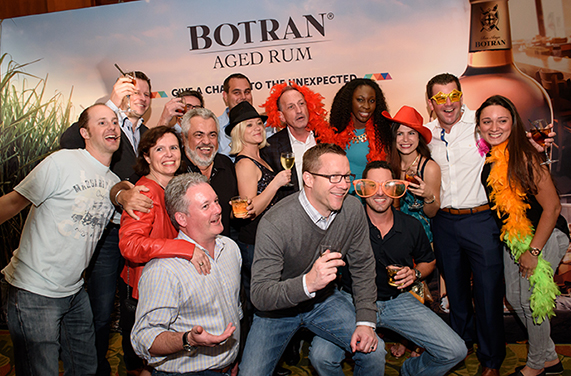
After a hard day’s work comes Club Americas, where IAADFS faithfuls need no lessons on how to have a good time.


Club Americas was held on both Monday March 23 and Tuesday March 24 between 10.00pm and 2.00am.


For the second year running, IAADFS offered its single registration option, which includes full exhibition access, plus all of the events and the Club Americas.


THe IAADFS Gala Dinner was held on the Tuesday (March 24) evening.


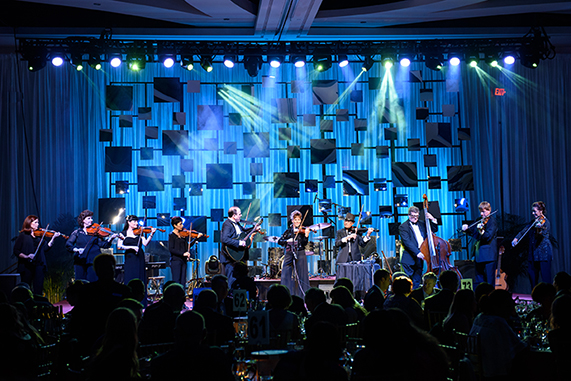
Orchestral mood music to dine by at the Gala Dinner in Orlando.


‘A day (or night) in the life’: This fun Beatles tribute band entertained attendees at this year’s IAADFS Gala Dinner.


Díaz declares Asia is now Dufry’s number 1 priority

Dufry CEO Julián Díaz has told TRBusiness.com that Asia is now the ‘number one priority for the company, although he insists that the retailer is not going to pay huge minimum guarantees in rent just to build more 
points of sale.
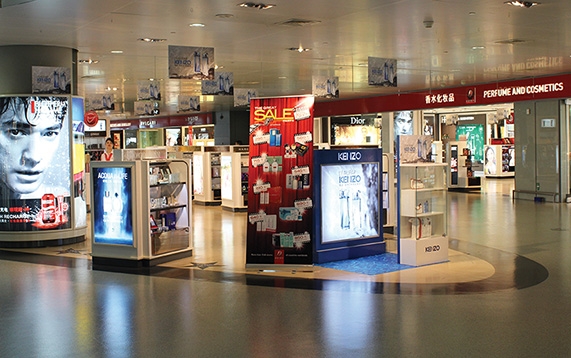
 

He said: “First of all, Asia for us is one of the main priorities. In 2014 we have been able to open and I think we are now in nine countries and probably more than any other international company in the region.


“The way of starting the business in Asia is obviously very confidential, because we are not going to tell how we are going to do it,” said Díaz.


“But what we are not going to do is to pay huge minimum guarantees in rent and this is something that is a financial discipline that we try to implement.”


Díaz said it was for this reason that it did not participate in the recent Incheon Airport duty free tenders, although it remains interested in business elsewhere, including the two shops in Macau that Dufry gained from last year’s Nuance acquisition as interesting new additions.


Dufry operates 26 shops at the major Chinese domestic Shanghai Hongqiao Airport Terminal 2 and is easily the biggest duty paid luxury retailer present.


COMPLEX AND FRAGMENTED REGION

He added that Dufry’s Taiwanese Kinmen Islands’ joint venture is also developing and he believes it is ‘a great opportunity’, although he acknowledges that Asia is a very complex region and ‘very fragmented in terms of legislation and nationalities’.


“But we have been able to prove – mainly in America – that we are able to expand the business with a specific strategy,” said Díaz.


“When we started in America we didn’t have anything – except in Mexico – and now we are number one from the top to the bottom and from the east to the west.


“Obviously after ten years it is a long 
time, but Asia is going to be our main priority and we obviously want to expand the business in a profitable way.”


Currently, Dufry has Asian retail interests in various locations, including Shanghai Hongqiao (26 shops) and Chengdu (22 stores) and Zhuhai airports in China, plus airports and downtown business in Hong Kong, South Korea, Singapore, Taiwan, Macau and Australia.


[Julián Díaz was talking in an exclusive interview with TRBusiness’ Charlotte Turner and Doug Newhouse in Basle earlier this year. Part one of this interview is available in the March edition of TRBusiness and part two will appear in the April issue.].


New store plans go ahead on Uruguayan border

Despite less dynamic sales than usual for Uruguayan border shop operators in 2014, several are still going ahead with new stores and expansion plans – irrespective of whether Brazilian operators begin retail operations on the Brazilian side on July 1.
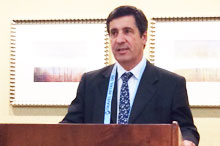
 

Carlos Loaiza, Secretary General of the Uruguayan Chamber of Free Shops told TRBusiness: “2014 was a strange year, with the duty free business on the Uruguay-Brazil border suffering from the slowdown in the Brazilian economy.”


He said the behaviour of the Brazilian consumer is changing and those operators who have adapted ‘have probably done better than they originally anticipated.’


Of those retailers who have reported planned expansions, Enrique Urioste, President and CEO of Neutral Duty Free said the retailer opened a new 1,800sq m store in Rivera last September, replacing a smaller facility.


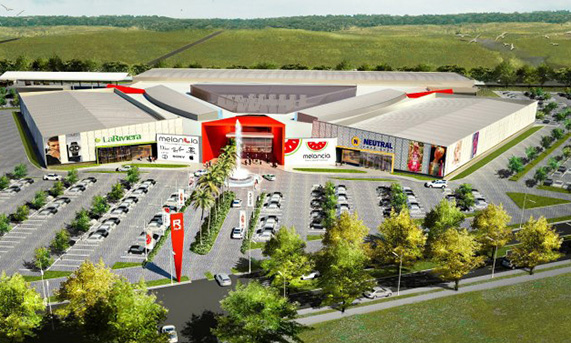
The new Melancia Mall with stores from Wisa (LaRivera) and Neutral is due to open in July of this year – the same time that store openings are supposed to begin in the Brazilan border towns.


MELANCIA MALL TO OPEN IN JULY

He also adds that a new 4,000sq m store will open in Rivera later this year, as work at Neutral’s new Melancia Mall store continues on schedule for its grand opening this July.


Andres Mendelsohn, General Manager of DFA Uruguay said his operation expects to see the benefits of renovations carried out in its Rivera operation last December.


While DFA Uruguay is also opening a new chain selling only keenly-priced products at the end of March, with its first ‘Macanudo by DFA’ store debut in Bella Union.


Building work is also commencing at DFA Uruguay’s biggest project now that it has received the last permit allowing it to commence work on the $40m Rio Branco mall. [A major feature article on this appears in the March issue of TRBusiness-Ed].


ASUTIL reveals 2015 conference highlights

José Luis Donagaray, ASUTIL Secretary General, has said that attendees to the ASUTIL 2015 conference will be treated to insights from a huge Brazilian consumer study along with an address from Eugenio Andrades, WDFG CEO, in June.

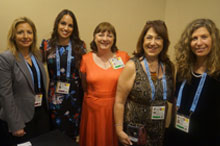
 

The study, conducted by m1nd-set, was informed by more than 2,000 interviews undertaken in Brazil. M1nd-set’s Peter Mohn will present the findings from the study, which covers consumer activity at airports, borders, ferries, but also downtown operations.


This year, the annual conference will take place in Panamá between 3-5 June at the Westin Playa Bonita hotel. Donagaray says that Copa Airlines is offering a 15% discount on flights for those travelling within the Americas to the conference.


Other conference highlights – revealed at this morning’s ASUTIL press conference at the IAADFS show in Orlando – include an address from WDFG’s CEO Eugenio Andrades along with Donagaray’s customary update on the region’s economic performance. He said he would be talking about what is happening at the borders, particularly in Rio Branco and Melancia.


Carlos Melconian from M&S Consultores will speak once again this year and TRBusiness understands that delegates will hear from tobacco companies – with cumulative operations spread across six continents – on the state of the category, worldwide.

L to R: ASUTIL President, Enrique Urioste and Secretary General, José Luis Donagaray.


This will not be limited to discussions about new regulations, but will also look at how the category can continue to operate (profitably) in new challenging conditions. The Moodie Report’s Martin Moodie will close the conference with a presentation on the metamorphosis of the channel in the Americas.


Donagaray says the travel retail industry in the Americas is ‘up a little bit on last year’; he estimates around 10%. He says he expects a ‘flat year’ on the borders.


When asked how many visitors he was expecting for ASUTIL 2015, he told TRBusiness that he was expecting close to 360. “We had around 330 last year so I expect up to 360 this year.”


Once again he told TRBusiness that it is not easy to find suitable venues, which can accommodate the growing number of attendees. “You need huge hotels to host this conference. It’s difficult to change venues every year, but this we will not change. It is good for people to see the various local operations from place to place.”


He also said he would not consider expanding the exhibition space or the number of stands taken by local suppliers at the conference [he says there are currently nine stands confirmed]. He explained that this was not the focus of the event, and that it was not his intention to compete with the IAADFS or Cannes etc.


Donagaray says that the organisation is hoping to confirm the staging of ASUTIL 2016 with the Hilton in Buenos Aires shortly, but if it cannot, next year’s conference could be in Chile. He says that ASUTIL hopes to return to Brazil in 2017.


WiTR raises $3,500 for Hand in Hand for Haiti

This morning at the IAADFS Women In Travel Retail (WiTR) breakfast, $3,500 was raised for the Hand in Hand for Haiti charity through the customary raffle and silent auction.

 

The group also donated $200 of the proceeds to the Asociación Escuela de La Calle (EDELAC) – the Guatemalan-registered, non-profit organization, which aims to lessen the number of children living and working on the street.


According to WiTR the raffle this morning included an emerald pendant donated by Colombia Emeralds International. The event, which took place at the IAADFS Duty Free Show of the Americas, in Orlando, attracted more than 100 women from the travel retail industry.


This trumps last year’s breakfast meeting, which saw 70 women raise nearly $1,600 for a Haitian charity dedicated to providing clean water to impoverished villages. This figure was doubled through a generous donation from Dufry America.


WiTR was first established in 2006 as an informal gathering of four women, Sarah Branquinho, Anouska Forte, Ylva Persson, and Cathryn Davis. The inaugural meeting of WiTr in South America took place during the 2010 ASUTIL Conference.


London Supply prepares new Rio Gallegos store

Just prior to leaving for the Orlando IAADFS Show, Argentine-owned London Supply was preparing the layout and brand selection for its latest duty free store in Rio Gallegos, in the southern Patagonian province of Santa Cruz in Argentina.
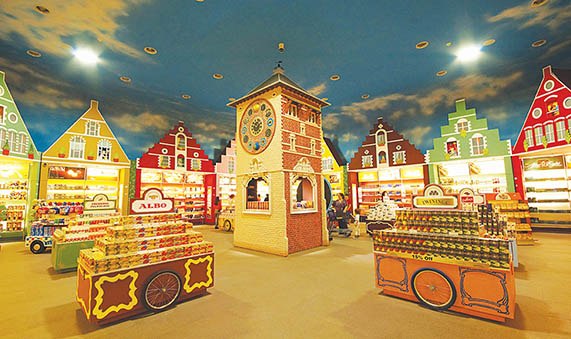
 

The operator won the duty free tender last year and was hoping to sign the contract just prior to heading off for the Florida show.


London Supply Commercial Manager Maggie Ducos said: “We are already planning to build a 1,500sq m store, along with a 1,500sq m warehouse. The objective is to be up and running 15 months after signing the contract,” she said.


London Supply is best known for its Puerto Iguazu store and the themed merchandising throughout (see above), but it has also recently won a tender to operate a different and smaller style of border store at Rio Gallegos.


Ducos says the new store will feature all the traditional categories: “This will be a different style of duty free store from Puerto Iguazu; our target market is the local resident who probably shops at the moment in the Punta Arenas Free Zone in Chile, which is about 50km away.
“As well as the traditional categories, we will have a strong presence for Home and Design products that we have sold well in our downtown store in Ushuaia. We will also be selling cars again – something that the company did many years ago.”
[See major Puerto Iguazu expansion story in the March edition of TRBusiness which is with subcribers now and also available at the IAADFS Duty Free Show of The Americas in Orlando].