Archives

Ethnic campaign wins for Peace Bridge

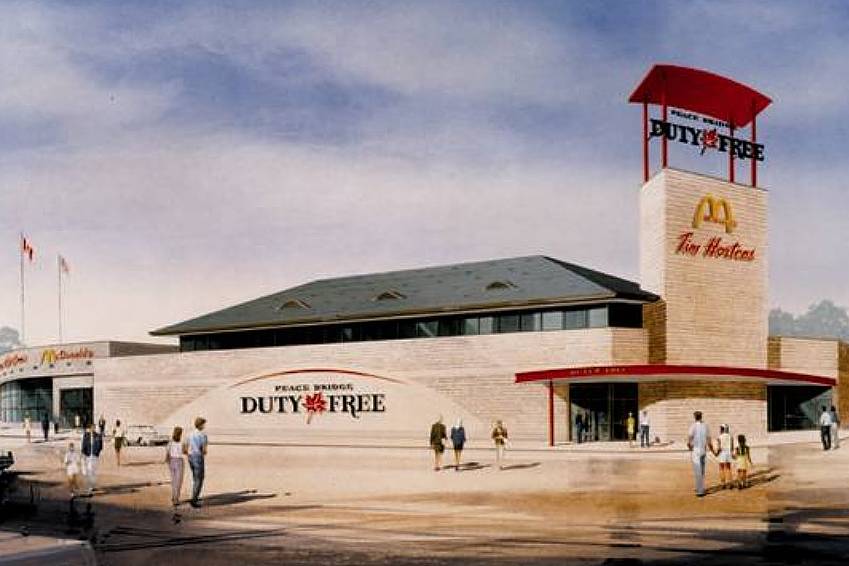
Peace Bridge Duty Free took four prizes at the annual Frontier Duty Free Association (FDFA) Gold Standard Awards last week – with one for a marketing initiative that captured new spend from nearby East Asian communities.


Peace Bridge was recognised for work in targeting a specific demographic: 800,000 Ontarians of East Indian descent living within an hour’s drive of the border store in Fort Erie, Ontario, situated at the Peace Bridge leading to Buffalo, New York.


“We investigated how we can reach these potential customers in their native language while promoting popular products of their culture,” says Bonnie Gates, Peace Bridge Duty Free Marketing Manager.


Marketers fluent in Tamil, Punjabi and English wore Peace Bridge Duty Free T-shirts and distributed flyers at key locations. Information on the flyers was provided in Tamil and Punjabi and promoted products popular in the East Indian community such as Johnnie Walker Black Label, Chivas Regal and La Scala jewellery.


“Our flyers were very well received and our duty free ambassadors explained the rules and regulations regarding duty free shopping. This demographic was extremely grateful to receive a printed hand-out in their language that was easy for them to understand and learn more about the benefits of shopping duty free,” adds Gates.


The campaign resulted in “a very noticeable increase of South Asian business” in the store and, due to its success, the retailer has plans to target other nationalities in the Toronto area.


SIGNING SUCCESS

Two other marketing awards were given to Peace Bridge for Best Marketing of a Canadian Product when it hosted Canadian comedian and actor Dan Aykroyd for a bottle signing; and the Best New Idea for the launch of a pre-order website.


Dan Aykroyd signed bottles of his Newfoundland/Labrador-produced Crystal Head Vodka, an event coordinated by Intrabrands President Barry Parkinson and led to a record sales day for the product. “Dan Aykroyd fans lined up two hours before the event began,” says Gates.


Meanwhile, the store pre-order system allows travellers to reserve a product prior to their arrival with the price guaranteed for up to six months after the order is placed, even if a sales promotion has ended.


“Since starting the programme six months ago, we have had an 85% pick-up rate of pre-order products. When a customer comes in for their pick-up, we also reward the customer with a special gift for finalising the commitment to purchase. This adds a greater element of satisfaction from our customers,” says Gates.


TOP AWARD

As well as the three marketing awards, Peace Bridge took away the platinum award for Best Canadian Land Border Duty Free Store (large category).


Jim Pearce, Peace Bridge Duty Free General Manager says: “The underlying factor for our successes is the high level of engagement we’ve nurtured with our staff. This allows us to accomplish many things. It allows us to build off of solid, basic retail strategies and not have to rely on the mystical magic bullet. It also encourages ideas to be freely distributed and to have these ideas tweaked and, most important, executed.”
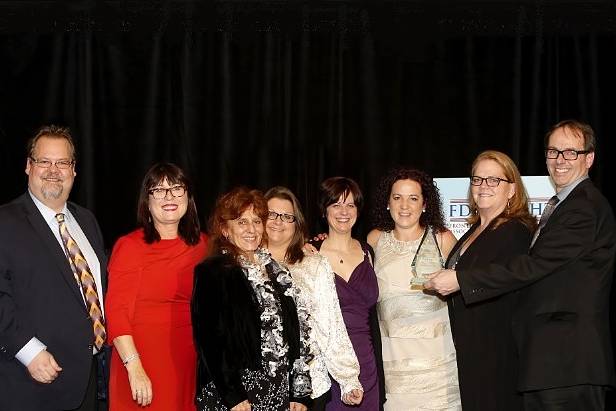


[Pictured: Peace Bridge team accepts the Platinum award. From left: Sandy Rienzo, Filomena Cangianiello, Karen Shaubel, Cindy Beam, Kathleen McCreary, Kara Spear, Meaghan Hearn, Jim Pearce.]
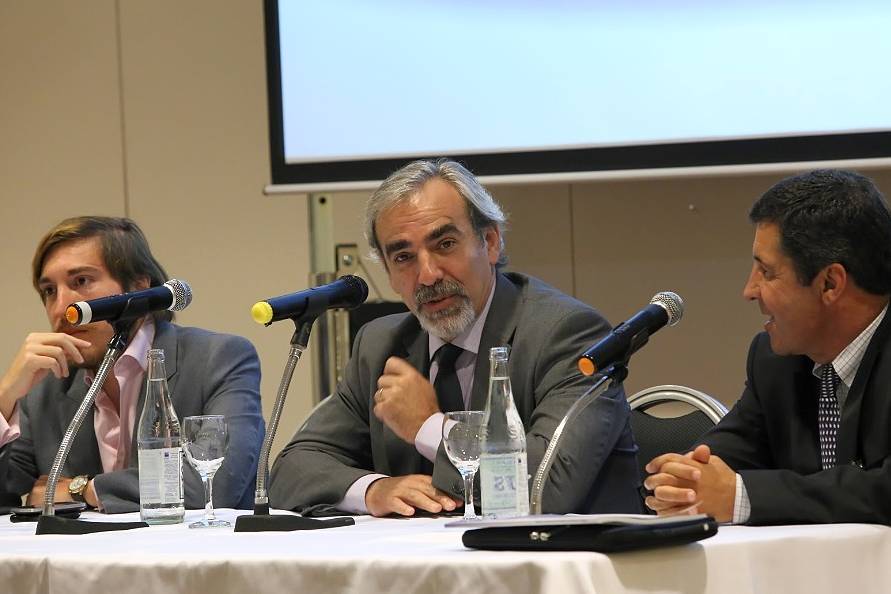
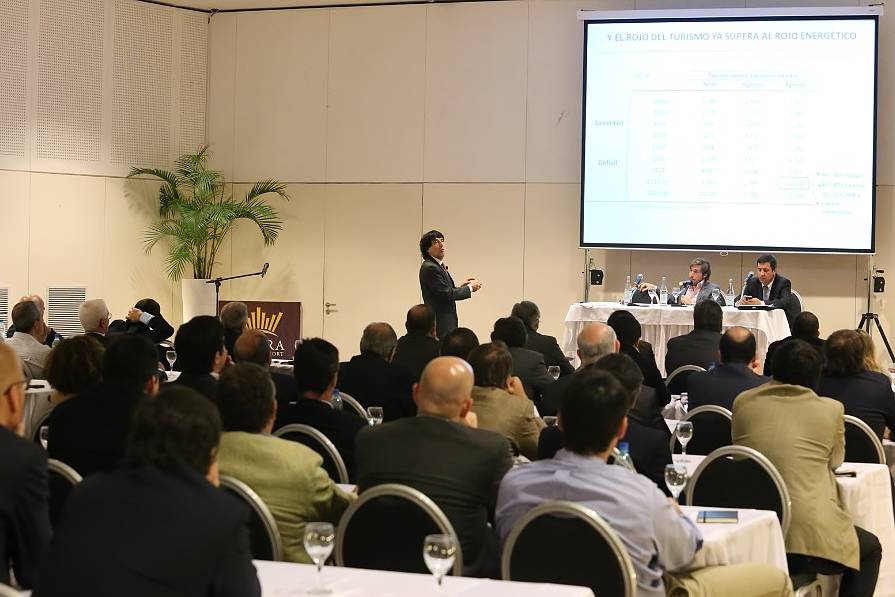
Border DF: gateway to the future?

In the first gathering of professionals involved in the important border store business in South America, Uruguay’s Under Secretary of Foreign Affairs, Luis Porto, described borders as “the gateway to the future”.


The conference of Frontera Rivera, entitled ‘La Frontera: A future of opportunities’ took place yesterday and was organised by the Chamber of Free Shop Entrepreneurs of Uruguay and the South American Association of Free Shops (Asutil).


Porto (pictured centre) highlighted the contribution that duty free and travel retail stores in this channel make to state revenues and to job creation but also pointed to the economic activity developed in the border regions as “essential for building bilateral relations between neighbouring nations”.


The industry audience from Uruguay, Argentina and Brazil also heard from experts such as economists Carlos Melconian, from Argentina, CPA Ferrere Partner Gabriel Oddone from Uruguay, and Tatiana Pinheiro from Banco Santander in Brazil, who analysed the current industry trends, recent growth trajectories, and future prospects.


TAX BENEFITS

The conference stressed the importance of the DF&TR sector for the Uruguayan economy in general and for the Uruguay-Brazil border in particular. Along these lines, Carlos Loaiza (pictured above on the left), Secretary General and Advisor to the Chamber of Free Shop Entrepreneurs of Uruguay, said that the Uruguay-Brazil border generates direct and indirect benefits amounting to 13% of customs revenue, and as much as 7% of that of the Tax Offices (DGI) in some border provinces.


Loaiza added that the sector has generated more than 5,000 direct jobs, plus indirect jobs in associated services in the area.


Secretary General of Asutil, José Luis Donagaray (recently interviewed by TRBusiness on video [and pictured above on the right]), highlighted the importance of the large investments in the north and north-east border regions, such as the Siñeriz store and Melancia shopping mall in Rivera –following the example of Neutral’s and La Riviera stores – and the forthcoming construction of a shopping mall and a hotel in Rio Branco, recently announced by Duty Free Americas.


Generation Research puts the value of the DF&TR business in 2012 at $55.8bn worldwide, 57.2% of which is generated at airports and 33.1% at ‘other’ stores (which includes border shops and downtown duty free stores plus another 10 smaller channels). Generations tells TRBusiness that it plans to “define and weight” the importance of all 12 of these channels next year.


ECONOMIC CHANGES AHEAD

At the meeting, speakers agreed that Uruguay, Argentina and Brazil are heading for some major economic fluctuations.


Pinheiro from Santander Brazil, estimated that, over the next 18 months, Brazil will see positive indicators in the run-up to forthcoming national elections. “The Government will not let spending and credit decline during election time, but these figures will be adjusted later on. Regardless of the election results, the economic situation in Brazil is bound to change.” However, Brazilian spending power is set to decline as she also forecast a -7% depreciation of the real against the dollar for next year.


Commenting on Uruguay, CPA Ferrere’s Oddone said: “The cheap dollar, low interest rates and capital inflow have come to an end. The good news is that the nation is prepared to face the new scenario and avoid dramatic situations.” Argentinian economist Carlos Melconian remarked that his country “will definitely have to take economic measures between 2014 and 2015” and noted that the recent legislative elections “marked the end of a cycle.”

Canadian airport sales swell in HY1

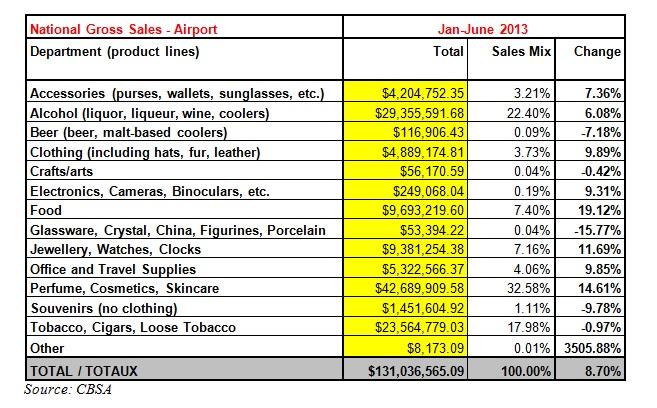
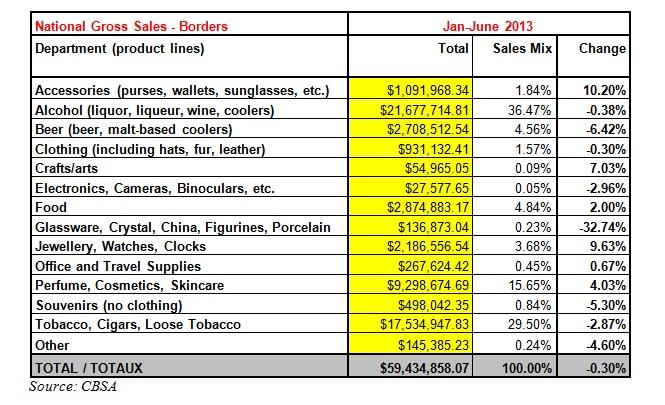
Duty free and travel retail sales at Canadian airports grew by +8.7% to C$131.0m ($125.7m) in the first half of 2013, while they were flat (-0.3%) at the border at C$59.4m, affected by a -5.5% fall in the Canadian dollar during the period.


According to the figures – provided by the Frontier Duty Free Association based on data from the Canadian Border Services Agency – among the product categories with sales over C$2m, the fastest growers at the airport were food at +19.1% to C$9.7m, beauty (+14.6% to C$42.7m), and jewellery and watches (+11.7% to C$9.4m) – see table below.  The biggest faller was glassware and crystal (-15.8%).


At the land border, of 13 specific categories seven were negative, with glassware and crystal falling by -32.7%. Among the core product groups, liquor was also down by -0.4%, tobacco by -2.9% and beauty up by +4.0%. The biggest riser – and the only one in double digits – was accessories at +10.2% (see table below).


Based on June 2013 numbers, the main categories that dominate DF&TR sales at the land border were: Liquor, Tobacco & Cigars, Beauty, Food, Beer (beer, malt-based coolers), Jewellery & Watches, Accessories (purses, wallets, sunglasses, etc), Clothing (including hats, fur, leather) and Souvenirs.


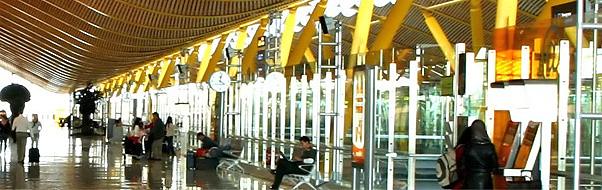
[Pictured top is Toronto Pearson Airport.]

NWS: ‘Remarkable growth’ for Sky Connection

The parent company of Hong Kong travel retailer Free Duty (Sky Connection Ltd) has described the operator’s growth in the six months to December 2012 as “remarkable”.


Sky Connection’s contribution to NWS Holdings, the infrastructure and service flagship of New World Development Company, enabled NWS’s Facilities Management division (which runs the Hong Kong Convention & Exhibition Centre and Sky Connection) to lift operating profit  by +19% to HK$687m ($88.6m). Sales turnover was not disclosed.


NWS says: “Free Duty’s tobacco and liquor retail business at all land border crossings continues to thrive and experience remarkable growth by capitalising on the strong patronage of high-spending visitors from mainland China.”


Free Duty (Sky Connection) has railway duty free and travel retail stores at Hung Hom Terminal, Lok Ma Chau Railway Terminal and Lo Wu Terminal, which process millions of passengers every year – Lo Wu alone handling 93m – and were subject to a major upgrade last year. Traveller volume through Lo Wu, Lok Ma Chau and Hung Hom were up by +8% during the six months to December.


Free Duty (Sky Connection) also operates DF&TR stores at the busy China Hong Kong Ferry Terminal and the Macau Ferry Terminal, although its long-standing liquor and tobacco concession contract at Hong Kong International Airport (operated since the airport’s inception in 1998) expired in November 2012 after DFS won all the core duty free tenders there last summer. The full impact of this loss may be felt in NWS’s end-of-year results in June, although continuing strength of the rail and ferry terminal businesses could prove an effective counter balance.

Sharp sales spike on Canadian border

June duty free and travel retail sales on the Canada-US border have surged by +9.1%, indicating that new allowances introduced from 1 June are having a positive effect on trading.


The latest data from the Canadian Border Services Agency – which have been analysed by the Frontier Duty Free Association – show that the June rise to C$13.8 million (US$13.9m) is significant in relation to the overall trend in the first half of the year which produced a more pedestrian growth rate of +4.45%.


June’s sales accounted for 23.2% of the C$59.1 million total border sales in the first six months of the year, a 1.0 percentage point rise on last year when they accounted for 22.2%. However, the June border result, while exceptional, was not quite enough to overtake the airport channel which saw growth of +10.0% to C$22 million.


By far the biggest sales hike seen at the border came from the electronics sector which grew by +126.0% compared to June 2011. Among the categories that account for the vast majority of sales – liquor excluding beer (37.5%), tobacco (25.9%) and beauty (15.5%) – the growth rates were +11.4%, +2.5% and +16.3% respectively.

Dubai opens its first border shop


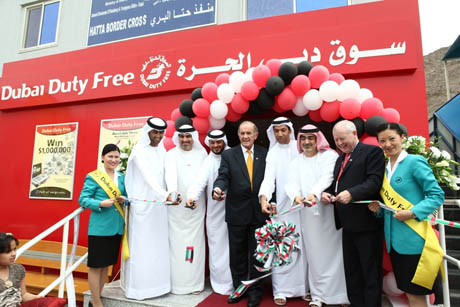
Dubai Duty Free (DDF) has officially opened its first 24-hour duty free shop (42sq m) at the Hatta-Oman border next to the Customs and Immigration offices.


While the opening is modest to begin with by DDF standards, Colm McLoughlin, Executive Vice Chairman of Dubai Duty Free said the retailer is very happy to expand the operation when it is appropriate ‘in line with the plans that are in place’.


Thanking government officials who made the formal opening possible back on May 24, 2012 McLoughlin added: “When we were first approached with the idea of establishing a border shop here at the Hatta-Oman border, we thought that the timing was good as there are plans in place to expand capacity at the border check points.”


He then thanked officials from the Dubai Immigration Department and Dubai Customs who assisted DDF to ensure the smooth inaugural opening.


CONVENIENT STOPPING POINT

The new retail outlet now offers a selection of high-demand items, including confectionery, perfumes and tobacco and serves as a convenient stop off point for drivers crossing to and from Dubai.


Lieutenant Colonel Talal Ahmed Al-Shangeti, Deputy Assistant, Director of Ports Affairs from the Ministry of Interior said his organisation was ‘honoured today to be part of this distinct project’.


He added: “The opening of Dubai Duty Free at the Hatta border is definitely a great service to the passengers at the borders and a service to tourism in Dubai and the UAE. Having such a universal reputation due to the tremendous variety of product and the high sales, Dubai Duty Free will for sure contribute to revive the area.”


Dubai Duty Free recently reported an 11% first half sales rise to Dhms.2.818bn ($772m), which it believes, places it well on track to hit annual sales of Dhms.6bn ($1.64bn) this year.


The official inauguration of the Dubai Duty Free Hatta Border Shop on July 11 earlier this month, attended by officials from Dubai Duty Free, the Dubai Immigration Department and Dubai Customs.


September hearing for €220m Bulgarian border business

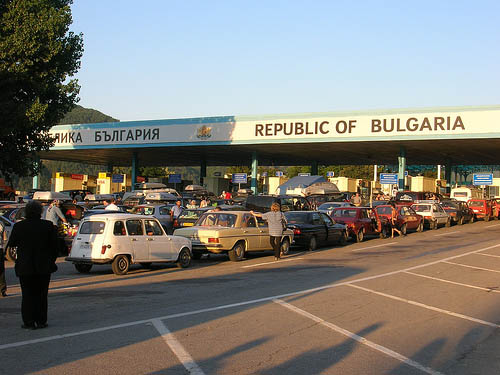
Parliamentary hearings to discuss the possible reinstatement of duty free land border shops and petrol stations on Bulgaria’s frontiers with Serbia, Macedonia and Turkey could take place as early as the beginning of September, according to the Bulgarian Duty Free and Travel Retail Association.

serbia and bulgaria border

Reinstatement would mean the revival of a business valued at €220m annually.


Radostin Genov, Chairman of BDFTRA, told TRBusiness: “It is expected the first hearings will be held immediately after the summer parliamentary holiday in early September. But because restarting the duty free shops is a political decision, nobody can say for sure whether we will have a successful outcome.”


The hearing will take place thanks to a new bill, officially tabled on 11 May and signed by 14 independent deputies who support the ruling majority. The bill aims to establish a comprehensive framework for the strategic development of the whole Bulgarian border travel trade. “This includes establishing modern travel retail centres, instead of the current small shops, on internal EU borders with Romania and Greece,” says Genov.


On the basis that there is the political will for the bill to go through, Genov says that operators could be back in business as early as February 2013, after jumping the relevant bureaucratic hurdles.


Economic imperative

One key factor that will influence parliament is that, following the closure of Bulgarian land border shops in 2008 – under “unjustified” European Commission pressure believes the BDFTRA – revenues from this trade have moved to neighbouring countries.


The association estimates the economic loss for Bulgaria, including tax, social security payments, jobs and currency turnover exceeds €220m annually. In addition, cigarettes smuggling jumped by 3-4 times says the BDFTRA after the border store closures.


Bulgaria’s duty free and travel retail market is interesting due to the country’s location between Europe and Asia. It is also a tourist destination, which ensures strong permanent border flows which in total are about 20 million annually. For example, the Kapitan Andreevo checkpoint – located on Bulgarian-Turkish border processes about 5-6 million people and about 300,000 trucks annually.


Genov says: “The closure of Bulgarian land border shops was a good present to Turkish duty free operator Setur.”


Last August, after a two-year investigation, the European Ombudsman slammed the EC for stating in a 2008 pre-closure report that Bulgarian border-based duty-free shops and petrol stations are a “focal point for local corruption and organised crime”. The Ombudsman said the statements “were not substantiated by concrete evidence in its possession”.


EC President José Manuel Barroso rejected the findings saying that the EC report findings “were based on evidence collected from independent sources, such as the Bulgarian authorities, representatives of EU Member States and third countries (and) demonstrated a lack of effective control over duty-free shops and also pointed to repeated abuses such as smuggling, fraudulent imports as well as links to corruption and organised crime”.

Scandlines disposes of Sassnitz BorderShop

Ferry company Scandlines is selling five ferry routes to Stena Line – subject to approval from the relevant competition authorities – including its Sassnitz BorderShop, one of three that the company operates. The deal affects about 300 employees in Germany, Sweden and the Baltic States.


At 800 square metres, Sassnitz is the smallest of the three duty free BorderShop locations owned by Scandlines. The largest, in Puttgarten, Germany – where Havana Club recently opened a permanent tasting bar – is 10 times larger at 8,000 square metres, while the unit at Rostock, which opened a year ago, is 1,200 square metres.


The routes Scandlines is selling comprise about 80-90% of its freight routes according to a spokesperson. They are:

– Travemünde – Ventspils

– Travemünde – Liepaja

– Nynäshamn – Ventspils

– Rostock – Trelleborg

– Sassnitz -Trelleborg.


The Baltic company says that in future it will focus on the “traffic machines” of Rostock – Gedser, Puttgarden – Rødby, and Helsingborg – Helsingør. Traffic machines is a term referring to the routes that are the main passenger generators and therefore also big duty free earners. These routes operate in the triangle between Germany, Denmark and Sweden.


Both companies benefit from the deal. Gunnar Blomdahl, CEO for Stena Line says: “Through the acquisition of the routes from Germany and Sweden to the Baltic States, we are increasing our presence in the southern Baltic and expanding our offering for both freight and passengers. Our ambition is to continue developing the new operations.”


Søren Poulsgaard Jensen, CEO at Scandlines, adds: “Our strategic objective is to be a consumer-driven ferry operator (and) selling our freight routes at a time of a friendly market environment is a logical step. Focusing on our three traffic machines together with our land-based retail operations will help us strengthen our image as a provider of services in the triangle between Germany, Denmark and Sweden.”


In 2011, Scandlines parent company, Scandferries Holding, produced 38% of its total revenues of €611 million from catering and retail. The group carried 12 million passengers last year.

Canadian border sales boosted as DF allowance quadruples

Border stores on the Canada-US border are reporting mixed results from the first weekend after duty-free allowances for Canadians travelling to the US were quadrupled from C$50 to C$200 (if they are away for more than 24 hours). But Canadian domestic retailers are lobbying the government over fears that the change will reduce spending at home.


The rule-change, last Friday – which puts the allowances on a par with those already existing for US travellers going the other way – has not produced a mad dash for the border in some places but in others, retailers are seeing high sales increases.


windsor DFAt Windsor Tunnel Duty Free (left) at the Windsor Detroit tunnel – a chiefly commercial crossing in Ontario, Manager Nick Rumfeldt, tells TRBusiness: “This was the first weekend the new allowances were in operation and it is too early to judge the impact on sales or traffic. I personally don’t anticipate a drastic change. The new allowances do not affect the existing liquor (or tobacco) limits and liquor is our main sales driver.”
 

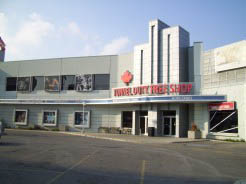
However, in the same province at the Peace Bridge Plaza in Fort Eerie close to Niagara Falls – a more tourist-oriented crossing – Peace Bridge Duty Free (below right) saw sales increase by +8% in the first four days of June.


Marketing director at the biggest duty free border store in North America, Bonnie Gates, says: “We had more than 500 extra customers during this period with average spends increasing and plenty of people very excited about the changes, with some already deciding to spend longer in the US to take advantage of it.” The new allowances are C$200 after 24 hours but rise steeply to C$800 after 48 hours.


peace bridgeGates is not worried by the allowances for liquor and tobacco being unaffected. She says: “With the overall increase it means that shoppers who were previously spending it all on core categories like liquor and tobacco now have the opportunity to spend on other categories like perfumes, watches and luxury goods. We have been adding named brands for about two years we can now further expand this side of the business.”


The Frontier Duty Free Association was not available for comment, but in a statement it says: “The previous two-tiered allowance system was confusing to many travellers and it was a factor in traffic congestion and longer waiting times at border crossings. Now it’s even easier for border shoppers to shop and save.”


A negative aspect of the government reform is that the duty free industry is accused of taking away national tax revenues as well as business from local retailers. Chief Economist at BMO Capital Markets, Douglas Porter puts the losses to the retail channel – under the old allowances – at over C$20 billion a year “at a conservative estimate” he says. Porter maintains that the new rules will only exacerbate the situation as Canadians travel to the US to shop more, especially as the Canadian dollar remains high and at parity with the US dollar.


However, duty free shops say that shoppers are also able to spend their full duty-free limit on the Canadian side of the border, if they are away for more than 48 hours.


The Retail Council of Canada is calling for Ottawa to make immediate changes that would help combat cross-border shopping but focused more on structural changes such as the elimination of import tariffs, in order to level the playing field, according to Karen Proud, Vice-President, Federal Government Relations at RCC.

Canadian duty free sales reach $131 million

According to the FDFA, Canadian land border duty free sales reached $12.3 million in November 2011. This constitutes a 1.16% increase in sales compared to November 2010.

Sales at land border duty free shops for January-November 2011 amount to $131 million; a 0.19% increase compared to January-November 2010. Alcohol, Tobacco and P&C were the best-selling categories.

AIRPORT DUTY FREE STORES
The national airport duty free sales figure for November 2011 is $16 million; an increase of 11% compared to November 2010. Sales at airport CDN duty free shops for January-November 2011 equal $209 million; a 14% increase compared to the same period last year.

REGIONAL SALES FIGURES – LAND BORDER
For January-November 2011, the Prairie region reported sales of $9.3 million with a decrease of approximately 1.8% compared to the same period last year. During the month of November, the Prairie Region recorded sales of approximately $962,000 thousand which is a decrease compared to November 2010 by about 6.8%.

The Pacific sales figure for November 2011 is $1.8 million. This is a 7.6% increase compared to November 2010. For January-November 2011 the Pacific region has seen sales of $22 million with an increase of 5% for January-November 2011 compared to January-December 2010.

The Ontario sales figure for November 2011 is $7.6 million. This represents an increase of 0.67% compared to November 2010. For January-November 2011 Ontario recorded sales of $72 million with a minor decrease for January-November 2011 compared to January/December 2010 of approximately 0.58%.

The sales figure for Atlantic/Quebec for November 2011 is $1.9 million, which is an increase of 1.65% compared to November 2010. For January-November 2011 Atlantic and Quebec regions recorded sales of $27 million with a slight decrease for January-November 2011 compared to January-December 2010 of roughly 1%.

‘LAND BORDER DUTY FREE CATEGORY RANKING’
The main categories that dominated sales in land border duty free are as follows (in order of sales highest to lowest – based on November 2011 numbers):

Alcohol (liquor, liqueur, wine, coolers)
Tobacco, Cigars, Loose Tobacco
Perfume, Cosmetics, Skincare
Beer (beer, malt-based coolers)
Food
Jewellery, Watches, Clocks
Clothing (including hats, fur, leather)
Accessories (purses, wallets, sunglasses, etc.)
Souvenirs
Glassware, crystal, china, figurines, porcelain
Office and Travel Supplies
Other
Crafts/Arts
Electronics, Cameras, Binoculars, etc.