After another record-breaking $5.25bn sales turnover from all operations last year, the South Korean duty free industry is used to breaking records as David Hayes reports.
All duty free operators in South Korea now expect their industry to pass the $6bn mark for the first time in 2013 if Jeju domestic sales are included, or $5.8bn if not. Either way, this is still the biggest duty free market in the world by far and according to detailed official Korea Customs Service figures, South Korea is poised for yet another another record year.
A flood of Mainland Chinese visitors has produced new records across the board for the country’s downtown and airport duty free shops. Buoyed by a sustained increase in business revenue, many of South Korea’s duty free operators are undertaking or planning major shop expansion schemes to accommodate further anticipated growth in Chinese customer numbers.
Supported by heavy overseas marketing, South Korea’s travel retail sector has also has benefited from the as yet still unresolved diplomatic tension between China and Japan over the Senkaku islands, which has deterred many patriotic mainlanders from visiting Japan.
But this growth is nothing new. The Business has covered this market thoroughly now for many years and duty free revenue growth has been particularly dynamic over the last three. However, South Korea’s duty free industry has not peaked yet and operators fully expect to see Chinese visitor purchasing power expand further, while Southeast Asian tourists promise to become higher spending customers in future.
GETTING ON WITH THE NEIGHBOURS
Having said that, closer to home the country is enduring difficult bilateral relations with North Korea which are prompting some concerns. However, loud and aggressive sabre rattling rhetoric from Pyongyang in North Korea has thankfully not hurt leisure travel in the region so far. However, some groups of Chinese tourists are reported to have cancelled tours to South Korea in April when North Korea’s threats were loudest.
Leading duty free operators interviewed in South Korea for this deep in-depth and exclusive insight into the nation’s huge duty free industry have told The Business that they expect sales to grow by around 10% or more this year, while smaller operators are looking at high single digit growth at this stage.
Even if total duty free sales growth were to slow to around 10% this year compared to the actual 15.3% in 2012, then total duty free revenue in South Korea will hit around $5.8bn this year, after the country’s bustling duty free shops recorded another record-breaking sales year registering $5.26bn in sales in 2012, according to official Korea Customs Service figures.
These figures include sales in all airport, seaport and downtown shops, including internet sales, but not inflight sales or ‘domestic duty free sales on Jeju Island.
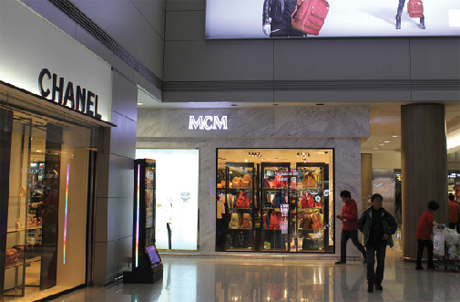
[MCM – shown here at Incheon Airport – has become a big brand for Mainland Chinese after it began advertising in China].
When these ‘domestic’ duty free sales are included as well, total duty free revenue in South Korea last year reached $5.6bn (6.33 trillion won) using the exchange rate of $1.00 = 1,126 won in 2012, according to Korea Customs Service, registering a 15.3% increase compared with the $4.86bn recorded in the previous year.
Lotte Duty Free is South Korea’s largest duty free operator with total sales of Won.3.23 trillion in 2012, according to Korea Customs Service figures, up 18.6% on W.2.72 trillion the previous year. This gives the company a 51% share of South Korea’s total duty free market including domestic duty free sales.
INCHEON’S SECOND LARGEST OPERATOR
Shilla Duty free is the second largest operator with total sales of W.1.92 trillion won in 2012, up 25.9% on W.1.52 trillion the previous year. This result means the company has a 30% share of the nation’s total duty free market including domestic duty free.
Third place, interestingly, is taken by Jeju Development Corporation with sales worth W.342.8bn in 2012 in its domestic duty free shop. Registering a 1.3% increase on sales worth W.338.3bn in 2011, this result gains the company a 5.4% share of the overall South Korean duty free market.
Among other operators, Dongwha Duty Free recorded sales of W.244.7bn won in 2012, representing an 11.3% increase on its performance the previous year and giving the company a 3.9% duty free market share.
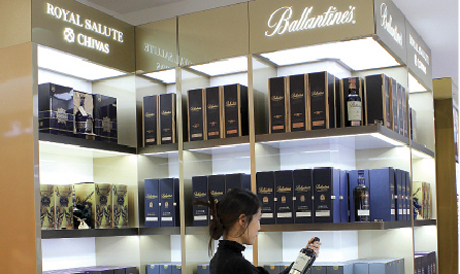
[Downtown Dongwha has begun selling a limited amount of premium liquor for the first time].
Meanwhile, the State-run Korea Tourism Organisation, posted sales worth W.229.5bn in 2012, a 2.3% increase on the previous year where it gained a 3.6% duty free market share last year. By contrast, WalkerHill Duty Free’s sales reached W.183.3bn, showing a 21.1% improvement on 2011 and achieving a 2.9% market share.
Only two South Korean duty free operators saw a fall in sales last year. Shinsegae Duty Free, which has taken over the former Paradise Duty Free Shop in Busan, recorded a -6.9% fall in sales to W.133.9bn in 2012, giving the company a 2.1% share of the national duty free market – including domestic duty free sales.
Jeju Tourism Organisation, the other operator to suffer a revenue fall, saw a -5.3% decline in its domestic duty free shop sales, registering W.40.3bn in sales revenue in 2012, delivering a 0.8% share of the South Korean duty free market.
INCHEON AIRPORT EXPECTING $1.9BN IN 2014
Lastly, the War Veterans Welfare store generated nominal sales of W.0762m, up 9.3%, representing a 0.1% share of the total.
Meanwhile and as reported, Incheon International Airport has retained its ranking as the world’s number one airport for duty free sales for the second year running, recording total duty free revenue worth the equivalent of $1.73bn in 2012, up 15% on the previous year.
The State-run Incheon International Airport Corporation (IIAC) is now looking for duty free revenue growth of at least 10% this year which would lift sales to $1.9bn if the minimum 10% growth target is met. The IIAC is currently waiting for a new president to be appointed after the former somewhat charismatic head, Lee Chae Wook, stepped down in February to take up a senior private sector post in the logistics industry.
Lee’s departure was always expected, coinciding as it did with the inauguration of South Korea’s new government. Such changes at Korean state companies are regarded as ‘normal rotation’ following the election of a new government.
Currently, Incheon Airport is headed up by Acting President, Lee Young Geun, IIAC’s previous Deputy President and the selection process for a new president has yet to begin. This will require government approval before the proposed candidate will be able to take up their new post.
NEW SHOWCASE LOUIS VUITTON BOUTIQUE?
When that happens, one of the first tasks will be to oversee the planning for the airport’s Terminal 2 project. Ensuring a world-class travel retail offer will be one of the key elements in the new H-shaped terminal’s design.
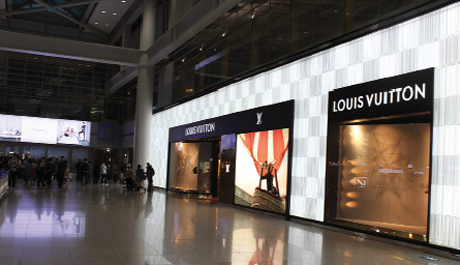
The Business understands T2 may include a showcase Louis Vuitton boutique to partner the Louis Vuitton world’s first airport boutique in Incheon Airport’s current main terminal (shown here).
Operated by Shilla Duty Free, Incheon’s striking Louis Vuitton boutique recorded $92m in sales in 2012, which certainly ranks it as the highest revenue generating single brand airport outlet in the world. Meanwhile, new developments are in the offing as the government encourages smaller local companies to enter duty free retailing and instructs operators to devote more retail space to displaying Korean-made products.
Nine new small and medium-sized companies are due to open downtown duty free pre-order shops in cities across the country this year as part of government efforts to promote tourism in provincial areas. Major operators do not expect any threat to their dominance from the smaller shops however, as the majority of foreign tourists visit Seoul and Jeju Island.
Interestingly, small and medium companies failed to bid for Korea Tourism Organisation’s duty free shops that were tendered at Incheon International Airport last December and again more recently in February, after which both procedures were cancelled.
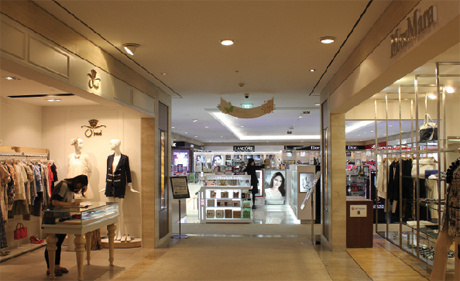
[WalkerHill Duty Free where many changes are planned for the downtown store, hotel and casino].
Industry sources believe that the two tenders, which on instructions from the previous government were restricted to small and medium-sized companies, failed to generate interest due to the level of retail space rental fees at Incheon Airport.
The proposed rental fees are thought to be too high to interest smaller companies who flocked to bid for the nine downtown provincial city duty free operator licenses – many of them owning property or having reasonable rental options to house their proposed shops.
Meanwhile, the Korea Tourism Organisation, which promotes Korean-made products in its shops including fashion brands, is hoping South Korea’s new government will allow the organisation to continue operating duty free shops at Incheon Airport where the profits earned are used to fund its tourism promotion activities.
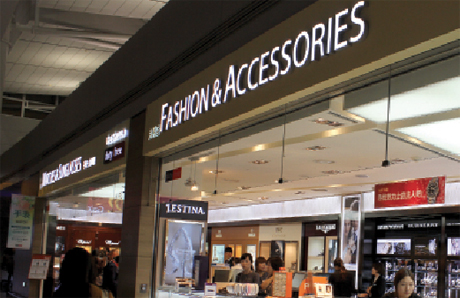
[Top image: Fashion at Incheon Airport].

 Trbusiness. The travel retail Trbusiness. The magazine for global retail and duty free professionals.
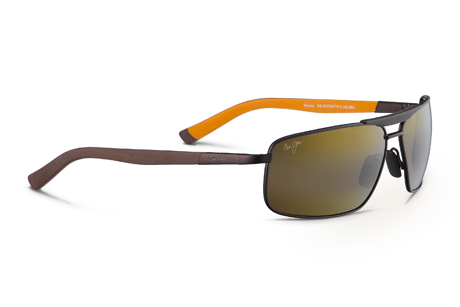



 Apart from Hippie Chic, the company is also launching Breo Twilight “which gives Breo watches a more premium feel by incorporating Swarovski Elements and black highlights”.
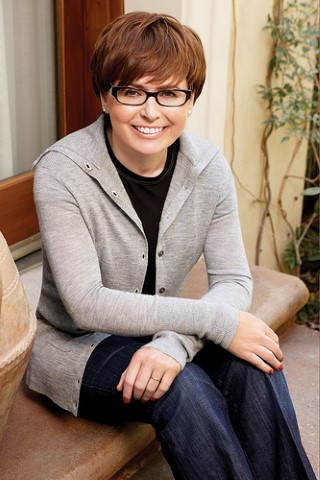 “To me, the women of San Francisco and the city itself really epitomise today’s multifaceted beauty consumer,” explains Suzi Weiss-Fischmann, OPI’s ebullient Executive VP & Artistic Director (left).
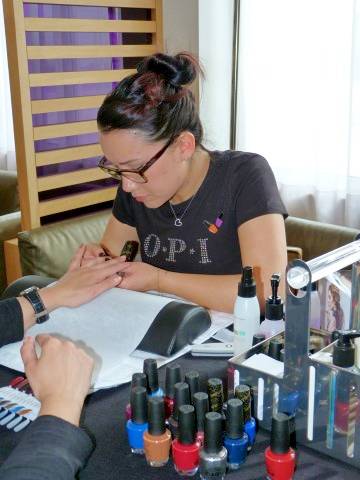 In addition, the range is joined by three new Liquid Sand nail lacquers in earthy hues of taupe, blue and grey: It’s All San Andreas’s Fault, Wharf! Wharf! Wharf! and Alcatraz…Rocks. Liquid Sand lacquers dry to a textured, matte finish, infused with reflective sparkle.

 Most recently, Loftus was the North American President and CEO of P&G Prestige, a position he held for over a decade. Prior to that he held posts at Cosmopolitan Cosmetics, Escada Beaute, YSL Beauté and also served as Divisional VP at May Department stores.
 CELEBRITY AND DESIGNER FOCUS

