 Senior Russian and Airline executives attending last week’s SKYSERVICE 2016 Conference in Moscow were presented with a lively presentation from Inflight Sales Group (ISG) Executive Director Vimal Rai on why onboard retail services remain important.
Rai began his presentation at Moscow’s Ritz Carlton Hotel by referring to ISG’s onboard retail partnership with Aeroflot majority-owned Aeromar – the supplier of all retail and F&B provisions to this carrier and many other airlines in Russia.
He then provided a tailored inflight presentation looking at the main aspects of inflight retail and how ISG believes it should be approached, focusing on the ‘five simple steps for an inflight programme’.
This began after a brief history tracing ISG’s roots back to 1982, while noting its 30-plus years experience in the industry.
“Across the last decade or so we have won a number of awards in the industry,” said Rai. We have been consistently voted by our partners who are suppliers and catering companies and other partners as amongst the best – if not the best – inflight retailer in the world,” he said.
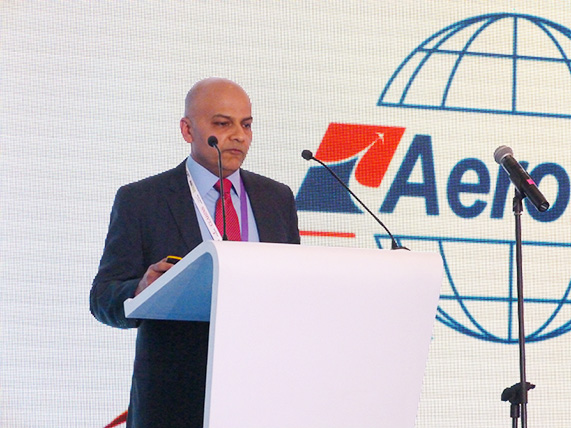
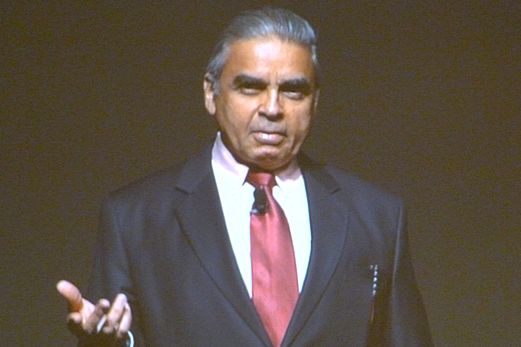
Inflight Sales Group (ISG) Executive Director Vimal Rai addressing the SKYSERVICE 2016 airline event in Russia last week. ©
He also added that ISG was very proud that just a few days earlier they had received the DFNI Global Award for Inflight Retailer of the Year. He then set the scene by showing a map of the world and the countries where ISG has offices and bases across Europe and Asia.
“We have 31 airlines today and the latest airline that we started on the first of April was Garuda in Indonesia and on the first of July we will be starting this French Blue,” he said.
“We are obviously looking for more and more business and we are very happy to be working here (in Moscow). The key point here is that while we are global players, we always act locally and we always act with our partners in the best interests of the airlines and the passengers we represent.”
Rai then gave the audience a flavour of the services ISG offers its partners, whether working directly with airlines, or through partnerships such as Aeromar and other catering companies.
“Our products are actually sold to over 400m passengers worldwide today. We introduce an average of 200 or more new products a year across all of our customer airlines.
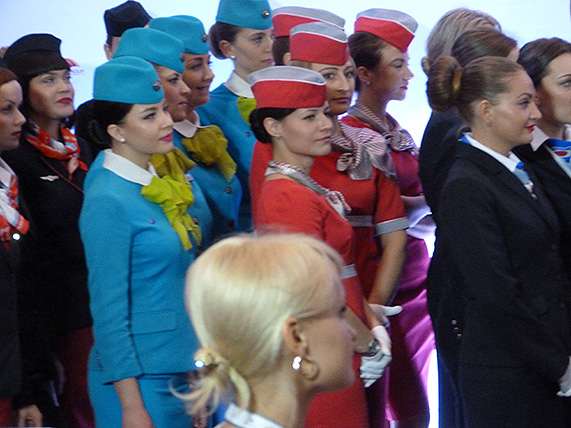
Cabin crew representing airlines from all over Russia attended the first day of the SKYSERVICE 2016 Conference hosted by CJSC AEROMAR, which provisions retail and F&B to Aeroflot and many other airlines. ISG partners with Aeromar for its Aeroflot contract and other airline business in Russia. AEROMAR is 51% owned by Aeroflot and 49% by LSG. ©
“We are known in the industry for providing products that other airlines do not carry that are frequently not even in travel retail at the airport.”
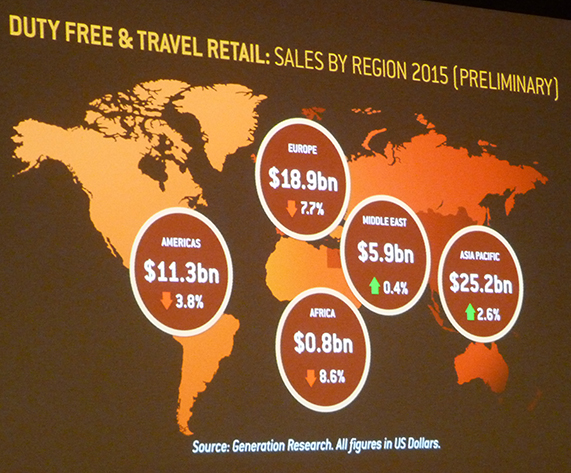
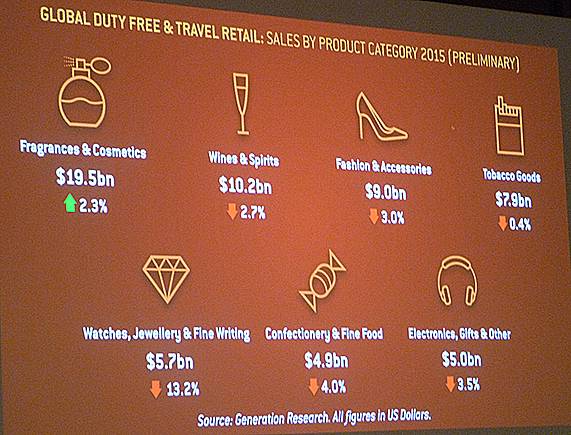
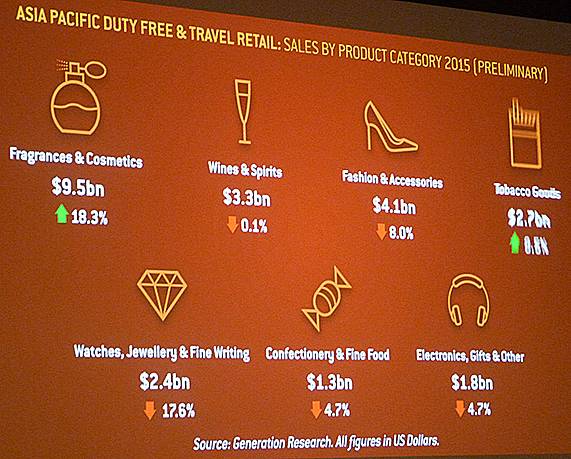
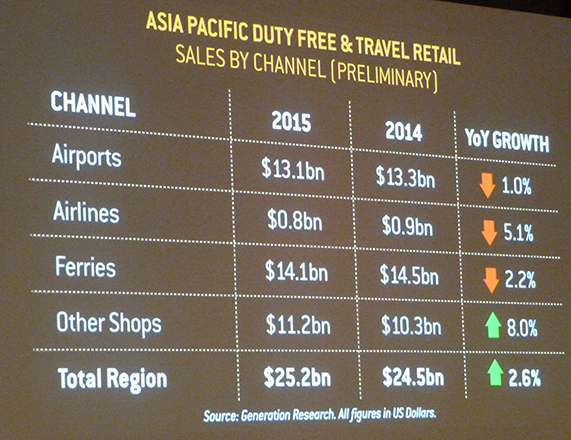
Citing one of ISG’s ‘old, but gold’ slogans as ‘beyond duty free, beyond the cart and beyond expectations’, Rai then took the audience through an instant guide to travel retail. He also provided the attentive audience with a breakdown of duty free sales based on Generation’s figures presented at the Cannes Tax Free World Exhibition.
QUANTIFYING THE TOTAL BUSINESS
Within this was the key global travel retail turnover total of $63.5bn in 2014, which is expected to be around the same level or thereabouts when the 2015 numbers are in, before rising to around $85bn by 2020.
For the uninitiated, Rai said this represented an average accumulated growth rate of about 8% year on year, with airports typically accounting for the lion’s share.
Indeed, of the largest seven airports in the world for travel retail, five of them are in Asia, with Rai naming Seoul, Singapore, Hong Kong, Shanghai and Bangkok in sales ranking order.
He then highlighted regions contributing heavily to travel retail, including Asia Pacific leading close to 40%, while Chinese passengers alone contribute about 30% of all tax free spending as ‘a huge number’.
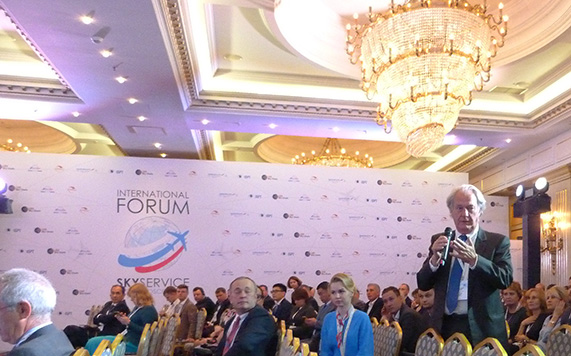
Inflight Sales Group CEO Jean-Marcel Rouff talks from the floor of the Moscow Conference which was pretty well attended on the first morning. ©
Rai then posed the question whether anyone could guess where Russians stand in this ranking, before promptly breaking the resulting audience silence with ‘news’ that it is still their Russian national counterparts that hold the number two spot with 14%.
The case was then made for why travel retail is so important today and why the compound annual passenger growth rate of 5% represents such a ‘fantastic opportunity’ for airlines to earn additional revenue.
SHOPPING MATTERS TO TRAVELLERS
While the vast majority of travellers say they actually enjoy shopping when visiting foreign cities, Rai added that research also indicates that as many as 68% of passengers actually choose their destinations based on shopping opportunities.
With disposable income rising, so travel retail has taken on a greater importance in peoples’ lives and airports are no longer ‘just airports’, but more like air malls, as Rai pointed to both main Moscow airports of Domodedovo and Sheremetyevo as good examples.
He then explained the origins of travel retail and references to it as the Sixth Continent which were first coined by Jean-Paul Agon, the Chairman of L’Oreal. This was due to the sheer size of the 1.3bn-strong passenger base, effectively representing 10% of the world’s population.
Rai then moved on to address the five steps ISG believes are the building blocks for the most successful inflight programmes.

Left to right: Vadim Zingman, Customer Service Director, Aeroflot; Vladimir Dzhao, CEO, JSC Aeromar and Jean-Marcel Rouff, CEO, Inflight Sales Group. ©
Airlines need to look at strategy first and ask where they stand as an airline and with what competitive advantage – plus whether this is within the entire spectrum of full service, low cost, food for free or for sale – and what kind of items will be merchandised.
He said: “Are you going to be selling High Street brands, luxury brands or airline logoed merchandise? I think it is very important that we understand as airlines where we are in that competitive spectrum. This will then allow you to focus on the next few elements of inflight, which are looking at your partners and looking at your stakeholders”.
MULTIPLE STAKEHOLDERS
These include at least seven other entities, including product suppliers; cabin crew that will sell the products; a marketing team; back office operations and logistics; performance analysts; and IT teams looking after onboard information technology and POS systems.
Rai said: “So the entire travel retail programme is a synergy of all of these stakeholders and you have to be prepared to sometimes have the difficult conversations with each of these stakeholders – in order to ensure that your inflight retail programme takes off.”
He also explained to airline executives in the room that value perception needs to be driven through the differentiation of products and those that are not easily available and while price is a factor, it is not always the case.
Once the planning is all over and the aircraft doors close for take off it is only then that all the
attention paid to motivating, engaging with and equipping the crew with the right tools hopefully pays off.

Vitaly Saveliev, CEO, Aeroflot also attended the grand opening. ©
Rai said: “We like to believe that you not only credit crew and pay them commissions, but hopefully you inspire them. It has to come from within and you have to understand why they are doing this?”
He said it could be because they feel they are contributing to the company and to ancillary revenues, as well as making passengers who are buying products a little happier. But when it comes down to making the sale he says ISG’s experience is that promotions are strong tools.
Logistics, packing plans, sales and security issues are also important, along with performance analysis.
DIGITAL SOPHISTICATION ‘EXPECTED’
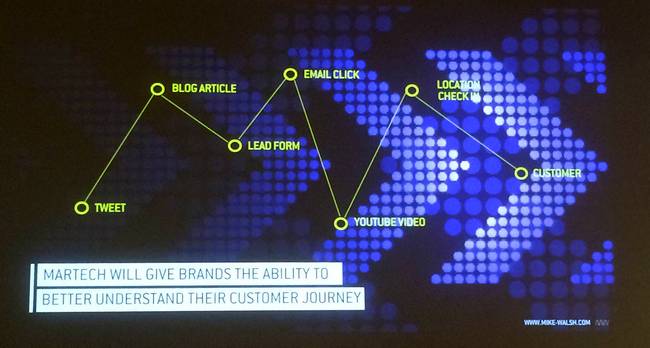
Rai said there is also the added dimension that customers today expect a certain level of digital sophistication inside the aircraft, at the same time that they are now very much more informed about brands, prices and value.
“This has a significant impact on the business that we know today. Social shopping is something that has really taken off in the last few years. I am not just talking of Facebook, but if you look at Instagram and you look at WeChat…
“Today in China, WeChat can actually enable payments to some mobile platforms, so you can actually get a text message that shows you products, you can click on it, you can browse and you can pay immediately on your mobile phone.
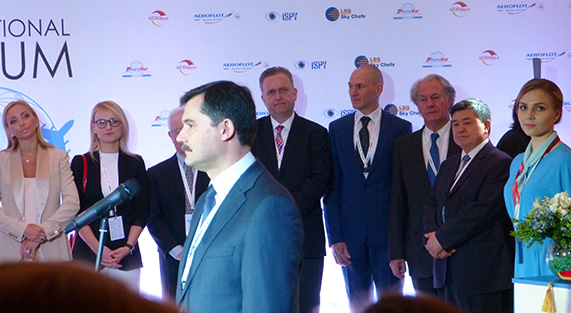
Alexander Neradko, Head of Russia’s Rosaviation Federal Agency of Air Transport addresses the crowd at the event. ©
“Again, this is something that is going to impact travel retail tremendously, because we have to be ready to apply these sorts of platforms for passengers to part with their money.”
Rai also addressed some of the changing trends amongst travellers and not only with regard to currency fluctuations. He said: “I mean recently in the last two years we’ve seen people preferring to spend money in Europe and people travelling more to Japan and Korea for example – but really this is a fundamental shift.
“You are having a lot more people travelling – today we have 1.3bn people. That number is expected to grow to about 2bn in the next seven years.. 2bn people is one third of the world.
TRANSACTION VALUES MAY FALL…
“That will result in lower transaction values. The more people you have travelling, the lower your transaction values and that is going to impact travel retail tremendously.”
Rai then declared that he would end with a very provocative statement when he said: “Is it the end of luxury? You can choose to disagree with me. I am asking the question… is luxury dead in travel retail?
“I don’t know the answer, but increasingly it seems to me that people are wanting to experience luxury and wanting to immerse themselves in luxury, but they are not willing to transact luxury. They don’t just see Chanel and want to buy it. It’s a Chanel, I want to go into the shop.”
With this in mind he suggested that the travel retail business may have to start focusing once more on High Street brands – perhaps even more on mass market – while retaining a little bit of differentiation as far as luxury goods is concerned.

 Trbusiness. The travel retail Trbusiness. The magazine for global retail and duty free professionals.
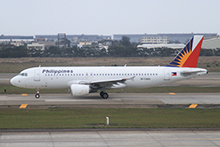 Philippine Airlines (PAL) is to tender its inflight duty free contract which expires at the end of this year, according to the airline’s Assistant Vice President – Ancillary Business Programs Management, Alfred Montemayor.