Archives

M1nd-set tracks India’s traffic recovery and shares key shopping influences

Delhi's meet and greet service introduced last year.

Delhi Airport introduced a meet-and-greet service introduced last year.

Indian outbound travel and tourism is showing healthy recovery, according to the latest research by leading travel retail research agency m1nd-set, evidence of which was particularly strong around the Hindu Diwali festival.


According to m1nd-set, the intention to travel internationally – particularly around the religious festival – was considerably stronger in 2022, not only in comparison to the last two years, but even 2019.


M1nd-set reports that online searches for international flights were around 40% higher than the same Diwali period in 2019, before the pandemic. Hotel bookings increased by around 55% over the festive period compared to 2021 and more than 12% higher than the 2019 level.


The report also reveals how Indian shoppers can be influenced to purchase from duty free and travel retail stores when travelling.


The research provides an in-depth overview of current and future travel trends, shopper behaviour in global travel retail, and recommendations on where the focus should lie in the future for converting travellers to browsers, and browsers to shoppers.


The forecast for the full-year traffic figures in India for 2022 is positive for both domestic and international travel.


Domestic air traffic is expected to be around 60% higher than the 2021 level, while for international traffic, the figure is double that, at around 120% higher.


‘India to become world’s third-largest aviation market’

Looking ahead, air traffic and travel and tourism will see healthy growth in India over the next few years. The travel market over the next few years is set to see growth of just below 10% between 2022 and 2026. The research also reveals that India’s air traffic is set to grow by 7% annually over the next two decades. This is higher than neighbouring countries across Southeast Asia and China where growth will be below 6% and according to m1nd-set, India is predicted to become the world’s third-largest aviation market, behind China and the US in the next few years.


Indian travellers are increasingly seeking greater value from their travel experiences, according to m1nd-set, a trend which the Swiss research agency says is stimulating growth in India’s luxury travel sector.


There is a marked spike in interest among Indian travellers for health and wellness travel, unconventional experiences and adventure travel, nature tours and other innovative travel experiences.


There are considerable opportunities for brands launching new products in the travel retail market with Indian consumers, according to m1nd-set. Peter Mohn, CEO and Owner at m1nd-set, commented: “More than nine out of ten Indian shoppers said they wanted to try a new brand during the recent festive period, whether shopping at home or while travelling. This is similar to the tendency among Indian shoppers in travel retail.


“Around eight out of ten Indian shoppers say they purchased a product from the duty free shops that they had never purchased before, which is well above the global average.”


Products on promotion and TR exclusives

Mohn went on to explain the Indian’s above-average tendency to purchase products on promotion and travel retail exclusives.


Peter Mohn, CEO & Owner at m1nd-set at TR Consumer Forum 2021.

Peter Mohn, CEO & Owner at m1nd-set.

“Three out of four Indian shoppers say they purchased a product on promotion from the duty free shop compared to less than seven out of ten global shoppers. 86% of Indian shoppers say they purchased a travel retail exclusive product, which is again well above the tendency among global travellers.”


The Indian traveller research also highlights the most purchased categories and sub-categories by Indians when travelling. Food, Perfumes and Alcohol are the leading product categories, according to the m1nd-set research.


Food is purchased by 35% of Indian shoppers, Perfumes by 32% and Alcohol by 22% of Indian shoppers. Other aspects of the shopper behaviour by Indians in travel retail, which the research provides detailed data on, include the tendency to plan or purchase on impulse in duty free and travel retail, the destination of purchase, whether for self-indulgence, sharing, gifting or on request, and the main reasons for shopping in duty free.


The research details the key purchase drivers and highlights the difference to the global shopping behavioural tendencies, as with all aspects covered throughout the research.


There are certain areas which travel retail stakeholders can focus on to increase footfall and improve conversion among Indian travellers in the travel retail environment, said Mohn.


These include staff engagement, social media influencers and VR and AR technology. “To focus on just one of these three key areas that can impact footfall and conversion among Indian travellers we identify in the research,” he said.


“Indian shoppers have a greater tendency than global travellers on average to interact with staff. The impact of their interaction is also higher than the global average. Training that is specific to the Indian consumer is therefore paramount, particularly on the cultural keys among Indian consumers, to ensure staff understand and respect these cultural nuances when engaging with Indian customers in store.”


More information on m1nd-set’s research and consultancy services can be obtained from m1nd-set by writing to [email protected].

Market leader Asia Pacific ‘could lose its air passenger traffic dominance’

Asia Pacific is set to lose its principal share of global passenger traffic in full-year 2022 to finish at 1.84 million passengers – a 45% decline compared with 2019, forecasts ACI Asia-Pacific.

While countries such as Japan, Hong Kong, South Korea and Chinese Taipei have eased Covid restrictions, continued quarantine requirements in some countries within Emerging and Developed Asia has slowed the region’s overall recovery, according to a statement twinning with the release of the Airport Industry Outlook for Q3.*

Pent-up passenger traffic demand is fuelling the post-Covid recovery, but sizeable headwinds exist such as the ongoing conflict in Ukraine, high fuel prices, rising inflationary pressures, lower economic growth projections and the looming recession, it goes on to say.

Stefano Baronci, Director General, ACI Asia-Pacific said: “Restoring international connectivity will take longer and will be partly dependent on the decision of China to re-connect to the World.

Q3 domestic traffic up 10.5%

“The macro-economic headwinds, less acute in Asia than other western regions, should not hamper a process of growth, subject to continuing to maintain the freedom to travel without restrictions. All the stakeholders engaged in the aviation ecosystem must prepare for the surge in traffic.”

On the other hand, domestic scheduled capacity has recorded a noticeable upswing and is now just 1.5% below 2019 levels.

Third quarter domestic traffic is up by 10.5%, though international capacity remains 51% down on 2019 (up by 8% over Q2 2022).

That Asia Pacific could lose its number on traffic position among the regions in full-year 2022 ‘comes as a significant shock’, says ACI, given it has dominated civil aviation markets since 2011 ahead of Europe and North America. Source: ACI Asia-Pacific.

Load factors for domestic and international passengers remain below pre-pandemic levels across Asia-Pacific and the Middle East sub-regions, continues ACI Asia-Pacific.

South Asia had the strongest load factor recovery in Q2 2022, to 78% versus 84% in Q2 2019.

“The consistent improvement in passenger volumes in the region is a positive indication of a sustained recovery of the industry following prolonged efforts towards rebuilding passenger confidence in air travel,” noted Baronci.

Although airports in the region are enjoying traffic upswings they are still experiencing operating losses, maintains ACI Asia-Pacific.

Total airport revenue in Q2 was around 59% lower compared with the same period in 2019, though a gradual increase is observed versus 2021 and 2021.

Total operating expenditures were 11.5 % lower in Q2 this year against the same period in 2019.

New greenfield airports

Stefano Baronci, Director General, ACI Asia-Pacific.

Since the second quarter of 2021, expenditure levels have remained relatively stable, continues ACI Asia-Pacific, indicating that airport operators are trying to strike a balance between increasing total revenue and maintaining or reducing expenditure.

China’s Zero-Covid strategy that prohibits outbound and inbound travel has overshadowed the region’s overall positive trend.

“The recovery of air transport in Asia Pacific is lagging behind as compared to other regions, mainly due to prolonged administrative restrictions, despite strong economic, social and demographic fundamentals,” added Baronic.

“Altogether, Asia-Pacific and Middle East airports are handling less than half of what they did before. With such dramatic drop in passenger traffic volumes, the economic and financial health of our airports are impaired. Pandemic-induced travel curbs in China and its zero-Covid strategy, continue to hamper recovery in Asia-Pacific.”

ACI Asia-Pacific says global air passenger demand is expected to grow by more than two-fold over the next 20 years – from 9.2 billion passengers in 2019 to about 19 billion in 2040.

The region will in time regain its leadership position in aviation, notes the association, with Asia Pacific and the Middle East alone accounting for 58% of global volumes, increasing at an average rate of +4.5% per annum versus +2.8% for other regions.

To support this, ambitious investment is required to meet demand with plans for almost 300 new greenfield airports, of which 57% are in Asia Pacific alone.

South Asia accounts for 18%, Southeast Asia 17% and Emerging East Asia 12%.

*The Airport Industry Outlook Asia-Pacific and the Middle East Q3 2022 is developed in partnership with Mott MacDonald and offers a quarterly assessment of the airports’ performances.

Europe on track for Q4 travel recovery, shows ForwardKeys’ air ticket data

European air travel in Q4 is tracking 24% down versus 2019 against -30% for global international travel, according to the latest ticketing data from travel analytics firm ForwardKeys.

The performance across Europe betters the -30% reported for the continent in Q3, heard attendees to City Destinations Alliance’s Annual CEO Meeting of Capital & Major Cities 2022 in Valencia (20-21 November).

While international arrivals are leading the way in Southern Europe (-14%), it is Northern Europe (-20%), Western Europe (-26%) and Central and Eastern Europe (-55%) that are playing catch up.

Urban destinations heavily impacted by the Covid-19 crisis registered a 23% decrease in international arrivals in Q4 – aligned with the European average, shows the City DNA City Index.

Positive signs for Q1 2023

In Q4, London, Paris and Istanbul notch the highest number of international arrivals at -23%, -18% and +9%, respectively, in a sign that international travellers are finding their way back to Europe’s larger cities.

London (-23%), Paris (-18%) and Istanbul (+9%) register the highest number of international arrivals in the last quarter of this year.

Olivier Ponti, VP of Insights at ForwardKeys, said: “Southern Europe is still leading the way and other parts of Europe are also making good progress as can be seen in Northern Europe during the popular winter season.

“On the flip side, the performances of Central and Eastern Europe are still negatively affected by the war in Ukraine, which is impacting not only on the countries directly involved but also on neighbouring destinations.

“The good results of Istanbul have been made possible by a rapid expansion of the destination’s air connectivity, a weak lira and a steady ‘open for business’ policy. Compared with 2019, Istanbul registers 6% more seats on international flights.”

Looking at 2023, Q1 international arrivals in Europe are tracking at -20 versus 2019 levels.

“The sustained recovery of international travel to European cities is very encouraging to see, after all the challenges our members have endured in the past years,” commented President of City Destinations Alliance, Petra Stušek.

“The return of travellers to our destinations puts international cooperation and sustainability at the centre of our strategy. We, and our Destinations Management Organisations (DMOs) members, are strongly committed to rebuilding tourism and making our destinations achieve an even higher quality of life and better possibilities for employment.”

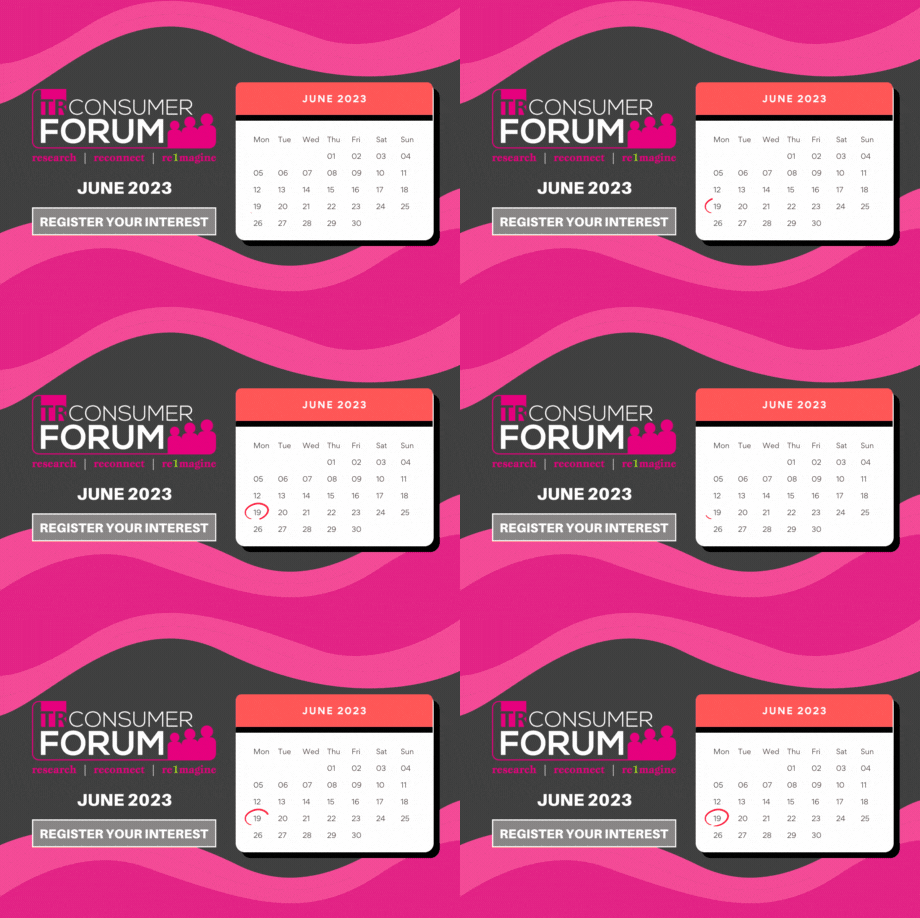
BREAKING: TR Consumer Forum revises June date for 2023 event

TRBusiness and m1nd-set are delighted to confirm that the TR Consumer Forum will now take place in the week commencing 19 June 2023, taking into consideration new feedback we have collected from the industry on their preferred week.

This also accommodates another industry event, which is unable to change its dates.

Organised by TRBusiness and m1nd-set, the TR Consumer Forum is the only travel retail industry event that places the consumer at the heart.

The 2023 edition will be back in full force, bringing all the top talking points into focus courtesy of vibrant panel discussions and interactive sessions delivered as part of its influential global conference agenda.

The location for the touring annual conference will be revealed in due course. 

“We have already received expressions of interest from a number of parties about hosting the next edition, as well as keen interest in both speaking at and sponsoring the 2023 TR Consumer Forum,” said Michael Barrett, Head of Events and Corporate Social Responsibility at TRBusiness.

“The last two editions have generated huge momentum, so we are all very much looking forward to next year’s event.”

TR Consumer Forum 2023

The second edition of the forum, which took place between 4-6 September 2022 in Limassol, Cyprus, attracted 180 industry stakeholders from around the world.

A total of nine dynamic sessions were held over the two-day educational programme, with leading names taking to the stage to deliver a masterclass in curating a consumer centric culture, including Yiannis Karousos, Minister of Transport, Communications & Works, Republic of Cyprus; Peter Mohn, Owner and CEO, m1nd-set; Eleni Kaloyirou, CEO, Hermes Airports; Rob Marriott, CEO, Aer Rianta International Middle East; and Barry Wheeler, Head of Retail, Qatar Duty Free and many more.

The programme was enhanced by m1nd-set consumer insights worth six-figures in value, which were revealed exclusively to delegates at regular, key points throughout the conference.

The TR Consumer Forum 2022 team.

The TR Consumer Forum 2022 team.

The feedback from delegates was overwhelmingly positive.

“It is always gratifying when delegates give positive feedback following an event,” said TRBusiness’ Michael Barrett. “It’s very rare though when the feedback is so overwhelmingly encouraging and consistently upbeat.

“When asked about the conference overall, speakers and sessions, the networking or the value of the event for the industry, the assessment from delegates was 100% positive with more than two thirds stating ‘excellent’.

The 2022 edition was hailed a “extraordinary conference” and praised for delivering “the latest insights from the best in the business”.

It was “a well organised event and gathering of like-minded individuals, set in beautiful surroundings on the delightful island of Cyprus, with thought provoking industry insights and discussions, which demonstrated, that together, through the sharing of ideas, knowledge and progress, we can bring about positive global change”, said Tracy Ross, Projects & Design Manager, Sustainability Champion & LEED Green Associate at Aer Rianta International Middle East (ARIME).

It was “a great event in a terrific venue”, according to Julie Lassaigne, Secretary General at European Travel Retail Confederation. “The format of the conference delivers great insights with m1nd-set data supported by interactive panel discussions.”

Helen Bull, Senior Business Manager – Internal Media Services at Hamad International Airport described it as “a very well planned and engaging, informative forum” with “good sessions and networking opportunities in a lovely location”.

A key fixture in the annual calendar

More comments from delegates highlighted the event’s reputation as an important fixture in the industry’s annual calendar.

Thomas Henningsen, Partner at Blueprint, called it an “extraordinary conference” with “educational, inspiring and data rich presentations and panel debates on how travel retail, as an industry, can better serve travelling customers during these unprecedented times”.

“The TR Consumer Forum has quickly become a must attend event for me because it puts the consumer at the heart of all the discussions”, enthused Tim Young, Founder/Managing Director of Young Spirit Consulting.

“This year’s event was packed full of valuable information, good discussions, and fantastic networking opportunities with old and new industry friends alike”.

Key moments on stage from the TR Consumer Forum 2022.

It was a “well run event with useful research insights to support strategic thinking within the travel retail sector”, said Lea Claxton, Head of Retail Space, Strategy & Delivery, Heathrow.

The TR Consumer Forum 2022 was a “fantastic opportunity to learn and hear about the latest trends for travel retail industry, to share thoughts and experiences and also an excellent networking event”, commented Bianka Pivarcsi, Retail Marketing Manager at Budapest Airport.

Emily Garrett, Senior Strategist, Altavia Travel Retail had “a fantastic couple of days, networking and hearing the latest insights from the best in the business”.

“Another insightful edition of this one-of-a-kind event”, summarised Danielle Willox-Semple, Insight Manager, Malt Whiskies & Partnership Brand at Edrington. “This year showcased Cyprus, and provided excellent examples of best in class consumer engagement activities”.

TR Consumer Forum 2022.

Coeur De Lion was among the brands exhibiting at the TR Consumer Forum 2022.

Delegates enjoyed ample networking opportunities, from the opening cocktail to the gala dinner.

As Rowena Holland, Managing Director, Essential Communications described, it was an “excellent conference in a superb venue” with “insightful presentations across a broad spread of industry topics, plenty of networking opportunities, and super hospitality all round”.

TR Consumer Forum 2022

Quality networking at the TR Consumer Forum 2022 gala dinner.

The 2022 TR Consumer Forum attracted a record number of sponsors and event partner (38) for a TRBusiness event (whether independently run or as a joint venture).

If you are in interested in finding out more about sponsorship packages, booking an exhibition space or speaking on stage, simply fill in the form at the top of this article.

Photos: Ogival Visuals.

You can watch all the highlights from the 2022 TR Consumer Forum in the video below:

–

TRBusiness owners appoint Ben Webb as new Managing Director

TRBusiness is delighted to announce that one of the company’s longest-serving employees, Ben Webb has been appointed Managing Director, effective immediately, while retaining his seat on the board.


TRBusiness Owners, Janice Hook and Nigel Hardy, will become Joint Chief Executive Officers (CEOs). Webb will continue to report directly to Hook and Hardy.


Webb has been working with brands, suppliers and retailers in a busy B2B environment for over 15 years.


He joined TRBusiness in May 2011 and quickly progressed to the role of Business Development Manager. In October 2014 he was promoted again to become Commercial Sales Manager.


Nigel Hardy and Janice Hook, Owners and Joint Managing Directors of TRBusiness

Nigel Hardy and Janice Hook, Owners and Joint CEOs of TRBusiness.

In September 2019 Webb was appointed International Sales and Marketing Director whilst joining the board.


He has been instrumental in the founding of The Travel Retail Awards – the only consumer-voted awards in the travel retail channel – as well as the game-changing TR Consumer Forum and acclaimed virtual event, TR Sustainability Week.


Co-owners and new Joint CEOs of TRBusiness, Hardy and Hook commented: “We are delighted that Ben has accepted the position of Managing Director.


“He is an integral part of the company and has demonstrated enormous commitment and loyalty over the 11 years he has worked for us. Ben is a great asset to TRBusiness who boasts exceptional experience within our growing team.”


“It is a huge honour and privilege to accept this new role,” said Webb.


“I started working for TRBusiness in May 2011, over eleven years ago, and have been privileged to receive the most fantastic support, mentorship and guidance from our two fantastic company owners, Janice Hook and Nigel Hardy.


“I also consider myself extremely lucky to be a part of the most fantastic team of people, all of whom are exceptionally hard-working, knowledgeable, friendly and unwaveringly dedicated to the travel retail industry.


“I am extremely excited to start this next chapter in my career with TRBusiness and look forward to continuing to serve the travel retail industry alongside my fantastic colleagues, fellow directors and company owners.”

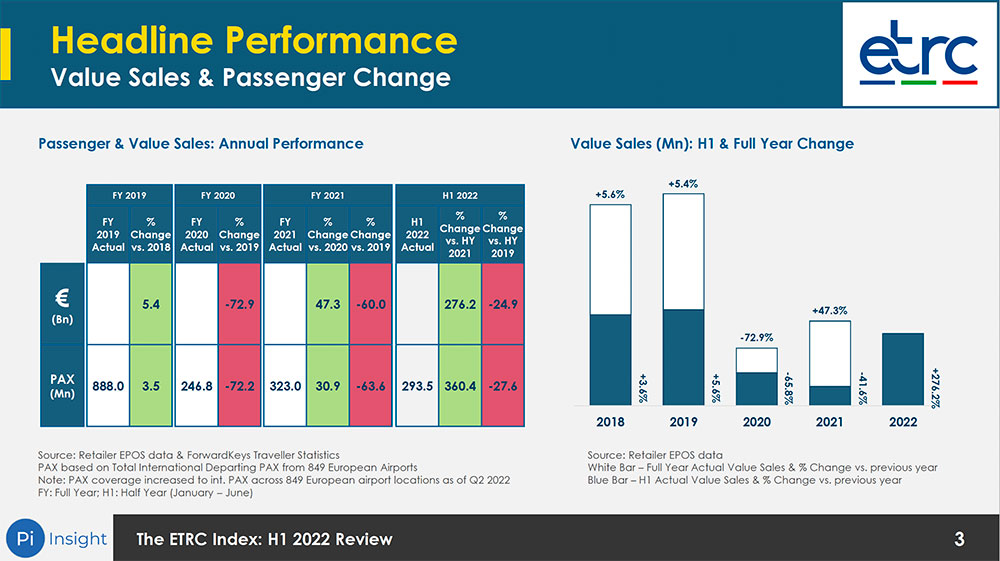
Value sales recover quicker than traffic, according to H1 2022 ETRC Index

According the ETRC Index, in the first half of 2022, travel retail continued to be heavily impacted as a result of the Covid-19 pandemic with international passenger levels down -28% and value sales down by -25% compared to H1 2019.


However, following a static performance in the first quarter of this year, Q2 2022 has shown a significant rate of recovery, with the Q2 value sales deficit falling to -17% vs. Q2 2019, following a deficit of -35% in Q1 2022.


The report compiled by Pi Insight for the members of the European Travel Retail Confederation (ETRC), outlines that the recovery continues to be underpinned by several key dynamics including value sales recovering quicker than international passenger numbers, although several trends, including the increased rates of spend per passenger are now softening.


“Value sales continue to recover quicker than international passenger numbers, although each metric is now following a similar trend. Each of the core categories shows strong rates of recovery with each sub-category also posting a positive contribution,” said Steve Hillam, Managing Director at Pi Insight.


“Spend per pax trend is now normalising, although it remains at a higher level in H1 2022 than spend per PAX in H1 2019.”


Julie Lassaigne, ETRC Secretary General, said: “As anticipated, Q2 2022 delivered strong results for European Travel Retail thanks to increased international travel in the region. We are pleased to see Travel Retail remains relevant for travellers in Europe.


“We hope this will be further confirmed by the results for Q3 2022 which will be unveiled at the ETRC Business Forum organised in Amsterdam on 26 January 2023.”


Developed as an exclusive service to ETRC members, the ETRC Index is compiled by Pi Insight thanks to data contributed by participating Travel Retailers of ETRC and the support of ForwardKeys for passenger data.

ForwardKeys: Top 20 arrivals destinations unveiled

Travel analytics company ForwardKeys has unveiled a list of the top global destinations for international tourist arrivals this year.

The Dominican Republic leads the ‘Most Visited Destinations’ report that has been published to align with World Travel Market in London this week (7-9 November).

Based on the latest available air ticketing data (combining arrivals up to 18 October with bookings to year-end), the Dominican Republic is set to welcome 5% more visitors than it did in 2019.

Following in descending order are Turkey, Costa Rica and Mexico, all of which have restored their 2019 tourist arrival levels (0%).

Jamaica and Pakistan were both 5% down on bookings, in fifth and sixth place, respectively, with Greece at -12%, Egypt -15%, Portugal -16%, and UAE -17%.

Strong representation from Central American and Caribbean destinations echoes the robustness of the US outbound market together with the positive impetus taken by a number of tourism-dependent countries that have imposed less severe Covid-19 travel restrictions than others, indicates the research.

Antalya is top destination city

Antalya in Turkey emerged as the top destination city as it prepares to welcome 66% more visitors than it did in the equivalent period in 2019.

The weakness of the Turkish lira combined with the government’s policy to remain relatively open to tourism during the pandemic and welcoming Russian visitors has helped the performance.

It is followed by Mexico’s resort cities of San José del Cabo, up 21%, and Puerto Vallarta, up 13%; then the Dominican Republic’s Punta Cana, up 12%; El Salvador’s capital San Salvador, up 10%; and the popular Mexico destination of Cancún, up 9%.

Click to enlarge. Source: ForwardKeys.

Several prominent trends have characterised the air travel recovery in 2022, according to ForwardKeys, including a relaxation of pandemic-related travel restrictions coupled with pent-up travel demand.

Major global events such as the World Expo in Dubai and FIFA World Cup in Qatar have offered impetus, together with the revival in business travel.

However, the infectious Omicron variant of Covid-19 stalled travel at the start of the year.

Staff shortages at airports have also hampered operations over the summer, continues ForwardKeys.

Despite the substantial hit to travel to and from Russia followings its invasion of Ukraine in February and bans on direct flights, it did not cause the expected precipitous decline in long-haul travel to Europe.

Olivier Ponti, VP Insights, ForwardKeys.

Europe: ‘Delaying effect’ on travel recovery

While tipped to maintain resilience, travel to Southern Europe has been knocked, particularly to Greece, down 12%; with Portugal suffering a 16% decline; and Turkey, flat (0%).

Meanwhile, trips to Iceland declined 14% for the period in question.

ForwardKeys expects that second-order consequences of the war, such as rising fuel prices and inflation, will have a ‘delaying effect’ on the travel recovery.

Asia Pacific, which has been characterised by stiffer travel restrictions most notably in China due to its Zero Covid policy, has begun to recover, outlines the report.

Leisure travel has been the driver of traffic, with Pakistan and Bangladesh 5% and 8% down, respectively, on 2019 levels.

Travel to the Maldives, down 7%; and Fiji, down 22%, are expected to hold up well.

Consumers’ appetites for beach holidays have spurred the travel revival, continues ForwardKeys, but business travel and city tourism lagged until the beginning of autumn.

The so-called ‘revenge spending’ phenomenon – has fuelled – in part the trend towards premium-class travel as consumers seek out value-added services.

This, together with rising costs of fuel, has driven a strong uptick in air fares.

Olivier Ponti, VP Insights, ForwardKeys, said: “Looking at the world on a regional basis, one must admire Caribbean countries for their early efforts to sustain visitor arrivals in the face of the pandemic and their continued growth in an increasingly competitive travel landscape.

“The Middle East also stands out, as it has helped to accelerate its recovery by hosting major global events such as the Dubai World Expo, the Formula One grand prix in various Gulf locations and, above all, the FIFA World Cup in Qatar. The Gulf has also seen a relatively robust comeback in business travel, a segment whose recent revival has come as a surprise to many.”

For a link to the full report, click here.

Shopping revenue soars in 9m as Copenhagen Airport returns to profit

Copenhagen Airport (CPH) tilted back into the black in the third quarter as shopping revenues surged 231% in the first nine months of 2022 year-on-year to DKK 487 million/US$65 million.

Profit of DKK 234 million/$31.2 million before tax in Q3 marks the first time since 2020 that CPH has turned a profit after borrowing DKK 2.2bn to maintain and invest in the airport in the first two years of the Covid-19 crisis.

Non-aeronautical revenue totalled DKK 499m for the period, a 75% jump versus Q3 2021.

Concession revenue in Q3 totalled DKK 327m, a rise of 92% compared with Q3 2021.

Revenue for the quarter increased 71% compared with the same period on 2021 to reach DKK 1,071m.

Nine-month results

Profit before tax registered DKK 221m in the first nine months of this year, a result that Copenhagen Airports A/S CEO Thomas Woldbye labelled as ‘satisfactory’ in a statement.

The airport handled 16.4 million passengers for the period, an increase of 216% compared with the first nine months of 2021.

Non-aeronautical revenue grew 119% versus the same period in 2021 to reach DKK 1,240m.

Heinemann Tax & Duty Free at Copenhagen Airport.

Concession revenue from the shopping centre amounted to DKK 487m for the first nine months of 2022, an increase of DKK 340m compared with the same period of last year.

“Most of the specialty shops, tax free and concessionaires in the restaurant and convenience segment were open for passengers during all nine months of 2022, whereas they were mostly closed during Q1 2021 due to the pandemic and had only partially reopened in the second and third quarters of 2021,” read an announcement to the stock exchange today (7 November).

Nine-month revenue rose 144% year-0n-year to DKK 2,621m, but remained 21% down on 2019.

Click to enlarge. Source: Copenhagen Airports.

The airport maintains that its current debt levels represent a ‘challenge’ to future investment.

“In the first two, extremely challenging, years of the pandemic, we accumulated a loss before tax just short of DKK 1.5 billion,” said Woldbye, who went on to acknowledge that repaying the DKK 2.2 billion in borrowing at the same time as investing in a sustainable airport operation and maintaining CPH’s status as an important northern European air traffic hub represents ‘a very big challenge’.

Thomas Woldbye, CEO, Copenhagen Airports A/S.

Pax forecast 22 million in full year

Woldbye emphasised that the airport must continue to be competitive on pricing, but added: “It is difficult to see how we can avoid becoming more expensive, if we are to be able to invest and repay the debt.”

Investments for the year are expected to be in the region of approximately DKK 950-1,000 million.

“We still have ambitions to invest in the airport in the coming years, however, that will depend on our ability to do so,” he said. “Regardless of the crisis, we have so far been able to continue our ambitious project to extend the airside terminal area, for example to create extra space for the baggage reclaim area, airport travellers and passport control.”

CPH confirmed in its stock market announcement an updated passenger forecast for full-year 2022 of approximately 22 million passengers.

Profit before tax is projected to fall within the range of DKK 125-225 million this year.

An outlook statement read: “Passenger numbers, however, are dependent on the development in current macroeconomic and geopolitical factors such as the ongoing war in Ukraine, the high inflation rates worldwide, and the hike in energy prices. All factors that may affect the appetite for travelling negatively.

“Additionally, continued waves of new Covid-19 variants in the fall/early winter may result in reimposed travel restrictions, which may also adversely affect passenger numbers.

“The cost base for the remainder of the year is largely fixed and predictable, however factors such as the inflation and the high volatility in energy prices may have a significant effect on our estimate for the profit before tax for 2022. Revenue is mostly passenger driven and actual numbers may therefore be affected by the above factors.”


ISG ‘to trial’ with Cathay ahead of possible contract

Source: Cathay Pacific.

Inflight Sales Group (ISG) will begin a ‘trial period’ with Cathay Pacific Airways on a wholesale contract basis as the airline concessionaire reignites its partnership with the Hong Kong flag carrier, TRBusiness can reveal.

The trial, understood to begin in mid-December, is set to run across a limited number of Cathay routes and feature a reduced assortment of skus – mainly P&C and accessories  – available through a digital platform.

Dependent on the outcome of the trial period, an official agreement between Cathay Pacific and ISG Hong Kong could materialise around March with a plan to offer a fuller assortment across the airline’s routes.

Retail inMotion (RiM), the wholly owned inflight retail subsidiary of LSG Group, won a competitive tender in 2019 to become the inflight and technology solutions partner for Cathay.

It was due to take over the management of the highly prized boutique and duty free programmes onboard Cathay Pacific Airways and the group’s then Cathay Dragon subsidiary [Cathay Dragon ceased operations in October 2020 as part of a corporate restructure – Ed] from long-term incumbent ISG.

It is unclear as to why the RiM concession did not materialise and the company declined to comment when approached by TRBusiness.

Inflight service onboard French Bee.

Renewals for French Bee & Air Caraïbes

“ISG is now reaching out to brands/suppliers to discuss the commercial terms and product proposals to prepare for the official launches,” an ISG source told TRBusiness.

“We are also working on some crew incentive mechanisms in a hope of motivating crew members to sell onboard.”

ISG had previously operated the Cathay business for a number of years and retained it in 2013 before RiM was announced as the new concessionaire in 2019.

Cathay, like many carriers globally, felt the full brunt of Covid-19’s impact on passenger demand by moving to reduce capacity as travel restrictions took hold.

As mentioned, the group unveiled a corporate restructuring process in October 2020 in response to the severe hit to the aviation market caused by Covid-19, with a number of changes implemented to reduce what at the time amounted to a cash burn of HK$1.5-2 billion per month.

Earlier in the year, the group announced a recapitalisation plan to maintain its competitiveness and operations that included receiving capital support from government.

Its most recent traffic figures for September 2022 reflect the positive impact of the action taken by the Hong Kong Special Administrative Region’s government with regards to travel restrictions and quarantine requirements.

Cathay handled a total of 265,845 passengers for the month in question, an increase of +101.7% compared with September 2021. However, this represented an 89% decrease compared with the pre-pandemic level in September 2019.

Mandatory hotel quarantine arrangements for locally based aircrew were removed from 10 September and for travellers arriving into Hong Kong from 26 September.

Meanwhile, several important developments have taken place regarding ISG’s European business over the past 12 months.

Effective November 2021, ISG Europe SAS extended its partnership with low-cost carrier French Bee and regional airline Air Caraïbes for three years (until 2024) .

ISG Europe, which runs full concession programmes onboard the Groupe Dubreuil carriers, had inked a renewal with both in December 2019 prior to the pandemic.

A full-service agreement with Corsair was also renewed in November 2021 for two years.

In late 2020, ISG Europe secured wholesale contracts for ASL Airlines France and Transavia France.

The former covers duty free and buy-on-board sales and the latter business – acquired from Dutyfly Solutions – concerns duty free only.

The contracts for ASL Airlines France and Transavia France run until the end of October 2023 and the end of March 2024, respectively.

Among its other wholesale contracts, ISG agreed a one-year extension in June this year for Royal Air Maroc until the end of June 2023 and its ongoing contract with Air Tahiti Nui is scheduled to resume its inflight duty free operations this month, with a focus on purchasing via IFE with payment via IFE or currency.

“For my duty free customers, the paper brochure in the backseat is important – French and American customers like to have the brochure in hand,” commented Karen Durban-Villeval, President, ISG Europe. “For buy-on-board, we rely on IFE.”

Aeroflot business halted

On 28 February, shortly after the start of the Russia-Ukraine war, ISG HK halted its full concession contract with Aeroflot under a force majeure clause.

“Goods were transiting from Europe to Russia; it was just impossible to continue service,” Durban-Villeval told TRBusiness. “Moreover, we had EU regulations that forced us to stop. To be clear, we don’t know if one day we will be able to restart.”

Prior to Covid, the Aeroflot account accounted for around 40-50% of ISG’s business.

“But thanks to Transavia France, it’s had really good development and has compensated for the loss of Aeroflot,” commented Durban-Villeval. “We’ve renewed and renegotiated all contracts to be able to be profitable. We are quite happy with the results. We’ve recovered from the Covid period, the summer has been so successful and traffic is back.

ISG ceased its trading with Aeroflot in February.

“Now it is all about restructuring the company. We had 17 people between Asia and Europe [ISG businesses] and now we are five. Covid had a real impact on resources. We are ready to recruit to manage current contracts properly and to develop activity and there is a lot of potential in airlines. It’s a new start.”

Prior to the pandemic, ISG Europe’s portfolio spanned more than 150 skus that took prominent space within inflight brochures but the deep-seated hit to the aviation sector has meant profound changes.

“Just after Covid when we resumed activities, we started with 30 products, flyers with best-sellers and classic items and it was a winning story – the turnover was there,” continued Durban-Villeval.

“What we are doing now is really focusing on bestsellers. We will not be back to 150-200 items and have rationalised the ranges of products. Of course, the habits of passengers are different. There is a strong focus on prices. Impulse purchase is still there but [it’s about] price advantage and promotions on specific products.”

Asked whether there is an argument to make available more skus on an e-commerce only basis for pre-order, Durban-Villeval says while pre-order is available its share of turnover is in the region of 2-5% depending on the customer profile.

Crew training remains a critical component of successful onboard sales.

“It makes a difference if you have something else; if you copy-paste your brochure into pre-order, it doesn’t work,” she stated. “You have to propose something in pre-order that is really different such as an exclusive item or wider range. What is quite successful is having your rationalised range onboard and then if you want, additional items for pre-order.”

Tobacco, and perfume sales continue to be mainstays of the inflight business in Europe and while more can be done to lift revenues, the challenges facing travel retail today  – notably  stock-outs and supply chain bottlenecks  – pose a complicated picture

“Before it was quite clear; you were ordering any brand and there was no problem,” explained Durban-Villeval. “Today, each time you receive a delivery it’s a surprise what you get. It’s our job to see how to optimise, forecast, block quantities and get stock. The sales are there and passengers are there to buy, but we need stock to sell.”

SWISS relaunches inflight shopping service with LSG’s Retail inMotion

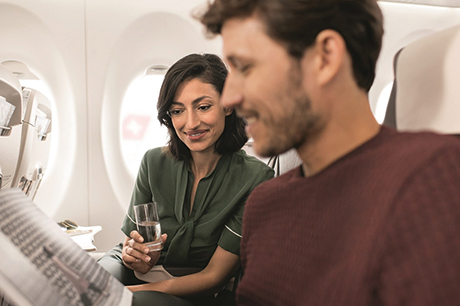
Passengers onboard Swiss International Air Lines (SWISS) can now browse from a refreshed assortment of boutique products courtesy of wholly owned LSG Group subsidiary Retail inMotion (RiM).
Effective 1 November, SWISS’s Inflight Shopping powered by Worldshop brings a varied mix of travel exclusives, sustainable items and bestsellers to intercontinental and selected continental flights.

According to the LSG Group, product assortments are clustered around three themes: products for your journey, products to bring back from your trip and products that make you feel better.

Intrepid voyagers can pickup goods such as Nuud vegan deodorant, which is packed in a bioplastic tube made from sugar cane, and Planet Buddies Children’s Headphones inspired by endangered species from across the globe.

The packaging for the Planet Buddies products are made from 100% recyclable cardboard, use soy-based inks and have no plastic window.

Meanwhile, quintessentially Swiss-made skus include Lindt Tin Suitcase Switzerland Edition, Caran d’Ache Colouring Pencils, and Swissdent Dental Care are available to purchase.

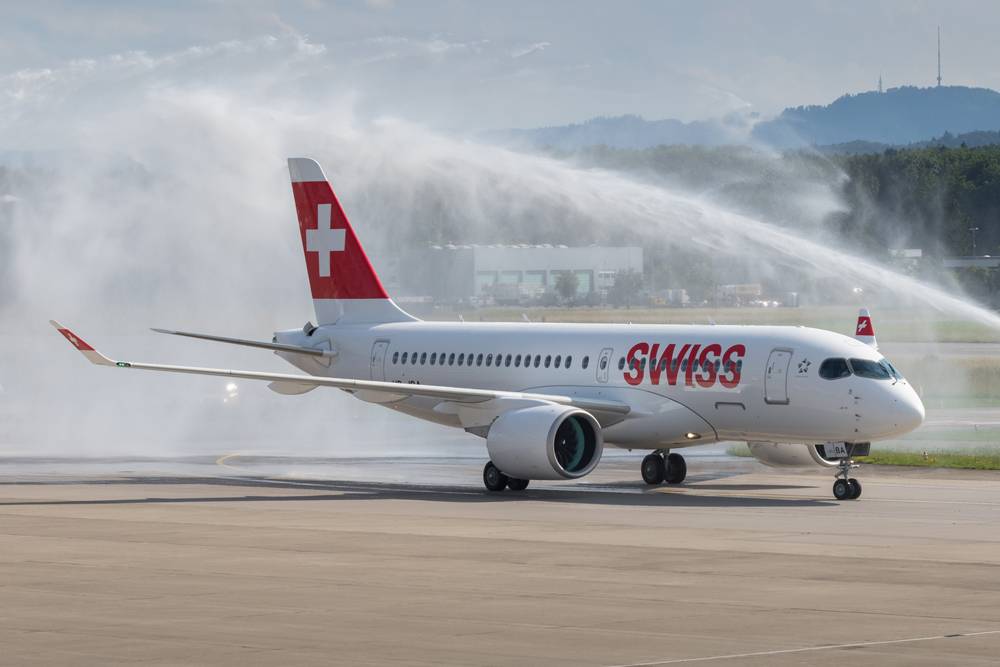
Airline retail and technology solutions provider RiM has relaunched the Lufthansa Group carrier’s inflight retail programme, which is powered by WorldShop. Source: SWISS.

José Lirio Silva, Head of Onboard Retail Europe & Managing Director, Retail inMotion, said: “We are delighted to partner with SWISS to bring their guests products that explore the SWISS diversity while zooming in on high quality and premium standards.

“We take pride in offering a product assortment that has been carefully selected for guests’ specific needs and demands, and we are very satisfied with the outcome – a programme that combines expertise with consistency to bring a great shopping experience onboard.”

Johann-Philipp Bruns, Vice President Ancillary and Retail, Lufthansa Group, added: “With the further development of Inflight Shopping, we are creating a new experience on board by offering a new product world with a valuable assortment and innovative and convenient processes. We are excited to announce the relaunch of the new Inflight Shopping to inspire and delight our guests and crews on board.”