Archives

UK and China reopen Hainan Airlines Beijing-Manchester route

The UK and Chinese governments have agreed that flights between Manchester and China can now resume after a two-and-a-half-year suspension, as Hainan Airlines has announced it will resume its Beijing-Manchester service from today (Monday 22 August).


The airline started flights from the Northern hub in 2016, with the route going on to unlock hundreds of millions of pounds in trade, investment and tourism benefits, insisted Manchester Airports Group (MAG).


The news has been hailed as a major boost to the North and the UK’s levelling-up ambitions, with Manchester Airport becoming the only gateway outside of London with a direct service to mainland China.


Chris Woodroofe, Managing Director of Manchester Airport, said: “Today’s announcement is clear evidence of the vital economic role that Manchester Airport plays, both in the North and the UK as a whole, as we emerge from the pandemic.


“Prior to 2020, the Hainan service provided vital connectivity to one of the world’s most important economies and I am sure this news will be welcomed by the hundreds of thousands of people across the North who travel to and from China each year.


Hainan Airlines has announced it will resume its Beijing-Manchester service from today (Monday 22 August).

Hainan Airlines has announced it will resume its Beijing-Manchester service from today (Monday 22 August).

“It is extremely positive to see critical routes like this return to our departure boards and we look forward to working closely with Hainan Airlines to build on the previous success of this route.”


Pre-pandemic, there were around 100,000 people a year who travelled between Manchester and Beijing from the airport’s catchment area.


Economic impact studies showed the route led to a 38% increase in Chinese visitors to the North, with an average spend per visit increasing by 94%, and export values grew by 41%.


The return of the route will also be incredibly encouraging for the more than 40 universities across the airport’s catchment area that welcome thousands of Chinese students each year.


Due to policy in China, the outbound service to Beijing will initially stop in the Chinese city of Dalian, but the inbound service will be direct from Beijing. From October the service will operate on a Tuesday.


China inbound market worth £1.7 billion to UK

Tao Zhu, the CEO from Hainan Airlines said: “It is great to bring Hainan Airlines back to Manchester. Hainan Airlines is a 5-star Skytrax rated airline and we will operate an A330 aircraft on the route offering both economy and business classes. The flight arrives in Manchester at 10:00 each Monday and departs at 15:00.


“At the beginning of the resumption of flight, it will travel via Dalian first. After completing the seven days quarantine, passengers will be able to fly to other destinations within China according to their preferences.”


The route resumption has been welcomed by organisations across the North such as the Manchester China Forum, VisitEngland/VisitBritain and Consul General of the People’s Republic of China to Manchester.


VisitEngland/VisitBritain CEO Patricia Yates said: “We want to deliver a world-class welcome for returning Chinese visitors and the resumption of services making it easier for them to get here is a crucial part of our competitive tourism offer and recovery post-covid.


“In 2019 China was the UK’s second most valuable inbound market, worth £1.7 Billion and Hainan’s direct route to Manchester will not only act as a gateway to the greater North West but also make it easier for visitors to come and explore regional Britain spreading the economic benefits of tourism growth across the UK.”

Travel Retail Awards: Sustainable Initiative finalists

The Travel Retail Awards 2022 ceremony will be held on Tuesday 4 October, during the TFWA World Exhibition in Cannes, France.Following a week of announcements in products and airport categories, TRBusiness can now reveal the 2022 Global Travel Retail Awards finalists for the Best Sustainable initiative at an Airport, Airline, Cruise or Rail company.


Nominations for this particular award can be submitted by an airport, airline, cruise or rail company. It is also open to commercial partners working with any of the above, including retailers, food and beverage operators and other service providers. 


First introduced in July 2020, the sustainability awards underline TRBusiness’ pledge to help drive the travel retail industry to move towards a more sustainable future, including the use of more ethically-sourced ingredients and reducing single-use plastics, among many other initiatives.


TRBusiness further reinforced its commitments with the launch of TR Sustainability Week in 2021, which made a successful return in 2022.


The companies listed below are vying for trophies which will be presented on Monday 3 October at Hotel Barrière Le Majestic Cannes, during the TFWA World Exhibition.

Finalists for the Best Sustainable Initiative at an Airport, Airline, Cruise or Rail company:

Harding Retail

High Speed 1 (HS1)

KrisShop

Olio

Starboard Cruise Services

Vancouver Airport Authority


This concludes our finalists announcements for the 2022 Global Travel Retail Awards. For all other lists of finalists in all product and airport categories, click below.

For the list of Beauty finalists click here.

For the list of FAWJ finalists click here.

For the list of finalists in Electronics, Travel Accessories & Children’s products click here.

For the list of finalists in Confectionery & Fine Foods; Wines; Spirits click here.

For the list of airport finalists click here.

For the list of Sustainable Supplier finalists click here.

Congratulations to all of our finalists, as voted for by consumers. You can find out more about how The Travel Retail Awards are judged by reading our recent article.


Hotel Barrière Le Majestic Cannes. Photo: Leading Hotels of the World.

The 2022 Global Travel Retail Awards ceremony will take place at the Hotel Barrière Le Majestic Cannes. Photo: Leading Hotels of the World.

Finalists should take advantage of Early Bird discounted tickets for the glamorous seated dinner ceremony, which will take place on Monday 3 October at Hotel Barrière Le Majestic Cannes, during the TFWA World Exhibition. Tickets can now be purchased at this link travelretailawards.com.

A new feature for 2022 is the ‘Highly Recommended’ accolade, which will be awarded to finalists that consumers ranked within the upper benchmark of the judging process. 

Early bird tickets, available until 12 September 2022 are £185 per person +VAT (20%) and £1,665 +VAT (20%) for a table of 10.

Thereafter, tickets are available for £250 per person +VAT (20%) and £2,250 +VAT (20%) for a table of 10.

Highlights from last year’s award ceremony can be viewed in the video below.


ASPAC & ME airport rev 60% down in Q2; ‘cautious’ optimism on recovery

ACI Asia-Pacific says airports across the regions continue to suffer ‘economically unsustainable’ revenue’ levels.

The financial margins of airports across Asia Pacific and the Middle East ‘continue to remain far below pre-pandemic levels’ despite more encouraging optics, Airports Council International (ACI) Asia-Pacific has reported.

In its industry outlook for Q2 (April to June), the association says quarterly revenues were 60% below that of 2019 – a similar level compared with 2021 – as airports suffer large operating losses.

Airports across the regions are also dealing with the risk of labour force deficits, although to a lesser extent versus Europe and other parts of the world.

This is not just limited to airports, but to the wider aviation ecosystem including airlines, government agencies, ground handling, security and check-in, ACI Asia-Pacific continues.

Notwithstanding this, a ‘cautious sense of optimism’ surrounds the recovery of the aviation sector in Asia Pacific and the Middle East following positive indicators recorded during the quarter.

The association cites strong pent-up demand for air travel – particularly in the leisure segment – as a result of eased travel restrictions and successful vaccination regimes in some areas of the regions.

International seat capacity -59%

Cambodia, Singapore, India, Thailand, Malaysia and Australia are among the countries to have relaxed curbs on international air travel during the quarter.

Statistics from key hubs in the countries reveal that in aggregate, passenger traffic rose substantially between the end of February and early July 2022, though Asia Pacific is expected to witness the slowest recovery versus other parts of the world in 2022 to reach 62% of 2019 passenger traffic levels.

South Asia (Bangladesh, Bhutan, India, Nepal, Pakistan, Sri Lanka, Maldives, Afghanistan) and the Middle East (Bahrain, Kuwait, Oman, Saudi Arabia, UAE, Iraq, Iran, Jordan, Yemen and Qatar) have recovered to approximately 85% of Q2 2019 seat capacity.

Emerging East Asia (China, Mongolia and the Democratic People’s Republic of Korea) have reached just 15% of 2019’s Q2 level due to China’s zero-Covid policy combined with renewed lockdowns.

Most East Asian countries are heavily dependent on Chinese passengers.

The above is a contrast to a first quarter marked by rigid travel restrictions, geopolitical conflict and the suspension of air travel in some countries.

The association goes on to caution on prevailing headwinds, including instability in Eastern Europe and a volatile global macroeconomic picture resulting in heightened inflation, rising energy prices and disruptions across supply chains.

While Q2 scheduled domestic seat capacity recovered to 89% of pre-pandemic levels versus the same quarter in 2019, international seat capacity fell by 59% linked to travel restrictions, quarantine and testing, notably in China and parts of Japan.

Total domestic seat capacity is expected to exceed 2019 levels by Q3 2022, with the overall traffic for the year 2022 likely to be on par with 2019 levels.

ACI Asia-Pacific Director General Stefano Baronci (right), commented: “As a result of a successful vaccination campaign that covers an average of 74% of the population across the region, travel restrictions are being gradually phased out across the region, fuelling strong demand for air travel.

“Though 2022 looks to be a more positive year for the sector, there will be bumps in our road to recovery especially in consideration of the uncertain macroeconomic scenario.”

The association says it is urging regulators to work closely with the industry to enhance manpower and operations and harmonise health protocols to smooth the travel experience

“ACI Asia-Pacific will continue to work with our members to help the industry build back stronger,” he added.

UK’s Jet Zero strategy sets 2040 net zero emissions targets for aviation

UK's Jet Zero strategy.

UK’s Jet Zero strategy.

The UK government has introduced a new Jet Zero strategy committing UK domestic aviation to achieving net zero emissions by 2040 and for all airports in England to be zero-emission by the same year.

The strategy, launched at Farnborough International Airshow yesterday (19 July), sets a clear timeline for delivering what the UK government describes as ‘guilt-free air travel’ as per the and marks a milestone in future-proofing the aviation sector, which currently contributes £22 billion to the UK economy and is responsible for around 2.5% of global carbon dioxide (CO2) emissions.

Jet Zero builds upon the existing Net Zero strategy (the nation’s economy-wide plan for achieving net zero emissions by 2050, as well as the move to decarbonise the entire transport system) with fresh targets for cutting aviation’s carbon emissions and preventing them from rising above pre-pandemic levels in the future.

As part of the strategy, a new mandate for sustainable aviation fuel (SAF) has been set to ensure at least 10% of jet fuel is SAF by 2030, with the government’s ambition to have at least five commercial-scale SAF plants under construction in the UK by 2025.

Made from waste materials such as household waste, sewage or used cooking oil, these fuels offer, on average, greenhouse gas emissions savings of more than 70% compared to conventional fossil jet fuel when fully replacing kerosene.

In a welcome boost for the industry, eligible SAF projects in the country can now apply to the £165 million Advanced Fuels Fund.

“We want 2019 to be remembered as the peak year for aviation emissions,” said Transport Secretary Grant Shapps.

“From now on, it should all be downhill for carbon emissions – and steadily uphill for green flights.

“The UK is setting an example of the ambition needed to tackle climate change, and the Jet Zero strategy provides a clear path to building a greener aviation sector for generations to come.

“Rather than clipping the sector’s wings, our pathway recognises that decarbonisation offers huge economic benefits, creating the jobs and industries of the future and making sure UK businesses are at the forefront of this green revolution.”

Looking at the fuller picture, the Jet Zero strategy outlines six priority areas, including: improving the efficiency of the existing aviation system (for example, by improving fuel efficiency by 2% each year); ramping up support for SAF; supporting the development of zero-emission aircraft, with the goal of having zero-emission routes connecting destinations across the UK by 2030; developing carbon markets and greenhouse gas removal technologies to drive decarbonisation; providing consumers with improved information to help them make informed decisions regarding sustainable aviation choices; and delivering environmental information to passengers at the time of booking air travel from autumn 2022.

The industry’s progress will be monitored annually.

Manchester Airport Terminal 2.

Manchester Airport Terminal 2. Photo: MAG Group

The new Jet Zero strategy has been welcomed by industry stakeholders including Manchester Airports Group (MAG) – owner and operator of Manchester, London Stansted and East Midlands airports – which announced five new pledges to support the charter and propel the Group towards the goal.

These include investing in education materials for use at its Aerozones and Airport Academies, a competition offering five years of free landing fees to the first zero-emission aircraft operating transatlantic flights from its airports, and a financial incentive as part of its charging arrangements to encourage airlines to go beyond the UK SAF mandate on flights from its airports.

“Decarbonisation is one the most important issues facing our society and at MAG we are committed to playing a full role in the aviation industry achieving Net Zero,” said MAG CEO Charlie Cornish.

“The publication of the Jet Zero Strategy is an important recognition by Government of the commitments made by our industry for a more sustainable future.

“With the pledges we have announced today [19 July], we will be working even more closely with our industry partners and the UK Government through the Jet Zero Council, to make real and measurable progress against the targets we have in place.

“MAG has always taken a proactive and ambitious approach to decarbonisation for over a decade, and I am proud of the work we have delivered over that time. Our landmark partnership with Fulcrum BioEnergy UK on SAF and the important progress we are making with airspace modernisation at our airports shows that we are committed to playing our part in achieving net zero by 2050.”

More support comes from stakeholders including Scottish regional airline Loganair and Airbus, among others.

“Loganair is pleased to be an active member of the Jet Zero Council which, as a cross-industry and governmental body, has driven forward the UK aviation industry’s Net Zero strategy and ensured that the UK remains at the forefront of global efforts to reduce aviation’s environmental impact,” commented Andy Smith, Head of Sustainability at Loganair.

“Decarbonising aviation is a significant challenge, but the Jet Zero strategy provides a clear goal for the sector whilst driving forward the development of the different technological pathways needed to make net zero aviation emissions by 2050 a reality,” added Julie Kitcher, EVP Communications and Corporate Affairs, Airbus.

“The time to act is now. Working together, we will succeed.”

IATA: Appetite for travel will maintain pax demand in face of headwinds

Clockwise from top left: John Rimmer, Managing Director, TFWA (moderator); Julie Lassaigne, Secretary General, ETRC; Martina Bednarikova, Economist, IATA; and Anna Marchesini, Head of Business Development, m1nd-set.

Positive demand for global air passenger travel is expected to hold firm in the near term, according to the International Air Transport Association (IATA), despite airlines having to balance the challenge of absorbing stiff price rises or passing those costs onto passengers.

In TFWA’s Travel Outlook H2 2022 webinar hosted today (19 July), IATA Economist and Policy Analyst Martina Bednarikova painted an optimistic picture for the recovery trajectory of international pax volumes in 2022, aided by relaxed travel restrictions and the global vaccination rollout.

However, the air transport sector continues to face a cocktail of pain points – from airline operating pressures linked to the escalating costs of jet fuel – currently around $170 per barrel – and Brent crude; rising inflation; and the ripple effects of the Russian/Ukraine war on commodity exports.

“Obviously absorbing high costs after two-and-a-half years of the global pandemic might be an issue for certain airlines in some regions, and some might think this will actually discourage demand,” observed Bednarikova.

“We do not think that increasing energy prices will impact demand as much. There are quite a few reasons for this. People really do want to travel and pent-up demand is there; they are willing to pay a little extra to travel; and they accumulated some extra savings from the pandemic when interest and inflation was at a lower rate, so the [cost] increases in some regions may not affect household incomes as much.”

Airlines hedging their bets

In a Q&A, TFWA Managing Director John Rimmer pressed Bednarikova on why IATA is confident that cost increases for airlines wouldn’t have a long-term negative impact on traffic demand – the crucial financial artery for beleaguered DF&TR businesses – at a time of spiralling airfare prices and travellers’ concerns around the costs of living, with incomes not rising in line with inflation.

International Air Transport Association (IATA) Economist and Policy Analyst Martina Bednarikova offered a timely analysis of passenger traffic patterns into the peak summer season. Click to enlarge.

Bednarikova responded by referencing the practices of European airlines, some of which have hedged prices on jet fuel to around 60% to offset cost pressures.

She reiterated the strong willingness and pent-up demand for travel, demonstrated by the so-called ‘revenge travel’ phenomenon.

Delivering an appraisal of the passenger traffic recovery trajectory by region, Bednarikova pointed out that international pax is gradually returning despite the shockwaves of the pandemic.

IATA monthly statistics demonstrate that the North Atlantic, North America and Europe/Middle East revenue passenger kilometres (RPKs) are trending above 2020 levels, webinar attendees heard.

Asia Pacific’s closure to international markets for a prolonged amount of time has muted the recovery, though the context is changing in some areas such as Australia and New Zealand and in tourist markets such as Thailand and Vietnam, which are reopening. This trend is expected to progress, adds IATA.

Global international and domestic bookings remain buoyant, boosted by summer vacation travellers and fewer restrictions, notably benefitting Europe.

Discussion around the often-mentioned pent-up demand for travel, now a reality in many markets, was framed against the backdrop of serious challenges to airport and airline capacity. Click to enlarge.

May bookings for the region were almost at pre-crisis levels in several tourist destinations, according to IATA Economics drawing on data from its Direct Data Service (DDS).

“What is interesting is the gap between international and domestic bookings is narrowing; people have been stuck at home for two-and-a-half years and want to travel,” said Bednarikova, though she cautioned on ‘overinflated’ demand that could soften after the summer.

“Passengers forecasts still very much rely on the willingness of people to travel and get out,” she continued. “In terms of the booking profiles we’ve been monitoring, the war in Ukraine didn’t have much effect.

“There are a few elements: the conflict was limited to a location within Europe and also to the size of the air transport industry in Ukraine. Shortly after, bookings went back up and the trajectory is increasing.”

Forecast recovery from 2023 onwards

IATA forecasts that industry financials will remain negative this year due to the onerous cost increases faced by airlines, though this will obviously differ by region.

While airlines’ operating margins in North America are tipped to be back in the black in 2022, regions including Asia Pacific continue to be sluggish.

The webinar was streamed via the TFWA 365 virtual platform on 19 July, 10:30 – 12:00 CET.

More positive numbers could emerge in 2023/2024 with a forecast return to 2019 passenger levels, but this will be closely linked to pent-up travel demand and airline hedging factors, continued Bednarikova.

The Americas is estimated to recover in 2023, joining Europe, but Asia Pacific and Africa are not tipped to return to 2019 pax volumes until 2024/2025.

Conversation switched to airports, including Heathrow, which have moved recently to impose caps on daily passenger numbers.

Touching on the ‘unfortunate situation’ of lengthy check-in queues and delays at baggage reclaim at airports across Europe that have played out in recent months, she said: “Airports say that an airline should limit capacity, which is obviously saying that you cannot make profit as we [the airport] are not ready for that.

“That is a very interesting and unreal ask for airlines that have been facing very difficult and challenging times and the only reason they are alive is due to bailouts during Covid.

Asia Pacific continues to lag behind other markets, with China’s zero-Covid strategy applying the brakes to the region’s travel revival. Click to enlarge.

“The situation is challenging and very difficult to manage considering that airlines’ staff were either laid off or offered voluntary redundancies during Covid as labour costs are obviously a big chunk of total costs for airlines. The challenge is cooperation between the airlines and airports and how they will solve this issue.”

On the current labour shortages being witnessed across European airports and elsewhere, resulting in flight disruption, she clarified: “This is not just the airline industry, the problem is [across] the whole supply chain – airports, ground handlers, security staff… All these elements will need to be coordinated to ease the negative effects we are experiencing at the moment.”

Asked by TFWA’s Rimmer whether the labour issue could quicken airline consolidation, Bednarikova said while consolidation could materialise in the long-term, existing labour shortages should not present the main reason for this occurring.

“We would estimate that these kind of labour shortages will be resolved in the coming months with staff being re-qualified, retrained and being able to fly again, but obviously the industry has been struggling with pilot shortages for a long time,” she commented.

With many aviation stakeholders targeting net zero emissions in 2050, Bednarikova acknowledged this as a ‘challenging ask’, but said it is possible to achieve with interconnected support from governments and stakeholders to funnel investment.

Some European airlines have hedged 60% of their jet fuel supplies to offset cost pressures. Click to enlarge.

“Net zero by 2050 – any energy transition – will need government support either through long-guarantees or loans,” she explained,.

She cited sustainable aviation fuels (SAF) as an example of a resource that currently occupies a small share of total jet fuel, yet more refineries are emerging that will help to increase supply.

Hosted via the TFWA 365 digital platform, the Travel Outlook H2 2022 webinar explored current and future trends in international travel and tourism.

Alongside IATA, m1nd-set and the European Travel Retail Confederation (ETRC) shared critical research and information on regulatory issues shaping the travel rebound.

More to follow…

CEETRA Travel Retail Forum to take place at Budapest Airport in October

The CEETRA Travel Retail Forum takes place on 13 October at Budapest Airport’s conference centre.

The Central & Eastern European Travel Retail Association (CEETRA) will hold its Travel Retail Forum on 13 October in Budapest, Hungary.

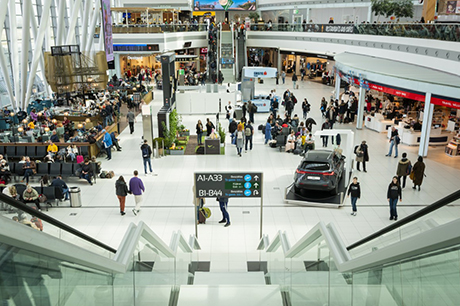
Due to be held at Budapest Airport’s conference centre, it will represent the first in-person CEETRA event since the start of the Covid-19 pandemic.

CEETRA has pledged insightful and prominent topics related to the regional travel retail business, plus opportunities for its members to network and re-connect.

Christoph Stump joins the Board

In related news, and as expected, Christoph Stump, Director Sales Central & Southeast Europe at Gebr. Heinemann has been appointed as a CEETRA Member of the Board with immediate effect.

He takes over from Gebr. Heinemann Corporate Affairs Manager Benjamin Dillmann.

New CEETRA Board Member Christoph Stump, Director Sales Central & Southeast Europe, Gebr. Heinemann.

The CEETRA Board now consists of the following: Andrzej Milaszewicz, CEO, Lagardère Duty Free Polska (Chair); Nebojsa Cirjakovic, Engagement Manager Global Travel Retail, British American Tobacco (Treasurer); Gyte Landreau, Global Customer Manager, Pernod Ricard; Christoph Stump, Director Sales Central & Southeast Europe, Gebr. Heinemann; and Eszter Horváth – Senior Concessions Manager, Budapest Airport.

On the appointment of Stump, who has lived and worked in Hungary for many years, CEETRA Chairman Andrzej Milaszewicz commented: “I am glad indeed that Christoph is joining our Board. His professional path as well as deep-rooted presence in our region, will certainly enhance achievements of CEETRA’s goals.

Stump added: “I am looking forward to continuing Gebr. Heinemann’s commitment on the Managing Board and to further promoting the interests of travel retail in the CEETRA region.”

CEETRA praised the contributions of Dillmann, described as ‘instrumental in driving the organisation forward’ in recent times.

“Benjamin was a key member bringing into the board his expertise in engagement and communication but also the passion we needed during the hard times of the pandemic,” added Milaszewicz.

Europe tipped to recover 70% of pre-Covid travel demand in 2022, says ETC

Rolled back restrictions and pent-up passenger demand is fuelling Europe’s travel and tourism rebound but worsening inflation, war and rising Covid transmissions cloud the outlook, according to the region’s tourism sector.  

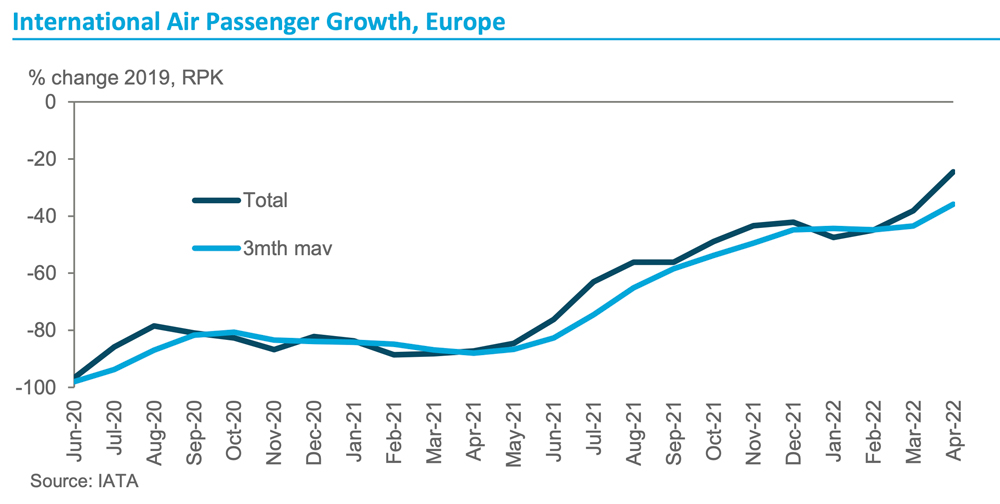
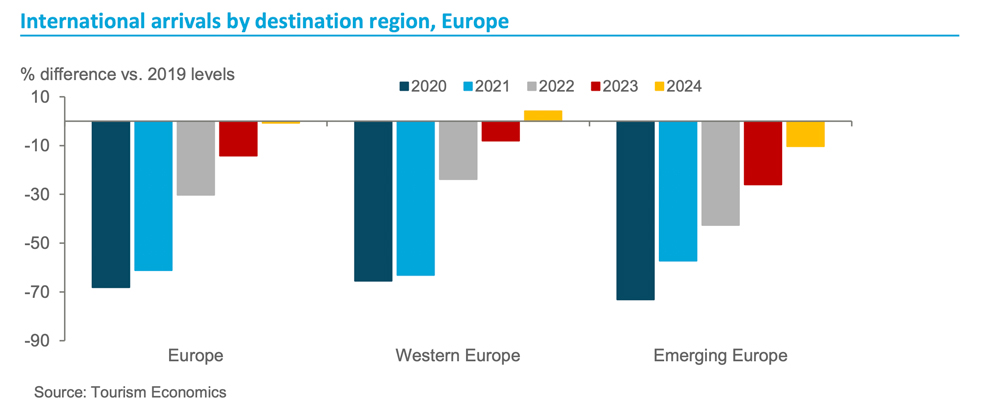
In its latest ‘European Tourism Trends & Prospects’ quarterly report produced by Tourism Economics, the European Travel Commission (ETC) predicts that the region will restore 70% of pre-pandemic travel demand in 2022.

But a surge in the appetite for travel coupled with staff shortages ‘pose serious challenges’ for the industry as it enters the peak summer months.

‘Ongoing lag in labour supply’

Luís Araújo, President, ETC said: “We are witnessing a much faster rebound than travel businesses in Europe had been expecting, and staff shortages may prove to be an obstacle to a complete recovery. Bringing back talent, and making careers in the sector more enticing, is the top priority for European tourism recovery in the months to come.

“It is also crucial that the EU continues to monitor the impact of inflation on the cost of living – Europe must do everything within its power to ensure that travel does not become inaccessible for the average European.”

Short- and medium-haul travel is expected to continue driving the recovery in Europe, but arrivals from long-haul markets are still lagging behind, especially in Asia, while the bounceback in the US has been ‘slower than expected’.

The ETC adds that the ‘ongoing lag in labour supply’, due to (among other reasons) long lead times on security clearances and the perceived employment instability of the sector is resulting in staff shortages across European travel and tourism.

As a result, the non-profit organisation says many European destinations may struggle to meet rising demand.

It continues that around 190,000 European aviation workers lost their jobs during the pandemic and despite airlines and airports reacting with recruitment campaigns, it is unlikely the industry would be able to respond within this peak summer season.

Over the first weekend of June, the Netherlands witnessed cancellation rates of up to 11% and the UK up to 4%.

In response, airports are cutting the volume of flights into the summer months [and in some cases such as Amsterdam Schiphol, limiting the volume of departing passengers – Ed]  against a backdrop of several air carriers announcing strikes and cancelling itineraries over labour shortages.

To date this year, Bulgaria (-8%), Serbia (-10%) and Turkey (-14%) recorded the strongest rebounds in tourist arrivals.

On the other hand, Latvia’s proximity to Russia is slowing the former’s tourism recovery (-63%) following mass hotel booking cancellations. Slovakia and the Czech Republic are also among the Eastern European destinations exceeding the 50% decline.

All images courtesy of ETC’s ‘European Tourism Trends & Prospects’ quarterly report. To access the report in full, click here.

CEE urged to rediscover ‘passion’ as data shows fall in shopper conversion

The CEETRA Travel Retail Forum was held on 29 June.

Central Eastern European Travel Retail Association (CEETRA) Chairman Andrzej Milaszewicz has issued a rallying call to the regional industry in the face of what are mounting global macroeconomic and geopolitical challenges.

Addressing attendees to the CEETRA Forum, held on 29 June, the Managing Director of Lagardère Duty Free (Polska) said travel retail ‘should recall the passion that we used to have’.

He said while it is “reassuring to see that people in the region still have an incredible hunger for travelling, business didn’t come back as expected and there are many question marks still ahead of us”.

The event was attended by representatives of airports, travel retail operators, brands and related service providers to exchange ideas and best practice as the industry battles back following a devastating two years due to the pandemic.

“Even with some recovery after the darkest times of the Covid-19 pandemic, retail at airports and transportation hubs in CEE are now hit hard by the effects of the war in the Ukraine, inflationary pressures, airport capacity restrictions and staffing issues,” commented Milaszewicz.

Solidarity with Ukraine

Vyacheslav Cheglatonyev, Chief Commercial Officer at Ukraine’s Odesa International Airport, reminded attendees of the airport’s achievements, with a new terminal opened in February 2020 followed by an apron extension and new runway.

Dufry has operated a 600sq m retail space at the airport since February 2021 and also runs a successful duty paid operation in domestic departures.

However, the Russia-Ukraine war has meant Ukraine’s airports have been targeted by Russian missiles and bombs and it is unclear when and under which circumstances Odesa can reopen.

The airport manager called on attendees to stand by Ukraine and offer any support possible.

During the Forum, m1nd-set Head of Business Development Anna Marchesini revealed survey data related to the region.

While airport shop footfall in the first quarter of this year remained flat, conversion decreased on a year-on-year basis.

“Give the visitors a reason to shop once they are in the store”, declared Marchesini, who added that shoppers now buy only 1.5 categories on average, compared with 1.8 a year ago.

Meanwhile, ‘gifting’ has decreased (28% of purchases) while ‘sharing with others’ has steeply increased to 23% of all purchases.

Marchesini noted: “instead of value for money, convenience is now the number one driver to purchase, compared to pre-covid levels.”

Duty free on arrival campaign update

Julie Lassaigne, Secretary General, ETRC.

Meanwhile, Paweł Galiak, Chief Commercial Officer at Kraków Airport, pointed to the importance of partnership.

During the crisis, the airport abolished minimum guaranteed rents and linked retail concession fees to passenger numbers.

This ensured the market’s confidence – just ahead of an RFP for commercial space was launched in December 2021.

Krakow is located in close proximity to Ukraine’s border.

Around 4.3 million crossings have been made from Ukraine to Poland since the beginning of the conflict.

He believes the industry has proven its resilience to external shocks and can cooperate and collaborate though obstacles to an extent not witnessed before.

Obstacles to a fast recovery include staffing issues, inflationary pressures and the threat of new variants of Covid.

CEETRA Forum attendees also heard from Julie Lassaigne, Secretary General, ETRC, who offered an update on the duty free on arrival campaign.

She expressed her pleasure at the launch of a formal study on VAT rules applicable to the travel and tourism sectors, which will also assess opportunities to allow duty and tax free shops on arrival in the EU.

This study is part of the EU VAT Tourism package, which will be published by the European Commission next year, to support the recovery of the sector after the pandemic.

ETRC has now launched a new campaign aimed at ensuring the industry contributes to the study, builds momentum for a legislative process to be launched, and engages with members states once the decision process starts.

Work is ongoing to publish a comparative study showing how duty and tax free for arriving passengers is a ‘successful model in several European countries, namely Norway, Turkey and Switzerland’, she added.

easyJet COO Peter Bellew resigns; David Morgan steps into the role

Peter Bellew and David Morgan, easyJet

Left: Peter Bellew. Right: David Morgan

Peter Bellew has resigned as Chief Operating Officer of easyJet to pursue other business opportunities effective from 1 July 2022.

He is succeeded by David Morgan, who has been with the airline since 2016 and has been appointed to lead the operations function as interim COO, reporting directly into Johan Lundgren.

In an update to the market this morning, easyJet said: ‘The Board would like to thank Peter for his hard work over the last two and half years and wishes him well in his future endeavours’.

“I would like to thank Peter for his hard work and wish him well,” commented Johan Lundgren, CEO of easyJet.

“Everyone at easyJet remains absolutely focused on delivering a safe and reliable operation this summer.

“I am pleased that Operations will be in the very capable hands of David Morgan who can move seamlessly into this role having previously led the operation, as interim Chief Operating Officer, throughout 2019.

“David has significant experience and deep knowledge of the business and operation and will provide strong leadership for the airline this summer.”

easyJet aeroplane

On 26 May 2022, the airline flagged IT systems issues that meant some departing flights between 13:00 and 15:00 UK time on that day ‘may be impacted’.

At the time, the airline advised customers due to travel to check the status of their flight via Flight Tracker before making their way to the airport and apologised for any inconvenience caused.

In today’s update regarding the COO role, the airline said: ‘easyJet remains absolutely focused on our daily operation and continues to monitor this very closely, having taken pre-emptive action to build further resilience for the summer due to the current operating environment. The airline continues to operate up to 1,700 flights each day and carry up to 250,000 passengers’.

Passenger numbers tipped to record 7.1 billion in 2022, says ACI quarterly report

Global air passenger traffic is expected to ‘improve significantly’ this year to reach 77% of the volume recorded in 2019, according to ACI World.

Commenting this week as it published its quarterly assessment on the impact of Covid-19, the voice of global airports noted the recent positive momentum generated by eased travel restrictions and a lift in health measures across much of Europe and the Americas.

ACI World Director General Luis Felipe de Oliveira said: “Considering my recent trips and based on the latest data, there is no doubt that many travellers are eager to resume travelling – and the early summer volumes are a testament to it.

“With the combination of ‘vacation deprivation’ and an upsurge in confidence in air travel provided by increased vaccination rates and safety measures, the relaxation of travel restrictions will help boost the propensity for air travel and fuel the industry’s recovery.

“With many countries taking steps towards the return to a certain normality, lifting almost all the health measures and travel restrictions, we expect a jump in air travel demand in the second half of 2022.”

ACI World says global passenger traffic is expected to improve markedly this year.

Luis Felipe de Oliveira, Director General, ACI World.

Sizeable headwinds remain

The brutal impact of the pandemic on global air transport resulted in a circa 64.6% decline (6.1bn) in global passenger traffic for the whole of 2020 versus its projected pre-Covid baseline – to total 3.4 billion travellers.

Having been projected to generate around $188 billion in 2020 prior to the Covid outbreak, airport revenues shed approximately $124.8 billion to reach $63.4 billion.

According to previous estimates, ACI World had put the loss of additional global passengers in 2021 at 4.7 billion to reach 5.2 billion.

This equated to a -47.5% decline on the projected baseline pre-Covid forecast for 2021 (9.8bn), and a 43.6% fall on 2019’s result when global passenger traffic reached 9.1 billion.

While the industry suffered a loss of 4.6 billion passengers in 2021, this equated to a 50.3% decline on 2019’s figures as pax totalled 4.5 billion.

Despite the optimistic outlook for 2022 as travel markets around the world – with the exception of Asia Pacific – continue to unlock, ACI cautioned on the aviation sector recovery, particularly in the medium to long term given the current uncertainty.

Headwinds include geopolitical conflicts such as the war between Russia and Ukraine, rising inflation, an economic downturn, supply chain disruptions, labour shortages and possible new variants.

“Despite the downside risks, the industry remains confident that the potential for a recovery to 2019 levels within two or three years is foreseeable,” stated ACI World.

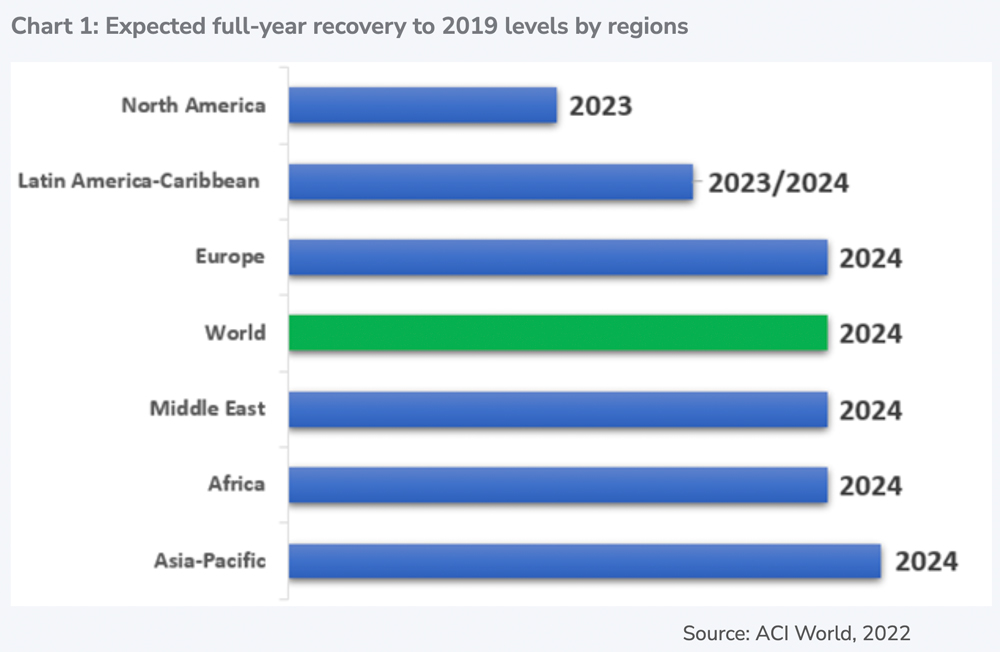
“While some markets have experienced a robust recovery, on average and under the current projection, accounting for the slower than expected first quarter of 2022 due to the Omicron wave, global passenger traffic is expected to reach back to 2019 levels in late 2023 with the full-year recovery to 2019 levels in 2024.”

The association says domestic passenger traffic will be the main driver of the recovery, although that will be hampered by the ‘recovery stagnation’ in Asia Pacific and a slower uptick in international travel.

It added: “Global domestic passenger traffic is still expected to reach 2019 levels in late 2023 with full-year 2023 traffic at par with 2019 levels. However, global international passenger traffic will require almost one more year to recover and is forecast to reach 2019 levels only by the second half of 2024.”

To read the ACI World quarterly assessment, click here.