Archives

The Estée Lauder Companies doubles travel retail output with new facility

The Estée Lauder Companies’ recently appointed Global Travel Retail President, Israel Assa tells TRBusiness that its new 300,000sq ft distribution centre is a symbol of the company’s commitment to the travel retail industry, whilst insisting that the channel offers enormous growth potential despite what he calls ‘short-term volatility’ in the market.


TRBusiness spoke with Assa on-location at the opening of a new ‘state-of-the-art’ distribution centre in Galgenen, Switzerland, which ELC says will double its total output capacity, ‘enabling the flexibility necessary to adapt to the channel’s high growth potential’, it said.


ELC is home to market-leading beauty brands, such as Estée Lauder, Clinique, Mac, La Mer, Bobbi Brown, Aveda, Jo Malone London, Tom Ford Beauty, Le Labo and Dr. Jart+ among many others, and its travel retail division represented 28% of the group’s sales in fiscal year 2021.


FIVE YEARS IN THE MAKING

Plans for the new facility were formalised pre-pandemic in 2017 and the centre finally began operating in November of last year. Understandably the official opening was postponed until now.

Video below: ELC’s new, state-of-the-art distribution centre in Switzerland will support the dynamic growth of the Company’s TR business


Umair Ansari, VP/GM, Travel Retail EMA, Fabrizio Freda, President and Chief Executive Officer, Jane Lauder, EVP, Enterprise Marketing and Chief Data Officer, and Roberto Canevari, EVP, Global Supply Chain cut the ribbon at the new Galgenen distribution centre.

L to R: Umair Ansari, VP/GM, Travel Retail EMA, Fabrizio Freda, President and Chief Executive Officer, Jane Lauder, EVP, Enterprise Marketing and Chief Data Officer, and Roberto Canevari, EVP, Global Supply Chain cut the ribbon at the new Galgenen distribution centre.


Addressing the timing of the opening and the challenges facing all travel retail stakeholders currently, Assa insisted that volatility in the market was short-term.


“I think there’s definitive short-term volatility that’s being cause by the pandemic; there’s short-term volatility that’s being caused by other geo-political factors, but the truth is this facility and our stance overall is that we believe in the travel retail channel and we’re 100% committed to the success and resilience of the channel.”


ELC says it will double its total output capacity.

ELC says it will double its total travel retail output capacity.

ELC celebrated the milestone opening today (7 June) in the presence of VIP guests among which were representatives from its travel retail partners, Dufry, DFS, Dubai Duty Free, Gebr. Heinemann, Lagardère Travel Retail and Aer Rianta.

The following ELC representatives were in attendance: Fabrizio Freda, President and Chief Executive Officer; Roberto Canevari, Executive Vice President, Global Supply Chain; Nadine Graf, Senior Vice President, General Manager, Europe, Middle East, and Africa (EMEA); Maike Kiessling, General Manager, Switzerland; Jamal Chamariq, Senior Vice President, Global Supply Chain, EMEA and Travel Retail Worldwide and Sascha Trabelsi, Vice President, Supply Chain, Travel Retail Worldwide.

Fabrizio Freda, CEO and President of Estée Lauder Companies addressed VIP guests at the opening of the new Galgenen distribution centre today.

Fabrizio Freda, CEO and President of Estée Lauder Companies addressed VIP guests at the opening of the new Galgenen distribution centre today.


LONG HISTORY IN SWITZERLAND

ELC is well-established in Switzerland, opening its affiliate office more than 55 years ago and its first manufacturing plant more than 45 years ago. It is the fifth largest employer in the canton of Schwyz.


The company currently has four distribution centres in Switzerland. “Switzerland is also home to ELC’s EMEA and TR Supply Chain Management Hub in Wollerau, which drives agility, speed, and collaboration across our EMEA and Travel Retail supply chain teams,” added the company.


Plans for the new facility were formalised pre-pandemic in 2017 and the centre finally began operating in November of last year.

Plans for the new facility were formalised pre-pandemic in 2017 and the centre finally began operating in November of last year.


Whilst expanding its already sizeable distribution footprint in the region, the new facility will enable ELC to ‘remain at the forefront of delivering its prestige beauty products and high-touch services to travelling consumers around the world’, it says. The centre is also equipped to further drive the company’s sustainability efforts.


“Travel retail continues to demonstrate its resilience, driving tremendous growth over the last decade for The Estée Lauder Companies. We remain extremely confident in the channel for the long-term, especially as travel restrictions ease globally and people start travelling again,” said Fabrizio Freda.


“The opening of our new Galgenen distribution centre will enable us to adapt even better to ever-changing retail needs and growth opportunities for the channel, and expand upon our existing distribution presence in Switzerland,” added Freda.


ELC MARKS 30 YEARS IN TRAVEL RETAIL

Assa added his remarks: “As we mark the 30th anniversary of The Estée Lauder Companies’ travel retail business, we are incredibly proud of our track record of exciting and delighting travellers all over the world with our exclusive products and high-touch experiences for the travel retail industry and having made the channel an integral engine of growth for ELC.


According to ELC, the distribution centre's roof solar panels generate 1600 kilowatts at peak performance (kWp).

According to ELC, the distribution centre’s roof solar panels generate 1600 kilowatts at peak performance (kWp).


“As we look to the future, this investment here at Galgenen is a testament to our belief in the long-term growth potential of this channel and that by investing in these capabilities and with our retailers, we can capture the next generation of growth in this dynamic, prestige marketplace.”


“Galgenen will serve as a cornerstone of The Estée Lauder Companies’ agile, global fulfillment network,” said Roberto Canevari. “This distribution centre will not only significantly enhance our capacity but enable operational efficiencies, speed-to-market and resiliency through innovative, highly automated equipment and technologies. Additionally, we are proud that Galgenen is also a shining example of ELC’s commitment to safety, quality, and sustainability.”


SUSTAINABLE SOLUTIONS

According to ELC, the building’s design is based on the newest standards to reduce energy and water consumption. It features total LED lighting, an energy-efficient HVAC system and the roof’s solar panels generate 1600 kilowatts at peak performance (kWp).


Estée Lauder Companies is the fifth largest employer in the canton of Schwyz.

Estée Lauder Companies is the fifth largest employer in the canton of Schwyz.

Furthering sustainability efforts, a comprehensive waste management system has been implemented to separate out numerous recyclables, with electric trucks ready for waste removal. As part of the recycling undertaking, wooden waste pallets will generate renewable heating energy.


“Worldwide, ELC is driving strategic initiatives to reduce its environmental footprint, integrate environmentally responsible practices and invest in innovative technology as part of efforts to not only provide consumers with transformative products and experiences, but also to contribute to the well-being of the planet,” it stated.

Asia Pacific airlines carry 4.8m intl pax in April as region pursues recovery

Asia Pacific airlines handled a total of 4.8 million international passengers in April – a 272.9% surge compared with the same month in 2021, reports the Association of Asia Pacific Airlines (AAPA).

The progressive easing of border restrictions across the region coupled with pent-up demand for travel has helped to stimulate the business and leisure segments, said AAPA.

Demand lifted to an average of 15.2% of the volumes posted in the pre-pandemic month of April 2019.

Revenue per passenger jumped by 302.7% year-on-year, linked to the rebound in long-haul traffic.

HAMPERED TRADE ACROSS ROUTES

Available seat capacity expanded by 77.5% year-on-year, resulting in a solid 36.3 percentage-point increase in average international passenger load factors to 64.9% for April 2022.

However, the Russia-Ukraine war served to constrain manufacturing activity and global trading in the second quarter while questions hang over the unlock of China due to strict Covid-19 curbs.

Asia Pacific carriers recorded a 36.3 percentage-point increase in average international passenger load factors to 64.9% in April – the highest since the start of the pandemic.

International air cargo demand fell for the second consecutive month in April 2022 and by 8.5% year-on-year.

Subhas Menon, Director General, AAPA commented: “With vaccination rates high in the region, the general easing of border regulations has unleashed pent-up travel demand, as evidenced by the strong growth in international passenger numbers in April and healthy forward booking patterns.

“By contrast, the air cargo business faces some challenges; Asia Pacific continues to lag in the recovery of international travel. To build on the current momentum towards a full recovery, it is vital that governments and industry stakeholders collaborate closely with the aim of simplifying border measures and streamlining digital applications to make air travel truly seamless.”

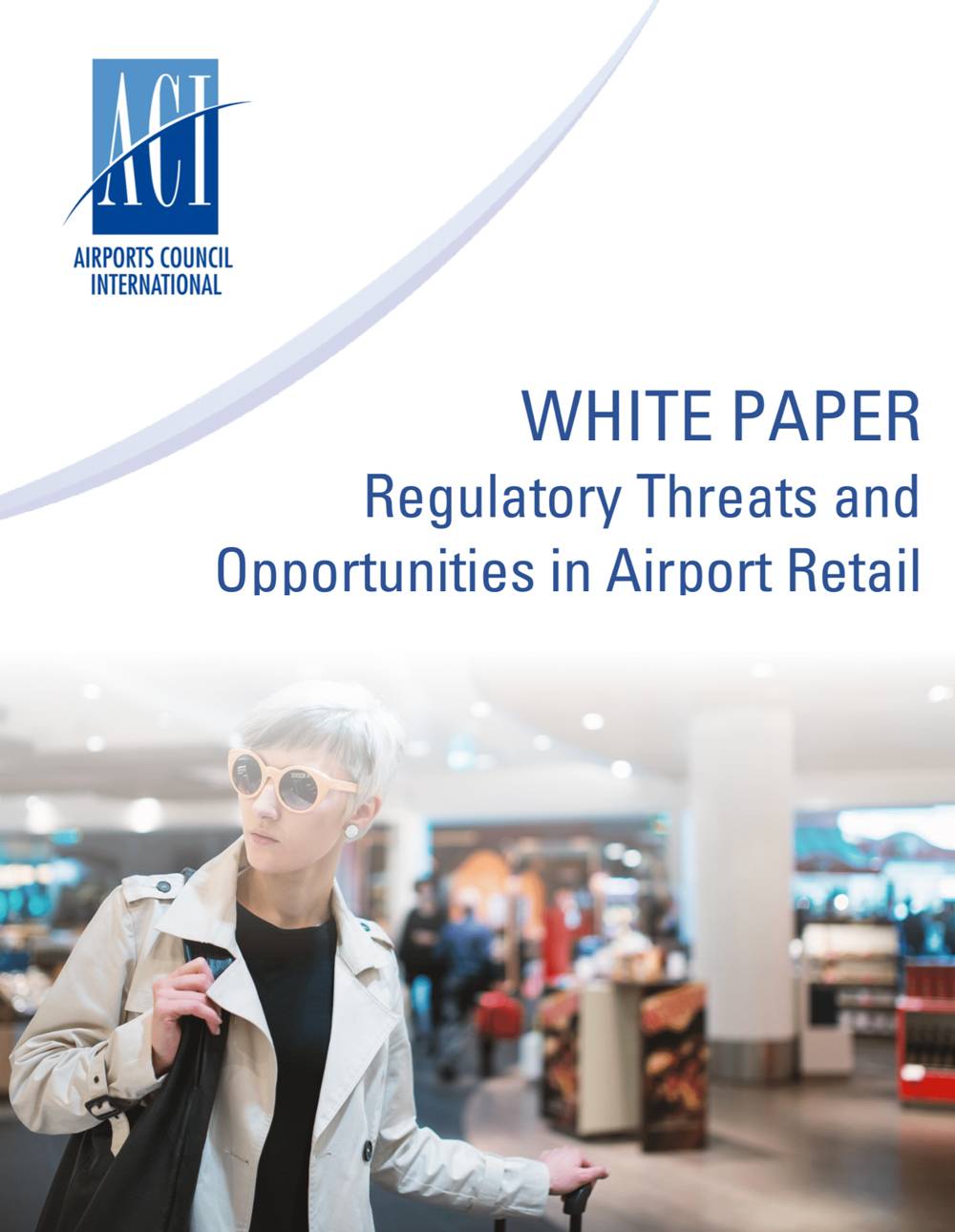
Industry welcomes ACI white paper on travel retail’s role in airports recovery

As Covid restrictions ease and passenger numbers return, travel retail and duty free environments can help to stimulate growth and investment in airports.

Airport commercial stakeholders stand ready to develop ‘tailor-made responses’ in the pandemic recovery phase should opportunities arise to consult with policymakers, suggests a newly released ACI World white paper.

The Duty Free World Council (DFWC) has applauded the launch today (31 May) of the complimentary publication, titled ‘Regulatory Threats and Opportunities in Airport Retail’, which outlines how airports can adjust their non-aeronautical (commercial) business strategies.

Many airports and retail operators sustained record revenue losses in 2021 and 2022 but the white paper argues that as passenger numbers revive, governments and decision makers have the opportunity ‘to create an enabling environment’ for airport DF&TR.

DFWC President Sarah Branquinho commented: “The pandemic has demonstrated the critical role of duty free and travel retail revenues to the broader aviation and travel industries.

“The cooperation between airports and concessionaires in working together to navigate the difficulties leaves all parties in a stronger position to face future challenges and to embrace the opportunities that we all now have as passengers return to airports and the airport retail experience.”

Luis Felipe de Oliveira, Director General, ACI World.

‘INDUSTRY AT A CROSSROADS’

The white paper identifies some of the major legislative and regulatory challenges* and opportunities** facing airport retail and duty free.

It is designed to assist airport operators, travel retailers and policymakers to collaborate in driving sales, investment and sustainable employment opportunities.

The white paper warns that decisions made by governments and policymakers at this time can on the one hand decrease competitiveness, or on the other set a path towards creating sustainable, community-serving businesses.

“Many airports and travel retail operators are now at crossroads following widespread economic slowdown because of the Covid-19 pandemic and other macro-economic factors,” read the paper.

“Imposing domestic labelling requirements and restricting sales on certain categories of products may reduce competitiveness and inhibit profitability. On the other hand, arrivals duty free and home delivery are examples of opportunities that can be explored across the world.

“Airport operators, travel retail operators, and policymakers should work together to examine potential opportunities, which can help stimulate an increase in sales, investment, and sustainable job creation.”

Sarah Branquinho, President, DFWC.

As the latest edition to ACI World’s Non-Aeronautical Revenues and Activities (ANARA) guidance series launched earlier this year, the white paper has been developed by ACI World’s ANARA Sub-Committee.

The sub-committee is linked to the ACI World Economics Standing Committee, which comprises experts from member airports and world business partners such as WHSmith, Ferrovial Airports, Heinemann Asia Pacific and Kansai Airports.

The sub-committee’s aim is to investigate, analyse, and formulate strategies, policy recommendations, industry positions, and guidance material on how best to improve, facilitate, and diversify the range of non-aeronautical revenue sources to benefit the air transport ecosystem.

DFWC has welcomed the creation of the ANARA sub-committee and the deepening links between ACI and the DFWC, which the association says is demonstrative of the interdependence of both industries.

ACI World Director General Luis Felipe de Oliveira added: “We encourage relevant aviation stakeholders, including governments, to leverage the new guidance and the entire series, to stay one step ahead of the game as they strengthen the commercial side of the business.

“The guidance can in turn also help airports and retailers enhance customer experience and service quality.”

Future publications in the ANARA series will include guidance on digital transformation, F&B and sustainability.

For more information on the white paper, click here…

*Covid-linked healthy, safety & security measures; tobacco illicit trade protocol; labelling requirements; reduction of inbound allowances; tax free abolition in the UK.

**Increasing inbound duty free allowances, home delivery, arrivals duty free, downtown travel retail, domestic travel retail (Hainan, Jeju, Kinmen, Penghu etc).

S. Korea DF&TR operators buoyant on 2022 outlook

Duty free sales from non-landing flights have offered an important crutch in a climate of severe business pressure.

South Korea’s duty free operators are expecting further sales growth in 2022 after an encouraging first quarter, TRBusiness has learned, as the government begins to fire up the nation’s large inbound travel market.

On 1 April, South Korea lifted quarantine restrictions for fully vaccinated arriving international travellers holding valid negative test certificates.

The decision to introduce quarantine exemptions had coincided with a spike in domestic Covid-19 Omicron cases across the country.

Though today (Monday 30 May), South Korea reported 6,139 new Covid-19 cases – a considerable slowing compared with daily case rates at the beginning of the year – and nine fatalities, according to the Korea Disease Control and Prevention Agency (KDCA). The total number of confirmed cases stood at 18,086,462.

Kim Tae-Ho, the newly appointed President of the Korea Duty Free Shops Association, spoke to TRBusiness in the May e-zine.

SALES CLAWBACK IN Q1

In conversation with sources for the May e-zine, TRBusiness heard that South Korea is expected to encourage growing numbers of inbound foreign travellers to book trips to Seoul and other popular Korean destinations for summer vacations and visits later this year.

Outbound South Korean travellers have also begun to book overseas trips of late, as other countries lift Covid-related quarantine restrictions for inbound foreign visitors.

South Korea’s duty free sales have displayed ‘gradual improvements’ during Q1 2022, Kim Tae-Ho, the newly appointed President of Korea Duty Free Shops Association (KDFA), told TRBusiness in a recent interview.

This follows a 15% increase in duty free revenue to KRW 17.8 trillion/US$14.7 billion in 2021, of which approximately 95% was sales to foreign customers – mostly Chinese daigou shuttle traders.

“Although the pandemic has not ended, the demand for international travel is expected to recover which will increase sales of Korean duty free [operators] compared to last year,” commented Kim.

“However, I don’t think the sales structure [reliant on Chinese daigou trading] will change radically.”

Indeed, South Korea’s duty free operators are likely to continue to rely on daigou sales for a large share of revenue until international business and leisure travel begins to normalise.

A clearer picture of that trajectory is expected to emerge in the coming months, as foreign visitors eye trips to South Korea’s popular destinations such as Seoul and Jeju Island, while outbound South Korean travellers begin to confirm bookings for overseas summer vacations.

“Although the pandemic may not end within this year, it is expected that the duty free market, especially [South Korea’s] domestic market, will recover significantly,” explained Kim.

“Therefore, we will focus on strengthening the competitiveness of our online businesses, improving sales infrastructures to enhance consumer convenience, establishing systems to respond to digital convergence, and developing solid partnerships between stakeholders such as brands, airports and suppliers.”

Kim, who is also Vice President of Hotel Shilla Co Ltd’s Korea travel retail division, explained that cooperation among all duty free stakeholders is needed to ensure the industry’s post-Covid recovery at a time when competition for high-spending Chinese customers is intensifying amid the growth of China’s Hainan duty free market.

“My biggest goal [as President of KDFA] is to ensure the rapid growth of the Korean duty free industry and to secure its global competitiveness amid Covid-19,” he continued. “In doing so, I will focus my effort on preserving Korea’s number one status in the global duty free market.”

CALLS FOR MORE GOVERNMENT SUPPORT

While Korean duty free operators hope to see growth in downtown and airport duty free revenues this year, a continuance of wide-ranging government support measures and reasonable concession contract arrangements for new duty free shop licences at Incheon International Airport are needed to ensure the recovery and future prosperity of the domestic duty free industry, according to Kim.

The government’s help has played an important part in sustaining the duty free sector during the past two years, as the global Covid crisis brought South Korea’s international travel market to a virtual standstill.

As a result, the country’s retail operators have temporarily closed or experienced sluggish trading downtown.

Concession contracts at Incheon Terminal 2 are set to expire in 2023, with bidding tipped to open this year.

Airport duty free retailers have been forced to cut costs in addition to operating on reduced opening hours due to the paucity of footfall to shops.

“The government has provided a wide array of policy support to help the duty free industry overcome the unprecedented difficulties brought about by the pandemic,” affirmed Kim.

“This includes reducing rental fees for duty free shops as well as allowing domestic sales, introducing no-destination [duty free shopping] flights and abolishing [outbound] duty free purchase limits for domestic customers.

“I am very grateful for this support. Nevertheless, in order for the duty free industry to overcome the immediate difficulties and strengthen its global competitiveness, I believe additional support is required. In this regard, I would like to ask for the continuous support of the government.”

Kim Tae-Ho, President, KDFA: “We will focus on strengthening the competitiveness of our online businesses, improving sales infrastructures to enhance consumer convenience, establishing systems to respond to digital convergence, and developing solid partnerships between stakeholders such as brands, airports and suppliers.”

APPETITE TO LIFT DUTY EXEMPTION LIMIT

One measure that South Korean duty free operators would like authorities to pursue is upping the existing US$600 duty free exemption limit, which has remained unchanged for the past eight years.

This limits the value of South Korean travellers’ outbound duty free purchases that they intend to bring back with them when they return home from travelling.

“In 2019, the duty free purchase limit for outbound Korean nationals was lifted from US$3,000 to $5,000, and it has been decided this year to abolish the limit entirely,” noted Kim.

“I believe it will encourage Koreans to purchase luxury duty free items and boost the sale of global luxury brands. However, since there has been no change in the import duty allowance, which remains at $600, it’s difficult to expect any immediate increase in customer transactions.”

South Korea’s downtown duty free stores and online pre-order duty free services have handled the bulk of duty free sales since the Covid pandemic began more than two years ago.

Various operators have given up their airport shop concessions or are not operating certain outlets at present to avoid incurring losses due to the large reduction in international flights and passenger traffic.

With the resumption of normal international travel seemingly in sight, duty free operators stand poised for Incheon International Airport Corporation to reveal plans for its delayed T1 liquor/tobacco and forthcoming T2 concession tenders, which as reported could be offered this year.

IIAC is understood to have appointed consultants to advise on the preparation of T1 and T2 concession tender documents, TRBusiness understands.

However, further official information on the tender timetable or other details have not been forthcoming as yet and IIAC has, to date, not responded to TRBusiness’ request for comment.

“I am aware that it has not yet been decided as to how to proceed with the bidding and discussions are underway considering various perspectives,” said Kim.

“Given that rents in Incheon Airport have placed a huge burden on duty free shops, I hope that Incheon Airport will cut rental fees to revitalise the airport itself and ensure co-existence with duty free businesses.

“Since Incheon Airport is an important place for domestic duty free businesses, we [Korean duty free operators] will participate actively in the bids.”

Click here to read more analysis of South Korea’s duty free market inside the TRBusiness May e-zine.

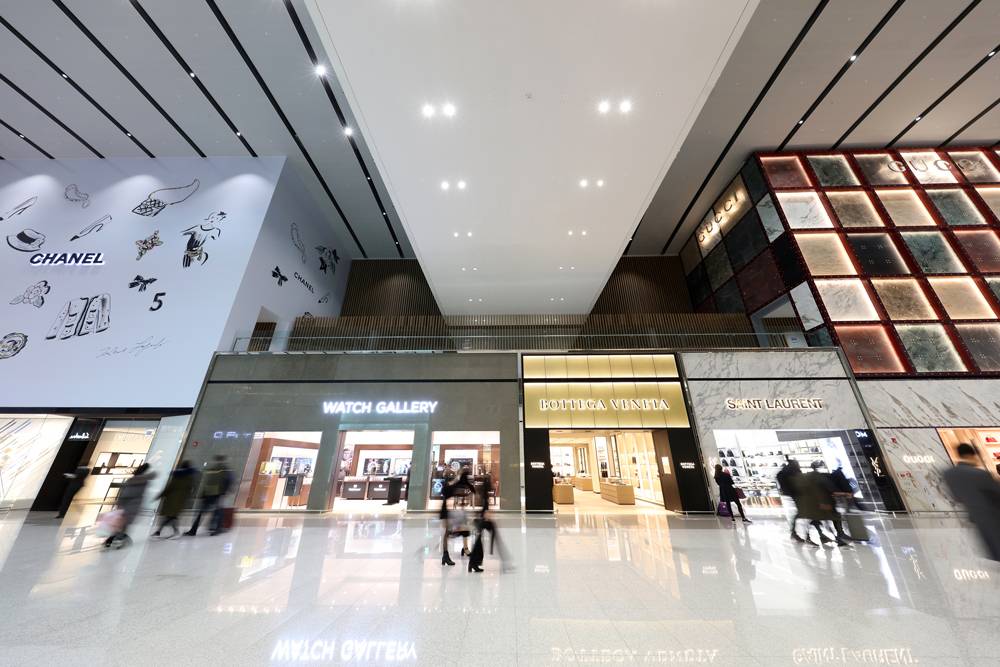
Main image: Chanel, operating under the auspices of Hyundai Department Store Duty Free, made its comeback at Incheon T1 last year after a six-year absence.

Bahrain is destination for 2022 MEADFA Conference, announces association

This year’s Middle East & Africa Duty Free Association (MEADFA) Conference will take place in the Kingdom of Bahrain on 27-29 November.

The event managed by TFWA and hosted by Bahrain Duty Free will take place at the Art Hotel & Resort located in Amwaj Islands in the Persian Gulf.

Sherif Toulan, President, MEADFA (right) said: “Following our fruitful in-person event last year, the MEADFA Conference will continue to demonstrate our commitment to facilitating and accelerating the recovery of the duty free and travel retail industry in the post-pandemic era.

“We’re grateful to Bahrain Duty Free, our official host of the event, and to TFWA, our long-term partner, for their support. We are delighted to bring the MEADFA Conference to the kingdom of Bahrain for the first time, and looking forward to welcoming our friends and industry partners from the Middle East, Africa and beyond.”

Erik Juul-Mortensen, President, TFWA said: “The return of industry events this year such as the MEADFA Conference is a solid indicator of the recovery of our industry. TFWA is delighted to continue our partnership with MEADFA and provide our support to this important trade event. We look forward to once again reconnecting in person with our colleagues and friends across the industry.”

Bassam Al Wardi, Chief Executive Officer & Board Director, Bahrain Duty Free, added: “We are honoured to be the official host of the MEADFA – undoubtedly one of the key trade events in duty free and travel retail – this November. It’s gratifying to be able to play a part in supporting the industry as we continue our recovery. We can’t wait to welcome our industry colleagues to the kingdom of Bahrain.”

HKIA rent relief continues as SAR takes small steps to ease Covid restrictions

The government has moved to ease some Covid testing requirements for travellers that will take effect on 1 June. Source: HKIA.

Retail and F&B concession partners of Hong Kong International Airport (HKIA) will continue to benefit from rental relief to the end of July, Airport Authority Hong Kong (AAHK) has confirmed.

Most shops and restaurants have suspended business in the terminal as the aviation sector remains distressed from the prolonged impacts of Covid-19.

As per an announcement in March, base rents also continue to be waived for those businesses that remain open for essential services.

Other measures in place include a full waiver of parking charges for idle passenger aircraft and airbridge fees; reduction of passenger aircraft landing charges; and fee reductions related to ramp handling, maintenance and airside vehicles.

In addition, there are rental reductions for terminal tenants covering lounges and offices; fee waivers for terminal licensees including ancillary passenger services, commercial services counters and cross-border transport operators; and concessions on fees for aviation support services such as into-plane fuelling, aircraft maintenance and inflight catering services.

AA first introduced rent relief for its partners in February 2020 and has continued to do so since the pandemic.

The government has removed the requirement for transfer and transit passengers in Hong Kong to undergo a pre-departure PCR-based nucleic acid test within 48 hours of travel, effective 1 June.

TESTING MEASURES TO EASE IN JUNE

In a timely development, the government of the Hong Kong Special Administrative Region (SAR) announced yesterday (29 May) a ‘fine tuning’ of Covid-19 testing requirements for arrivals.

Effective 1 June (00:00am), inbound travelllers from overseas destinations will only be required to present a negative result of a PCR-based nucleic acid test conducted within 48 hours prior to the scheduled time of departure and are no longer obliged to provide documentary proof of the lab’s accreditation.

“The adjustments are made so as to reduce the impact on the journeys of persons coming to Hong Kong while continuing to firmly guard against the importation of cases,” read a statement seen by TRBusiness.

Twinning with this is a decision to scrap pre-departure PCR-based nucleic acid tests for travellers transferring or transiting in Hong Kong after the requirement was introduced in December to curb transmission of the Omicron variant.

The government has taken the step ‘as the epidemic situation around the world further stabilises, and prevention and control measures have been strengthened at HKIA to ensure the segregation of travellers transferring or transiting in Hong Kong to lower the risk of transmission of cases into the community’.

The statement added: “AAHK will continue to implement relevant prevention and control measures for transfer or transit passengers waiting for their connecting flights at the HKIA. The government will continue to implement the stringent quarantine and testing arrangements for inbound persons who will enter the community.”

Under current rules, all persons arriving in Hong Kong who have stayed in overseas places or Taiwan must undergo a PCR-based nucleic acid test on the twelve day of arrival, regardless of whether they have been discharged early from compulsory quarantine.

Those subject to compulsory quarantining in designated quarantine hotels are also now required to take a PCR-based nucleic acid test on the ninth fifth day of arrival, in addition to those take on the fifth day or arrival and twelve day (as above).

LSG Group to operate retail and catering onboard Greater Bay Airlines in HK

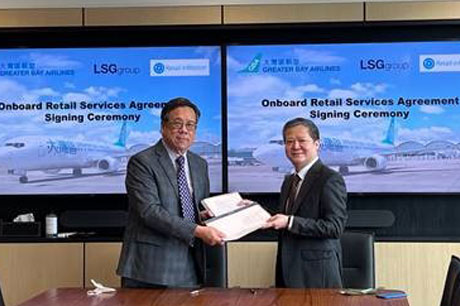
LSG Group’s Retail inMotion (RiM) Asia has been awarded a contract by Greater Bay Airlines (GBA) to manage retail onboard, including F&B and boutique products.

LSG Sky Chefs in Hong Kong was also awarded the airlines catering service contract at the end of 2021.

“Both services complement each other perfectly, and thus provide customers and their passengers with a completely new customer experience on board,” said HK Cheung, Head of the LSG APAC region, during the signing ceremony on May 24 in Hong Kong.

“I am very grateful for the trust that Greater Bay Airlines has placed on our company and proud of my team, which together with the RiM team has made this success possible.”

INAUGURAL FLIGHT IN JULY

“From the very beginning that we worked with LSG Sky Chefs on the classic-catering offer, we realized that our companies were a good fit,” added Algernon Yau, CEO of Greater Bay Airlines.

“Retail inMotion is the expert and market leader in OBR and is the partner of choice for our onboard-retail program offering to our passengers. We are looking forward to a strong and trusting cooperation starting this summer.”

Newly established international airline, GBA is based in Hong Kong and whilst it only has two B737-800 aircraft, a third one set to join the fleet by late 2022 and it aims to grow this to over 30 by 2026.

GBA has been granted the licenses to operate from Hong Kong to 104 destinations, including the Chinese Mainland and other Asian destinations in the region and plans to launch its inaugural flight this July. The OBR program will be available from September.

Dufry: No retail pivot due to fewer Chinese travellers

Dufry Group’s Chief Operating Officer for Asia Pacific Pedro Castro has told TRBusiness that the global travel retail giant is not making drastic adaptations to its retail merchandising strategy in the region to account for a lack of Chinese customers travelling overseas.

In an interview carried in the May e-zine as part of the Leading Asia Pacific Operators report, this publication also learns that Dufry’s divisions in Asia Pacific and globally have not witnessed fundamental or structural changes in the shopping behaviours of Chinese shoppers. Rather, shifts in travel patterns that are linked to travel restrictions in place at any one time.

TRBusiness recently reported that APTRA and ACI are working together to try to encourage government organisations to regulate travel health checks and documentation requirements for a more harmonised approach across the region. How does Dufry see the situation currently and do you think the company can help to affect change in this regard?

As a member of the most important industry and travel retail associations – including the two you mentioned – we support their lobbying activities as much as possible, as a joint coordinated response within the industry is important.

Pedro Castro, Chief Operating Officer Asia Pacific, Dufry Group.

How has Dufry adapted to a distinct lack of Chinese passengers over the last two years?

China and Chinese customers are an important customer group because of their affinity to brands and their propensity to shop and to share these experiences. Across our business – including the APAC region – we have not seen fundamental or structural changes in the shopping behaviour of the customers. Instead, we have seen changes in travel patterns linked to travel restrictions that are in place at any one time.

In China, therefore, related restrictions on international travel resulted in much of the spending being transferred domestically. As such, our business in China (duty paid operations, as well as the business related to Global Duty Free Plaza in Hainan with Hainan Development Holdings) has been performing well.

This trend continues to be influenced by two opposing elements: ongoing travel restrictions often influenced by a ‘zero cases strategy’, alongside the attraction and considerable interest generated by exclusive products, novelties, limited editions and promotions, which all remain valid, as these are the elements which make the travel industry unique.

How has Dufry adapted its portfolio to better serve other nationalities in the absence of Chinese customers?

As already touched on in the response above, the universal drivers for customers within the travel retail sector continue to be exclusivity, novelties, limited editions and unique promotions. These elements are a key part of our retail offer and are relevant for all nationalities. There is therefore no need to ‘adapt our portfolio’ to suit other nationalities, if there are fewer Chinese customers. The only exception to this would be those sought-after brands and local products that are favoured by specific passenger demographics and we have adjusted our ranges to ensure such products are available in  our stores.

I’m sure, like many others in the industry, Dufry welcomed the news that Singapore has opened up and removed testing requirements for those fully vaccinated. What other developments are you encouraged by in the region?

The easing of restrictions in Singapore is indeed welcome news and it has been encouraging to see similar approaches in other countries in the region such as Malaysia, Korea, the Philippines and Thailand. Likewise, restrictions have also been eased for Australia and New Zealand, both of whom are opened their borders to fully vaccinated travellers from mid-April and from the beginning of May, respectively.

The reduction in travel restrictions is clearly a step-by-step process. What we do know from our own research is that people are keen to travel as soon as they are able to do so. The fact that at least some countries in the region are starting to reopen is good news, regardless of whether they are open fully or partially.

To read the full interview in the TRBusiness May e-zine, click here. To read more from Dufry at TFWA Asia Pacific Live, click here.

IATA calls for further easing of border measures in Asia Pacific

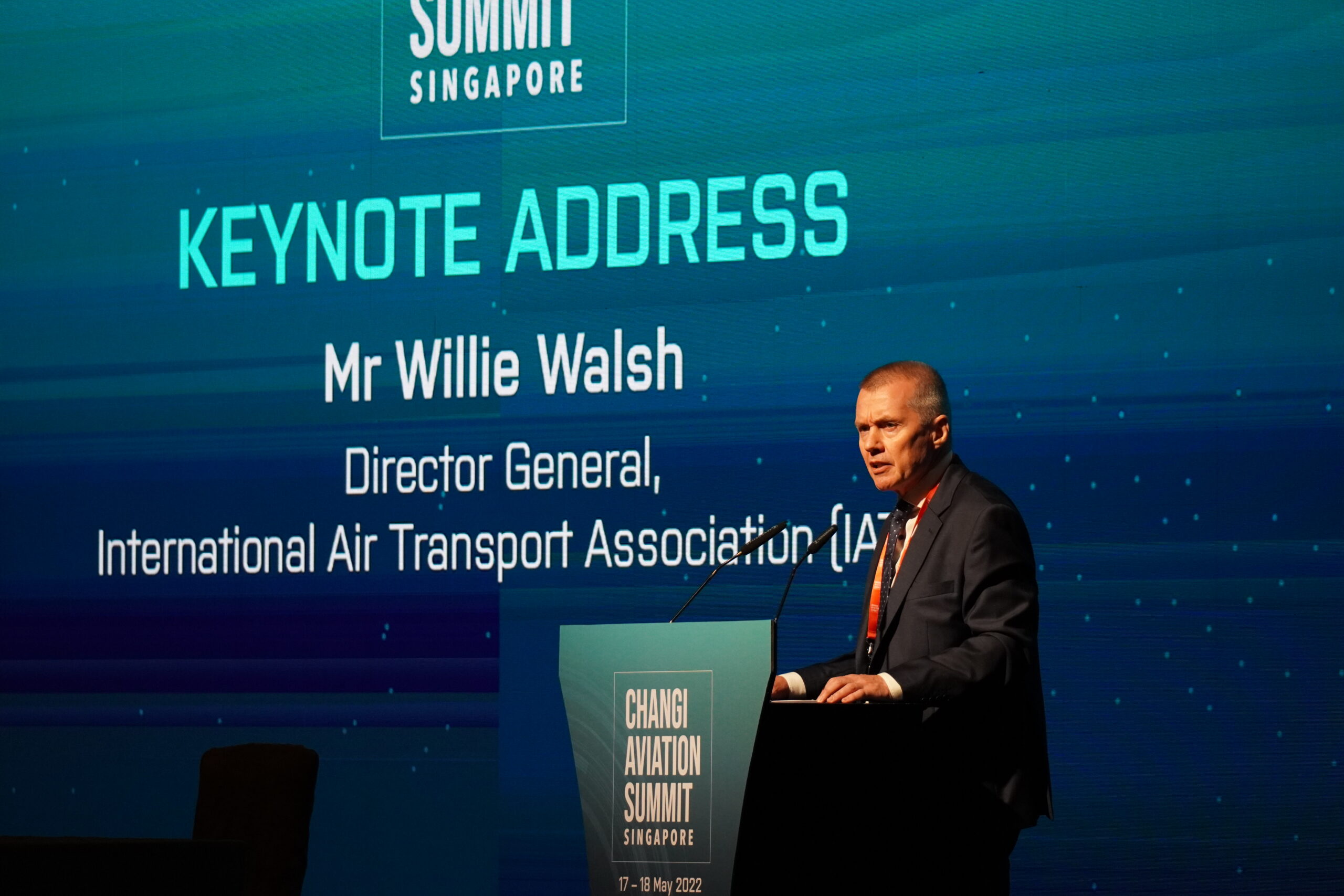
International Air Transport Association Director General Willie Walsh.

International Air Transport Association Director General Willie Walsh.

The International Air Transport Association (IATA) has urged Asia Pacific states to continue to ease border measures to help accelerate the region’s recovery from Covid-19.

IATA data shows that international passenger demand in Asia Pacific for March 2022 reached 17% of pre-Covid levels, after having hovered at below 10% for most of the last two years.

The Association’s Director General Willie Walsh pointed out that this is “far below the global trend where markets have recovered to 60% of pre-crisis levels”.

“Asia Pacific is playing catch-up on restarting travel after Covid-19, but there is growing momentum with governments lifting many travel restrictions,” said Walsh in his keynote address at the Changi Aviation Summit, which took place at the Sands Expo and Convention Centre, from 17-18 May 2022.

“The demand for people to travel is clear,” he added. “As soon as measures are relaxed there is an immediate positive reaction from travellers. So it is critical that all stakeholders, including governments, are well-prepared for the restart. We cannot delay. Jobs are at stake and people want to travel.”

TOURISM RECOVERY IN ASIA PACIFIC

Walsh highlighted three main ways that governments in the region could help to further ease border measures.

Firstly, he suggests removing all restrictions for vaccinated travellers.

Next, he recommended removing quarantine and Covid-19 testing for unvaccinated travellers in destinations where there are high levels of population immunity. “The science supports these initiatives,” he said.

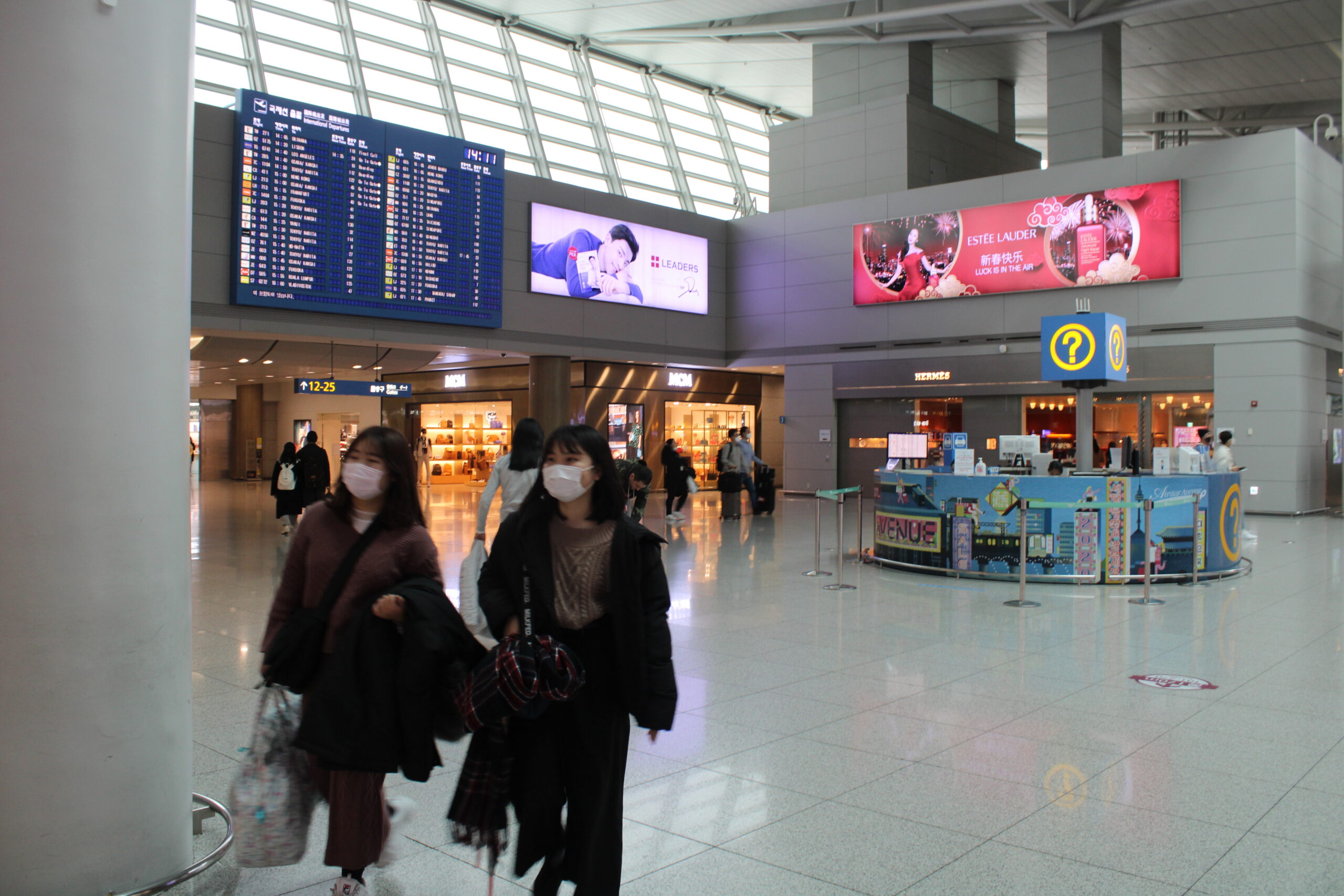
Tourists travelling through Incheon International Airport

Tourists travelling through Incheon International Airport.

Lastly, he proposed lifting the mask mandate for air travel when it is no longer required in other indoor environments and public transport.

“Supporting and more importantly accelerating the recovery will need a whole-of-industry and government approach,” said Walsh. “Airlines are bringing back the flights. Airports need to be able to handle the demand. And governments need to be able to process security clearances and other documentation for key personnel efficiently.”

PASSENGER DATA FOR MARCH 2022
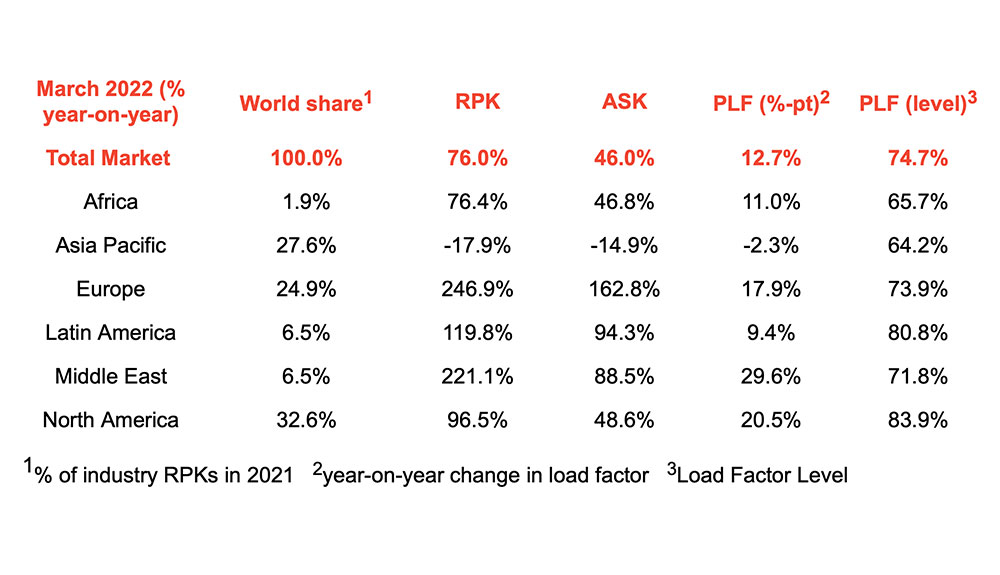
In the wider context, the latest IATA passenger data points to a continuing recovery for international air travel, with total traffic in March 2022* up 76.0% compared to March 2021 reflecting the ‘surge in pent-up demand finally being realised’.

International Air Transport Association passenger data for March 2022

International Air Transport Association passenger data for March 2022. Source: IATA.

Drilling down on regional dynamics, the report identified that Asia Pacific airlines experienced a 197.1% rise in traffic in March 2022 compared to March 2021, up over the 146.5% gain registered in February 2022 versus February 2021.

It also noted that while ‘China and Japan remain restrictive to foreign visitors, other countries are becoming more relaxed’, including South Korea, New Zealand, Singapore, and Thailand.

Capacity rose 70.7% and the load factor was up 24.1 percentage points to 56.6%, the lowest among regions.

Looking at domestic passenger markets, China’s domestic traffic was down 59.1% in March 2022 compared to March 2021 – a significant reversal compared to the 32.8% year-over-year growth recorded in February.

‘This was due to the ‘lockdowns and travel restrictions following the spread of Omicron in the country,’ said the report.

*Measured in revenue passenger kilometers or RPKs.

REVEALED: Asia Pacific Travel Retail Awards winners

TRBusiness and m1nd-set can now reveal the winners of the much-anticipated consumer-voted 2022 Asia Pacific Travel Retail Awards.

Winners were selected across 14 product categories (including best overall product) and seven airport categories.

Click below to watch the 2022 Asia Pacific Travel Retail Awards ceremony.

As explained, companies that entered the 2021 Global Travel Retail Awards were automatically enrolled in the 2022 Asia Pacific Travel Retail Awards.

To find out the winners of the 2022 Asia Pacific Travel Retail Awards, watch the video below.


NEW OPPORTUNITIES FOR BRAND EXPOSURE AND DEVELOPMENT

The regional flanker to the hugely successful Global Travel Retail Awards provides a much-needed boost to the DF&TR industry as it continues on its path to recovery.

Travellers have voted on the best products within each of the categories to demonstrate the buying inclinations of travellers in Asia Pacific, compared with their global counterparts.

TRBusiness and m1nd-set believe strongly that amplifying what are frequently regional disparities in consumer purchasing behaviours affords new opportunities for brand exposure and development, something fundamental to the collective recovery of the travel retail industry.

Both firms believe that the latest awards iteration affords new opportunities for brand exposure and evolution — fundamental aspects of the industry’s collective recovery.