Archives

Lotte’s Kap Lee eyes FITs and group tour comeback

Lotte Duty Free is considering opening new stores in countries with stringent quarantine rules such as Australia and Vietnam, South Korea’s powerhouse travel retailer has told TRBusiness.

In a recent in-depth interview with CEO Kap Lee, TRBusiness learned that Lotte Duty Free still managed to record KRW6,391 billion/$5,836 million in DF&TR revenue [Lotte Duty Free posted sales of $8.5bn in 2019 according to TRBusiness’ Top 10 International Operators 2020 – Ed] in 2020 despite a crippling year for global travel retail.

From February 2021 to May 2021, sales jumped by 20% year-on-year. 

Briefly reflect on the challenges of a Covid-stricken 2020 and how Lotte Duty Free has responded?

In spite of the unexpected situation caused by Covid-19, we have been introducing new ideas with resilient responses and innovation the industry has never seen. While securing domestic sales by selling off un-depleted stock through domestic channels and offerings on flights to nowhere, we are also presenting a new normal in the duty free industry through rapid digital transformation.

We are pioneering new sales channels by entering the live commerce market, securing potential customers through the online conversion of family concert, and expanding brand awareness.

There has been surging popularity for non-landing tourist flights in South Korea. Talk to us about the success of the initiative and what further incentives will you introduce to increase spending?

Kap Lee, CEO, Lotte Duty Free: “The travel retail industry inherently bears many risks. It is important that relevant economic actors including the government communicate quickly and respond flexibly to changes and come up with countermeasures together. Even after the pandemic ends, the industry and the government will work together to enhance the competitiveness of the Korean travel retail industry.”

Non-landing tourism flights have been one of our focuses in securing domestic sales. Some 1,400 passengers purchased from Lotte Duty Free in February, approximately two-and-a-half times higher than in December 2020 when non-landing tourist flights began.

February sales surged by 35% compared with the previous month, driven by heavy promotional activity held in association with all seven participating airlines [Korean Air, Asiana Airlines, Air Busan, Jeju Air, Air Seoul, T’way Air, and Jin Air]. Average sales per customer for Lotte Duty Free from no-destination flights were KRW1.2 million ($1,075), which is three times higher than Lotte’s average sale per customer in 2019.

We have introduced a range of marketing activities such as giving gifts to airline affiliates, upgrading the membership level of Lotte Duty Free Online Store, and hosting inflight prize draw events.
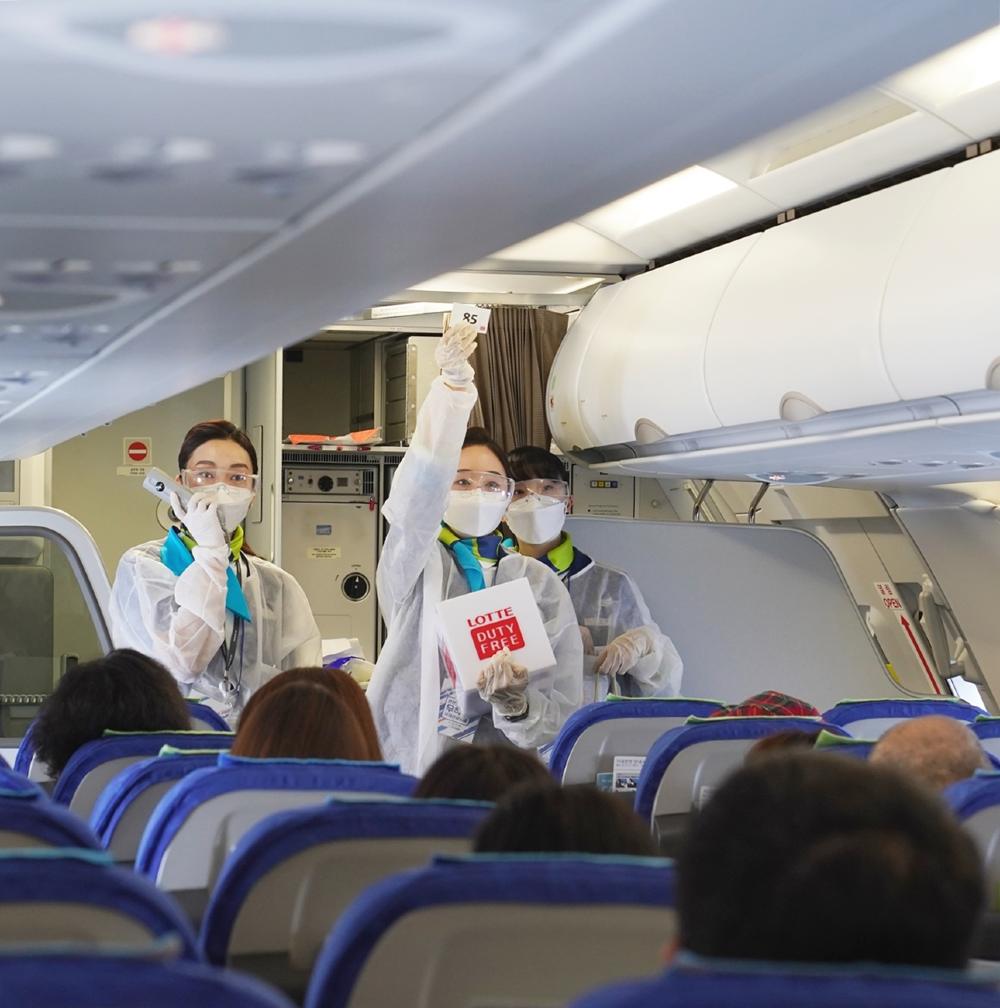
The surging popularity of non-landing flights in South Korea is paying dividends for Lotte Duty Free, with average sales per customer at KRW1.2 million – three times higher than its 2019 SPP metric.

Operational resilience in the form of cost-cutting measures and diluting existing inventory characterised 2020, but travel retailers continue to shift from damage limitation to preparedness ahead of the resumption of international travel. How would you characterise the way Lotte Duty Free is approaching business today?

Lotte Duty Free is planning to respond more flexibly and quickly to trend changes this year by accelerating digital transformation and business diversification. We are accelerating the digitalisation of offline stores starting from the opening of the Smart Store.

Opened at Lotte Duty Free main store in Seoul earlier last year, Smart Store is a hi-tech zone where you can meet beauty brands’ various services that combine cutting-edge technologies. We will soon introduce a mobile self-payment system and strengthen the AI-based customer experience at the stores. Stores will be opened at other Lotte’s downtown locations in South Korea and other countries.

In addition, we are pushing forward different projects to support best service for individual customers, introducing a customised product recommendation based on DDM (Data-Driven Marketing) utilising extensive big data.

As for our business diversification, we are expanding partnerships with local travel agencies in neighbouring countries, developing cruise packages and launching combined package products through collaboration with hotels, home shopping channels and travel agencies. These are our efforts to become a travel retailer rather than a mere duty free operator.

How has Lotte Duty Free performed this year in sales/growth terms, including at your Singapore Changi Airport operation?

Lotte Duty Free recorded a 20% year-on-year rise in sales from February to May of 2021. Changi Airport Store is still in partial operation.

How happy have you been with the level of relief you’ve received from the government and your airport partners, be it financial (rent/MAG suspensions, delayed or extended payment terms etc) and/or operational support and are there areas where you’d like to see improvements?

From permitting clearance of un-depleted stock through domestic channels to tax reduction for airport duty free shops, introducing non-landing tourism flights and a 50% reduction in patent fees, every one of these support measures has helped the industry significantly.

The South Korean travel retailer has boosted its brand equity and secured new customers through the online conversion of its popular Family Concert. The 31st Lotte Duty Free Concert held in May under the banner ‘Meet the green vibes, Greet the duty free life’ featured top Korean artists such as Super Junior-D&E, BTS, Twice, Itzy and Tomorrow by Together.

I would like to express my deep gratitude for the support for the duty free industry from various government ministries and the National Assembly. The travel retail industry inherently bears many risks. It is important that relevant economic actors including the government communicate quickly and respond flexibly to changes and come up with countermeasures together. Even after the pandemic ends, the industry and the government will work together to enhance the competitiveness of the Korean travel retail industry.

A two-part question: A) How reliant has Lotte Duty Free become on daigou shuttle traders, and b) in your view what does the continued repatriation of foreign spending by China mean for Lotte Duty Free’s locations and South Korea’s duty free market?

Encouragingly, the demand for Korean duty free goods is still high in China taking from the fact that daigous are active in the Korean market, even after the borders closed due to the pandemic. Currently due to the global pandemic, the Korean duty free market revolves around Chinese shuttle traders. However, once the pandemic lifts and people are free to travel overseas, [daigou] proportions will naturally decrease, while FITs [free independent travellers] will take centre place in the industry.

The L&T concession at Singapore Changi Airport commenced in June 2020. Lotte Duty Free runs 18 stores over an 8,000sq m footprint across all four terminals and says it is prioritising a Grand Opening.

Therefore, the ultimate goal of Lotte Duty Free is set to attract more FITs and group tourists by contributing to strengthening the competitiveness of Korean tourism. While we are strengthening our network of travel agencies that are widespread both at home and abroad, we are also securing potential customers using Hallyu (Korean Wave) content such as Family Concert, establishing live commerce, and consolidating elements such as data-driven marketing using extensive customer data. We also plan to proactively prepare for the post-pandemic era.

In 2019, online sales accounted for around 25% of Lotte’s total business. Describe the development of Lotte’s e-commerce business since then and what share of total sales do you expect it to occupy in the coming years?

After the pandemic, the business model of all retail industries quickly transformed from offline to online. E-commerce had been on the rise even before the pandemic, but its pace has accelerated, its scope has expanded and e-commerce has become deeply embedded in the daily lives of customers. Online sales accounted for 44% [of total revenue] in our 2020 annual performance. As online sales are growing continuously, it is expected to account for about 50% of total sales at the end of the pandemic. The e-commerce department of Lotte has doubled in size since I took office.

Lotte Duty Free has been focusing on the e-commerce business through reorganisation and online UI/UX improvements in recent years. We recently incorporated the FIT team into the e-commerce sector to prepare pre-emptively for the transition to online purchases of FITs. As such, we are laying the foundation to lead the global online duty free market.

Lotte Duty Free has experienced remarkable success using domestic customs clearance to offload duty free stock through downtown shops and Luxe Mall was created last year to this end. How has Luxe Mall performed in 2021 in sales and growth terms and do you have plans to increase sales to Korean customers?

The government’s support measures themselves have been great and helpful, but we have taken a step forward to fully engage with customers by adopting digital tools in effective ways. Last year, the Korean government has permitted duty free operators to sell their un-depleted stock that went through customs via domestic channels.
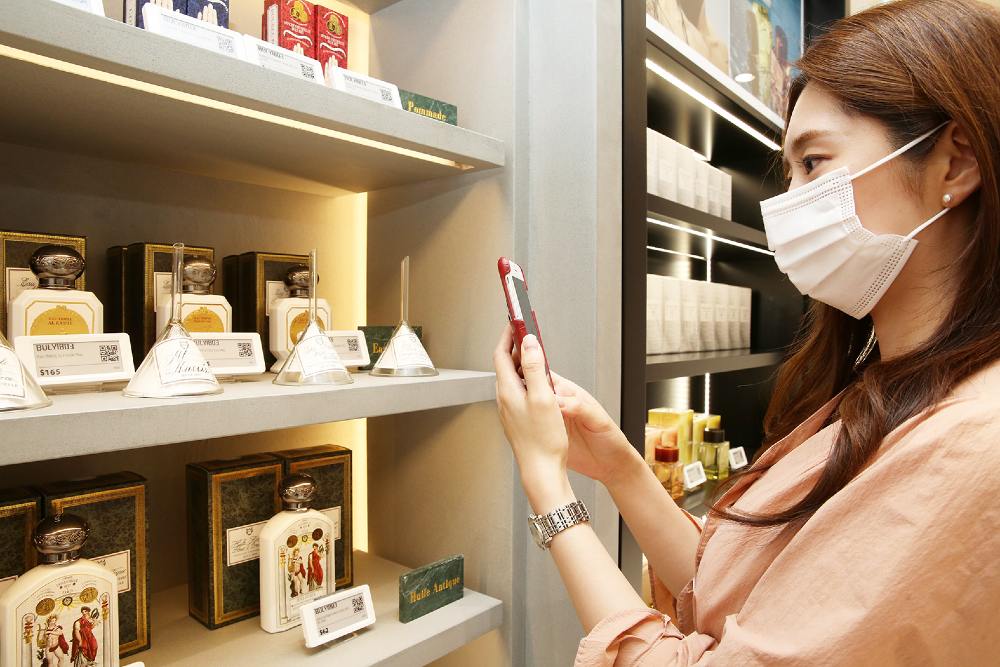
The first Lotte Duty Free Smart Store incorporating new digital technology launched in 2020. The company has plans to strengthen the AI-based customer experience and introduce a mobile self-payment system as it ramps up Smart Store rollouts at other Lotte Duty Free downtown locations in South Korea and elsewhere. In the long-term the plan is to expand the ratio of free independent traveller customers.

We had previously sold the excess stock online at one of Lotte’s subsidiary, Lotte Shopping’s platform called Lotte On. However, because the channel was not ours and we could only use the channel during certain periods of time, it caused inconvenience to customers. In December, we launched our own online outlet, LuxeMall. It features about 10,000 customs-cleared products from more than 100 international fashion brands including Salvatore Ferragamo, Valentino and Balenciaga.

Simple payment through services such as Payco and Naver Pay has also been activated to enhance customers’ convenience. LuxeMall has been very successful so far. Over the last three months, sales have surpassed Lotte On’s by +1,100%.

Lotte’s liquor & tobacco concession at Incheon Airport T1 ended earlier this year after the consecutive failure of bids for the new contracts. The operator has previously indicated that the terms of any future tender would adopt the middle ground between a fixed-based and percentage rent model. Indeed, many in the travel retail industry have said the MAG concession model is not fit for purpose and should change given the challenges of Covid-19. What is your view on this?

Incheon International Airport is one of the major Asian hub airports, and the duty free businesses located in the airport are proud to be part of the top-notch player in the industry. Although the business environment has become uncertain for duty free shops due to the pandemic, I think there is plenty of room for the duty free business and the Incheon International Airport Corporation to discuss and work together for win-win growth.

In a situation like this where prospects for the number of outbound travellers are uncertain, the biggest burden for duty free businesses is the fixed rental fee. Considering these difficulties, Incheon International Airport proposed several measures to reduce the stress of the business owners. However, the existing fixed rent fee still laid a heavy burden on business operation and many overseas airports are adopting variable rental rates such as PAX linkage or operating rates by sales total. If these methods could be applied appropriately, duty free businesses will participate in future bids more actively.

How do you view the landscape and fortunes of South Korea’s duty free market changing in the coming 12 months?

I believe that global tourism demand will begin to recover within this year. Vaccinations are being carried out without major problems in many countries around the globe and there have been some discussions on the systems that will bring about effective breakthroughs in the stagnant global tourism industry.

There are talks about introducing a vaccine passport, the travel bubble and area hotel quarantine to name a few. South Korea is the world’s top travel retail market and we are expecting to see a V-shaped recovery in the industry within this year. The status of infectious disease prevention and control and vaccine distribution in South Korea has been so successful and has been recognised worldwide.
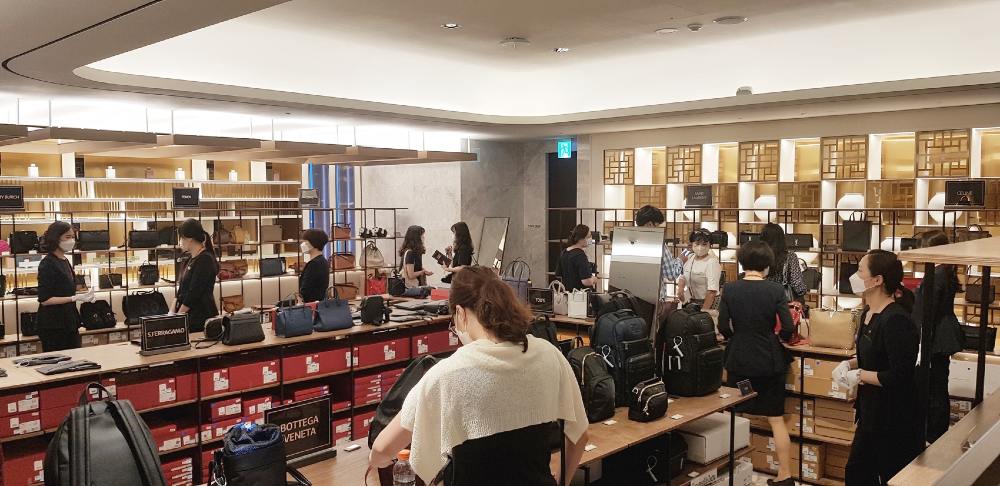
Lotte Duty Free has achieved marked success by offloading surplus duty free inventory via permitted domestic channels. Pictured is sales activity at its Myeongdong main store in downtown Seoul.

In addition, the Korean government has formed a taskforce to accelerate the early recovery of international tourism and has been actively engaged in discussions on vaccine passports and travel bubbles. International tourists are expected to be able to visit South Korea starting from places like Seoul and Jeju within this year. Such a rebound is expected to commence in line with revenge consumption that has been suppressed. Lotte Duty Free made surplus in two consecutive quarters since last 4Q [2020]. Our operating profits will also get better as the pandemic fades.

What about *future business expansion –  is Lotte Duty Free targeting bids in new markets or other acquisitive activities and if so, in which countries/duty free channels?

Although the launching of the previously planned new stores were partially delayed due to the pandemic, we are planning to continue developing new overseas markets at the right time by considering the recovery time of each country. To this end, we are paying close attention to the recovery trend of the number of passengers from each country, the travel bubble implementation plan, and vaccination status.

In particular, we are considering opening new stores in countries with excellent quarantine performance, such as Australia and Vietnam, where international flights are expected to resume sooner than other places. Specifically, we are considering prioritising the grand opening of the Changi Airport Store, which is currently in partial operation, as well as new stores in Sydney downtown in Australia, Da Nang and Hanoi downtown in Vietnam.

Going forward, we will continue to establish different strategies from a mid-to-long-term perspective and take multi-faceted approaches to overseas expansion to pre-emptively respond to the post-pandemic era. Currently, we are operating 20 business sites in seven countries in the Asia Pacific region (South Korea, Japan, Vietnam, Australia, New Zealand, Guam, and Singapore).

Just like the acquisition case in Australia in 2018, we will continue to exert our efforts to hone our competitive edge by reviewing business expansion through M&As or opening new shops at new locations. We will help the duty free industry to take a leap forward together by collaborating with outstanding players in the global duty free industry across boundaries and barriers.

Kap Lee has revealed that sales at Lotte Duty Free’s online outlet Luxe Mall has surpassed that of Lotte On’s by over 1,000% in recent months.

How is Lotte Duty Free positioned moving into the coming months and what are your expectations for 2022?

Irrespective of the Covid-19 pandemic, FITs are very important in duty free stores. In order to improve business soundness and secure sales stability, our top priority is to expand the ratio of FITs gradually from a long-term perspective.

In particular, our focus is on implementing online-oriented strategies. First of all, we are revamping our app this year so that it can provide a differentiated customer experience including content-oriented product display and live commerce.

Many brands in duty free stores are also realising the importance of FITs and are seeking collaboration with our company. For example, we are preparing a dedicated pavilion for high-end brands for our online shop and app along with different services that can meet the needs of customers for boutique brands.

Chinese customers remain an important customer base that cannot be overlooked in the duty free industry. However, diversifying the customer base in terms of nationality for FITs is our major goal in the long run.

Accordingly, we plan to gradually expand our customer base with differentiated strategies tailored to the characteristics of customers by nationality. Currently, we are expanding business partnerships targeting Southeast Asian customers and providing simple payment services by introducing local payment platforms in each country for quick and easy checkout.

In August of last year, we opened an online shop in Vietnamese, laying the foundation to expand our customer base to Vietnamese customers. Since we are constantly striving to diversify the demographics of our customers, we have pre-emptively prepared a service base for each language. Thus, we are ready to actively attract international customers when the market normalises after the pandemic.

Is there a final message you’d like to share with TRBusiness readers?

I would like to offer a word of support to all those in the travel retail industry who are going through difficulties in the unprecedented challenges we face in the pandemic. As vaccinations are being undertaken around the globe and there are some talks about the travel bubbles and vaccine passports in some parts of the world, I would like to say that we can be optimistic that the spring is not far away for the travel retail industry.

Lastly, I would like to express my deep gratitude to all partners who have been supporting Lotte Duty Free in these challenging times for the duty free industry. We grew together with our partners over the years, overcoming numerous difficulties. The biggest factor for how Lotte Duty Free could sustain customer loyalty and become the leader in the industry over 40 years is the product competitiveness based on the trust from our partners.

If we continue to work together to develop products supporting each other in terms of capabilities and resources, we will be able to share the fruits of the greater growth that the future without Covid-19 will bring.

*Lotte Duty Free did not comment when asked by TRBusiness whether parent Hotel Lotte still intends to pursue a much-publicised IPO.

Extracts from this interview first appeared in the TRBusiness June e-zine, which can be viewed by clicking here.
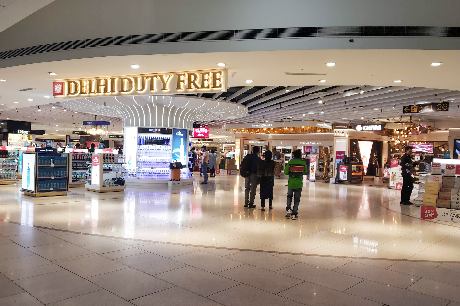
Delhi and Incheon Airports top list for AsPac departures in first quarter 2021

Indira Gandhi International Airport in Delhi took a 7.7% share of international departures traffic across Asia Pacific’s airports in the first quarter of 2021.

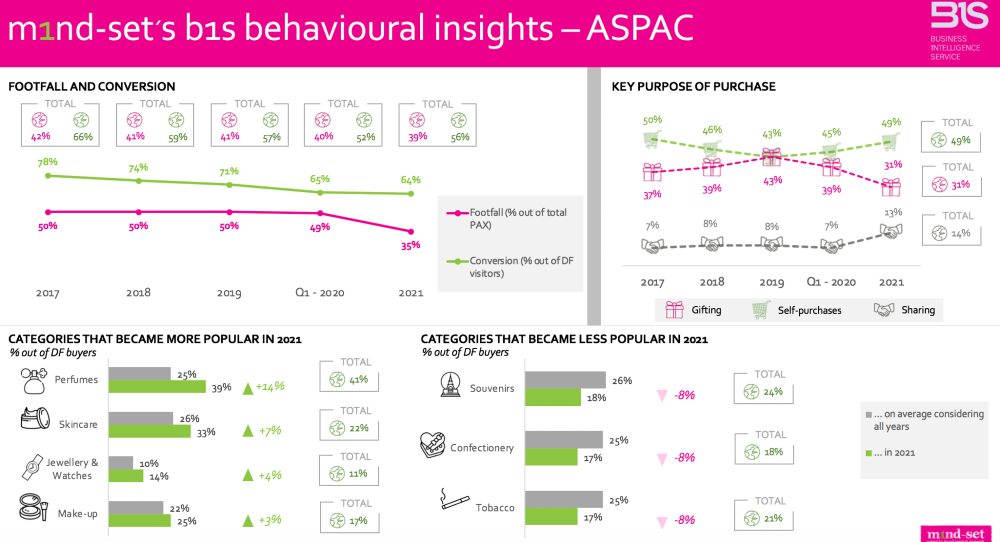
Delhi’s Indira Gandhi International Airport (DEL) took the highest share of international departures passenger traffic among Asia Pacific’s airports in the first quarter of this year, according to a ranking of the region’s top 20 airports courtesy of m1nd-set.

Data from the Swiss travel and travel retail research firm’s B1S traffic platform, shared exclusively with TRBusiness, shows DEL took a 7.7% slice of pax volumes in the first quarter of 2021 to total 531,536 passengers.

Joining DEL in the top five (in descending order) were Incheon International Airport in Seoul (7.4%), Dhaka Shahjalal International Airport (4.6%), Ninoy Aquino International Airport in Manila (3.7%), and Chhatrapati Shivaji Maharaj International Airport in Mumbai (3.7%).

These airports outperformed seasoned heavyweights such as Singapore Changi Airport (3.3%) ranked seventh and Tokyo Narita International Airport in eighth – both of which regularly feature in TRBusiness’ Top 10 Annual Airport Operators report ranked by DF&TR revenues.

ASPAC CONVERSION REMAINS HIGH

A list of the top 20 final international destinations from Asia Pacific airports in Q1 reveals DEL in first place again with a 7.7% share of pax at 527,282, followed by Incheon International Airport, (6.9%), Dhaka Shahjalal International Airport (4.6%), Ninoy Aquino International Airport (3.7%) and Chhatrapati Shivaji Maharaj International Airport (3.7%).

Insights shared with TRBusiness in the June Asia Pacific edition of the interactive e-zine offers a unique snapshot of the passenger traffic picture in Asia Pacific.

Click to enlarge. Source: m1nd-set B1S.

International departures from the region dropped by 82% to 93 million in the 12 months ending Q4 2020, according to the B1S data, although a 23% uptick is expected this year [albeit from the smaller pax base] to reach 115 million by the end of 2021.

Growth is forecast to explode by 193% to the end of 2022 to total 336 million travellers as the region’s recovery gathers pace, before climbing by 54% to 518 million passengers in 2023.

The share of footfall to duty free shops in the region as a percentage of total pax reached 35% over H2 this year – only fractionally lower than the average share of total instore footfall among all global travellers and shoppers worldwide (39%).

Click to enlarge. Source: m1nd-set B1S.

However, conversion among Asia Pacific travelling shoppers has been significantly higher this year (64%) versus the total average for all regions (56%) and has remained stable versus Q1 2020 (65%).

Indeed, despite the decreasing trend globally towards lower conversion rates, it is interesting to note that levels in Asia Pacific are significantly higher versus the total average for all regions.

For the full report available in the TRBusiness June e-zine, click here.

John Baumgartner to leave Gebr. Heinemann; Gottschling to assume role

John Baumgartner, Sales Director, Inflight & Catering, Gebr. Heinemann, is to pursue interests outside duty free and travel retail.

John Baumgartner, Sales Director, Inflight & Catering, Gebr. Heinemann is to leave the German family-owned company at the end of the month to pursue interests outside DF&TR, TRBusiness can confirm.

News of Baumgartner’s departure was revealed in a letter distributed to partners and customers which was seen by TRBusiness.

Baumgartner will be replaced by Oliver Gottschling, who will assume the role on 1 August 2021. Gottschling has been working with the company for more than 10 years in different positions.

For the past two years he has served as Head of Category Management, Liquor, Tobacco and Confectionery. Before that, he held the roles of Head of Sales in the Cruises and Ferries Department and Head of Market Management/Retail.

SUCCESSFUL FIVE-YEAR TENURE

Gebr. Heinemann said: “We thank John for his successful work at Gebr. Heinemann. In the last five years he has built up strong and reliable partnerships between you, our partners and customers. As he now leaves the business, we wish him all the best in his new adventure.”

On the appointment of Gottschling, the company added: “We are more than sure that the well working cooperation and the strong relationship that has been established between the inflight and catering team and you, our partners, will continue with Oliver Gottschling in the same positive way.”

More action and clarity from govts to kickstart travel, say associations

ACI Asia-Pacific, IATA, APTRA, DFWC and PATA discussed the hurdles facing the restart of international travel and tourism.

In an absorbing session during the TFWA Asia Pacific Hainan Special Edition (21-24 June), travel and travel retail industry associations explored the multi-layered and complex issues facing international travel’s restart.

‘The future for travel & tourism’ session held on Tuesday 22 June (10:25-11:25 CET) featured contributions from Stefano Baronci, Director General of Airports Council International (ACI) Asia-Pacific; Sarah Branquinho, President of Duty Free World Council (DFWC); Conrad Clifford, Regional Vice President Asia Pacific of International Air Transport Association (IATA); Sunil Tuli, President, Asia Pacific Travel Retail Association (APTRA); and Soon-Hwa Wong, Chairman of Pacific Asia Travel Association (PATA).

The hour-long session addressed the big picture issues facing the travel industry, from so-called ‘vaccination passports’ to the essential role played by duty free & travel retail in the recovery phases.

QUARANTINING IS ‘SIGNIFICANT DETERRENT’ 

APTRA’s Sunil Tuli began by stating unequivocally in an exchange with moderator and TFWA Managing Director John Rimmer that the priority objective is resurrecting travel.

The main challenge, Tuli suggested, is travel will not resume in a familiar manner until quarantines are lifted.

APTRA have written to governments in the region to state that the business needs to restore, impressing on them the importance of DF&TR to the entire travel ecosystem,

Updating viewers, Tuli said APTRA has put forward a joint representation with the likes of ACI, PATA and IATA and have collectively asked what travel and travel retail associations can do to assist once the situation begins to return to normality.

The joint paper highlights that each party has a role to play in understanding what measures airports, airlines and other stakeholders can take to protect the passenger journey.

“That’s what we are working on with governments right now and we are going to make  a presentation on this in the next few weeks I hope and let’s see what happens,” said Tuli. “We’ve got to work with governments to engage and explain that travel retail, as much as other travel [industries], is as important in this whole ecosystem.”

Soon-Hwa Wong, Chairman of PATA pointed to the ‘rather uneven’ government efforts across the region with respect to the supporting the industry.

Asked about so-called ‘vaccine passports’ such as the IATA Travel Pass, he said these will help to open up travel, but a great deal more clarity is needed.

“If we look at the vaccines itself, governments are not fully in agreement on what kind of vaccines are proof,” he observed. “There is still a lot work to be done but it’s a step in the right direction. The most challenging thing is how to harmonise all the health and safety protocols.”

DFWC’s Branquinho identified a combination of problems. While a great deal of effort is being made to speed up mechanisms for travel, there exists a challenge around intra-operability and the types of vaccine passes and solutions being suggested.

“That is coming at the same as the problem that society is increasingly focusing on personal liberty and has been for the last three or four years – not discriminating one group against the other. In this case, the vaccinated versus the non-vaccinated.”

Quarantining is the single biggest deterrent to travelling, Branquinho stated. Things have not been made easier by the ‘politicisation’ of travel, citing the UK and the myriad set of different rules around testing procedures mixed with the need to quarantine on arrival.

“We’re hearing that is going to be lifted, possibility for double-vaccinated travellers, so that’s a glimmer of light but at the moment the big questions are around the conundrum of civil liberties, plus intra-operability of the systems being suggested, and quarantining.”

VACCINES: THE GAME CHANGERS

ACI Asia-Pacific’s Stefano Baronci observed that airports have been working hard to restart with more than 70 of them having joined the ACI Airport Health Accreditation Programme.

This confirms a level of compliance with health and safety guidelines, he outlined.

The peculiarity of the region means quarantine restrictions and sequential testing are still very common, he went on to say.

He said that while vaccines will be the game changer, only 7.5% of the population in Asia have received two  vaccinations, meaning the region is still lagging behind compared with other parts of the world.

“When we look at China, about 16% of the population has been vaccinated with two shots,” he explained. “We’re talking about 220 million people, a big number per-se and higher than in the US but still limited per portion of the entire population.

“If we narrow down to key aviation markets from India and Indonesia, Vietnam, Philippines, Australia… all of them have populations that has been vaccinated with two jabs below 5%. In Japan, the percentage is 7%.

“In my opinion governments should invest more and they are investing more. From our perspective the opportunity to learn from experiences that are tested in Europe and US not to miss the summer will be very important.

“The Middle East should also be factored in as countries that are trying to reopen as they are more dependent on transfer traffic.”

PATA’s Wong was asked about his forecast for regional passenger volumes this year.

He observed that 2021 will continue to be a difficult year, with the next half not offering too much promise and  PATA is not too optimistic of a meaningful recovery this year.

While Asia Pacific is managing Covid-19 better than most regions, governments tend towards more conservative policy making.

“They are far more conservative right now compared to what is happening in Europe in the US – it will be a carefully, calibrated approach as public health has to come first. The vaccination rate is rather disappointing. On average, less than 10% have been vaccinated.

“It will be a long way to go before we reach the 70%-80% mark to get some form of herd immunity. Only then, will governments be willing to open up more.”

As such, he pointed to the importance of speeding up the vaccination programme, but there are factors affecting the rollout.

“Vaccination is the first and most important factor in the reopening. If countries have a higher rate, the openings will be faster.”

CONFUSION OVER ‘TRAVEL PASSES’

IATA’s Conrad Clifford then provided an update on the IATA Travel Pass, the digital health certificate that simultaneously acts to enable contactless travel, providing information to airports, airlines and other authorities to verify and certify passengers’ health credentials.

As a personal, secure digital wallet solution it can be used by passengers to obtain and store their Covid-19 test results from accredited laboratories.

It also tells them the health requirements for the country they are visiting and make arrangements to comply with the necessary protocols.

Over 40 airlines have trialled it to date around the world and the app has received tremendous take up, according to Clifford.

“We’ve done a lot of trials and need governments to buy in to it. We have around four or five governments that have bought in so far and there are more to come. But it doesn’t guarantee the opening of a route and we need governments to make that happen.

“It’s very difficult to find governments that are willing to open their borders to one other from a health perspective. They need to feel very secure that if they open their borders to another country they won’t increase the risk of transmission. The number one challenge is getting governments to feel comfortable in terms of opening their borders to one another.”

Asked by John Rimmer whether there is now a ‘dawning acceptance’ that steps need to be taken to kickstart travel and that the Travel Pass can help to achieve this, Clifford agreed and cited the delayed Singapore-Hong Kong air travel bubble due to spikes in infection rates as one example.

Discussion then turned to the importance of DF&TR to the travel experience and ensuring authorities are aware of the role that companies in the sector can play in the recovery.

While a lot of work is being done, the approach is ‘disjointed’. In Europe, while there is openness towards embracing a uniform digital pass the decision of adoption rests with each member state, which relies on the guidance of health authorities.

More broadly, individual countries retain a desire to protect their own borders and making their own decisions and the approach to travel retail has been varied.

Clockwise from left: Stefano Baronci, Director General, Airports Council International Asia-Pacific; Sarah Branquinho, President, Duty Free World Council; Conrad Clifford, Regional Vice President Asia Pacific, International Air Transport Association; Sunil Tuli, President, Asia Pacific Travel Retail Association; and Soon-Hwa Wong, Chairman, Pacific Asia Travel Association.

“Looking at the aviation ecosystem there has been a definite tendency to supporting airlines rather than airports and retailers don’t come into that equation in lots of cases.

“We were very pleased to have support from ICAO to make sure that duty free retail is considered an essential retail part in re-opening airports. Airports are looking to recoup their revenues and DF&TR will be a strong part of that.”

Branquinho disagreed with suggestions that customers are worried about shopping, responding that what is being observed is passengers are happy to browse and shop and that there remains a pent-up demand to travel and buy.

Responding to a question on ensuring non-aviation revenue and particularly income from duty free is put front of mind in the recovery, Baronci acknowledged there remains work to do to ensure there are synergies between associations to ensure an attractive solution is proposed to partners such as airlines after the pandemic.

APTRA’s Tuli flagged that there still exists confusion over the applicability of travel passes, particularly when it comes to establishing occupancy rates for hotels where travellers must serve their quarantine.

“There is a lot of confusion at the moment. We need to get the message out on what these things mean. What is the travel pass and where they are accepted in which countries. It’s a lot of work to be done to educate people so they can understand what is going on and travel when the time is right.”

IATA’s Clifford responded by acknowledging the huge challenge that exists in responding to the constantly changing situation, with governments shifting their positions in terms of the sort of testing permitted, when they can be undertaken, and what sort of vaccine(s) is acceptable.

“We badly need to come up with global standards. We’ve been pushing ICAO and WHO as much as we can to try to make some sense on this but we are not there yet and this will take some time. This has been further confused by the rise of new variants as all the rules change again.”

Register to attend the virtual Travel Retail Awards: Asia Pacific 2021

The consumer-voted Travel Retail Awards: Asia Pacific will take place on Monday 21 June at 09:15 CET. Click below link to register.

TRBusiness and m1nd-set are delighted to announce that the winners of the inaugural consumer-voted Travel Retail Awards: Asia Pacific will be announced at 09:15 CET (08:15 BST) on Monday 21 June.

The industry’s first-ever regional consumer awards ceremony coincides with the TFWA Asia Pacific Hainan Special Edition, which takes place from 21 to 24 June.

The Travel Retail Awards: Asia Pacific will be held prior to the commencement of the TFWA Hainan Special Edition e-networking session.

Registrations are now open to view the virtual awards ceremony, which will be broadcast using the Demio webinar platform. click below to register and receive the link to connect on 21 June.

As announced in May, the finalists in the Travel Retail Awards: Asia Pacific were voted for by 2,000 international travellers across the region, sourced from leading Swiss research agency m1nd-set’s unique database.

Suppliers who took part in the consumer-voted Global Travel Retail Awards last year (2020) have been automatically entered into the Travel Retail Awards: Asia Pacific.

TRMarketplace register button

The Asia Pacific iteration of the Travel Retail Awards features 12 product categories, accompanied by six airport awards.

Asia Pacific travellers have voted on the best products within each of the merchandise categories to demonstrate the purchasing preferences and tendencies of travellers from the region.

SETTING A NEW STANDARD IN REGIONAL CONSUMER RECOGNITION

Nigel Hardy and Janice Hook, Owners at TRBusiness previously said: “It is crucial for the industry to recognise that when it comes to listing products, ‘one (global) size does not fit all’ and the consumer-voted Travel Retail Awards: Asia Pacific 2021 will prove that point.

“This event will provide valuable insight into the importance of regional buying patterns and the equal importance of suppliers providing tailor-made products specifically targeting travellers from particular regions.”

Peter Mohn, CEO and Owner, m1nd-set remarked: “Especially in the last five years, m1nd-set has conducted a significant variety of research topics in the Asia Pacific region. Our experience taught us to always look at this group of travellers from a different perspective given their significant alterations in shopping behaviour, attitudes and expectations.

“For those brands that did not win product awards in the 2020 Global Travel Retail Awards, they will definitely have a new chance to win at the Travel Retail Awards: Asia Pacific.”

The first regional edition of the Travel Retail Awards arrives three years after the launch of the ground-breaking Global Travel Retail Awards in Singapore in May 2018.

This year’s 2021 Global Travel Retail Awards is set to take place on Tuesday 26 October during the TFWA World Exhibition in Cannes.

For information about sponsorship opportunities, please contact [email protected], [email protected], [email protected] or [email protected]. For general enquiries, please contact [email protected].

Airlines hit out at Portugal’s exit from UK ‘green’ list in blow to travel market

Portugal will join the ‘amber’ travel list from 4am on Tuesday 8 June.

Embattled airlines have reacted with dismay at the UK government’s decision yesterday (3 June) to remove Portugal from the ‘green’ travel list of countries.

Despite speculation the government could add to the current list of 12 countries where travel is permitted without the need to quarantine on arrival to the UK, no further changes were made and Portugal (including the Azores and Madeira) was instead bumped to the ‘amber’ travel list (effective 4am on Tuesday 8 June).

Vaccinated UK citizens returning from Portugal are now required to isolate for 14 days as ministers react to rising Covid-19 cases and concerns over a mutation of the so-called ‘Delta’ variant first identified in India.

Portugal’s foreign ministry has questioned the logic informing the decision.

‘VACCINE DIVIDEND ERODED’

Tim Alderslade, CEO of Airlines UK that represents UK-registered carriers branded the move a ‘fresh body blow’ for families eager to travel in the summer and the hundreds of thousands of people employed in the travel sector.

“Despite vaccinating millions more people both in the UK and Portugal, we have actually gone backwards since the original country list was published,” he said. “The vaccine dividend we had built up has now been eroded, and the UK will fall further behind the rest of the EU who are safely opening up their tourism sectors and removing restrictions for vaccinated passengers.

“This is no way to treat passengers. The government promised a green watchlist to avoid this very scenario of people being stranded overseas – where is it? This decision just adds to the belief that ministers don’t actually want international travel this summer and want to cut off the UK from the rest of the world despite the success of the vaccination programme.

“If that is the case they should be open and tell us rather than leading us and our customers further down this painful merry dance, and put in place longer-term support measures for an industry now on its knees.”

Ryanair has called on the government to immediately restore Portugal to the green list and add other ‘low-risk’ destinations such as Malta, the Balearics and the Canary Islands. Source: Ryanair.

The government has come under pressure in recent weeks to delay the lifting on Covid-19 restrictions due on 21 June.

A decision on the latest stage of the roadmap out of lockdown is due on 14 June.

Despite the low volume of countries on the green list, the government is advising the public not to travel to amber countries amid the aforementioned concerns over the prevalence of Covid-19 variants .

Alderslade told the BBC’s World Tonight programme that the industry is being ‘potentially sacrificed in order to protect the domestic re-opening on 21 June’.

“That’s fine if you just think of the sector as a conduit for holidays, but we are talking about hundreds of thousands of jobs here,” he added.

Jet 2 has delayed restarting flights and holidays by one week until the 1 July in reaction to the news.

Ryanair branded the decision ‘bizarre’ while criticising Transport Secretary Grant Shapps for failing to add other destinations such as Malta and islands such as the Balearics and Canaries, which have low Covid-19 case counts, to the green list.

The first three-weekly review of the government’s traffic light system governing travel resulted in no new countries being added to the green list. Transport Secretary Grant Shapps (pictured) has urged the public not to travel to destinations outside the green list.

SEVEN MORE COUNTRIES JOIN RED LIST

Ryanair’s CEO Michael O’Leary said in a statement issued today: “This stop-go-stop approach to short-haul travel in Europe is inexplicable and unjustified when 75% of the UK population has now received a Covid vaccine.

“There is no medical or public health reason for moving Portugal from the green to the amber list, when its Covid case rates are as low as the UK at just 50 per 100,000 population, and Portugal’s vaccine rollout programme has exceeded 40% and is rapidly catching up with UK levels.

“UK citizens who have already booked travel to Portugal deserve an explanation why vaccinated UK citizens are required to quarantine when returning from a country which has similarly low Covid case rates as the UK.

“Ryanair calls on Boris Johnson and Grant Shapps to immediately return Portugal to the green List, and add those other low risk destinations such as Malta, the Balearics and the Canary Islands, so that British families can plan their holidays for Summer 2021 without being repeatedly disrupted and mismanaged by Boris Johnson and his chaotic government administration.”

Communities Secretary Robert Jenrick said that while he appreciated news of Portugal’s exit from the green list would be disappointing and frustrating for holidaymakers and workers in the travel industry, he maintained that ‘a cautious approach’ is needed to protect the UK from the new variants.

Portugal’s almost doubling in Covid-19 positivity rates of late has necessitated ‘swift action’ to safeguard the gains made through the vaccine deployment, says the government.

According to data from GISAID, 68 cases of the Delta variant have been identified in the country including those carrying mutations.

In a further move, seven countries including Sri Lanka and Egypt have now added to the ‘red’ list, with those changes also coming into effect at 4am on Tuesday 8 June.

Transport Secretary Grant Shapps said: “The public has always known travel will be different this year and we must continue to take a cautious approach to reopening international travel in a way that protects public health and the vaccine rollout. While we are making great progress in the UK with the vaccine rollout, we continue to say that the public should not travel to destinations outside the green list.”

Current rules mean travellers to the UK require proof of a negative test, taken within three days before the service on which they will arrive in England departs.

Arrivals from amber countries must also book and pay for day two and day eight Covid-19 travel tests for when they return to the UK.

Only the day two test is required for those returning from green countries.

Further 24 airports pledge backing to Europe’s 2050 net zero emissions target

Ten airports operated by landlord Swedavia are now fossil-free. Source: Swedavia/Svante Örnberg.

More than 90 European airports are set to achieve net zero CO2 emissions by 2030, heard delegates attending the second ACI Europe Aviation Sustainability Summit on 20 May.

An ACI Europe resolution adopted in May 2019 committed its members to net zero carbon emissions by 2050 at the latest.

In addition to the 211 airports aligned to that goal before Covid-19, an additional 24 airports have now joined the European airport industry commitment.

This means 235 airports run by 63 operators across 20 countries are backing the initiative.

Olivier Jankovec, Director General, ACI Europe.

‘STEPPED-UP AMBITIONS’

The 235 airports took a 68% share of European passenger traffic in 2019.

Olivier Jankovec, Director General, ACI Europe said: “Europe’s airports have been leading globally on climate action for the past 12 years, delivering constant CO2 reductions through Airport Carbon Accreditation.

“While Covid-19 is an unprecedented shock from which we still must recover, it has only reinforced our resolve to play our part in the transition towards carbon-free European economies.

“The renewed and stepped-up ambition levels we are announcing are truly impressive given the circumstances. They reflect not just continued alignment with the EU Climate goals, but for many airports that are now targeting Net Zero by 2030, it means going well beyond the EU’s 2030 reduction target of -55%.

“Of course, these efforts are also part and parcel of the vision and roadmap towards a Net Zero European aviation by 2050, which recently came to fruition through ‘Destination 2050’. Beyond reducing those CO2 emissions for which they are directly responsible, Europe’s airports will also have a crucial role to play in supporting other partners and in particular airlines in their own decarbonisation efforts.”

Jankovec added that while the industry is doing all it can to recover from the decimation of Covid-19, ‘more supportive regulatory and financing frameworks’ are required given the current hurdles faced by the industry.

“There is no escape that delivering on these Net Zero targets will be extremely challenging given the financial distress in which Europe’s airports find themselves in,” he continued.

“With generally limited financial support extended to airports to face the Covid-19 crisis, still significant uncertainty over the recovery coupled with constant downward pressure on airport charges, no access to the EU Recovery and Resilience Facility and inadequate State aid rules, Europe’s airports are facing an investment crunch.

“This will hurt investment in sustainability first, and the risk of locked-in carbon intensive solutions at airports is real. This needs to be addressed by the EU and European States as a matter of priority – they have to walk the talk on the regulatory and financial side when they speak about greening airports.”

Niclas Svenningsen, Manager, Global Climate Action, UNFCCC added: “The Covid-19 crisis has changed the world as we know it, leaving no sector unscathed and reshuffling many a priority. It is therefore with great joy that I welcome European airports’ perseverance in upholding their pledge to reach net zero CO2 emissions by 2050.

“Even more so, as over 90 of them are setting the bar even higher and planning to hit this target by 2030. This is the kind of ambition we need in the run up to the upcoming COP26. Given the un-relentless pace of the Climate Emergency, now more than ever we need all stakeholders to get on board with climate action.”

High Court rules against Heathrow-led tax free bid

Legal challenges brought by Heathrow Airport, World Duty Free and Global Blue against HM Treasury’s axing of tax free sales have failed.

A Heathrow Airport-led coalition has lost its legal challenge to the UK government’s abolition of tax free sales.

The High Court (Divisional) Court and Court of Appeal (Civil Division) today ruled that the challenges brought by Heathrow Airport, Dufry-owned World Duty Free and tax refund specialist Global Blue had failed.

As reported, the government abolished the airside extra statutory concession (ESC) for outbound passengers at UK airports and the VAT Retail Export Scheme for tourists [the former operated under ‘ESC 9.1’ made by the Commissioners of Her Majesty’s Customs and Excise – Ed] for tourist in January in line with the end of the Brexit transition period.

The move hit non-liquor and tobacco categories such as confectionery, luxury fashion, electronics and gifting.

HOPES OF A POSITIVE OUTCOME DASHED

The decision first emerged in September following responses contained within a government consultation.

DF&TR lobbyists criticised a decision taken without warning that dealt a ‘hammer blow’ to the industry.

In November, the parties mounted a legal bid and at the time there was genuine hope among industry stakeholders in conversation with TRBusiness that enough pressure could be exerted on ministers to reverse the decision.

TRBusiness petitioned the government to overturn its decision to shelve airside tax free sales and the VAT RES scheme. The petition attracted 12,664 signatures before it closed and elicited a response from HM Treasury.

A claim was dismissed that month by the High Court, but the parties where granted permission to proceed on two other issues at the same time as lodging an appeal.

In February this year, a court heard arguments from both sides.

Tax free sales to passengers travelling to non-EU countries were permitted under the HM Revenue & Customs ESC.

But the ‘very limited’ legal scope of the ESC and the inability to amend or continue it after Brexit were among several reasons cited by government.

The government stated in turn that the ESC would have been a ‘costly system to maintain’.

In addition, it argued the ESC was being applied ‘inconsistently’ with regards to international tax rules, namely that VAT and excise goods should be paid in the country of consumption rather than applied to goods for immediate consumption that are not exported.

The claimants’ arguments were based on several grounds. These included concerns over the constitutional power of the Commissioners to grant tax concessions without using legislation and the government’s view that the granting of ESC 9.1 had always been, and remained, outside its statutory powers of collection and management.

Another point of contention was the scope and effect of the General Agreement on Tariffs and Trade 1964 (GATT) as it applied to internal taxes affecting the export of goods such as duty free.

The claimants argued that the government ‘artificially and wrongly constrained the range of possible solutions and ignored alternatives which were favourable or at least less damaging’ with concern around the government’s conclusion that it would not in the future treat sales to the EU differently from the rest of the world.

The claimants also said the government failed to properly evaluate evidence related to the economic fallout of the decision and did not take into account ‘more options’ available within the auspices of the Trade and Cooperation Agreement (TCA).

Britain entered the TCA with the EU on 24 December and it received Royal Assent on 31 December.

In its full-year 2020 results, Heathrow Airport said removing airside tax free sales would impact its pricing policy and posed a ‘credible threat’ to an income stream of around £200 million annually. Source: Heathrow Airport.

In a judgement, Lord Justice Green and Mrs Justice Whipple upheld the government’s view on limits to the powers of the Commissioners to use ESC to create exemptions from VAT and that the concessions in question were outside existing powers to amend.

They said the government was correct to take the position that if any tax exemption scheme that differentiated between sales to the EU and the rest of the world was retained in the future, it would amount to a breach of GATT.

That the government didn’t take into account the TCA between the EU and UK was ‘perfectly rational’ and ‘did not alter the analysis’, said the court.

Regarding the evaluation and collection of evidence relating to the wider fiscal and economic impact of the decision, the court judged the approach taken by government was ‘justified and rational in the circumstances’.

“The government was entitled to conclude that given the large number of uncertainties and imponderables that existed any attempt at modelling or quantifying potential indirect economic and fiscal effects would be an exercise in uncertainty which could not generate reliable results,” the court heard.

Concluding, Justice Green and Justice Whipple said: “None of the grounds succeed and accordingly the appeal seeking permission to seek judicial review, the claim for judicial review and all associated applications, fail.”

‘BAKED-IN DISADVANTAGE’

A statement on the outcome obtained by TRBusiness from Dufry, Global Blue and Heathrow read: “The Treasury has baked-in a competitive disadvantage for UK tourism by making this the only country in Europe not to offer tax free shopping.

“The previous policy had been hugely successful in attracting up to £4bn of tourism spending in UK restaurants, theatres and shops each year and it is frustrating that while the court recognised that the government’s consultation process was flawed, the government still chose to press ahead with this ill-considered decision.

Fears remain that stopping tax free sales to all international visitors will damage Britain’s attractiveness as a global retailing hub, resulting in high-spending Chinese shoppers electing to divert their share of wallet spend to European destinations such as France and Italy. Source: Global Blue.

“At a time when Ministers should be doing everything they can to help stimulate the country’s economic recovery, we would urge them to look again at all of the clear evidence which proves the revised policy is damaging for tens of thousands of jobs across the country.”

François Bourienne, Chair of the UK Travel Retail Forum said: “When the government took the decision to remove tax free shopping last year, the UK Travel Retail Forum told the Exchequer Secretary that the impact on airside retailers would be profound. Only a few weeks ago Dixons announced the closure of all its airport shops up and down the country.

“There is no escaping the clear negative consequences stemming from a completely avoidable decision by Treasury. Airports will not be able to replace this lost revenue immediately, and will now find it harder to invest in infrastructure, route development, and the recovery from Covid-19.

“UKTRF continues to urge the government to reconsider its position to avoid causing further damage to UK businesses and UK livelihoods.”

Heathrow, World Duty Free and Global Blue previously stated that the ESC and VAT RES schemes collectively generate between £3 and £4 billion for the UK economy, supporting tens of thousands of jobs and generate hundreds of millions of pounds in revenue for the Exchequer indirectly.

As referenced, earlier this month UK airport retail suffered its first major casualty as Dixons Travel pulled out of the channel.

The electronics retailer said it did not expect passenger numbers to recover sufficiently to compensate for the removal of airside tax free shopping.

Click here to read the HM Treasury response to TRBusiness’ petition (now closed) to save tax free sales.

Qatar Airways chief Akbar Al Baker is new Chairman of oneworld alliance

Qatar Airways Group Chief Executive H.E. Akbar Al Baker has been appointed as the new Chairman of oneworld.

The Governing Board of airline alliance oneworld has named Qatar Airways Group Chief Executive His Excellency Akbar Al Baker as Chairman.

Al Baker, chief of the national carrier and several of its divisions including Qatar Duty Free, succeeds Qantas CEO Alan Joyce who has served in the post since September 2018.

Oneworld’s global loyalty network counts 14 airlines, including the likes of British Airways, Cathay Pacific Airways, Finnair and the aforementioned Qatar Airways, serving flights to as many as 1,000 destinations in 170 countries.

In his new role, Al Baker will oversee the alliance’s governance strategy, chair its board meetings and work closely with oneworld CEO Rob Gurney and the management team.

Qatar Airways has been a member of  oneworld since October 2013. Source: Qatar Airways.

‘A TREMENDOUS PRIVILEGE’

As an influential figure in global aviation, Al Baker has been the steward of Qatar Airways since its launch in 1997.

Under his leadership, Qatar Airways has grown into a decorated carrier with an expansive global network that has plans to serve more than 140 destinations by the end of July.

A familiar face within global duty free and travel retail circles, Al Baker has appeared as a keynote at industry conferences including the Trinity Forum in 2019, hosted in Doha, Qatar.

He served as Chairman of the International Air Transport Association (IATA) from June 2018 to June 2019 and has been on the board of governors since 2012,  dividing his time between a number of other senior aviation and tourism posts.

In a statement, Al Baker said he was honoured to have been chosen for the position at a time when aviation is facing its sternest challenge.

“To represent and lead the oneworld alliance is a tremendous privilege, and I am grateful for the opportunity to represent an alliance that has played a pivotal role in maintaining global connectivity to support the transportation of essential workers, medical equipment and aid supplies throughout the pandemic,” he said.

“I look forward to serving as Chairman of the Governing Board and working with our alliance partners, oneworld CEO Rob Gurney and the oneworld team to provide more global connectivity, a seamless travel experience and more valuable loyalty offerings for our passengers.”

One of Qatar Duty Free’s shops at Hamad International Airport, Doha.

Rob Gurney, CEO, oneworld added: “On behalf of the alliance, we want to thank Mr Joyce for his leadership of oneworld, including during a challenging period for the industry.

“Since Qatar Airways joined oneworld in 2013, it has been a leading contributor to the alliance and we are honoured to have His Excellency Mr Al Baker serve as our next Governing Board Chairman. We look forward to working with him to further strengthen and grow the alliance, as we position oneworld for an industry recovery.”

Travel Retail Awards: Deadline for entries extended

The deadline for entries to the 2021 consumer-voted Global Travel Retail Awards is extended until Tuesday 15 June.

The deadline for submitting entries to the consumer-voted 2021 Global Travel Retail Awards has been extended, TRBusiness can announce.

The decision comes following the recent announcement by TFWA that the World Exhibition and Conference in Cannes will be delayed until October (24-28).

Companies now have until Tuesday 15 June to submit their nominations for both the product awards and Best Sustainable Airline, Airport and Cruise Retail award.

Entries can be submitted by clicking here. 
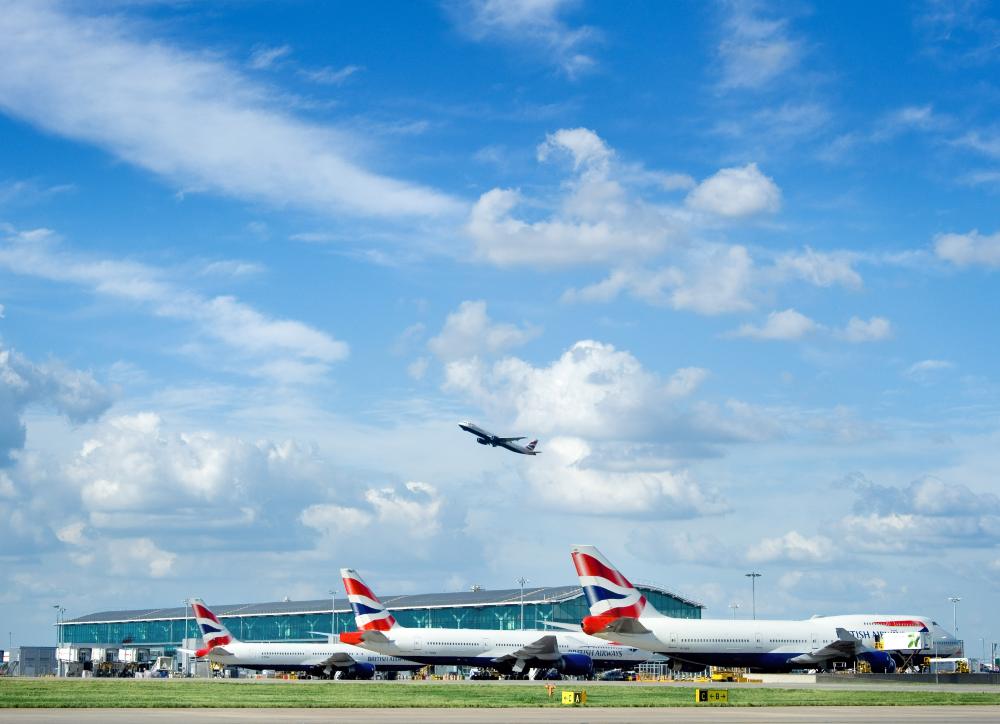
In related news – and following the delay to the TFWA World Exhibition & Conference – TRBusiness can also announce that the 2021 Global Travel Retail Awards is now planned to take place on the evening of Tuesday 26 October in Cannes during the TFWA World Exhibition & Conference.

Details of the venue for the awards ceremony will be announced nearer the time.

As announced, submissions for the product awards remain at £245 per entry (frozen) for the 2021 Global Travel Retail Awards.

All airport, cruise and inflight awards will remain free of charge to enter. Details of entry criteria and terms and conditions can be found on the Travel Retail Awards website.

CONSUMER OPINION IS ESSENTIAL

The Travel Retail Awards, the industry’s only global consumer-voted awards, was launched in 2018 and has since grown in popularity  thanks to the all-important consumer endorsement and recognition.

Organised in partnership with leading Swiss research agency m1nd-set, the nominations are evaluated by a panel of more than 5,000 travelling shoppers sourced from m1nd-set’s unique international database. A panel of expert bloggers and vloggers also evaluate each product entry.

More information on the judging methodology can be found on the judging website of the Travel Retail Awards website judging section here.

Following on from TRBusiness’ commitment to driving the industry’s sustainability agenda, the 2021 Global Travel Retail Awards features two new sustainability focused awards.

The ‘Best Sustainable Airport, Airline and Cruise Retail’ submissions, which will be free of charge, is for airports, airlines and cruise companies and their respective retailer or F&B partners only.

Suppliers can submit their socially responsible and environmentally friendly products in the new product award category: ‘Best Sustainable Supplier’ award.

For information about sponsorship opportunities, please contact [email protected], [email protected], [email protected] or [email protected]. For general enquiries, please contact [email protected].