Archives

UK government’s travel green list should be ‘massively’ expanded, says Heathrow

Heathrow has reduced its passenger forecast for 2021 to a range between 13 and 36 million versus 81 million in 2019.

London Heathrow Airport (LHR) has called on the UK government to bulk out the current ‘green list’ of countries as part of a new set of travel rules due to come into force from 17 May.

As reported, the arrival of the long-awaited traffic light system means international leisure travel from England will no longer be illegal, although strict rules on testing and quarantine will remain in place and people have been advised not to travel to ‘amber’ and ‘red’ countries for leisure.

In a statement echoing comments previously provided to TRBusiness, John Holland-Kaye, CEO, Heathrow said: “The government’s green list is very welcome, but they need to expand it massively in the next few weeks to include other low risk markets such as the United States and remove the need for fully vaccinated passengers to take two expensive PCR tests.

“Border Force’s claims that ‘long queues in immigration are inevitable’ smack of complacency – they are completely avoidable if ministers ensure that all desks are staffed at peak times.”

Total passenger numbers for the period May 2020 – April 2021 dropped by 86.7% to 9,472.

Last month, LHR revealed a further loss of £329/$462 million in Q1 – increasing financial losses due to Covid-19 border closures to nearly £2.4 billion – with 1.7 million passengers travelling through the airport.

Julia Simpson named as World Travel & Tourism Council President & CEO

Julia Simpson has been appointed as the new President & CEO, WTTC.

International Airlines Group (IAG) Executive Committee Member Julia Simpson has been named as President & CEO of the World Travel & Tourism Council (WTTC), effective 15 August.

She takes over from Gloria Guevara, who leaves the position after four years leading the global tourism body.

Simpson brings extensive experience within the travel and tourism industry to the helm of WTTC, having served on the boards of British Airways, Iberia and most recently as Chief of Staff at International Airlines Group (IAG).

Her resume includes senior roles in the UK government, including advisor for the UK Prime Minister.

Julia Simpson said: “It will be a great privilege to lead WTTC as it emerges from the worst crisis in our history. Travel & tourism plays a critical role to our economies across the globe, accounting for 330m jobs in 2019. In many communities it is the backbone of family run businesses that have been left devastated.

“The travel & tourism sector has shown real leadership in ‘reopening’ the world safely and securely; and I look forward to shaping and driving the sector’s ambitious agenda to achieve long-term sustainable and inclusive growth.”

Travel stakeholders react to ‘limited’ green list in new rules for England

Source: DfT.

Airports have welcomed the UK government’s move to restore international travel this month but warns that more countries should be added to the green list when safe to do so to sustain the recovery.

From 17 May, international travel to and from England will be legally permitted via the long-awaited ‘traffic light’ system.

In an announcement on Friday (7 May), the government confirmed that 12 countries and territories were on the ‘green list’: Australia; Brunei; Falkland Islands; Faroe Islands; Gibraltar; Iceland; Israel and Jerusalem; New Zealand, Portugal (including Madeira and the Azores); Singapore; South Georgia and South Sandwich Islands; and St Helena, Ascension and Tristan da Cunha.

International travel will be permitted via a traffic light system from 17 May. Source: Heathrow Airport.

‘MEANINGFUL PROGRESS’ AT FIRST REVIEW

Travellers from those countries will no longer need to quarantine on arrival in England, although they must have a negative pre-departure Covid-19 test, complete a passenger locator form and book and pay for another test on or before day two of landing.

However, popular tourist destinations such as Spain, Italy and France remain on the bigger ‘amber list’ [for further information, see link at footer].

All three lists (green, amber, red) will be reviewed every three weeks informed by public health advice including the Joint Biosecurity Centre’s Assessment of the latest data.

Charlie Cornish, CEO at Manchester Airports Group (MAG) which owns and operates Manchester, London Stansted and East Midlands Airports, said: “Many people will be frustrated that the announcement by the Transport Secretary does not allow for a broader restart of international travel, with so few countries on the initial green list.

“The aviation industry will be especially concerned that the government appears to have ignored clear scientific evidence, which shows that testing and vaccinations can support safe travel to a larger group of low-risk destinations.

“The British public will understandably question why our world-leading vaccination programme has not earned them the freedom to travel abroad without expensive and inconvenient tests – a freedom that other governments, including the European Union, will be giving to people who have been vaccinated.

“Aviation supports more than one million jobs and generates billions of pounds of economic value but is being held back by much tighter controls than any other industry. The industry has been impacted more than any other sector, and we need the same positive recovery plan that other parts of the UK economy have been given.

“It is essential that we see meaningful progress towards restarting international travel at the first review of the green list in the next few weeks, ahead of the peak summer season.

“It is also vital government explores fairer and smarter ways to protect the UK from variants of concern, removing the need for all arriving passengers to take costly and inconvenient PCR tests and mirroring the approach being taken by other countries. A true aviation recovery plan is needed to  ensure it can play its part in the recovery of the UK economy as a whole.”

Grant Shapps, Secretary of State for Transport, announced the green list of 12 countries and territories on Friday.

PORTUGAL BOOST FOR LGW

In a statement, Gatwick Airport (LGW) CEO Stewart Wingate said: “Confirmation that international travel is to restart is very welcome news after what has undoubtedly been the most difficult period in the airport’s history.

“We are particularly pleased to hear that Portugal is on the green travel list and we will have regular flights from Gatwick from 17th May allowing people to reunite with friends and family or enjoy an early Summer break.

“However, as soon as vaccination and infection rates make it safe to do so, we need more countries regularly added to the green list if the airport and our supply chains are to rebuild and protect as many jobs as possible.

“We look forward to welcoming back more passengers and can reassure them that we and our airlines are very well prepared to safely welcome back passengers in large numbers and have a significant range of social distancing, hygiene and testing provisions in place right across the airport campus.

“As the government has warned while queue time may be longer at the border due to extra health checks, we will do all that we can to help ensure these are kept to a minimum including our ongoing trialling of the use of e-gates.

“We will also continue to work with Border Force to ensure they make as much resource available to ensure passengers do not have a disrupted journey arriving into the UK.  We hope people feel increasingly confident to book flights to see relatives, take a well-deserved holiday or travel on business.”

Heathrow chief John Holland-Kaye had previously raised concerns over the ability of the UK Border Force to cope with the added Covid-19 checks for travellers required once international travel resumes on 17 May.

The airport said via Twitter that the latest announcement was a ‘positive step’ to restarting international travel and would continue to update its website with the latest information as it is received.

In a statement provided to this publication, Heathrow CEO John Holland-Kaye said: “Grant Shapps has made a positive start to reunite families, boost international trade and allow overseas holidays. As further progress is made with the vaccine roll out at home and abroad, we should see a significant extension of the ‘green’ list in early June and a change to the testing requirements so that fully vaccinated people can travel without restrictions.

“The government should help people plan ahead by publishing a list of countries expected to be on the green list for the summer holidays so that passengers are not faced with high prices for last-minute bookings.

“The government also needs to urgently address the unacceptable situation at the border, where passengers can wait for longer than their flight to the UK. Long immigration queues are an inevitable result of under resourcing, not an inevitable results of extra checks. Passengers will expect ministers to keep every desk staffed at peak times.”

UK APPROACH ‘TOO CAUTIOUS’

The World Travel & Tourism Council (WTTC) welcomed the UK’s gesture of opening the door to international travel through the travel light system but expressed disappointment that the US was not included on the green list, denying the chance to throw a ‘lifeline’ to the transatlantic travel sector.

“The UK is the fourth biggest G20 economy in terms of international travel & tourism spend from business travel, which amounted to £7.5 billion in 2019, before the pandemic ripped through the heart of the sector,” said Gloria Guevara, President & CEO of WTTC.

“While we understand that protecting public health should be the priority, the UK is being too cautious and risks losing its hard-won competitive advantage achieved by the early vaccine rollout by being too slow to allow the significant resumption of international travel.

“Holidaymakers and business travellers will be disappointed by the news, with so few countries on the ‘green list’, while Europe steals a march on the UK by continuing to open up and welcome visitors back.

“We are also disappointed that UK travellers are expected to pay for expensive PCR tests, even when travelling from countries on the green list. This will make foreign holidays totally unaffordable for many families.

“We urge the UK government to work with its providers to offer more cost-effective tests for UK travellers, or accept the more affordable yet rapid and effective, antigen tests.

“After suffering the biggest fall in contribution towards GDP from travel & tourism of the 10 most important global markets – by a staggering 62.5% – the UK can ill-afford to be this cautious.”

Research by the Airport Operators Association (AOA) reveals that the 12 countries and territories on the green list accounted for 5.5% of passengers in July-August 2019.

AOA Chief Executive Karen Dee said: “UK airports are ready to welcome back passengers from 17 May, with high levels of health and hygiene measures in place, and we welcome confirmation that international travel will resume.

“Given the success of the UK’s vaccine roll-out, it is disappointing that so few countries are on the green list. This is not yet the meaningful, four-nation restart UK airports and the economy need.

“Aviation is essential to connect families who have not been able to meet for so long, to provide well-earned holidays, and for businesses to reach new and existing customers abroad. To ensure this can restart effectively, the UK government must play its part by adding countries to the green list, making testing more affordable, through the use of widely available rapid tests, and by simplifying the processes and providing sufficient resource at the border.

“The unacceptable queues passengers experience at the border in some airports put passenger welfare and safety and security in UK airports at risk.

“Ministers need to use the upcoming reviews to reduce restrictions for fully vaccinated people, just as the EU and the US are planning. This is particularly important for restarting the UK’s inbound tourism sector.”

Transport Secretary Grant Shapps says the UK has taken a ‘cautious’ approach in a bid to protect public health.

To protect against new variants of Covid-19, the Maldives, Nepal and Turkey will be added to the red list as of 4am on 12 May.

“This is a new way of doing things, and people should expect travel to be different this summer – with longer checks at the borders, as part of tough measures to prevent new strains of the virus entering the country and putting our fantastic vaccine rollout at risk,” he said.

Different travel restrictions apply to Scotland, Wales and Northern Ireland and the devolved administrations will decide whether or not to mirror England’s rules.

Click here for red, amber and green list rules for entry into England.

Limit foreign travel to protect against Covid-19 variants, UK government told

Britons could be allowed to enjoy foreign holidays again from 17 May, but that remains uncertain.

A cross-party group of more than 60 MPs and peers have urged the UK government to continue curbing international travel after 17 May.

This is the date in which the ban on foreign travel for England is expected to end in line with lockdown-easing measures.

Ministers have been called to discourage all but essential overseas trips, introduce stronger border checks and provide ‘adequate financial support’ to businesses in the travel sector to guard against Covid-19 variants and avert the risk of a ‘third wave’.

In a *report published today (3 May), the All-Party Parliamentary Group (APPG) on Coronavirus have called for tougher measures to be implemented at the UK’s borders while setting out a series of recommendations to ‘ensure that the hard-won progress in tackling the virus is not lost and mistakes of the past are not repeated’.

SERIES OF RECOMMENDATIONS

These include reducing the risk of infection at airports and ensure passengers arriving from green, amber and red list countries are kept separate.

Improving ventilation, creating more space for social distancing at arrival halls and verifying travel documents pre-departure where possible to reduce airport queues, are among the recommendations.

In addition, the cross-party group is calling on the UK to drive the development of international standards for Covid-19 test and vaccination certificates to help border staff spot fake documents.

Heathrow has expressed concerns that the UK’s Border Force could struggle to cope with extra Covid-19 passenger checks should international travel resume again in earnest from 17 May. Source: Heathrow Airport.

The APPG, which is carrying out an ongoing cross-party inquiry into the government’s handling of the coronavirus pandemic, says the policy should be renewed on a quarterly basis.

Layla Moran MP, chair of the APPG on Coronavirus, said: “It is staggering that the government is even contemplating encouraging overseas holidays when airports are already struggling to keep the virus and new variants at bay.”

Caroline Lucas MP, vice chair of the APPG on Coronavirus, said: “Ministers are showing a shocking level of complacency about the risks posed by overseas travel.

“We know from past experience that tourism hotspots risk becoming Covid hotspots, with people mixing from all over the world.

“Instead of giving the green light to overseas holidays, we should be providing ongoing support to the travel industry and reversing aid cuts that are undermining the global fight against Covid-19.”

THOMAS COOK: BOOKINGS UP

The development comes amid uncertainty over the list of countries due to be graded under a new traffic light system.

In a report issued on 22 April, the Commons Transport Select Committee said the framework for the list of destination countries would be populated at the latest by 1 May. It is gathered that these will now be published in ‘early May’.

Speaking to BBC News today, Alan French, CEO of Thomas Cook’s new online travel agency, welcomed the potential lifting of the foreign travel ban on 17 May, but the desire to travel would need to be balanced in a safe manner.

He said the firm has witnessed healthier bookings than it had seen for some while, confirming to BBC News an increase of 40-50% week-on-week.

French added that Portugal, Spain, Greece and Croatia were destinations that Thomas Cook hoped travellers would be able to return to in the summer.

*Report based on evidence received at the APPG’s hearing with expert witnesses on Tuesday 20 April. The session heard how airports are becoming a ‘breeding ground’ for the virus, with people arriving from red, amber and green list countries often mixing in overcrowded arrival halls. 


AirAsia Beauty launches in Malaysia and Indonesia as part of expansion plan

AirAsia Beauty has launched in Malaysia and Indonesia as part of a rapid expansion plan in the ASEAN region.

AirAsia.com’s Super App has launched its latest AirAsia Beauty product offering in Malaysia and Indonesia.

Acknowledging the growing market demand for beauty and skincare products, AirAsia beauty has revealed a rapid expansion plan within the Association of Southeast Asian Nations.

AirAsia Beauty has curated a range of products including skincare catering to all skin-types and fragrances, bath and body supplements for pampering.

Accessible via the AirAsia super app (under the beauty tab) and at airasia.com/beauty, the platform features a wide range of brands including History of Whoo, Dr. Morita, Mediheal, The Mineraw, farmskin, Clio, Dashing Diva and Cosrx.

AirAsia beauty currently delivers within Klang Valley, Malaysia and Jakarta, Indonesia by Teleport, AirAsia digital’s logistics venture.

‘REMARKABLE DEMAND FOR BEAUTY PRODUCTS’

Lim Ben-Jie, Head of Commerce, AirAsia Super App said: “E-Commerce and home shopping has now become part of our daily life. From our experience with AirAsia shop, we observed remarkable demand for our beauty products, and we decided to carve out AirAsia beauty as a standalone service, offering authentic beauty products delivered to your doorstep.

“We hope to share our products to the people of Asean by leveraging on AirAsia’s unique internal talent, none other than our cabin crew and grooming instructors who are the perfect beauty ambassadors. Beauty is part of their everyday regime and they are experts on always looking great and flawless.

“The addition of AirAsia beauty will further diversify our Super App lifestyle offering, bringing us a step closer to becoming Asean’s leading one-stop lifestyle and travel app.”

[Click the below video for an insight into the AirAsia Beauty product offering]

AirAsia beauty is currently offering up to 50% off selected brands and free delivery within Klang Valley. Shoppers can also pay with BIG Points to save more and earn BIG Points each time they spend on AirAsia beauty.

Ben-Jie added: “With AirAsia beauty, consumers can look forward to an integrated online shopping experience supported by real personal beauty tips, product reviews and favourite picks from our Allstars and other users.

“Beauty is a continuous journey; besides providing consumers with the best items for their skin and delivering them to their doorstep, we are also here to give more resources in helping one to become their best self.

“Kicking off in the Klang Valley in Malaysia and Jakarta in Indonesia, we have plans for nationwide expansion in Malaysia, Indonesia and other Asean markets. We are working closely with various brands to introduce new products and exclusive bundles soon, so stay tuned for more exciting developments from AirAsia beauty.”

New MAG Sustainability Blueprint aims for net zero carbon emissions by 2050

Daniel Bainbridge, Malaysia Airlines Regional Manager for UK & Europe.

Malaysia Airlines and the Malaysia Aviation Group (MAG), the parent company of the national carrier, have introduced the MAG Sustainability Blueprint. The aim of the Sustainability Blueprint is to achieve net zero carbon emissions by 2050, a target set with Oneworld alliance partners.

As a starting goal, MAG is also working towards bringing several aspects of the business up to industry-leading standards in line with the United Nation’s Sustainable Development Goals (SDG) for 2030.

MAG’s sustainability programme will contribute towards SDG aspirations for aviation emission reduction, fuel conservation and climate change. The Group also aims to reduce the overall CO2 emission by 25 million kilograms this year.

A further aim is to reach 50% usage of biodegradable materials for inflight operations, coupled with 50% of ground and inflight waste recycled and up cycled by 2025 onwards.

Championing sustainability is a key focus as part of its goal to become Asia’s leading travel and aviation services group. MAG seeks to integrate sustainability through minimising environmental impacts; positively enhancing the communities it operates in; ensuring safety excellence; ensuring compliance within the organisation; and driving profitability at the benefit of stakeholders and employees.

FIVE KEY FOCUS AREAS

With 66 initiatives already being implemented, across 23 sustainability matters from five key focus areas — economic, governance, safety and security, environmental and social —the Blueprint will also serve as a driver to accelerate and support these initiatives into the future.

[Watch the below video for more information on Malaysia Aviation Group’s Sustainability Blueprint]

In addition to offering Airbus A350 aircraft on the London route, further fuel-saving initiatives are already yielding benefits.

Due to London Heathrow’s long runway, Malaysia Airlines pilots use idle reverse thrust power while stopping the aircraft. This allows for 18kg of fuel to be saved per landing, which saves approximately 3,420kg of carbon dioxide over the course of a month.

This is in addition to taxiing the aircraft with one engine instead of two after landing, which can further save as much as 50kg of fuel or 158kg of carbon dioxide per flight.

Another major initiative that the Group is already undertaking is ‘sub-cycling’. This is the process of transforming waste items such as leather seats, lifejackets and uniforms into handbags, aprons and toiletry bags.

Championing sustainability is extremely important for Malaysia Airlines.

Malaysia Airlines has also engaged in carbon offsetting initiatives in line with the Carbon Offsetting and Reduction Scheme for International Aviation that was set by the International Civil Aviation Organisation in 2016.

The airline aims to complement these measures further by continuing to explore opportunities and key initiatives such as the use of sustainable aviation fuels in the future.

Daniel Bainbridge, Malaysia Airlines Regional Manager for UK & Europe said: “We recognise that customers are increasingly looking to purchase from brands that lead the way in sustainability, therefore sustainability needs to be at the forefront of our decision-making process, in delivering both socially responsible and environmentally focussed business practices.

“The sustainability blueprint sets the direction for our business to make a notable and tangible difference. Championing sustainability is of the utmost importance to Malaysia Airlines and will continue to remain so as we look forward to welcoming customers back with our warm Malaysian hospitality once travel restrictions ease.”


JFK T4 to re-think commercial offer; questions over $3.8bn redevelopment

Approximately 30-35% of international traffic volumes have restored at JFK T4.

Discussions regarding future expansion at New York’s John F. Kennedy International Airport Terminal 4 are taking place but the operator remains tight-lipped on the detail after the suggestion its $3.8 billion terminal redevelopment might not proceed.

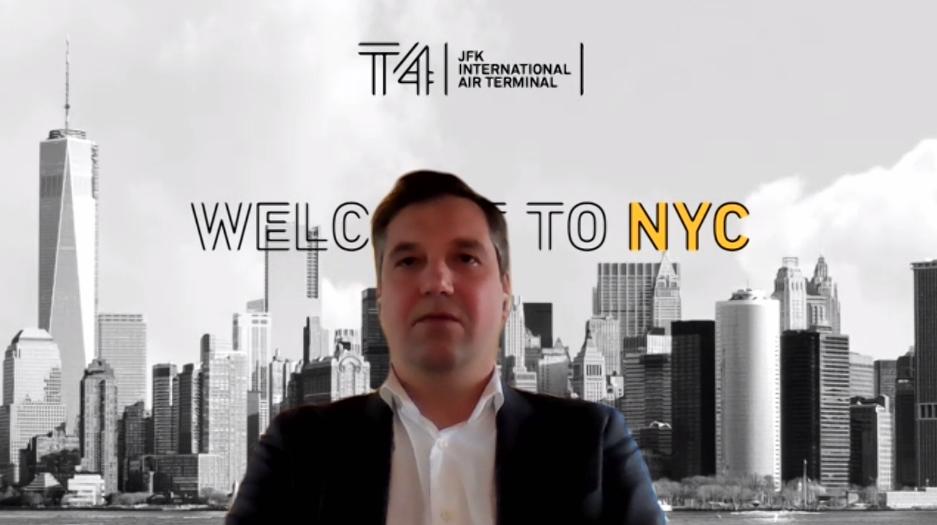
In the opening ‘View from the top: The CEO Chair’ session on day three of the virtual Summit of the Americas, Roel Huinink, President and CEO of John F. Kennedy International Airport Terminal (JFKIAT) Terminal 4 said the project with partner Delta Air Lines, which was announced last year and due to complete in 2023, ‘isn’t going to happen’.

It remains unclear whether the redevelopment plan has been mothballed or shelved altogether.

When approached for clarity on the matter, JFKIAT – privately owned by Royal Schiphol Group affiliate Schiphol USA – provided the following statement to TRBusiness: “The redevelopment project was put on hold last year due to the impact of the Covid-19 pandemic. We will continue to work with our partners to determine the best path forward for the planned redevelopment.”

FRESH COMMERCIAL PLAN

During an informative series of exchanges with session moderator and Moodie Davitt Report President Dermot Davitt, Huinink said the Port of Authority of New York’s mission to create new airports – the facility at New York LaGuardia Airport, for example – remains.

“There will be expansion plans at JFK. There are ongoing discussions about consolidation, expansion, but nothing to announce yet,” said Huinink. “Looking at our terminal, apart from expansion, we will rethink our total commercial offer. This has changed the business. We have to see if we have the right concepts in place and the right locations. We have started that and making a new commercial plan.

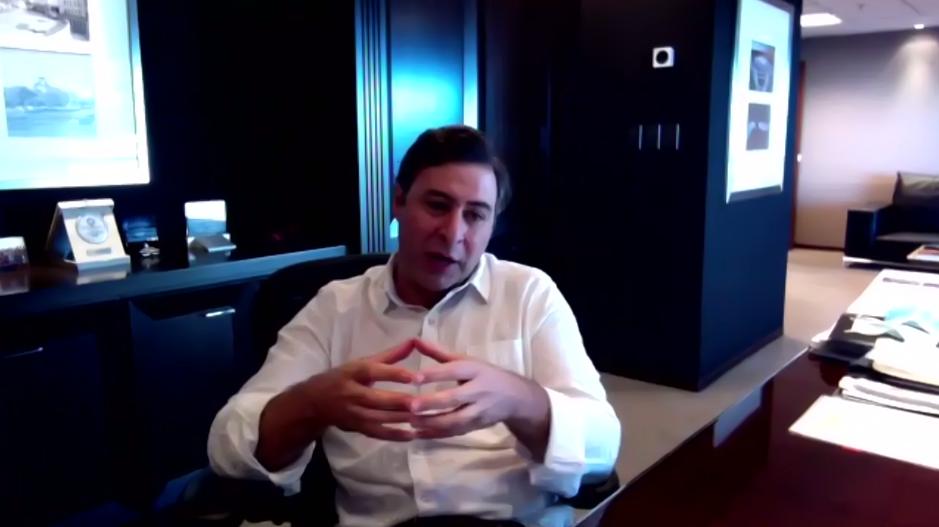
Roel Huinink, President and CEO, JFKIAT: “There will be expansion plans at JFK. There are ongoing discussions about consolidation and expansion, but nothing to announce yet. Looking at our terminal, apart from expansion, we will rethink our total commercial offer.

“I strongly believe we need to invest in data-driven concepts relevant to the passenger demographics,” continued Huinink, in doing so mentioning the importance of quickening the pace of e-commerce implementation.

“It is extremely crucial to reach out to the consumer early on in the journey and get them in the mindset of buying. Digital shopping and e-commerce experiences is definitely something that will help there.”

Responding to that need, JFKIAT is implementing a new platform in the coming period in discussion with its retail partners.

Unsurprisingly, the bans on Chinese and European travel – significant source markets – has resulted in a huge impact.

Attendees to the webinar heard that in the first few days of April 2020, the airport averaged 2,000 pax per day and 200 international travellers.

This compared to around 65,000-75,000 pax a day. Currently, there are zero China flights at JFK T4 but Huinink said he is confident Chinese travellers will return and start buying.

“The traffic is still volatile but is growing,” he commented. “We’re seeing early signs it is returning. The north east US has been hit harder than other parts of the US.”

Around 50-55% of domestic traffic volumes [driven mainly by Delta Airlines – Ed] and approximately 30-35% of international traffic volumes have restored at the terminal. Importantly, Virgin Atlantic is sustaining its itineraries to New York.

On the other hand, the terminal has welcomed a sizeable amount of cargo with up to 20 full cargo freighters in the terminal per day.

CONTRACT ‘RESETS’

With traffic slowly beginning to restore, Huinink outlined a comprehensive response plan across a number of keys areas, with the safety of employees put front and centre.

“The first step to restore consumer confidence is to restore employee confidence,” he said. “If the employee doesn’t have any confidence or feel safe, that is not a good start.

“We’ve made sure to do everything we can to ensure [employee] safety,” he continued, mentioning PPE stockpiling, routine temperature checks and the opening of a testing site at the airport.

He spoke of JFK’s strong terminal community and a culture that has helped the terminal weather the Covid-19 crisis.

Addressing JFK T4’s partnerships, Huinink paid tribute to the Port Authority of New York, airlines and commercial stakeholders.

“Nobody is in the business of losing money,” he said, in doing so pointing out the fine line that exists between delivering the necessary customer experience as a landlord, while at the same time satisfying conditions for retailers to operate in a manner that is sustainable.

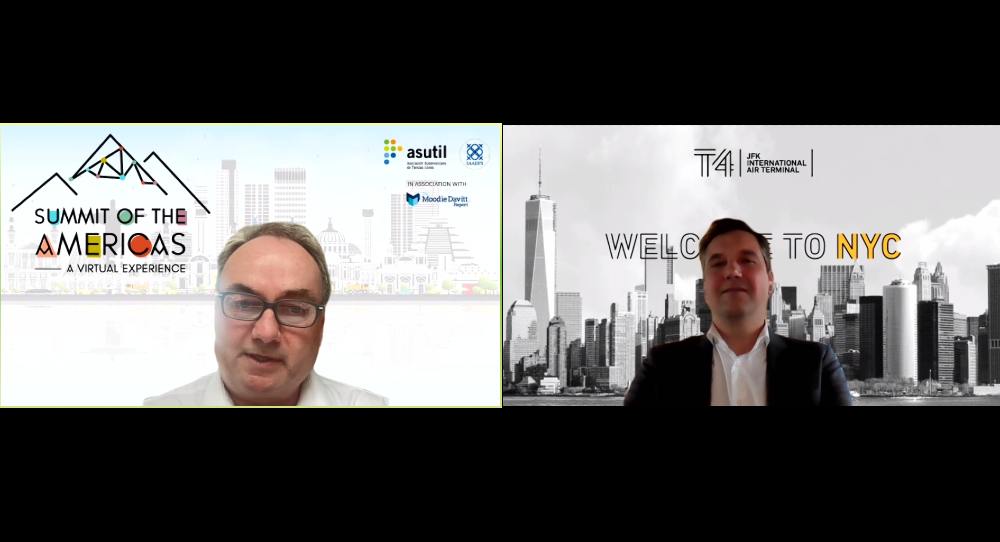
JFKIAT President and CEO Roel Huinink (right) in discussion with Dermot Davitt.

“I look at my bottom line and the retailers look at their bottom line and those interests aren’t always aligned. I may push for more openings and the retailer may potentially say they will lose money. By having a constant dialogue, trying to find where we can help each over, we will gradually work back to full openings.”

In terms of concession support, MAG relief is in place and has been extended over time.

The port authority, like other US landlords, was the beneficiary of CARES Act funding from federal government to support aviation [concessionaires at US airports recently received an additional $800 million pot that is being allocated under the auspices of the Federal Aviation Administration – Ed].

“We have not yet reset all the contracts, but that is coming,” said Huinink. “Those discussions are ongoing and we need to make sure that the long term commercial plan is in place. That will not come overnight. We need to constantly adapt and change and see how we can get the best customer experience and open as much as possible without the retailers going bankrupt.”

On the structure of retail concessions and the necessary balance of risk and reward, Huinink said he didn’t believe in minimum annual guarantees but nonetheless stated that there should be an incentive for retailers to perform and that airports have an expectation in terms of revenue per departing pax. Nonetheless, he acknowledged that alternative contract arrangements could be a consideration.

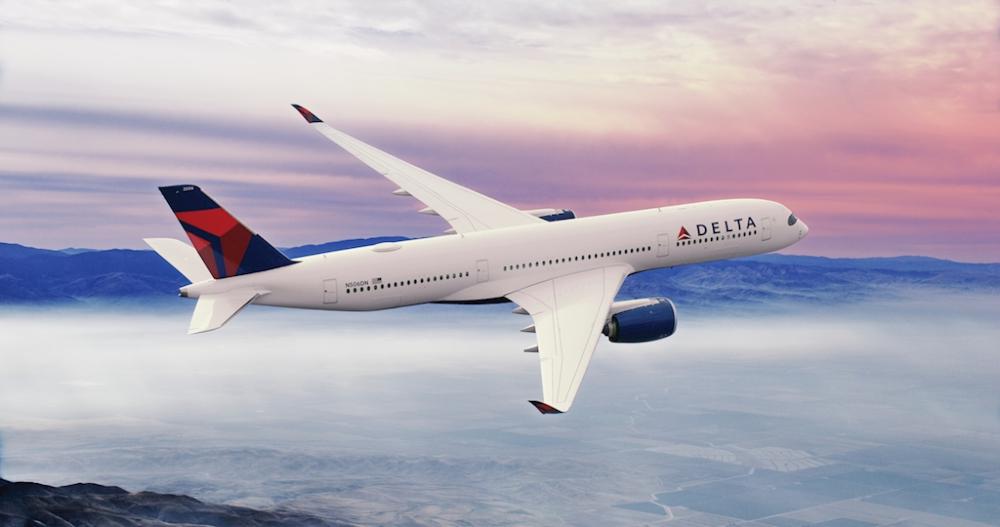
JFKIAT partner Delta Air Lines is driving an increase in domestic traffic at Terminal 4. Source: Delta Air Lines.

Looking ahead, Huinink said there is a need to instil confidence in a safe and touchless air travel experience.

“Let’s be clear; pax want to go back to the magic of travel. That starts with the airport, great F&B and retail options.”

He said the restoration of travel will be speeded by vaccination programmes, developing safe travel corridors and digital passports without the need to quarantine.

“The future is bright. It has been an extremely rough year as an industry, for us as a company and me personally, but I really long to go back to travel. I feel the consumer is ready. We as an industry have shown that by collaborating strongly through the pandemic we can come out stronger. It will remain a bumpy road, but that is okay as long as we keep collaborating.”

Retailers: Minimum annual guarantee ‘rules of engagement’ have changed

An engrossing series of discussions on the passenger experience, the role of digital and the concession model took place on Monday at the virtual Summit of the Americas (5-9 April).

A collective of travel retailers have agreed that operational contracts hinging on minimum annual guarantees (MAGs) are no longer workable in a Covid-ravaged air transport climate and must be reformed.

An engaging panel discussion entitled ‘Road to Recovery: The Retailer Perspective’ took place during yesterday’s virtual Summit of the Americas (5-9 April), with contributions from Motta Internacional, Dufry and 3Sixty Duty Free.

While acknowledging that retailers have availed themselves of MAG relief since the Covid-19 crisis stymied revenues last year, panellists agreed that fixed rents should give way to risk-sharing agreements – a view that have noticeably hardened in the past year.

Aurelio Barria, Senior Vice President at Panama-headquartered Motta Internacional, argued that travel retailers cannot be expected to meet the same rates as in the past.

“We have to change the rules of engagement. We cannot work with the same conditions that we have before. We have airports that have expanded their terminals, because they believe in their growth, but now it will take many years to come back to their projections. We cannot any longer pay MAGs or monthly guarantees.”

MORE CALLS FOR SHARING RISK

Retail continues to provide an important source of income to the airports, Barria maintained.

“All the rules have changed; we have to negotiate new terms and conditions. We are in the process of letting them know that a good partner is important. We have to avoid the ‘landlord’ relationship and have a partnership relationship. That is the only way we can be in the business in the future and give service to the passengers. We have to be creative and we are working on that.”

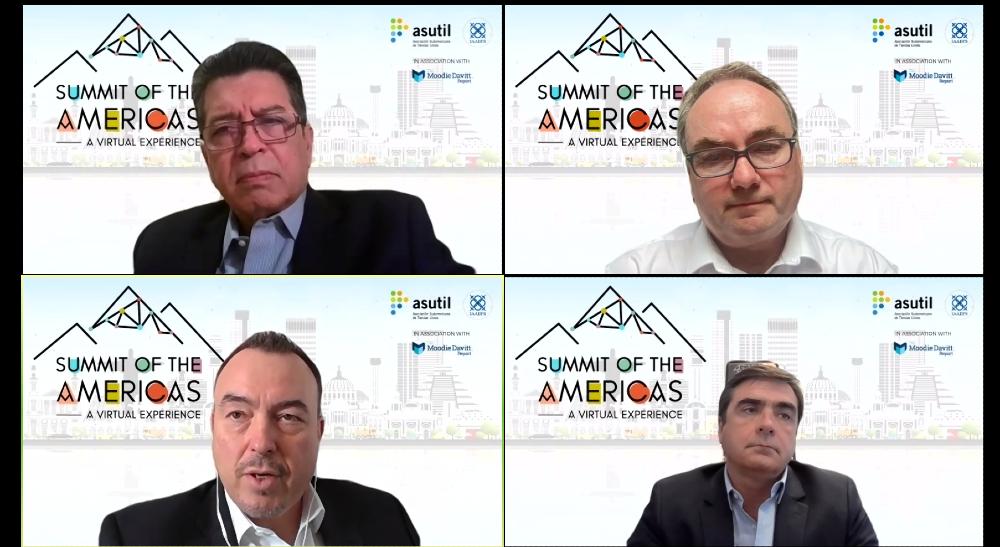
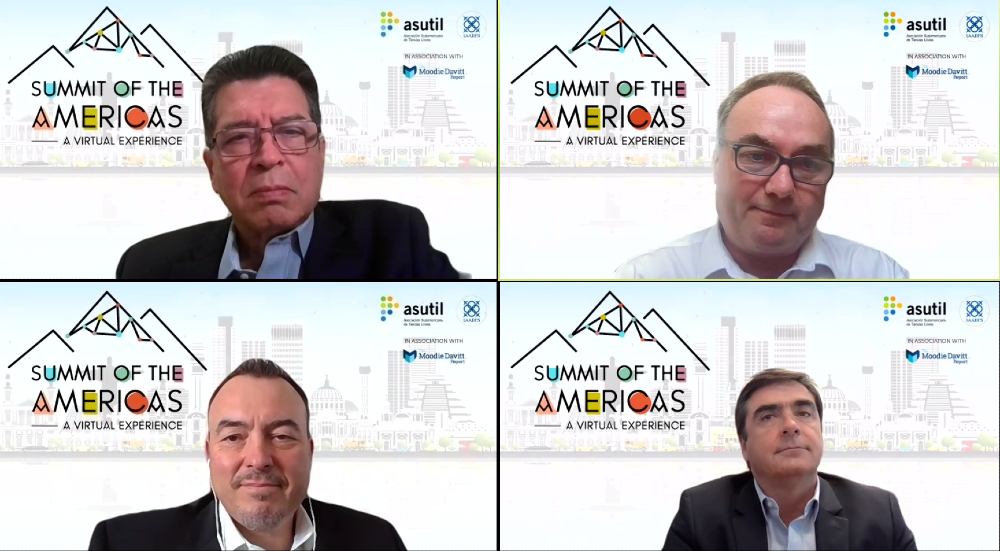
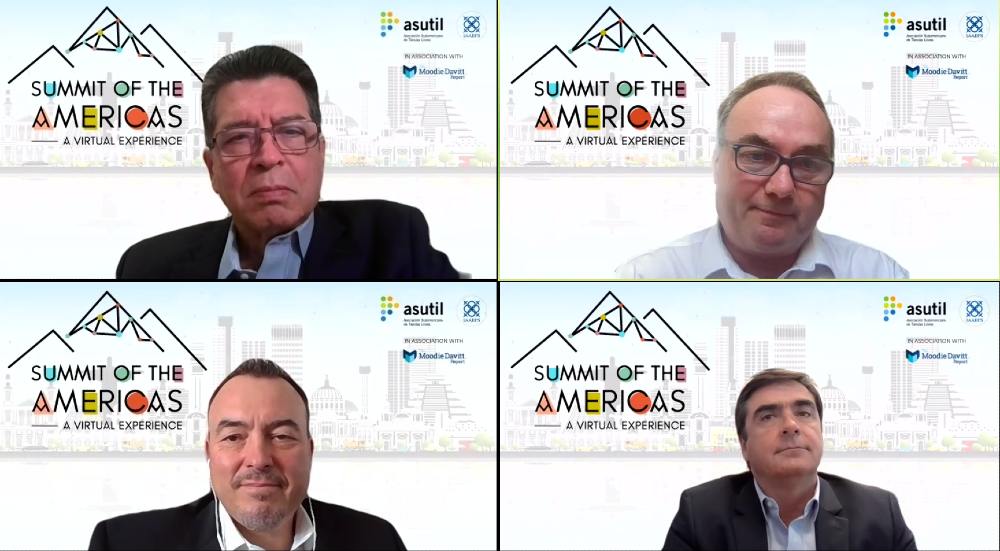
Clockwise from top left: Aurelio Barria, Senior Vice President, Motta Internacional; Dermot Davitt, President, The Moodie Davitt Report; Enrique Urioste, General Manager Sub-Cluster South America, Dufry; and Alex Anson, Chief Operations Officer, 3Sixty Duty Free.

Enrique Urioste, General Manager Sub-Cluster South America at Dufry said: “I think the new world will go towards risk sharing; if the airport delivers the number of passengers, we commit to extract an amount of money based on pax delivered so we will go into a MAG per-pax basis where we all assume challenges. If the conditions are there, we will have risks but can manage those risks.”

3Sixty Duty Free Chief Operations Officer Alex Anson said closer partnerships should be forged between retailers, airlines and airports while traffic restores.

“If some airports think they can revert back to historical rents before traffic and revenues are in place it could spell a crisis for many travel retail operators,” he suggested.

In Central and Latin America, Barria mentioned that Motta Internacional has suffered since the pandemic hit with the lowest sales return in 20 years.

This is due in part to challenging travel restrictions; Chile’s government recently closed its borders and Argentina’s flights have been significantly reduced [around four international flights per day – Ed].

On the other hand, Panama is showing greater promise and Barria expects the transit passenger business to pick up pace moving forward.

Indeed, Dufry’s Urioste pointed to a ‘hunger’ among travellers to travel and buy.

“People have a desire to travel and buy and vaccines are the tool that will give us the road back to freedom,” he told delegates.

“We know digital is a key tool to bounce back sales but in most of the countries we are faced with a legal challenge: we cannot sell online.”

Aurelio Barria, Senior Vice President, Motta Internacional: “We have airports that have expanded their terminals, because they believe in their growth, but now it will take many years to come back to their projections. We cannot any longer pay MAGs or monthly guarantees.”

NEW PARTNERSHIPS REQUIRED

He went on to stress the importance of reinventing relationships with the aeronautical community and new partnerships fostered with airport partners have been one of positives to emerge from the crisis.

“In Argentina we are working very closely with the airport to reinvent the travel industry and the experience we can provide to the passenger,” said Urioste.

Encouragingly, Barria pointed out that purchase levels per pax at Motta Internacional’s shops are matching the levels seen in 2019, despite the low volumes.

Spending is being driven by core segments such as P&C, which accounts for 65% of sales.

However, he expressed concern around the economic challenges in Latin America and the possible impact that could have on intra-regional travelling at the expense of international travel to destinations such as Europe and Asia.

He said: “It won’t be easy. We have to compete and a face a new reality. Maybe we have to reduce the size of the stores, skus and product lines… before we used to have larger stores but any business that loses 75-80% of clients is hurt.”

Working closely with airlines and suppliers remains crucial, added Barria, to offer added value to customers.

In the case of suppliers, he said the advent of e-commerce particularly in the domestic market is decimating retailers and requires a nimble pricing strategy that reflects differential tax requirements and the pressures faced by travel retailers (space, fees, staff employment).

On the topic of rationalising sku assortments, Alex Anson said 3Sixty Duty Free like others has been working to manage cashflow and inventory.

The type of aggressive promotions seen in the industry have been targeted at reducing inventory, but Anson warned: “12 months on, we are in a position where the customers in our stores still expect bestsellers, good value and innovation and that is the reality. They still want them and therefore if we don’t offer those to these passengers, the little turnover available in airports will be missed but knowing we will still carry an inventory that is not as necessary as in 2019.”

Optimistically, he pointed to the evolution of domestic traffic volumes in the US.

The Center for Disease Control & Prevention (CDC) recently updated it safety guidance to make it easier for fully vaccinated individuals to travel within the US without the need for Covid-19 testing for post-travel self-quarantining.

Anson singled out Dallas as a destination witnessing a positive evolution in traffic and sales. However, returning and leisure traffic hubs such as in Orlando is not witnessing the same pax evolution.

In the case of the airlines, Air Canada – a 3Sixty Duty Free customer – is yet to resume inflight sales.


Panellists agreed that moves towards flexible, revenue per passenger-delivered agreements between travel retailers and airports would represent a more equitable contractual scenario for both parties moving forward.

Anson went on to mention that a big risk in the next three years could mean airport commercial departments view the positive evolution of domestic traffic as an ‘enabler’ for rent hikes among international travel retailers.

He concluded by highlighting areas of concern for the international travel retail business, including multinational brands targeting specific groups such as Chinese customers as part of regional sales networks, and the success of domestic e-commerce platforms.

Challenges around testing in travel retail environments are also being magnified by the likes of domestic retailers, including Sephora in the US, that are now actively using shop floor testing to capture spending.

Anson confirmed that from May, 3Sixty Duty Free will be introducing single tastings for the drinks and confectionery categories.

Speaking directly to the company’s vendor partners, he added: “Leisure travel will resume and travel retail has been amazingly successful for decades and will continue to do so, serving long-haul passengers in an environment they don’t typically have in domestic markets.

“They [vendors] need to continue investing in the region and our channel for the long term. This blip is not forever so we need them to be committed to our region and channel to make sure we’re ready for the resumption of that international – particularly long-haul – traveller, that will come back.”

For more coverage from day one of the virtual Summit of the Americas, click here.

Uncertainties cloud recovery path in long road ahead, say Americas leaders

The five-day virtual Summit of the Americas began today.

The duty free and travel retail industry faces ‘a confluence of uncertainties’ and must seize on the dynamic advantages it possesses to enrich the customer experience and stay competitive.

This was the topline message heard today (5 April) by delegates in the opening educational session on day one of the virtual Summit of the Americas (5-9 April).

Welcoming attendees, IAADFS Chairman René Riedi drew on statistical estimates from the United Nations World Tourism Organization (UNWTO) to illustrate that the economic impact on worldwide tourism as a result of the Covid-19 crisis amounts to around $910bn in revenue losses.

The sector’s knock-on effect to global GDP registers at approximately 1.5-2.8%.

“The crisis is not over yet,” Riedi warned. “Although many countries have started successfully vaccinating people, the industry is still facing a confluence of uncertainties. Without a doubt the Covid-19 crisis has had a profound impact on aviation, tourism and travel retail sector in the Americas.

“Faced by this scenario and the diminished recovery prospects for international travel in particular, IAADFS and ASUTIL collectively made the decision at an early stage that the only realistic platform for the 2021 summit was a virtual one.”

‘UNCHARTERED TERRITORY’

In the ‘View from the Top: The CEO Chair’ session, Corporación América Airports CEO and ACI World Chairman Martín Eurnekian cast doubt over comparisons between the scenario for travel and tourism today versus last year given the dramatic changes that have taken place.

“We are working with the information we have. Even places where today they have low access to vaccines, all the numbers I’ve seen show by 2021 the vaccine availability will be widespread and most countries will be able to move ahead with their vaccination campaigns, with different regions and times during the year. We hope this is the right path, but since this is unchartered territory we should think of a plan B.”

Eurnekian says the formulation of such a plan requires sharpened dialogue with governments to adapt to the aforementioned ‘new normality’, including implementing technology that facilitates the restart.

Offering a trading snapshot for Corporación América Airports, which boasts 52 airports in its portfolio across seven countries, he said: “We’ve had mixed results during the last year. It’s a long process that has had its ups and downs with some total lockdowns that were eased and came back into force again. It’s a very steep declining path for passengers everywhere with mixed results whenever restrictions are eased.”

He declined to provide specific indictors on pax declines, other than to say the fallout in 2020 year-on-year stood at around -70%, instead identifying two factors shaping the narrative since the beginning of the pandemic in March 2020.

Fear was the main driver affecting the drop in pax at the beginning, sending travellers into shellshock, he explained, However, over time that gave way as a ‘new normality’ set in.

“We no longer have this huge fear of travelling as everyone has come to terms with what is happening,” he said. “Fear is still there, but it has turned into something different: something that people feel is manageable.”

He observed that what is driving pax down is restrictions, which he said are frequently based on measures taken by governments to give populations clarity on the road ahead.

Asked by moderator Dermot Davitt of The Moodie Davitt Report about the shape of the recovery into 2021 and beyond, Eurnekian responded that it was a difficult question to answer.

Rathering than offering strong predictions, he pointed to global vaccine deployment programmes offering hopes for the recovery, coupled with a relaxation in travel restrictions. While the prevalence of factors that act to deter travel, there are other factors that will incentivise people to travel [the emergence of the IATA Travel Pass Initiative being one such device – Ed].

UNITING BEHIND A COMMON CAUSE

Speaking in his capacity as ACI World Chair, he acknowledged that the voice of airports during the crisis had been raised, but has not been heard loud enough.

The steps taken by governments, suggested Eurnekian, have not taken advantage of the available resources intended to make travel safe via a coherent system.

“International travel is one of the most standardised and well-coordinated industries in the world,” he maintained, as discussion turned to vaccinations, testing and the emergence of digital vaccination certifications to facilitate travel.

Corporación América Airports Chief Executive Officer and Chair of ACI World Martín Eurnekian.

Touching on travel retail, he said the industry has a real opportunity to shape its own future roadmap towards success.

“The travel retail industry and travel industry itself has long had ideas on what is the next step for the industry, how to engage with the consumer using tools that are available through technology,” he continued.

“As an industry because we lacked a bit behind the outside (world) one of the interesting things going on is [the pandemic] allows us to stop and think on how we want to shape the future, allowing us to have conversations with our suppliers to create new solutions, systems and ways to engage with consumers and be more efficient in the future.”

Fuelling this is greater synergies between different stakeholders – airports, airlines and duty free stakeholders – on data sharing that can make the consumer experience far better, Eurnekian suggested.

After discussing the mechanics of the ‘trinity’ and attracting commitments from the airlines – the well-versed missing part of the data jigsaw – Eurnekian emphasised the importance of sharpening the customer experience.

Asked about the future landscape of airports in the Americas, Eurnekian responded that it remains difficult to predict.

“The US has issued huge stimulus packages that have affected the airports and airlines; in Europe there have been measures supporting different countries and industries […] we will have to see how the industry behaves,” he noted.

He said most companies, including Corporación América Airports, have stopped moves to lift capacity at airports (via investments) but says the pause has allowed it to prepare for the restart, channeling the focus into the passenger experience and minimising disruption.

A series of informative and insightful exchanges on the state of Americas travel retail, passenger traffic challenges and opportunities, inventory and stock management and contractual agreements took place in the ‘Road to Recovery: The Retailer Perspective’ session. Clockwise from top left: Aurelio Barria, Motta Internacional; Dermot Davitt, The Moodie Davitt Report; Enrique Urioste, Dufry; and Alex Anson, 3Sixty Duty Free.

“It is more a matter of putting minds to work than investing a lot in capital expenditure,” he stated.

Addressing the dynamics of the commercial offer at airports, he acknowledged that a constantly evolving, more personalised experience is more important than ever, but delivering that is not without its challenges.

“I am still very optimistic about travel. I think our industry will keep being very relevant and still be an amazing place to showcase brands and engage consumers,” he concluded.

“Now is the time to unite behind a standardised way to reopen the industry […] and in the future thinking how we can compete in the virtual world with the advantage we have.”

The five-day virtual Summit of the Americas is hosted by IAADFS and ASUTIL in association with The Moodie Davitt Report.

Stay close to TRBusiness for more from day one of the virtual Summit of the Americas, including a panel discussion featuring 3Sixty Chief Operations Officer Alex Anson; Motta Internacional Senior Vice President Aurelio Barria; and Dufry General Manager Sub-Cluster South America Enrique Urioste.

UK government to brief on intl travel amid ‘traffic light system’ suggestions

UK Prime Minister Boris Johnson is expected to provide an update on the foreign travel situation at a briefing on Monday.

UK Prime Minister Boris Johnson is expected to use a Downing Street briefing later today (5 April) to outline measures intended to kickstart international travel.

Speculation is rife that a country-based ‘traffic light system’ could determine testing and isolation requirements for arrivals into the UK.

It has been widely suggested in the national and international press that ‘green’, ‘red’ or ‘amber’ statuses would be assigned to countries based on their Covid-19 vaccination and infection rates.

Under current rules international travel is banned until 17 May at the earliest except under circumstances where there is a ‘reasonable excuse’, excluding holidays.

Holidaymakers will be hoping international travel can resume when the government’s Global Travel Taskforce reports its recommendations on 12 April. Source: Gov.uk.

TWICE-WEEKLY TESTING IN ENGLAND

The government’s Global Travel Taskforce is due to report its findings on 12 April.

Currently, 39 countries are on the ‘red list’ that prohibit entry to the UK. This includes Bangladesh, Kenya, Pakistan and the Philippines, which will be added to the list at 4am on 9 April.

Separately, there have been suggestions that so-called ‘vaccine passports’ could be introduced to permit entry to entertainment venues in the UK as lockdown rules ease, although nothing has been confirmed.

While the Prime Minister has so far distanced himself from the term, he confirmed to Sky News at the weekend that there would be a ‘role’ for vaccination certification.

A cross-party group of more than 70 MPs – including more than 40 MPs from the Conservative Recovery Group – signed a pledge at the weekend opposing what they view as the ‘divisive and discriminatory use’ of the scheme.

Former Labour leader Jeremy Corbyn; Labour MPs Dawn Butler and Rebecca Long Bailey; former Director of Liberty Baroness Shami Chakrabarti are also among signatories to a campaign supported by Big Brother Watch and others.

Under the current roadmap, businesses in England such as bars, restaurants, hairdressers, gyms and non-essential shops are due to reopen on 12 April.

Ministers today announced that everyone, including those without Covid-19 symptoms, will be eligible to take free rapid lateral flow tests (LFDs) twice per week, effective 9 April.

“Around one in three people who have COVID-19 show no symptoms, and as we reopen society and resume parts of life we have all dearly missed, regular rapid testing is going to be fundamental in helping us quickly spot positive cases and squash any outbreaks,” said Health Secretary Matt Hancock.