Archives

Call for aviation support package as UK braced for tighter travel restrictions

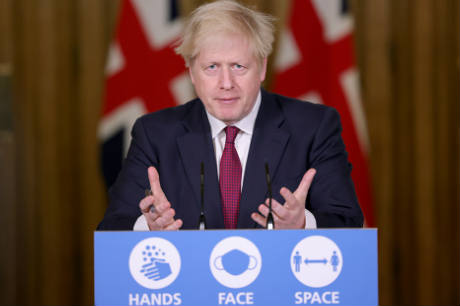
Prime Minister Boris Johnson announced the latest national lockdown on Monday. Source: Gov.uk.

[UPDATED] The UK government is set to introduce tougher measures at the borders after a third national lockdown was announced yesterday evening (4 January).

Prime Minister Boris Johnson told people to ‘stay at home’ during a televised address to the nation, with the lockdown set to be in place until mid-February.

A ban on non-essential travel – including domestic and international trips – is in place as the UK battles to curb the spread of the new Covid-19 variant, although these measures are expected to go further in the coming days.

In a coronavirus briefing held today, the PM said: “We will be bringing in measures to ensure we test people coming into this country and prevent the virus being re-admitted.”

The confirmation of stricter rules on arrivals to the UK was preempted by Cabinet Minister Michael Gove earlier today.

‘ANOTHER DEVASTATING BLOW’

Asked during a BBC Breakfast interview whether the government would soon insist on a negative test result from travellers to the UK, Gove said ‘further options’ to restrict international travel were under consideration in coordination with the devolved nations.

He said the government is reviewing the situation at ports and airports to ensure they are as safe as possible.

Reacting to the lockdown announcement, Chief Executive of the Airport Operators Association (AOA) Karen Dee said: “While airports understand the public health reasons behind the renewed lockdown, this is yet another devastating blow to airports. It comes on top of the EU’s ban on UK nationals travelling to the EU for non-essential purposes.

“We are fast approaching a full twelve months of aviation being effectively shut down, with only limited support for UK airports provided to date. The government must urgently announce a comprehensive aviation support package, allowing the sector to weather the current dire financial circumstances while protecting jobs and aviation connectivity.

“This must include covering operational losses during the current heightened restrictions and extending all existing forms of support until aviation is able to operate free from the barriers that have prevented any meaningful recovery to date.

“The UK aviation industry will play a crucial role in enabling the UK’s economic recovery and global Britain, but can only do so if it gets the support necessary to get through the coming months and years.”

The rules currently prohibit travel except for a legally permitted reason and those who need to travel overseas (and are allowed to do so) should consult rules in place at the destination.

Current rules require the completion of a passenger locator form and (dependent on the departure location) a period of self-isolation of up to 10 days on arrival. That could be lifted after five days if visitors pay and the test returns a negative result.

Grasp ‘Brexit-generated opportunity’ for full tax and duty free regime, UK told

The Brexit transition period ends on New Year’s Eve (31 December).

The post-Brexit trade agreement between the UK and EU offers travel retailers ‘a degree of certainty’ regarding new rules, says the UK Travel Retail Forum (UKTRF).

As reported, the UK and EU struck a trade deal on Christmas Eve to avert a no-deal withdrawal in a move that ushers in a tariff-free and quota-free trading regime from 11pm GMT on Thursday (31 December).

A bill approved by UK Parliament in the past 24 hours has sealed the UK-EU Trade and Cooperation Agreement into law after the deal was signed by EU leaders.

In a statement provided to TRBusiness, François Bourienne, Chair, UKTRF said: “The UK Travel Retail Forum welcomes the conclusion of the Trade and Cooperation Agreement between the UK and the EU.

François Bourienne, Chair, UKTRF.

‘FULL DUTY AND TAX FREE ADVANTAGES’

“The full effects and consequences of the deal will not be understood for some time yet, but the text now offers travel retailers a degree of certainty regarding movement of goods and passengers for 2021.”

The return of duty free shopping between the UK and EU has been welcomed by travel retail as it eyes the gradual recovery of international air travel.

However, UK ministers continue to face pressure to reverse the decision to abolish VAT-free sales (aside liquor and tobacco).

“A full duty and VAT free system would be not only a tremendous support to all airports and ports looking to recover from the worst of 2020 but is also a Brexit-generated opportunity that the UK can seize immediately,” added Bourienne.

“We will therefore continue to make our case with ministers and civil servants in early 2021.”

TRBusiness launched a petition challenging the decision to remove the extra-statutory concession at airports and VAT Retail Export Scheme and urges all readers to sign by clicking the link below.

Changes to customs rules for travellers entering the UK (England, Wales and Scotland) from non-EU countries means passengers will now benefit from a generous increase in their inbound personal allowances (see below table).

They will be able to buy duty free alcohol and tobacco, where available, at British ports, airports, international train stations, onboard shops, trains and airlines.

Source: HM Treasury.

This includes 42 litres of beer, 18 litres of wine, 200 cigarettes, 50 cigars and a duty free allowance on other goods of up to £390 (£270 for those travelling by boat or airline).

Those entering the EU from a non-EU country are entitled to a duty free allowance covering four litres of still wine, 16 litres of beer, one litre of spirits and other liquors over 22%, two litres of fortified wine (i.e port and sherry), sparkling wine and alcoholic drinks up to 22%, 200 cigarettes, 100 cigarillos, 50 cigars or 250g of tobacco.


Duty free return looms as UK and EU agree Brexit deal on Christmas Eve

Duty free shopping between the UK and EU will return on 1 January.

Great Britain and the European Union have announced a post-Brexit trade agreement just seven days before the end of the transition period.

Having been locked in all-night talks, UK and EU negotiators rubber-stamped the deal today.

As expected, duty free liquor and tobacco sales for EU-bound travellers from the UK will restore on 1 January 2021.

Travellers to the EU from England, Wales and Scotland will no longer be subject to UK excise taxes or duties on these items at British ports, airports, international train stations, on ships and airlines.

SAVE TAX FREE FIGHT NOT OVER

Those travelling to the UK from the EU can benefit from a healthy allowance of duty/ tax paid goods or bring home limited quantities of duty free purchases – but not both without incurring possible fees, as TRBusiness revealed last year.

The UK’s affiliation to the EU Single Market and Customs Union preserves the ‘status quo’ arrangement with regards to duty free sales between the UK and EU until the end of the Brexit transition period on 31 December.

Non-EU and EU travellers to Great Britain will also enjoy a significant lift in their inbound personal allowances as a result of the new rules, including an alcohol quota of 42 litres of beer and 200 cigarettes.

EU arrivals to the UK can continue to carry an unlimited quantity of goods (including excise goods) into the country provided they are for personal consumption/gifting, are transported by the traveller, and the duties and taxes have already been settled in the originating country.

EU-bound passengers will be able to buy duty free alcohol and tobacco at British ports, airports, international train stations, aboard ships, trains and airlines, effective 1 January 2021, but tax free sales on all other products will end.

Tax and duty free sales to travellers within the EU were abolished in 1999, but the UK’s withdrawal from the EU on 31 January has paved the way for the restoration of sales between the UK and EU countries.

Reports that the EU and UK were on the cusp of a trade deal have dominated international headlines over the past 24-48 hours.

That a deal has finally surfaced ends a nail-biting conclusion to an unbearable year wrought by the global economic and social damage inflicted on countries due to the coronavirus (Covid-19) pandemic.

While precise details of the agreement will emerge in the coming days and week, the gesture represents a positive development that ushers in quota- and tariff-free trade for UK industries, a position that looked almost unrecognisable as little as one week ago given the stubborn dialogue around fisheries.

In the case of travel, UK passengers will no longer be able to use fast-track passport control and customs lanes applicable to the EU and the European Health Insurance Card will end.

However, visa-free travel will be permitted to most EU countries, Iceland, Liechtenstein, Norway and Switzerland.

While news of the belated trade deal will be welcomed by both sides, the UK government is yet to reconsider its position regarding removing airside tax free sales on non-excise duty products such as beauty, fashion and electronics, and the VAT Retail Export Scheme (VAT RES).

A volley of opposition from businesses, including High Street retailers and airports, and MPs together with concerted lobbying from travel retail associations and other aviation stakeholders greeted the Treasury and HM Revenue & Customs’ decision to remove the schemes.

The followed an announcement in September that dovetailed with responses to a consultation on the potential approach to duty and tax free goods arising from the UK’s new relationship with the EU.

This publication continues to play an important role in pushing the government to overturn – and at the very least reconsider ­– what many view as an ill-timed and ultimately costly ‘hammer blow’ to the UK’s economy that could cost tens of thousands of jobs and billions of pounds in lost revenue.

As reported, the government formalised its position to abolish VAT RES and the extra-statutory concession earlier this month amid mounting pressure on Chancellor Rishi Sunak to change course. This has included a legal challenge against the decision led by Heathrow Airport.

The petition to ‘Keep tax-free sales at airports and the VAT Retail Export Scheme’ reached 10,000 signatures on 2 December, prompting a government response, and continues to amass support.

Countries enforce UK travel restrictions as concerns rise over new virus strain

UK Prime Minister Boris Johnson has said the tougher ‘Tier 4’ restrictions are needed to protect the NHS and save lives. Source: Gov.uk.

A growing number of countries across Europe and the world are introducing travel bans on arrivals from the UK amid escalating concerns over a ‘mutant’ strain of the coronavirus (Covid-19).

Ireland, France, Germany, The Netherlands, Italy, Bulgaria, Denmark, Finland and Austria are among a handful of nations enforcing various limitations on travel with the UK in a move that pours further misery on an embattled UK travel retail industry.

The government is due to hold an emergency COBRA meeting today to discuss the worrying development, which includes passenger and freight traffic at the Port of Dover being halted after France imposed a 48-hour curb on arrivals.

France announced it was restricting air, car, ferry and train travel from the UK beginning at 24:00 CET on 20 December.

DISRUPTION AT DOVER

“Accompanied freight and passenger customers are asked not to travel to the Port,” read a statement from the Port of Dover. “Unaccompanied traffic continues to be allowed into France. All traffic into the UK is currently unaffected by those restrictions (subject to pre-existing travel constraints for tourists) but please check with ferry operators regarding their sailings.”

Germany barred all passenger flights with the UK at 23:00 (UK time) on Sunday until 23:00 on Thursday 31 December.

The Netherlands has suspended all passenger flights between the UK from 06:00 CET until 01 January 2021.

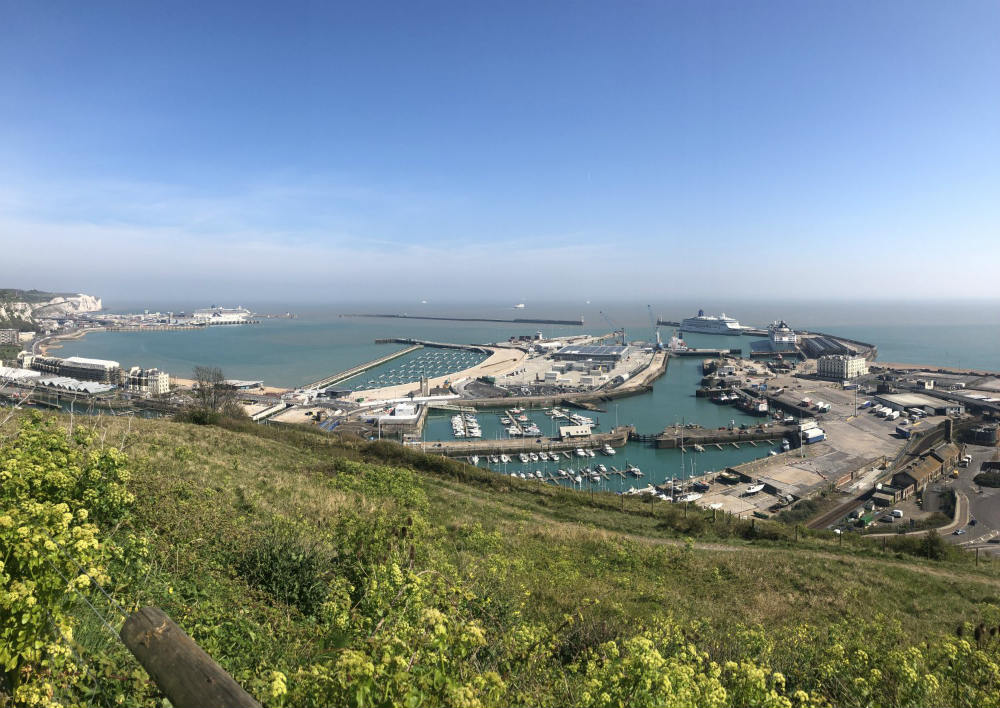
Concerns have been raised that France’s border restrictions with the UK in reaction to the rapid spread of the new Covid-19 variant will hit food and goods supply chains across the UK. Access to the Port of Dover (pictured) has been suspended to all accompanied traffic leaving the UK until further notice after France blocked arrivals for 48 hours. Source: Port of Dover.

Italy announced the immediate suspension of all flights between the UK and Italy on 20 December and Canada launched a 72-hour suspension on all inbound passengers flights from the UK on the same day.

Denmark has ceased all passenger flights beginning today (21 December) at 09:00 UK time for 48 hours, joining Belgium that enforced border closures for at least 24 hours beginning 00:01 on the same day.

From 19:00 (CET) today, all passenger flights between the UK and Romania will cease for 14 days and Turkey has announced it will be suspending travel with the UK.

At press time, the number of countries imposing travel restrictions continues to change, with Kuwait expected to introduce a travel ban by 22 December, according to the Foreign, Commonwealth and Development Office.

The Evening Standard has claimed Israel, El Salvador, Colombia, Saudi Arabia, Morocco and Iran have said they will stop flights arriving from the UK and sections of the UK media are reporting that India has now been added to the growing list.

UK Health Secretary Matt Hancock told The Andrew Marr Show on Sunday that that the new strain of Covid-19 is ‘out of control’.

This follows the introduction of a new ‘tier 4’ lockdown affecting London and the Southeast on Sunday (20 December), that has scuppered Christmas travel plans for many across the country.

A rising number of countries are imposing travel bans on inbound passenger flights from the UK. Source: Heathrow.

‘DETERIORATING SITUATION’

At a press conference on Saturday (19 December), Prime Minister Boris Johnson pointed to a deteriorating situation in London, the east and southeast of England regarding the transmissibility of the virus.

However, there is no evidence at this stage to suggest the new strain causes more severe illness or higher mortality rates.

Citing analysis from advisory group the New and Emerging Respiratory Virus Threats (NERVTAG), the PM said: “NERVTAG’s early analysis suggests the new variant could increase R by 0.4 or greater.

“Although there is considerable uncertainty, it may be up to 70% more transmissible than the old variant. This is early data. It is subject to review. It is the best we have at the moment, and we have to act on information as we have it because this is now spreading very fast.”

The new, tougher tier 4 restrictions, which are roughly equivalent to the national lockdown measures implemented in November, have been applied to *London, the southeast and east of England.

These include the closure of all non-essential retail, with people across all tiers asked to limit travel to other areas and consider whether foreign travel is necessary [although those in Tier 4 are prohibited from international travel except for limited purposes such as work – Ed].

“When the virus changes its method of attack, we must change our method of defence,” added the PM. “As your Prime Minister, I sincerely believe there is no alternative open to me. Without action, the evidence suggests infections would soar, hospitals would become overwhelmed and many thousands more would lose their lives.”

*Kent, Buckinghamshire, Berkshire, Surrey (excluding Waverley), Gosport, Havant, Portsmouth, Rother, Hastings, London (all 32 boroughs and the City of London); Bedford, Central Beford, Milton Keynes, Luton, Peterborough, Hertfordshire, Essex (excluding Colchester, Uttlesford and Tendring).

BA sharpens its sustainability focus with Carrie Harris appointment

British Airways (BA) has named Carrie Harris as Head of Sustainability.

The ‘crucial’ role is designed to entrench sustainability into the long-term corporate ethos of BA, the carrier said in a statement.

Harris joins from BA parent International Airlines Group (IAG), where she has spent the past five years as Group Sustainability Manager.

The position at BA includes responsibility for overseeing the airlines’s strategy for environment, diversity, inclusion & wellbeing, and community investment.

Reporting to the Director of External Communications & Sustainability, Harris will oversee a team of eight staff.

Carrie Harris, Head of Sustainability, British Airways.

FRESH LOOK AT SUSTAINABILITY

She is a chartered environmentalist, Fellow of IEMA, registered environmental auditor and the holder of two Master’s degrees in Environmental Science and Management.

Among her list of achievements at IAG was helping to introduce ‘Flightpath Net Zero’, which commits the group to achieving net zero carbon emissions by 2050.

“Sustainability is absolutely fundamental to British Airways’ future strategy and I am delighted to welcome Carrie to British Airways as Head of Sustainability,” said Louise Evans, British Airways’ Director of External Communications & Sustainability.

“I know Carrie’s expertise, as well as her ability to deliver, will have a hugely positive impact on our sustainability agenda.”

Harris added: “This is an incredible opportunity for me to build on the great work that is already well underway.

“As we head into 2021, we’ll be taking a fresh look at all we do to ensure sustainability is embedded in our culture, our operation and our customers’ experience; from technological solutions such as zero emissions hydrogen aircraft and sustainable aviation fuels for the medium to long-term, to operational efficiency and carbon offset and removal projects in the short term.

“We’ll also be focused on improving diversity, inclusion and wellbeing within the organisation and ensuring we contribute meaningfully to the communities where we operate in the UK and around the world.”

BA is expected to retire the last of its 747 aircraft, four years earlier than originally planned, to be replaced with modern alternatives such as the A350 and 787 that are said to be between 25-40% more fuel efficient.

Retail inMotion strikes five-year onboard retail deal with LCC Frontier Airlines

Frontier Airlines will receive new onboard retail options from RiM. Source: Frontier Airlines.

Retail inMotion (RiM) and LSG Group’s North America division will deliver a full retail concession programme onboard US low-cost carrier Frontier Airlines after sealing a five-year contract.

The long-term full outsource agreement with Frontier Airlines allows RiM to release major brands and products onboard next summer.

Frontier Airlines will gain access to RiM’s retail services and integrated end-to-end solution to boost sales and lift the customer experience.

Tone Cresswell, Chief Commercial Officer at LSG Americas said: “We are delighted to partner with Frontier Airlines to bring its customers products they know and love and provide a high level of quality that is synonymous with the Retail inMotion brand.

‘TERRIFIC ONBOARD RETAIL OPTIONS’

“Individualisation can unlock new revenue streams and boost customer experience and we believe that the key to increasing both aspects is to deliver best in class products combined with digital applications.”

Jake Filene, Senior Vice President of Customers for Frontier Airlines added: “As Frontier continues to grow, we are extremely focused on evolving the customer experience and this new partnership with LSG and the experts at RiM will provide terrific new onboard retail options that we know our customers will appreciate and enjoy.”

[UPDATED] EasyJet confirms no change to carrying duty free shopping onboard

EasyJet travellers wishing to use the overhead luggage lockers may have to upgrade their tickets in a change to its cabin baggage policy effective 10 February next year.

However, the low-cost carrier has confirmed to TRBusiness that there will be ‘no changes’ to its policy of allowing passengers to carry onboard one bag of airport shopping for free irrespective of the luggage allowance.

A spokesperson said: “Duty free shopping continues to be allowed on board, in addition to a customer’s cabin bag allowance, that can be stowed in the overhead lockers once all other bags have been placed there if there is room.”

POLICY CHANGE ‘WILL IMPROVE PUNCTUALITY’

In new rules announced yesterday (2 December), easyJet said all customers will be able to store a small under-seat cabin bag (max 45 x 36 x 20cm) only for free, unless they pay for an ‘Up front’ or ‘Extra legroom’ seat.

Customers paying higher fares will be able to bring an additional large cabin bag (max 56 x 45 x 25cm) onboard to store in the overhead locker.

The change to easyJet’s cabin baggage policy takes effect from 10 February 2021. Source: easyJet.

The cost of the extra legroom seats start from £7.99, says easyJet.

At present, all passengers can benefit from flying with a cabin bag measuring up to 56 x 45 x 25cm.

EasyJet says the new policy will improve boarding and punctuality by reducing queue times and other associated delays due to storing excess cabin bags in the hold.

The airline says the size of its under-seat cabin bag and large overhead cabin bag remain among the most generous for air travel, with no weight limit for any cabin baggage.

Customers travelling from 10 February that have not booked an Up Front or Extra legroom seat will still be able to bring onboard a small under- seat cabin and check their large overhead cabin bag into the hold at bag drop.

Robert Carey, Chief Commercial & Customer Officer for easyJet said: “Punctuality is important to our customers and we know that if they have their bags placed into the hold at the gate due to the limited space onboard this can cause flight delays, and it can be frustrating for them too.

“Our new policy will improve boarding and punctuality for everyone, as well as give our customers certainty of what they will have with them onboard.

“For families, we’ll continue to provide a number of options to allow them to bring additional items free of charge, helping keep travel easy and affordable for families when they fly with us.”

This is an updated version of a story published on 2 December.

Premier Portfolio bids fond farewell to industry after announcing closure

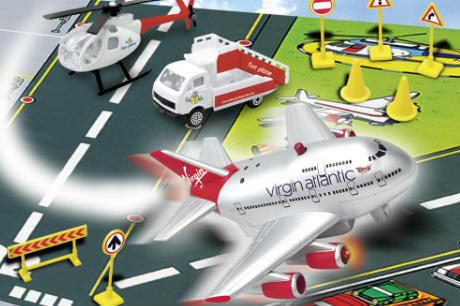
Premier Portfolio International shot to prominence with its ‘Fun Plane’ product, which went on to sell more than five million pieces.

UK-based Premier Portfolio International has paid tribute to its business partners and staff after announcing plans to  liquidate operations at the end of this year.

The decision, taken voluntarily, was prompted by the extremely difficult trading conditions exacerbated by Covid-19 and Brexit.

In a statement provided to TRBusiness, owners Kevin Walsh and Andrew Webster expressed proudness at the achievements of the travel retail distributor and sales agent, which built up its business from scratch with no external financial support.

At the same time, both owners expressed sadness that the business had been ‘taken away from us through no fault of our own’.

“We would like to thank all our clients for supporting our company over the 21 years we’ve been in business. We would like to thank those clients that helped us during the dark early months of the Covid lock down. And finally, a big thank you to all our friends over the years that have made our journey in travel retail one of the most memorable careers possible. Surely there in no industry where the words ‘work hard, play hard’ are more apt.

INDUSTRY ‘WILL BOUNCE BACK’

“Thanks also to Sharon [Blachford], Steve [Rands], Yvonne [Frampton] and of course Bridget [Walsh] and Karen [Webster] too.

“We would also like to take this opportunity to thank Garry Maxwell who helped us build us over the past 18 years and would like to wish him all the very best with GMAX Travel Retail.”

Founded in 1999 by Webster and Walsh, Premier Portfolio International shot to prominence with its ‘Fun Plane’ product, which has been listed with more than 150 airlines across the globe and sold more than five million units.

The company established a revered client list supplying a large number of airlines across the world with licensed toy versions of their own carriers, including for British Airways, Virgin Atlantic, easyJet, Ryanair and a number of others.

This was aside successes with retailers including Gebr. Heinemann, where Premier Portfolio was at one stage the Hamburg-based travel retailer’s second biggest toy supplier.

Founders and Directors of Premier Portfolio International Andrew Webster (third right) and Kevin Walsh (fourth right) built a successful business over 21 years. Pictured here is the team, including Garry Maxwell and Yvonne Frampton, at TFWA Cannes during happier times.

In 2007, Premier Portfolio won the inaugural Frontier Award for ‘Supplier of the Year’ before winning the accolade again in 2010.

From humble beginnings raising money from car boot fairs, Premier Portfolio lifted its annual turnover to just shy of £6 million.

“Our philosophy was to create an aviation toy range which could be taken globally inflight and have a non- corporate business that was fun,” explained Walsh and Webster.

“We succeeded and went on to create not only one product that went global, but a range of items that probably made Premier Portfolio the market leader inflight for logoed products.

“Our supply chain management was key and we built a team of people who were excellent and worked tirelessly to ensure our customer service was second to none. Our team were special to us and they would always go the extra mile to ensure the business was a success. The industry is strong and it will bounce back. It will take time, but we feel sure business will return.”

Walsh told TRBusiness: “What’s next? Who knows. Andrew will start a new life and I will take some time off as I’ve worked for 38 years solid, all of which have been in travel retail. As for the team, Garry [Maxwell] has set up GMAX Travel Retail and will continue to develop the logo business with our tooling in the Far East.”

Garry Maxwell was the subject of a TRBusiness ‘Adapt & Survive’ video interview earlier this year (click here to watch).

Gerry Crawford to step down from ARI after more than 30 years’ service

Gerry Crawford (right) leaves ARI after 31 years of distinguished service. Nuno Amaral (left) will absorb Crawford’s responsibilities.

Aer Rianta International (ARI) Chief Business Development & Implementation Officer Gerry Crawford is to leave the company at the end of this year.

Described by ARI as a ‘hugely influential figure’ in the multi-location travel retailer’s development, Crawford stands down after 31 years of eminent service.

Nuno Amaral, Chief Operations Officer, will add the Business Development & Implementation mandate to his remit, leveraging his experience to drive strategic growth opportunities for ARI.

He will lead an experienced team led by Head of Global Business Development Sue Kelly and Head of Global Implementation Ciaran Kelly.

Prior to his current position, Crawford was Global Chief Operations Officer for five years having spent time in a number of senior retail and airport commercial management roles in several of the company’s key international markets across Europe and the Middle East.

Ray Hernan, CEO, ARI: “Gerry has been instrumental in the growth of ARI, he has consistently delivered compelling results whilst building and nurturing relationships internally and with our stakeholders across the world.”

HIGH PRAISE

Crawford commented: “Since joining the group as a graduate over three decades ago, I have had an exciting and very fulfilling career with daa and ARI, working with fantastic partners and colleagues across the world including my sixteen years spent living and working overseas.

“I’ve always been passionate about ARI, and particularly motivated to ensure that the key pillars of our global expansion strategy are in place which enables me to hand over the role with confidence.

“While this has been a difficult decision, with my length of service it was the optimum time to leave, and I am now looking forward to pursuing new opportunities. I would like to take this opportunity to thank ARI’s CEO, Ray Hernan, for his support and leadership and I wish him and the entire team at ARI the very best of success.”

Ray Hernan, CEO, ARI added: “Gerry has been instrumental in the growth of ARI, he has consistently delivered compelling results whilst building and nurturing relationships internally and with our stakeholders across the world.

“I would like to thank Gerry and extend our very best wishes in his future endeavours. I have no doubt that Nuno will continue Gerry’s sterling work and I am confident of our team delivering growth in ARI’s retail portfolio in the coming years.”

Support sustainable aviation fuels with stimulus packages, governments told

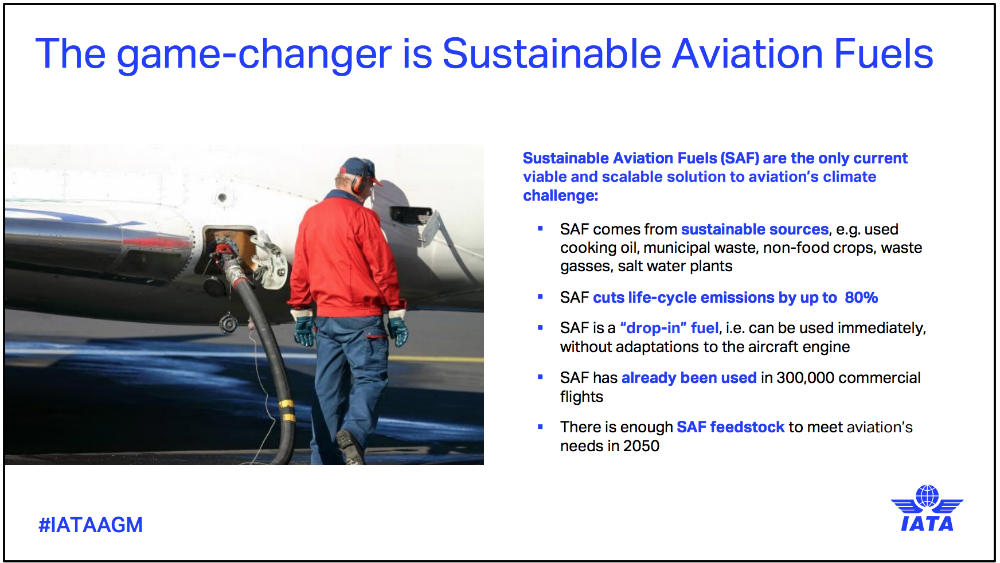
Sustainable Aviation Fuel is currently too expensive and limited in supply.

The International Air Transport Association (IATA) has called on governments around the world to support the development of what is at present ‘costly’ Sustainable Aviation Fuel (SAF).

IATA has made clear that SAF is a critical component in cutting net emissions to half of 2005 levels by 2050, a target reinforced by a resolution made yesterday at the association’s 76th Annual General Meeting.

Stimulus packages could help promote SAF via direct investment, loan guarantees and incentives for the private sector, says IATA.

Meanwhile, regulations could channel feedstock towards hard-to-abate sectors such as aviation as opposed to other low-carbon transport sectors.

PRICE LEVELS ‘UNCOMPETITIVE’ 

According to IATA, SAF is currently on average two to four times more expensive than fossil fuels, with a current global production of approximately 100 million litres a year; a fraction (0.1%) of the total aviation fuel consumed by the industry.

Such stimulus investments could assist in boosting SAF production to the 2% (six to seven billion litres) required to potentially bring SAF in line with the competitive price levels of fossil fuels.

Source: IATA. Click to enlarge.

Alexandre de Juniac, Director General and CEO at IATA said: “We have long known that an energy transition to SAF is the game-changer. But energy transitions need government support. The cost of SAF is too high and supplies too limited. This crisis is the opportunity to change that.

“Putting economic stimulus funds behind the development of a large-scale, competitive SAF market would be a triple win—creating jobs, fighting climate change and sustainably connecting the world.”