Qatar Airways is to give 100,000 free tickets to frontline healthcare professionals in acknowledgement of their hard work during the coronavirus (Covid-19) pandemic.
The giveaway will open at 00.01 am on 12 May and close at 23:59 on 18 May (Doha time).
This latest acknowledgement of the hard work and dedication of frontline healthcare professionals during the crisis, comes after the recent launch of this publication’s Duty Free Care for Carers campaign.
The campaign invites industry stakeholders to join us on our mission to give back to health and medical professionals who risked their lives to save others. Interested parties can provide details of their offer on the dedicated Duty Free Care for Carers ‘Join the Campaign’ page.
Under the terms of the Qatar Airways exclusive offer, healthcare professionals worldwide will be eligible for the free tickets. Each country will receive a daily ticket allocation depending on its population to ensure a fair and transparent application process. Ticket allocation will be staggered over a seven-day period from 12 May to 18 may.
The daily allocation will be released at 00:01 am (Doha time) throughout the campaign.
COMPLIMENTARY RETURN ECONOMY TICKETS
Healthcare professionals which receive the promotion code can book up to two complimentary Economy Class return tickets on Qatar Airways operated flights — one for themselves and one for a companion — to anywhere within the airline’s global network.
Healthcare professionals worldwide will be eligible to book up to two complimentary Economy Class return tickets on flights operated by Qatar Airways.
Tickets must be booked before 26 November and travel is valid until 10 December 2020. Tickets will be fully flexible, with an unlimited number of destination or date changes permitted without fees. Fare and surcharges will be waived on tickets, but airport taxes apply.
The offer is only available for flights operated by Qatar Airways. Eligible healthcare professions are limited to doctors, medical practitioners, nurses, paramedics, pharmacists, lab technicians and clinical researchers. A valid employer identification must be presented at check-in.
Additionally, healthcare professionals will be offered 35% discount vouchers, which can be redeemed in Qatar Duty Free stores at Hamad International Airport. Vouchers are valid until 31 December 2020 (subject to conditions).
Qatar Airways Group Chief Executive, His Excellency Akbar Al Baker said: “We at Qatar Airways are incredibly grateful for the commitment and hard work of healthcare professionals around the world who looked after people in these times of uncertainty.
“Their heroic display of kindness, dedication, and professionalism has saved hundreds of thousands of lives around the world.”
Healthcare professionals will also be offered 35% discount vouchers, which can be redeemed in Qatar Duty Free stores at Hamad International Airport.
He added: “We have built a strong level of trust with passengers, governments, trade partners, and airports as a reliable partner during this crisis and we intend to continue delivering on this mission by acknowledging the incredible efforts of these heroes.
“Our crew and operation have never given up during these past three months and never abandoned hope, or their mission to help people get home to their loved ones. We do not intend to do so now.
“United in dedication, we share our gratitude. Now it is our turn to give something back to those on the healthcare frontline.
“There are no words or gestures that are enough to repay these brave men and women but we hope that our small offer of a complimentary return flight on Qatar Airways will allow them to enjoy a well-deserved holiday, visit family and friends or explore a destination they have always dreamed of, as travel restrictions start to ease.”
PHASED NETWORK EXPANSION
Qatar Airways is currently in the midst of a phased approach to expand its network in line with passenger demand and the relaxation of entry restrictions amid the coronavirus (Covid-19) pandemic. It is aiming to rebuild its network to an initial 52 destinations by the end of May and to 80 in June.
Named World’s Best Airline in the 2019 World Airline Awards, managed by Skytrax, Qatar Airways regularly disinfects all aircraft. It also uses cleaning products recommended by the International Air Transport Association and World Health Organisation and facilitates the thermal screening of crew.
In addition, Qatar Airways’ aircraft feature air filtration systems, equipped with industrial-sized HEPA filters. These remove 99.97% of viral and bacterial contaminants from re-circulated air, providing effective protection against infection.
Qatar Airways and Hamad International Airport are meeting increasing demands from across the globe for essential goods and medical supplies.
All onboard linen and blankets are washed, dried and pressed at microbial lethal temperatures. Ear foams are removed from headsets and the headsets are sanitised after each flight. Linen and headphones are then sealed into individual packaging by staff wearing hygienic disposable gloves.
All meal service utensils and cutlery are washed with detergents and rinsed with demineralised fresh water at temperatures that kill pathogenic bacteria. Sanitised equipment is handled by staff wearing hygienic disposable gloves, while cutlery is individually re-packed.
Healthcare professionals can register for the offer at qatarairways.com/ThankYouHeroes. Those submitting the form will receive a unique promotion code. This will be offered on a first come, first served basis.
Emirates Group subsidiary dnata is evaluating the feasibility of its Australian operations after being excluded from a government job support scheme, TRBusiness can confirm.
The Australian government has omitted wholly-owned foreign companies from availing themselves of a AUS$130 billion/US$84bn coronavirus (Covid-19) JobKeeper package.
A partner of 46 airlines, air services provider dnata is part of state-run Emirates Group and involved in ground handling, cargo, retail, hospitality and catering activities, including buy-on-board activities with low-cost carrier Jetstar Airways.
Dnata has expressed its surprise and disappointment following what it claims is a government decision to retrospectively amend legislation backdated to 30 March, which reneges on a previous confirmation that qualified dnata to claim wage subsidies on behalf of its employees.
BUSINESSES UNDER MICROSCOPE
“The exclusion of dnata from the JobKeeper scheme puts over 4,500 jobs at risk, while leaving employees and their families without income with extremely short notice,” said a dnata spokesperson in a statement obtained by TRBusiness.
“As a result, we are also forced to review medium, and long-term viability of dnata’s various Australian businesses including catering, cargo, ground handling, retail and hospitality.
“We are working closely with unions and other partners to provide all possible support to affected employees in this situation.”
Dnata has been operating in Australia since 2007. Before the outbreak, the company supported over seven million passengers providing 64 million inflight meals through a team of 6,000 professionally trained staff annually at nine Australian airports in Adelaide, Brisbane, Cairns, Canberra, Coolangatta, Darwin, Melbourne, Perth and Sydney.
Prior to Covid-19, dnata supplied 64 million inflight meals through a team of 6,000 staff annually at nine Australian airports in Adelaide, Brisbane, Cairns, Canberra, Coolangatta, Darwin, Melbourne, Perth and Sydney.
“The impact of the Covid-19 outbreak on dnata has been significant, with most of our airline customers dramatically reducing flights or ceasing services altogether,” continued the spokesperson.
“We are committed to retaining our Australian employees and continuing to make a substantial contribution to Australia’s trade, investment and tourism flows. To do this though, we need the government’s support.”
Dnata maintains that while unintended, the amendment to the JobKeeper legislation creates ‘an uneven playing field’ in the airport handling and catering sectors given other competitors have not been excluded from the scheme.
“We urge the government to reconsider the amendment of the JobKeeper legislation, enabling us to retain our employees and reinstate services when domestic and international travel resume,” added the spokesperson.
“Our services are critical to maintain the aviation supply chain and the flow of essential goods, and ensure safe operations of domestic and international flights.”
A spokesperson from the Australian Treasury told TRBusiness: “As outlined in the Explanatory Statement to the Coronavirus Economic Response Package (Payments and Benefits) Act 2020 and fact sheets available on the Treasury website, a sovereign entity is not a qualifying employer for the purposes of JobKeeper payment.
“The term ‘sovereign entity’ takes its meaning from the Income Tax Assessment Act 1997 and, generally, includes a body politic of a foreign country, a foreign government agency, and an entity wholly-owned by a body politic of a foreign country or foreign government agency. Government employers are considered to have a greater capacity to support their employees through this period than private businesses.
The spokesperson says the government has temporarily expanded eligibility for income support payments for the next six months, established a new Covid-19 supplement to be paid at a rate of $550 per fortnight and has temporarily relaxed the JobSeeker Payment partner income test.
“The $130 billion JobKeeper Programme will provide unprecedented support to millions of Australians,” added the spokesperson.
“Combined with the Government’s previous actions, this totals $320 billion or 16.4% of GDP in economic support to Australian businesses, households and individuals affected by coronavirus. The JobKeeper Payment will ensure that eligible employees remain connected to their workforce and will help businesses restart quickly when the crisis is over.”
According to its website, Dnata states: “We have launched numerous buy onboard and duty free programmes for customers and continue to invest in this area, for the benefit of our customers.”
In December, it acquired the remaining 50% share of its UK inflight catering joint venture with LSG Group’s Alpha LSG, making dnata the sole shareholder of the inflight catering, onboard retail and logistics firm.
IAG has confirmed that Luis Gallego will succeed Willie Walsh on 24 September.
Willie Walsh will resign as International Airlines Group (IAG) Chief Executive on 24 September at the same time as Iberia Chief Executive Luis Gallego takes up the reins.
As reported, Walsh was due to stand down his position in March ahead of retiring, but that move was curtailed in order to navigate the airline group through Covid-19.
British Airways has already announced it will shed up to 12,000 jobs as a result of the crisis.
In a statement, Antonio Vazquez, Chairman, IAG said: “We announced in March that Willie would delay his retirement for a short period. We can confirm today that Luis Gallego will take over the leadership on 24 September, the expected date for IAG’s AGM, when Willie will step down as CEO.
“We are grateful that Willie delayed his retirement at this challenging time providing the airlines’ management with the necessary stability to focus on the immediate response to the crisis. We look forward to working closely with Luis in his new role.”
PAX RECOVERY ‘NOT EXPECTED UNTIL 2023’
In a first quarter announcement today (7 May), IAG revealed consolidated results for the three months to 31 March were significantly hit due to the global virus impact.
Passenger revenue slid 14.5% to €3.9bn/$4.2bn as operating losses totalled €1.86bn/$2bn. Passenger capacity has reduced by 94% from late March, with most aircraft grounded.
The parent of British Airways, Iberia, Vueling and Aer Lingus says it expects deeper damage in the second quarter and does not expect passenger demand to recover before 2023, necessitating further group-wide restructuring measures.
Click to enlarge. Source: IAG.
Walsh commented: “The operating result up to the end of February was in line with a year ago. However, March’s performance was severely affected by government travel restrictions due to the rapid spread of Covid-19 which significantly impacted demand. Most of the loss in the quarter occurred in the last two weeks of March.
IAG CEO Willie Walsh.
“We had a strong balance sheet and liquidity position coming into this crisis. We are taking all appropriate actions to preserve cash, reduce and defer both capital spending and operating costs and secure additional financing in order to strengthen and maintain our liquidity.
“At the end of April our liquidity stood at €10 billion. We are planning for a meaningful return to service in July 2020 at the earliest, depending on the easing of lockdowns and travel restrictions around the world. We will adapt our operating procedures to ensure our customers and our people are properly protected in this new environment.
“We are working with the various regulatory bodies and are confident that changes in regulations will enable a safe and organised return to service. The industry will adapt to new requirements in the same way that it has adapted to developments in security requirements in the past.
“However, we do not expect passenger demand to recover to the level of 2019 before 2023 at the earliest. This means Group-wide restructuring is essential in order to get through the crisis and preserve an adequate level of liquidity. We intend to come out of the crisis as a stronger Group.”
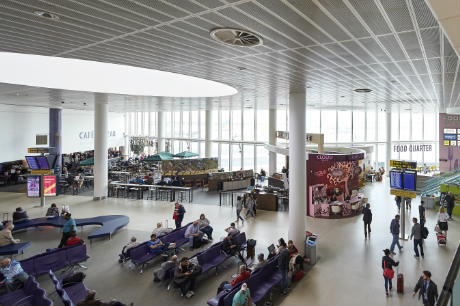
Manchester Airport Terminal 1 Departure Hall. Source: Manchester Airport/Hufton + Crow.
Passengers to Manchester, London Stansted and East Midlands Airports are today (7 May) being advised to cover their faces and wear gloves under a new pilot scheme from operator Manchester Airports Group (MAG).
The guidance is for all departing and arrivals travellers and is the first of its kind for airports in the UK.
All MAG colleagues will wear gloves and face masks and staff of the airports’ partners will also be encouraged to follow procedure.
Aimed at reinforcing safety while instilling confidence in air travel ahead of a future climb in pax volumes, the move will involve airport staff being on hand to guide passengers through security processes.
TEMPERATURE SCREENING TRIALS
The small number of travellers currently making essential journeys are encouraged to bring their own gloves, face coverings or face masks to the airport, although initially the airports will provide these to passengers who do not have them.
MAG has already introduced social distancing practices and the new guidance will not change this, it says.
However, face coverings and gloves may in the future play an important role in ensuring airport terminal safety at busy times.
The operator says it will be carrying out some limited temperature screening trials in the coming weeks, but these will be used to test equipment rather than deciding on a passenger’s eligibility to travel.
London Stansted is one of three MAG-run airports carrying out the pilot.
MAG is considering asking all passengers to make a health declaration to gain access to airports and the operator says it will inform passengers of any such trials.
Charlie Cornish, Group CEO, MAG said: “It’s clear that social distancing will not work on any form of public transport. But we’re confident that when the time is right, people will be able to travel safely.
“MAG has been working with the rest of the airport industry on a new safety framework for travel. We now need to work urgently with government to agree how we operate in the future. This has to be a top priority so that people can be confident about flying, and to get tourism and travel going again.
“At MAG we’ve taken expert medical advice on how people can travel safely, and we’re pleased to be piloting these new measures at our airports for those passengers who do still need to travel. We expect to be able to agree a new framework by the end of May that will support a restart of the industry as soon as possible.”
Alexandre de Juniac, Director General and CEO, IATA.
IATA REJECTS EMPTY MIDDLE SEATS
Earlier this week, the International Air Transport Association (IATA) released a statement in which it called for face coverings and masks to be worn by passengers and crew on flights.
This would form part of several actions designed to reduce the spread of Covid-19’s transmission, others being temperature screening of passengers, reducing contact on boarding and deplaning, limiting cabin movements, deep cleaning and simplifying onboard catering procedures.
In the future, Covid-19 testing or immunity checks through passports have been suggested in temporary biosecurity methods.
IATA says that evidence suggests the risk of infection transmission onboard is low, with mask wearing helping to reduce this further.
Alexandre de Juniac, IATA’s Director General and CEO said: “The safety of passengers and crew is paramount. We will take measures – such as the wearing of face coverings by passengers and masks by crew – to add extra layers of protection.
“We must arrive at a solution that gives passengers the confidence to fly and keeps the cost of flying affordable. One without the other will have no lasting benefit.”
However, IATA made clear that it does not support leaving middle seats empty as part of enforced social distancing measures, as some airlines have already indicated.
IATA claims such a move would tamper with the economics of aviation by slashing maximum load factors to 62% – well below the average break even industry load factor of 77%.
Seat costs would rise – between 43%-53% depending on the region just to break even, IATA warns.
De Juniac added: “Airlines are fighting for their survival. Eliminating the middle seat will raise costs. If that can be offset that with higher fares, the era of affordable travel will come to an end.
“On the other hand, if airlines can’t recoup the costs in higher fares, airlines will go bust. Neither is a good option when the world will need strong connectivity to help kick-start the recovery from Covid-19’s economic devastation.”
TRBusiness has received a tidal wave of cross-industry support for the inaugural Travel Retail Connect (TRConnect) Covid-19 webinar, which aired today (5 May).
The 75-minute session hosted at 14:00 CET attracted 899 registrations, with just over 500 permitted to watch live [to view a repeat of the webinar, click below].
Entitled, ‘Emerging Stronger in a Post-Covid World’, the first showing in TRBusiness’ series of incisive, thought-provoking webinars struck to the root of what is a multi-faceted topic and as viewers discovered, one with many converging opinions.
Hosted by TRBusiness Editorial Director Charlotte Turner and Events and CSR lead Michael Barrett, the webinar featured data-rich presentations and insightful commentary from Peter Mohn, CEO and Owner, m1nd-set and Anson Bailey, Head of Consumer & Retail, ASPAC, KPMG.
They accompanied a panel of leading travel retail executives: Lisa Bauer, President and CEO, Starboard Cruise Services; Sarah Branquinho, President, Duty Free World Council (DFWC); and Stewart Dryburgh, General Manager, Nestlé International Travel Retail.
BUSINESSES TO RE-ADJUST
Strong audience participation was a key feature of the webinar, with flash polls conducted at appropriate intervals designed to gauge reaction from the many industry stakeholders tuning in.
Collectively, the panellists and presenters unboxed strategies and solutions and discussed steps to prepare global DF&TR for an exit strategy from what is unquestionably the most severe crisis to have struck the industry.
After some opening remarks from Turner and Barrett, attention turned to exclusive m1nd-set research conducted among 1,500 international travellers around the world in the past six months passing through more than 60 different airports.
The research branched across 50 different nationalities and covered all regions of the world.
Among the findings, 89% claimed the coronavirus has changed living conditions and, as a result, 81% are more inclined to spend less in the near future.
Interestingly, 26% expressed a willingness to purchase different products and services in the near future, for example those that are local or more sustainable.
M1nd-set shared exclusive insights that illuminate clearly the sea change taking place in future shopping behaviours prompted by Covid-19. Click to enlarge.
From its origins as a mysterious pneumonia-type virus first discovered in Wuhan, China in December, Covid-19 has raged into a global pandemic.
The tragedy of lost lives have been flanked by a virtual shutdown in air and marine transport, with border closures, grounded flights and decimated economies and global equity markets.
While encouragingly, m1nd-set data reveals that 61% of travellers that had taken trips in the past 12 months would be willing to pick up air travel again within the first three months after lockdowns are lifted, for businesses the hit is likely to be particularly painful.
‘Emerging Stronger in a Post-Covid-19 World’. Clockwise from top left: Charlotte Turner, Editorial Director, TRBusiness; Michael Barrett, Events & CSR, TRBusiness; Sarah Branquinho, President, Duty Free World Council; Peter Mohn, Owner & CEO, m1nd-set; Lisa Bauer, President & CEO, Starboard Cruise Services; Stewart Dryburgh, General Manager, Nestlé International Travel Retail; and Anson Bailey, Head of Consumer & Retail ASPAC, KPMG.
Mohn acknowledged there are some differences in the data dependent on the region, for example in Asia where the situation is looking more positive.
A worrying 63% of business travellers claimed their companies would request a reduction in the number of business trips due to budget cuts, while 56% admitted that the precarious economic situation will result in fewer international trips.
Overall, 33% consider travelling less or not at all for business in the six months after travel bans are removed. For duty free purchasing, profound knock-on effects are expected.
According to m1nd-set, 41% of travellers stated they would visit duty free shops when international travel bans ease.
Of those who would choose not to visit duty free shops, 16% attributed it to Covid-19 directly. On a category level, perfumes, alcohol and skincare are the top three most impacted.
Health and safety remains a priority for shoppers. Click to enlarge.
Delving deeper, 52% of respondents said they probably wouldn’t purchase any categories, while 35% stated they would consider opting for their preferred purchases.
However, perhaps more concerning is the suggestion that 65% of travellers will alter their behaviours in the airport environment after Covid-19 and 44% would spend less time shopping.
A resounding 91% flagged a desire to spend more time using their mobiles/tablets and laptops, 81% revealed they would avoid interacting with other passengers and 78% would try to isolate themselves from crowds.
Increased health and safety protocols will almost certainly become a mainstay for travel retailers for the foreseeable future and m1nd-set’s data points to that importance.
After Covid-19, 51% of travellers said they would refrain from unnecessarily touching products in duty free and 62% would refrain from being in proximity with retail ambassadors and sales staff.
“This will lead to new some new measures, information, signs and help from the sales staff to help passengers as they are worried about this aspect,” observed Mohn.
Asked whether travellers would prefer airline staff and fellow passengers to wear face masks, 62% said they would feel safer and reassured in the case of airline staff and 48% when it comes to other passengers.
The conclusion of Mohn’s presentation opened up the opportunity for the first TRBusiness flash poll of the webinar, a core component designed to enrich viewers’ engagement with the series.
A reported 85 million trips were made by domestic travellers in China in the three days beginning 1 May this year.
They were asked when they would likely resume international travel after travel restrictions are lifted, with 45% indicating a desire to do so within three months. A mere 10% expressed a preference to travel only if mandatory health screenings were in place at airports.
CHINA: TRAVEL CONFIDENCE RECALIBRATED?
Anson Bailey then made a compelling argument for the new retail ‘normal’ facing DF&TR. In a presentation aptly entitled, ‘Changing Consumer Behaviours in a Post-Covid-19 World’, Bailey extrapolated in detail how the emergence of new technology solutions into the retail sphere is driving discussion around change.
“I really think people are starting to discuss life after Covid-19; there is this new normal and I think we are going to see things happening at different speeds,” he said.
He mentioned that in the first three days of Golden Week beginning 1 May, 85 million domestic tourist trips were taken in China.
“Those numbers are quite significant and we are coming out of lockdown,” Bailey continued, although he forewarned of the mixed news emerging for air transport following US business tycoon Warren Buffett’s move to sell off $50 billion worth of shares in US airlines.
“This is time for a lot of companies to take stock; airlines and airports are really driving interesting new technology and innovation,” he explained. “There is an increasing focus on the customer, use of new tools such as machine learning, data and 5G.”
He outlined six drivers of consumption: Value, convenience, experience, choice, purpose, and privacy and safety, expanding on a discourse of accelerated retail changes taking place in Asia, including a pronounced move towards a cashless society through contactless mobile payments.
Business continuity, cashflow management, supply chain issues, changing consumer behaviours, wellness, health and hygiene and ecommerce are all fundamental trajectories.
However, despite the encouraging signs witnessed in China as alluded to above, Bailey struck a word of caution.
“China is not immune – 600,000 businesses are already closed with GDP and retail significantly down. There is light at the end of the tunnel, the lockdown has ended, but we’re not going to see travel overseas anytime in the immediate future.”
Audience snap polls were used to good effect.
Regionally, Thailand, Russia and China had emerged as the favoured destinations for Chinese tourists in 2020.
On the other hand, the US has dropped out of a top ten list of favoured destinations entirely, in part due to trade tensions and Covid-19.
“Consumers are more digitally minded and tech-savvy than ever before,” declared Bailey. “Data, data, data is going to power growth. That is the new gold.”
Much of that growth is being fuelled by China’s flourishing digital and social media platforms, said Bailey, with 1.2 billion Alipay users, one billion on WeChat and 765 million mobile payment users.
“Those numbers are staggering and continuing to grow,” added Bailey. “This is the new normal. We are seeing the changing ownership from the ownership of assets to the ownership of access and this is something we need to be thinking about.”
Taobao, JD.com, Amazon, Facebook and Tmall offer instant delivery, transparent pricing and flexible payments, added Bailey. “Traditional players in travel retail have to up their game.”
Heady investment in what Bailey describes as ‘new economy companies’, capitalising on social media platforms and influencer marketing (KOLs, microbloggers) and the leap from cash to digital payments are transforming retail’s landscape.
“The major hiccup I see is around fulfilment and logistics infrastructure,” he continued. “Be ready for emerging technology like AI and blockchain: It will impact our supply chains.”
A discussion then ensued, offering a vibrant cross-exchange of ideas that unboxed some of the major talking points from the presentations.
Dovetailing with yesterday’s announcement of a framework protocol galvanising support from retailers and suppliers to aid the DF&TR recovery in the face of Covid-19, Sarah Branquinho, DFWC reiterated that the priority remains on increasing share of voice for the industry.
“As an industry we know we tend to fall between two stalls – not the aviation or maritime sector, we’re somewhere buried in them, yet we are a vital component of all of those.
“The various regional associations and the world council itself have been reaching out recently to governments and in some cases airports and cruise lines to make sure we don’t fall between the cracks.”
She reiterated that industry associations have been connecting with governments to push the message of DF&TR’s significant contribution to economies across the globe.
FIERCE PACE OF CHANGE
Addressing Mohn’s research, Starboard’s Lisa Bauer highlighted that the 61% of passengers ready to travel again aligns closely with behaviours exhibited in the cruise sector.
“Those first-time cruisers or those considering a cruise… the size of that market has shrunk, but just like in the air we see the travellers coming back are the loyalists and those that have cruised before,” she said.
Bauer went on to stress the importance of customer centricity and allowing guests to engage with retail in their own way.
“The role of digital is incredible, so whether it is pre-cruise, integration with the cruise lines through individual apps so customers can transact on their phones, click and collect, set up appointments for personalised shopping, but also having a safe experience for those wanting to come into the stores and having experiences – from our perspective it is really omnichannel, letting the customer transact in a way they feel comfortable.
“From a cruise perspective, the cruise lines have always had a focus on safety and that will be even more prevalent moving forward and anything we can do to inspire confidence will be really important.”
Viewers were offered the chance to ask questions via a live feed, with a selection of the most popular questions put to panellists and speakers.
Nestlé ITR’s Stewart Dryburgh reinforced a prevailing view that good data and reference points are imperative for the industry to navigate the turbulent status quo.
He asked viewers to bear two points in mind: Travel will be influenced as much by the desire of travellers to do so, as their financial capabilities.
“Part of that is confidence is the health scenario and that will be allayed by [the discovery of] a vaccine,” he said. “That will have a sustainable effect on economic life generally which will stimulate economies globally.
“This moment in time we are living through is creating a disconnect which is creating a shift in the way people use digital,” Dryburgh continued, stressing the duality of offering value and meeting needs as central to customers’ demands.
In a second flash poll concerning the key to driving traffic into shops in the post-Covid-19 era, 69% believed in reassuring passengers of health and safety measures, while 38% mentioned attractive promotions and travel retail exclusives.
Following some interesting discussion on the role of KOLs and influencers and the attention to (or lack of) data harvesting, a central message that surfaced surrounded the perpetual pace of change.
“Zoom had 10 million daily active users on 1 December, as of last week they had 300m daily active users,” explained Bailey. “With the technology here now that we can set up all these calls and online meetings and with a lot more cost pressures, I think a lot of smart companies will be deploying a lot more technology in the future.”
In an audience Q&A, panellists and speakers tackled a range of questions, including the potential to increase duty free allowances to boost sales, supplier and retailer dynamics, payments, changes in methods of merchandising and selling vis-a-vis sales staff.
“The data Peter shared sends a very clear signal to all of us that some of the actions we are going to need to take will be completely counter cultural to what we’ve done in the past,” commented Dryburgh.
“In the past, it’s been about getting in front of the consumer with whisky, chocolate etc and right now the thing we need to do is back off and leave people space so they feel comfortable. In the short term one of the things we will have to do is create space for people and looking at things through a completely different lens.”
Concurring with Dryburgh, Starboard’s Bauer added that support from parent firm LVMH in the form of a taskforce has helped Starboard shape the future of the customer experience and re-think the entire customer journey.
Another question raised by several viewers was whether the associations would push for financial support to siphon down to those suppliers at risk of becoming insolvent as a result of Covid-19.
‘Duty Free Care for Carers’ invites all DF&TR stakeholders to give generously to the health and medical professionals leading the valiant fight against Covid-19.
This offers important benefits and discounts at travel retail shops and F&B outlets to global frontline health workers when they travel internationally.
Giveaways and promotions such as a cup of coffee or tickets to enter high-value prize draws are also included in the mix.
All frontline staff including doctors, nurses and other hospital employees, plus carers in homes for the elderly, are included among the beneficiaries.
Pledges offered by stakeholders will be listed on the dedicated ‘Duty Free Care for Carers’ campaign page on TRBusiness.com with a link to information (including any special terms and conditions) on the pledger’s own website or Facebook page.
To download the m1nd-set presentation by Peter Mohn, click here.
To download the KPMG presentation by Anson Bailey, click here.
Stay close to TRBusiness for further information on the next TRConnect webinar.
As announced during the TRConnect Covid-19 webinar earlier today, TRBusiness is delighted to launch the ‘Duty Free Care for Carers’ campaign, which aims to provide special benefits and discounts to frontline global health workers when they next decide to travel internationally.
We invite all global duty free and travel retail industry stakeholders – including all airport commercial partners such as food & beverage providers, car park operators as well as airlines and cruise & ferry companies – to join us in our mission to give back to the health and medical professionals that risked their own lives to save countless others.
All frontline staff, including doctors, nurses and other hospital staff (such as cleaning and maintenance workers) as well as carers in homes for the elderly, are to be included among the beneficiaries.
The objectives are two-fold: firstly to provide something for these dedicated frontline health workers to look forward to when they are able to travel again and secondly to show them and the world that the global duty free and travel retail industry – although significantly impacted by the coronavirus and travel restrictions – wants to play its part in thanking them for their unwavering service and care.
Benefits pledged in the Duty Free Care for Carers campaign can include discounts at duty free shops as well as other travel retail stores, coffee shops, restaurants and any other F&B outlets in airports or elsewhere in travel retail. Other pledges may include giveaways, such as a cup of coffee, or even tickets to enter high value prize draws.
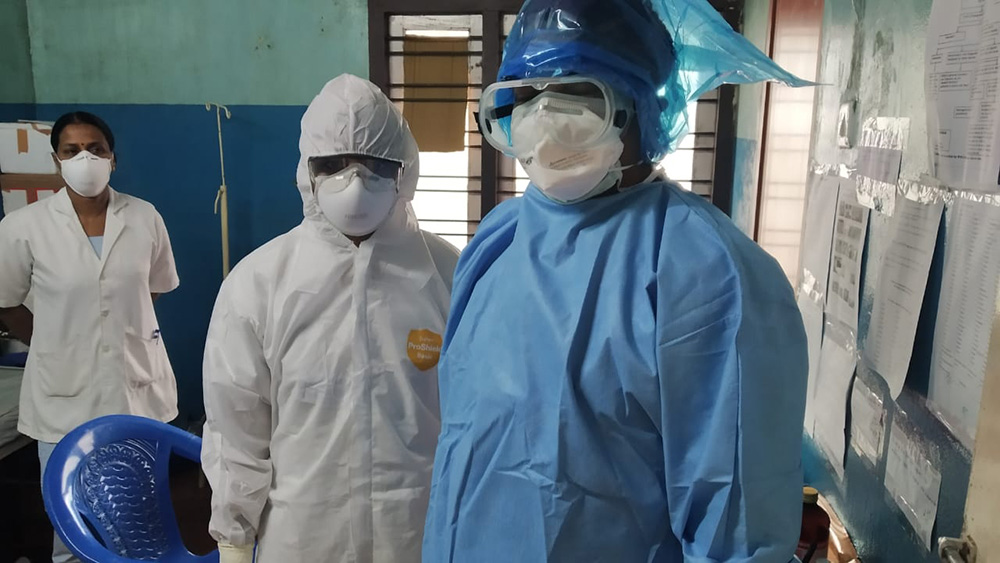
Healthcare workers caring for patients with coronavirus at a district hospital in Kerala, India. Source: Javed Anees
All pledges offered by stakeholders within the industry will be listed on the dedicated Duty Free Care for Carers campaign page on TRBusiness.com along with the link to the information page on the pledger’s own website or Facebook page. Information such as any special conditions for prize draws should be provided on the pledger’s webpage and Facebook page.
TRBusiness will provide all participants in the campaign with a customised version of the campaign logo with their own corporate branding for their own external communications upon request.
The 2021 edition of the Travel Retail Awards will also feature a new awards category where consumers will vote for the best pledge made within the Duty Free Care for Carers campaign.
“We want to do our part to help the industry express its sincere gratitude to healthcare workers across the globe.” – Nigel Hardy, TRBusiness.
SIMPLE SIGN-UP PROCESS TO JOIN THE CAMPAIGN
TRBusiness will list all pledges submitted to the campaign on TRBusiness.com and social media platforms, as well as promote the offer to the general public.
Nigel Hardy, Managing Director and Co-owner at TRBusiness commented: “Altruism and corporate social responsibility are both key components of this industry’s DNA. We have witnessed so many amazing acts of generosity over the years, including a number during the current pandemic with generous donations and acts of kindness.
“With the Duty Free Care for Carers campaign, we want to do our part in helping the industry express its sincere gratitude to healthcare workers across the globe. It’s a very simple process to sign up and easy for healthcare workers to understand what they are being offered, by whom and at which airport/travel retail outlet.
“While we in global travel retail are all significantly impacted by the current crisis, it’s thanks to the care workers’ devotion and commitment that the situation will eventually be able to revert to normal; albeit the new normal. We owe them our deepest gratitude. Thank you from us all for taking part in this pledge campaign.”
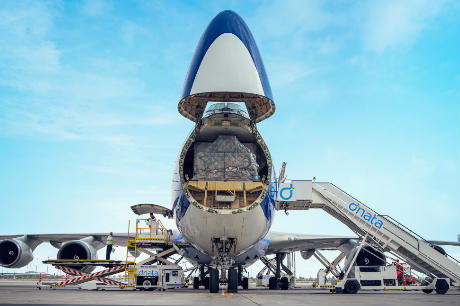
Hamad International Airport (HIA) and Qatar Airways are persisting with a significant cargo transportation regime that operates around 175 freighter and belly-hold flights per day.
In the past month, flag carrier Qatar Airways has collaborated with governments and NGOs to shift more than 100,000 tonnes of medical and aid supplies via scheduled and charter services to worldwide regions hardest hit by the coronavirus (Covid-19).
This is the equivalent of around 1,000 fully loaded Boeing 77 freighters, with goods shifted to the likes of China, India, Iran, Kuwait, Lebanon, France, Spain, Italy, Belgium, Germany, Poland, United Kingdom, the US and Australia.
The airport handled 529,436 tonnes of cargo (+4.7%) in the first quarter of this year.
MULTI-PHASE EXPANSION
Last week, freight division Qatar Airways Cargo reached a new record with 78 freighter flights and 69 freight-only passenger flights – a total of 147 cargo flights in a day.
The airport and airline continue to repatriate citizens and entry screening of all arriving passengers and crew are being undertaken, in addition to quarantining procedures.
Qatar Airways and Hamad International Airport are meeting increasing demands from across the globe for essential goods and medical supplies.
As reported, HIA is eyeing the completion of a multi-phase airport expansion focusing on safety and sustainability, with phase A due to complete before the 2022 FIFA World Cup.
This will lift airport capacity to more than 53 million passengers annually. Phase B, due to be completed after 2022, will lift capacity to more than 60m passengers per year.
In the latest ‘Adapt & Survive’ video interview, Philip Handley, CircleSquare Executive Creative Director and Founding Partner, tells TRBusiness how employees continue to remain in close contact with each other from the company’s offices around the world, with virtual ‘tea breaks’ and various interactive initiatives such as the ‘Lockdown Libations league’ cocktail club.
“We need to keep everyone connected right now,” said Handley. “It’s the one thing that we’re all missing right now.”
While there’s not a huge amount that can be controlled right now, he does admit that the additional planning and preparation time allows the company to develop even more creative – and cost-effective – solutions for its clients during these longer lead times.
“If we can get our bags packed full of great ideas, before the gate opens, we can really hit the ground running. I personally believe that there’s going to be a race that’s going to start and I want all my clients to be fit, healthy, stretched and limbered up on the start line and ready to go.”
When travellers do start travelling again there will be an immediate need to increase penetration and conversion rates in duty free stores, as passenger numbers are expected to be very low at the beginning of a recovery for the travel industry. ‘Irresistible and memorable experiences’ will be absolutely crucial to ensuring success, says Handley.
Adapt and Survive asks members of the travel retail industry community, often working from home, for their candid commentary on the constantly evolving Covid-19 pandemic.
The video series is a direct response to the industry’s critical need for direct, factual and analytical commentary and – in typical TRBusiness fashion – interprets clearly and concisely the challenges faced by travel retail during Covid-19.
UK-headquartered digital commerce firm The Hut Group (THG) has struck a deal with Singapore Airlines to charter more than 100 of its flights.
The partnership, a response to the unprecedented disruption in the aviation sector and THG’s strong international sales growth, will remove a reliance on scheduled passenger services to serve customer demands across its global networks.
The global consumer brand and proprietary technology group known for its beauty and wellbeing products has been running successful trials using dedicated air cargo flights since January, including to Asia.
In a twin move, the company behind brands such as MyProtein, Beauty Expert and Zavvi, has introduced ‘THG Air’.
By the end of October, it will have two of its own cargo airlines operating out of Manchester Airport.
THG will leverage Singapore Airlines’ extensive flight network to ensure fulfilment needs.
THG AIR TO GO LIVE IN OCTOBER
Matthew Moulding, Founder and Chief Executive Officer of THG, said: “The recent disruption across the airline industry has brought huge challenges in the movement of goods across the globe. This led us to accelerate our trials for dedicated cargo planes to link together our own global manufacturing and distribution centres.
“These trials have proved a great success, resulting in the partnership with Singapore Airlines. The trials have also given us the confidence to supplement this partnership with the launch of two of own cargo planes, under the livery of ‘THG Air’.
“The partnership with Singapore Airlines places us in the strong position of having secured routes from UK to Asia for the foreseeable future, enabling us to keep our supply chain moving and delivering goods – including essential items such as vitamins, personal care and hygiene products.
“Navigating the current crisis by forming these partnerships is an integral part of our strategy for THG Air, which will cement our standing as a global leader in ecommerce and technology and brings us closer to millions of customers.”
Sherine Teo, Vice President of Digital and E-Commerce Logistics, Singapore Airlines, added: “We welcome this partnership with THG, which facilitates the movement of goods across Asia and supports global supply chains. This collaboration will leverage Singapore Airlines’ flight network to ensure timely and efficient supply and delivery of THG goods to its customers.”
Markets will have one eye on Hainan as an indicator of China’s travel recovery.
While ‘green shoots’ of recovery are being observed in China’s travel market there are no positive signs as yet that international tourism is reviving, according to travel analytics company ForwardKeys.
Beijing has moved to downgrade its emergency response to the coronavirus (Covid-19) in recent days, with arrivals to the city from ‘low-risk’ areas of China no longer obligated to quarantine for 14 days.
As of 29 April, China’s National Health Commission reported a mere four new cases of the virus, all imported cases in Shanghai, and no deaths.
Olivier Ponti, VP Insights, ForwardKeys, said: “We have been expecting a jump in domestic flight bookings to occur as soon as domestic travel restrictions are eased and now that appears to be happening.
“It is currently still a little too early to see that trend in our flight data, but we expect to do so in the coming days, especially given the imminent ‘Labor Day’ holiday (1 May).
“While this looks like the emergence of the proverbial ‘green shoots’ of recovery, it is a domestic phenomenon and Chinese international air traffic is still falling.”
Oliver Ponti, VP Insights, ForwardKeys.
‘NO INDICATION YET’ OF INTL RECOVERY
Data from ForwardKeys suggests Chinese domestic air travel leaped by 62.9% between 23-29 February week-on-week, buoyed by the glimmers of an economic revival twinned with a broadening of domestic air capacity.
Although it is worth noting that subsequent growth has been more muted; between the first week of March and the third week of April, growth was +19.5%, says ForwardKeys.
Travel to popular tourism and shopping hotspots such as Hainan and Shenzhen are likely to underpin the revival, with flight revivals picking up in the third week of February (although the base was higher for Shenzhen’s commercial centre than leisure destination Hainan).
On the other hand, China is still placing heavy restrictions on international flights.
ForwardKeys notes that Chinese airlines are cordoned into operating one flight per country, per week, with foreign airlines permitted only one route to China and one flight per week.
It is estimated there will be a mere 130 international flights to China per week and a maximum of 5,000 people per day arriving and departing the country, adds ForwardKeys.
“While it is encouraging to see air travel increasing within China, there is currently no indication that anyone outside China can yet look forward to the return of Chinese tourists,” added Ponti.
“So, if you are a luxury goods retailer, seeking to sell to the Chinese market, the reality is that the only places to do so will be in China.”
This website uses cookies and contains content relating to the tobacco and alcohol industry. Click here to view our cookie policy. By continuing to browse this site you are agreeing to our use of cookies, are aged over 18 and permitted to see tobacco and alcohol content intended for a business to business audience.

 Trbusiness. The travel retail Trbusiness. The magazine for global retail and duty free professionals.
 Qatar Airways is to give 100,000 free tickets to frontline healthcare professionals in acknowledgement of their hard work during the coronavirus (Covid-19) pandemic.






 As announced during the TRConnect Covid-19 webinar earlier today, TRBusiness is delighted to launch the ‘Duty Free Care for Carers’ campaign, which aims to provide special benefits and discounts to frontline global health workers when they next decide to travel internationally.