Archives

TRBusiness March issue: Read the entire magazine online right now

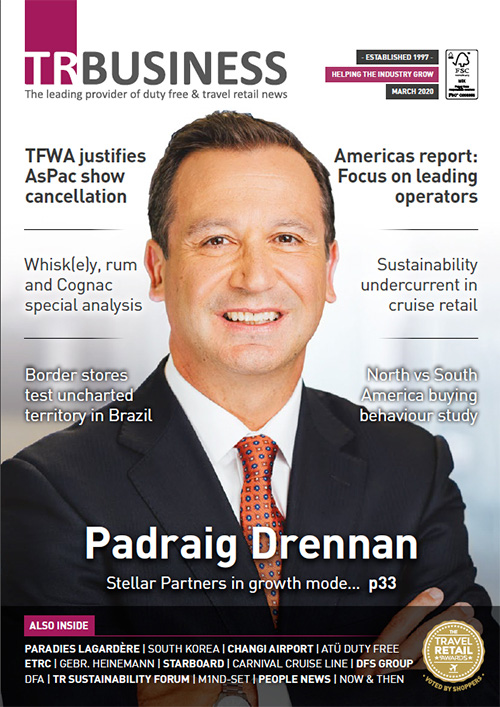
March issue cover 2020 leadWhile all of us are disappointed that the Summit of the Americas will not go ahead this year, TRBusiness is pleased to announce that exhibitors and visitors will not miss out on reading their free-of-charge March issue which they normally pick up at the show. TRBusiness is offering the entire March issue to all its readers this month as a good will gesture to all those who were planning to attend the show, but cannot for obvious reasons.


Inside this special Americas focused issue, cover star, Stellar Partners President and CEO, Padraig Drennan tells Andrew Pentol that the company is adopting an aggressive growth strategy through contract wins and extensions, acquisitions and direct negotiations.


Charlotte Turner speaks with Hudson (Dufry) CEO, Roger Fordyce who has successfully led the company through a transformational year. Fordyce talks about his first year in the role as CEO, during which time he oversaw a company rebrand and two acquisitions.


In another exclusive interview, Paradies Lagardère EVP, Gerry Savaria tells TRBusiness that the $1.2bn company is at the forefront of a major transformation of airports in the North American region.


March 2020 OFC for webTRBusiness also presents detailed analysis from Swiss research agency, m1nd-set, on the shopping preferences and behaviour of travellers from the region; segmenting them between North and South America as well as by age and gender.


Moving further south, Luke Barras-Hill delivers a comprehensive analysis of the Brazilian border business, evaluating its potential and talking with key retail players and economic experts.


TRBusiness also hears from US cruiselines and their retail partners on their exciting pipeline of projects as well as their laser-like focus on innovation and sustainability.


Finally TRBusiness dissects the brown spirits category, speaking with suppliers from the worlds of whisk(e)y, rum and Cognac. We discover how the industry has been impacted by Covid-19 – particularly in Asia – but is still preparing various projects to go live once the storm passes.


Interview subjects include: Diageo, William Grant & Sons, Beam Suntory, Bacardi Global Travel Retail, Edrington, Halewood Wines & Spirits, Chabot Armagnac and IWSR.


If you like what you are reading and would like to access the full editions of any future issues of TRBusiness magazine please click here to subscribe.


If you are not already a subscriber and would like to receive a full PDF version of the March issue, please use promotional code TRBUSINESSMARCH2020 when subscribing.


Your annual subscription to TRBusiness magazine will contain 12 regular monthly print editions, full access to the digital issue every month, plus digital and print copies of the critically acclaimed TRBusiness Top 10 International Operators of the World Annual Report.  

Latest report from M1nd-set identifies potential for ‘purpose-driven’ brands

m1nd-set sustainability research leadMillennials are leading the ‘purpose-driven’ purchasing drive – or demand for more sustainable products and brands – in travel retail according to the latest consumer insights report from Swiss research agency m1nd-set. 

TRBusiness was granted exclusive access to more detailed analysis from m1nd-set in the following article.

The report, which addresses shopper behaviour in travel retail as well as in downtown locations, studies customer groups most likely to purchase from sustainable brands; the price elasticity of sustainable products; the power of social media and peer-influencers on sustainable consumption and the key categories concerned by purpose-driven purchases.

The report also looks at the risks/dangers for those companies not seen to be respecting sustainable business practices.

According to the report, 84% of shoppers interviewed from across all regions of the world, think greater focus on sustainability by manufacturers has a positive impact on their perception of a brand.

Unsurprisingly millennials were among those customer groups scoring higher, with 91% of shoppers from this age group expressing this opinion.

m1nd-set sustainability report March 2020_1

FEMALE TRAVELLERS MORE LIKELY TO SEEK SUSTAINABLE CREDENTIALS

Female travellers and shoppers from Europe and North America also stand out with above-average percentages on the perception of a brand’s sustainability in the channel.

On average, 72% of all shoppers in travel retail said they would be more inclined to purchase from a brand which placed greater focus on its sustainability. This is particularly the case for millennials and female travellers – 78% in each segment agree – while among nationalities, Europeans are the most likely to shop with a brand because of its sustainable qualities (77% in agreement).

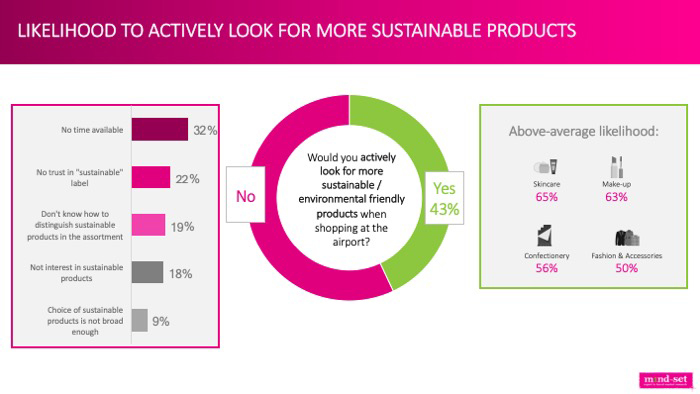
The report reveals that 43% of shoppers in travel retail would actively look for more sustainable and environmental friendly products when shopping at the airport.

However, this percentage is significantly higher among millennials (55%) and female travellers, who are proactive in their quest for greener purchases when shopping at airports.

When analysing shopping preferences by region, the report shows that 52% of both European and North American travellers are also above-average ‘green-seekers’.

PRICE ELASTICITY IN SUSTAINABLE GOODS

The categories where more sustainable choices are more likely to be sought are in skincare (65%), make-up (63%), confectionery (56%) and fashion & accessories (50%). Among those who do not seek out sustainable products at airport shops, lack of time is the main reason, followed by a lack of trust in the sustainable certification; confusion about what is and is not sustainable; lack of interest and finally, insufficient selection.

M1nd-set’s sustainability report also shows that on average, 64% of global shoppers said they would be willing to pay more for a sustainable product in duty free and travel retail.

m1nd-set sustainability report March 2020_2

Again women score higher with 70% willing to pay more; 69% for Europeans and 68% for North Americans. Among all shoppers, 40% say they would be willing to pay up to 20% more for a sustainable product and 33% would pay up to 30% more. The report picks up on data reported by the TRBusiness-led industry sustainability initiative, the Travel Retail Sustainability Forum (TRSF), which estimates that the global travel retail industry is responsible for more than 10 billion plastic shopping bags being distributed annually.

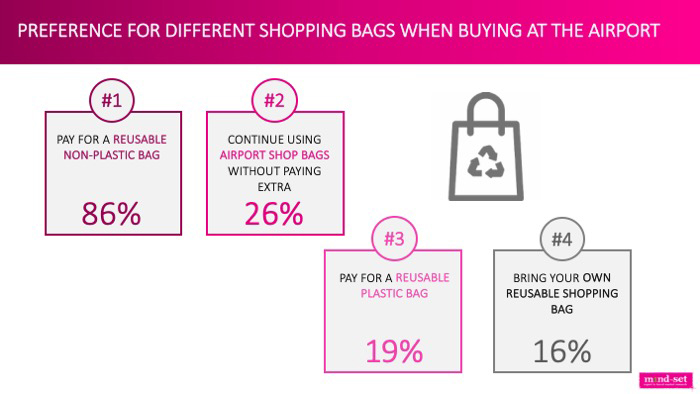
The m1nd-set report shows there is also a clear willingness among shoppers in travel retail to opt for more sustainable solutions for the shopping bag. Eighty-six percent of all shoppers say they are willing to pay for a shopping bag, as long as it is reusable and not ‘virgin plastic’. Only 26% say they would rather not pay for their shopping bags; 19% are willing to pay for a reusable plastic shopping bag and 16% say they would rather bring their own reusable shopping bag.

RETHINKING ON REFILL

With water being one of the other key contributors to single-use plastic pollution in duty free and travel retail – an estimated 3bn plastic water bottles are sold at travel retail outlets globally – m1nd-set was keen to find out how consumers felt about their sale in travel retail.

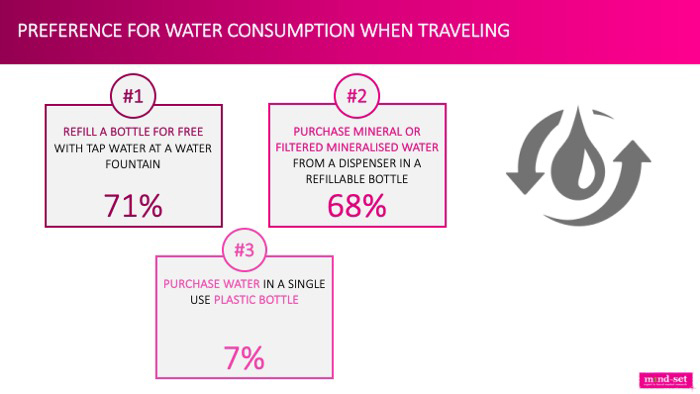
M1nd-set says there is a clear demand from consumers to see single-use plastics for water consumption eliminated, with 71% of shoppers saying they would prefer to refill their reusable water bottles for free from a water fountain.

Seventy-six percent of millennials expressed this preference, however 68% said they would be willing to pay for mineral or filtered mineralised water from a dispenser using their refillable bottles. Only 7% say they would prefer to purchase water in a single-use plastic bottle.

m1nd-set sustainability report March 2020_3

M1nd-set owner and CEO Peter Mohn commented: “We see from the research that sustainability is more than a buzz word or hot topic. It has become a fundamental part the consumer experience for a broad section of shoppers today, in travel retail specifically as well as retail in general.

“Purpose-driven brands and companies have the power to unite consumers, develop and increase loyalty. Consumers are increasingly conscious of the need to be more responsible socially and environmentally, when shopping, travelling or dining out. It’s also important to note that sustainable brands are more resistant to price hikes as consumers clearly express they are willing to pay more for purpose-driven products and services.”

As Mohn goes on to explain, it is essential for companies to increase their communication around their sustainable approaches: “It’s clear from our research that the majority – in most cases, a large majority – of consumers would switch to a purpose-driven brand, i.e. a brand with clear socially responsible or environmentally friendly attributes.

“However, it’s also important to note that around two thirds of shoppers will take action if a company fails to meet consumer expectations on social and environmental responsibility. This does not just refer to how products are sourced or manufactured but also how they are packaged.”

The report also focuses on consumer attitudes to packaging. More than 7 out of 10 of shoppers believe that brands and retailers are currently not doing enough to provide more environmentally-friendly packaging.

A FAIRER FUTURE

Consumers are increasingly influenced by social media’s extensive exposure and coverage of plastic pollution and the dangers to the environment as a direct result of packaging waste and it’s estimated that between 60% and 70% of shoppers, depending on the market, will change their purchasing behaviour because of their concerns about packaging. Only 25% of consumers however say it’s important for packaging to have a luxury aspect, according to the report.

The report concludes with a look at the future development of sustainable brands. Analysing sales growth across all product categories over recent years, m1nd-set reports that sales growth is driven predominantly by sustainably marketed goods such as those with Fair Trade or other sustainable certification, despite representing less than a fifth of all goods sold currently.

m1nd-set sustainability report March 2020_4

This shift in priorities has been particularly significant over the past five years, according to m1nd-set, with sales of sustainable goods growing six times faster than other products. The Swiss research agency predicts this growth will be stronger still in the coming years as purpose-driven companies produce more effective environmentally friendly products, supported by growing consumer demand for such goods.

“While consumers are leading the demand for more purpose-driven products, industry leaders are also calling for a shift towards more responsible production and consumption, even a more responsible, purpose-driven economic system as opposed to profit-driven” Mohn concludes.

“Structural change is necessary in order to address climate change according to several leading CEOs, who are expressing their disdain in increasing numbers with climate change, ocean pollution, deforestation, social inequalities and human rights abuses.

With change driven from both top-down and bottom-up, we believe we’re going to see a paradigm shift in the way companies source, produce, package and sell. This is a global shift, driven by multinationals across all sectors, from consumer goods to technology and even financial institutes. It’s no longer a question of if or when, but how many, how soon and whether your company will be leading or lagging.”

‘Adapt & Survive’: TRBusiness Skype interview series

Coronavirus-Covid-19

In a trade media first, TRBusiness presents a new Skype video interview series called ‘Adapt and Survive’ (click below).

Adapt and Survive asks prominent and influential travel retail industry figures, often working from home (WFH), for their candid commentary on the constantly evolving Covid-19 pandemic.

The video series is a direct response to the industry’s critical need for direct, factual and analytical commentary and – in typical TRBusiness fashion – interprets clearly and concisely the challenges faced by travel retail during Covid-19.

In the first video, TRBusiness speaks to Peter Mohn, CEO and co-founder of Swiss research agency m1nd-set on how the company is adapting to working from home, while trying to re-locate to new office premises.

Mohn paints a clear picture of the public mood in Switzerland and what action the Swiss government is taking to prevent the spread of infection.

He also discusses m1nd-set’s new Covid-19 platform and tells TRBusiness that analysts are working around the clock to cater to DF&TR’s demand for continually updated traffic data.

He also looks to the future, offering advice to the industry that can be actioned now ahead of a recovery in passenger traffic and a rebound in sales.

He highlights that sustainability – in a post-Covid-19 world – will be more important than ever, as consumers emerge from a time of deep reflection and contemplation, having spent so much time at home and (for many nations) in lockdown and quarantine.

More to follow from m1nd-set on sustainability soon… Stay close to TRBusiness

Covid-19: ISG ‘taking all necessary measures’ to protect staff and business

Aeroflot

Aeroflot has cancelled/amended flight schedules to many European destinations.

Inflight Sales Group (ISG) Europe SAS has asked for patience from its partners to navigate a ‘disastrous’ spell for the DF&TR industry.

ISG Europe has ceased its full concession activities in France, effective 16 March, as a result of the coronavirus (Covid-19) outbreak. Wholesale contracts, with some exceptions, have also been put on hold.

“I am taking all necessary measures to protect our business – my staff first and then of course my airlines’ customers and all our partners:  brands, logistics, designers, printers,” ISG Europe President Karen Durban-Villeval told TRBusiness.

CALL FOR CALM

Beginning this week, ISG Europe’s Paris office closed together with its warehouse in France.

All ISG Europe staff have been temporarily laid off and are being supported by the French government in line with special measures covering wages. Up until Friday (20 March), ISG employees had been working part time.

All activities are being managed by Durban-Villeval in the meantime, who tells TRBusiness that all new assortment ranges have been postponed.

Air-Caraibes-ISG-renewal

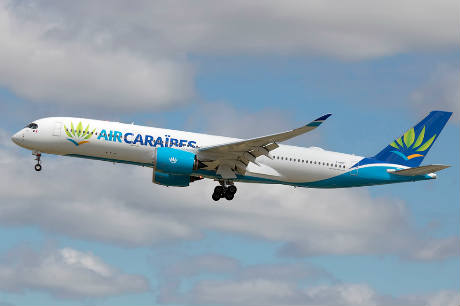
ISG Europe renewed its contract with Air Caraïbes last year. Source: Wikimedia Commons/Pedro Aragão.

“We’re still supplying goods for Aeroflot, which is still flying, but it is limited, with a great impact on sales (-28% in February) and a strong decrease in traffic.Until mid-March, we were very positive – we didn’t expect the situation to turn so rapidly.

“We have to face the situation – it is a disaster for our industry,” Durban-Villeval continued. However, she points optimistically towards the summer months amid hopes for a revival in air traffic and passengers’ propensity to spend.

“It depends on the airlines,” she added. “We expect the next few months to be very difficult. We may get through it if everyone is fair and helps and understands the other. We will be able to survive this and get ready for the summer season.

“I have had many calls from vendors. We need our partners to face the reality in a difficult moment and (business) will restart, as it did after 9/11. We don’t need anyone to panic. We will do all we can to restart.”

The inflight concessionaire runs full concession programmes on French Bee, Air Caraïbes and Corsair and supplies other carriers including Aeroflot, Royal Air Maroc and Air Burkina.

British Airways and Tourvest the latest to promote online shopping platforms

British Airways for web small

British Airways’ pre-order and home-delivery services remain open for business.

Tourvest Retail Services, which runs the duty free business on board British Airways and the carrier’s home-delivery and pre-order platforms, is the latest company to encourage online purchases during this traumatic period for the aviation and DF&TR sectors.

As revealed by TRBusiness earlier this week, the likes of AS Tallink Grupp and Shilla Travel Retail Hong Kong are leveraging the importance of online shopping to help boost sales amid the Covid-19 pandemic.

In an email circulated to British Airways’ High Life Shop customers, which was seen by TRBusiness, Tourvest emphasises that its pre-order service (for onboard delivery) and home-delivery platform are operating as normal. The correspondence also offers various forms of support for customers wishing to continue shopping during this challenging period.

Customers using the pre-order service are urged to follow latest British Airways flight information. In addition, shoppers are informed that orders can be re-routed to UK home addresses at no extra cost should flights be affected. They are also notified that deliveries will be made using Royal Mail’s first-class service on all products, except tobacco, alcohol and fragrances.

HOME-DELIVERY SERVICE ‘SECURE AND OPERATING’

In the meantime, the home-delivery service is also ‘secure and operating’ with all deliveries taking place as normal. Customers, however, wishing to cancel orders will be granted a refund.

BA highlife shop image for web

Orders made using the pre-order service can be re-routed to UK home addresses at no extra cost should flights be affected.

The letter said: “This is a challenging time for many of us and the wellness of our customers is very much top of our minds at the moment. As we all adjust to a rapidly changing situation, we wanted to share what we are doing to support you.

“We are monitoring the situation daily so we can adapt quickly as we continue to put our customers first.”

Meanwhile British Airways has revealed it is working with the Foreign and Commonwealth Office to continue flying where travel restrictions permit during the Covid-19 pandemic.

An update on the airline’s website, which was last modified on 19 March at 15:54 (British time) said: “We understand the uncertainty this unprecedented time might be causing. We are focused on supporting you wherever you are in the world.

“Our teams are working around the clock to help you get to where you need to be or rearrange your travel plans. We’ll do everything we can to help those of you affected by the changes”

BA Home Delivery Screen Shot

Customers wishing to cancel home-delivery orders will be granted a full refund.

In order to allow greater flexibility, passengers can change destination, date of travel or both without being charged on all new bookings until Sunday 31 March 2020. The same applies to existing bookings departing up to Sunday 31 May 2020.

Aside working to limit disruption, British Airways has reviewed and changed its aircraft cleaning programme. This includes increasing cleaning teams and audit inspections.

“Our disinfectant cleaning fluids are used on every aircraft after each flight to thoroughly clean all hard services in the cabins and lavatories. All our aircraft are fitted with HEPA filters which remove particulate and bacterial contamination and provide passengers with clean air. They provide the same level of air filtration as hospital operating theatres,” the update indicated.

AAPA fires message to governments to handle ‘worst health crisis in 100 years’

Bangkok-Air-Covid

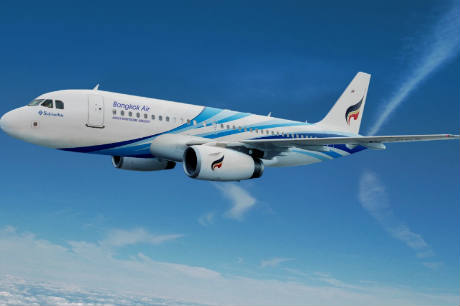
Source: Bangkok Airways.

The Association of Asia Pacific Airlines (AAPA) has called on governments across the world to implement emergency relief action amid the coronavirus (Covid-19) outbreak.

In a circular issued today (19 March), the AAPA says ‘holistic global measures’ should now be considered to safeguard the aviation industry and mitigate against the economic and social impacts of Covid-19.

“Asia Pacific airlines are fully committed to working with governments and the industry to maintain global connectivity and smooth operations despite the very challenging operating environment,” read the circular.

“AAPA urges all governments to take immediate action to address the societal impact of the world’s worst public health crisis in a century.”

ACTION REQUIRED

Flagging the enormity of the challenge and the need for critical action, the AAPA has outlined several actions that governments should take.

These include the suspension of payroll taxes, deferment or reduction in income taxes, extension of payment terms, waiver of taxes and other governmental levies, taxes, dues and charges this year.

Direct financial support to ease pressure on revenues and ease liquidity fears due to travel restrictions have been encouraged, together with the extension of interest-free loans or loan guarantees.

Support for corporate bond markets ­– either directly or to commercial banks – to extend credit for affected companies has been mooted, plus direct financial help for individuals.

AAPA-airline-Covid

AAPA: Asian airlines are facing income shortfalls of upwards of $60 billion this year due to plummeting demand.

Asia’s economies and air transport network is ‘still reeling’ from ‘draconian’ measures put into force in the last two months in the form of travel bans, border closures, lockdowns, quarantine and isolation directives, says the AAPA.

Carriers are now staring at revenue shortfalls of upwards of $60 billion this year as flatlining demand has suffocated fleets, resulting in many grounding services.

As a result, more than one million people working in the Asia Pacific airline industry are facing the threat of job losses, the AAPA continues.

As reported, the association called on governments last week to review blanket travel bans after the World Health Organization (WHO) declared the situation a pandemic.

“The World Health Organisation (WHO) is providing strong leadership in coordinating the global public health response, and notes that this is the first pandemic we can control if all countries and sectors come together,” added the circular.

“Similarly, we believe that it is time to consider holistic global measures to pave the way for the aviation industry to survive this crisis. Such a global approach is necessary to manage the economic and social impact of the COVID-19 pandemic.”

AAPA challenges ‘rationale’ behind mounting global travel restrictions

Seat-flight-Covid-19The Association of Asia Pacific Airlines (AAPA) is calling on governments to review blanket travel bans in the wake of the coronavirus (Covid-19).

Yesterday (11 March), the World Health Organization (WHO) declared the outbreak a pandemic, with more than 125,000 confirmed cases in 114 countries and in excess of 4,600 deaths (correct at the time of writing).  

The AAPA has urged authorities to roll back or refrain from introducing such measures, reiterating the WHO’s stance that advises against ‘generally infective’ travel or trade restrictions.

These can cause significant disruption to the global economy, supply chains, commerce, trade and most importantly to peoples’ livelihoods, says the AAPA.

Coronavirus-Covid-19

Covid-19 has been declared a pandemic.

STANDING IN SOLIDARITY

Where travel restrictions are introduced, they must be based on careful risk assessments, ensure proportionately to the risk of public health, are short term in nature, and subject to regular revision, adds the association.

Andrew Herdman, Director General, AAPA said: “The proliferation of travel restrictions worldwide, and insufficient adherence to the International Health Regulations are imposing enormous costs on society with little or no public health benefits.

“AAPA appreciates the leadership of WHO on this issue and calls on governments to fundamentally reconsider the rationale for such travel restrictions and measures.

“Governments must strengthen cooperation across borders and work together with WHO, International Civil Aviation Organization (ICAO), and other stakeholders to develop a more globally co-ordinated set of policy measures, in addressing the current outbreak, avoiding unnecessary social and economic disruption. Additional resources could then be directed towards strengthening the public health response.”

Herdman says the airline industry remains fully committed to the safety and wellbeing of travellers and Asia Pacific airlines are well-equipped to deal with health crises.

Carriers are following established guidelines developed by ICAO, in consultation with the WHO and Airports Council International (ACI) in ascertaining and managing public health risks. These include hygiene and disinfection of aircraft and airline lounges and the use of hospital-grade HEPA air filtration systems onboard.

Harsh-Vardhan-India

India’s travel visa suspension was decided by ministers at a meeting chaired by Union Minister for Health & Family Welfare Harsh Vardhan. Source: Government of India.

INDIA LATEST TO SUSPEND VISAS

Referencing a WHO situation report from 10 March, the AAPA says that while more than 90 countries have introduced some sort of travel restrictions, only 45 have informed the WHO of additional measures and supplied the associated public health rationale required under IHR.

A number of countries in Asia Pacific, including Japan, South Korea and Thailand, have moved to restrict or suspend visa waiver schemes for tourists in the past week in an attempt to curb transmission levels.

Elsewhere, US President Donald J Trump yesterday (11 March) suspended travel to the US from Europe’s 26 Schengen countries, excluding the UK and Ireland.

India has issued a revised travel advisory that will result in visas being suspending (with a limited number of exceptions), beginning 13 March (12:00).

Ministers decided to extend the suspension until 15 April during a meeting.

All foreign nationals intending to travel to India are being advised to contact the nearest Indian mission.

Passengers, including Indian nationals, arriving from or having visited China, Italy, Iran, Republic of Korea, France, Spain and Germany after 15 February will be quarantined for a minimum period of 14 days, beginning 13 March (12:00).

People in India are being advised to avoid non-essential travel.

On location in S. Korea: outlook in face of Covid-19

Entas Duty Free Incheon T1 Liquor and tobacco leadSouth Korea’s duty free industry is prepared for a large drop in sales this year after 322 new Covid-19 cases were reported yesterday (Thursday 5 March), lifting the number of confirmed coronavirus cases to 6,088, according to the Korea Center for Disease Control and Prevention (KCDC). David Hayes reports from South Korea.


So far, 41 people, most of whom already had underlying medical conditions, have died from Covid-19 in South Korea, after eight new deaths were reported yesterday.


About 60% of confirmed cases have been linked to a branch of the Shincheonji Church of Jesus sect in the southeastern city of Daegu, KCDC Director General Jeong Eun Kyeong earlier told reporters at a press conference on Wednesday (4 March).


Virus tests on members of the 210,000-strong Shincheonji sect who show symptoms have been completed, according to Jeong. In addition about 9,000 Shincheonji members who have shown no symptoms are under self-isolation.


As of Thursday afternoon, some 4,327 confirmed cases had been reported in Daegu, located 300 kilometres southeast of Seoul, while 861 cases had been reported in neighbouring North Gyeongsang.


Myeongdong shopping district Tour information employees Feb 2020

Tour guides in the Myeongdong shopping district remain upbeat during a difficult time for South Korea.

80% FALL IN CHINESE VISITORS

Elsewhere, the number of confirmed cases in Seoul rose by four to 103 on Thursday, while the number of Covid-19 cases in Busan in the southeast is 93.


The rapid spread of Covid-19 in South Korea over the past two weeks (since 20 February) has left South Korea’s duty free industry reeling from a double whammy.


Chinese visitor arrival numbers have plunged since the Chinese Government banned outbound group tour departures.


According to South Korea’s Ministry of Economy and Finance, the number of arriving Chinese visitors in the last two weeks of February fell by about 80% compared with the same period last year while the number arriving during the whole was down about 70% compared with last year.


Now South Korea’s travel retail market has received a second blow following a dramatic increase in domestic coronavirus cases.


Since news broke on 20 February about the likely mass spread of the Covid-19 virus among Shincheonji members, the startling increase in cases reported in Daegu and North Gyeonggi has caused foreign visitors from countries other than China to cancel plans to visit Seoul and other cities.


ENFORCED TRAVEL RESTRICTIONS

South Korean businessmen and leisure travellers also are cancelling their overseas travel reservations to avoid possible infection, contributing further to the current duty free sales slump.


Even those wanting to travel abroad are being forced to change their plans as more countries and territories announce entry restrictions on travellers arriving from South Korea.


As of Wednesday 4 March, some 94 countries and regions had introduced or are planning to implement entry restrictions on visitors from South Korea, an increase of eight from a day earlier.

Incheon Airport T1 general Feb 2020

According to South Korea’s Ministry of Economy and Finance, the number of arriving Chinese visitors in the last two weeks of February fell by about 80% compared with the same period last year.

Currently 37 countries and regions are barring (or plan to bar) the entry of foreign travellers who have visited South Korea in the past two weeks. In addition, 54 countries and regions, including 14 provinces and cities in China, have prepared or are carrying out quarantine programmes or recommendations for them for travellers who have visited South Korea recently.


IMPACT TO AIRLINES

Countries and territories banning the entry of foreign travellers who have visited South Korea in the last 14 days include: Singapore, Hong Kong, India, Nauru and others.


For the moment, Japan, Vietnam, the Philippines, Fiji, the Maldives and some other countries are confining their entry ban only to travellers who have visited Daegu, North Gyeonggi and the surrounding area.

SM Duty Free Incheon T1 Feb 2020

In spite of last year’s sales growth, duty free operators’ profitability did not improve as a large share of the 2019 revenue increase was taken up by sales to Chinese daigou wholesaler traders who receive large discount incentives from duty free stores.

Among other countries’ responses, the United States has issued an advisory note advising against all but urgent travel to the whole of South Korea, while the United Kingdom and others have advised against all but urgent travel to Daegu and North Gyeonggi Province.


Airlines also have been impacted by South Korea’s rapid increase in confirmed Covid-19 cases. Many carriers have reduced or totally suspended all flight services to Seoul and other Korean cities after earlier switching to use smaller planes and cutting flights due to the drop in Chinese passenger numbers since January.


Cathay Pacific on 1 March, for example, temporarily suspended all flights between Hong Kong and Seoul for four weeks to 28 March after previously suspending services to Busan and Jeju following a sudden fall in passenger reservations.


MODIFIED OPENING HOURS

As reported, South Korean duty free operators have responded to the sudden drop in foreign visitor numbers since the end of January by reducing store opening hours and introducing new promotions to attract dwindling customer numbers.


Lotte Duty Free, for example, has reduced store opening hours at its Sogong flagship store in Seoul to 09:30 to 18:30 daily and has modified opening times at other downtown stores.


Signs in the Sogong store elevator lobby warn customers that shop staff will take their temperature and those found to have a temperature above 37.5 degrees Celsius will not be permitted to enter the store.

Incheon Airport T1 Louis Vuitton

Incheon Airport’s famous Louis Vuitton store in Terminal 1 will no doubt see a significant drop in sales in 2020.

To reduce shop running costs, Shinsegae Duty Free on 1 March announced new opening times from 11:00 to 18:00 daily for its Seoul Myeongdong and Gangnam, and Busan downtown stores.


Elsewhere in Seoul, Hyundai Duty Free’s opening times at its Gangnam store are 09:30 to 18:00 daily.


SME OPERATORS

Among small and medium operators, SM Duty Free announced in February the closure of its Seoul downtown store at weekends and has reduced weekday opening times to 10:00 to 19:00 daily.


Other SME operators also have modified their downtown store opening times.


SM Duty Free downtown shop notice Feb 2020

SM Duty Free announced in February the closure of its Seoul downtown store at weekends and has reduced weekday opening times to 10:00 to 19:00 daily.

All duty free operators have been hard hit by the recent drop in customer numbers and sales, along with most of South Korea’s domestic retailers.


Last week, (28 March) the government pledged a stimulus package worth more than KRW20tn (US$17tn) to help alleviate the Covid-19 impact on South Korea’s economy.


This monetary booster covers support to ease small and medium enterprises’ financial difficulties, including SME operators running the country’s downtown and airport duty free shops.


SME companies renting business premises from state-run enterprises will have their rent reduced by 20% to 35% for six months or the monthly rental fee deferred if a sales-based rental fee agreement is in operation, according to the Ministry of Economy and Finance.


The promised assistance will benefit SME operators running duty free shops at Incheon International Airport and at airports under Korea Airports Corporation.


On Wednesday (4 March), the government announced a supplementary budget of KRW11.7tn ($9.8bn) to help mitigate the impact of the coronavirus.

FATE OF ‘THE BIG THREE’?

The government support package also will assist the country’s SME downtown duty free operators pay their shop rental fees. Landlords renting business premises to small and medium companies will receive the equivalent of 50% in corporate and income tax reductions of the rent reduction they extend to small business tenants.


In Seoul, landlords owning property in the capital’s famous Namdaemun Market adjacent to Myeongdong shopping district have agreed to cut rents by 20% for about 2,000 market traders under the ‘Good-hearted landlord campaign’, while other landlords in Seoul are reported to have reduced rents by up to 30% since the government programme was announced.


South Korea’s ‘big three’ duty free operators are also looking for concession fee reductions as they battle to cope with reduced customer footfall and plummeting sales.


Lotte, Shilla and Shinsegae are believed to be involved in talks with Incheon International Airport Corporation (IIAC) over requests for reduced concession fees though no official announcement has been made.


“There has been a 60% passenger fall at Incheon Airport but the big three have not received a licensee fee reduction, so it’s a disaster for them as they have high concession fees. If Incheon Airport does not reduce it will be a big problem for them,” commented a duty free industry source in Seoul.


Lotte Duty Free main store Feb 2020

Lotte Duty Free has reduced store opening hours at its Sogong flagship store in Seoul to 09:30 to 18:30 daily and has modified opening times at other downtown stores.

While reduced airport and downtown shop rentals will help operators to some extent, South Korea’s duty free industry nonetheless is facing a large loss of revenue this year.


DUTY FREE OUTLOOK FOR 2020

According to industry estimates, in-store and online sales currently are running at about 20% of their previous level since Chinese visitor numbers plunged at the start of February.


South Korea’s total duty free sales rose by around 30% in 2019 in KRW terms, according to industry estimates, totalling around KRW 25 trillion last year, and up from KRW 19 trillion (US$17.2bn) the previous year.


Total monthly duty free sales averaged an estimated KRW 2.1 trillion in 2019 which at current exchanges rate (US$1.00 = KRW 1,185) is about US$1.77bn per month.


Perfume and cosmetics are estimated to have accounted for about 60% of South Korea’s total sales last year followed by fashion and general merchandise representing about 20%, liquor and tobacco around 10%, watches and jewellery 7% to 8%, and electronics the remaining share of revenue.


In spite of last year’s sales growth, however, duty free operators’ profitability did not improve as a large share of the 2019 revenue increase was taken up by sales to Chinese daigou wholesaler traders who receive large discount incentives from duty free stores.


“Operators fear there could be big redundancies as they are losing a lot of money now,” the source said.


PERFUME & COSMETICS HARDEST HIT?

“Last year operators did not make big profits, unlike cosmetics companies Amore Pacific and LG who made huge profits; but not the operators as they give big discounts to daigou traders and cosmetics brands have not increased margins for operators.


“Because of Covid-19 there is no chance to improve business for another three to four months. Operators fear there will be a move to redundancies and layoffs, and to reduce their operation size.”


If total duty free sales remain at the current level until the end of June (about 80% below their monthly average in 2019), South Korea’s duty free industry could suffer revenue losses in the region of KRW 6 to 8 trillion (US$4.2 to $5.6bn) in addition to lost sales recorded in February.

Myeongdong shopping district Feb 2020

In Seoul, landlords owning property in the capital’s famous Namdaemun Market adjacent to Myeongdong shopping district have agreed to cut rents by 20% for about 2,000 market traders under the ‘Good-hearted landlord campaign’, while other landlords in Seoul are reported to have reduced rents by up to 30% since the government programme was announced.

All duty free categories have been hit by the fall in demand. South Korean cosmetics companies supplying duty free operators are among those who have been hardest hit by the recent overall reduction in duty free sales.


Many local cosmetics brands were already losing duty free market share to international brands before the original Covid-19 coronavirus outbreak began in Wuhan in China’s Hubei Province last December.


This trend is expected to continue once the coronavirus crisis has passed and daily life around the world starts returning to normal.


“South Korea cosmetics brands are worst hit,” confirmed the source. “They lost sales before the coronavirus outbreak began. Now there are fewer daigou traders to carry their goods, so they are losing more sales.”


Travel Retail Awards relocates to London following TFWA cancellation

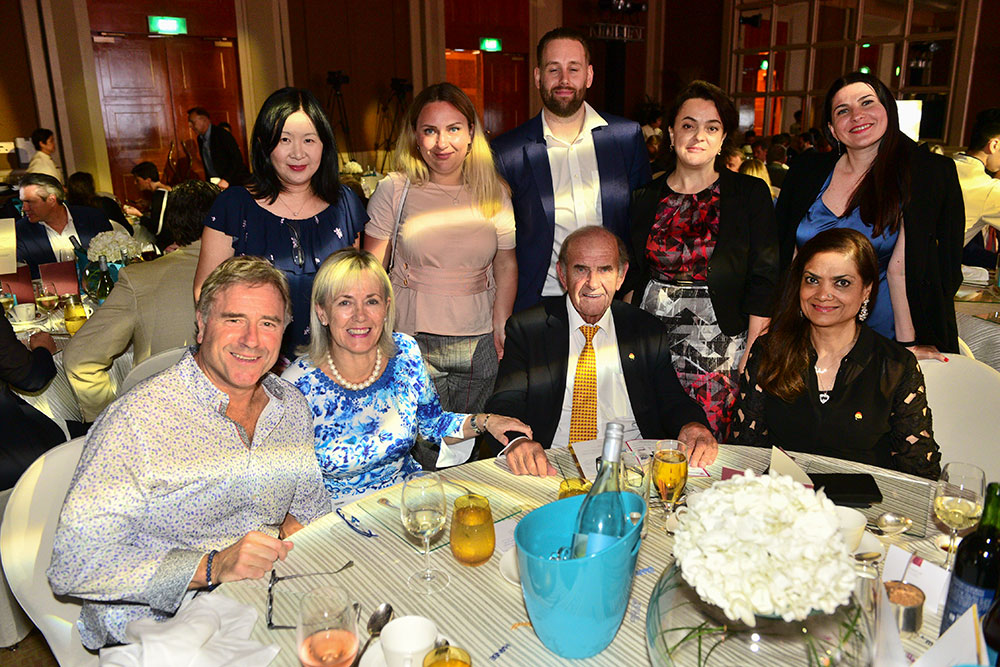
Travel Retail Awards 2019 Changi leadFollowing the difficult decision by TFWA to cancel the 2020 TFWA Asia Pacific Conference & Exhibition, TRBusiness can confirm that the Travel Retail Awards ceremony will be relocated to London in June. The precise date and venue will be communicated in the near future.

The Awards ceremony, which will take place at a prestigious London hotel, will be preceded by a complimentary half-day seminar during which TRBusiness will host the inaugural Travel Retail Sustainability Forum (TRSF) meeting, initially planned to take place during the 2020 Duty Free & Travel Retail Summit of the Americas, also cancelled due to concerns over the Coronavirus.

The TRSF agenda will discuss some of the many challenges facing the travel retail sector on single-use plastic waste and address the solutions and opportunities for the industry, with focused perspectives from suppliers, retailers and other stakeholders.

The session will preview some of the excellent nominations submitted for the Best Green Initiative at an Airport Award, the first-time winner of which will be announced later during the evening Awards ceremony.

DETAILED CONSUMER INSIGHTS

The seminar will also feature a detailed consumer insights presentation from TRBusiness’ research partner m1nd-set drawn from the panel of 5000 consumers who are currently (at the time of writing) casting their votes on the awards nominations.

Travel-Retail-Awards-2019-Dubai-Duty-Free-table-2

A shot taken from the 2019 Travel Retail Awards in Singapore last year. The 2020 Travel Retail Awards will take place in London this June.

A record 17 companies sponsoring the 2020 Travel Retail Awards, will benefit from the extended showcasing throughout the day and evening.

Changi Airport has signed up for the third consecutive year as Headline Sponsor of the 2020 Awards.

Platinum sponsors include Distell, Duty Free Innovation, Foreo, Furla, Mars Wrigley and Moroccanoil and as Gold sponsors for this year are Bluedog, Cabeau, Champagne Laurent Perrier, Chupa Chups/Mentos, Duty Free Experts, Hanse Distribution, Lindt & Sprugli, Pink Fish, Swarovski and Treasury Wine Estates.

Sustainability-Forum-main-Orlando

The Awards ceremony, will be preceded by a complimentary half-day seminar during which TRBusiness will host the inaugural Travel Retail Sustainability Forum (TRSF) meeting

Ticket prices to the event will not change; the £245 ticket for the Awards ceremony will apply to both the dinner and seminar, which will be preceded by a networking buffet lunch. Finalists in the 2020 Travel Retail Awards, to be announced in the latter part of March, all receive a complimentary ticket to the awards ceremony.

Nigel-TRBusiness

‘OUT OF ADVERSITY COMES OPPORTUNITY’

TRBusiness Owner and joint Managing Director, Nigel Hardy (left) commented: “As Benjamin Franklin said – ‘Out of adversity comes opportunity’.

“While we empathise with TFWA and its members for the difficult decision the association has had to take, we fully support it and understand the concern for the health and safety of all industry colleagues.

“The London event will enable stakeholders to come together for a highly insightful and educational afternoon as well as the networking lunch before the third annual awards dinner gets underway.”

“We are confident and optimistic, that governments around the world will continue to take wise precautionary measures to contain the Coronavirus and that infection rates will continue to fall.”

For further information, please contact: [email protected], [email protected] or [email protected].


UK carrier Flybe enters administration and stops flights on ‘sad day’ for UK

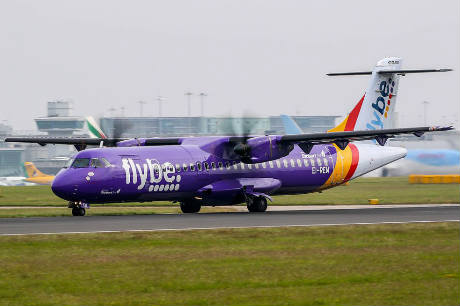
Flybe-2020-carrier

Source: Wikimedia/Aero Pixels.

UK airline Flybe has ceased trading ‘with immediate effect’ and grounded all flights.

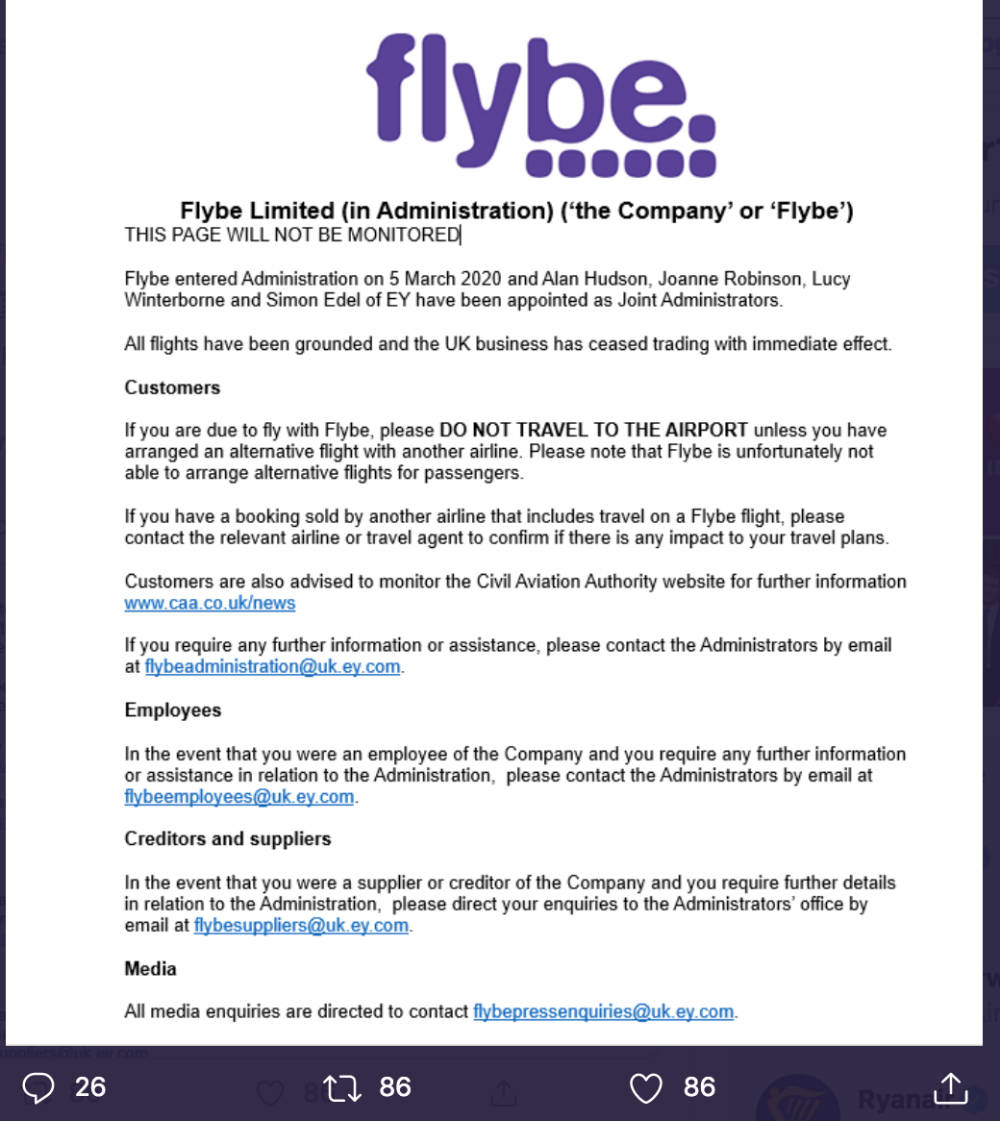
The Exeter-based airline, which served routes across the UK and Europe, advised all passengers in a notice today (5 March) not to travel to airports unless alternative flight arrangements were in place.

Widely reported excerpts from a letter sent to staff by CEO Mark Anderson blame the coronavirus’s impact on flight bookings, which compounded an already precarious financial position.

Those passengers with bookings sold by other airlines that include travel with Flybe have been told to contact their travel agent or airline.

CAA PROVIDING INFORMATION

In a statement, Richard Moriarty, Chief Executive at the UK Civil Aviation Authority (CAA) said: “This is a sad day for UK aviation and we know that Flybe’s decision to stop trading will be very distressing for all of its employees and customers.

“We urge passengers planning to fly with this airline not to go to the airport as all Flybe flights are cancelled.

“Flybe also operated a number of codeshare partnerships with international airlines.  If you have an international ticket you should make contact with that airline to confirm your travel arrangements.”

Notice-Flybe

The carrier put out an announcement on Twitter. Source: Twitter.

Flybe, which carried around eight million passengers per year, had been in talks with government at the start of the year to secure rescue funding to continue trading but terms could not be agreed.

The airline was owned by Connect Airways, a consortium comprised of Cyrus Capital, Virgin Atlantic and Stobart Group.

In an interview with Sky News, UK Transport Secretary Grant Shapps said: “We really tried to do everything that we possible could back at the turn of the year but unfortunately with the situation that has developed with coronavirus, an already weak company, I’m afraid just hasn’t been able to survive.”

He added the government would be liaising with various travel operators to assist passengers stranded at airports and said it will support Flybe’s circa 2,000 employees in finding new jobs.

Ernst & Young is handling the administration process.

The UK CAA is providing advice and information to passengers via its website and Twitter.