Trbusiness. The travel retail Trbusiness. The magazine for global retail and duty free professionals.
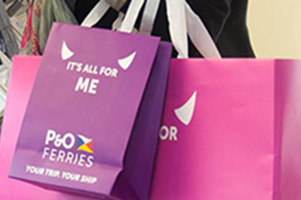
Duty paid retail onboard P&O Ferries today – but could it be duty free again post 2019?
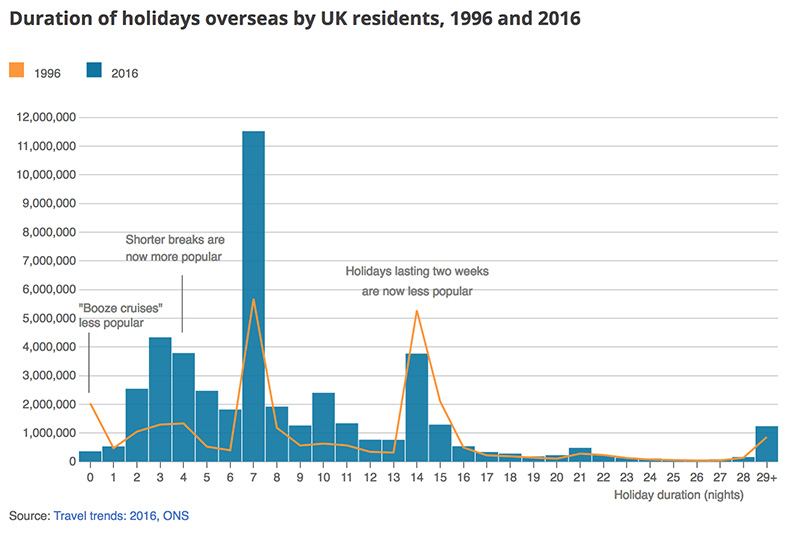
UK travellers accounted for 45m overseas holiday trips in 2016 – up 68% compared to 27m in 1996 – while the UK population rose by 12% over the same period, according to a new 20-year report comparison on overseas travel by British citizens from the UK Office for National Statistics (ONS).
This is the top-line conclusion from a very detailed survey conducted by the UK Government statistics department, which confirms the perceived wisdom that British travellers are taking more holidays than ever before, but they are typically shorter in duration.
SHORT BREAKS REIGN OVER TWO-WEEK HOLIDAYS
“One of the biggest changes we’ve seen over the last 20 years is the marked decline in the popularity of two-week holidays and the rise of short breaks,” said the ONS report.

[The fact that this reports also covers virtually the same time line as the number of years that have passed since intra-EU duty free abolition should make it ‘required reading’ for companies and organisations hoping to benefit from a return of full intra-EU duty free allowances once the UK leaves the EU-Ed].
COULD DAY TRIPS COME BACK AFTER THE UK LEAVES THE EU?
“The week-long break is a lot more popular than before, and there’s also been an increase in the number of holidays lasting 10 nights.”
The ONS also notes that UK residents now take far fewer overseas day trips than they did 20 years ago with the demise of so-called ’booze cruises’ across the English Channel in particular, where travellers would stock up on alcohol and cigarettes before intra-EU duty free sales ended in 1999.
Increasing comparative prices of tobacco in France has also reduced the attraction of one-day trips, along with the falling value of the pound sterling against the euro, while the growth of budget and low cost airlines has opened new horizons for British holidaymakers looking for quick overseas breaks.
BETWEEN 1996-1995 PAX AT UK AIRPORTS +85% TO 251M
The ONS said: “Throughout the 1980s and 1990s, the European Council relaxed the rules to create a common aviation area across Europe, allowing low-cost carriers including easyJet and Ryanair to enter the market. Between 1996 and 2015 – the most recent figures available from the Civil Aviation Authority – passenger numbers at UK airports increased by 85%, from 135m to 251m – continuing a long-term trend.
“And according to the UN’s International Civil Aviation Organisation in 2003, ‘around 50% of the traffic on low-cost carriers is newly generated’ – which means half of the people flying on budget airlines in Europe weren’t making those journeys before.”
As for the favoured destinations, not that much has changed in 20 years, with the report pointing to both Spain and France as still very popular with travelling Brits. However, while the number of holidays to Spain has ‘rocketed’ by 87% over 20 years, France is one of the few countries that British travellers are visiting less than in 1996 – down by some 9%.
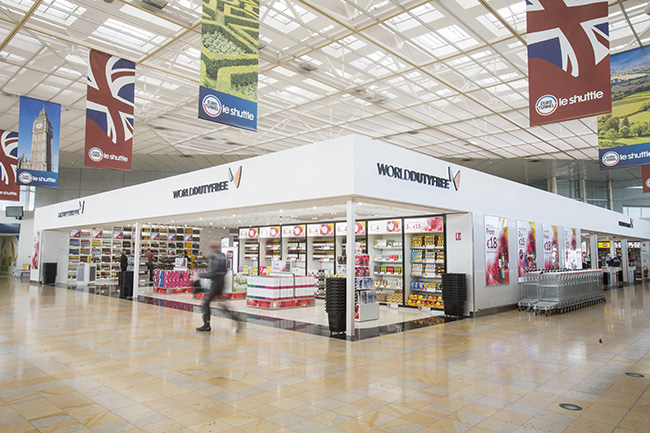
The Dufry-owned World Duty Free Eurotunnel shop at the Charles Dickens Terminal in Calais today. The Eurotunnel duty free drive-in store on the UK side (then run by Aer RIanta International-Ed) was one of the biggest traditional duty free liquor, tobacco and perfume operations ever seen in the UK prior to the abolition of intra-EU duty free allowances in 1999.
COULD THE FERRY BUSINESS MAKE A COMEBACK?
The ONS report states: “Budget airlines may be behind this too. Rather than driving to France on a ferry – the number of holidaymakers travelling by sea has declined by 33% since 1996 – tourists are perhaps opting for a cheap flight elsewhere instead.
“Germany has now joined the top 10 destinations for UK holidaymakers and another new entry is cruising – which is now four times as popular as it was 20 years ago. This could be due to an ageing population, with increasing numbers of older people in the population – but cruise operators are also trying to extend their appeal to younger holidaymakers too.
“Two destinations that have dropped out of the top 10 since 1996 are Belgium and Turkey.”
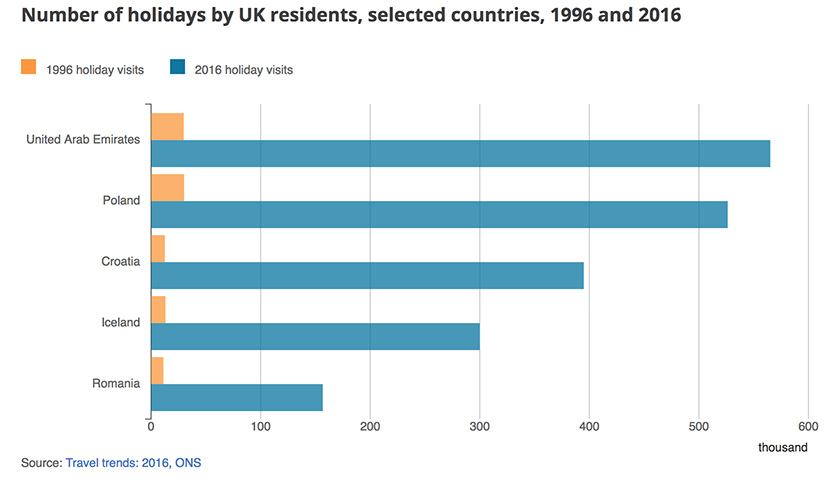
The report also notes that some other countries ranked outside the top ten have also become much more popular in recent years with UK resident holidaymakers since 1996.
These include the United Arab Emirates – and Dubai in particular, while back in Europe the addition of Poland and Romania to the EU in 2004 and 2007 respectively has also proved to be significant within the travelling statistics.

THE CHANGING PROFILE OF UK RESIDENT TRAVELLERS…
“In 2016 many of the UK resident holidaymakers were nationals of the countries they visited – 69% of those visiting Romania for holidays were Romanian and 31% of those going to Poland were Polish – perhaps returning to spend the holidays with family and friends.
“Croatia joined the EU in 2013, and the dramatic rise in visitor numbers partially reflects the emergence of the country from the Balkans War, which only ended in late 1995.
“Iceland’s new-found popularity is less straightforward to explain – the rise in the numbers of UK holidaymakers began around 2010, just two years after the economic crisis devalued the Icelandic krona, making the country much more affordable for foreign tourists.
“2010 was also the year that the volcano Eyjafjallajokull erupted, sending clouds of ash into the skies above Europe and grounding planes across the world, and some think that the TV pictures of Iceland shown around the globe encouraged visitors to go there.”
TERRORIST INCIDENTS CONTINUE TO HIT HOLIDAY DESTINATIONS
The ONS concludes that only five countries with significant visitor numbers have suffered declines in the numbers of holidaymakers and besides France, the biggest falls have been seen in countries where there have been terrorist incidents and security concerns in recent years – namely Turkey, Egypt, Kenya and Tunisia.
While the report does not make any comment on Brexit, the very real possibility that the UK may well be in a position to restore full intra-EU duty free allowances for its citizens travelling to and from EU countries after 2019 could certainly influence travel patterns yet again.
Fast-link train and ferry services will certainly benefit hugely from any return of this business, although travellers to EU countries may well need some coordinated educational campaigns if they are to readily understand the potential benefit savings associated with ‘excise duty free’, as opposed to their understanding of the current ‘travel retail’ umbrella term.”
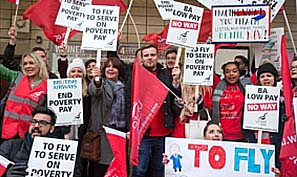
 The UK’s largest union Unite yesterday warned that long running industrial action by British Airways’ mixed fleet cabin crew could be extended right through to the end of August unless the airline returns to the negotiating table to secure an agreement.

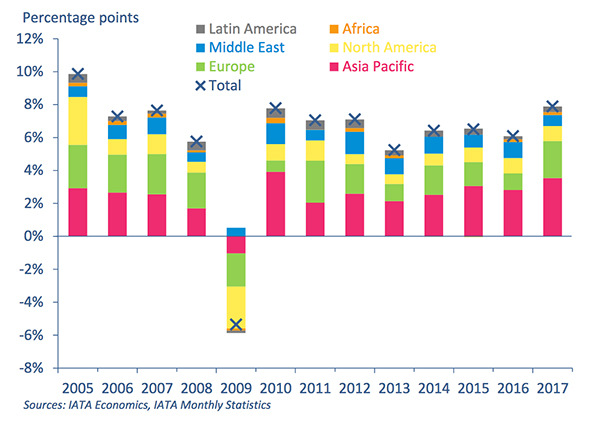
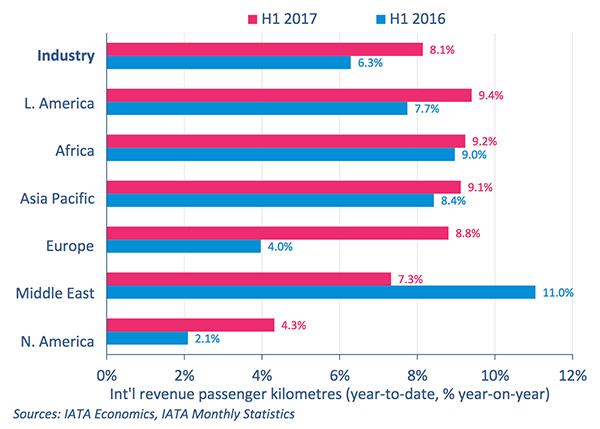
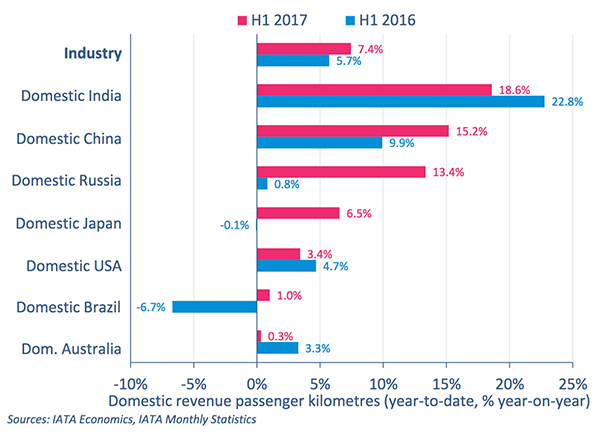
 The International Air Transport Association (IATA) has reported a healthy +7.8% global increase in passenger air transport for the month of June and a +7.9% rise – the highest increase for 12 years – in the first half of 2017, alongside a record 80.7% first half load factor.

 ‘ALL GOOD NEWS’, SAYS IATA…


 Several European Union airports are reported to be experiencing severe delays to airline departures due to a combination of record holiday traffic and the introduction of enhanced security checks at EU airports.

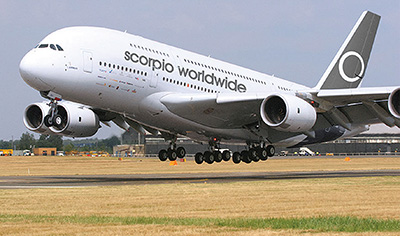
 Gebr Heinemann and its inflight arm Scorpio Worldwide Ltd have acquired a majority stake in Gastro Culinary Innovation Ltd (GCI) to broaden the company’s inflight portfolio to offer both food and beverages on board – in addition to the company’s extensive travel retail product portfolio.


 “Our industry generates excitement and pleasure as well as vital revenues, and we want to mark that through this campaign.”
 “Others are more emotional, such as how a visit to the duty free store is part of the holiday experience, how a gift from duty free can make a homecoming even happier, and how the industry brings customers great brands at great prices.”
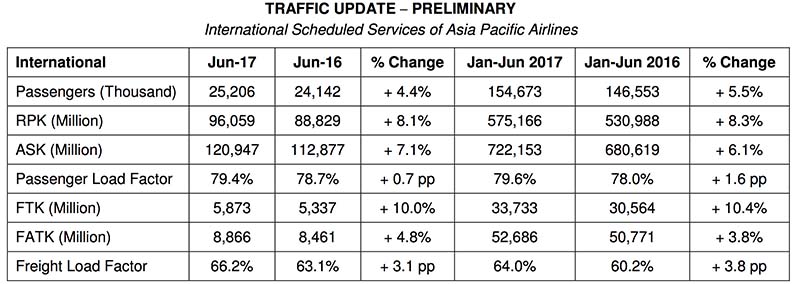
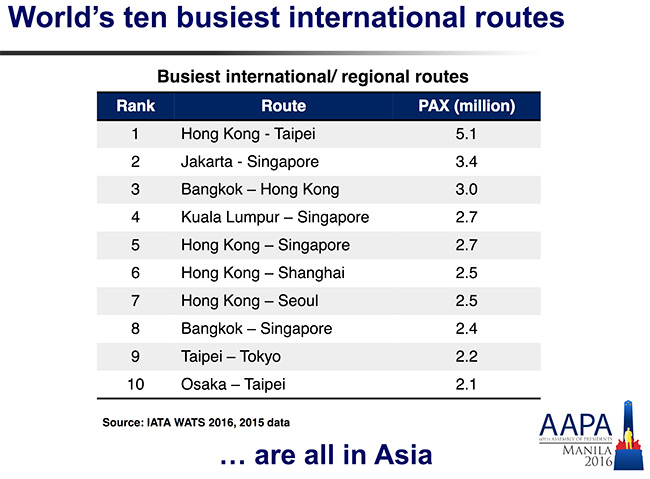
 The Association of Asia Pacific Airlines (AAPA) reports that the number of international passengers handled by the region’s airlines rose 4.4% to 25.2m in June, with the body noting that the upturn in global economic activity is driving both business and leisure demand for air travel.
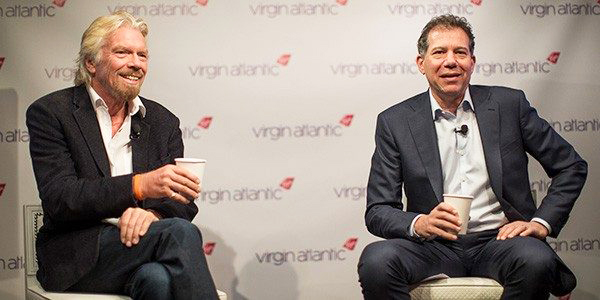
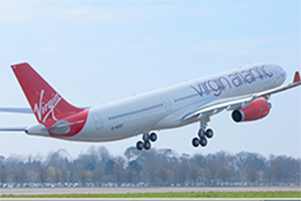 In what is a huge international powerplay with multiple ramifications, Air France-KLM is acquiring a 31% shareholding held by the Virgin Group in Virgin Atlantic for £220m ($288m).
 The Middle East and Africa Duty Free Association (MEADFA) board has invited its members to provide their input on how those potentially affected by the January 1 2018 implementation of the 5% value added tax in the GCC countries are proposing to approach this issue.