Archives

Multi-million dollar operator focus on Hong Kong

MTR trainSeveral leading DF&TR operators are shifting their near and medium-term focuses to Hong Kong this year, now that the Hong Kong MTR Corporation is tendering its Lo Wu and Hung Hom and Lok Ma Chau station duty free shops more than one year in advance of the contract start dates.


At the same time, some even more ‘optimistic retailers’ are hoping that DFS Group decides not to exercise its three-year extension options for its duty free liquor and tobacco, perfume and cosmetics and general merchandise concessions. These were won back in 2012 on five-year contracts at Hong Kong International Airport (HKIA).


HKIA DFS 2016

DFS certainly upgraded the retail offer at HKIA when it took over the shops, although the retail space planning at Hong Kong International Airport has always been very challenging for all operators.


DFS Group’s duty free liquor and tobacco contract expires in November 2017 – as does its general merchandise business – while its perfume and cosmetics contract has an extra month to run with its expiry set for December 2017.


EXTENSION OPTIONS

However, DFS also has options at the end of the fifth year to extend these businesses for another three years, although there are mixed views amongst competitors whether it will exercise all, some, or none [DFS does not comment on contractual matters-Ed].


By contrast it is a much clearer picture with the two duty free contracts for the Mass Transit Railway (MTR) in Hong Kong, comprising Lo Wu and Hung Hom together and Lok Ma Chau as a standalone separate contract.
 

Lo Wu MTR Station duty free border store.

Lo Wu has historically been the busiest duty free station shop on the Hong Kong side of the border with China, although the Lok Ma Chau station operation is now said to be catching it up in sales turnover terms.


Once again, these contracts – currently held by Anway/Sky Connection – are being tendered by MTR more than a year ahead of their expiry dates, although in these instances there are no extension clauses in either contract.


GROWING MTR STATION BORDER BUSINESSES

The largest of these is the contract covering Lo Wu and Hung Hom, which begins on January 1 2018. The minimum guarantee acceptable for the Lo Wu and Hung Hom business is HK$87m ($11,204,289) per month or 42% of sales, whichever is higher.


As is known, Lo Wu remains Hong Kong’s most heavily used immigration control point for passengers travelling to and from Mainland China. Duty free sales at Lo Wu last year were HK$2bn ($257m) although the minimum guarantee MTR is looking for is 40.2% based on 2015 sales.


Lok Ma Chau is a separate contract where tenders are due to close on July 28 2016, with the new contract set to begin on August 15 2017. This tender was released in the first week of May 2016 and the minimum acceptable monthly bid is HK$77m ($9,916,591) or 42% of sales – whichever is higher.
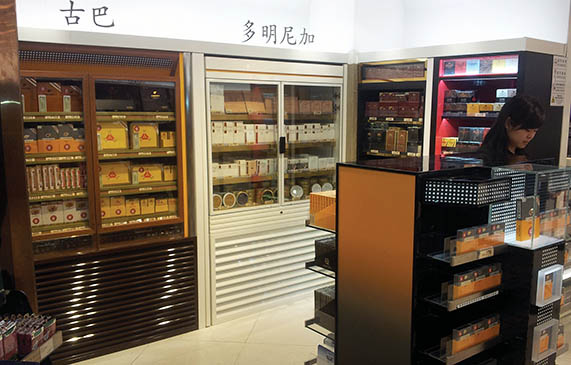
 

Anway's cigar section at Lok Ma Chau rail station

Total Hong Kong Revenue

The MTR (Mass Transit Railway) turnover breakdown showing the importance of Hong Kong station commercial business. (Top picture: Anway’s cigar section in the duty free shop at Lok Ma Chau railway station).


Duty free sales at Lok Ma Chau are also understood to have been around HK$2bn ($257m), so the minimum guarantee rent that MTR is asking for is equivalent to 42.3% of 2015 sales.


TOBACCO IS THE LEAD BORDER STORE PRODUCT

Meanwhile, contrary to airport duty free, the sales mix at this very busy border business is heavily 70% dependent on cigarettes. As such, some sources have told TRBusiness that any threat to the inbound cigarette allowance in Mainland China during the course of these contracts would therefore have a devastating impact on future sales.


Some sources also point to the ‘small matter’ of four months security deposit and an advance guarantee of eight months of the fifth year rent’s for these border shop contracts.


Bidders for these border shops will also doubtless be wary of the much delayed high speed Hong Kong-China rail link actually opening in 2018. The original tender for this business was cancelled when it was discovered that mountain tunnelling work on the Hong Kong side was way behind schedule in the final leg of laying the railway line into Mainland China.
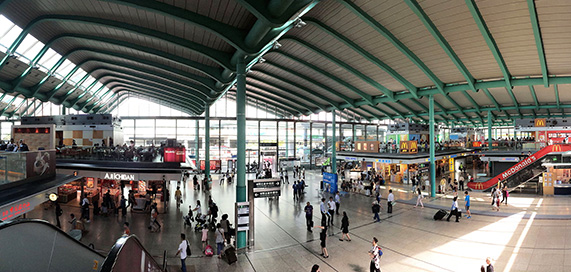
 

Top Hung Hom Station Concourse (Photo credit Wing1990) copy

Hung Hom Station Concourse (Photo credit: Wing 1990).


The relevance of this is that MTR plans to tender this separate duty free contract again for this new service ahead of the line opening. This is despite the fact that some sources claim these sales could dilute those at the new Lo Wu/Hung Hom and Lok Ma Chau duty free contracts.


Regarding traffic numbers, MTR has reported that passengers boarding its Hong Kong cross boundary services totalled 114.2m (+1.1%) to Lo Wu and Lok Ma Chau in 2015 – up just over one million for 2014. However, this growth rate has been slowing due to the well-publicised decrease in land visitor arrivals to Hong Kong from Mainland China.


MTR’S SHOPS WORK ON AIRPORT-LEVEL RENTS

Station commercial revenue also rose with MTR management pointing to positive rentals from station shops and higher turnover rents, mainly at Lok Ma Chau station’s duty free shops.


Revenue from MTR’s Hong Kong station commercial businesses last year rose by +8.4% in 2015 to HK$5,380m. Operating costs at MTR’s Hong Kong station commercial businesses increased by +6.8% to HK$550m, resulting in an 8.6% rise in operating profit to HK$4,830m – equal to an operating margin of 89.8% for MTR.
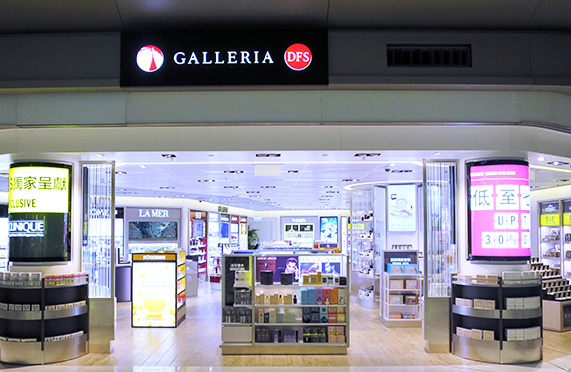
 

DFS HKIA Midfield 2016

One of two new DFS stores opened at HKIA’s $1.3bn, 105,000sq m, five-storey Midfield Concourse earlier this month.


At the same time, station retail revenue for the year increased by 10.7% to HK$3,540m, as rents increased and new shops were added in ten stations. In a statement, MTR said: “Rental increases were driven by trade mix refinements, positive rental reversions, and increases in rents in accordance with lease contracts for duty free shops at Lo Wu and Hung Hom stations, as well as higher turnover rents from the Lok Ma Chau Station duty free shops.”


The transport company added that as of 31 December 2015, there was ‘a total’ of 1,362 station shops, occupying 56,238sq m of retail space, an increase of 542sq m, as compared with 31 December 2014.


Amongst those companies that may well look at these MTR border shop contracts include the incumbent Anway/Sky Connection; King Power Group, Hong Kong; China Duty Free; Shenzhen Duty Free; and Lotte Duty Free.


ADDITIONAL BACKGROUND: DFS was awarded all three of its anchor license concessions at Hong Kong International Airport (HKIA) comprising Liquor & Tobacco, Perfumes & Cosmetics and Airside General Merchandise back in mid-2012.


The retailer bid highest for each one of the three individual licenses against 11 other bidders proposing 20 offers, according to the General Manager for Retail & Advertising at that time, Albert Yau. Total duty free revenue at Hong Kong Airport in the run up to the contract awards (2011) exceeded US$570m.




More than 400 delegates rocked Singapore

This year, TRBusiness Rocks Singapore welcomed more than 400 TFWA delegates to a bigger and better venue called ‘Switch’, raising the bar once more with a truly memorable social event on the evening of Monday 9th May.


TRBusiness Rocks Singapore moved to a new social hub, for a terrific night of music, fabulous drinks, lots of dancing, a complimentary bar, and a goodie bag containing gifts from our sponsors.


Guests were treated to a night of real quality live music from the very talented Soul Beat, who were flown in from the UK especially for the event.


This year’s TRBusiness Rocks event in Singapore – whose hugely popular sister event in Cannes is among the French Riviera week’s most anticipated highlights – gave delegates a much-needed chance to unwind at a night to remember.


See highlights from this year’s event below.

Special thanks to this year’s sponsors:


Gold sponsor: Brown-Forman/Jack Daniel’s Tennessee Fire.


Silver sponsors: Cabeau; Chang Beer; Hanse Distribution; Mars; Maurer & Wirtz/4711; WOPI/Tofka; Hershey’s/Brookside.


We look forward to seeing you soon!

ASUTIL says 257 have registered for 20th event

Sheraton-Santiago-ASUTIL-2016-lead-1ASUTIL’s Secretary General, José Luis Donagaray has revealed that the 20th annual conference has received 257 registrations via the association’s website, and that they have confirmed one more speaker in addition to an already impressive line-up.


As previously reported, ASUTIL will hold its 20th conference entitled ‘Step by step in the right direction’ at the Sheraton Santiago Hotel & Convention Center, Santiago de Chile between 8-11 June.


“We closed last week the last speaker who is Guillermo D’Andrea who will speak about ‘Retail keys in an omnichannel world’,” says Donagaray who posted the announcement in the TR Meeting Point Facebook page.


Guillermo D’Andrea is a professor of Marketing and Retailing at IAE Business School – Austral University, in Buenos Aires, Argentina, where he chairs the Centre for Leadership in Marketing & Retailing – CLEMER, and the Alumni Division.


Jose-Luis-Donagaray-ASUTIL-2015

José Luis Donagaray addressed industry challenges at last year’s conference in Panama.


He leads Babson College’s Strategic Planning and Management in Retailing Program at IAE and at Monterrey Tec, Mexico, teaches at IESE’s Global CEO Programme. He has also been Visiting Professor at Instituto Politecnico di Milano International MBA and other renowned business schools around the world. From 2002 to 2012 he was Research Director of The Coca-Cola Retailing Research Council – Latin America.


Guillermo-D'Andrea-ASUTIL

D’Andrea will talk about the major disruption that retail is about to face.

A regular contributor to the Harvard Business Review and other similar business publications, he has written over 60 case studies, papers and other teaching materials, and is author or co-author of seven books.


MAJOR RETAIL DISRUPTION

According to Donagaray, at the approaching 20th conference to be held in Santiago Chile, D’Andrea will talk about the major disruption that retail is about to face.


“The digital transformation and other prevailing trends are empowering customers that increasingly expect a better shopping experience and demand more value than ever before,” says Donagaray, disclosing D’Andrea’s agenda.


“At the same time this second digital wave opens chances for improving the business by expanding relations with both customers and suppliers. It’s a demanding challenge where only the bravest will survive and following Moore’s Law, time is shrinking.


“We will explore how retailers are reacting to this new context, and what opportunities arise in the new omnichannel landscape. “

Industry academy takes shape at TFWA show

Frank-O'Connell-DFWC-leadOn Sunday 8th May the Duty Free World Council (DFWC) experienced a landmark moment at the TFWA Asia Pacific Exhibition & Conference in Singapore as the much anticipated industry-led Academy took a major step towards full legal establishment.


This meeting followed a DFWC Board Meeting in Orlando in April, which gave the approval to proceed with the plans.


Frank O’Connell, President of the DFWC will chair the Academy, supported by the incoming Board of individuals who all share a passion for driving standards through education.


Christine Martin

TRT MD’s Christine Martin is thrilled to finally have this project off the ground.

The Board will oversee the legal and practical creation of the DFWC Academy and provide the Academy with a range of expertise including HR, Operations, Marketing and Sales.


The other members of the interim Board are: Erik Juul-Mortensen, President of TFWA, and member of the DFWC Executive Council; Sean Staunton, Vice President Operations, Dubai Duty Free, President MEADFA and DFWC Board member; Jaya Singh, Director, Head of Global Accounts, Mondelez World Travel Retail, President APTRA and DFWC member; Marcus Griffin, Divisional HR Director Latin America and Caribbean, Dufry and Markus Stauss, Director Marketing, Travel Retail Worldwide, Coty Inc.


The Board further agreed to appoint Travel Retail Training Ltd (TRT), organisers of the well-known Inflight Retail event ISPY to act as the Academy’s management company with the responsibility to create, deliver and coordinate training programmes and services on behalf of the DFWC Academy.


dfwc logoLast year an industry-wide survey was carried out to identify common learning and development needs and aspirations. In response to this, the DFWC Academy will initially focus on:


  1. Creating a certified online programme providing an introduction to the Duty Free and Travel Retail Industry for those who are new to this industry and for companies seeking to enter the business
  2. Determining and monitoring industry professional standards
  3. Developing Quality Mark in-house and external learning programmes
  4. Accrediting training delivery
  5. Providing Verification and Certification

The focus in the first instance will be on frontline retail staff and ensuring quality delivery of supplier product and brand training.


Frank O’Connell said, “We look forward to working closely with Christine Martin of TRT to make this a reality and to create and deliver quality products and services that the industry recognises and values and can incorporate into their own learning and development strategies. Our aim is to have this initial wave of products and services ready to launch at TFWA World Exhibition & Conference in October in Cannes.”


For further information, the DFWC points to the following contacts.


Frank O’Connell,        E:         [email protected]


Christine Martin,       E:         [email protected],                        T:+44 7811372891


Asia keynotes: positivity, quick thinkers and Trump

tfap16 Mahbubani1

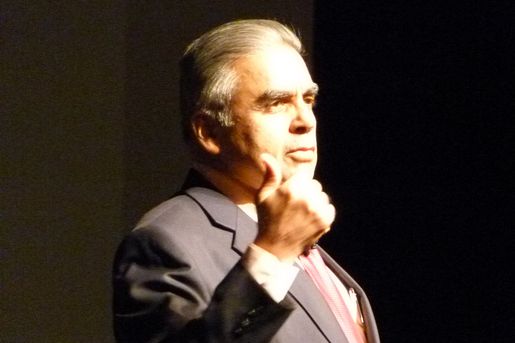
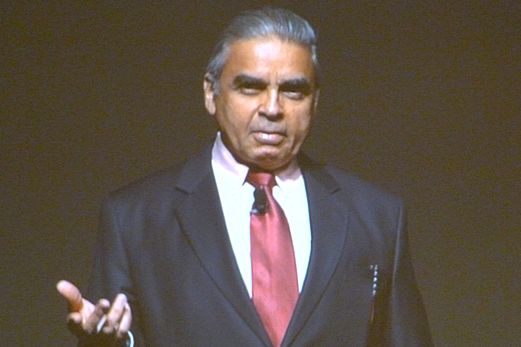
Kishore Mahbubani.

Some doom and gloom emerged at this year’s TFWA Asia Pacific Conference themed Navigating Through Change, when Generation data revealed a contraction in the global channel of -2.3%, the first since 2009.

Nevertheless the keynote speakers – both outside the duty free and travel retail business – gave the large number of conference attendees some reasons to be positive about the future, and how DF&TR operations could grow successfully. Both in their own very different ways also pointed to data and science/technology as the most logical ways to negotiate the road ahead.

Looking at the macro factors that underpin the channel was Kishore Mahbubani, an author, diplomat and Dean of Singapore’s Lee Kuan Yew School of Public Policy. Mahbubani – a former ambassador to the UN for the island state – told his audience that in order to understand today’s trends they would have to examine the bigger picture and “not the conventional wisdom”.

“We have seen more change in the past 30 years than the past 300, and we will see even greater change to come,” he said.

PESSIMISM RULES… BUT SHOULD IT?

Referring to the world market with its currency meltdowns, migrant crises, and rising terrorism, he added: “It seems like we are drowning in pessimism today. Look at Donald Trump. What’s driving that phenomenon is a culture of pessimism. But I can tell you that culture is wrong because actually the world is getting to be better and better.”
Mahbubani: 'I can tell you that up to now the key qualification for becoming the UN Secretary General was that you had to be spineless'.
Mahbubani: ‘I can tell you that up to now the key qualification for becoming the UN Secretary General was that you had to be spineless’.

He noted that – despite today’s frequent doom-laden headlines – fewer people were dying in wars now than ever. Deaths from conflicts in the 1950s were around 500,000 annually but they are down to 30-40,000, he claimed.

“War is becoming a sunset industry,” he said. “It’s hard to believe that if you read the newspapers – but the data is there. This is an important point for your industry because the biggest single obstacle to travel is war and conflict.”

Another macro trend governing change is global poverty. In 2000, the United Nations goal was to halve it by 2015 and “this goal was met and exceeded”. In fact the National Intelligence Council of the US predicts that by 2030 global poverty will be almost zero.

The counter side to that is rise of the middle classes – the bedrock of DF&TR shoppers. Mahbubani says that from 500m in 2010 in Asia Pacific, they will number 1.75bn by 2020 [and 3.2bn worldwide]. “We have never seen anything like this,” he added.

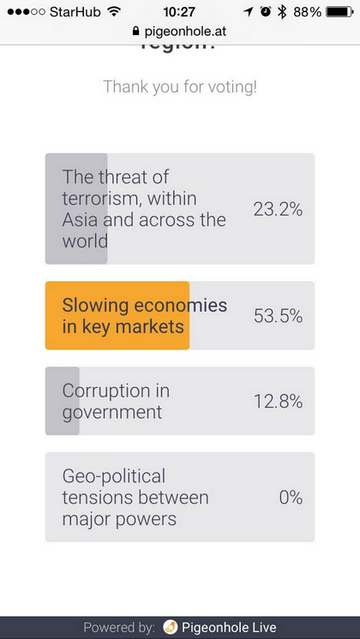
The pigeonhole app was an excellent real-time way to get the audience's thoughts on any topic related to a conference theme or speaker's subject.

The pigeonhole app was an excellent real-time way to get the audience’s thoughts on any topic related to a conference theme or speaker’s subject and was used throughout the day. The question here was: What do you consider the most significant threat to growth in the Asia Pacific region?

Why is this happening? Powerful underlying forces are at work according to Mahbubani, who at this point plugged his book The Great Convergence. About it, he said: “At a time of great pessimism it gives you good news.”

Among these forces he cited science/technology and its great strides in overcoming [and almost eradicating diseases like polio] – and the adoption of logic and reasoning.

“There is one reason war is becoming a sunset industry; because most countries have leaders who do a cost-benefit analysis of conflicts. That’s why I can confidently say to you there will be no war between the US and China, or India with Pakistan,” Mahbubani pointed out.

Positive change has also come about due to free market economics “in almost every country except North Korea” he said. Multilateralism has helped; more meetings and more gatherings mean more interaction. “These fundamental factors are transforming the world, but there are three big challenges,” he added.

GLOBAL CHALLENGES… AND A PROVOCATION

The first of these is that the world is getting smaller through globalisation and Mahbubani characterised this by comparing countries in past times as 7bn people on different boats with today’s 7bn on the same boat, but in different cabins and without a captain.

He noted that the global financial crisis needed a meeting of the G20 in London in 2009 when a global stimulus plan was adopted – led by UK Prime Minister, Gordon Brown – and he said that a similar lead was needed to fight global warming.

Secondly, there is a shifting power balance taking place between the US and China. “So far it has been managed very well between Washington and Beijing,” Mahbubani believed, but a Trump presidency might upset that the applecart. Finally, the dean said that global institutions were still dominated by western countries and that this had to change as power shifted east.

Mahbubani suggested that only one rule change could make all the difference: “So far it has been the policy of the great powers to keep multilateral institutions weak… especially the United Nations.”

He went further by adding: “I know the UN very well and I can tell you that up to now the key qualification for becoming the UN Secretary General was that you had to be spineless.”

This may have worked in a time when the world was more diverse, noted Mahbubani “but when we are all on the same boat we need to strengthen institutions for global governance, not weaken them”.

In parallel he said that a region like Southeast Asia, with its complex religious and cultural mix, should, on paper, be one of the most troubled, but after the European Union it is the second most peaceful region in the world.

Mike Walsh challenges his audience.

Mike Walsh challenges his audience.

This he said was because of the Asean political and economic trading bloc, set up almost 50 years ago. “If Asean can do it for this region, it shows that we can do it for the world as a whole,” he said.

AN ANTHROPOLOGICAL APPROACH

In the keynote that followed a less directly controversial address was made by Mike Walsh, an Australian futurist, author and CEO of Tomorrow, a global consultancy “designing business for the 21st century”.

However Walsh – whose father was a former CEO of London luxury department store Harrods – was no less provocative in his often abstract demands that his audience should look at a retail future that would be turned on its head.

As a commentator who scans for emerging technologies and key shifts in consumer behaviour, before translating these into pragmatic plans for business transformation, he offered up some wide-ranging ideas to conjure with when looking to future commercial strategies.

He was not concerned with labels like Generation X or Y or Millennials. The buzz word ‘disruption’ is – for him – something that had already started at the turn of this century thanks to technology.

“How will the next generation disrupt the future of retail?” was his starting point. Current exposure to technology had changed the world view rather quickly he said, citing services such as Airbnb, Uber, and something as simple as no longer having a landline telephone, as signs of major tech-driven transformations.

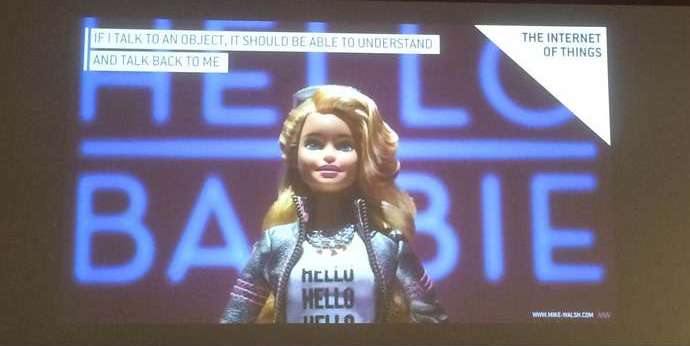
Hello Barbie is raising expectations in youngsters.

Hello Barbie is raising expectations in youngsters.

These innovations have come about in a matter of a few short years and Walsh asks: “Just how different will our kids be when they are older?” That generation he says will be data driven. He points to wearable and contextual computing technology such as Disney’s ‘magic bands’ that allow theme park staff to address kids by their names before an introduction, or skin sensors that alert a phone when the user needs to put on sun protection, as services that will become normal to younger generations.

A VERY DIFFERENT ANIMAL

Hello Barbie is another example which gives girls the ability to talk to their Barbie doll thanks to speech recognition software with progressive learning capabilities. Such advances create early-onset expectations – something retailers must be able to keep up with to have a chance of holding any kind of attention.

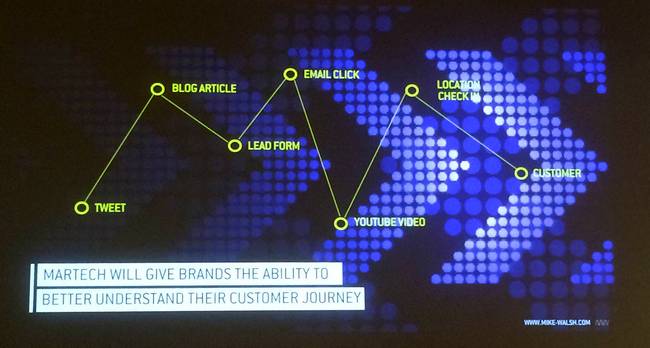
TFAP16 martech

This customer journey may be incomprehensible to a DF&TR manager of a certain age!

“How does an eight-year-old think?” Walsh challenged his audience in order to make them realise that duty free retailing tomorrow will be a very different animal from today.

Another aspect that he also claimed would be important was media. He suggested that young people were finding their celebrities not in magazines or TV and movies like their parents’ generation, but on channels like Youtube and through their peers.

There was therefore a shifting balance between marketing technology and advertising technology; the former helping to understand the customer journey and the latter helping, via social media platforms like Facebook, in driving up audience acquisition.

In this respect, he said that it was essential to “find the data that matters” in order to provide the underlying shifts in behaviour to make retail relevant to this new generation. “You need to augment your teams with data to succeed,” says Walsh. “They need to think big and think new, but most important, to think quickly.”

He added: “The future is not what we expect… it’s not an upgrade of the present. It’s an invitation to think in an entirely different way.”

DF&TR sales down -2.3% to $62.1bn in 2015

6 Small growth tableThe latest preliminary duty free and travel retail sales data from Generation Research shows that the industry declined by -2.3% to $62.1bn compared with 2014.


At the same time, DF&TR sales in the Asia Pacific region rose by +2.6% to $25.2bn in 2015 compared with 2014.


These figures were exclusively revealed today by TFWA President Erik Juul-Mortensen in his introductory presentation at the Duty Free & Travel Retail Asia Pacific Summit in Singapore.


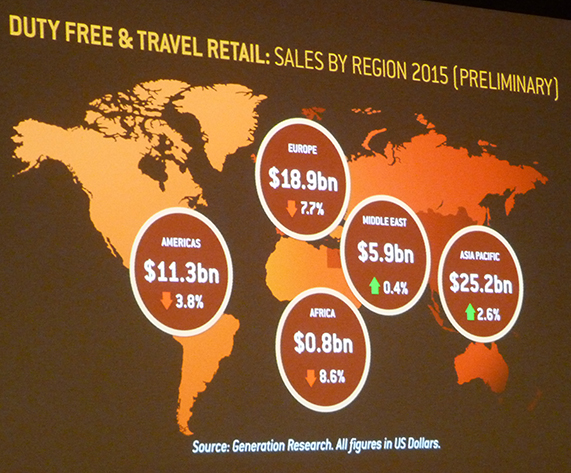
2 Sales by region 2015


In terms of breakdown (again preliminary figures), Asia Pacific accounted for $25.2bn (+2.6%); Europe $18.9bn (-7.7%); The Americas $11.3bn (-3.8%); Middle East $5.9bn (-8.6%); and Africa $0.8bn (-8.6%).


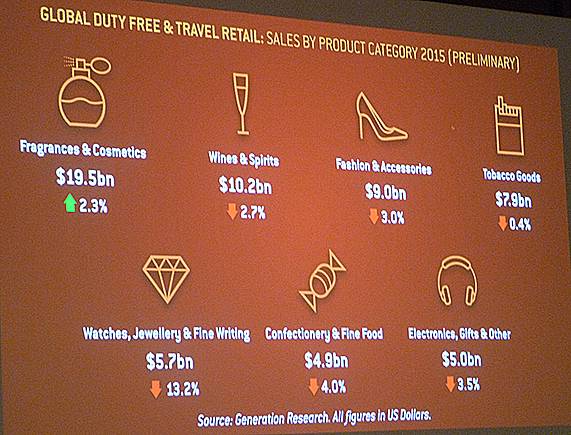
Sales by product category were also very interesting, with only fragrances and cosmetics in positive territory, +2.3% to $19.5bn.


Other categories in descending order of global sales were as follows: Wines and spirits $10.2bn (-2.7%); fashion & accessories $9.0bn (-3.0%); tobacco goods $7.9bn (-0.4%); watches, jewellery and fine writing instruments $5.7bn (-13.2%); electronics, gifts and other $5.0bn (-3.5%); and confectionery and fine food $4.9bn (-4.0%).


3 Product category sales 2015


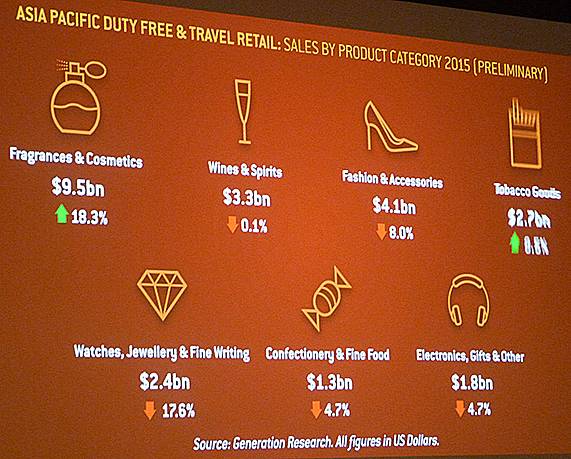
Looking at the Asia Pacific region, each sales category returned the following sales: Fragrances and cosmetics 9.5bn (+18.3%); wines and spirits $3.3bn (-0.1%); fashion and accessories $4.1bn (-8.9%); tobacco goods $2.7bn (+8.5%); watches, jewellery and fine writing $2.4bn (-17.6%); confectionery and fine food $1.3bn (+4.7%); and electronics, gifts and other $1.8bn (-4.7%).


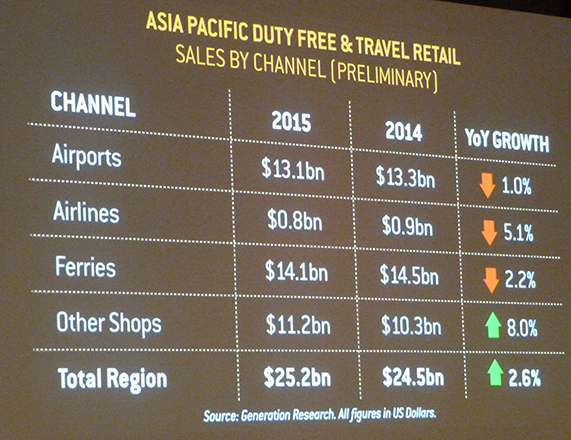
In terms of global DF&TR sales by channel, the preliminary sales figures were led by airports with sales of $35.2bn (-3.9%); other shops $22.1bn (+1.7%); airlines $2.6bn (-10.7%); ferries $2.2bn (-2.3%).


4 Asia product category sales


Preliminary results related solely to Asia were as follows: Airports $13.1bn (-1.0%); other shops $11.2bn (+8.0%); and airlines $0.8bn (-5.1%).


Interestingly, Juul-Mortensen made the point that Asia Pacific 2015 air passenger growth stood at +9.1% compared to the -1.0% decline in airport duty free sales (sources: ACI and Generation Research).


5 sales by channel Asia 2015 (Ferries should read $0.1bn

Sales by channel in Asia 2015 (Please note that the 2015 Ferries column should read $0.1bn not 14.1).


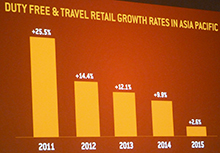
Juul-Mortensen then presented a five-year comparison showing the respective growth rates of the DF&TR business in the Asia Pacific region.


These were as follows: 2011 (+25.5%); 2012 (+14.4%); 2013 (+12.1%); 2014 (+9.9%); 2015 (+2.6%).


[A more comprehensive report on this and other presentations will appear here shortly-Ed].


South Korea’s DF&TR sales hit $8.14bn in 2015

South-Korea-downtown-teaserSouth Korea’s duty free and travel retail industry registered total sales of $8.14bn in 2015, which included operations at airport, seaport and downtown shops (plus internet sales) and ‘domestic duty free’ sales on Jeju Island. They did not include inflight sales.


This represented a sales increase of $200m in 2015, according to reliable duty free sources in South Korea, interviewed by TRBusiness for an exclusive report on the region, in the May issue of the magazine.


China Central Television recently reported that an estimated 6.1m Chinese tourists visited South Korea in 2015, accounting for more than 40% of all foreign tourists.


South Korean luxury fashion accessory brands are displayed in the basement retail floor of Shilla’s Seoul flagship store.

South Korean luxury fashion brands on display at Shilla’s Seoul flagship store.


As Chinese and Southeast Asian visitor arrivals pick up, leading South Korean duty free retailers and state-run airport companies are setting double-digit growth targets for 2016.


Korean Prime Minister

The South Korean Government, led by President Park Geun-hye, aims to attract 20m Chinese visitors by 2020

The growing number of downtown, airport and seaport duty free store operators are also upbeat, with many setting ambitious sales targets for their first year of trading.


This is perhaps unsurprising considering that the number of Chinese tourists is expected to rise more than three-fold over the next five years, lifting duty free operators’ hopes of a continuing duty free shopping boom.


The South Korean government also aims to attract 20m Chinese visitors by 2020 as part of efforts to make the country a favourite destination for mainland travellers.


As business improved at the end of last year, several long-term trends became evident. For example, revenue at downtown duty free stores continued to grow faster than at airports in South Korea’s three major duty free shopping centres – Seoul, Jeju Island and Busan.


Incheon International Airport

The impact of the MERS crisis on passenger traffic at Incheon Airport certainly had an affect on duty free revenue.


Incheon International Airport registered a 4% decrease in total duty free revenue in 2015 with combined sales for all operators at the airport reaching US$1.88bn, down from $2bn the previous year. [See the exclusive cover interview with IIAC’s Kim Bum Ho in the May issue of TRBusiness].


The impact of the MERS crisis on passenger traffic at Incheon Airport certainly had an affect on duty free revenue, as did disruption to shopping facilities caused by shop renovations.


This followed the start of Incheon’s new five-year duty free concession period on 1 September 2015, when the seven new operators took over new shops and boutiques.


Read the full-length interview in the May issue of TRBusiness magazine which can be picked up at the TFWA Asia Pacific Exhibition and Conference or through subscription here.

Dufry sales turnover up by +60% in Q1 to $1.7bn

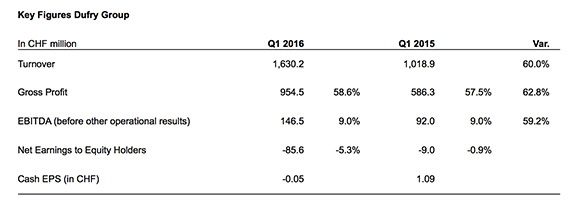
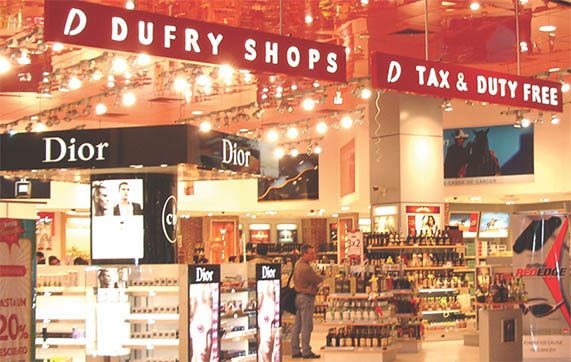
Nuance Antalya Duty Free StoreDufry, the leading DF&TR operator generated sales turnover growth of 60.0% to CHF1,630.2m ($1,708.07m) in the first quarter of 2016, with gross profit margin up 110 points to 58.6% from 57.5% and EBITDA plus-59.2% to CHF146.5m ($153.5m).


The retailer maintained its previous year’s margin level of 9%, while cash flow from operating activities and free cash flow generation were both said to be strong, registering CHF118.9m and CHF78.8m.


Dufry also reported today that the World Duty Free integration is ‘proceeding according to plan’, as it continues to be a main focus this year, alongside other priorities which include ‘the acceleration of organic growth, cash generation and deleveraging’.


In a statement this morning, Dufry said: “The first quarter 2016 was characterised by an ongoing improvement of organic growth performance driven by several factors, such as a strong performance in Southern Europe, a stabilisation of emerging market currencies, as well as the continued acceleration of commercial and marketing activities by the company.


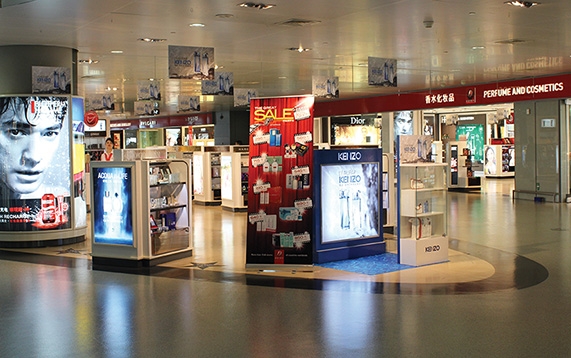
Dufry Shanghai Hongqiao Term 2

Dufry sales to March 2016 Q1

Dufry Shanghai Hongqiao Airport Terminal 2. (Table Source: Dufry).


“Dufry also started the execution of the World Duty Free integration according to plan, which is expected to be completed by mid-2017. Following the announcement of the organisational structure at group and divisional level, further action plans to integrate single functions and processes were launched.”


As mentioned, turnover grew 60% to CHF1,630.2m ($1.7bn) in the first quarter of 2016 from CHF1,018.9m ($1bn) one year earlier, while Dufry pointed out that ‘changes in scope’ added 63% and organic growth improved by 1.3 percentage points to -5.2% from the fourth quarter 2015.


In reported terms and as an indication, the retailer said that ‘like-for-like growth’ reached -6.2% and the contribution from net new concessions was 1.0% with a foreign exchange translation impact of 2.2%.


SALES BY REGION

In terms of performance by region, sales turnover in Southern Europe and Africa reached CHF286.9m in the first quarter of 2016, from CHF125.3m in the same period last year. Dufry said: “The underlying growth in the division reached 6.6%, mainly as a result of the strong double-digit growth seen in Spain. Other countries in Southern Europe also performed well, as it was the case of France, Italy, Malta and Portugal.


“Although the first quarter represents the lowest quarter in terms of seasonality, operations exposed to Russian consumers, showed opposite developments – while Turkey continued to see weak performance due to the absence of Russian consumers, trends in Greece were maintained, confirming the high booking rates announced for the current year.”


Dufry Mexico

Dufry at Mexico City Airport.


Meanwhile, sales turnover in Dufry’s biggest region of Central and Eastern Europe grew to CHF427.6m in the first quarter, compared with CHF150.3m in the previous year. Underlying growth in the division reached 3.4%.


RUSSIAN MARKET STILL VERY DIFFICULT

Dufry added: “Most of the operations performed well, supported by a solid growth in the number of passengers across Europe, with the exception of Eastern European operations. In Russia, operations continue to face a difficult environment, but we started to see signs of small improvements.”


Turning to Asia, Middle East and Australia, sales turnover grew to CHF187.2m in the first quarter of 2016, against CHF137m in Q1 2015, with nominal underlying growth in the division of 0.1%. Dufry added: “Operations in the Middle East and India did well, with Jordan and Sri Lanka being the best performers.


“In Southern Asia, Cambodia and Indonesia also showed a good performance and in Northern Asia, South Korea continues to perform extraordinarily well and helped mitigating the lower trading seen in China.”


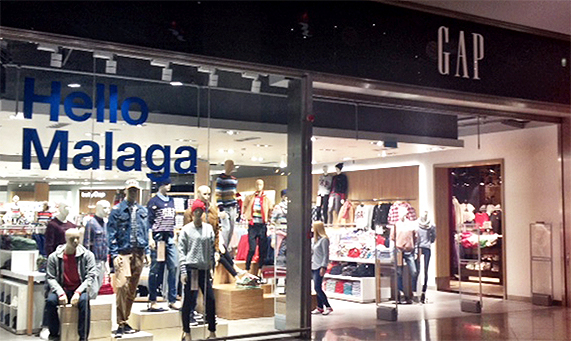
Gap Dufry Malaga Airport

Gap with Dufry at Malaga Airport.


Meanwhile, Latin America saw turnover reach CHF351.8m in Q1 2016 from CHF327.1m in Q1 last year. Dufry said that operations in Central America and Caribbean were positive, benefiting from an overall increase in passenger numbers – particularly Americans – thanks to the strong US Dollar.


SOUTH AMERICA STILL A PROBLEM…

However, the South America region continues to drag due to the devaluation of local currencies, resulting in underlying growth in the division of -13.1%. Not surprisingly, a devaluation of 66% year-on-year in Q1 2016 of the Argentinean Peso impacted sales in Argentina, while Brazil started to see a gradual improvement thanks to a recent ‘stabilisation of the Brazilian Real’ in recent months.


Last, but not least, North American turnover reached CHF367.3m compared with CHF 267.1m in the first quarter of 2015. Dufry said: “Underlying growth reached 4.9%, as a result of strong performance of Hudson and other duty-paid concepts. On the duty-free side, the stronger US dollar positively impacted our operations in Canada, while the opposite effect was seen in the United States.”


In overall terms for the period, Dufry said that the gross profit margin rose by 110 basis points to 58.6% in Q1 2016 from 57.5% in the previous year, while the measure based on ‘constant scope’ improved by 50 basis points, thanks to synergies achieved from the Nuance integration.


dufry shop Interbaires

Dufry at Buenos Aires Airport.


EBITDA margin came in at 9.0% in Q1, with Dufry adding that this was positively influenced by the higher gross margin plus personnel and general expenses. However, the consolidation of WDF obviously generated an increase in concession fees. At the same time, EBIT reached CHF-39.5m in the year to March compared to CHF 4.6m in the same period in 2015.


Meanwhile, net earnings to equity holders stood at CHF-85.6m in Q1, compared to CHF-9.0m one year earlier, while financial results reached CHF50.4m – in line with Q4 2015 when excluding one-offs in the previous period.


DEFERRED TAXES HELP INCOME TAX

Income tax was ‘positive by CHF9.9m’, impacted mainly by deferred taxes. Dufry added that the constant quarterly charges of amortisation and interest expenses as well as the linearisation, accentuate the seasonality of the business in the net earnings.


The company said: “Cash earnings, which add back the acquisition-related amortization, reached CHF-2.7m from CHF39m in the same period in 2015, mainly because of the linearisation charge.


“At the same time, net cash flow from operating activities reached CHF119m before acquisition-related cash outflows in the first quarter of 2016, from CHF43.8m one year earlier. In the first quarter of 2016, CAPEX was CHF44.4m compared to CHF26.8m in 2015.


Dufry-Brazil-pre-order-website


“Excluding cash outflows related to the World Duty Free transaction, free cash flow increased to CHF78.8m, as compared to CHF19m in 2015. As the first quarter typically is cash neutral or slightly cash negative due to the pronounced seasonality of the business, this shows as very positive cash generation trend.”


Finally, Dufry reported that net debt amounted to CHF3,871m at the end of March 2016, which is CHF87m lower than in Q4 2015 (CHF3,958m).


POSITIVE START TO 2016

Commenting on the performance, Dufry CEO Julián Díaz said: “We had a good start in 2016, with the continuation of the improving organic growth trends we started to see in Q4 2015. Europe had another strong quarter and countries impacted by Brazilians and Russians continued to recover.


dufry julian diaz new1

Julián Díaz, CEO, Dufry.

“Overall, we saw improvements as we were expecting when comparing to previous quarters. This confirms our view that organic growth will see a gradual improvement along the year and will end up positive for the whole year.


“The wide range of initiatives to accelerate organic growth which Dufry launched in the second half of 2015 such as the refurbishment plan, the brands plan – as well as the customer retention and promotional activities – confirm their success by showing good results and will thus be continued.


HUGE EXPANSION THIS YEAR…

“In the first quarter we have opened 4,500 square metres of retail space and have another 22,000 square metres already signed for opening in the current business year, equal to over 5% of our current retail space.


“One of the priorities for 2016 is the integration of World Duty Free. Most of the planning phase is already completed and we are already executing on the several action plans. The initial synergy targets remain unchanged at Euro 100 million.


“We believe that there will be volatility in some markets, but provided that currency levels remain relatively stable, we expect overall improving performance. As for developed markets, Southern Europe – particularly Spain, Greece and Italy – report record numbers of bookings and we expect to have a very strong performance in those markets along 2016.”

TFWA Care announces 2016’s chosen charities

TFWA-Care-Hope-Foundation-leadTFWA has confirmed 12 charities which will receive support from the association’s Care initiative in 2016, nominated by TFWA members and finally selected by the TFWA management committee.


Every year, TFWA Care assesses the nominated causes according to a number of strict criteria, including the tangible benefits they bring to people in need.


Priority is given to projects that TFWA can support from day one and continue to aid as the venture is completed to ensure that the support has a lasting legacy.


Priority is also given to organisations that support women and children, and those that help the recipients to help themselves in a sustainable way. Efforts are made to select organisations that have a particular connection to TFWA or any of its members.


MAKING ‘GOOD THINGS HAPPEN’

“When we launched TFWA Care back in 2005, one of the points that was made was that ‘good things only happen if we make them happen’,” says TFWA president Erik Juul-Mortensen. “That philosophy still underpins what we do today.


“Thanks to the support of TFWA’s members and other stakeholders in the industry, we have been able to bring about positive change to the lives of vulnerable people across the world.”


TFWA reveals that it is supporting two new charities this year:

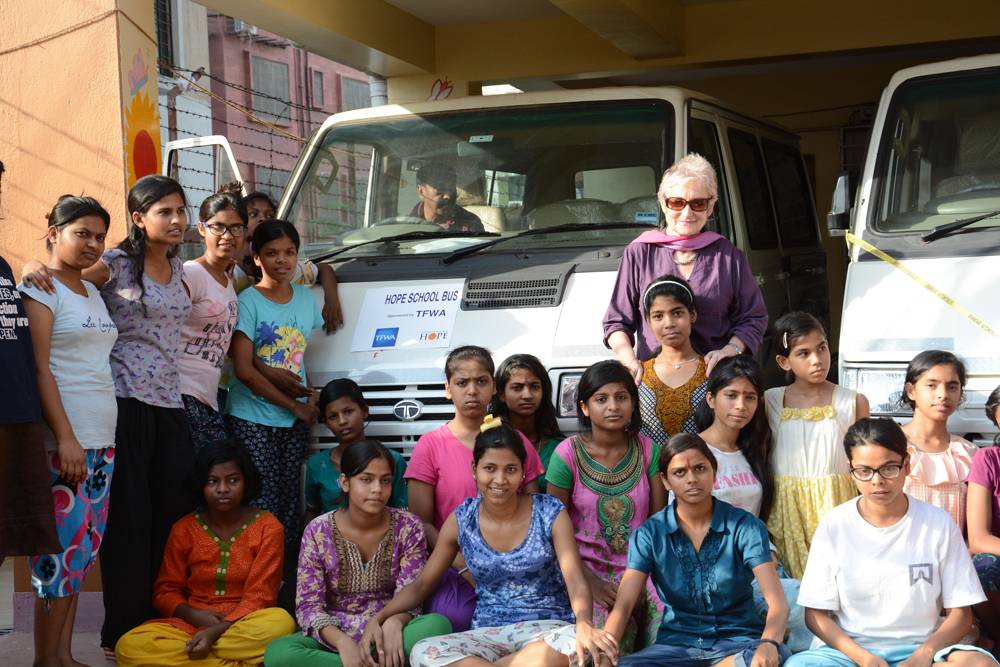
The Hope Foundation rescues children from the streets and slums of Kolkata, India. The charity offers the children protection, education, training, healthcare, food and support, helping to improve their quality of life and give them a better future.


Hope-foundation-TFWA-Care

The Hope Foundation offers the children protection, education, training, healthcare, food and support.


Streethearts provides a community care centre for street children in Cap-Haitien, Haiti. The safe house gives children a clean and protected environment in which they can study, take part in sports, and eat well, alongside becoming involved in community service activities and a social work programme.


Streethearts-Haiti-TFWA-Care

Streethearts provides a community care centre for street children in Cap-Haitien, Haiti.


TFWA will also continue to support the following charities:

Lotus Flower Trust is dedicated to changing children’s lives through education. The trust builds schools and homes and provides access to education for disadvantaged young people in remote areas of India.


Toutes à l’école is committed to developing education for young girls living below the poverty line in Cambodia. The charity set up the Happy Chandara school for girls in Prek Thmey in Kandal Province, near Phnom Penh, which now welcomes 970 pupils from primary school through to school leaving age.


The N/a’an ku sê Foundation aims to improve the lives of tribal people and wildlife in a remote part of eastern Namibia. The charity oversees a wildlife sanctuary and carnivore conservation project, while the Lifeline Clinic provides free primary healthcare and an ambulance service to the San community in Epukiro.


TFWA-Care-logoNosy Komba Solidarité is tackling malnutrition and fighting endemic infectious diseases in the rapidly expanding village of Ampangorina on the Madagascan island of Nosy Komba. Their goal is to improve the living conditions of local people and contribute to the sustainable and ecological development of the area.


Les Enfants du Mékong educates and trains young people in south-east Asia to enable them to improve their living conditions. It now operates in seven different countries in the region through sponsorship programmes and the development of infrastructure for education.


Open Arms International had a vision of creating a village for the orphans of AIDS and civil war in Eldoret, north-west Kenya. Today at the Open Arms Village there are six children’s homes, a baby home and a primary school, caring for over 100 children in total. The work of relieving poverty and deprivation has also extended to the surrounding areas.


The Nuria García Foundation works with like-minded organisations around the world on projects that bring lasting benefits to underprivileged women and children. Relevant initiatives include healthcare, disease prevention, improving access to drinking water, fighting malnutrition and providing humanitarian assistance to emergency zones after natural disasters.


Helen Keller International helps to prevent blindness and combat malnutrition across the world. HKI projects supported by TFWA Care range from providing equipment to allow doctors in Burma to conduct simple but sight-saving operations to treat glaucoma, to helping communities to establish technically-improved local food production systems.


Aide et Action is an international development organisation which runs educational programmes across over 25 developing countries. The charity’s iLEAD project in India has successfully trained hundreds of young people in Trivandrum and Bilaspur, placing them in employment and thereby helping them to improve their living conditions and those of their families.


The Lovedale Foundation Trust is a secular organisation seeking to empower and educate women and children in some of India’s most deprived areas. Its mission is to help those who are disabled or underprivileged, through developmental initiatives focusing on educational, socio-economic, cultural and technological aspects.

DFWC Shopping Monitor highlights service levels

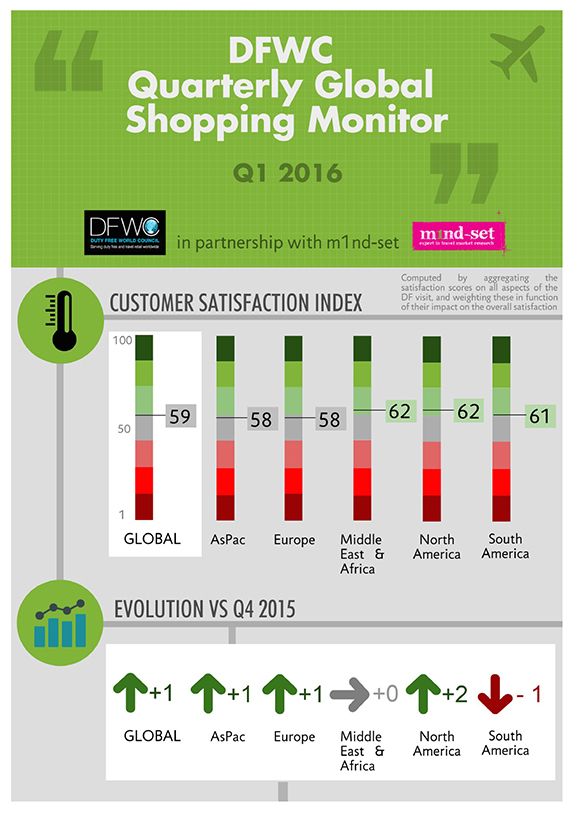
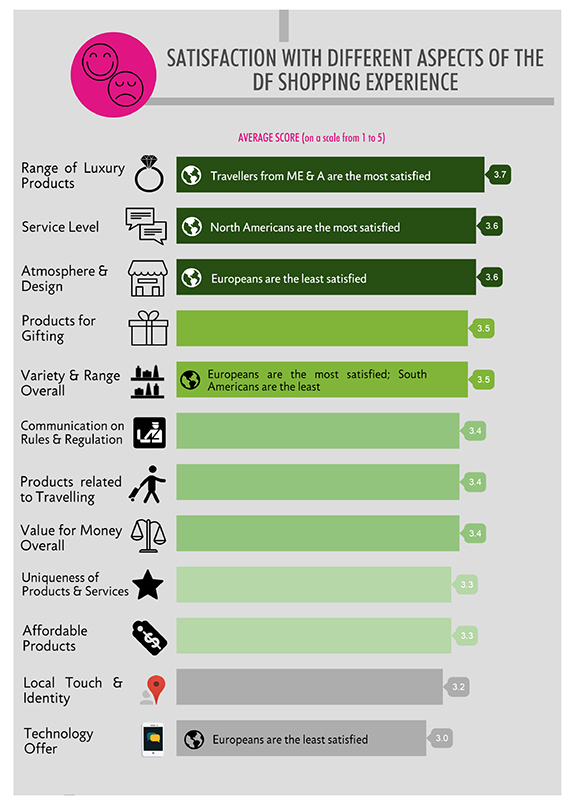
Peter Moen M1nd-set owner topThe Duty Free World Council (DFWC) reports that its quarterly key performance indicator (KPI) monitor covering Q1 in 2016 shows a slight increase in the Customer Satisfaction Index, thanks mainly to higher satisfaction being experienced with the general service levels being received in duty free shops.


The report was compiled from interviews with over 4,000 travellers across all major world regions during Q1 2016, with the KPI Monitor produced in partnership with the highly respected research and consulting agency m1nd-set.


Together, the two partners also compared results across the regions and discovered that that South Americans were the only ‘regional segment’ of them all where the Customer Satisfaction Index was lower than that recorded in Q4 2015.


This was primarily due to customers showing less satisfaction for the product variety on offer in these duty free shops.


By contrast, North American travellers were increasingly satisfied with the duty free shopping experience, as a result of an improved perception in the level of service received and the atmosphere created within duty free shops.


Peter Moen M1nd-set owner big

Peter Moen, m1nd-set owner.

TECHNOLOGY ‘LEFT BEHIND’
At the sale time, shoppers overall were also reported to be ‘least satisfied’ with the technology offer, along with the ‘local touch and identity’ currently available in the Travel Retail & Duty Free channel. The range of affordable products and the unique identity of products and services were also noted as offering ‘significant room for improvement’.


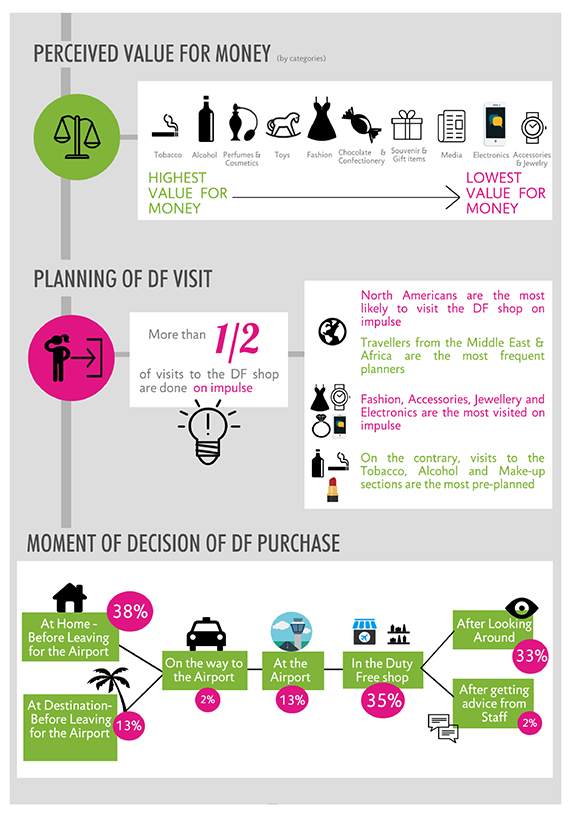
The report adds: “While there has been no change in the satisfaction levels for the indicator which has the highest impact on the overall satisfaction level – value for money – one interesting change is that tobacco has surpassed both alcohol and perfume and cosmetics as the most positively perceived category.”


Fashion has also improved in satisfaction rankings on this indicator, compared to the previous quarter. Meanwhile, new to this quarterly monitor report is a comparison of the level of planned versus impulse purchasing across all regions.


The report says that North American travellers are most likely to purchase on impulse, while Middle East and African travellers are identified as those most likely to plan their duty free purchases.


Frank O'Connell DFWC

Duty Free World Council President Frank O’Connell has already pulled together a lot of assets for the DFWC – including KPI research – which will help the industry substantially in the future.

At the same time and globally, more than 50% of all duty free purchases are still said to be made on impulse, the categories of fashion, accessories, jewellery and electronics the most likely impulse purchases.


DFWC and m1nd-set say it is no surprise that research shows that alcohol, tobacco and cosmetics continue to be the most planned purchases.


NEW RESEARCH ADDITIONS…
The two partners also say that other new features in the report include details on exactly when travellers decide to make their duty free purchases, which is currently mainly at home, before leaving for the airport, or closely followed by deciding within the shop itself.


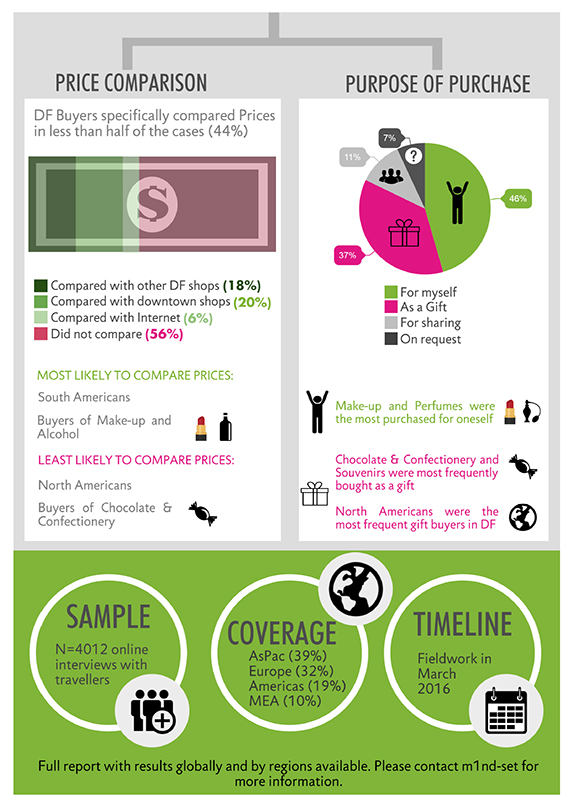
Another area covered is price comparison behaviour, with South Americans shown to be the most likely to compare prices and North Americans the least. Cosmetics and alcohol are the categories for which prices are most commonly compared, while across the globe less than half those travellers surveyed – some 44% – admit to comparing prices.


The two partners conclude that while the DFWC Global Shopping Monitor reveals top level data for the most part with some regional differentiation insights, more detailed data on the regional disparities for each aspect studied is available from m1nd-set upon request. Click here: [email protected]


For the full research infographic version of the Q1 Monitor see below:


DFWC Shop Monitor 1

DFWC Shop Monitor 2

DFWC Shop Monitor 3

DFWC Shop 4