Archives

Macau duty free arrivals aligns with Hong Kong

From yesterday, the Macau Customs Service brought its duty free arrival tobacco allowance into line with that of Hong Kong by reducing the allowance per person from 100 cigarettes to just 19, or an alternative allowance of just one cigar or 25 grams of other tobacco material per person.


In a statement released today on the official Macao SAR website, the government said it was introducing this and other measures following the implementation of its new tobacco duty increase where this tax now accounts for more than 70% of the retail price.


This change follows the same volume reduction made to Hong Kong’s duty free arrivals allowances way back on August 1, 2010. At that time the Hong Kong SAR Government slashed its allowance entitlement for incoming travellers to Hong Kong from three packs to just 19 cigarettes.


This was linked at that time to Hong Kong’s public health programme, with the Lo Wu duty free railway station operation serving China (run by Sky Connection then and now) hit very badly as a result.


Macau Secretary for Security, Wong Sio Chak answered questions on the reduced tobacco arrivals allowance yesterday, while separately promising more random customs and border checks to reduce tobacco smuggling into Macau.


Until then it was generally acknowledged to be the single largest Marlboro retail outlet in the world, catering to millions of Hong Kong and mainland travellers passing through the international station every year.


Meanwhile, back in Macau, Secretary for Security, Wong Sio Chak told press yesterday that he was also turning his attention towards illicit smuggling of cigarettes into Macau and more measures are being put into place to try to reduce this, including more random inspections at border checkpoints.


He added that the Macao Customs Service will review its measures in a timely manner and will retain close contact with other related departments on the work of preventing illicit cigarettes.


[Click here for details as reported by TRBusiness at the time: http://www.trbusiness.com/regional-news/asia-pacific/hong-kong-tobacco-allowance-to-drop/58413].


Global travel to hit +4%, Russia still contracting

International arrivals will grow by +4% in 2015, driven by forecast growth of +5% in developed countries such as the UK and the US – and despite a slowdown, China outbound travel is expected to rise +10% in 2015. However, Russian travel will slip by -2% after a -15% contraction in 2014.

These are the findings of Euromonitor International’s latest travel research which also points to India and Indonesia driving the global market through the increasing wealth and changing consumer habits from their populations.

Bremner: ‘geopolitical trends are likely to determine winners and losers’

Caroline Bremner, Head of Travel at Euromonitor, says: “Following the slowdown in 2014, when on-going geopolitical tensions and regional conflicts took their toll on tourism demand, our new research shows some encouraging results in 2015.”

CORRELATIONS WITH POLITICAL/SECURITY ISSUES

But she warns: “International tourist arrivals are strongly correlated with political and security issues, as well as economic fluctuations.”

For example, Russia’s outbound demand declined in 2014 by over -15%. “This downward trend is expected to continue in 2015 as the Russian economy contracted in the first quarter of the year and consumer confidence fell to its lowest level in six years as a result of the conflict in Ukraine and ensuing international sanctions, compounded by falling oil revenues,” she says.

In the Middle East and North Africa, political turmoil is constraining tourism demand.  The Syrian conflict is affecting the entire region, with travel advisories still in place across the region. In 2014, Egypt recorded growth of +7% but remains well below pre-Arab Spring levels, and Tunisia experienced a decline of -2%.

RUSSIAN FALL OUT

Falling outbound Russian demand is having a knock-on effect on many destinations, with demand forecast to shrink by a further -2% in 2015 after contracting sharply in 2014. Arrivals from Russia to Finland are expected to fall by -3%, and by -2% to other popular destinations like Thailand, Spain and Turkey.

“The travel industry is poised for growth, but this will not be evenly distributed and geopolitical trends are likely to determine winners and losers,” concludes Bremner.

Cross-border card fees now ‘more competitive’

European cross-border fees and the new framework for national interchange rates became law today, making debit and credit transactions more competitive for retailers and their customers, thanks – in part – to years of hard work by the Travel Retail Fair Payment Alliance its leader Jacques Parsons – also Chairman of Kappé International at Amsterdam Schiphol Airport.


The FPA says that the new Interchange Fee regulations apply from today and will and various new rules will be incorporated over the year, with the most relevant and important for travel retailers relating to the Multilateral Interchange Fee or ‘MIF’.


The old interchange system, as depicted by EuroCommerce which has also been part of the lobby for change.


The lobby group says that these are now capped at 0.2% for debit transactions or 0.3% for credit transactions and these rates now apply immediately for cross-border transactions. The same rates will also be applied to domestic transactions from December 2015 and these will also include an alternative €0.5c debit cap to offer some flexibility for smaller payments.


One of the other major victories for the FPA is that the new law ‘both creates and obliges a lot more transparency’ from the card schemes. It defines various technical requirements more clearly, such as ‘un-blending of different fees contained in the Merchant Service Charge statement’ and offers more information regarding transactions. The new law also simplifies previous ‘burdensome rules’ and sets a review clause to ensure that the new law delivers.


Another cartoon depiction from EuroCommerce illustrating the share of cross border credit card transactions previously taken from consumers, which are now strictly regulated.


BRINGING THE BANKS TO ACCOUNT

Importantly, the new law also introduces tough anti-circumvention rules to avoid the interchange law being broken. At the same time the MIF regulation enters into Force, the FPA says that it is its understanding that the other half of the Payments Package, the Payments Services Directive reform (PSDII), which covers aspects such as surcharging, has just been adopted in Brussels. The FPA expects that Directive to be agreed by the European Parliament and published by the end of October.


Commenting on the victory on what has been a long hard battle, Jacques Parson, who also chairs the Dutch Retail Association’s Payment Systems Committee, said: “I have to smile because when I started this campaign many told me it was doomed to failure. Yet here we are with a law enshrining lower fees, which we must remember are the ceiling; Member States can go lower, or even zero should they wish.


“This is the result of a lot of hard work and I should like to pay tribute to those in our FPA network that worked with us. I also pay tribute to our allies, such as Euro Commerce, which launched the original complaint many years ago and the European Commission for sticking resolutely to their task and not taking easy options in front of pressure from the card schemes and banks.


There is no doubt whatsoever, that Jacques Parson and the Fair Pay Alliance have rendered a huge service to both retailers and consumers by doggedly lobbying for these major changes over a period of several years now.


INDUSTRY MUST FAMILIARISE ITSELF

“This is a major step for our business, but we must be vigilant. We must not sit back after all our hard work to get us this far. We have to ensure we are ready to profit from the new rules for us and our customers. The industry must be alert to the introduction of new payment technologies, such as Apple Pay and Android Pay and their ‘tokenisation’ systems.


“We certainly must make sure this new regulation is doing what it says on the tin and that our overall charges are coming down. I invite anyone that is unsure of the benefits or wants to take further action to contact me for more information.”


Jacques Parson can be reached at Kappé International, (Tel) +31 (20) 4058451; GSM: +31 (65330) 4826; (E-mail) [email protected]

ASUTIL 2015: Rio Airport shares 2016 vision

Sandro Fernandes, CCO, Concessionária Aeroporto Rio de Janeiro told TRBusiness today that RIOgaleão (the airport’s new operator as of April last year) will be involved in a new round of Brazilian airport tenders that are due to take place in the next couple of days.


Fernandes, who made a presentation on the evolution of Rio International Airport [also known as Tom Jobim International Airport] today, also told TRBusiness that the airport is about to launch two F&B RFPs measuring 2,000sq m each.

“The F&B RFP will be composed of two packages of roughly 2,000sq m each with areas spread out along the airport,” Fernandes told TRBusiness.

Click on images to enlarge.

The Brazilian government corporation, Infrarero, officially handed Rio de Janeiro International Airport over to private company RIOgaleão as its new concession-holder on 2 April, 2014. However, Fernandes maintains that the company only took over in August; barely a year ago.


In the lead up to the games, the airport will introduce 44 new commercial establishments creating an additional 15,000sq m of retail space.

For the next 25 years RIOgaleão will be responsible for expanding, operating and maintaining the airport. The private group that controls the concession brings together Odebrecht TransPort’s experience of urban mobility, roads and logistics and that of major airport operator and investor, Changi Airports International (CAI).


Fernandes said during his presentation that the new RIOgaleão team is at the forefront of a major ‘transformation’ and its first challenge is to prepare the airport for the 2016 Olympic games.


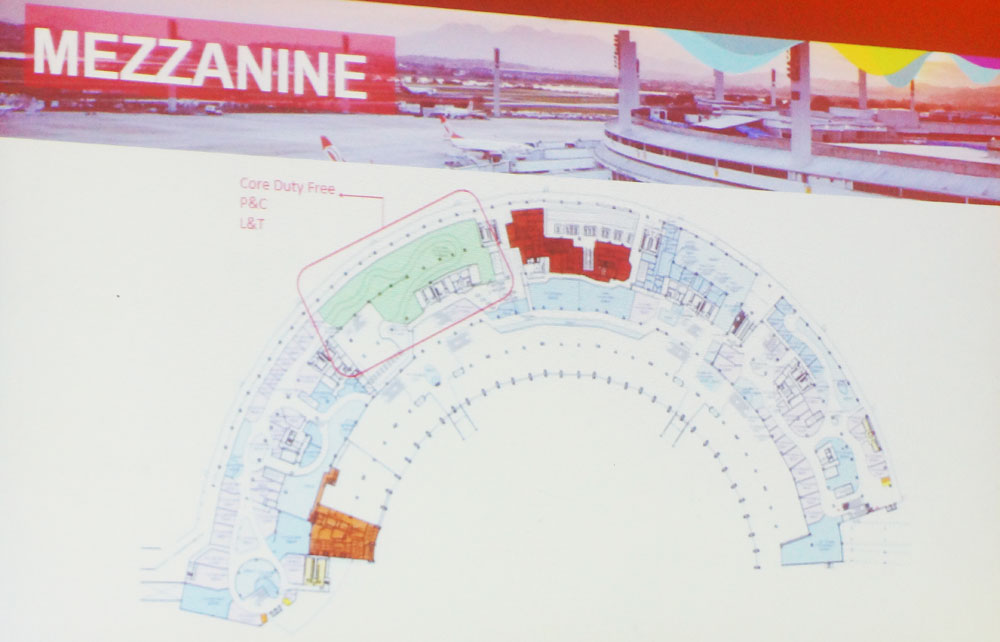
Fernandes highlights one of the core duty free areas which will be located on the mezzanine floor.

The airport has already introduce 44 new commercial establishments since taking over and will add a total of 6,000sq m of retail space in the lead up to the Olympic games.


He revealed some interesting information about the airport’s passenger demographic at Rio de Janeiro International Airport, which is apparently split almost 50/50 between men and women. He also said that a significant percentage of passengers served by the airport are frequent travellers and ‘college-educated’. Fernandes told TRBusiness that 64% of its passengers travel for leisure, which “is significant and positions the airport very differently than its direct competitors’.


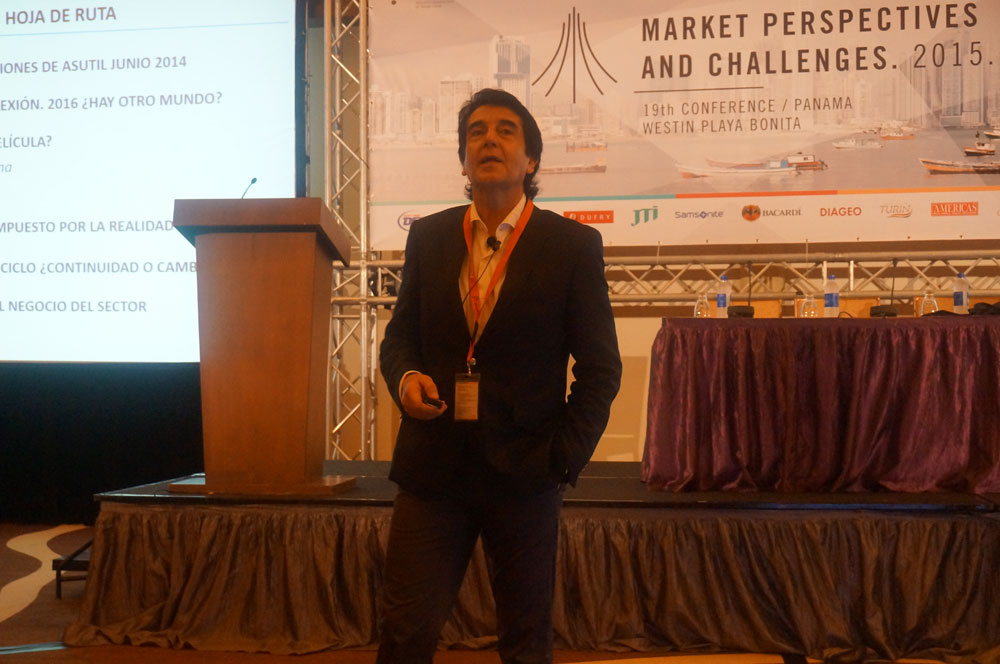
Earlier on in the day, Carlos Melconian, Director, M&S Consultores, delivered yet another stirring presentation on LatAm’s changing socio-economic and political landscape and how a new economic context – international and local – would impact key macroeconomic variables.


Carlos Melconian, Director, M&S Consultores.

He highlighted that Argentina, in particular, is hoping for a change in its political regime and that the socio-economic crisis in Venezuela is ‘very complicated’


He believes that the European Central Bank is currently conducting similar measures to the US Central Bank, but he is dubious as to how successful they will be at this imitation game. He asks: “Can they radicalise the EU like the US Central Bank did in the States?


“Angela Merkel is not the President of 51 states. The EU is still taking their structure of welfare apart, so productivity is different…there is a question mark surrounding the good intentions of the EU Central Bank.”


Melconian confirmed that we are living in a ‘different world’; one where Mexico, Chile, Colombia and Peru have experienced a deceleration in GDP growth and both Argentina and Venezuela find themselves in a critical situation with inflation.


He also revealed that trade balances are negative in many LatAm countries including, once again, Argentina. Melconian confirmed that the country continues to struggle with currency ‘issues’, suffers from very little credit, energy exhaustion, and faces an ‘export catastrophe’.


Although he says that the country is now decapitalised, Melconian told TRBusiness exclusively that Argentinians do not realise the full extent of the potential economic collapse and continue to question the need for the Government’s spending cuts to public services such as railways/buses etc.


He said that this is indeed a very odd ‘limbo’ situation, which Argentina finds itself in and in many ways, he says that a collapse might actually help the country recover in the long term.


DUTY FREE REIMAGINED

There was a shift in today’s conference programme, which meant that Martin Moodie, Founder & Chairman of The Moodie Report, took to the stage next.


During his presentation he explored a scenario where the concept of duty free had not yet been invented. He asked the audience to consider how different the industry’s business/commercial model would be in an era much changed from 1947 (when the industry was actually founded in Shannon, Ireland).


Following a tribute to WDFG’s Fraser Dunlop – who tragically lost his battle with cancer on 1 April – Moodie asked the audience how the recent consolidation of the travel retail sector and advances in digital and social media would change the rules of our industry.


Although, the programme promised ‘a provocative address followed by an open debate session with the audience’ Moodie left the stage immediately following his presentation. [TRBusiness believes this was down to timing issues and not Moodie’s decision]. Many expressed that this was a shame as they were looking forward to discussing some of the deliberately thought-provoking topics highlighted in Moodie’s presentation.


In fact, aside from Melconian’s session – which did run on much longer than planned after a Q&A session – the audience was not given the chance to ask any questions of the speakers. Perhaps this is something that could be addressed at next year’s conference.


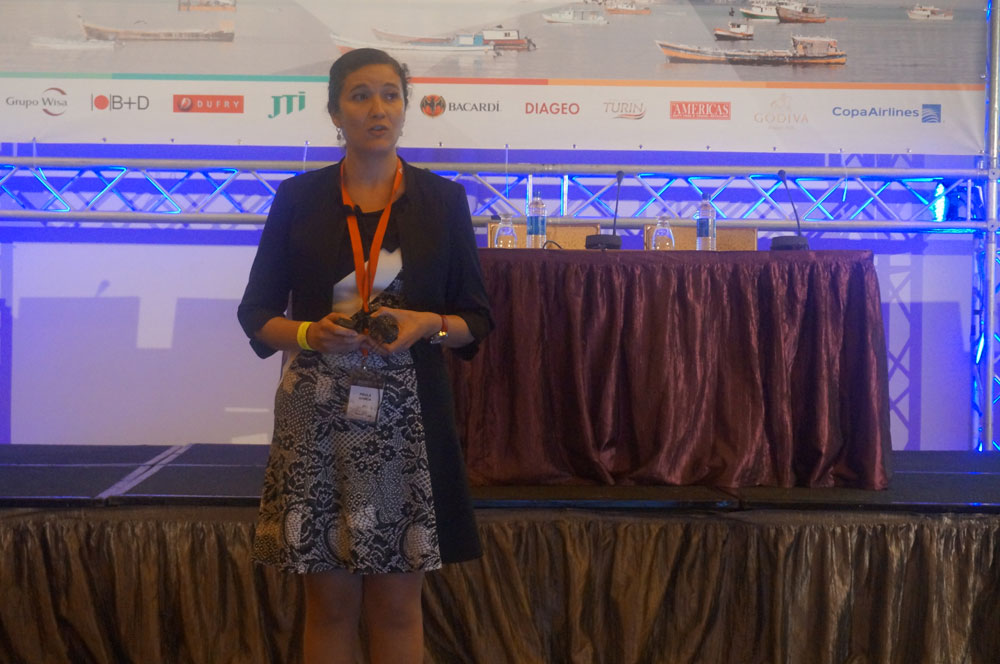
Last, but not least, Paula Armoa, Corporate Affairs & Communication Manager, Japan Tobacco International (JTI) took to the stage.


Paula Armoa, Corporate Affairs & Communication Manager, Japan Tobacco International (JTI).

Armoa’s task was to present a campaign for defending the uniqueness of the duty free environment vis-à-vis regulatory developments, under the heading ‘The Sixth Continent’.


During her presentation she said that the recognition of travel retail’s uniqueness can be achieved and that having a different approach for travel retail is necessary in order to retain a competitive environment for travel retailers.


Unsurprisingly, she argued that tobacco is key to the success of travel retail. She highlighted, using data from Counter Intelligence Retail (CIR), that 13% of all TR sales are generated by the tobacco category.


She also pointed out what TRBusiness already knew – thanks to the TRBusiness ‘Tobacco Power in Duty Free’ forum which we conducted two years ago – that smokers are not only more likely to shop in duty free environments, but also spend more per head.


Following this last presentation, Marcelo Montico Vice-President ASUTIL made some closing remarks and awarded Essence Corp’s President, Jean-Jacques Bona, with ASUTIL’s lifetime achievement award.

Jean-Jacques Bona, President of Essence Corp, collects his award.


Editor’s comment:

A lunch hosted by JTI today saw the culmination of the 19th annual ASUTIL conference which enjoyed a +5.1% increase in visitors. Many expressed their fondness of the event’s relaxed and intimate format to TRBusiness, and many first-timers said they would certainly consider travelling to the 20th conference in Chile next year.


TRBusiness ascertained from informal conversations with delegates that some presentations could have been more engaging this year. However, there was a general consensus that the content of all the presentations was both informative and useful.


TRBusiness suggests that perhaps in future ‘power point’ slides could be produced in English and Spanish to help all audience members understand the often complex and data-concentrated material.

ASUTIL 2015: LatAm braves ‘evolution’

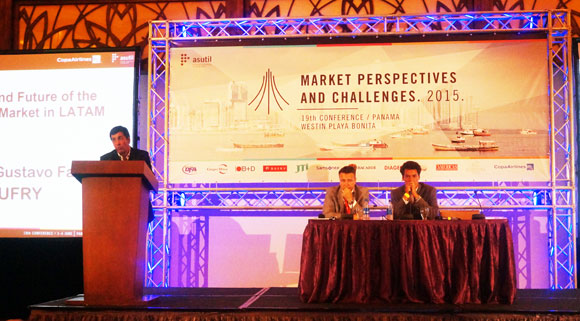
ASUTIL President Enrique Urioste told TRBusiness today that he believes 2015 will be a year of ‘evolution’ or ‘transition’ for LatAm, but admits he’s not entirely sure what it will evolve into.


“This is an evolving year,” he told TRBusiness. “A transitional year…to what I don’t know, but hopefully for the better. Our industry is historically the first one to receive the hit, but it is always the first one to recover and I think that is understood well by all the operators in this region at least.

Click on any image below to enlarge.


“None of us have cancelled any of our CAPEX investment plans. Dufry is doing major investments in Brazil; Grupo Wisa, Neutral, InterBaires, everybody is investing heavily because we believe in the system and in the fundamentals of the system.”
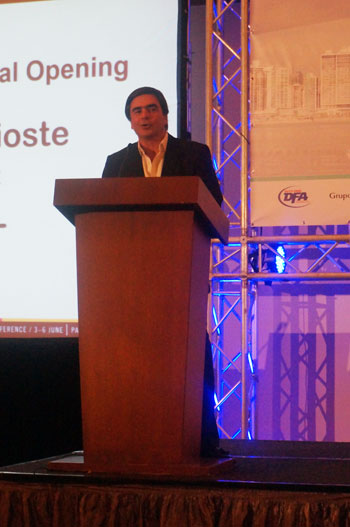
 

ASUTIL President Enrique Urioste.

Earlier today, at the 19th annual ASUTIL conference José Luis Donagaray, Secretary-General, ASUTIL thanked the industry for its ongoing support of the association – during what is turning out to be a very challenging year for LatAm – whilst revealing that ASUTIL’s visitors are up by 5.1% to 347. [TRBusiness reported yesterday that the figure had grown between 4 and 5%].


However, he also revealed in his ‘Statement of the affairs of ASUTIL and the industry’ that travel retail sales in the first quarter of 2015 were down by -6% across South and Central America as well as the Caribbean (YOY). The figure takes into account the sales performance of 12 countries and 15 operators.


Donagaray told delegates today that next year ASUTIL’s 20th conference will be held in Santiago de Chile between 8-10 June at the Sheraton Santiago and that he next Border meeting will take place on 16-17 November in Puerto Iguazú.
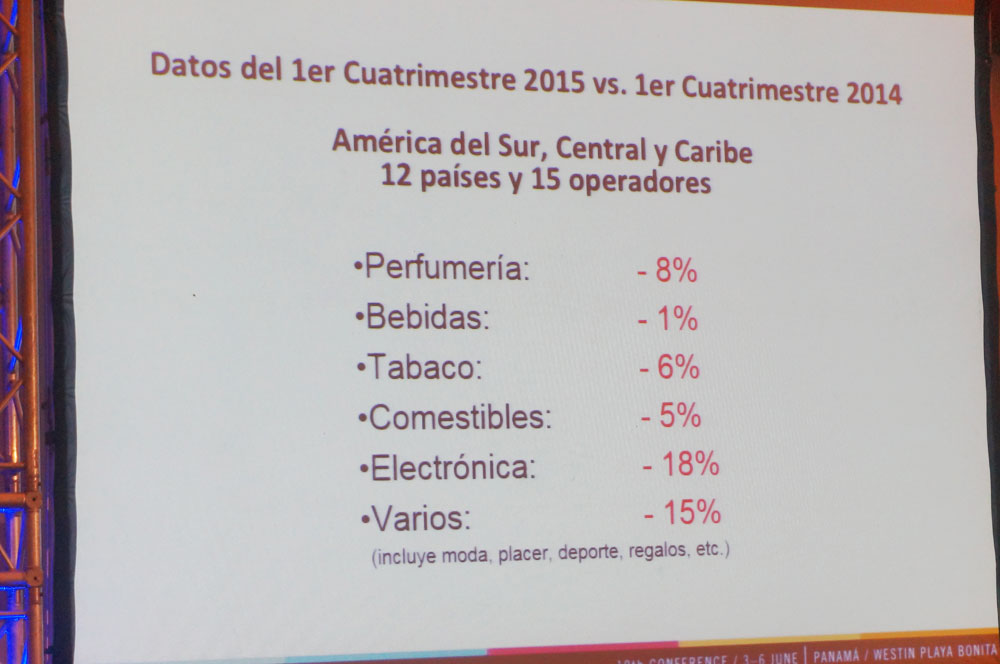
 

Sales performance across South/Central America and the Caribbean for Q1 2015 by category (in list order); perfume, alcohol, tobacco, food, electronics and other – including fashion, sport, leisure and gifts.

The conference suffered from some technical difficulties at the very start of the morning – interference played havoc with the devices delegates were using to listen to the English translation of the two opening addresses. Although this was remedied later on, TRBusiness was unable to hear much of the ASUTIL President’s opening comments on the association and the industry.


Thankfully, Urioste was able to relay the same information privately to TRBusiness in the coffee break. “It was a rough first quarter for LatAm…I think the calm, stable and predictable years of 2011, 2012 and 2013 dramatically changed as from January.”
 

José Luis Donagaray, Secretary-General, ASUTIL thanked the industry for its ongoing support of the association.


However, he suggested that markets and companies may have over reacted. “Basically because of the weakness of various currencies against the dollar; the drop in oil prices; the drop in commodities; the monetary, political expansions of the European Central Bank and so on, markets were really forecasting and preparing for a worse scenario, than I think actually occurred.


“Emerging market currencies did lose value against the dollar, but not as expected…People were expecting oil to go further beyond the $50 and it’s more or less stable in the range of $50 mark. Commodities in general have recovered prices, not to historical levels, but to kind of a mid-point. The US economy is performing, but lower than the market expected.


“So I think that the combination of all those things allow me to say that we have already hit the bottom part of this year’s crisis or ‘change of scenario’ and I think that we’re going to start slowly seeing a recovery. We shouldn’t expect a quick bouncing back, but I think that the markets are ready to stabilise…In the specific case of LatAm we have the component of the Brazilian political scandal, which on top of economic issues, brought a lot more instability.”
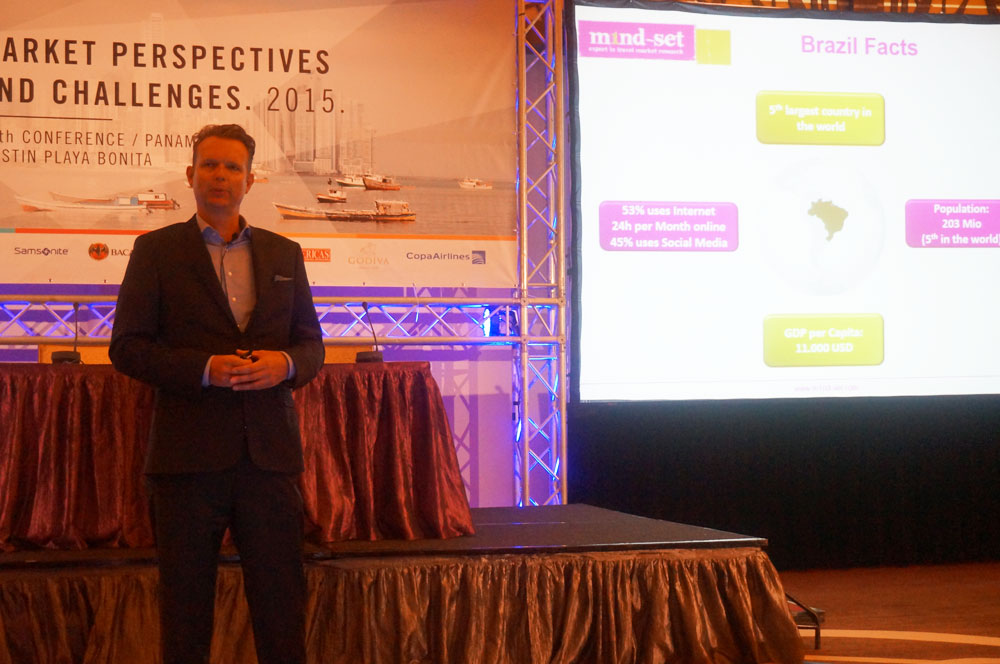
Peter Mohn, Owner & CEO m1nd-set.

But Urioste is ever the optimist and as mentioned above, he believes that this will be an ‘evolving year’ for the travel retail market in Central and South America, hopefully for the better…


Peter Mohn, Owner & CEO m1nd-set followed Urioste and Donagaray this morning, presenting the insights he and his team have gathered on the shopping behaviour of Brazilian travellers. M1nd-set conducted a major study on Brazilian consumers – exclusively for ASUTIL – considering the views of 2,000 Brazilian travellers (an impressive sample size).

Mohn’s presentation was reliably data rich and left no category or travel retail channel uncovered. One of the most interesting points made by Mohn was that DF&TR shops on ferries suffer from the lowest penetration rate of any other channel, but that their conversion rate – of shoppers into buyers – is very high at 78%.
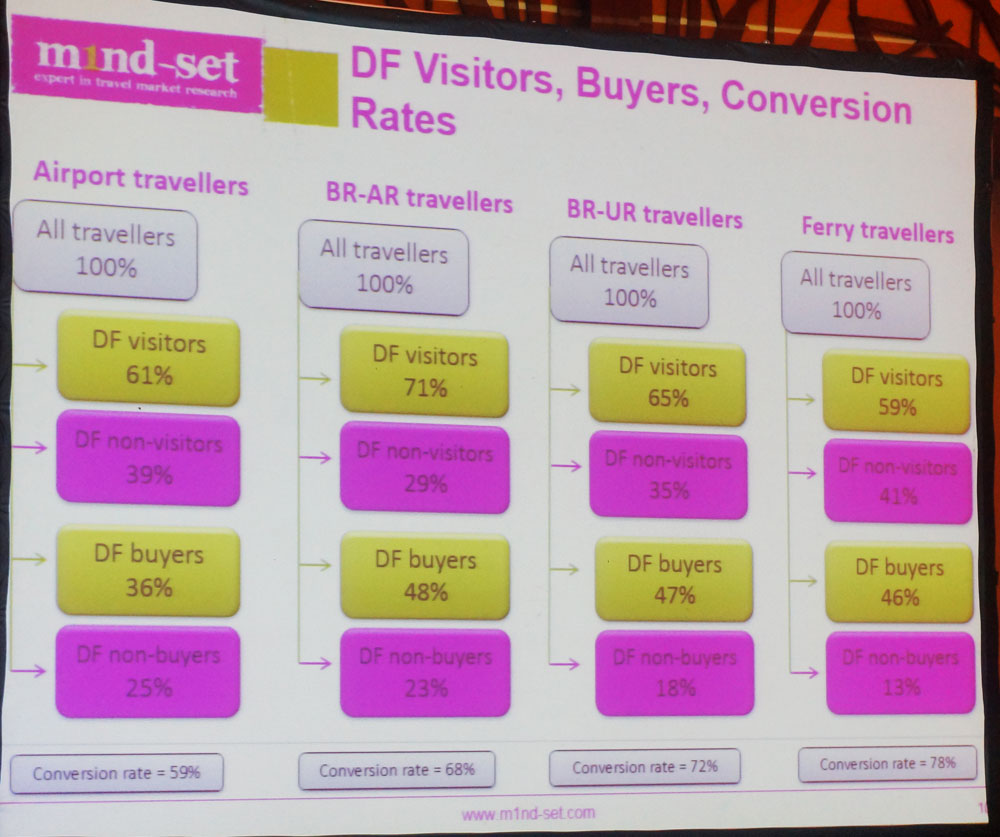
 

DF&TR shops on ferries suffer from the lowest penetration rate of any other channel, but their conversion rate – of shoppers into buyers – is very high at 78%.

From the results of the study, Mohn concluded that duty free shopping is considered to be very much a part of the travel experience for Brazilian travellers. In fact, he stated that the percentage of travellers who said that they believed duty free was an important part of the travel experience, was the highest he has seen anywhere in the world.
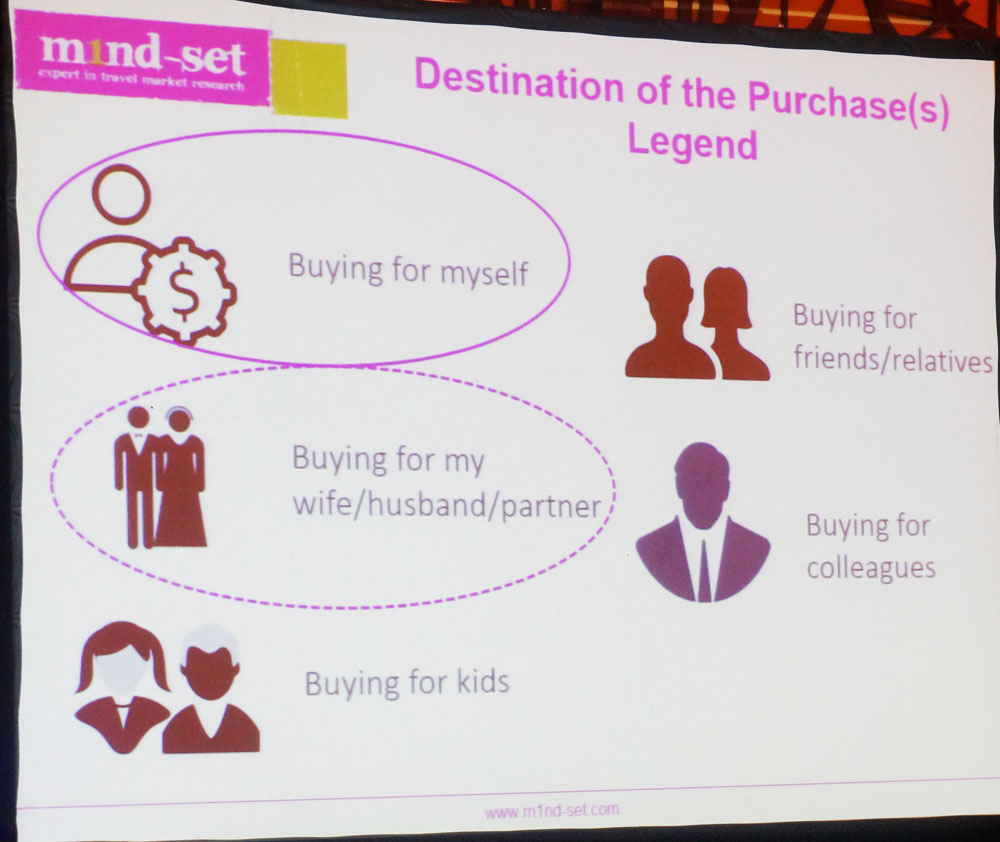
 

Mohn also revealed that Brazilian travellers mainly buy for themselves and their partner/wife/husband (see slide above). Among the top reasons to buy were: “I found my favourite product/exactly what I was looking for”; “the price was lower than in local stores”; and finally “there was an appealing promotion”.


One of the biggest barriers to success in this region is the ill education of Brazilian travellers on customs regulations, said Mohn. “Too many people did not buy because they were not aware of the custom regulations,” he argued.
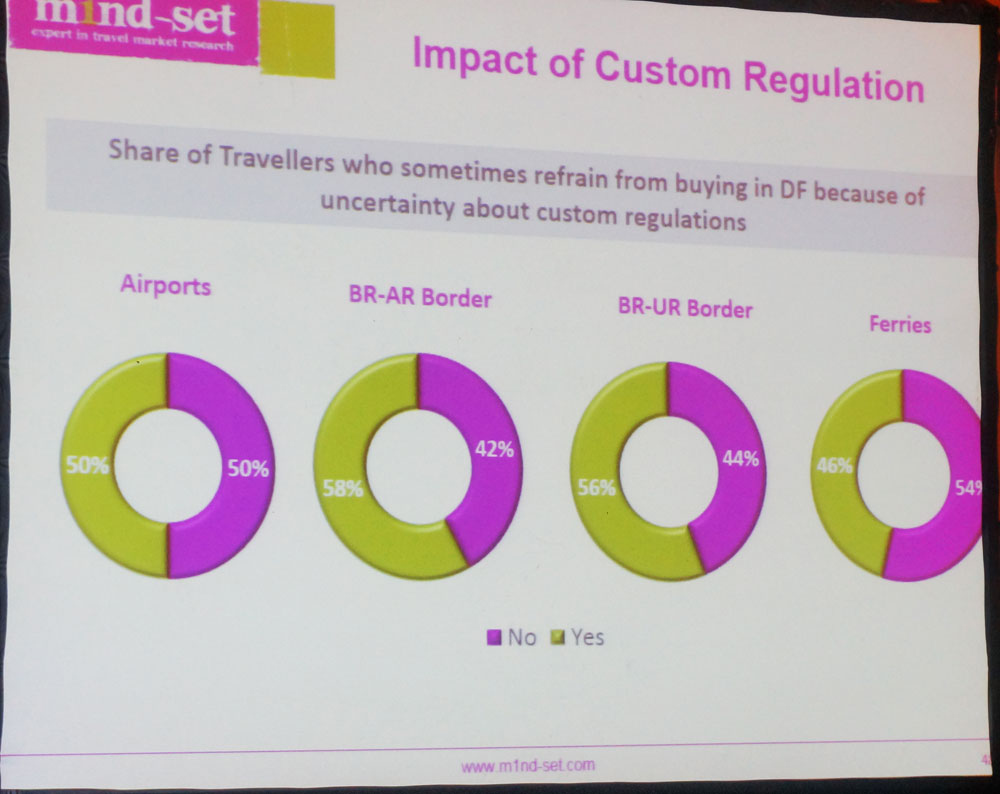
 

He also said that customers crave local identity at duty free shops, especially onboard ferries where 42% of travellers believe local identity is ‘very important’.


“Travellers want local and original and new and different things,” added Mohn in his conclusion. “Let’s give it to them.”


Carlos Loaiza Keel, Secretario de la Camara de Free Shops del Uruguay was next up to provide his views on border shops in Brazil.
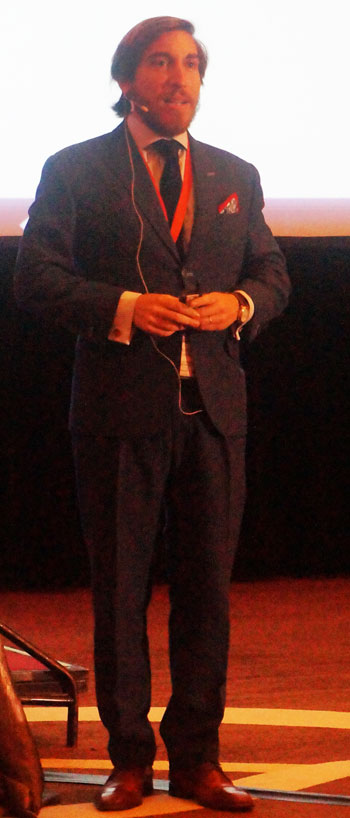
 

Carlos Loaiza Keel, Secretario de la Camara de Free Shops del Uruguay.

He said that the ‘landing of the new duty free shops’ on the Brazilian side of the Uruguay-Brazil border presents both challenges and opportunities.


He pointed out that Uruguay’s internal challenges contributed to a decrease in the nation’s travel retail purchases in the first quarter of 2015. “We cannot hide it,” he said. “But the numbers are not as relevant as people think. The differences in performance yoy for March are not so harsh [as they were in January and February].”


Much like Urioste, Loaiza believes that we are starting to see the stabilisation of the Real and as a result Brazilians will start “to trust again and buy”.


Despite various internal and external challenges, Loaiza pointed out that there are some amazing travel retail projects taking place in Uruguay, namely the Rivera mall and free shops in Melancia – which boast 26,000sq m, and will open as soon as August 2015.


Last, but not least, were the Dufry duo comprising Rene Riedi, Regional COO LatAm & Caribbean and Gustavo Fagundes, Chief Operating Officer of Region America II.


Riedi made it clear early on that he would not reveal any further details on the WDFG acquisition at this time, preferring instead to talk about the state of travel and tourism in LatAm.


Immediately he conceded that conditions were not particularly favourable right now. Among others he mentioned that Venezuela’s GDP was set to decline this year.


He agreed with the speakers preceding him that currency devaluations in Mexico, Chile and Colombia had a major impact on travelling behaviour in recent months.
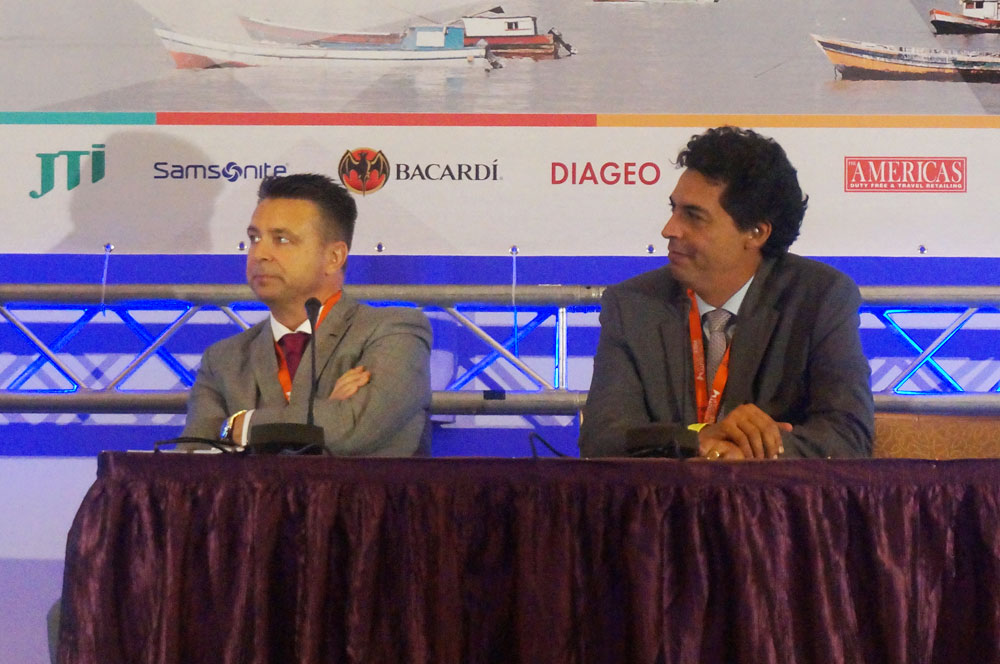
 

L-to-R: Rene Riedi Regional COO Latam & Caribbean and Gustavo Fagundes, Chief Operating Officer of Region America II, Dufry.

However, he highlighted that LatAm and Caribbean flights are set to double by 2031 and with major airport infrastructure development at Mexico City’s mega hub; Bogota’s El Dorado extension and Panama’s new terminal, things are looking up.


Unsurprisingly, he said that new airport development must allow for the fully realised potential of retail activity, although he said that airport privatisation was already helping to fund improvements.


Riedi moved on to talk about the cruise market, highlighting that dwell time is not measured in hours, but in days in this shopping environment and that there are many more opportunities to convert passengers into shoppers.
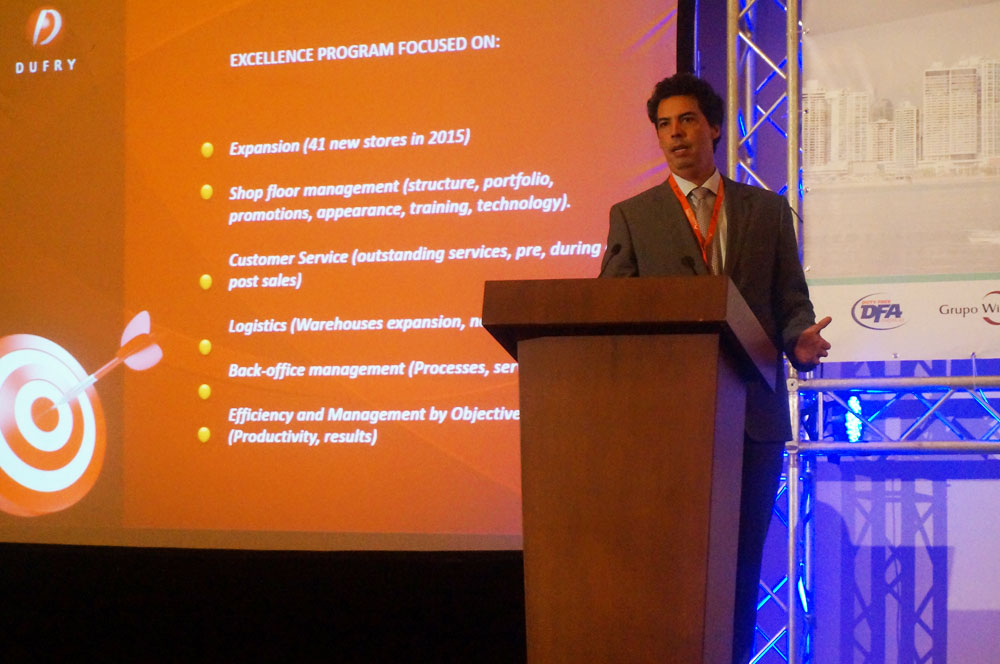
 

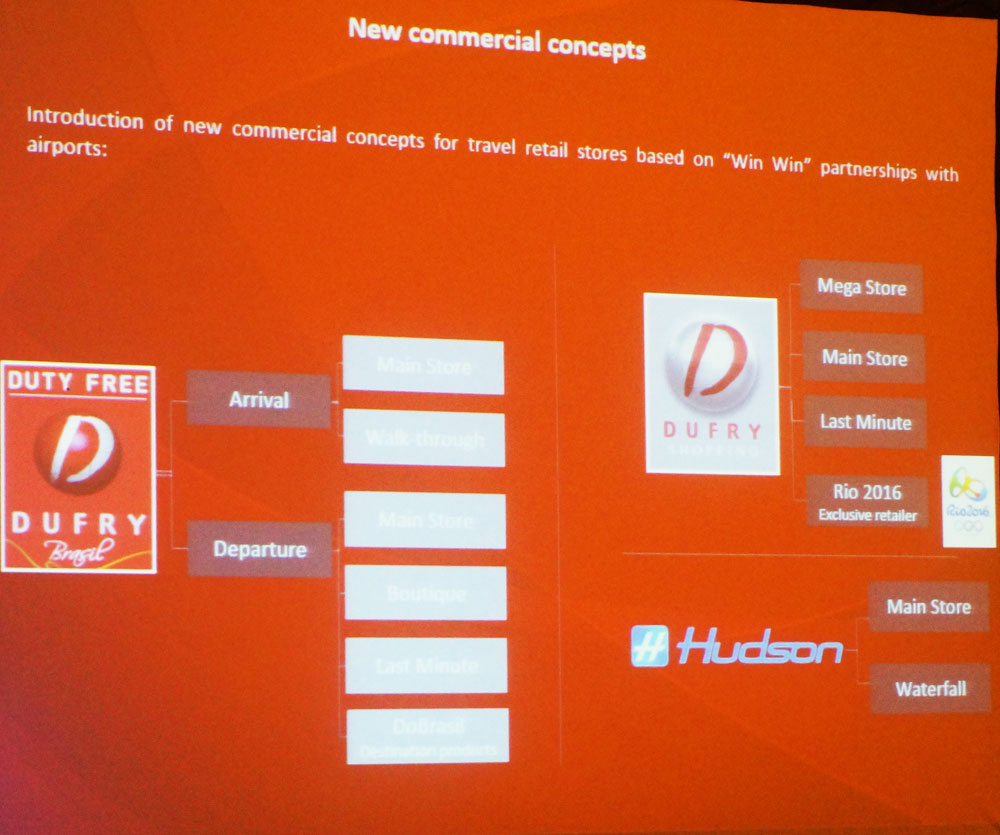
Fagundes made it very clear that the group wishes to fully develop its Hudson convenience store brand and to expand in duty paid in 2015.

The following and final presentation by Fagundes focused heavily on exploring the inner workings and ambitions of Dufry. Fagundes made it very clear that the group wishes to fully develop its Hudson convenience store brand and to expand in duty paid.
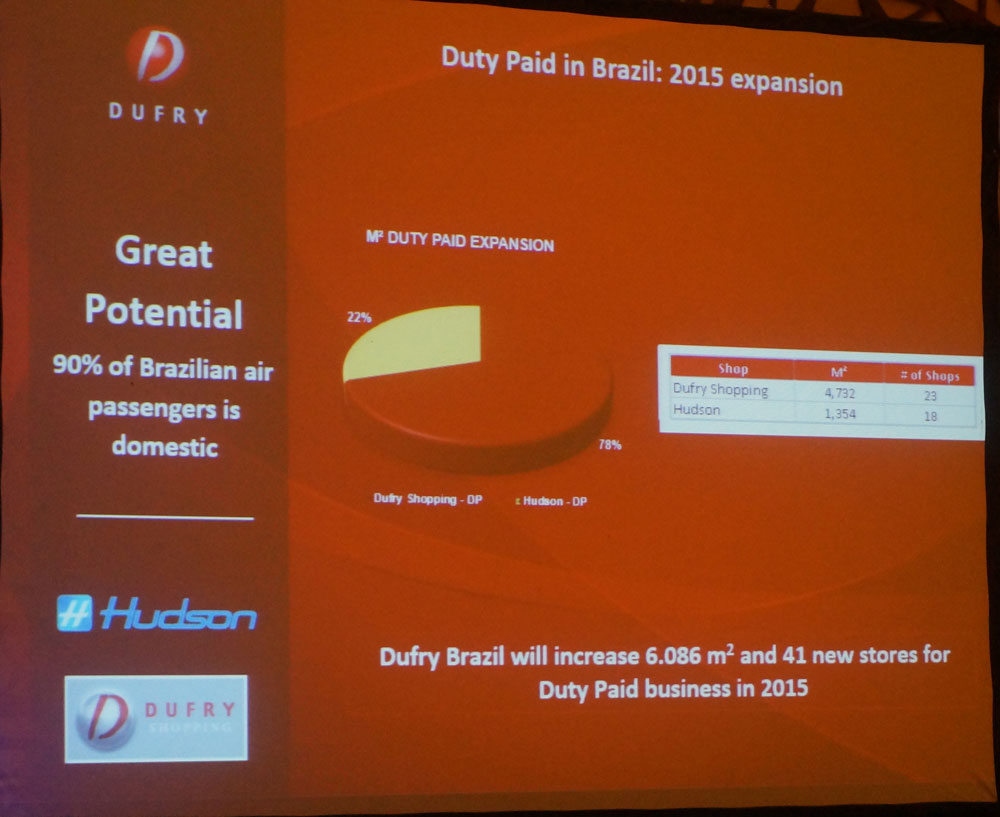


Noting that 90% of Brazilian air traffic is domestic, he revealed that Dufry will increase its duty paid business by 6,086sq m across 41 new stores in Brazil, where he believes the segment has massive business potential.


Fagundes confirmed that Dufry has increased its retail space by 1,800sq m in the first quarter of 2015. It also reiterated that it estimates that the group represents a 24% share of the total DF&TR market with a pro forma 2014 turnover of CHF 7.8bn ($8.3bn).
 

Although it now trades in 20 countries across 500 stores, Spain represents 25% of its total net revenue. Towards the end of his presentation, Fagundes revealed Dufry’s ‘Excellence Programme’, which will see the group focus on shop floor management; customer service; logistics; back-office management as well as the ‘efficiency and management by objectives’ (productivity, results).

Check back for Day Two’s analysis and highlights on TRBusinesss.com tomorrow.


LatAm inbound tourism to beat global average

New forward-looking data from Euromonitor International predict that Latin American inbound arrivals will grow much faster in the five-year period 2013-2018, than the preceding five years. The growth will also be faster than the global average.

According to the inaugural WTM Latin America Trends Report 2015 [full details in the current print issue of TRBusiness] the underperformance of Latin American inbound arrivals is set to turn around… good news for duty free and travel retailers in the region.

From 2008 to 2013 the rate of growth was just +2.8% but between 2013 and 2018 it is set to rise to +4.4% CAGR (compound annual growth rate), above the global CAGR of +4%. Only Middle East/Africa and Asia Pacific/Australasia are forecast to perform better.

The Euromonitor data also show that, while the DF&TR business tends to looks to Brazil as the driver of the region, from a tourism perspective it is Mexico that is the motor.
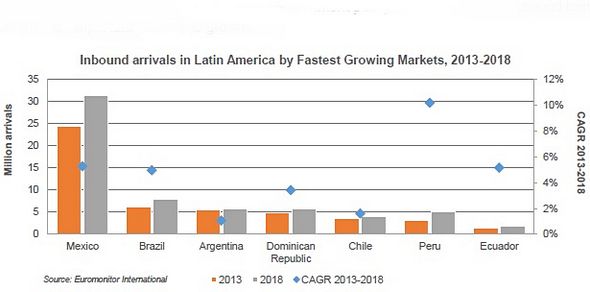

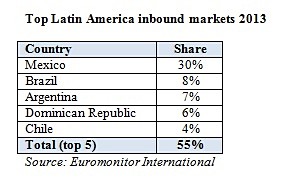
In 2013, for example when Latin America registered a total of 84m arrivals, Mexico accounted for 30% of those arrivals whereas Brazil only took an 8% share. Last year Mexican airports also had strong growth in pax numbers.

“This can be mainly attributed to Mexico’s proximity to the biggest source market for Latin America: the US,” says Euromonitor International Research Analyst Alexis M Frick. Despite recent advances, Brazil still has handicaps. “Visa requirements, crowded flights, bad infrastructure and language are strong barriers to growth for international tourism in the country,” he notes in the report.

PERU ON FAST TRACK

Euromonitor points to Peru as the country that will register the strongest growth in arrivals over the forecast period of 2013-2018 (see chart and click to enlarge).

Government efforts to promote inbound tourism will play an important role in this growth which is set to exceed +10% CAGR. The largest market of Mexico will be the second fastest growth market with a CAGR of +5%.

In terms of intra-regional tourism, rising wealth will have an effect on DF&TR sales in the region. “Like many consumers worldwide, Latin Americans love to travel, and take steps to ensure that they have the financial resources to escape to the beach, the countryside or a lively urban centre,” says Frick. “In fact, Latin Americans prioritise travel above all else when it comes to discretionary spending.”

TR rises +32% for Latvijas Balzams, profit falls -9%

The biggest liquor producer in the Baltic States, Latvijas Balzams [part of SPI Group], has seen strong growth in its duty free and travel retail business in the first quarter with sales up by +32%. However, company profits fell by -9%.

The Riga-based drinks group with a range of more than 100 different products exports 73% of its production to more than 160 markets through SPI, and another 30 markets through direct export.

PROFITS FALL -9%

Q1 also saw high growth from Estonia (+52%) and Norway (+4%), but overall company turnover in the period only rose by +2% to €15.5m ($17.1m). Unaudited profit for the reporting period reached €1.37m. that is €0.173m less than Q1 2014, a decrease of -9.1%.

This was caused by the difference of sales distribution between product categories and exchange rate fluctuations, says Latvijas Balzams.

The company, whose main shareholder is SPI’s Amber Beverage Group with an 89.53% stake since October 2014, says it has successfully expanded its assortment in China`s market, and also established a base for future growth in the US and UK markets.


Dufry ramps up control of beauty to 17.6%

By the end of 2015, 17.6% of beauty spending in duty free and travel retail could be within a Dufry-owned store, up from about 6.1% at the start of last year.

The share hike is based on the assumption that Dufry can follow through with its planned purchase of World Duty Free, subject to approval from the relevant competition authorities, by the end of this year.

Based on 2013 data, Dufry had a 6.1% share of the global DF&TR beauty category worth $17,260.3m according to Generation Research. Adding in the share from Nuance [which Dufry has owned since last autumn] takes that share up to just over 11.5%. With WDF’s expected consolidation by the end of the year that share ramps up to 17.6% to make total beauty sales of more than $3bn (based on 2013 figures).

BEAUTY CONCENTRATION HIGHER THAN OTHER CATEGORIES

It is also worth noting that Dufry’s share of beauty will be much bigger than the average for all product categories.

Overall, with WDF and Nuance integrated (based on 2013 figures), the Dufry juggernaut will have a 13% share of the global DF&TR market, significantly less than the 17.6% for beauty.

The reason is that both, WDF and Nuance are traditionally weighted far more heavily to perfumes and cosmetics than Dufry with shares of 44%, 41% and 28% respectively.

[For a fuller analysis of how beauty is concentrating in the DF&TR channel see our beauty report in the June edition of TRBusiness magazine, out soon.]

Chinese turn their backs on Hong Kong; retailers braced

One of DFS Group’s downtown duty free strongholds, Hong Kong, is going to see a -48% fall in arrivals from mainland China – with South Korea, Thailand, Japan and New Zealand mopping up PRC traffic instead.
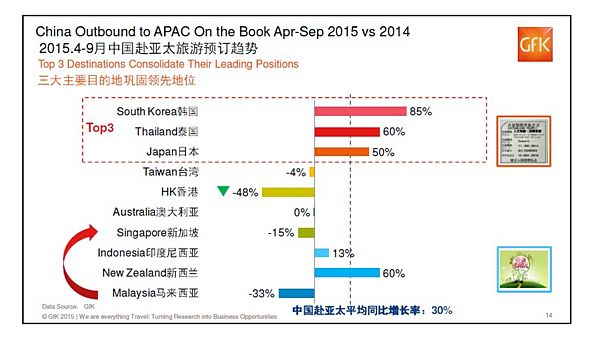

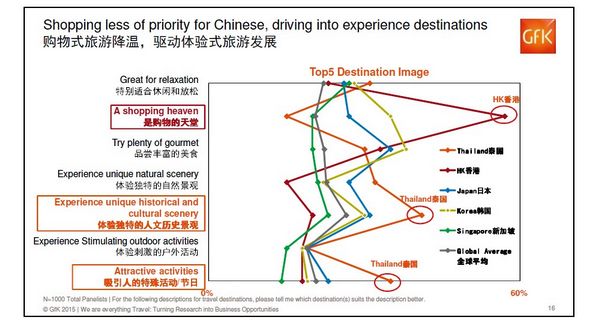
According to data from market research group GfK – which is based on ‘on the book’ [ie actual] bookings for April through to September 2015 versus the same period last year – South Korea will see the highest rise in outbound PRC traffic at +85%. Thailand and Japan will see +60% and +50% respectively (see chart below and click to enlarge).

These three destinations will therefore consolidate their positions as the leading outbound markets in Asia Pacific for PRC Chinese, while New Zealand, currently in ninth place, will gain by +60%.

GfK also notes that Malaysia will suffer a -33% decline [hit by the two MAS flight tragedies] while Singapore will see a -15% fall in PRC travellers during the period. Singapore Changi airport has already reported weak overall traffic, down -0.9% in the quarter to March.

Hong Kong International Airport has seen better total traffic growth at +8.8% in the quarter, but downtown retailers are worried about the situation when it comes to their core Chinese shoppers.

‘STEEPEST DROP SINCE SARS’

Mak: ‘drastic drop’

Caroline Mak, Chairman of the Hong Kong Retail Management Association comments: “Hong Kong retail sales experienced a drastic drop of -14.6% in January 2015, the steepest slump in monthly retail sales since the SARS outbreak in 2003.”

But she acknowledges that sales in February were up +14.9% and that “this may be due to the fact that Chinese New Year fell on 19 February this year, while it was on 31 January in 2014”. Nevertheless, the first two months of 2015 still showed total retail sales down by -2% in value.

“At this moment, we must take into account all the unfavourable factors for this sluggish outlook, such as the economic slowdown and anti-corruption campaign in the Mainland, which have already had an impact on the spending patterns of Mainland tourists,” says Mak.

“Furthermore, we believe the weakening of the euro and yen have also discouraged tourists’ spending in Hong Kong. The recent protests against Mainland visitors had made the situation even worse.”

SHOPPING NOT SUCH A PRIORITY ANYMORE

More bad news for Hong Kong is that PRC Chinese travellers are no longer that interested in shopping destinations as they switch into locations that give them ‘experiences’ (see chart below and click to enlarge).

Hong Kong is still very much seen as a shopping haven, based on a GfK survey of 1,000 PRC travellers, but scores low on culture and history. Thailand scored highest for these latter two categories.

L’Oréal’s Boinay: why travel retail is not a step ahead

In a straight talking interview with TRBusiness at last week’s TFWA show in Singapore, Managing Director of L’Oréal Travel Retail, Vincent Boinay, explained why he thought the conference theme, Staying a Step Ahead, does not fit with what he is seeing in the channel.
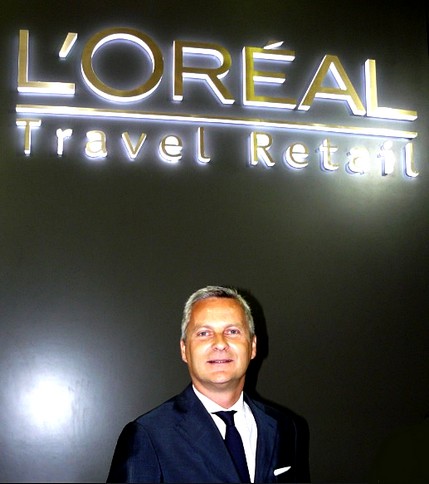
Boinay returned to the duty free and travel retail channel last October after seven years away in domestic markets. During that period he has had time to compare and contrast the two – and DF&TR has some shortcomings.

Boinay: ‘Compared to the domestic market, we have far less information to drive the business’

“If we elaborate on the theme of this TFWA show, the question must be: staying a step ahead of who and what? I do not believe that we are a step ahead as an industry. There were interesting remarks made during the conference, but very few answers.”

WHERE IS THE DATA?

He believes that a key issue that is holding brand owners and retailers back is data sharing.

“Compared to the domestic market, we have far less information to drive the business. This is crucially important. It’s not just about information to measure the market share and see who’s the biggest. It’s about driving the business for our common interest.”

Boinay believes that to grow the pie faster requires more data “because the industry is moving very fast and we need to identify the trends and to react”.

[To read the entire interview with Vincent Boinay and his full and frank analysis of the industry – and the changes needed to improve it – see our beauty report in the June issue of TRBusiness magazine, out soon.]