Archives

Russian Standard’s CEDC vodkas step into spotlight

Russian Standard made its ambitions clear for its new Russian and Polish vodkas – through its 2013 acquisition of Central European Distribution Corporation (CEDC) – at a press briefing in London, yesterday.


On 5 June 2013, Russian Standard Corporation completed its acquisition of Central European Distribution Corporation (CEDC), adding more than a dozen brands to its portfolio. As a result Russian Standard is now said to be the ‘second-largest vodka producer by volume in the world’ with over 34mn 9l cases of products sold annually in over 80 markets.


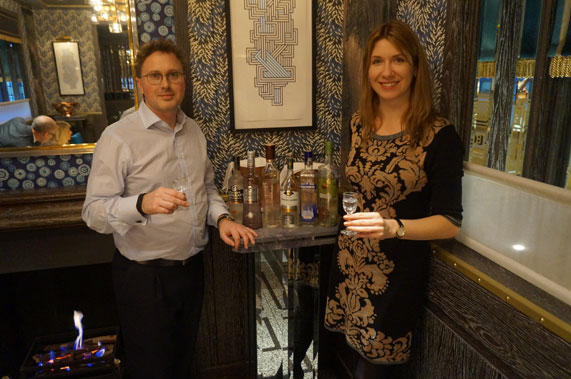
TRBusiness had the privilege of sampling some of the more recent additions to Russian Standard’s portfolio, namely Imperia, Green Mark, Parliament and Żubrówka, at the Bob Bob Ricard restaurant in London earlier this week.


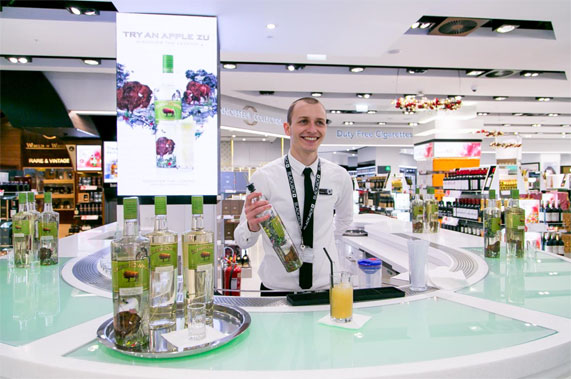
Although the company is still in the early stages of building the presence of the relatively new brands in travel retail, it has already witnessed some success with Polish Bison Grass vodka, Żubrówka.


SAMPLING SUCCESS

In April last year, Russian Standard launched a sampling programme for Żubrówka across Nuance’s European airport network, focusing on Lisbon, Geneva, Zurich, Malta and Antalya airports. Retail theatre and sampling was also introduced at Gatwick and Manchester Airport.


This was followed by the introduction of an attractive Enchanted Forest limited edition sleeve, which was launched exclusively across global travel retail.


According to Drinks International, Żubrówka was the fastest growing global vodka in 2014. During the tasting Andrew Notcutt, Global Travel Retail Marketing Director, Russian Standard, revealed that Russian Standard hopes to build on the strong distribution, investment and activation – which saw it promoted at 14 European airports in 2014 – in 2015 with ‘further expansion’.


Notcutt told TRBusiness that the company sold 20,000 9L cases of Żubrówka in 2014 and the ‘Enchanted Forest’ limited edition ‘was an incremental third of that in airports’. He Notcutt also said that mid-market Russian vodka brand, Green Mark – popular in local markets – is doing well in border shops in Europe. Green Mark and fellow new Russian vodka, Parliament will be launching on Baltic ferries soon.
 

MILK AND CHARCOAL FILTRATION METHODS

Wheat vodka, Green Mark, filtered through birch charcoal, is apparently the ‘best-selling mainstream vodka in Russia’. Parliament, which is known for its distinctive soft taste achieved through milk filtration, is very popular in Germany, which has a preference for Russian vodka.


TRBusiness was also lucky enough to sample Imperia, which is one of Russian Standard’s Super Premium vodkas, but is also thought to be a good candidate for those trying vodka for the first time. Its subtle and ‘feminine’ character meant that it was one of the favourites during the tasting session in London.


TRBusiness was also re-familiarised with the Russian Standard vodka brand, which recently launched Gold as a travel retail exclusive. By far the most successful brand in the company’s portfolio, in 2013 the International Wine and Spirits Report (IWSR) named it the third-fastest growing vodka brand in global travel retail. It was also the year in which that the brand hit 200,000 nine-litre cases for the first time.


According to Andrew Notcutt, Global Travel Retail Marketing Director, Russian Standard – who spoke to TRBusiness at the end of last year – Russian Standard has a ‘disproportionally’ large market share (10%) in the Europe, Middle East and Africa region (EMEA). It is also the fifth largest vodka brand in travel retail just behind Bacardi’s Grey Goose.
 

‘AUTHENTIC AND BELOVED VODKA BRANDS’

Russian Standard Founder and Chairman Roustam Tariko, is now hoping that the company’s CEDC brands may hope to reap similar rewards. “We now have the most authentic and beloved vodka brands in the most important vodka homelands – Poland and Russia,” said Tariko, of the acquisition.


“As the vodka category continues its global growth, our diverse portfolio will be able to satisfy the taste of consumers around the world, from price conscious to premium.”


It’s also unsurprising that Russian Standard have picked up Russian and Polish vodkas; Russia consumes 45% of the world’s vodka and Poland consumes eight times as much vodka per head than the UK.


According to Tatiana Petrakova, International Brand Ambassador, Russian Standard there are approximately 6-7,000 vodka brands in the world and around 3,000 of them are Russian. Out of those 3,000 brands around 5% are premium brands.


It was therefore important for Russian Standard to bring on a mid-market brand, such as Green Mark, as well as premium and super premium brands, to reflect global consumption trends.

Fairn & Swanson sues US Alcohol & Tobacco Bureau

Leading North American US duty free wholesaler and retailer Fairn & Swanson has launched a legal action against the Alcohol and Tobacco Tax and Trade Bureau.

 

In its law suit filed with the District of Columbia, Fairn & Swanson alleges that the federal agency unlawfully terminated its permit for a TTB export warehouse, due to what it claimed were unreported changes to the company’s controlling stockholders — including a stock transfer that took place 16 years ago.


The Oakland, California-based company filed its complaint in the District of Colombia and has rejected TTB’s allegations, arguing that the unreported placement of company stock into a revocable trust with a stockholder’s family member is not a change as asserted.


Fairn & Swanson also applied for a temporary restraining order on January 13 to prevent TTB from revoking Fairn’s export warehouse proprietor’s permit for Export Warehouse EW-WA-39 in Seattle, Washington.


This restraining order is also aimed at preventing TTB from seizing any of Fairn & Swanson’s inventory, or taking any action inconsistent with F&S having a current valid export warehouse proprietor’s permit for Export Warehouse EW-WA-39.


The thrust of Fairn & Swanson’s main request to the court is that it issues an order that sets aside TTB’s decision to revoke its export warehouse proprietor’s permit on the basis that it is contrary to US law. The case continues.


[For reference purposes the case number is 1:15-cv-00047-RJLin the District of Columbia and the judge is Richard J Leon].


Besides its extensive import, distribution and warehouse business based in Oakland, California (since 1949), the company is also well known for operating the 10-strong Baja Duty Free chain along the US/Mexico border.


In California it currently operates stores in Calexico, Otay, San Ysidro (3 stores), and Tecate. In Texas its four shops are located in Brownsville, Eagle Pass, El Paso and Laredo.


Macau visitors +7.5% to 31.5m with 28m Chinese

The Macau Government Tourist Office (MGTO) reports 31.5m (+7.5%) visitors to Macau last year and DFS Group Chairman & CEO Philippe Schaus is very optimistic.
 

MGTO made the announcement at its press conference earlier this week, while Macau’s business sector also acknowledged that official gambling and casino revenues declined for the first time since the business was deregulated back in 2001.


Revenues fell by 2.6% last year to $44bn, as many stayed away following the Chinese government’s anti-corruption drive to discourage ’junket gambling’.


[This is where individuals play with money provided in pools by ‘backers’ on the Mainland – a practice strongly frowned upon by the Beijing Government that has pointed to money laundering in the past and now believes gamblers should only play with their own money].


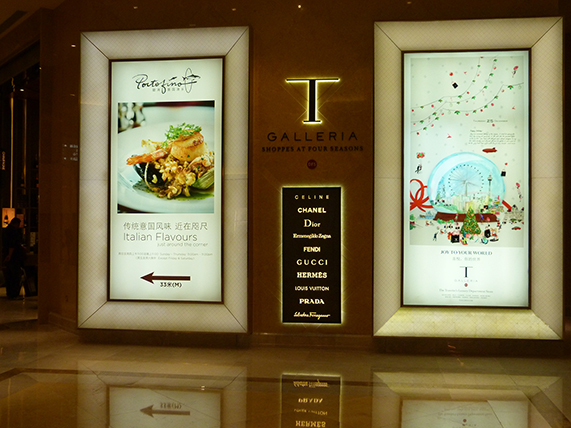
The DFS T Galleria at Macau’s Four Season’s Hotel.


CHANGING VISITOR DYNAMICS

The absence of these ‘junket players’ in 2014 is also being seen as a positive move towards turning Macau into a genuinely more friendly and diverse family-friendly destination, along with new hotel development and better transport infrastructure – such as the rail bridge currently being built to link Hong Kong directly with Macau.


DFS Group Chairman & CEO Philippe Schaus told TRBusiness quite recently that he believes that a much broader family orientated visitor base is the future for Macau’s tourism industry and he says all the signs are there that this will be the way it evolves. [DFS currently operates two T Galleria stores in Macau, at the Shoppes at Four Seasons and the City of Dreams-ED].


Schaus said: “Right now it has reached its limit of capacity because of a stagnant number of hotel rooms. Hotel capacity is completely utilised. There will be almost a doubling of hotel rooms over the next years and many more people will flock into Macau,” he said. “So we see that there is a lot of potential there with the new projects coming up for many of the brands.”


Asked how he sees the infrastructure growing to support more visitors – primarily Chinese – to Macau in future, Schaus said: “First of all there has been a crackdown on the junket operators and that has affected a part of the very high-end level gamblers. If you take that away for a second, then you see that Macau has been continuing to grow on high rollers – and not the junket operators – but the people who play with their own money.


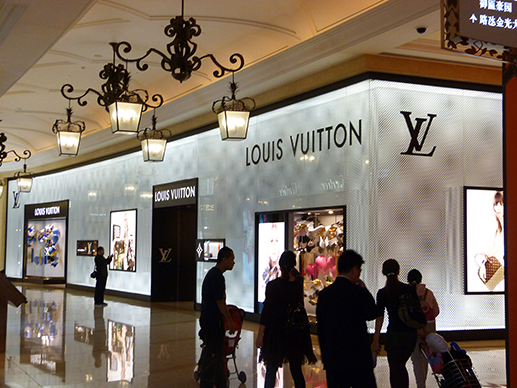
DFS Group manages the popular Louis Vuitton store in the T Galleria at the Four Seasons Hotel.


BETTER INFRASTRUCTURE = MORE TOURISM

“That market has been growing up to the limit of the hotel capacity and that’s why right now the minimum for most of the casinos – the minimum amount you have to gamble with – is much, much higher. It’s over $200, but when you are in Las Vegas it is like $10 or $20 and even in Singapore it is $25, $30 or $40. So what it means is that there is a limitation in Macau that is defined by the hotel rooms.”


He believes this Macau gaming entry limitation will lower as more hotel rooms come on line, so making it increasingly attractive and affordable for more people to visit Macau. In addition, he also points to much improved entertainment and restaurants in Macau, plus the new bridge that is being built between Hong Kong and Macau.


This is a huge feat of engineering which is scheduled for completion this year to carry high-speed train passengers into Hong Kong and then onto Macau. All of this is against a background where the Macau Government Tourist Office confirmed this week that it remains committed to positioning Macau as ‘a World Centre of Tourism and Leisure’.


Meanwhile, for the whole of 2014, visitor arrivals to Macau reached a record high of 31,525,632, up by 7.5% year-on-year; same-day visitors amounted to 16,959,949, sharing 54% of the total. Visitors from Mainland China (21,252,410), the Republic of Korea (554,521) and Japan (299,849) increased year-on-year, while those from Hong Kong (6,426,608) and Taiwan (953,753) decreased.


Visitors from the United States recorded a year-on-year increase; however, those from Australia, Canada and the United Kingdom all registered decreases. In 2014, the average length of stay of visitors remained stable at 1.0 day compared with 2013.


The average room rate being charges by three to five-star hotels last year was equivalent to US$199.90 (+8.5%) and more than 12m visitors to Macau arrived in tour groups last year.


TFWA completes China’s Century speaker line up

The organisers of the Shanghai TFWA China’s Century Conference (10-12 March) have finalised what looks like a strong speaker line up for the two-day event.

 

The second in the China’s Century Conference series, this year’s event is being held at Shanghai’s Jing An Shangri-La Hotel and the organisers are also promising plenty of opportunities for business networking.


The conference will be opened with welcome addresses by TFWA President Erik Juul-Mortensen, APTRA President Jaya Singh and Liu Jin Ping, Chairman of the Shanghai Association of Enterprises with Foreign Investment – the official supporter of the event.


It will begin with a look at the development of Beijing Daxing International Airport, which is set to open its doors in 2018 as the world’s biggest. Gao Shiqing, Vice General Manager, Capital Airports Holding Company is scheduled to take the conference audience through its commercial opportunities.


Peng Hui, Chairman of the China Duty Free Group – the biggest and most diverse duty free operator in China – will then address the audience on recent retail developments in China and beyond, including the huge Haitang Bay downtown project in Hainan, while also touching on the Chinese luxury market and current consumption trends.


He will then be followed by Shaun Rein, founder of the China Market Research Group and author of ‘The End of Copycat China: the Rise of Creativity, Innovation and Individualism in Asia’. His address will concentrate on assessing China in the context of the global and regional economy.

Peng Hui, Chairman of the China Duty Free Group and Shaun Rein, founder of the China Market Research Group will both address delegates on the first day of the conference.


CHALLENGES AND LESSONS LEARNED

Sunil Tuli, King Power Group (Hong Kong) Managing Director Duty Free & Travel Retail will then give his take on the company’s consolidation of its presence in Chinese travel retail alongside the perceived current challenges to doing business in the region.


The next presentation will concentrate on the lessons learned by Lagardère Services’ owned LS travel retail during its first two years of operations with the new luxury operation in Shenzhen Airport. This will be jointly presented by LS General Manager China Eudes Fabre and Shenzhen Airport Vice General Manager Sun Zhengling.


There will also be plenty of opportunity for suppliers and brandowners to get involved by offering their perspectives on the development of luxury retail in China and the current challenges they face.


For example, Andrea Dini, President & CEO of the Italian label Paul & Shark – one of the first European houses to develop widely in China – will review the past two decades and offer his vision for luxury brands in China. A panel discussion will then feature Furla Global Travel Retail Director Gerry Munday and Edrington Group Asia Travel Retail Managing Director Ryan Hill.


Yet another interesting dimension – and an eye opener for many – will follow with an address by China National Service Corp President Robert Lee. This company has actually operated downtown shops in China for returning overseas Chinese citizens for no less than 30 years.


In this address, Lee will discuss why he believes that a step change in quality is taking place for this key travel retail sector, beginning with CNSC’s impressive new store opening in Shanghai, as the relatively new Chinese government encourages more Chinese travellers to shop at home.

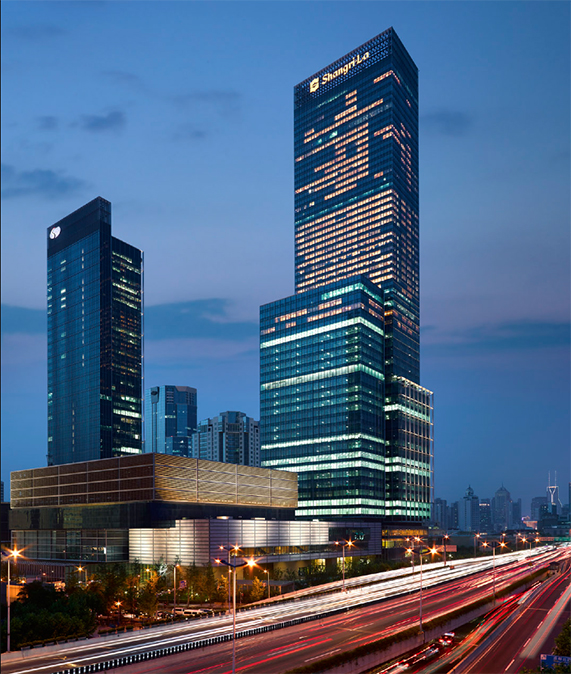
Shanghai’s Jing An Shangri-La Hotel.


OPPORTUNITIES FOR FOREIGN COMPANIES

Guangzhou Baiyun International Airport Co President & CEO Ma Xinhang will then open day two’s proceedings with a presentation concentrating on the ambitions of mainland China’s third-busiest airport to become a major hub and gateway to southern China.


He will then be followed by Gu Jun, Deputy Director of the Shanghai Municipal Commission of Commerce who will explain how the city’s commercial development plans will impact upon aviation, transport and tourism.


The opportunities for foreign companies and investors will be explored in a separate session by Zhu Min, Deputy Director of Management Committee for China Pilot Free Trade Zone, and Mark Schaub, lawyer and expert on the Shanghai Free Trade Zone – the first of its kind in Mainland China.


Professor Liu Dehuan, Vice President of the New Media Institute at Beijing University will then look at the Chinese luxury market in the mobile internet era and this theme will also be explored by Olivier Verot, founder of specialist Shanghai agency Gentleman, with particular reference to the role of social networks such as Baidu, WeChat and Weibo.


Luca Bastagli Ferrari, CEO of retail management company Arco Retail, will then follow with his address on how the Jihua Park project to develop leisure, sports and shopping resorts across China forms a key part of the government’s drive to promote China as a tourist destination and to encourage its citizens to take holidays at home.


Commercial Division Manager Gao Ya Li will also reveal plans for the new terminal at Chongqing, one of China’s fastest-growing airports which serves its largest city.


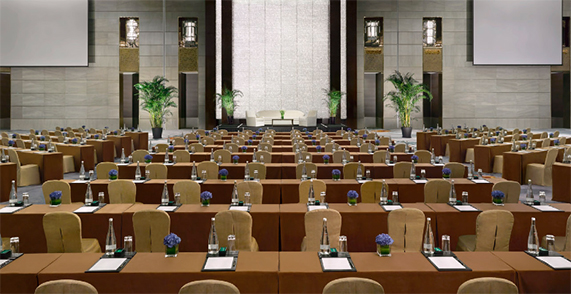
The conference facilities at the conference hotel are first rate.


SPECIALLY COMMISSIONED RESEARCH

Delegates will also hear key findings from market and consumer research, commissioned by APTRA and conducted by specialist agency m1nd-set, into the behaviour, perceptions and preferences of the Chinese traveller.


The final keynote address will be made by Haiyan Wang, Managing Partner, China India Institute, an expert on China’s rise to prominence and the role of foreign investors, before closing remarks from TFWA President Erik Juul-Mortensen.


Registration for the 2015 TFWA China’s Century Conference is open until 20 February at www.tfwa.com. The organisers are recommending that any individuals who have still to register should move quickly to secure their entry visas, as well as flights and accommodation.


This event follows which follows the very successful event held in Beijing in 2013 – described as one of the industry’s all-time best conferences by many attendees, participants and TRBusiness.com.


[TRBusiness is very pleased and proud to be producing the official China’s Century Conference Delegate Magazine and the official Work Book for this event. The Delegates Magazine will be exclusively available in China and only at this event and contains exclusive in-depth interviews with many of the aforementioned speakers. It is also the result of extensive in-depth editorially-led interviews held in Asia with top executives within the last month and a half at companies in Beijing, Shanghai, Hong Kong, Macau and beyond-Ed].


International tourism set for new record

The UNWTO predicts that international tourism is expected to set a new record of 1.1bn-plus tourists this year.


The United Nations World Tourism Organization says that between January and October 2014, the volume of international tourists (overnight visitors) reached 978m – an impressive 4.7% or 45m more compared to the same period in 2013. It also notes that this is well above the long-term trend projected by UNWTO for the period 2010-2020 (+3.8%).


By region, the strongest region of growth in the first 10 months was recorded in the Americas (+8%), followed by Asia and the Pacific (+5%) and Europe (+4%). By sub-region, North America (+9%) and South Asia (+8%) were the star performers, as well as Southern and Mediterranean Europe, North-East Asia and Northern Europe (all +7%).


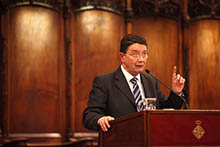
“In view of this trend, international tourism is set to end 2014 with record numbers”, said UNWTO Secretary-General, Taleb Rifai. “These are remarkable results considering that different parts of the world continue to face significant geopolitical and health challenges, while the global economic recovery remains rather fragile and uneven”, he added.


“More importantly, we see a growing political commitment to the tourism sector in many countries. This is encouraging, not in the least because tourism is one of the sectors that is best able to deliver on employment at a moment when job creation needs to be a priority to all”, he added.


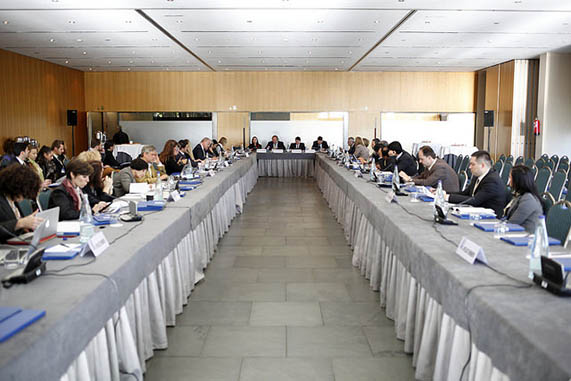
The 3rd Global Summit on City Tourism, which was held in Barcelona between 9-10 December 2014. (Photo credit: Roger Castellón, UNWTO).

THE AMERICAS: ‘BEST RESULTS IN A DECADE’

The Americas (+8%) led the growth ahead of all regions during the period, rebounding significantly on last year’s subdued results. The UNWTO says this is the region’s best performance since 2004, when international tourism also rebounded strongly, following the 2003 SARS outbreak.


All sub-regions – North America, the Caribbean, Central America and South America – doubled their growth rates of 2013, with ‘particularly positive results’ recorded in North America in view of the extraordinary performance of Mexico and the US.


Meanwhile, international arrivals in Asia and the Pacific increased by 5% (through October), consolidating the region’s growth trend of recent years. The best results came from South Asia (+8%), led by India (+7%), and from North-East Asia (+7%) where major destinations such as Japan and the Republic of Korea registered double-digit growth.


Arrivals in Oceania grew by 6% owing mostly to the increase of arrivals in Australia and New Zealand. In South-East Asia (+2%), growth slowed down compared to 2012 and 2013 as a result of the decline in arrivals registered in Thailand.


Europe, which is still the most visited region in the world, posted a 4% increase in international tourist arrivals through October, with strong results in Northern Europe and in Southern Mediterranean Europe (both +7%). Here, established destinations such as Greece, Portugal, Spain and Malta recorded robust growth.


TOURISM SLOWS IN WESTERN EUROPE

International tourism grew at a more modest pace in Western Europe (+2%) and was stagnant in Central and Eastern Europe (0%), in stark contrast with the last three years, during which arrivals grew at an average of 8% a year.


International tourist arrivals in the Middle East are also estimated to be up by 4% (in the first ten months of 2014), rebounding on the declines registered since 2011. All destinations in the region ‘with data available’ report positive growth, with Egypt, Jordan, Lebanon and Saudi Arabia all substantially improving their performances, as compared to 2013.


Africa’s international tourist numbers grew by 3% (through October) with North Africa consolidating its recovery (+2%). Sub-Saharan Africa’s arrivals were up by 3% despite the challenges of the Ebola Disease Outbreak in a few West African countries. However, the UNWTO says that data for Africa and the Middle East should nonetheless ‘be read with caution as it is based on limited and volatile data for these regions’.


The UNWTO is expected to release preliminary 2014 full-year international tourist arrivals data by 27 January 2015.


Canada’s airport sales reach $247m for Jan-Nov

Canadian duty free airport sales reached C$291.8m (US$247.6m), while land border sales hit C$132.5m (US$112.4m) between January and November 2014.

The total market amounted to US$360m in the first 11 months of 2014, according to the Canadian Border Services Agency (CBSA), which reported the figures on January 2, 2015 – alongside the usual analysis from the Frontier Duty Free Association (FDFA).

On the airports side, Toronto (Nuance/Dufry); Vancouver (World Duty Free) and Montreal (Aer Rianta International NA) continued to be the dominant contributors to sales, with Perfume, Cosmetics & Skincare leading all product categories at all airports with sales of C$98.4m (a 33.7% share).

MAJOR PRODUCT CATEGORY SALES

The next nine biggest product categories (measured in Canadian dollars only) were as follows: Alcohol (liquor, liqueurs, wine, coolers) C$60.2m (20.63%); Tobacco, Cigars, Loose Tobacco C$39.7m (13.61%); Jewellery, Watches & Clocks C$24.9m (8.56%); Food C$21.6m (7.41%); Clothing, hats, fur, leather C$14.8m (5.08%); Accessories, purses, wallets, sunglasses etc $14.4m ($4.96%); Office and travel supplies C$12.6m (4.33%); Souvenirs C$4.1m (1.44%); and Electronics, Cameras, Binoculars, etc C$316.212((0.11%).

On the land border side, Alcocol sales accounted for C$49.4m (37.30%); followed by Tobacco with C$36.6m (27.68%); Perfume, Cosmetics & Skincare C$21.1m (15.95%); Food C$7.3m (5.52%); Beer C$5.9m (4.50%); Jewellery, Watches & Clocks C$4.2m (3.24%); Accessories C$2.7m (2.05%); and Clothing C$2.4m (1.82%).

TOP IMAGE: One of the best looking airport stores in Canada at Montreal, with Aer Rianta International North America. (Right) The Peach Arch Bridge Canadian border Store operation.

Video Interview: Frank O’Connell

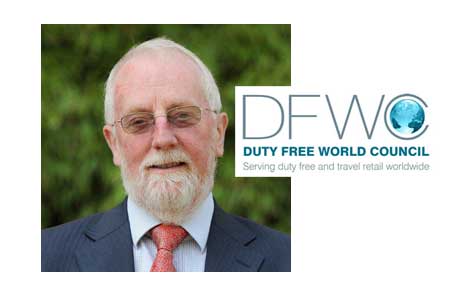
Doug Newhouse talks to Frank O’Connell, President of the Duty Free World Council, about the ambitions of the council and how they will work alongside industry associations in promoting and protecting the global duty free channel.


In September, the Duty Free World Council took the bold step to commission the creation of a global DF&TR ‘Industry Database’  to develop an Industry Profile.


Other projects being actively progressed by the Duty Free World Council include the potential development of an industry education academy, with a view to establishing training and management development standards for the industry backed by a robust and academically sound accreditation process through university partnerships.


Furla opens corner at Duty Free City’s San Ysidro store

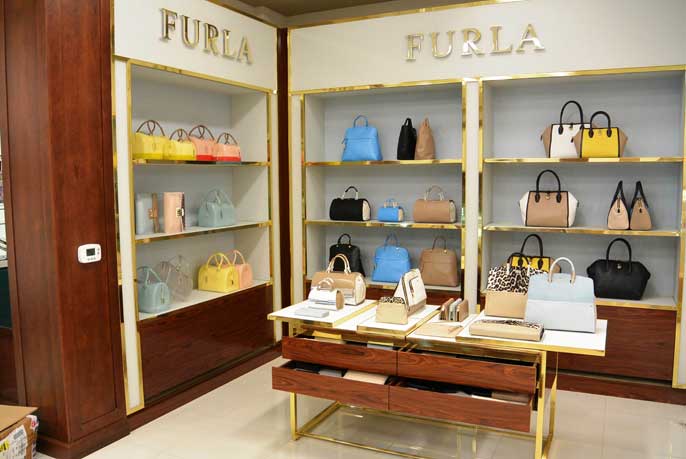
Furla is opening a 15sq m personalised corner at the new 14,000 sq ft Duty Free City land border store in San Ysidro, which opened on 28 July.

As reported, Duty Free City opened its debut location on the US-Mexican border at San Ysidro at 601 East San Ysidro Boulevard, earlier this week.


The company said its new store – the first of several planned on the US-Mexico and US Canadian borders – offers ‘a luxurious shopping experience’ as promised.


Furla Global Travel Retail Director Gerry Munday, says: “Furla is delighted to be working with Duty Free City as the sole leather goods brand present in its stunning border store in San Ysidro.


“We are present alongside some of the world’s most prestigious brands and have found the team at DFC a pleasure to work with. San Ysidro is one of the busiest border crossings in the world with a high spend per head, so we are confident that business here will be excellent for Furla as we continue to expand within the Americas. We look forward to working with DFC on further projects for the future.”


Furla ‘personalised corner’ in the Duty Free City-run store.


FURLA ‘FITS THE BILL’ FOR AFFLUENT CLIENTELE

Director of Marketing Alejandra Rudner (who TRBusiness interviewed in Orlando last year) says: “We are very pleased to be working with Furla. We wanted to work with a premium brand that would align itself with our affluent clientele and Furla very much fits the bill.


“San Ysidro is designed as a lifestyle destination – far more than just a border store – and Furla will sit very nicely alongside the many other signature brands in place, such as Versace and Swarovski.”


The store opened with the Spring Summer 2014 Collection focusing on key lines from the Premium and Icon collections with colourways including luna, petalo, rugiada, and sole combined with onyx, vitamin and atlantic. Plus touches of Giaguaro add interest and depth. Shapes include shoulder bags in different sizes, satchels and the innovative Dome in both medium N/S and mini sizes.


Furla closed 2013 with a turnover of €228m, an increase compared to 2012 of +7% which, at constant exchange rates, corresponds to +14.5%; a trend of strong growth for the company, confirmed by the overall increase recorded in the last three years of + 45%.


Furla says its travel retail business is growing with an increase in turnover from 2012 to 2013 of +37%, linked to an “increasingly incisive presence in major airports: from 33 doors in 2010 to the current 175 in 44 different countries,” adds Furla.

Canada slaps DF with +40% tobacco tax hike

The Canadian government’s budget announcement on Tuesday to implement big tobacco excise tax hikes has left the duty free industry fuming because it eliminates previous preferential treatment for the channel.


Effective today, the excise duty on a carton of 200 cigarettes has risen by +24% to C$21.03 from the previous C$17. Duties on chewing tobacco and fine-cut tobacco for roll-your-own cigarettes also increased to C$26.29 per 200g from the current C$21.25, while the duty on cigars has also gone up.


In normal circumstances domestic tax hikes are good news for the duty free and travel retail business because the savings in the channel are magnified. However this time the Canadian government is also increasing the ‘duty free’ excise tax on Canadian-made tobacco products sold in domestic and foreign duty free shops, as well as on imports for sale in Canadian duty-free shops.


A carton of 200 cigarettes previously had a C$2 excise duty preference compared to a carton in the domestic market ($15 versus $17). But from now, the excise rate for DF&TR tobacco will be the same as domestic, wiping out any advantage to the channel. It also means the industry has to bear an overnight tax hike of +40% (from C$15 to C$21.03).


Defending its position, the government states in its budget paper: “Taxing tobacco products at a sustainable level is an important element of the government’s health strategy to discourage smoking among Canadians.”


The Frontier Duty Free Association, which represents Canada’s land border duty free shops, today came out strongly against the excise tax increase saying that it “will work counter to government revenue goals, health strategies and Canada’s economic interests”.


‘MAJOR BLOW TO OUR STORES’

“We understand and support the government’s need and desire for a balanced budget and the goals of Canada’s tobacco health strategy, but a tax shock of this magnitude – which was brought in without any prior consultation or warning – is a major blow to our stores,” says Abe Taqtaq (left), FDFA President.


“Our members are troubled about the unintended consequences of this tax increase since it threatens to divert sales away from our members’ stores to the illicit market, which in turn jeopardises both the government’s revenue and public health goals.” Border stores are already under pressure with flat sales in 2013 (-022%) of C$146m.


Estimates of the size of Canada’s contraband market have ranged from 25-33% in recent years, fuelled by illegal manufacturing and sales on First Nations reserves, claims the FDFA. In testimony to the House of Commons Justice Committee, the Canada Border Services Agency has also described contraband tobacco as “a plague that is increasing”.


“Higher taxes in Canada drive more consumers to the US to buy tobacco products and, without effective means of enforcement at the border, in turn results in more illicit product entering the country. That translates into more lost revenue for government and creates a competitive advantage for US retailers over law abiding Canadian retailers,” warns Taqtaq.

Canadian 2013 duty free sales hit C$419m

Duty free sales at Canada’s airports and land borders reached C$419 ($382m) in 2013, up +5.8% on the previous year’s C$396m ($361m).


However the gains all came from the airport business where sales of C$273m were +9.15% ahead of those in 2012 while border shops suffered a marginal decline of -0.22% to $146m.


The data from the Canadian Border Services Agency (CBSA), and supplied by the Frontier Duty Free Association, show that, among the major product categories (over C$10m in annual sales) at airports, beauty grew fastest at +14.7% followed by food at +12.5% and fashion/apparel at +12.3%.


On the land borders, among the biggest categories (over C$6m in annual sales), the story was much more subdued with beauty growing +4.3% and food +4.8% with all other major product sectors declining. Among smaller categories, just two (both valued at C$2.66m) bucked the negative trend: fashion/apparel up +3.7% and accessories (up more sharply at +9.3%).