Archives

FRA AG highlights DF in Q1 revenue results

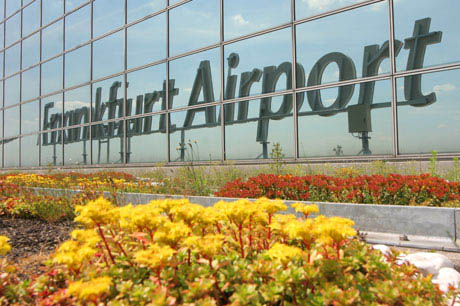
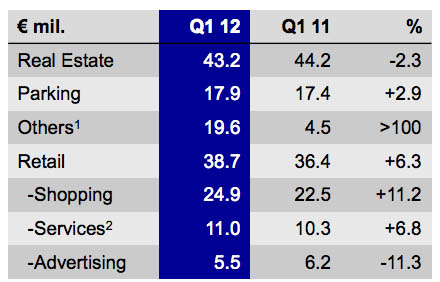
In the first quarter of 2012, Fraport AG achieved revenue of €537.9 million – an increase of 5.8% year-on-year.


Retail per passenger grew by 2.4% at €3.40 with duty free and fashion sales driving shopping revenue. Food & Beverage turnover increased overall service revenue by 6.8%.


The operating Group profit or EBITDA (earnings before interest, tax, depreciation and amortization) grew disproportionately by 7.6% to €138.3 million.


This positive performance can be attributed to growing passenger traffic at Fraport AG’s consolidated Group airports, which served a total of about 17.5 million passengers in the first quarter of 2012 – up 3.9%.

‘ONGOING INVESTMENT ACTIVITIES’

The Group result, by contrast, declined by 36.4% year-on-year to €15.4 million in the first quarter of 2012, mainly reflecting ongoing investment activities at Frankfurt Airport (FRA).


“On the one hand, the higher capital requirements for FRA’s expansion program resulted in a declining financial result,” said the operator.


“On the other hand, depreciation and amortization increased, with FRA’s new runway being included for the first time in a first-quarter financial statement.”


Correspondingly, basic earnings per share dropped from €0.27 to €0.17 year-on-year. Fraport is investing some €7 billion in FRA’s infrastructure from 2007 to 2015.

‘OPERATING PERFORMANCE IS EXCELLENT’

As a result of these investments, free cash flow was still negative at minus €125 million – despite improving by about €35 million compared to last year.


“Our operating performance is excellent thanks to the commitment of all our employees. As expected, the Group result declined, reflecting our comprehensive investment activities.


“With these investments, we are building a solid foundation for the future of our company,” said Fraport AG’s executive board chairman Dr. Stefan Schulte commenting on the first quarter 2012 results.


Because the global economy remains volatile, air cargo volume across Europe shrank in the months from January to March 2012.


AIR CARGO DECLINES

At FRA, air cargo tonnage declined by 11.7 percent, also partly due to the night flight curfew. Frankfurt Airport’s passenger figures, stimulated by intercontinental traffic, rose 3.5% to 12.2 million passengers.


Although FRA achieved record passenger volumes in January and March, the first quarter of 2012 did not exceed the record of the previous leap year in 2008.


This was due to 2,150 strike-related flight cancellations in February and March 2012.

Exclusive interview with Jin Kuk Lee, Director of the Korea Tourist Organisation

Exclusive interview with Jin Kuk Lee, Planning and Promotion Team Director, the Korea Tourist Organisation


With sales of $228m at Incheon this year and $325m in total, the government-run tourism agency Korea Tourist Organisation (KTO) is targeting another year of double-digit sales growth at its Incheon International Airport duty free shops in 2012, according to Director Jin Kuk Lee – plus more of the same in its four lesser known major duty free seaport outlets.


The growing number of foreign tourists visiting South Korea is the single main factor driving KTO’s impressive sales growth today, as the rising number of high-spending customers using the agency’s shops increase their fashion goods’ purchasing, as well as traditional Korean products, including ginseng.


The Korea Tourist Organisation (KTO) recently revealed exclusively to The Business that the state-run tourism promotion agency is targeting a 15% increase in sales in its Incheon International Airport duty free shops this year, after sales grew by an estimated US$65.2m in 2011.


“Our total sales at Incheon Airport increased by 40% last year and our total profit at Incheon increased by 10% in 2011,” said KTO Planning and Promotion Team Director, Jin Kuk Lee.

KTO Incheon Airport

“We are satisfied with our performance. As a state-run organization, KTO has a great role in promoting our country’s tourism industry and enhancing convenient shopping for foreign travellers. Our profit from duty free sales is used to promote tourism.”


Although actual sales figures were not revealed, The Business calculates that KTO’s total duty free sales at Incheon Airport hit $228m in 2011, based on total sales at Incheon of $162.7m in 2010. This means revenue growth at Incheon Airport reached $65.2m last year, based on the openly declared 40% increase in sales.


KTO’s sales accounted for 9% of Incheon Airport’s total $1.53bn duty free sales in 2011 and with foreign visitor numbers expected to continue rising, it is looking for double-digit growth at Incheon Airport again this year.


LOOKING FOR A +15% SALES INCREASE

“I guess there will be about a 15% increase in sales this year,” said Lee. “We are going to try online marketing using search engine marketing by cooperating with Yahoo and Google. We are trying to find highly competitive products, especially domestic goods like ginseng.


“We will try online marketing to promote our duty free products. We tried online shopping about three years ago, but the performance then was not good.”


KTO’s duty free sales at Incheon Airport account for about two thirds of the organisation’s total duty free revenue. A 15% increase in sales at Incheon this year would lift the agency’s airport duty free revenue by about $34m to around $262m.


As a special concession aimed at funding the KTO’s central function of promoting tourism in Korea, KTO’s fashion goods and general merchandise concession at Incheon was awarded directly without any bid by the government the last time around – unlike the five other duty free retailing concessions for perfume and cosmetics, liquor and tobacco, fashion goods and general merchandise that Incheon International Airport Corporation allocated through competitive bidding.
KTO Incheon Airport

Despite recording impressive sales results, KTO has always played down its presence at Incheon Airport – knowing it to be only temporary – and the airport authority is also understood to be keen to tender out KTO’s business to a more dynamic company who will not only bid high, but whose specialty business is airport retailing – unlike KTO.


‘Foreign companies’ tell The Business quietly that they have been eyeing this business in the belief that they might be able to generate considerably more revenue than KTO. All of which is naturally good news for Incheon Airport, since it has already fostered cut-price competition between both Lotte Duty Free and Shilla Duty Free who are both likely to set any bidding bar high – irrespective of any additional ‘foreign company’ participation in the process.


Of course, this all presumes that Incheon Airport continues to encourage foreign companies to bid for the 5+2-year duty free contracts when they come up for bid – in this form or another.
 

KTO Incheon Airport‘OPEN BIDS’ ARE PROMISED – BUT AT WHAT PRICE?

Incheon’s charismatic President & CEO Lee Chae-Wook (CW Lee) told The Business back in February that all foreign companies will be encouraged to participate – as they have in the past. But whether they will be able to match the cut-throat bidding of Lotte and Shilla as they lock horns yet again remains to be seen.


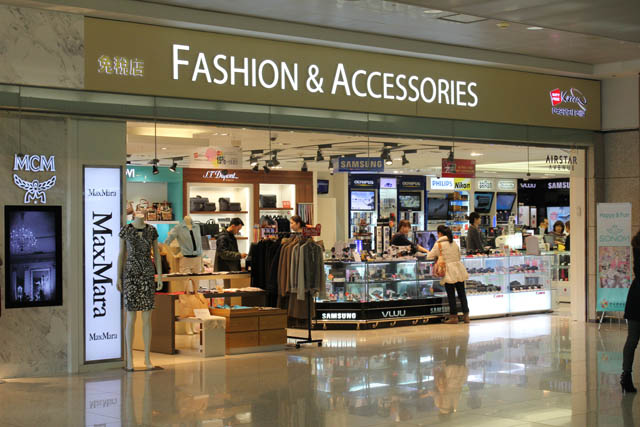
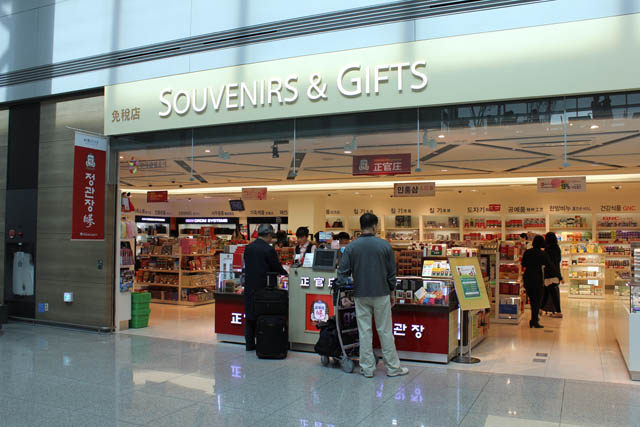
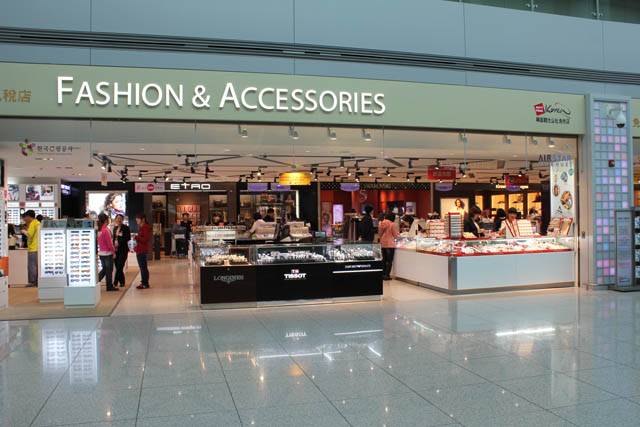
That this is a business with great potential and an unrealised critical mass is probably a fair assessment. For example, KTO currently operates 14 fashion and general merchandise shops at Incheon Airport, including boutiques, totalling 2,600sq m in area. KTO’s shops are located in the main terminal and west wing from where all Asiana Airlines flights depart. A number of special promotions are planned as part of marketing efforts to boost sales again this year.


“We plan to try special discount promotions in our airport shops,” said Lee. “We offer discounts of about 10% to 15% for some products to foreign tourists by cooperating with credit card companies like China Union Bank, Mastercard and some domestic South Korean credit companies like Samsung and LG.”


Eleven of KTO’s shops are located within the west wing, while the three other shops are located in the main terminal near the west wing pier entrance. KTO’s fashion shops are located around the entrance to the west wing pier where they are intended to be seen by more passengers than just those taking flights from west wing flight gates.


CHANEL IS MOST POPULAR KTO BRAND

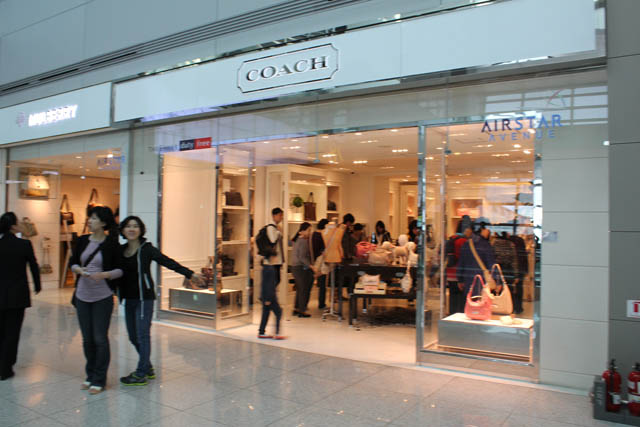
Meanwhile, fashion goods and accessory sales in KTO’s Incheon general merchandise shops account for 30% of total revenue, while South Korean products – including Red Ginseng and luxury boutiques such as Chanel, Burberry and MCM – are amongst the other major revenue generators.


“Chanel is our most popular brand regardless of the passenger’s nationality and our Burberry boutique is second,” said Lee, noting that Burberry is mostly popular with Chinese passengers who buy clothes and leathergoods, such as bags.


In addition to luxury international brands, KTO also stocks a number of well known South Korean fashion brands, including clothes by Beanpole of South Korea, which includes men’s, ladies’ and kids’ casual wear and sportswear.


Electronics products are in demand with KTO’s collection including cameras, iPods, MP3 players, electric shavers and other items. Digital cameras account for about 63% of all electronic items sold.
KTO Incheon Airport

Watches and jewellery sales have also risen during the past year, while most jewellery displayed, including rings, necklaces, bracelets and earrings, features Korean amethyst settings. Watches are also said to be selling well according to Lee, with more medium and lower-priced models including Swatch being bought.


Korean products account for almost 20% of KTO’s total sales. Popular lines include souvenirs such as ginseng, kimchee and Korean chocolates. High priced Red Ginseng is the most popular Korean product and popular with Koreans as well as foreigner travellers. KTO’s Red Ginseng airport shop prices are 10% to 20% cheaper than downtown stores in Seoul.


“We have relocated some of our products to make our shops more profitable. We have made separate layouts for food and non-foodstuffs to help customers find products more easily,” said Lee. “Usually we position items according to their sales performance. We evaluate each product on a quarterly basis. We move items within each shop, but not between our shops.” Top brands for South Korean customers are Chanel, Burberry, MCM and Montblanc, with many buying Red Ginseng products in KTO’s shops.


For Japanese customers, the top brands in KTO’s outlets are Chanel, Burberry, Le Sportsac and Dunhill items. Meanwhile, the top brands for Mainland Chinese shoppers in KTO’s shops are Chanel, Burberry, Montblanc, Canon cameras and Red Ginseng products.


With Chinese visitor spending continuing to grow, KTO is planning to increase the amount of Chinese language information available to help this important group of customers. “We operate an information desk for Chinese customers at Incheon Airport and we are going to publish a shopping guide for Chinese travellers,” said Lee.


“We opened our information desk last year. We will hire more Chinese-speaking staff for our information desk and shops.”
 

KTO Incheon AirportSEAPORT SALES REACHED AN ADDITIONAL $97.7M

Meanwhile, duty free sales at the four major seaports where KTO operates mixed category duty free shops also rose by double-digit figures last year, buoyed by the rising number of Chinese tourists visiting South Korea on ferries and on cruise ships.


Duty free revenue in KTO’s seaport shops grew by 19.3% in 2011, says Lee, while operating profit for the organisation’s seaport shops grew by 24% last year. Based on KTO’s seaport duty free sales in 2010, The Business estimates the organisation’s seaport sales reached US$97.7m last year.


With seaport shop sales accounting for about 30% of KTO’s total duty free revenue, The Business calculates that the agency’s combined Incheon Airport and seaport duty free sales totalled around $325m in 2011.


“The increase in seaport sales was due largely to the increase in Chinese passengers using Incheon Port where we have two duty free shops,” said Lee. “Also, the number of Japanese passengers using Busan Port increased last year. We expect our seaport duty free revenue will increase about 10% this year because of the increase in Chinese passengers. They are the main customers in our seaport shops.”


KTO operates five seaport shops in the ports of Busan, Kunsan and Pyongtaek, as well as the aforementioned two in Incheon Port. The organisation’s duty free license allows KTO to sell all duty free categories in its seaport shops, including liquor, tobacco, perfume, cosmetics, electrical goods such as rice cookers and shavers, plus ginseng products.


It also offers fashion goods, including mid-range branded handbags, although liquor is the top-selling category in KTO’s port shops, followed by tobacco and South Korean cosmetic brands. “Our seaport shops can sell all types of duty free goods, but cheap products like liquor and tobacco are good items. It’s completely different to our Incheon Airport shops,” said Lee. “Seaport shops are permitted to sell all types of goods, but port shop customers do not want to buy high-end items.”


Johnnie Walker Black Label and Ballantine’s 17yo are the two top-selling liquor items in KTO’s port shops, while Sul Wah Soo by South Korea’s Amore Pacific is one of the most popular domestic cosmetic brands. Asked about tobacco sales, Lee noted that South Korean cigarette brands Esse, The One and This are popular, along with Marlboro in most of the port shops.


In addition, Mild Seven sells well in Busan Port duty free shop, which is used by Japanese passengers who take ferry crossings from Osaka, Tsushima and Fukuoka in Japan. Chung Hwa cigarettes sell well in the two Incheon Port duty free shops which are used by the largest number of Chinese ferry boat passengers who return home on ferry crossings to Qingdao, Weihai and other East Sea ports in China.


“About 90% of our port shop sales are to Chinese passengers except at Pyongtaek Port, where South Koreans are the main passengers and account for 80% of our sales there. These are businessmen travelling to China. We can only do departure sales in our seaport shops,” said Lee said.


‘FOREIGN CUSTOMERS’ BOOST SALES

Foreign travellers are boosting KTO’s duty free revenue, with the Chinese travellers’ share of purchases rising by 5.1% in 2011 and the Japanese share by 1.8%, while South Korean passengers’ share of purchases fell by 9%.


In 2011, South Korean customers accounted for 62% of total sales revenue in KTO’s Incheon Airport outlets, down from 71% the previous year. The Chinese passenger share of total sales revenue was 13.3% last year, up from 8.2% previously, while the Japanese share grew to 12% from 10.2% in 2011 compared to 2010.


Chinese customers record the highest spend per purchase. Some 98,000 Mainland Chinese passport-holding customers accounted for 8% of all transactions in KTO’s Incheon shops last year, while South Korean passengers accounted for 58% of all purchase transactions and Japanese travellers 21%.


Per capita spending last year by Chinese passengers was US$200, according to Lee, followed by South Korean travellers with an individual average spend of $130, while Japanese customers each spent $73 on average. Other nationalities combined spent an average of $116 per purchase


“Chinese customers have a stronger spending tendency than other people,” said Lee. “The Chinese share of sales value increased 5% as more Chinese passengers used Incheon Airport. Instead of travelling to Japan, because of the Tohoku earthquake they came to South Korea.


“The Japanese share of purchases increased 1.8% because of the strong yen and the weaker won; shopping prices are good in South Korea. South Koreans temporarily did not want to travel abroad to Japan last year on account of the earthquake and Fukushima nuclear accident, but the disaster had little impact on the South Korean duty free market.”


(A major report on the Korean duty free market –  the world’s largest – will be published shortly in The Travel Retail Business-Ed].

ADFA says claimed ‘tobacco windfall’ is wrong


The Australian Duty Free Association (ADFA) says that any ban on duty free arrivals tobacco allowances will not translate into higher domestic sales and taxes.


ADFA says the Australian Government has got its sums severely wrong if it believes that removing duty free arrivals’ tobacco allowances will result in raising an additional A$200m a year in tax revenues. (Right, Sydney Airport).


Commenting on leaked reports to the media, Chair of the Australian Duty Free Association Milton Lasnitzki said: “If these leaked reports are correct then the Government has completely overstated the revenue it expects to raise by banning the sale of duty free tobacco on arrivals and the withdrawal of the allowances. lt has clearly not considered the costs of the unintended consequences of this poorly thought-out policy.


“It is impossible for the Government to meet its revenue projections from the measure. It will result in a budget black hole and materially harm an important tourist-related industry.”


ADFA adds that in its view, the Henry Tax Review has wrongly estimated the potential tax revenue that might be raised at around A$200m a year, while it says some leaks have even suggested the Government might hope to generate A$270m.


The Australian Duty Free Association [ADFA) says these sums are grossly in excess of the independent assessment of revenue generation related to any removal of duty free arrivals allowances – based on research it has commissioned by Deloitte Access Economics.


Apparently, this analysis shows that the net tax revenue that the Government would gain could be as low as A$17m with an upper limit of A$41m at best. The report also suggests that there will be ‘substantial costs’ involved for Australian Customs related to enforcing any ban.


ADFA’s Lasnitzki added: “The Government has irresponsibly overestimated the revenue it can gain by applying a ban. lt expects to collect more tax revenue from the sector than is generated. This clearly is not possible.


“Not only will the ban not achieve the Government’s budget objectives, but it will also result in devastating damage to the Australian duty free industry, with consequential loss of revenue to our airports and harm to our tourist industry.”


ADFA says it has received confirmation from the Department of Health and Ageing that this change is not based on health reasons and that it falls within the portfolio of the Treasury. Lasnitzki said: “Therefore Government does not believe that it will impact smoking consumption and it is only about Government revenues based on flawed assumptions and forecasts.”


The Nuance Group – Australia’s largest on-airport duty free retailer – agrees, with CEO Derek Larsen (right) warning that any ban would hurt tourism and strain frontline Customs services as longer lines form at airports.


He said: “The ban would require incoming overseas travellers to declare cigarettes brought into the country in excess of one packet of 25. The Government will have to spend more on Customs to deal with the expected influx of tobacco in excess of one packet, or decide to turn its back on those cheating the system” he said.


“Already the queues at some of our airports are, at times, very long. This is extremely frustrating and annoying for exhausted travellers coming into the country after many hours flying and this will only get worse. Another consequence will be the increased black market activity of tobacco imports and the additional cost to Customs to curb this,” he said.


“It will also cost jobs, with the report identifying at least 100 jobs being lost with immediate effect and this will grow substantially, as the wider implications are felt. This is a poorly thought-out policy which, again, Government has not consulted with relevant industry.”


ADFA says that it supports a fair and equitable approach to the sale of tobacco as a legal product and not what it refers to as ‘the indiscriminate targeting of a retail business that provides virtually no material gain to the Government, but with major downside to business’.


Founded in 1977, ADFA’s members operate over 20 stores throughout Australia. The duty free industry turns over in excess of A$700m a year, providing jobs and export opportunities to Australian manufacturers, mainly in fashion, arts and crafts. ADFA is also a member of the Asia Pacific Travel Retail Association (APTRA).

WOPI diversifies portfolio with Westwood and Missoni sunglasses

World of Patria International has reached an agreement with Suntech Eyewear to assist with travel retail distribution of Missoni and Vivienne Westwood designer sunglasses in worldwide markets outside the UK.


The agreement continues WOPI’s diversification into categories outside its core premium and super-premium liquor offer, which it believes are the right fit for travel retail markets. Samples from the latest 2012 collections will be on show to buyers at TFWA Asia Pacific & GATE ONE2ONE this month (stand A26).

Missoni fashion

[Left: Missoni catwalk shows]

Manufactured in Italy by Allison, the Missoni and Vivienne Westwood ranges offer ‘distinctive sunglasses collections both manufactured to the highest specifications’. Sunglasses are CE marked for Europe.


Missoni, the Italian fashion brand is still a family run business, made famous for its brightly coloured patterns inspired by folk art. “The sunglass range uses these vibrant patterns in subtle ways to bring a new twist to classic designs,” says WOPI. Priced at £135+, the range offers six models and four colours per sku.


Vivienne Westwood Eyewear

‘DAME VIV’

Retailing at £165+, the Vivienne Westwood frames [pictured left] incorporate classic elements associated with ‘Dame Viv’ such as tartan and the iconic orb. “The Dame’s collection of sunglasses, ooze VIP status, with her trademark opulence being transferred into eyewear for instant injection of unapologetic and eccentric glamour,” adds WOPI.


WOPI’s Andy Butcher comments: “Sunglasses are one of the fastest growing sectors within travel retail and, as we know, consumers love using the opportunity of travel retail to ‘trade up’ to more expensive, designer brands.

Vivienne Westwood Eyewear


[Vivienne Westwood eyewear modelled by Vivienne Westwood far left]


“What we really like about the Missoni and Vivienne Westwood collections are that, apart from being completely on –trend, they are also extremely well made, high quality sunglasses. Consumers are not just paying for a name – they’re paying for quality as well.”

DKNY Hearts The World fragrances inspired by iconic cities

Esteé Lauder and DKNY have launched the latest range of the popular fragrance brand DKNY Hearts The World.


DKNY Hearts the World is available from Travel Retailing in Europe, Middle East and Africa from May 2012 and in America, Asia and Pacific from June 2012.


Donna Karan New York and DKNY joined The Estée Lauder Companies when the exclusive global license agreement was signed in 1997. Sold in more than 120 countries and territories, the collection consists of luxury fragrance, bath and body collections that reflect the style of fashion designer, Donna Karan.

DKNY Hearts the world Be Delicious

The new collection takes consumers on a world tour; or more specifically to New York, Paris, London and Rio.


A BITE OF THE BE DELICIOUS APPLE

“[The new collection] promises to transport you to the chicest cities around the globe one spritz at a time,” says the brand. “From a romantic stroll through central park to the pulsating energy of Rio to the country-meets-city scene of London and of course, the ultra-posh streets of Paris. This is your nonstop ticket to take a bite out of life, wherever you go.”


I Heart New York Be Delicious “Seven years ago, when Donna Karan asked us to create Be Delicious, she requested that we capture the emotion of New York City in a bottle and so Be Delicious was born,” reveals the brand.


According to ELC DKNY Be Delicious NYC [pictured left] is ‘defined by a heart of a green apple, the scent is irresistible and easy to fall in love with’.

DKNY Hearts London Be Delicious


DKNY Be Delicious PARIS [pictured right] is ‘inspired by the Parisian woman’.  Notes include jasmine, violet, and patchouli as well as vanilla and Gala apples.


DKNY Be Delicious LONDON provides a ‘mix of English countryside with the heart and soul of the city’. Notes include hyacinth, green apples, honeysuckle, blackcurrant buds and English rose. Bottom notes of amber and vetiver round out the fragrance.


DKNY Hearts Rio Be DeliciousDKNY Be Delicious RIO [pictured left] is described as lush and tropical. The juice includes Maracuja fruit and Pink Lady apples as well as myrrh, benzoin and sandalwood. Orange flower and gardenia can also be detected.

Capi aims to drive sales with Merchandising Manual

Capi Trading has produced a Visual Merchandising Manual for its clients, including display instructions and training tips.


The Capi Visual Merchandising concept has been especially developed for travellers; the concept uses floor and display plans to attract and motivate customers and to ultimately encourage purchase.


“Visual Merchandising is one of the most underrated, but also most decisive parts of a store formula,” says Capi. “It functions like a ‘silent salesman’ and can help in boosting sales. In electronics retail the power of visual merchandising seems to be some steps behind other branches such as fashion/food/fragrance.”


Capi believes that by focusing on emotion and competence, the Visual Merchandising Manual is an added benefit for Capi business partners in electronics travel retail.


Capi Visual Merchandising ManualSTAFF TRAINING

The manual has clear and simple guidelines to help the client display products. Each display method calls for a different approach so instructions on how to fill showcases, slat walls, shelves, dump-bins and touch-and-feel presentations are included. Options are presented per product group.


“Each product group has step by step instructions and pictures showing the best way to create structure on various displays available by limiting the number of products, defining the maximum size of price cards and placing A-brands at specific levels in the presentation,” adds the electronics retailer.


The visual merchandising manual has been used to train staff at Capi shops at airports in Europe and South Africa, and is now being introduced in Business-to-Business partnerships.


“Because of our close connection to Capi retail we can offer our clients a focused assortment, which enables our Business-to-Business partners to develop a profitable electronics business; less is more” explains Jaco Vlemingh, General Manager Capi Trading.


“This manual compliments that assortment and our clients will benefit from the clear and concise presentation. We aim to inspire customers and we believe this manual creates real added value for our clients.”

Anna Sui launches sequel to successful Secret Wish scent

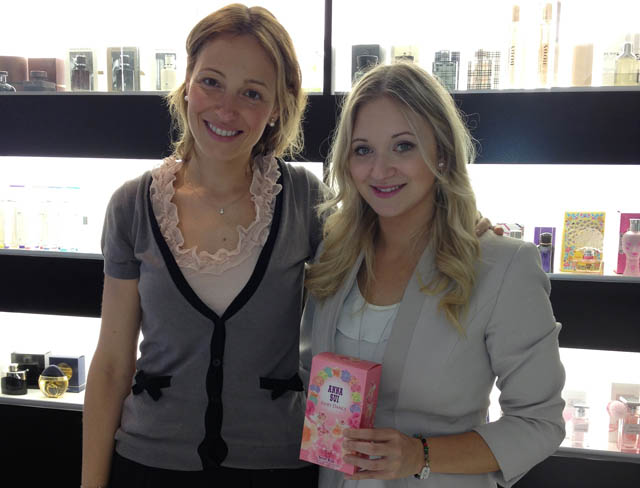
Inter Parfums and Anna Sui have recently launched ‘Fairy Dance’; an addition to the American fashion designer’s fragrance line and sequel to the popular Secret Wish fragrance, into GTR.


Fairy Dance made its debut during the official launch in Asia during April and May, where Sui actually presented the new fragrance at several events throughout Asia and participated in many one-on-one interviews.


According to Inter Parfums, every fragrance created under the Anna Sui brand is very personal to the American designer and ‘she puts her all into the creation and development of each fragrance’.


“Fairy Dance is a warm, shimmering, seductive fragrance,” remarked Sui with an exclusive comment to The Business. “One that captures good times, lighthearted laughter, and a girl’s yearning for her deepest wishes to come true.  It’s a celebration of life and joy, happiness and radiance…all imagined within an enchanted fairytale garden.”

[Patricia Rodrigues and TRBusiness Editor Charlotte Smith at Inter Parfums USA headquarters]


‘TREMENDOUS OPPORTUNITY’

“Keeping in the tradition of the Anna Sui fragrance history in Asia, we know we have a tremendous opportunity,” said Patricia Rodriguez at Inter Parfums.


Rodrigues describes the fragrance as a Fruity Floral, “which opens with notes such as Tangerine, Mango and Pink Pepper that moves into a balanced heart of Rose, Peony and Bamboo. The final dry down adds the warmth of Sandalwood, Vetiver and Vanilla.”


Anna Sui Fairy Dance Secret Wish fragrances are available at HKIA in 30ml, 50ml and 75ml Eau de Toilette flacons, which feature three concave sides and a charming fairy on its stopper.


Look out for a full-length feature on Anna Sui fragrances in the Beauty Report to be featured in the June issue of the Travel Retail Business magazine.

Buckley Jewellery dazzles with micro pave ‘Bouton’ Collection

Buckley Jewellery announces that coinciding with the company’s exhibition at the TFWA show in Singapore it will also launch a brand new range of sterling silver jewellery called Bouton.


This new premium range was created by Adrian Buckley, CEO of Buckley Jewellery, to showcase the company’s 20 years of design experience and exhibit ‘the award winning micro pave techniques employed by his technical craftsmen around the world’.


Buckley has created a ‘dazzling’ 100 piece collection of cubic zirconia gems set in 925 sterling silver, with micro pave detail. Pieces include rings, earrings, eye, pendants and bracelets.


To launch Bouton, a photographic and video campaign has been produced by the French fashion photographer Kristian Schuller.
 

Adrian Buckley said, “I have waited a long time to finally launch my new sterling silver brand and really wanted to create a more luxurious collection of pretty, easy to wear pure silver jewellery for women who like to have fun and look fantastic.


“I also wanted to create a range of beautiful jewellery that would last for decades, due to the highest levels of craftsmanship.”


For further information please contact: Sam McDermid, Brand Director, [email protected]

BAA announces sale of Edinburgh Airport


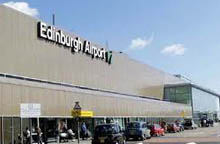
London Gatwick and London City Airport owner Global Infrastructure Partners is to pay £807.2m ($1.3bn) for Edinburgh Airport, following its forced sale by the UK Competition Commission.


The cash deal is expected to be completed next month and BAA’s CEO Colin Matthews said briefly: “Edinburgh Airport and its team have been part of BAA for a long time and we are proud of its achievements. We wish the new owners every success and are confident the airport will continue to flourish. BAA will continue to focus on improving passengers’ journeys at Heathrow and its other airports.”


For his part, Adebayo Ogunlesi, Chairman and Managing Partner of GIP commented: “Edinburgh Airport is a high-quality infrastructure asset. Its acquisition is a landmark deal for GIP and represents the first investment by GIP II. We see significant opportunity to apply our tested and successful operational expertise and our knowledge of the global airports sector to develop and enhance the performance of Edinburgh Airport in years to come.”


Michael McGhee, the GIP Partner leading the acquisition added: “We plan to work closely with the airlines to improve customer service and quality in a similar fashion to the strategy we are successfully executing at our existing UK airports London Gatwick and London City. We expect to continue to develop Edinburgh Airport into an attractive and efficient capital city gateway by improving the experience of our passengers, business and leisure alike.”


Edinburgh Airport handled 9.3m passengers in 2011 and generated EBITDA of £48.3m ($77.8m) for the same period. GIP is an investment fund founded by Credit Suisse and General Electric and it is understood to have outbid a consortium led by JP Morgan Asset Management’s infrastructure fund to acquire Edinburgh. The JP Morgan team also included Incheon International Airport Corp.


BAA was forced to sell one of its leading Scottish airports, following the UK Competition Commission order that it must dispose of Glasgow or Edinburgh. GIP was also the beneficiary of an earlier order by the Competition Commission that BAA should sell Gatwick, which it acquired for £1.5bn ($2.4bn) in 2009.

Heinemann brings local flavour to Oslo Airport

Gebr Heinemann has revamped its outlets at Oslo airport offering a greater number of services and regional specific products to choose from.

The 1,850sqm shop, in the departures area of Oslo airport, was given the Heinemann makeover in mid-April. Moreover, a 230sqm Heinemann Travel Value fashion shop stocking accessories and top international fashion labels, opened early in February; and the arrival shop has supported the brand implementation of Heinemann with 1,650sqm.


Elsewhere, Heinemann Duty Free has stores in Bergen and Kristiansand measuring 800sqm and 240sqm respectively. In addition Heinemann has two shop in Trondheim (travel value shop and a duty free shop) to open on 1 May, spanning a total of 800sqm.


These existing retail areas will be followed by a fully revamped, 1,050sqm duty free outlet in Stavanger in the middle of June – at which point Heinemann will have a presence at all of Norway’s five main airports.


‘REGIONALS AREA’

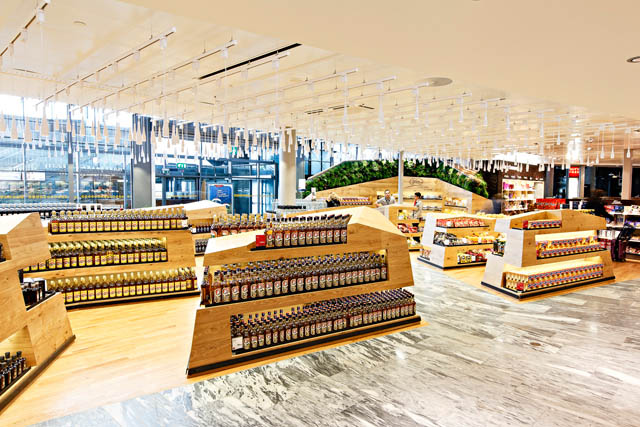
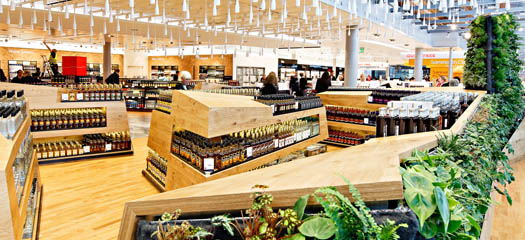
A special feature of the Heinemann Duty Free shop in Oslo will be a ‘Regionals’ area highlighting Norwegian specialities. In designing this space, Norwegian architects Snøhetta have reinterpreted the country’s natural landscape.


“Norway is the park of Europe where everybody has ‘allemannsrett’, or the principle of freedom to roam. In other words, the nature of Norway – its parks, mountains and coastline – is open to everyone,” explains Kjetil Thorsen, founding partner of Snøhetta.


“This is what we want to convey to customers in the duty free shop. We are not trying to transplant the Norwegian landscape to Oslo’s Gardermoen Airport, we are creating an abstract display of what nature means to us as Norwegians – the feel of our natural environment with its fertile greenery, fresh air and water, dramatic views and light.”


“Furnishings in light oak blend organically with the oak floor, upright green gardens growing in between,” says the retailer. “Aside from providing a fresher climate, these indoor gardens will have a calming effect on passengers, helping them to recharge their energies amid the busy environment of the airport.”


SPECIALITY PRODUCTS

The product range within the ‘Regionals area’ has everything from Bamsemums chocolate-coated marshmallow bears to Norwegian Vikingfjord vodka. Another attraction are the Braastad and Bache-Gabrielsen XO cognacs, produced in France by family-run companies with Norwegian roots; the cognacs have a strong following in Norway.


“The regional range gives our shop its identity. We track down the best that Norway has to offer for our customers, and bring those goods to the airport,” explains shop owner Gunnar Heinemann.


“In all of Heinemann’s stores, the ‘Regionals’ area is created by a well-known designer, architect or artist who produces a concept unmistakably matched to its location. The layouts, colours and materials differ at every airport, creating a series of unique designs.”


TRIP TO SPACE

Before the end of June, Heinemann duty free customers will have the chance to win a trip to space as part of a campaign to mark the new store openings. The winner will be taken to the spaceport in New Mexico to undertake three days of training that will give them an idea of what to expect on their forthcoming voyage.


Provided all health and fitness requirements are met, the countdown will commence – and the main prize-winner will get to view the earth from 110 kilometres up.


TRAVEL RETAIL NORWAY

The shops will be operated by Travel Retail Norway, a joint venture between the German-based family-run company Gebr. Heinemann, one of the three main players on the international travel retail market, and Norwegian company Validus.


Travel Retail Norway has been active at Oslo-Gardermoen, Bergen, Kristiansand, Stavanger and Trondheim airports since 2004. The company, which is based at Gardermoen, has around 700 employees and runs nine shops.