Archives

‘Zero-dollar’ tour ban sees Chinese pax growth slow to Thailand

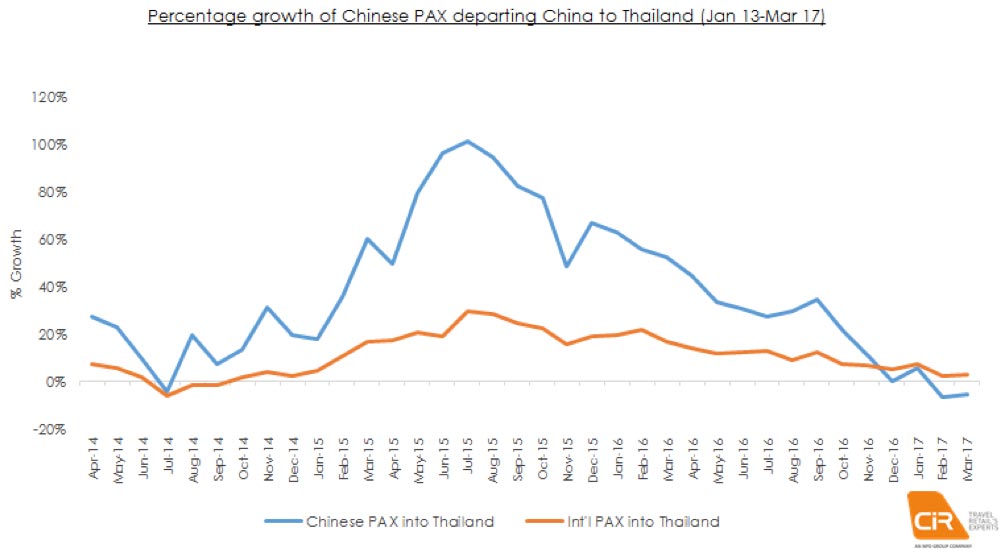
AOT-Bangkok-leadAccording to Counter Intelligence Retail (CiR), Thailand has seen the traffic growth rate of Chinese passengers slow dramatically over the last year made all the more pronounced by a surge of Chinese travellers it benefitted from in the prior year (12 months to July 2015).


CiR’s traffic modelling and forecasting tool, Business Lounge, shows that from peak growth of +101% in July 2015 (compared to July 2014 year-on-year) rates have been falling steadily ever since.


By December 2016 there was zero growth and in the first quarter of 2017 the trend was negative overall at -2%. “What this data from CiR Business Lounge tells us is that after a golden period of Chinese travel easily outstripping general international demand to Thailand, the situation has reversed – and since December 2016 international traffic to the country has been stronger,” says Garry Stasiulevicuis, President of Counter Intelligence Retail.


CiR points out that the Chinese boom in the 12 months after August 2014 came in the relative calm after the storm of a series of anti-government protests that lasted until May 2014 during which time incumbent Prime Minister Yingluck Shinawatra was unseated.


POLITICAL STABILITY SAW A RETURN TO GROWTH IN 2015

As political stability returned so did international traffic; from the Chinese in particular. In 2015, Chinese tourism was up by +66% (from a low base in 2014) while 2016 saw a more measured rise in Chinese pax at +32% YoY.
 

Thailand-traffic-2016-2017


Nevertheless, this represents 1.3m extra Chinese arrivals to the country – a boon for duty free and travel retailers. The Chinese market is the largest source of tourists in Thailand.


While Chinese growth rates have been falling since July 2015, they were well ahead of international levels. However, a September 2016 ban on so called ‘zero-dollar’ tours (cheap group packages where tourists are herded to specific hotels and shops and unable to do much independently) Chinese numbers to Thailand have dropped dramatically.


The death of Thailand’s King Bhumibol Adulyadej a month later and official year-long mourning has also meant the cancellation of a number events and ‘full moon’ parties which affected the tourism sector.


HOWEVER, TRAFFIC IS SET TO IMPROVE

The ‘zero-dollar’ tours ban is a joint campaign with the Chinese authorities and it has resulted in the impounding of more than 2,000 tour buses. Backed by Tourism Authority of Thailand, the initiative is designed to improve tourism quality levels so that Chinese travellers have a better experience once the market purge is completed.


TAT expects this will eventually result in renewed and sustainable growth from its largest source market.


However, forecast data from Business Lounge offers some hope to travel retailers in Thailand. Based on scheduled capacities from China the data indicates that while seat numbers have stayed below 2016 up to May, from this month (June) the trend is set to improve.


Stasiulevicuis comments: “Summer seat capacities look promising in that they will be substantially above 2016 numbers until August. The gap then narrows again but broadens out from October. This is good news for both travel retailers and the wider tourism sector in Thailand which is trying to attract more Chinese FITs (independent travellers) to its shores.”


Helping FITs to Thailand will be low-cost carriers. As previously mentioned by CiR, growth in China’s LCC sector has been buoyant in recent years and this continues to be the case for traffic into Thailand. In July for example, carriers such as Spring Airlines, Juneyao Airlines & Sabaidee Airways have increased available capacity by about +43%.


For further information, please visit Counter Intelligence Retail.
RiM wins retail consultancy contract with Aer Lingus

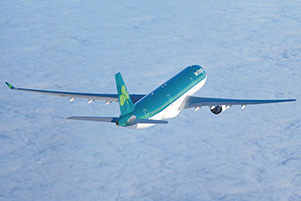
Aer Lingus RiM June 2017Dublin-based inflight services company Retail inMotion (RiM) has agreed a new retail consultancy and advisory agreement with IAG-owned Aer Lingus to help build the airline’s onboard retail services.
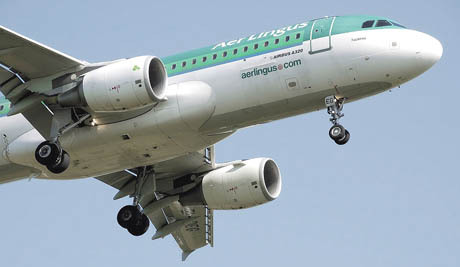
 

A majority-owned subsidiary of the LSG Group, RiM says this new retail consultancy agreement will offer advisory services to the airline for its onboard retail services and consultation regarding onboard retail.


This will also include duty free range selection management, crew training, menu card/catalogue design and optimisation of the airline’s existing onboard retail programme.


Responding to the Aer Lingus appointment of its new partner, Retail inMotion CEO Stefan Patermann said today that the company is ‘delighted’ to have won the business: “We will look to leverage our industry expertise, innovative solutions and customer-centric approach to one of the most prestigious onboard retail programmes in the industry,” he said.


001aer lingus

Aer Lingus has been the pioneering airline in the history of Irish Aviation which even Ryanair tried to buy not so long ago.

‘IMPORTANT PART OF OUR INFLIGHT SERVICE…’

Adding his comments, Mike Rutter, Aer Lingus COO said: “We welcome the retail expertise and technology solutions that a world leader in aviation retailing can bring the Aer Lingus platform.


“Our Bia and Boutique ranges form an important part of our inflight service and we look forward to working in partnership with Retail inMotion to further enhance our award-winning guest experience.”


As is well known, Aer Lingus – although owned by IAG – continues to be the national airline of Ireland, with a rich aviation history going back 81 years to its founding 1936 birth year.


Today, it operates a total of 63 aircraft on route sectors to the UK, Europe and North America and carries more than 12m passengers a year. It is also a vital airline partner of Dublin Airport.


PASSENGERS AWARDED AER LINGUS FOUR-STARS…

Aer Lingus is also Ireland’s only airline to gain a four-star rating from Skytrax – the much-respected international air transport rating organisation that ranks airports and airlines based on the comments of millions of  travellers who are invited to vote for their favourite transport providers each year. [The European Commission cleared the proposed €1.3bn ($1.4bn) acquisition of Aer Lingus by the International Airlines Group (IAG) on July 15, 2015-Ed].


The latest edition (at presstime) of the Aer Lingus inflight duty free magazine

The latest edition (as at press time) of the Aer Lingus inflight duty free magazine.

While the airline has long enjoyed its reputation as one of the early pioneers of inflight retail in Europe, so Retail inMotion has also built up a strong reputation with its impressive past and present clientele.


This includes Ryanair; American Airlines; spirit airlines; brussels airlines; Eurowings; Icelandair; TUI Nederland; Thomson Airways; TUIfly.com; edelweiss air; SunExpress; Jetairfly; TUIfly Nordic; SKY Airline; thello; Stobart Air; ASL Aviation Group; aurigny.com; viva aerobus and others.


GOOD INTERNATIONAL MIX

As of today, Retail inMotion has 150 employees and offices across the world, including Germany; Turkey; USA; Mexico; Italy; Spain; UK; Lithuania; Hong Kong and other markets, while it officially became part of the LSG Group in February 2016.


One of the most recent executives to join the retail organisation this year was Joe Harvey, who is now helping the company ‘drive’ its capabilities with its in-boutique programme around the world. Harvey has direct experience of Aer Lingus having worked for the airline previously.


Hamad International Airport traffic +8% to 19m in HY1

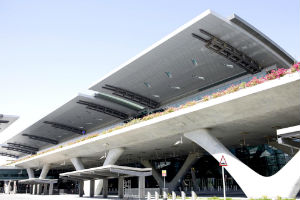
HIAmain

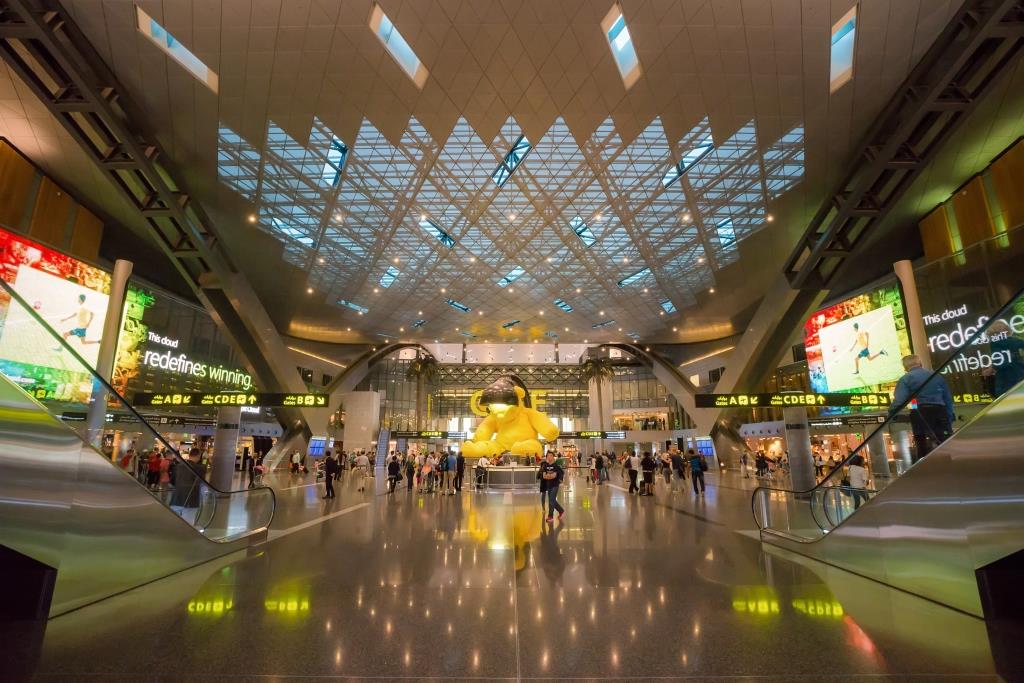
Qatar’s Hamad International Airport (HIA) in Doha has announced robust year-on-year passenger growth in its busiest six-month period to date.

The Middle East hub handled a total of*19m passengers from January to June this year, a rise of +8% compared with the same period in 2016.

Meanwhile, the airport handled 980,000 tonnes of cargo – an impressive uplift of +19% compared with the same period year-on-year.

Commenting on the results, Badr Mohammed Al Meer, Chief Operating Officer at HIA said: “Our growing passenger figures and cargo operations are a testament to our resilient and sustainable airport operations.”

SKYTRAX FIVE-STAR AWARD

Earlier this year, HIA was named as the sixth global airport recipient of the prestigious ‘5-Star Airport’ designation by London-based aviation institute Skytrax, making it the first Middle Eastern airport to capture the accolade.

The rating recognises excellence across departure, arrival and transfer areas, including airport facilities, together with customer service, immigration, shopping and food and beverage outlets.

HIA

HIA hit a new PAX record of 37.3m in 2016, an increase of +20.5% year-on-year. Source: HIA.

Other airport recipients of the five-star award include Singapore, Seoul, Hong Kong, Tokyo-Haneda and Munich.

HIA also won ‘Best Airport in Middle East’ for the third time in a row this year, and has claimed ‘Best Staff Service in the Middle East’ for the past two years.

“Our promise of operational excellence is at the core of our business, added Al Meer.

“HIA is a robust organisation backed by a committed and hardworking team. Together, we have promptly and successfully prioritised our passengers by offering them our five star services and a hassle-free travel experience.”

HIA hit a new passenger traffic record in 2016 with 37.3m – an increase of 20.5% year-on-year – as it fully activated Concourses D and E and delivered an additional 130,000sq m of expanded terminal capacity, including an enriched retail space.

GULF CRISIS CONTINUES…

As reported earlier this month, a tranche of GCC states have severed economic ties with Qatar based on accusations the country is “undermining the security and stability of the region”.

Qatar Airways and Qatar Duty Free CEO Akbar Al Baker has already called on the International Civil Aviation Organisation (ICAO) to intervene in the diplomatic crisis as a result.

At the time of writing, Qatar is reportedly refusing to negotiate with its neighbours before the imposed boycott on the country’s travel and trade is lifted.


Airport shopping lists ‘popular’ in UAE, poll shows

DXB

A high number of UAE travellers see their holidays beginning when they reach the airport. Source: Dubai Airports.

An increasing number of passengers in the United Arab Emirates are pre-planning their retail experiences before arriving at the airport terminal, new research has indicated.

A *YouGov travel habits survey conducted by Emirates Leisure Retail (ELR) and Dubai Airports (DXB) claims that 65% of respondents curate airport shopping lists before they leave home.

The most popular items for purchase include sunglasses (51%), toiletries (40%), and books (35%).

In turn, 45% say they mistakenly leave common travel items such as plug adaptors, mobile phone chargers, toothbrushes and sunglasses at home.

Interestingly, more than 67% believe their holidays begin by the time they reach the airport.

DXB KICKSTARTS SUMMER TRAVEL

As a result of the poll, DXB and ELR have launched a joint initiative, ‘Early Birds Have More Fun’, which offers discounts at restaurants as well as competitions and entertainment for the family.

Sunglasses

More than half of those surveyed included sunglasses on their airport shopping lists.

Matthew Horobin, Director – Brand Engagement, Dubai Airports, said: “The YouGov survey is further evidence that the airport experience is a fundamental part of the holiday experience, which is why we’re constantly introducing new and exciting ways to engage, entertain and delight our passengers.

“It also revealed that some passengers are unaware of many of Dubai International’s more recent facilities and services, like the dedicated Kids’ Zone to let children blow off steam, and a major upgrade to provide the world’s best airport Wi-Fi. Combined with the amazing special offers this summer, there are plenty of reasons for passengers to arrive early and get their holidays off to a flyer.”

Passengers can download the discounts, which include up to 25% off at ELR’s restaurants and Be Relax spa centres, from www.earlybirdshavemorefun.com.

*The YouGov survey polled 501 UAE residents

Qatar CEO Akbar Al Baker calls on ICAO to intervene

Qatar Airways and Qatar Duty Free CEO Akbar Al Bakerqatar airways ceo al baker has called upon the International Civil Aviation Organisation (ICAO) to declare the closure of UAE airspace and seaports ‘illegal’, following the imposition of the ban imposed on all Qataris travelling to, staying, or transiting to United Arab Emirates territories.


While the effective blockade has implications for Qatar Airways, it also represents a real medium business threat to Hamad International Airport (HIA) which traditionally offers flights and services to a mix of point-to-point travellers, plus a huge number who also travel in transit and/or take transfer flights from HIA around the region.


AKBAR AL BAKER SAYS BAN IS ‘UNPRECEDENTED’

In the first quarter of this year prior to the blockade being announced HIA handled 9.78m passengers in Q1 2017, equivalent to a 10% rise on the same period last year. At that time, Engr. Badr Mohammed Al Meer, HIA’s COO reported a significant increase in aircraft movements, as well as new airlines joining HIA’s network.


Akbar Al Baker

Qatar Airways and Qatar Duty Free CEO Akbar Al Baker talking to TRBusiness in Doha, Qatar, ahead of the Hamad International Airport opening in 2014.

On average, the airport handled well over 3m arriving, departing and transferring passengers per month in January, February and March. This followed on from the new annual passenger handling record set last year, when HIA processed 37.3m passengers – equivalent to an impressive 20.5% increase in 2016.


So far, Akbar Al Baker says Qatar Airways’ global operations ‘continue to run smoothly, with the vast majority of our network unaffected by the current circumstances’, but he is clearly far from happy.


“Our focus is on supporting any passengers impacted by the current situation and ensuring that we continue to deliver our award-winning service,” he said. “Our network expansion continues with two new destinations launching in the next month. As far as we are concerned, it is business as usual.”


IN ‘DIRECT CONTRADITION TO CONVENTION’

He added: “This blockade is unprecedented, and it is in direct contradiction to the convention that guarantees rights to civil overflight. We call upon the International Civil Aviation Organisation (ICAO) to declare this an illegal act. We are not a political body, we are an airline, and this blockade has stripped us of the rights which are guaranteed to us.”


The airline adds that due to the blockade it has ‘significantly increased’ the operations of its global call centre and social media to ensure concerned customers receive ‘the best possible care’.


It has also extended its commercial policy to ensure greater flexibility for refunds and rebooking for those passengers whose flights are impacted by the recent travel bans.


BA cabin crew announce new strike from July 1 to July 16

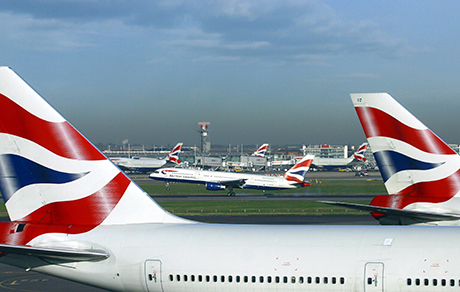
Top britishairways-planesBritish Airways cabin crew that belong to the Unite Union are to stage a two-week continuous strike from 00:01 on Saturday 1 July to 23:59 on Sunday 16 July, in support of the long-running pay and benefits dispute that has continued for more than a year now.


The Unite Union said yesterday that its BA cabin crew members are taking action again after it claimed that the airline is refusing to accept the union’s final compromise position ‘on the outstanding issue of the sanctioning of striking cabin crew.’


In addition to the strike, Unite has also vowed to ‘vigorously’ pursue legal action against British Airways to the ‘highest court in the land’ on behalf of its 1,400 cabin crew, after they were allegedly ‘sanctioned’ for taking strike action in a long running pay dispute.


DISPUTE OVER ‘REMOVAL’ OF CONCESSIONS

The Union claims that these ‘sanctions ‘have included cabin crew seeing bonus payments worth hundreds of pounds taken away and the removal of staff travel concessions’.


British Airways GMB Union

After numerous disputes, it would be an understatement to say that relations between British Airways’ crew and its senior management have been strained over the last 12 months – with most centred on pay, pensions and conditions.

The Union said yesterday that talks at the conciliation service Acas last week saw it express ‘deep frustration’ over British Airways’ failure to send its key decision makers to the talks. It says this led to the union writing to British Airways bosses with a final compromise position for acceptance by noon yesterday.


Commenting, Unite Assistant General Secretary Howard Beckett said: “The refusal by British Airways bosses to meaningfully consider our compromise offer is deeply disappointing.


UNION CLAIMS STRIKE ‘ENTIRELY AVOIDABLE…’

“A resolution to this long-running dispute was within the grasp of British Airways, but instead of grabbing that opportunity, bosses rebuffed it. It now means British Airways faces an entirely avoidable two-week strike and prolonged legal action on behalf of over 1,400 mixed cabin crew.”


The union adds that since 2010, all new BA cabin crew employees have joined what is called ‘mixed fleet’ where it says that ‘promises that pay would be 10% above the market rate’ have not materialised, with basic pay set at £12,192 ($15,585), with £3 ($7.66) an hour flying pay.


As such, it estimates that ‘on average’ these mixed fleet cabin crew earn £16,000 ($20,452), including allowances, a year.  Meanwhile, British Airways is understood to be disappointed with the Unite members’ decision to strike.


Major UK union votes ‘Yes’ to duty free at annual congress

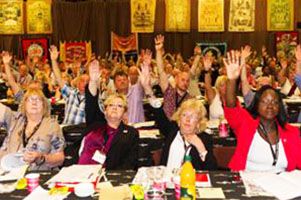
GMB Congress voting

The GMB Congress voting.

GMB, one of the UK’s leading trade unions has formally passed a motion to support the initiative to bring back intra-EU duty free shopping – as soon as the UK leaves the European Union after negotiations are complete.


The union gave its strong support in favour of backing a return to duty free shopping allowances at its recent 100th Annual Congress in Plymouth in the UK last week.


The motion was proposed to congress by Steve Mason from the GMB Southern Region branch, who reasoned that it could only aid job creation as he explained: “We respectfully remind you that duty free is not a new phenomena. We are not asking you to vote for a new creation. It has existed for well in excess of half a century.


GMB SAYS DUTY FREE WILL BRING BACK MORE JOBS

“For most of the period the UK has been linked to Europe as an economic entity going back to the early 70s [and] intra-EU duty free has existed. The restoration of intra-EU duty free would be a boost to the shipping, ferries, airport, airlines and general tourist industry and would also be advantageous, for example, to our drinks business and the Scottish Whisky membership.”


1999 duty free campaign

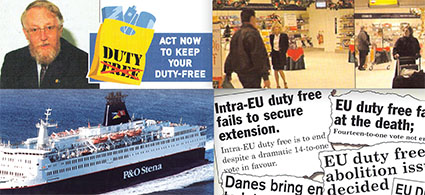
The 1999 save intra-EU duty free campaign was acknowledged by the European Commission at the time as one of the best-run it had ever faced, with only one member state – Denmark – finally refusing to sign off on the proposed extension. This effectively marked the end of the business at that time. Pictured top left here is Frank O’Connell, the President of the Duty Free World Council today, who is once again working closely (with ETRC) to bring back the business to the UK after it finally leaves the European Union.

Mason added: “This vote is a very serious motion and we wish you to vote on this basis. The revenue streams created would help to support route networks and be advantageous to people, businesses and regional economies.”


The union’s support will doubtless be appreciated by the pro-trade duty free lobby led by the ETRC and the Duty Free World Council, although there is a lot of hard work to get through first before this can become reality – mostly involving the physical separation of the UK from the European Union.


BACKGROUND: Intra-EU duty free allowances were obviously abolished in the UK back in 1999, although allowances have continued to apply to travellers whose final destinations are outside the EU.


Protests were also high when it was argued that up to 100,000 jobs could be lost if intra-EU duty free was abolished. This dispute over the industry’s future also led to strikes and blockades by French ferry workers at the Channel port of Calais, causing long delays for ferry passengers.


MASS WORKER PROTESTS

French maritime workers also blockaded entry and exit points to the Channel Tunnel on the French side at Coquelles near Calais. There were also sporadic delays at Caen where Brittany Ferries’ services were periodically delayed to Portsmouth. This occurred after workers went on strike fearing more than 300 redundancies at the ferry company.


Also, two years earlier in 1997 the-then Chairman of P&O Ferries Lord Sterling famously warned that without intra-EU duty free, the ferry company would have to withdraw some ships from the English Channel, or alternatively put up ticket prices.


It was also a similar story of concern at UK regional airports such as Birmingham, Bristol, Leeds/Bradford, Luton and Newcastle, where it was estimated that up to £36m ($45.7m) could be lost in annual sales revenue.


US courts reject Trump appeal over Muslim US entry ban

Congress will have to pass the Trump proposal small

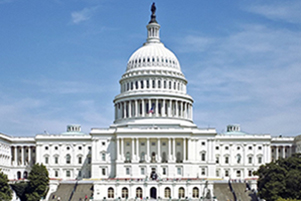
The US Congress in Washington.

The US Court of Appeals for the Ninth Circuit has unanimously rejected US President Donald Trump’s so-called ‘revised Executive Order travel ban’ on the rights of nationals of six mainly Muslim nations to visit the United States.


Yesterday’s ruling ultimately follows the government’s Executive Order of 27 January which was hastily brought in by Trump earlier this year, covering a series of immigration measures. It originally included a proposed ban on travellers from seven nations, which was subsequently reduced to six after Iraq was removed, leaving Iran, Libya, Sudan, Somalia, Syria, and Yemen.


The three appeal judges once again agreed with earlier judgments that President Trump had ‘exceeded the scope of the authority delegated to him by Congress’ in the first place by issuing the Executive Order entitled, ‘Protecting the Nation From Foreign Terrorist Entry Into the United States.’


The US Court of Appeals for the Ninth Circuit Courthouse in San Francisco where the appeal was heard

The US Court of Appeals for the Ninth Circuit Courthouse in San Francisco where the appeal was heard.

THE JUDGES’ OPINION:

In their ‘opinion’ the judges said: “In suspending the entry of more than 180m nationals from six countries, suspending the entry of all refugees, and reducing the cap on the admission of refugees from 110,000 to 50,000 for the 2017 fiscal year, the President did not meet the essential precondition to exercising his delegated authority.


“The President must make a sufficient finding that the entry of these classes of people would be ‘detrimental to the interests of the United States.’”


The judges added that Trump’s order also went against other provisions of the ‘Immigration and Nationality Act’ (INA) ‘that prohibit nationality-based discrimination and require the President to follow a specific process when setting the annual cap on the admission of refugees.’


INJUNCTION AGAINST TRUMP ORDERED TO BE REISSUED

Following its 86-pages of arguments the judges remanded the case to the district court with instructions to re-issue the injunction against Trump’s Executive Order in line with the appeal court’s decision.


The case was heard by Judges Ronald Gould, Richard Paez and Michael Daly Hawkins and effectively upholds the earlier injunction served on the Trump administration on this issue – as ordered by the federal judge in Hawaii earlier this year.


However, it is also understood that a High Court hearing could take place later this year to rule on whether there are grounds for a further review of this case.


Airlines to hit $31.4bn profit on $743bn sales says IATA

IATA planesThe International Air Transport Association (IATA) is predicting that the world’s commercial airline industry is expected to report a $31.4bn profit on revenues of $743bn this year, with profits up on $29.8bn last year and revenues close to the forecast number of $736bn.


Commenting on the strong numbers, Alexandre de Juniac, IATA’s Director General and CEO said: “This will be another solid year of performance for the airline industry. Demand for both the cargo and passenger business is stronger than expected.


“While revenues are increasing, earnings are being squeezed by rising fuel, labour and maintenance expenses. Airlines are still well in the black and delivering earnings above their cost of capital. But, compared to last year, there is a dip in profitability,” he said.


NET PROFIT OF $7.69 PER PAX EXPECTED IN 2017

In 2017, airlines are expected to retain a net profit of $7.69 per passenger. That is down from $9.13 in 2016 and $10.08 in 2015. The average net profit margin stands at 4.2% (down from 4.9% in 2016).


“Airlines are defining a new epoch in industry profitability. For a third year in a row we expect returns that are above the cost of capital. But, with earnings of $7.69 per passenger, there is not much buffer. That’s why airlines must remain vigilant against any cost increases, including from taxes, labour and infrastructure,” said de Juniac.


IATA de juniac

Alexandre de Juniac, IATA’s Director General and CEO.

IATA says that despite the strong results, major regional variations remain with around 50% of the industry’s profits generated in North America ($15.4bn).


PAX DEMAND TO GROW BY 7.4% BY 2017-END

It says that carriers in Europe and Asia-Pacific will each add a $7.4bn profit to the industry total, while Latin America and Middle East carriers are expected to contribute $800m and $400m respectively. By contrast, African airlines are forecast to return a $100m loss.


IATA says that passenger demand is now expected to grow by 7.4% by the end of 2017 – the same growth rate as 2016 and 2.3 percentage points higher than previously forecast.


IATA adds: “Stronger demand translates into an additional 275m passengers (over 2016), which will bring the total number of passengers expected to fly this year to 4.1bn. If achieved, this would be the largest year-on-year growth in absolute passenger numbers ever recorded.


“What is most important for the industry financial performance is that this surge in expected demand takes traffic growth ahead of planned capacity growth. As a result, the average passenger load factor is expected to reach 80.6% (slightly ahead of the 80.3% achieved in 2016), helping to boost unit revenues.”


REGIONAL ROUND UP:

North American carriers are expected to post a $15.4bn net profit (down from $16.5bn in 2016), which is equal to $16.32/passenger. Passenger demand is expected to grow by 4.0%, slightly behind expected capacity growth of 4.4%.


Asia-Pacific airlines are forecast to post a $7.4bn net profit (down from $8.1bn in 2016), which is equal to $4.96/passenger. Passenger demand is expected to grow by 10.4%, slightly ahead of expected capacity growth of 8.8%.


European airlines are expected to post a $7.4bn profit (down from $8.6bn in 2016), which is equal to $6.94/passenger. Passenger demand is expected to grow by 7.0%, slightly ahead of expected capacity growth of 6.9%.


001 aa ba planes

LATIN CARRIERS RECOVERING WELL

Latin American are expected to post a $0.8bn profit (up from $0.6bn in 2016), which is equal to $2.87/passenger. Passenger demand is expected to grow by 7.5%, well-ahead of expected capacity growth of 6.7%.


Middle East airlines are expected to post a $0.4bn profit (down from $1.1bn in 2016), which is equal to $1.78/passenger. Passenger demand is expected to grow by 7.0%, slightly ahead of expected capacity growth of 6.9%.


African airlines are expected to post a $0.1bn loss (in line with the $0.1bn loss in 2016), which is equal to a loss of $1.50/passenger. Passenger demand is expected to grow by 7.5%, slightly behind expected capacity growth of 7.9%.


Meanwhile, IATA estimates that the average return air fare is expected to be $353 this year, while the number of unique city pairs served by aviation is forecast to grow to 19,699 in 2017, a 99% increase on 1996. At the same time, the global spend on tourism enabled by air transport is expected to grow by 5.2% in 2017 to $685bn.


Airlines are expected to take delivery of some 1,850 new aircraft in 2017, around half of which will replace older and less fuel-efficient aircraft. This will expand the global commercial fleet by 3.8% to 28,645.


World passenger aircraft fleet to double to 40,000 planes

Airbus forecasts Top bigThe world’s total civil aviation passenger and freight fleet (above 100 seats) is forecast to more than double to more than 40,000 aircraft over the next 20 years, according to Airbus Industries’ Commercial Aircraft division.


These are the findings of the latest Global Market Forecast 2017-2036, which is also predicting a need for another 530,000 new pilots and 550,000 new maintenance engineers as traffic is set to grow at 4.4% per year.

The main drivers behind this latest prediction are the increasing numbers of first time flyers, rising disposable income spent on air travel, expanding tourism and industry liberalisation.


NEW ROUTES ALSO DRIVING DEMAND

New routes are also a major factor, with Airbus suggesting there will be a need need for 34,170 passenger and 730 freighter aircraft worth a combined total of $5.3 trillion. Of this, it also predicts that more than 70% of these new aircraft will be single aisle aircraft, with a 60% growth in this aircraft type.


As is well known, Airbus says air traffic growth is currently highest in emerging markets such as China, India, the rest of Asia and Latin America and almost double the 3.2% per year growth forecast in mature markets such as North America and Western Europe.


As such, emerging markets which are currently home to 6.4bn of the world’s 7.4bn population are expected to account for nearly 50% of the world’s private consumption by 2036.


Airbus forecasts big

Alongside this position growth scenario, the pressure will be on aircraft manufacturers like Airbus (and Boeing) to demonstrate ever-improving engine emissions technology to satisfy increasing environmental requirements.

AIR TRAVEL DOUBLES EVERY 15 YEARS

“Air travel is remarkably resilient to external shocks and doubles every 15 years,” said John Leahy, COO – Customers, Airbus Commercial Aircraft.


“Asia Pacific continues to be an engine for growth, with domestic China to become the world’s largest market. Disposable incomes are growing and in emerging economies the number of people taking a flight will nearly triple between now and 2036.”


Over the next 20 years Asia Pacific is set to take 41% of new deliveries, followed by Europe with 20% and North America 16%. Aibus adds that middle class numbers will almost double to nearly five billion as wealth creation makes aviation even more accessible – particularly in emerging economies where spending on air travel services is set to double.


Breaking future aircraft style requirements down, Airbus says that in the twin-aisle segment, such as the A330s, A350 XWBs and A380s there will be a requirement for around 10,100 aircraft valued at US$2.9 trillion.


In the single-aisle segment, such at the A320neo, it expects a demand requirement for around 24,810 aircraft valued at US$2.4 trillion.