Trbusiness. The travel retail Trbusiness. The magazine for global retail and duty free professionals.
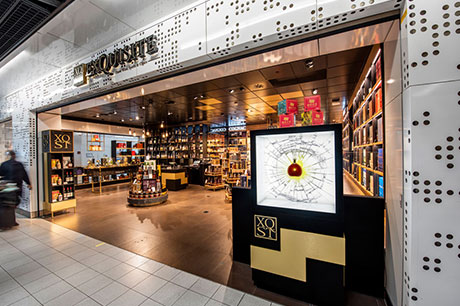 The paucity of international passenger volumes means it is difficult to accurately measure any meaningful like-for-like revenue gains following the introduction of UK-EU duty free, leading industry sources have told TRBusiness.
Travellers to the EU from England, Wales and Scotland and UK-bound travellers from the continent are no longer subject to UK excise taxes or duties on liquor and tobacco at British ports, airports, international train stations and onboard ships.
But the allure of attractive pricing and flattering personal allowances (travellers to Great Britain can avail of 42 litres of beer and 200 cigarettes without paying UK duties) is yet to be fully unleashed.
‘AIRPORT BENEFITS TO COME’
That’s according to association, retailer and supplier voices, many of whom say it remains premature at this stage to calculate any discernibly postive impact on sales as a result of the new regime due to the crippling blow of Covid-19.
“Not only is it early days – we’ve only had a few months really to get a read – a large part of that time has been and continues to be affected by low passenger numbers,” commented UKTRF Chair Rachel Bulford.
“Anecdotally, we hear quite positive news from some of our retailers, but I wouldn’t want to draw too many conclusions at this stage as the industry is in so much flux and turmoil that it is very difficult to get a sense of what the true underlying picture is in terms of consumer behaviour.”
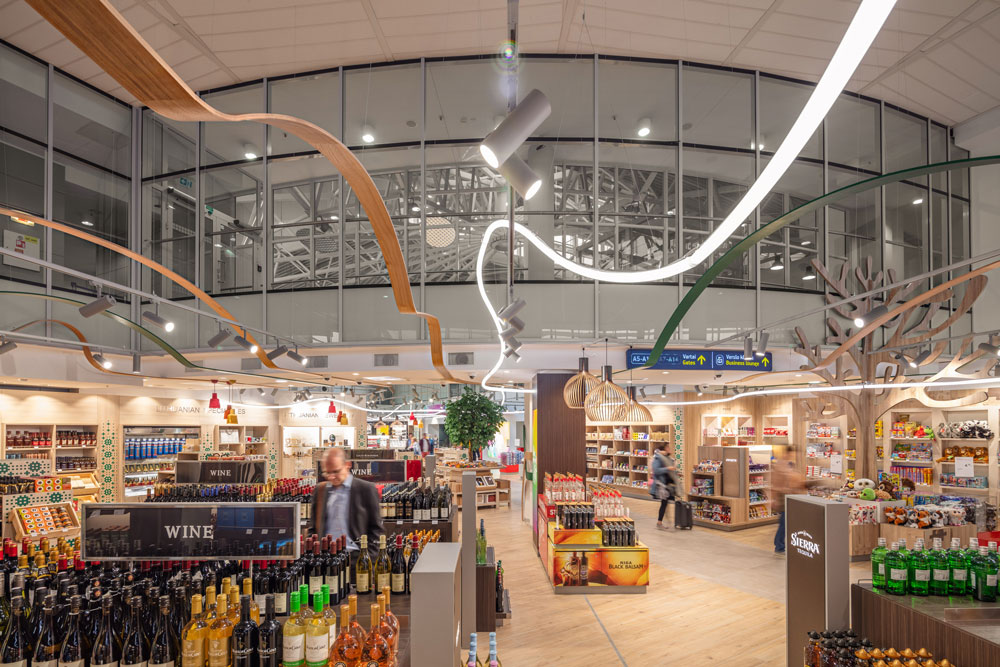
Gebr. Heinemann locations at Vilnius International Airport (pictured), Amsterdam Airport Schiphol and Vienna International Airport enjoy a high percentage of travellers to the UK.
Gebr. Heinemann locations in Budapest, Vienna, Vilnius and Amsterdam – which handle a high proportion of UK-bound traffic – are benefitting post-Brexit, but the full potential of duty free has not yet been realised due to the unpredictable cycle of border closures, travel restrictions and resulting suppression in travellers and flight frequencies.
“The most positive impact, I must say, will come for the airports,” Raoul Spanger, Chief Operating Officer, Gebr. Heinemann told TRBusiness recently.
“Unfortunately, traffic has been very low to and from the UK. Theoretically, we would have additional sales. Practically it did not happen which makes us positive for 2022 in a way as there is some potential which we will certainly get if traffic to the UK [becomes] easier as it was in the old days.”
Speaking to TRBusiness during last week’s TFWA World Exhibition & Conference, Eugenio Andrades, Chief Executive Officer, Operations at Dufry Group concurs that it is a little too early to determine any ‘perfect’ sales picture given the UK’s recent lifting of travel barriers.
“For us, Brexit was a fantastic opportunity and there is a fantastic opportunity to prove further value to our travellers and customers, which is the big advantage. The great news is we have been able to work with the local teams in the UK, which have done a fantastic job. We decided to provide value to our customers and airport partners and we’ve had fruitful conversations.”
FORECASTS REVISED TO MEET RISING DEMAND
While any real fiscal benefits remain difficult to measure due to the ongoing crisis, airports are seeing shoppers returning with a hunger to browse and shop.
Aer Rianta International’s businesses in Cyprus and Ireland are reporting strong impetus. In the case of the latter, a spokesperson from the company’s parent Dublin Airport Authority said: “Passengers are not only buying more but are spending more per item as they are trading up for gifting and self-treating.

Dixons Travel was a high-profile casualty following the UK government’s decision to axe tax free airside sales at airports.
“The impact of this is that we are continually revising our forecasts to suppliers to meet rising demand as they also have lead times on premium products.”
Dufry’s Andrades added: “It is good news for duty free categories. We are obviously providing better value and offers – more skus, a wider assortment especially in liquor. It has been positive.”
He says Dufry has kept with the same pricing for other skus, such as beauty, via arrangements with its airport partners to provide value to customers.
“We are missing many third country passengers such as Asian travellers that are still not flying, but for the time being we have been able to preserve and in some cases, increase the spend per head in these categories,” he continues. “The [categories] that are proving more challenging are luxury brands where we need to decide pricing versus the High Street.”
Last month, passenger ferry operator DFDS opened a 700sq m duty free store in the port of Dunkirk, France, offering discounts on perfumes, cosmetics, handbags and sunglasses as it capitalises on the revival of cross-Channel ferry routes.
However, for British airports, the restoration of duty free sales between the UK and EU has been diluted by the UK’s cessation of the airside tax free concession on products aside liquor & tobacco.
As exclusively reported, shoppers at Heathrow Airport have reacted with caution when faced with the prospect of paying tax on luxury items that were previously exempt.
The much-maligned decision to axe tax free sales and the VAT Retail Export Scheme, which triggered a high-profile public campaign by this publication and an ultimately unsuccessful High Court bid by Dufry, Heathrow Airport and Global Blue, led to the withdrawal of several businesses including Dixons Travel.
For the full report, see the TRBusiness October e-zine by clicking here.