Legal challenges brought by Heathrow Airport, World Duty Free and Global Blue against HM Treasury’s axing of tax free sales have failed.
A Heathrow Airport-led coalition has lost its legal challenge to the UK government’s abolition of tax free sales.
The High Court (Divisional) Court and Court of Appeal (Civil Division) today ruled that the challenges brought by Heathrow Airport, Dufry-owned World Duty Free and tax refund specialist Global Blue had failed.
As reported, the government abolished the airside extra statutory concession (ESC) for outbound passengers at UK airports and the VAT Retail Export Scheme for tourists [the former operated under ‘ESC 9.1’ made by the Commissioners of Her Majesty’s Customs and Excise – Ed] for tourist in January in line with the end of the Brexit transition period.
The move hit non-liquor and tobacco categories such as confectionery, luxury fashion, electronics and gifting.
HOPES OF A POSITIVE OUTCOME DASHED
The decision first emerged in September following responses contained within a government consultation.
DF&TR lobbyists criticised a decision taken without warning that dealt a ‘hammer blow’ to the industry.
In November, the parties mounted a legal bid and at the time there was genuine hope among industry stakeholders in conversation with TRBusiness that enough pressure could be exerted on ministers to reverse the decision.

TRBusiness petitioned the government to overturn its decision to shelve airside tax free sales and the VAT RES scheme. The petition attracted 12,664 signatures before it closed and elicited a response from HM Treasury.
A claim was dismissed that month by the High Court, but the parties where granted permission to proceed on two other issues at the same time as lodging an appeal.
In February this year, a court heard arguments from both sides.
Tax free sales to passengers travelling to non-EU countries were permitted under the HM Revenue & Customs ESC.
But the ‘very limited’ legal scope of the ESC and the inability to amend or continue it after Brexit were among several reasons cited by government.
The government stated in turn that the ESC would have been a ‘costly system to maintain’.
In addition, it argued the ESC was being applied ‘inconsistently’ with regards to international tax rules, namely that VAT and excise goods should be paid in the country of consumption rather than applied to goods for immediate consumption that are not exported.
The claimants’ arguments were based on several grounds. These included concerns over the constitutional power of the Commissioners to grant tax concessions without using legislation and the government’s view that the granting of ESC 9.1 had always been, and remained, outside its statutory powers of collection and management.
Another point of contention was the scope and effect of the General Agreement on Tariffs and Trade 1964 (GATT) as it applied to internal taxes affecting the export of goods such as duty free.
The claimants argued that the government ‘artificially and wrongly constrained the range of possible solutions and ignored alternatives which were favourable or at least less damaging’ with concern around the government’s conclusion that it would not in the future treat sales to the EU differently from the rest of the world.
The claimants also said the government failed to properly evaluate evidence related to the economic fallout of the decision and did not take into account ‘more options’ available within the auspices of the Trade and Cooperation Agreement (TCA).
Britain entered the TCA with the EU on 24 December and it received Royal Assent on 31 December.
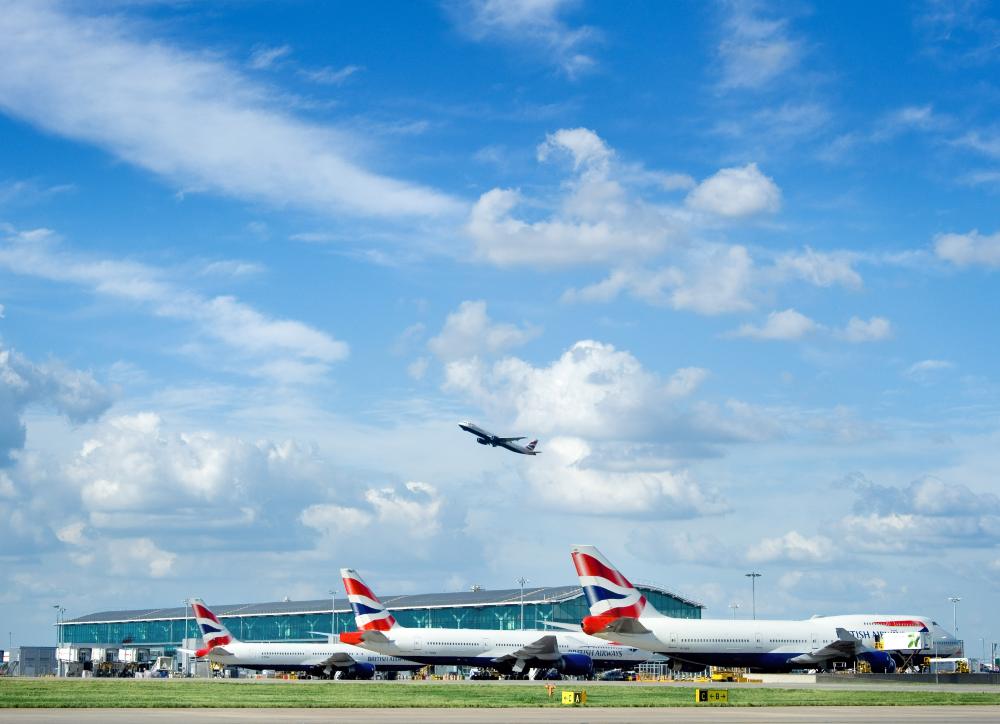
In its full-year 2020 results, Heathrow Airport said removing airside tax free sales would impact its pricing policy and posed a ‘credible threat’ to an income stream of around £200 million annually. Source: Heathrow Airport.
In a judgement, Lord Justice Green and Mrs Justice Whipple upheld the government’s view on limits to the powers of the Commissioners to use ESC to create exemptions from VAT and that the concessions in question were outside existing powers to amend.
They said the government was correct to take the position that if any tax exemption scheme that differentiated between sales to the EU and the rest of the world was retained in the future, it would amount to a breach of GATT.
That the government didn’t take into account the TCA between the EU and UK was ‘perfectly rational’ and ‘did not alter the analysis’, said the court.
Regarding the evaluation and collection of evidence relating to the wider fiscal and economic impact of the decision, the court judged the approach taken by government was ‘justified and rational in the circumstances’.
“The government was entitled to conclude that given the large number of uncertainties and imponderables that existed any attempt at modelling or quantifying potential indirect economic and fiscal effects would be an exercise in uncertainty which could not generate reliable results,” the court heard.
Concluding, Justice Green and Justice Whipple said: “None of the grounds succeed and accordingly the appeal seeking permission to seek judicial review, the claim for judicial review and all associated applications, fail.”
‘BAKED-IN DISADVANTAGE’
A statement on the outcome obtained by TRBusiness from Dufry, Global Blue and Heathrow read: “The Treasury has baked-in a competitive disadvantage for UK tourism by making this the only country in Europe not to offer tax free shopping.
“The previous policy had been hugely successful in attracting up to £4bn of tourism spending in UK restaurants, theatres and shops each year and it is frustrating that while the court recognised that the government’s consultation process was flawed, the government still chose to press ahead with this ill-considered decision.

Fears remain that stopping tax free sales to all international visitors will damage Britain’s attractiveness as a global retailing hub, resulting in high-spending Chinese shoppers electing to divert their share of wallet spend to European destinations such as France and Italy. Source: Global Blue.
“At a time when Ministers should be doing everything they can to help stimulate the country’s economic recovery, we would urge them to look again at all of the clear evidence which proves the revised policy is damaging for tens of thousands of jobs across the country.”
François Bourienne, Chair of the UK Travel Retail Forum said: “When the government took the decision to remove tax free shopping last year, the UK Travel Retail Forum told the Exchequer Secretary that the impact on airside retailers would be profound. Only a few weeks ago Dixons announced the closure of all its airport shops up and down the country.
“There is no escaping the clear negative consequences stemming from a completely avoidable decision by Treasury. Airports will not be able to replace this lost revenue immediately, and will now find it harder to invest in infrastructure, route development, and the recovery from Covid-19.
“UKTRF continues to urge the government to reconsider its position to avoid causing further damage to UK businesses and UK livelihoods.”
Heathrow, World Duty Free and Global Blue previously stated that the ESC and VAT RES schemes collectively generate between £3 and £4 billion for the UK economy, supporting tens of thousands of jobs and generate hundreds of millions of pounds in revenue for the Exchequer indirectly.
As referenced, earlier this month UK airport retail suffered its first major casualty as Dixons Travel pulled out of the channel.
The electronics retailer said it did not expect passenger numbers to recover sufficiently to compensate for the removal of airside tax free shopping.
Click here to read the HM Treasury response to TRBusiness’ petition (now closed) to save tax free sales.

 Trbusiness. The travel retail Trbusiness. The magazine for global retail and duty free professionals.