 Trbusiness. The travel retail Trbusiness. The magazine for global retail and duty free professionals.
Alan Bork, Chairman of the Central and Eastern European Travel Retail Association (CEETRA)
By Doug Newhouse |

Central and Eastern European Travel Retail Association (CEETRA) Chairman Alan Bork talked to Doug Newhouse recently about fighting the effects of illicit liquor in the Czech Republic.
As reported by The Business, CEETRA met recently at a workshop in Prague to underline its commitment to Product Safety and Quality both in alcohol retailing and other products after the government banned all alcohol over 20% proof in all domestic and duty free outlets. This drastic step was taken following the deaths of 40 people and dozens more who fell very ill when this illicit alcohol entered the domestic market supply chain.
Bork says it is crucial that consumers understand that the travel retail environment is safe and secure, as he explained the background to the whole issue, which he rightly describes as extremely serious.
“The background comes from the incidents in the Czech Republic in September of last year. All of a sudden people started dying from drinking poisoned alcohol and they quickly found out that those products came from the black market. We’ve always known we have an illicit trade issue, but illicit trade is one thing and then home distilling or home brewing among private people is another, as this is very, very extensive among people in Eastern Europe and also here in Hungary.
27 CASUALTIES
“But this time and all of a sudden this was in the Czech Republic and some 27 people died from this within one or two weeks. That obviously called for a strict response and that’s when the total ban on all alcohol sales above 22% alcohol content was brought in and that, of course, hit travel retail and duty free as well.”
As a result, Bork said all of these products came out of the shops and were taken out of general domestic distribution. Of course, while the government responded, Bork said it was pretty obvious that the government knew that the risk was already there, but he added that ‘nobody pays a lot of attention until something like this happens and he described it as ‘a bit like not covering a well opening after a child has fallen into it.’
Bork said that the government subsequently came under intense pressure from the press and other pressure groups to take action and it responded with no warning of any kind: “There was no warning at all. I’m not entirely sure how it happened, but I suppose it must have been a doctor simply waving a red flag and saying ‘listen, this guy died from alcohol poisoning, maybe you’d better pay attention.’ That was the kind of way it emerged.”
He said there has subsequently been a police investigation and several arrests have been made, while police are still discovering all of the locations where these ‘white spirits’ drinks have been manufactured. He added that several court cases are now expected as the police and the judiciary try to clear up the mess.
 ZERO TOLERANCY
The whole point of the travel retail workshop was to wave the travel retail flag and demonstrate that the likelihood of something like this happening in the travel retail channel is zero, said Bork. Having said that, the ban on alcohol products over 20% by alcohol equally applies to the duty free shops until something changes that.
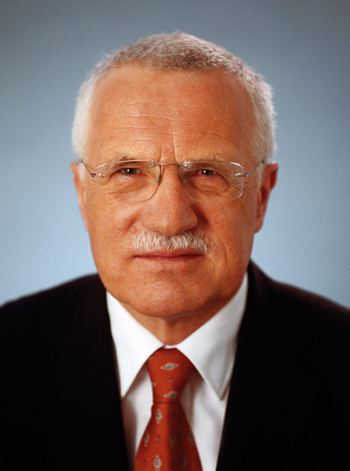
[Left: Czech Republic President Vaclav Klaus’ government came under pressure from the press to take action]
Nevertheless, Bork said that it is very important that consumers realise that the duty free and travel retail environment is a highly controlled and regulated distribution channel by definition. He said it doesn’t take much imagination to grasp how low the consumer confidence barometer has fallen with regard to liquor sales since these reported deaths.
“There have been some recent studies and research and the figures show that something like 70% of all consumers have lost confidence in buying alcohol, so we need to restore that.” He said that as a result the association is organising its communications to relay the point strongly that ‘the products you buy in duty free are safe and you do not need to worry about them.”
Bork said: “It’s still an idea that is being developed and that’s what we talked about in Prague on Monday [February 18-Ed] where we called a workshop and a discussion forum where everybody came up with ideas.”
SAFETY AND AUTHENTICITY
He said the idea now is to communicate and underline the safety and authenticity of goods purchased in duty free and travel retail stores in member association countries and reassure consumers by way of a safety certificate displayed in stores that the retailer of this or that store has signed up to high quality standards. “We haven’t phrased it yet, but it will simply say to the consumers that this retail store has committed itself to product safety and quality,” said Bork.
But he explained that this is only half the battle, because the other key target is the politicians and the authorities and especially considering that it was always clear from the beginning with the Czech Republic issue that the authorities made no distinction between the domestic market channel and duty free when they brought in the 20% plus alcohol ban.
“Of course, you can always ask the question, could they have brought in a ban on the domestic market and simply not included the duty free market and the answer has to be yes, of course they could have,” said Bork. But he said this would have required politicians, legislators, authorities and others to realise they didn’t need to ban alcohol sales in the airport.
Ever pragmatic, Bork said you could hardly expect politicians to be held responsible for understanding all the distribution chains and the way they all work. “That’s why we need to educate and that is also why we took the opportunity last Monday to have a meeting in the morning with the CAA and the Ministry of Transport and a security guy from the government in Prague to try to educate them and make them understand how we approach this in duty free. That has to be our other target,” he said.
 LOW CONFIDENCE LEVELS
“We also invited the Chairman of the Czech consumer association [Libor Dupal-Ed] to do a presentation on Monday and he actually brought some research showing us how that confidence levels have come down dramatically.”
While some might wonder how anyone could possibly make much of a positive out of this situation, Bork says he sees it as a real opportune moment to hammer the message home how safe the duty free and travel retail channel is and why consumers should feel reassured: “I mean, by definition we are safe and if we can communicate this safeness to consumers then while they might say that they don’t trust their local liquor store anymore, they might equally feel perfectly safe buying when they are travelling…”
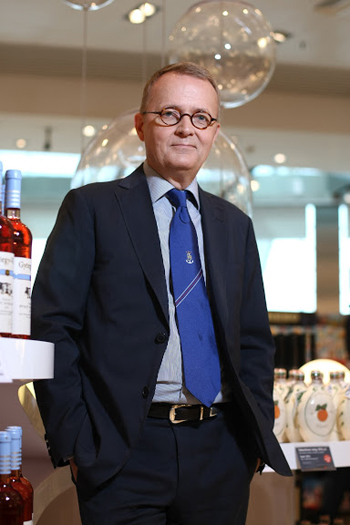
[Right: Bork says that you could hardly expect politicians to be held responsible for understanding all the distribution chains and the way they all work]
Bork said the Czech Consumer Association Chairman Dupal paid tribute to CEETRA’s efforts and he emphasised that ‘information, information and information’ is the key to restoring confidence, along with absolute honesty. At the same time, Bork added that the Czech Health Ministry almost certainly did not have the duty free and travel retail business on its radar when recommending the 20% plus alcohol ban, but it is now CEETRA’s mission to make sure that the business’ safety factor is larger than life on the safety screen the next time liquor or any other product safety concern is raised.
Asked whether he was concerned that such a ban in the Czech Republic might spread to other neighbouring countries, Bork said: “Yes, of course. I actually had a meeting with one of the local liquor guys down here in Hungary and he said there is also extensive home brewing going on here as we know and something like this could happen here… no doubt about it. There are all of these crooks out there who don’t give a damn about the people who drink the stuff and if they can increase their margin they will put anything in it.
‘RESPONSIBLE RETAILING’
“This is about responsible retailing and educating people that we are responsible retailers, while the code of conduct that ETRC has is really more about how we sell it, to whom we sell it and the fact we don’t sell to minors, so that is why we invited ETRC over and they gave a presentation on the code of conduct. So we are talking to them and making sure that we don’t overlap with each other at all.”
Asked whether he thinks there is a chance that the Czech Government might change its mind by eventually recognizing the duty free environment as one that’s sterile, safe and free from this practice, Bork said: “I think so, yeah. Why not? It makes perfect sense to explain it all to them and ask them to consider the environment that we operate in and the quality of consumers we serve.
“This is not a border shop with Bulgaria where you see all sorts of people, so I think it’s possible to simply make them aware and help them understand that this is the case.”
DFS transfers travel retail concessions at LAX and SFO to Duty Free Americas
Image Credit: DFS/Falic Group DFS Group has announced the transfer of its travel retail...
Prada Beauty winter takeover drives strong results at CPH
Image Credit: L'Oreal Travel Retail Prada Beauty delivered strong visibility and conversion...

Middle East arrivals could decline by -27% in 2026: Tourism Economics
Image Credit: Emirates The war in the Middle East – triggered on February 28 by the...
-
 Featured Interview,
DFS transfers travel retail concessions at LAX and SFO to Duty Free Americas
-
Featured Interview,
Prada Beauty winter takeover drives strong results at CPH
-
Featured Interview,
Middle East arrivals could decline by -27% in 2026: Tourism Economics

In the Magazine
TRBusiness Magazine is free to access. Read the latest issue now.