Archives

Maximise traveller response in face of major challenges, AsPac industry urged

Sunil Tuli, President, APTRA

Sunil Tuli, President of the Asia Pacific Travel Retail Association (APTRA).

The Asia Pacific Travel Retail Association (APTRA) has told TRBusiness of the ‘significant challenges’ the industry continues to face in shaping the approaches of regional governments through persistent advocacy efforts on behalf of the industry.

Speaking to TRBusiness as part of the Global Industry Survey 2023, APTRA President Sunil Tuli calls on industry stakeholders to meet what is an evolving travelling shopper mix with a comparably strong retailing offer.

In candid fashion, he stresses that the pandemic and its continuing repercussions should not distract DF&TR from addressing long-standing issues, such as the fundamental problem of stagnant conversion levels.

What are your expectations for your business in travel retail in 2023 and what are the major challenges you anticipate?

Asia Pacific has long been the engine room of travel retail growth and China is, of course, the pivotal factor in its prospects in 2023 and beyond. Currently, the Covid situation within China – and its potential regional and global implications – remains uncertain. Outside China, most airlines are not currently expanding their capacity in readiness for the return of the Chinese and ‘wait and see’ seems to be the dominant approach. Overall, this suggests that it will be the second half of 2023 before we might see a significant shift in the travel markets.

Alongside the continuing threat of a global recession, a series of other factors will continue to impact on our industry, including supply chain challenges, staffing issues and energy prices. But these have all begun to ease to some degree and, as an industry, we are gradually adapting our operations to address their effects.

Within APTRA’s region and focus, we continue to face significant challenges in influencing the region’s governments (45 governments and no collective representation) through APTRA’s advocacy work on behalf of the industry, including serious threats from new regulations in everything from tobacco sales to packaging.

This year’s major focus for the tobacco category, for example, is its response to the planned ‘next generation’ policy that will impose major new restrictions on the sale of tobacco products, with regulators in New Zealand well advanced in planning the strategy and with Malaysia and Hong Kong building their agendas.

This year’s major focus for the tobacco category, for example, is its response to the planned ‘next generation’ policy that will impose major new restrictions on the sale of tobacco products, with regulators in New Zealand well advanced in planning the strategy and with Malaysia and Hong Kong building their agendas. As the industry’s collective advocate, APTRA will continue to lobby the region’s governments to promote and protect the interests of travel retail and support the post-Covid recovery in 2023 and beyond.

How do you anticipate inflation and the risk of global recession affecting your business and the consumer appetite to spend in the travel retail channel in 2023?

The OECD predicts global annual GDP growth of just 2.2% in 2023, but the past month or so has seen a degree of optimism that the global economy, while weakened, will not decline to the level of the most doom-laden forecasts seen in 2022. Additionally, five of the top 10 countries in 2023 are here in Asia Pacific and are forecast to outperform the global figure.

China, which unlocked its international borders last month, remains pivotal to the fortunes of Asia Pacfic, for so long regarded as the ‘engine room’ of growth for duty free and travel retail. Source: Shutterstock.

China’s economy and its travellers remain the biggest factors but Asia Pacific has already hosted several strong post-Covid recovery strategies. India, for example, has powered forward with its airport ambitions, such as the fantastic developments at Hyderabad and Bengaluru and the initial phase of the major new airport at Noida planning the first terminal completion in 2024.

Whatever the pressures – and, let’s face it, our industry has faced everything from global recessions to volcanoes and global pandemics – we must maximise our response to travellers. All around the world there are hundreds of millions who have that added passion to travel in 2023; they are eager to make up for those Covid-inflicted lost journeys and missed experiences. Travel retail can play a valuable part in their rediscovery of the sheer joy of travel.

We have already seen encouraging signs of growth in ATV vs 2019 and APTRA is optimistic that the region will get back on track to lead industry growth and that key Asian nationalities will shape the future of the industry.

How has the shift in passenger demographics as a result of the pandemic/travel restrictions affected your product portfolio and growth plans?

Feedback from APTRA members shows that the shift in passenger mix remains a challenge and this is further exacerbated by the long-standing delays in logistics and supply chains, making it difficult for suppliers and retailers to implement evolution and consistency in their offer. Alongside this, the continuing rise of e-commerce demands a response too.

A two-part APTRA Exchange took place in Singapore last year, which TRBusiness Editorial Director Luke Barras-Hill was involved in moderating.

APTRA members fully appreciate the omni-channel opportunity facing the industry and the need to step-change dynamics away from the 100% focus on physical retail. However, it’s a challenge to develop and enhance the shopper experience while faced by this combination of sustained pressures that make even day-to-day operations difficult.

Despite this, as the recovery develops, we are certainly seeing a degree of ‘freedom shopping’ whereby shoppers are enjoying their post-Covid liberty by shopping at airports on high ticket items and driving a general increase in basket spend. Again, this is a small but valuable sign of industry optimism in that the range of global and local pressures are at least partially countered by the post-Covid enthusiasm of many travellers to get out and travel – and spend – again.

Stagnant conversion rates continue to pose a challenge for DF&TR. How should the industry be addressing this in a post-pandemic environment?

The Covid crisis and its continuing repercussions should not distract the industry from addressing long-standing issues such as the fundamental problem of stagnant conversion levels. The crisis has certainly accelerated the evolution of shopper behaviour – it’s changing faster and more radically than ever before – and our industry needs to respond with an equally radical evolution in the travel retail experience.

This means welcoming product innovation from suppliers and helping them maximise the brand-building potential of travel retail, giving prime space to new retail categories such as wellness, and confidently reinventing travel retail as an omni-channel marketplace, optimising collaboration along the extended consumer journey; a hybrid future blending digital and physical worlds.

READ MORE: TRBusiness Global Industry Survey in the TRBusiness January 2023 e-zine.

IATA: Air passenger travel recovers 68.5% of pre-pandemic volumes in 2022

International air passenger traffic reached 62.2% of 2019 levels in 2022, according to the latest data from the International Air Transport Association (IATA).

Year-on-year, international traffic increased 152.7% in RPKs (revenue passenger kilometres), with an 80.2% jump in December versus the same month in 2021.

Overall traffic in 2022 rose 64.4% year-on-year, representing 68.5% of 2019 levels.

In December 2022, international traffic increased 80.2% over December 2021, reaching 75.1% of the levels recorded December 2019.

Asia Pacific recorded a 363.3% surge in full-year international 2022 passenger traffic versus 2021 – the strongest year-on-year growth rate among the regions.

Capacity increased by 129.9% with load factors up 37.3 percentage points to 74%.

Middle Eastern airlines followed with a 157.4% traffic rise in 2022 year-on-year, followed by European carriers at +132.2%, North American carriers at +130.2%, Latin American airlines at +119.2% and African airlines at +89.2%.

Willie Walsh, Director General, IATA said: “The industry left 2022 in far stronger shape than it entered, as most governments lifted Covid-19 travel restrictions during the year and people took advantage of the restoration of their freedom to travel.

The recovery in global air travel persisted in December 2022, with international traffic taking a 62.2% slice of pre-pandemic levels. Source: IATA.

“This momentum is expected to continue in the New Year, despite some governments’ over-reactions to China’s re-opening. Let us hope that 2022 becomes known as the year in which governments locked away forever the regulatory shackles that kept their citizens earthbound for so long.

“It is vital that governments learn the lesson that travel restrictions and border closures have little positive impact in terms of slowing the spread of infectious diseases in our globally inter-connected world. However, they have an enormous negative impact on people’s lives and livelihoods, as well as on the global economy that depends on the unfettered movement of people and goods.”

‘Less important’ inflight and pre-order retail sales to end in spring, says Finnair

Finnair is axing inflight and pre-order retail sales of cosmetics, accessories, gifts and other retail products this spring.

Finland’s flag carrier Finnair will abandon onboard retail sales on 28 February, it announced yesterday (1 February).

The Oneworld Alliance member will continue to supply products on a pre-order basis into the spring, before ending the service on 18 April.

“Onboard and pre-order shopping has become a less important service among our customers,” commented Valtteri Helve, Head of Product Offering at Finnair.

In spring 2020, the airline announced the axing of its inflight sales on flights within the European Union in a move to improve sustainability by reducing aircraft weight.

F&B pre-order remains

Finnair says its customers can continue to place advanced orders for meals and buy snacks and beverages in the air.

“Food and beverage sales on flights will continue, of course, and we will continue to develop our service,” added Helve.

A final discount campaign beginning this month allows customers to buy products onboard or via pre-order at a 40% discount.

They can avail of inflight shopping on long-haul flights and those to the Canary Islands, Dubai, Egypt, Iceland, Israel, Switzerland, Turkey and the UK.

Flights exceeding two hours in duration are eligible for the pre-order retail option, though travel retail is unavailable on Finnair’s Doha route.

“Together with our partners, we have been able to offer a wide range of products, and many Finnish brands have also been well represented on our flights,” added Tiina Tissari, Vice President Customer Experience and Products at Finnair.

Changi handled 32.2m pax in 2022 reaching almost half of pre-covid levels

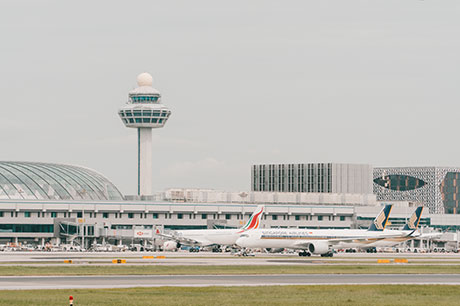
Singapore Changi Airport.

Singapore Changi Airport handled 32.2 million passenger movements in 2022, reaching almost half (47.2%) of the traffic seen at the hub in 2019, prior to the Covid-19 pandemic.
 
Aircraft movements (include landings and takeoffs) totalled 219,000, 57.2% of 2019 levels.

Across the year, all regions registered strong recovery in passenger traffic, says Changi, with North America slightly exceeding pre-Covid levels on a full-year basis.

Southwest Pacific, South Asia, and Europe each reached two-thirds of 2019 traffic.

Southeast Asia has also seen a ‘robust pickup in traffic’ following the region’s reopening, closing out the year on a high of two million passenger movements in December 2022, representing over three-quarters of the region’s December 2019 traffic.

Changi Airport’s top five passenger markets for 2022 were, in order (by passenger traffic): Australia, Malaysia, Indonesia, India and Thailand.

Similar to 2019, Kuala Lumpur, Bangkok and Jakarta were Changi Airport’s three busiest routes in 2022.

“In the past two years, we strengthened our airport offerings and continued to engage our airline partners in anticipation of travel revival,” said Lim Ching Kiat, Executive Vice President of Air Hub and Cargo Development, Changi Airport Group (CAG).

“Changi Airport community’s efforts have paid off – the airport is now leading the Asia Pacific region in travel recovery.

READ MORE: Changi Airport Group’s Teo Chew Hoon anticipates ‘even more growth’ in 2023

“The re-opening of Terminals 2 and 4 has helped restore airport capacity to cater to the strong travel demand.

“We look forward to welcoming more flights in the coming months, for example, Ethiopian Airlines will commence flights from Addis Ababa in March.

“Notwithstanding near-term challenges such as global economic uncertainty and inflationary pressures, we are confident that we will be able to progressively restore Changi Airport’s connectivity and traffic to pre-Covid levels.”

Zooming in on December 2022 traffic at Changi

Passenger traffic at Changi continued to grow throughout 2022, reaching a high in December with 4.62 million passenger movements recorded – representing 72% of Changi Airport’s traffic in December 2019.

The busiest week of the year (12-18 December) saw more than 1.07 million passengers passing through Changi’s terminals – that’s 82% of the weekly average in 2019.

READ MORE: Changi bolsters retail with new outlets as it registers 62% of pre-Covid traffic

Among Changi’s top 10 markets, South Korea saw passenger traffic grow beyond pre-covid levels during the month, driven in part by additional capacity from Changi’s airline partners, including new airlines T’way Air and Air Premia on the Singapore-Seoul route, and Scoot flying the new Singapore-Jeju route.

New airlines and city links enhance connectivity

Changi Airport welcomed eight new airlines last year – seven of which are passenger airlines: Aircalin, Bamboo Airways, Cambodia Airways, Citilink, HK Express, Thai Vietjet Air and T’way Air.

Four new passenger city links were established: Jeju (South Korea), Nouméa (New Caledonia), Pune (India) and Sibu (Malaysia).

As of the first week of January 2023, 96 airlines operate over 5,600 weekly scheduled flights at Changi Airport, connecting Singapore to 143 cities in 48 countries and territories worldwide. This is 82% of Changi’s pre-Covid connectivity.

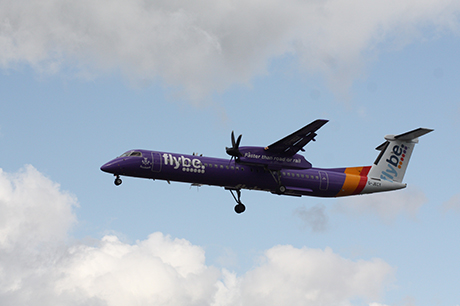
UK-based regional airline Flybe enters administration and cancels all flights

Low-cost carrier Flybe has announced it has ceased trading today (28 January), cancelling all flights into and out of the UK.

The regional carrier ran scheduled services from its base at Birmingham Airport and Belfast City and Heathrow Airports to continental destinations including Amsterdam and Geneva.

A statement on the website of the UK Civil Aviation Authority urged those passengers affected not to travel to airports.

“Flybe customers who still need to travel, will need to make their own alternative travel arrangements via other airlines, rail or coach operators.

“The UK Civil Aviation Authority will provide advice and information to affected passengers. More information can be found on www.caa.co.uk/news when it is available.”

Administrators appointed for second time

As reported, Flybe collapsed into administration in March 2020, pointing to the impact of the coronavirus on flight bookings among other factors.

It was later rescued by Cyrus Capital affiliated firm Thyme Opco and flights resumed in April last year.

Flybe issued a notice to passengers on its website on 28 January. Source: Flybe.com.

In a notice on its website, Flybe confirms the High Court has appointed David Pike and Mike Pink as Joint Administrators of Flybe Limited (Flybe) to manage its affairs, business and property.

Flybe was scheduled to serve 17 destinations across the UK and Europe this year – with Belfast City, Birmingham and London Heathrow being the largest destinations by flights – according to aviation analytics firm Cirium.

The airline had operated seven daily flights at Heathrow to Amsterdam, Belfast, Newcastle and Newquay and was scheduled to operate 292 flights from 30 January – 5 February.

The UK CAA has issued further advice to UK consumers affected by the decision, accessible here.

Avios points can be saved and spent at HIA’s shops, announces Qatar Airways

Avios reward points can now be spent on shopping and dining choices with Qatar Duty Free.

Qatar Airways Privilege Club (QRPC) members are now able to collect and spend Avios reward points at almost 200 outlets at Hamad International Airport (HIA) following a tie-up with Qatar Duty Free.

Dubbed an ‘industry first’ by Qatar Airways in a statement, the move announced today (24 January) unlocks purchases for loyalty members at the likes of luxury fashion boutiques and a variety of leading cafes and restaurants housed within HIA’s newly expanded terminal.

In addition, passengers at all departure points will be rewarded with Avios points upon check-in, credited up to two hours prior to departure.

H.E. Akbar Al Baker, Group Chief Executive, Qatar Airways, stated: “We have enhanced and upgraded our redemption options for our loyalty members and we are enabling access to a truly unique airport shopping and dining experience.

“A first in the world initiative, this demonstrates our commitment for going the extra mile when enhancing the quality of our offerings by providing members with a seamless experience. We encourage everyone travelling through HIA to avail themselves of this experience and opportunity as there has never been an easier way to collect and spend Avios.”

Avios is the loyalty currency of the Qatar Airways Privilege Club, preferred currency of the airline and can be used in conjunction with cash as a part payment option.

China approves sale of group outbound travel and packages from February

In a significant development for the global travel industry, from 6 February, China will once again allow the sale of outbound group travel products, in addition to travel packages.


During a recent webinar on ‘Chinese travel for Lunar New Year and beyond’, hosted by Dragon Trail International and ForwardKeys, viewers were reminded that it was in late January 2020 when Chinese travel agencies were initially banned from selling outbound group travel products as well as packages that included a minimum of flight and hotel booking.


From 6 February, travel agencies and OTAs (online travel agencies) will be allowed to sell outbound group travel and travel packages for the following countries: Thailand, Indonesia, Cambodia, Maldives, Sri Lanka, Philippines, Malaysia, Singapore, Laos, UAE, Egypt, Kenya, South Africa, Russia, Switzerland, Hungary, New Zealand, Fiji, Cuba, and Argentina.


As previously reported, from 8 January China recommenced issuing and renewing passports and announced that there would no longer be requirements for travellers to quarantine on return to China. There are now no flight restrictions in place or a need to present digital travel passes.


However, a 48-hour PCR test and health declaration for customs is still mandatory (according to information shared in the webinar which took place on 19 January).

The excellent 'Chinese Travel for Lunar New Year 2023 and Beyond' webinar was hosted by Sienna Parulis-Cook, Yelinuer Kadeerbieke and Nancy Dai.

The excellent ‘Chinese Travel for Lunar New Year 2023 and Beyond’ webinar was hosted by Sienna Parulis-Cook, Yelinuer Kadeerbieke and Nancy Dai.


The recent webinar provided a plethora of data on the Chinese traveller, using a variety of metrics.


Intention to travel outbound in 2023

According to Dragon Trail International – a marketing solutions company with roots in China and extensive experience in the global travel and MICE industries – more than 60% of respondents to a survey* conducted by Tencent from 3-7 January this year, said they want to travel outside mainland China this year.


The remaining 39.4% either have no plans to travel or will only do so domestically.

Interestingly, among other factors, the no 1 reason why travellers said they would not travel abroad, stipulated that salary impacted by Covid and ‘economic factors’, was a barrier.


Regarding preferred destinations among Chinese travellers, Dragon Trail suggested that the list largely resembled rankings drawn up pre-pandemic, with Hong Kong remaining the ‘clear top outbound destination for 2023’.

In a presentation delivered by Nancy Dai, Insights Expert for ForwardKeys, she confirmed what was earlier reported, that the easing of Covid controls have triggered a surge in bookings for domestic flights, with Sanya labelled ‘the hottest destination with the fastest recovery’.


Airline capacity crunch

Interestingly, she said that forward bookings for Chinese New Year were currently 47% behind pre-pandemic levels, but 30% ahead of last year.


In a concluding slide, she added that pent-up demand remains high and Southeast Asia is most likely to benefit first from the return of Chinese tourists.


However, importantly, the lack of flight frequencies and capacity combined with high fares could create a bottleneck for an industry desperate to return to the halcyon days of air travel, prior to the outbreak of the Coronavirus.


You can download a copy of Dragon Trail International’s Chinese Traveler Sentiment report by clicking here.


*The survey collected 1,058 responses from mainland China; 56% female/44% male.

Air transport organisations welcome postponement of smart border system

The postponement is sure to save the industry and travellers serious disruption this summer.

The postponement is sure to save the industry and travellers serious disruption this summer.

Air transport organisations, ACI Europe, A4E, ERA and IATA have welcomed the decision to postpone the implementation of the EU’s new smart border system for non-EU nationals (i.e. Entry Exit System or EES).


A release from ACI Europe maintains that the EES system ‘will be a game changer for how the EU’s borders are managed’, however, there are ‘a number of issues which must be resolved to ensure a smooth roll out and operation of the new system so that air passengers do not face disruptions’.


“The aviation industry is fully behind the roll out of EES and is committed to working with the EU and national authorities for a successful implementation,” read a statement issued ACI Europe, A4E, ERA and IATA.

The four organisations say there is much more to do before the system can be successfully implemented.

The four organisations say there is much more to do before the system can be successfully implemented.

“But it is important the EU and national authorities address industry concerns and provide efficient coordination for an effective implementation.


“This includes EU-LISA (the agency responsible for managing the system) strengthening its communications with the industry, and with international partners such as the US, to ensure the IT systems are connected and compatible.”


Postponing the implementation until after the busy 2023 summer period will give airlines, airports, EU and national authorities the opportunity to resolve these issues and ensure the system is fully tested, insist the air transport agencies.


“We therefore urge all those involved to make the best use of the extra time now available to address the outstanding issues and ensure enough resources are deployed for its introduction.”

Saskia Möller to lead Gebr. Heinemann’s new compliance and CR department

Saskia Möller will lead the new department.

Saskia Möller will lead the new department.

Gebr. Heinemann has created a department for compliance and corporate responsibility to be led by Saskia Möller, who will report to Co-CEO Raoul Spanger.


Möller is a lawyer, who moved from the raw materials and steel industry to the Hamburg-based family business in 2021.


“Sustainable and responsible corporate governance is part of our values and our corporate culture and has been for many years and decades,” said Spanger.


“Both compliance and our sustainability activities have become more and more important in our company.


“By expanding the two areas and bundling them under one leadership, we see great potential in the strategic use of opportunities and the early identification and avoidance of risks.”


Niels Runge, previously Senior Compliance Manager at Gebr. Heinemann, will become the new Head of Compliance

Niels Runge will become the new Head of Compliance.

“Both topics are also gaining in importance in the competitive environment,” added Co-CEO and owner Max Heinemann.


“In order to be able to serve these requirements in the best possible way and in a timely manner, we need the professional support of our colleagues from the compliance department as well as a long-term and cross-company sustainability strategy.”


Having already joined United Nations Global Compact (UNGC) in 2018, Gebr. Heinemann has anchored sustainable development goals in its corporate strategy, committing to achieving them by 2030 in the following fields of action: Energy & Emissions, Waste & Packaging, ‘Product Portfolio and People.


The sustainable impact also plays a very decisive and significant role in the company’s new mission statement, added the company.


Möller’s area comprises two departments. Niels Runge, previously Senior Compliance Manager at Gebr. Heinemann, will become the new Head of Compliance.


The travel retailer is currently advertising the position of Head of Corporate Responsibility.

AOE’s Omnevo announces new airline projects with Fly Arna and Fly Jinnah

Omnevo will embark on two new airline projects in 2023, following the launch of digital platforms with Fly Arna, Armenia’s national airline, and Fly Jinnah, a low-cost domestic carrier connecting main cities across Pakistan.


Fly Arna is a joint venture company operated by Armenian National Interests Fund (ANIF) and Air Arabia Group, whilst Fly Jinnah, represents a JV between the Lakson group and Air Arabia Group.


Launched in 2021 and headquartered in Wiesbaden, Germany (alongside parent company AOE), Omnevo develops digital ancillary revenue solutions for the transport and hospitality sectors, counting airports, airlines, rail operators, brands and malls among its client list.


POS and Retail Management in focus

Omnevo was selected by air services and catering operator dnata to partner in the delivery of its ambition to develop the on-board and pre-order catering programs for Fly Jinnah and Fly Arna, supported by dnata’s joint venture partner, Alpha Flight Services.


Peter Coelho, Chief Operating Officer, Omnevo.

Peter Coelho, Chief Operating Officer, Omnevo.

The agreement follows the partnership’s implementation of the Omnevo platform on board Air Arabia, which holds part-ownership in both Fly Arna and Fly Jinnah.


The two latest digital platforms are built on a selection of Omnevo’s core modules and are initially focused on two key operational areas: Point of Sale (PoS) and Retail Management and, secondly, the Supply Chain elements, including Flight Scheduling, Logistics and Loading.


“The Omnevo platform also gives the airlines the capacity to fulfill digital pre-order programs, including the integration of the onboard PoS with seat mapping and passenger manifests to create major new operational efficiencies and significant new levels of speed and support for cabin crew functions and processes,” said the company.


Peter Coelho, Chief Operating Officer, Omnevo, added: “Omnevo offers a ready-to-deploy, integrated and vendor-agnostic platform that reaches end-to-end but, crucially, it also contains the versatility for airlines to adapt the platform precisely to their needs, timescale and budget.


“The core beauty of the customised platform is that each airline can tailor its own selection of modules to precisely target key priorities across both operational issues and the needs of the passenger experience – including everything from Logistics to providing the passenger with pre-order services – with the flexibility to adapt and expand the platform at any time.”


Project wins in 2022

Omnevo is keen to highlight that the recently announced projects follow several contracts and platform expansions sealed in 2022, across airlines, airports, and rail operators, including those with Virgin Atlantic, Virgin Australia, Air Europa, Frankfurt Airport, and Zurich Airport.


Michael Raasch, CEO, Omnevo.

Michael Raasch, CEO, Omnevo.

Omnevo has also expanded its presence in the rail sector, with leading operators Eurostar and Thalys through partnerships with service providers Momentum and Railrest respectively.


Michael Raasch, CEO, Omnevo, said: “Across the whole travel sector the post-crisis recovery is well underway and more airlines, airports, and rail operators are positioning their businesses digitally to enhance the passenger experience, raise operational efficiencies (including major sustainability gains), and increase their revenue and profitability.


“In my view, these operators are strategically placed to seize major competitive advantages as the recovery accelerates in the second half of the year.


“In fact, Omnevo now has ten fully-implemented live customer platforms – including Singapore Airlines’ KrisShop, Sky Express, Frankfurt Airport, Auckland Airport, Virgin Atlantic, Virgin Australia, and Air Europa, as well as expanding platforms in the rail sector with Eurostar and Thalys – and already a further five major platforms well advanced for implementation in 2023.


“Travellers are determined to make 2023 the year they forget the Covid era and make up for the lost journeys, the time wasted, and the experiences missed.”


Raasch insists that when travellers embark on their journeys once more, they will bring with them demands for higher standards of customer experiences, as well as expectations of expanded options in services, Food & Beverage, and Retail.


“And they want these experiences to be digitally powered,” he added. “At Omnevo, we will continue to support the industry’s leaders by continually innovating and enhancing our platforms, further expanding our team and developing additional services and options for our clients.”