Archives

Atikuss Canada lands at Montréal Duty Free showcasing indigenous craft

Atikuss offers a range of premium traditional and contemporary accessories handmade by First Nations craftswomen.

Montréal Duty Free has unveiled the new Atikuss Canada range in-store, marking a first foray into travel retail by the Indigenous-owned company. The latest addition to Montréal Duty Free is part of an on-going commitment to supporting indigenous communities, both by ARI and YUL Montréal-Trudeau International Airport.

The brand’s mission is to support Indigenous artisanship, honouring tradition while also promoting the social economy and helping to advance cultural reconciliation through fair and responsible trade.

The collection at Montréal Duty Free showcases the best of traditional craftsmanship and reflects the rich Indigenous Canadian culture, from handcrafted leather bags to dreamcatchers, luxury handmade teddy bears to mittens and more.

Katherine Sullivan, ARI North America’s Head of Marketing said: “We are proud to welcome Atikuss Canada to Montréal Duty Free, with a range of premium gifts and accessories that we know our passengers will love. It’s a signal of our commitment to promoting local business, supporting Indigenous heritage, and to offering passengers a truly unique experience when they shop in our stores. Sense of place doesn’t come much more authentic than this.”

ARI said this new partnership by Montréal Duty Free marks a step beyond supporting local producers, instead carrying huge cultural significance by supporting Canada’s indigenous First Nations communities and offering passengers a chance to experience unique Canadian heritage.

“This is truly a dream come true for our team. Being present in such an iconic location allows us to share our story, our values, and our identity with travellers from all over the world”, said Josée Shushei Leblanc, Founder of Atikuss Canada.

READ MORE: GMR Airports takes over duty free business at DEL

READ MORE: ARI announces ‘ESG Champions’ under new Journey With Purpose strategy

READ MORE: ARI rolls out joyful All I Want For Summer campaign across the estate

ACI Europe HY25 pax figures show slow growth in major markets

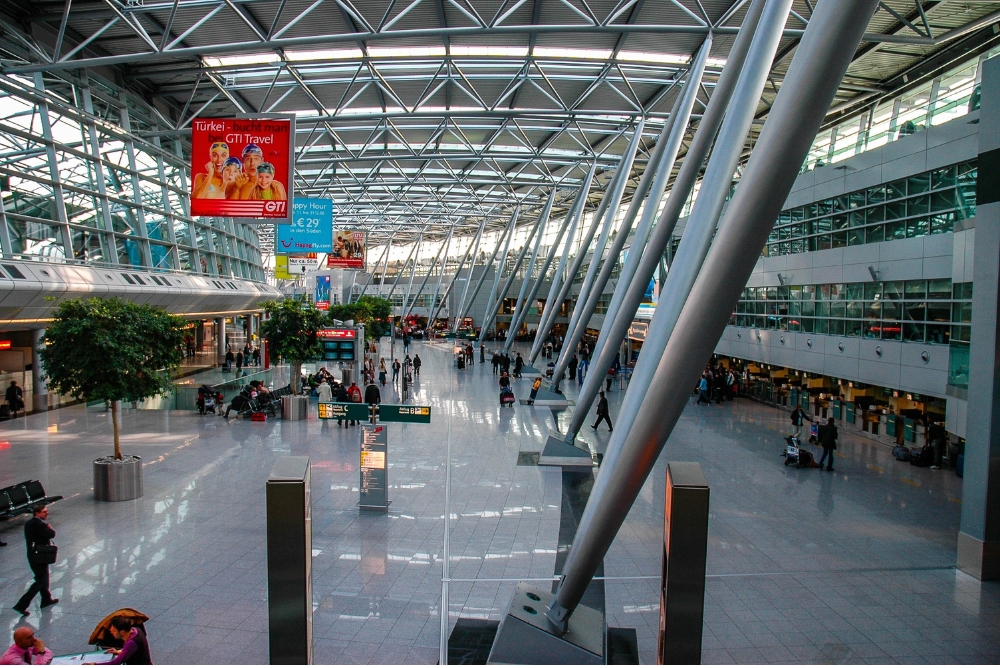
Image by Josch13 via Pixabay, showing Düsseldorf Airport.

European airport trade body ACI Europe has released its air traffic report covering the month of June, Q225, and the first half of 2025 respectively, which showed major markets growing at the slowest pace. with large and minor airports experiencing the highest rate of passenger growth.

Passenger traffic across the European airport network increased by +4.5% in H1 compared with the same period last year, with the pace of growth remaining steady over both Q1 and Q2 — respectively +4.3% and +4.6%.

International passenger traffic accounted for all of the gains (+5.7%) as domestic traffic essentially remained flat (+0.2%). Overall, passenger volumes in H1 stood at +5.1% above their pre-pandemic (H1 2019) levels.

Olivier Jankovec, Director General of ACI Europe, said: “The positive performance of passenger traffic since the start of the year reflects the continued and strong resilience of demand in the context of significant supply pressures, operational disruptions, increasing geopolitical and geoeconomic tensions and renewed macro-economic uncertainties.

All this brings renewed competitive pressures and traffic risks for airports, with much more volatile and unpredictable market dynamics where growth is no longer a given. The Summer season keeps delivering for now – let’s see how the following months will be shaping up. ”

EU & Rest of Europe

Airports in the EU+ area saw passenger volumes increasing by +4.3% in H1 compared to the same period last year, with significant divergences in performance between those located South-East and those located North-West of the bloc.

<strong>The EU+ area is comprised of the following countries: Albania, Armenia, Azerbaijan, Belarus, Bosnia & Herzegovina, Georgia, Israel, Kazakhstan, Kosovo, Moldova, Montenegro, North Macedonia, Russia, Serbia, Turkey, Ukraine, and Uzbekistan.</strong>
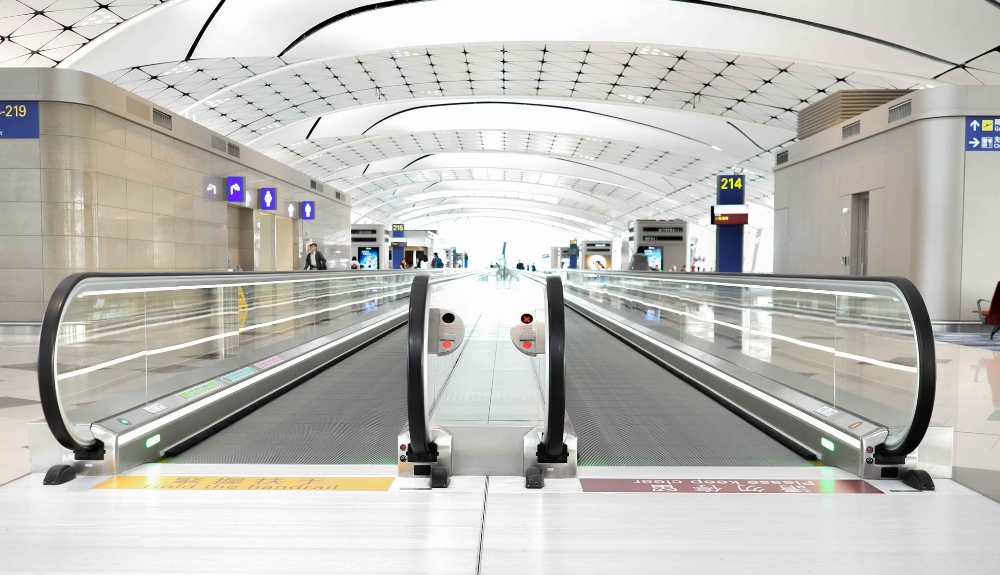
The EU+ area is comprised of the following countries: Albania, Armenia, Azerbaijan, Belarus, Bosnia & Herzegovina, Georgia, Israel, Kazakhstan, Kosovo, Moldova, Montenegro, North Macedonia, Russia, Serbia, Turkey, Ukraine, and Uzbekistan. Photo by tarok ate via Pixabay.

Accordingly, the best performances came from airports in Slovakia (+19.2%), Poland (+14.9%), Hungary (+14.2%), Malta (+11.7%) and Cyprus (+10.8%) — while airports in Sweden (-0.9%), Estonia (+0.2%), Iceland (+1.4%) and Luxembourg (+1.4%) posted the weakest results.

Amongst the largest EU+ markets, airports in Italy (+5.7%) registered the highest increase in passenger traffic, along with those in Spain (+4.5%). Conversely, airports in France (+3.6%), the UK and Germany (both at +2.3%) underperformed the EU+ average.

Meanwhile, airports in the rest of Europe (EU, EEA, Switzerland and the UK)  recorded a +5.6% increase in passenger traffic with performance gaps even more significant, reflecting the impact of both geopolitics and contrasted markets dynamics.

This resulted in airports in Moldova (+49.2%), Bosnia & Herzegovina (+31.1%), Israel (+27%), Kosovo (+16.6%) and Georgia (+13.7%) posting impressive results — while those in the larger market of Türkiye (+1.2%) and Azerbaijan (+1.6%) saw modest volume growth.

Airport market segments

Major airports (over 40m pax) grew at the slowest pace in H1 with their passenger volumes increasing by +3.3% over the same period last year:

Istanbul Sabiha Gökçen (+11.5%) and Rome Fiumicino (+6.5%) stood out, posting the best performances.

London Heathrow remained the busiest European airport, welcoming 39.9m pax — a modest +0.2% increase over the H1 2024.

The British hub was followed by Istanbul (39.1m tax | +2.5%), Paris-CDG (34.6 million passengers | +4.3%), Amsterdam Schiphol (32.7 million passengers | +3%) and Madrid (32.6 million passengers | +3%).

Mega airports (25-40 million passengers) saw passenger volumes increasing by +4%, with the best performances coming from Milan Malpensa (+11.4%), Athens and Copenhagen (both at +7.6%).

Large airports (10-25m pax) and Medium airports (1-10m pax) were the segments achieving the highest growth — both at +5.4%, largely driven by selective Low Cost Carrier expansion and the continued strength of leisure and VFR3 demand:
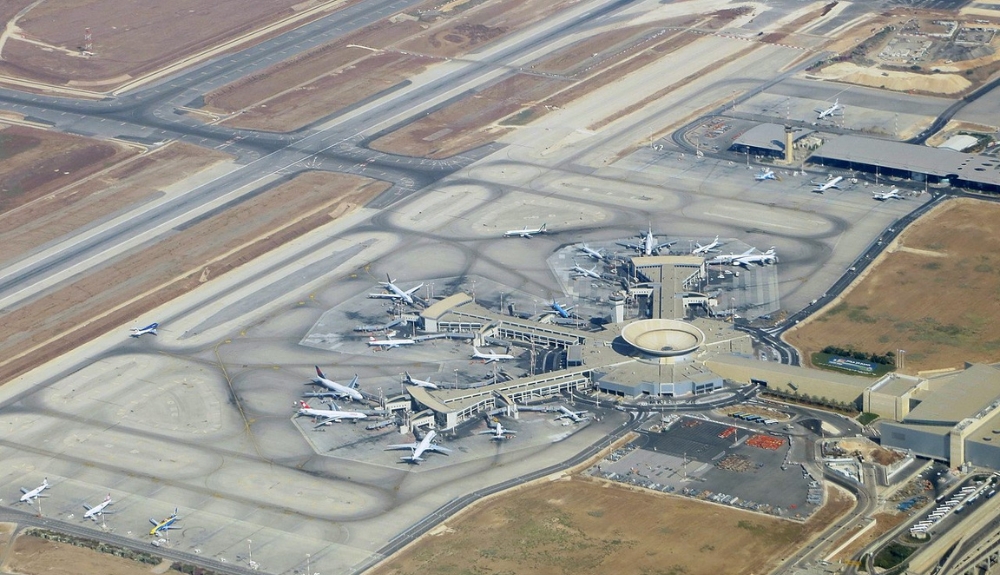
Apart from Tel Aviv (+27%) bouncing back, Krakow (+18.7%), Budapest (+15%) and Warsaw (+13.2%) stood out amongst the Large airports. Photo: Ben Gurionn Airport by Chris Hoare, circa 2012.

Meanwhile, Trieste (+31.8%), Bournemouth (+24.9%), Kaunas (+20.6%), Poznan (+20%), Varna (+19.1%), Genoa (+18%), Girona (+17.1%), Memmingen (+16.4%), Wroclaw (+15.6%), Bari (+15.7%) and Cork (+14.5%) were amongst the fastest growing Medium airports.

Small airports (less than 1 million passengers) also saw a positive momentum with their passenger traffic increasing by +5.1%. However, these airports remain the only ones not having recovered their pre-pandemic (H1) passenger levels (-32.9%).

Airport Group Data

In June 2025, Majors, Mega, Large, Medium, and Small airports reported an average increase of +2.4%, +3.4%, +2.4%, +4.2% and +5.2% respectively, as compared to June 2024.

The airports that reported the most dynamic growth in passenger traffic versus June 2024 are as follows:

Majors: Istanbul SAW (+12.2%), Munich MUC (+6.1%), Barcelona BCN (+4.8%), Rome FCO (+3.0%), Frankfurt FRA (+2.8%).

Mega airports: Milan MXP (+9.5%), Copenhagen CPH (+9.4%), Paris ORY (+7%), Dublin DUB (+5.8%), Athens ATH (+4.6%).

Large airports: Krakow KRK (+18.1%), Warsaw WAW (+13.3%), Almaty ALA (+9.6%), Budapest BUD (+9.1%), Valencia VLC (+9.1%).

Medium airports: Chișinău RMO (+39.7%), Bournemouth BOH (+29%), Varna VAR (+25%), Trieste TRS (+25%), Genoa GOA (+18.8%).

Small airports: Bucharest BBU (+403.4%), Syros Island JSY (+112.8%), Karlstad KSD (+97.5%), Gyumri LWN (+66.9%), Volos VOL (+51.1%).

READ MORE: ACI Europe May report reveals pax disparity and sliding freight traffic

READ MORE: Airports ‘vital’ for Europe’s prosperity, says new ACI Europe President

READ MORE: Restrictions against China ‘scientifically unjustified’, insists ACI Europe

Fraport AG sees higher revenue and lower profits in H1 2025

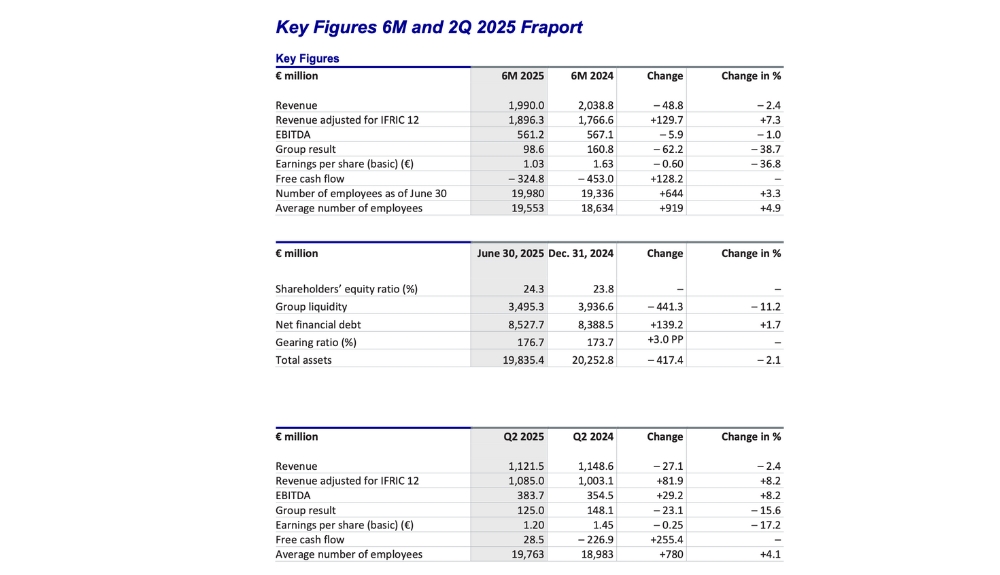
Boosted by the increased traffic, after adjustments for revenues from construction and expansion measures (in line with IFRIC 12), revenue across the Group rose by 7.3% to €1.9bn.

Fraport AG has released its H1 2025 financial report, which shows business performance picked up during the second quarter of 2025, as over the first six months of the year, around 77 million passengers traveled via Fraport’s Group airports worldwide – representing growth of 3.8%.

The operating result (EBITDA) remained virtually stable, at €561.2m (down 1.0 percent).

The Group result (net profit) for the first half of 2025 was €98.6 million, compared to €160.8 million in H1/2024.

The decline was primarily attributable to previously mentioned non-recurring events that positively impacted the prior-year period, as well as adverse effects from currency exchange rates and the recognition of deferred taxes in the reporting period.

Dr. Stefan Schulte, CEO of Fraport AG, said: “We’re on track to achieve our targets for the year. Following a lackluster first quarter – impacted by non-recurring effects from the previous year – we were able to improve our operating result significantly in the second quarter by a strong 8.2 percent.

For the second half of 2025, we’re expecting growth across all of our airports, with our international portfolio performing more strongly than Frankfurt.”

External factors and CapEx

Schulte continued:”As the German Federal Government is failing to implement its pledge under the coalition agreement to make urgent cuts to excessively high regulatory costs even in its 2026 budget, additional growth drivers for the German market are becoming an even more distant prospect.

The Federal Government is passing up an opportunity to strengthen the competitiveness of our industry. The connectivity of German airports will reduce, to the detriment of leisure and business travelers. In contrast to Frankfurt, our international business will benefit particularly from the successful completion of expansions to our airports in Lima and Antalya.”

When considering the second quarter of 2025 on its own, EBITDA increased, rising by 8.2 percent to €383.7 million in the three months from April to June.

There was also significantly improved performance for free cash flow in the second quarter.

Adjusting for revenues resulting from construction and expansion measures at Fraport’s international subsidiaries (in line with IFRIC 12), Group revenue increased by 7.3 percent to €1.9bn in the first half of 2025.  At Frankfurt (FRA), the rise was driven by an increase in revenue from airport charges (up €31.9 million), ground services (up €32.2 million), and infrastructure fees (up €18.8 million).

In the first half as a whole, free cash flow was -€324.8 million.

However, in the second quarter of 2025, the figure reached positive territory, at €28.5 million (Q2/2024: -€226.9 million).

The completion of major investment projects for the expansion of Fraport’s airports in Lima and Antalya demonstrated the first positive impacts.

Fraport’s growth outside of Germany

Passenger growth figures across the Group’s airports were generally positive in the first half of 2025. With some 29.1 million passengers, Frankfurt Airport (FRA) saw an increase of 1.4 percent.

In the second quarter, passenger numbers at Frankfurt rose by 3.1 percent.

This enabled Germany’s largest airport to make up the slight reduction in passenger numbers (-0.9 percent) that it experienced during the first three months of the year.

When adding traffic figures for Fraport’s international subsidiary airports – which largely outperformed FRA – the Group as a whole recorded a 3.8 percent increase in passenger numbers for the first half of 2025, to around 77 million travellers.

Outside Germany, traffic growth at Fraport’s Group airports in Greece (up €11.5 million) and Lima (up €10.6 million) made a major contribution to the overall result.

The operating result (or EBITDA) reduced slightly, by 1.0 percent to €561.2 million.

In 2024, the first half was impacted by non-recurring effects.

In particular, these included a coronavirus compensatory payment for Fraport Greece (€28.0 million) and compensation of €9.1 million for damage caused by flooding at the airport in Porto Alegre (POA).

Outlook for the 2025 fiscal year

Fraport’s executive board said it views the trend in the first quarter of 2025 as positive and is confirming forecasts for the current fiscal year.

The airport operator expects passenger numbers at FRA to reach up to 64 million.

A moderate increase in the Group EBITDA is forecast.

Expectations for the Group profit remain in a stable to slightly falling range.

READ MORE: Frankfurt Airport announces concessionaires for ‘Art of Retail’ space

READ MORE: FAR previews 3000sq m of retail space coming to Frankfurt Airport T3

READ MORE: Airports ‘vital’ for Europe’s prosperity, says new ACI Europe President

Hudson opens five new retail outlets at JFK T8

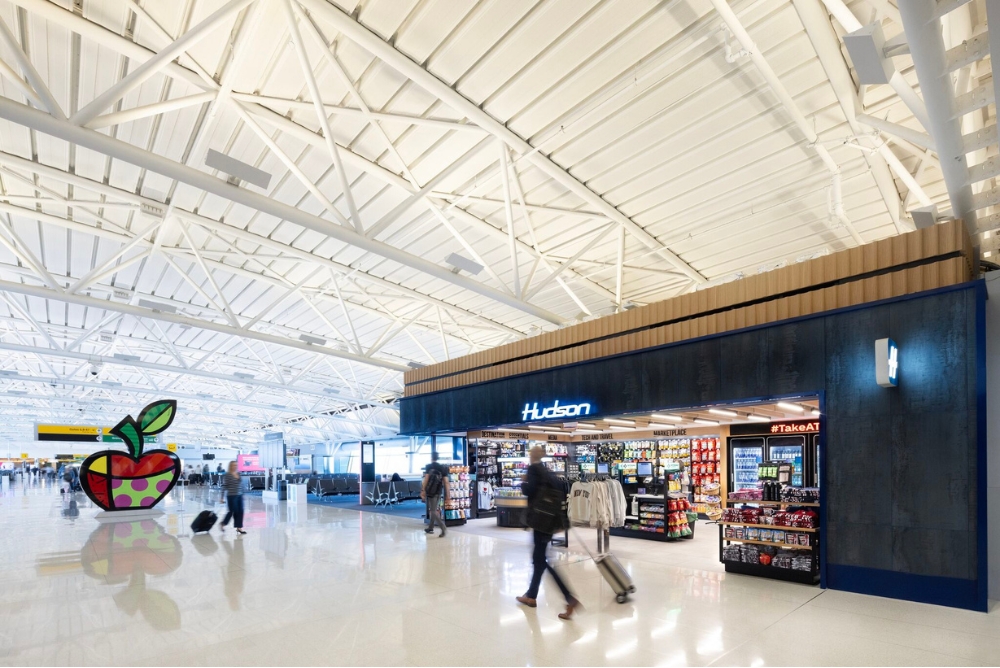
Photo: Unibail-Rodamco-Westfield Airports.

Hudson has recently opened several new retail spaces at John F. Kennedy International Airport Terminal 8, as part of its partnership with Unibail-Rodamco-Westfield Airports, The Port Authority of New York & New Jersey, and American Airlines.

In a statement released to social media platform LinkedIn, Hudson noted these five new spaces fall under the remit of a larger and ongoing effort to transform the retail offering at JFK T8.

Further, Unibail-Rodamco-Westfield Airports highlighted the addition of iPorte, which specialises in technology must-haves and new releases, and was established at T8 earlier this year.

READ MORE: ASUR inks $295m deal for URW Airports to control key airport retail programmes

READ MORE: JFK T1 allocates 8,400sq ft of travel essentials retail locations

READ MORE: Avolta transforms JFK T5 with new dining, retail and gaming experiences

ASUR inks $295m deal for URW Airports to control key airport retail programmes

The $295m deal unlocks ASUR’s expansion into the US airport retail concessions market where it will oversee commercial programmes at US airports including the New Terminal One (above) at New York’s John F. Kennedy International Airport. Credit: tmrw.inc

Mexico-headquartered operator Grupo Aeroportuario del Sureste (ASUR) has inked an agreement to buy URW Airports from Unibail-Rodamco-Westfield (URW).

Under the disclosed terms, ASUR subsidiary ASUR US Commercial Airports, LLC has entered into a purchase agreement with URW’s wholly owned subsidiary Westfield Development, Inc. to acquire all of the issued and outstanding equity interest of URW Airports, LLC for an enterprise value of $295 million.

The business handles commercial programmes at US airports, including at Los Angeles International Airport’s (LAX) Terminals 1, 2, 3, 6 and Tom Bradley International Terminal and Tom Bradley International Terminal West, Chicago O’Hare International Airport’s Terminal 5, John F. Kennedy International Airport’s Terminal 8 and the New Terminal One.

The closing of the transaction is expected to occur during the second half of 2025, subject to conditions.

ASUR is funding the transaction with cash on hand and has secured debt financing from JPMorgan Chase Bank, N.A. to maintain liquidity.

ASUR’s subsidiary, Aeropuerto de Cancún, S.A. de C.V., has provided a parent guarantee for buyer’s obligations under the purchase agreement.

ASUR operates, maintains and develops 16 airports in the Americas, comprising nine airports in southeast Mexico, including Cancún Airport and six airports in northern Colombia.

ASUR is also a 60% JV partner in Aerostar Airport Holdings, LLC, operator of Luis Muñoz Marín International Airport serving San Juan in Puerto Rico.

Mondelez WTR brings Oreo back to Singapore Changi Airport

Mondelez noted the collection aligns to meet current consumer behaviour trends in travel retail.

Mondelez World Travel Retail (WTR) is celebrating the return of the world’s number one biscuit brand, Oreo, to Singapore’s Changi Airport, marking a major step in the brand’s strategic growth across the APAC region.

Oreo’s return to Changi Airport is a key part of Mondelez WTR’s plan to accelerate the brand’s travel retail presence across APAC, with the new range now available at The Cocoa Trees stores in partnership with travel retailer and distributor FNA Group International.

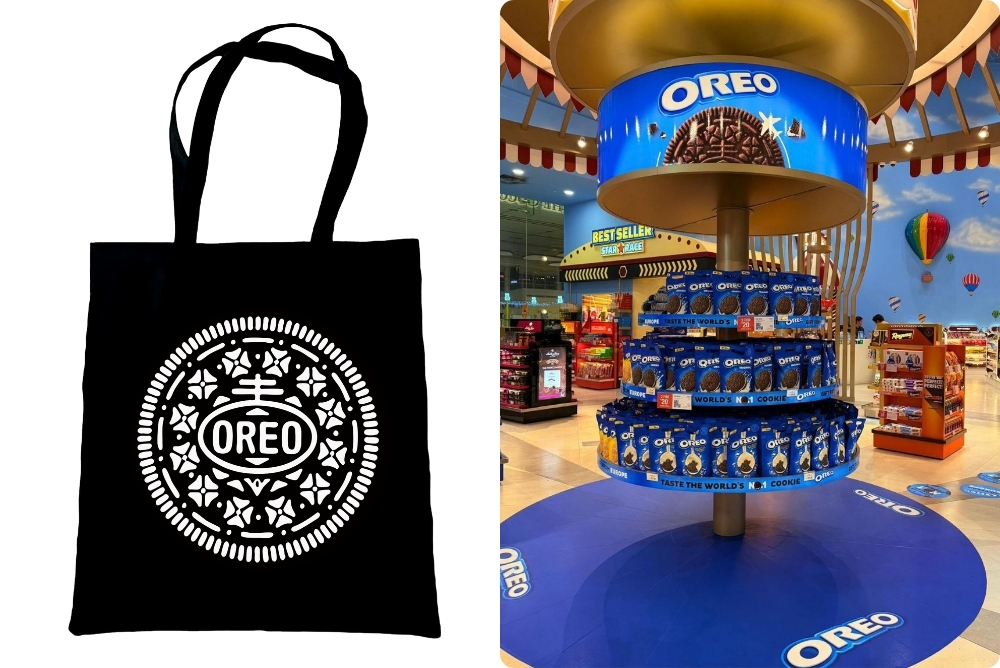
The travel-exclusive portfolio, including the Oreo Tin Box, Oreo Pouch Bag (featuring Original, Mini, Golden, Enrobed, and Enrobed White varieties) and Oreo Cookie Case, offers compact, giftable, and shareable formats.

The move is timely, with travel retail increasingly shaped by demand for snackable, portion-controlled products that blend indulgence, convenience, and shareability.

Mondelez claimed 91% of global consumers enjoying at least one snack per day, with nearly half of biscuit purchases in travel retail made for self-consumption, and added Oreo is ideally positioned to drive category growth.

The business added Oreo will continue to expand its APAC footprint, rolling out to key regional travel retail hubs such as Kuala Lumpur International Airport, supported by activations, displays, and gift-with-purchase promotions featuring exclusive Oreo tote bags and travel tags.

“Oreo is a true global icon, beloved by millions and recognised as the world’s number one biscuit brand,” said Carlos Granados Moyano, Global Sales Director, Mondelez World Travel Retail.

“Oreo’s return to Changi Airport reflects our commitment to strengthening the brand’s footprint in APAC travel retail and tapping into the strong demand for snacking in this region. Changi is the perfect stage to showcase our exclusive formats and engaging experiences, and we see this as an important milestone as we continue to invest in travel retail across APAC,” added Moyano.

Pamela Loo-Song, FNA Group International’s Deputy Group CEO, stated: “It’s a pleasure to partner with Mondelez World Travel Retail to welcome Oreo back to Changi Airport.

Bringing such an iconic and playful brand to The Cocoa Trees stores allows us to offer travellers something special and memorable, right here in Singapore’s gateway to the world. We look forward to sharing more Oreo moments with our shoppers from around the globe.”

READ MORE: Mondelez WTR and Avolta targeting football fans with La Liga partnership

READ MORE: TR Consumer Forum 2025: ‘Spirit of place’ retail and F&B concepts shine

READ MORE: Mondelez WTR recruits new travelling consumers with 200g Toblerone bar

Cartier debuts boutique at Zurich Airport in collaboration with Bucherer

This opening marks another milestone in Cartier Global Travel Retail’s strategy to strengthen its presence in leading international airports worldwide.

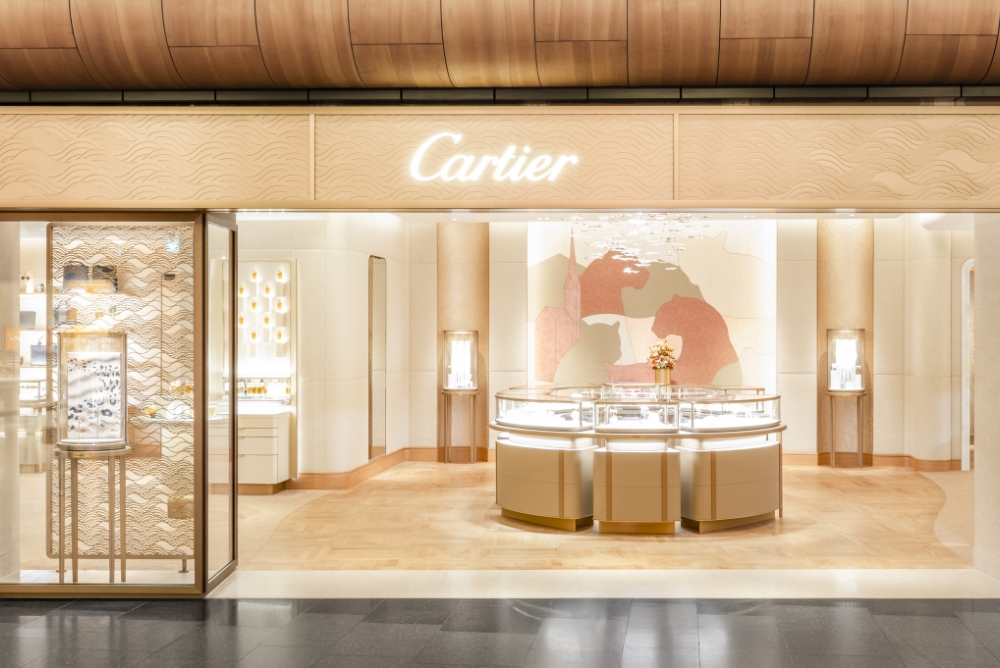
Cartier, in collaboration with Bucherer, has debuted its first airport boutique in Switzerland, located at Zurich Airport. As one of Europe’s most prominent aviation centers, Zurich Airport is a complement to Cartier’s existing boutique network across major European airports.

Nestled at the airport’s prime location, the boutique offers clients an elevated experience that blends Cartier’s signature savoir-faire with the city’s vibrant charm.

“As our first airport boutique in Switzerland, our opening in Zurich Airport marks a key milestone to strengthen our presence across key international airports worldwide. Combining Zurich Airport’s status as a leading travel hub with Bucherer’s expertise as a long-standing trusted partner, we are proud to bring to life an elevated experience that reflects the Maison’s timeless elegance and craftsmanship,” said Virginie Martignac, Global Travel Retail Director at Cartier.

Re-imagining the boutique experience for travelers, the Cartier boutique presents an airport concept designed to blend the Maison’s elegance with the city’s unique cultural and natural heritage.

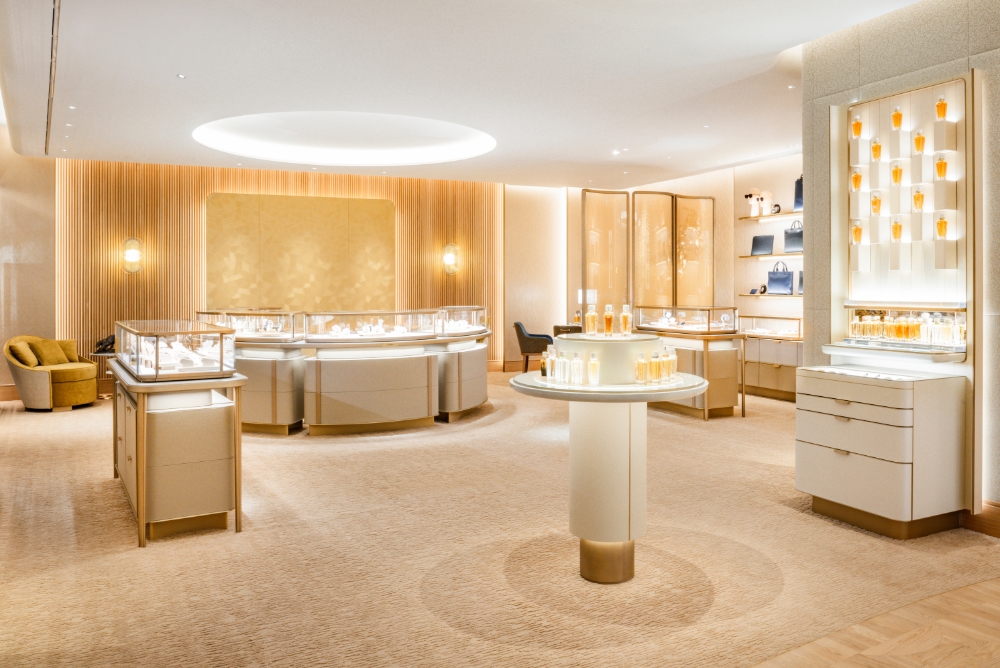
Its champagne gold façade offers an inviting preview of sophistication within, while the interior, inspired by Zurich’s distinctive four-season climate, transitions through soft spring tones at the entrance, vibrant summer accents in the VIP salon, warm autumn hues in the men’s area, and champagne-gold details that evoke the festive lights of winter.

“We are delighted to enhance our partnership with Cartier through the launch of its airport boutique in Switzerland. Through a collaboration built on a shared vision of curating unforgettable shopping experiences for travelers around the world, we look forward to welcoming both local and international clients into this unique space,” added Florian Gattiker, International Retail Director at Bucherer.

A highlight of the boutique is the focus wall, which celebrates Zurich’s architectural heritage with a design that incorporates the Maison’s emblematic panther motif.

Airport clients may discover a curated collection of signature jewelry, timepieces, fragrances and leather goods.

“Cartier’s arrival at the Airside Center marks an important addition to Zurich Airport’s portfolio of world-class luxury Maisons. This collaboration underscores our commitment to providing an exceptional shopping experience for travelers and reinforcing Zurich Airport as a premier destination for luxury retail,” said Heidi Köpple, Head Commercial Centers at Zurich Airport.

READ MORE: Record-breaking July pushes Dubai Duty Free YTD sales to US$1.3 billion

READ MORE: Cartier takes enhanced concept to Narita T1 with transformed boutique

READ MORE: Cartier debuts airport boutique on US West Coast at LAX with DFS Group

Sydney Airport reveals first phase dining and retail programme at domestic T3

Sydney Airport (SYD) has launched today (4 August) the first phase in a transformative redevelopment of the retail and dining facilities at the Terminal 3 Domestic Terminal.

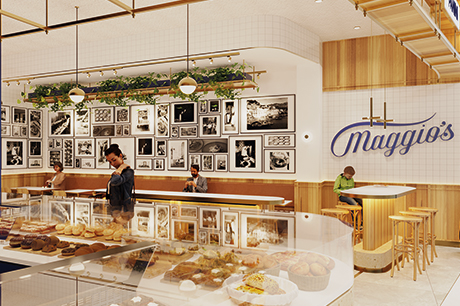
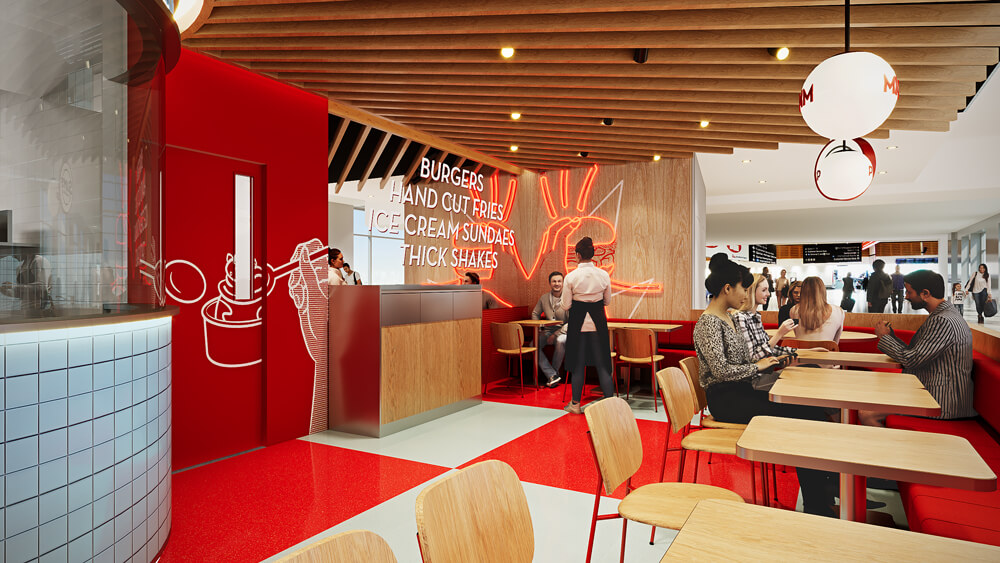
Phase one will welcome 14 new F&B concepts, beginning with three airport brand debuts: Maggio’s, Slim’s Quality Burgers and Loulou.

Scheduled for opening in late 2025, the concessions form part of a broader terminal upgrade programme.

In November, the airport unveiled its plan to modernise the T2 Domestic Terminal aligned to a AUD$200 million investment to streamline check-in, quicken security and update the facilities.

The T3 refurbishments include upgraded storefronts and signage, improved wayfinding and new furniture, finishes and greenery.

The remaining F&B brands in the 14-venue rollout are due to be revealed in the coming months, with speciality retail to follow.

As reported, Lagardère AWPL won a tender last year to run the travel essentials business at the T2 and T3 Domestic Terminals with an offering spanning approximately 2,500sq m across 14 locations.


The remaining F&B brands in the 14-venue rollout are due to be revealed in the coming months, bulding on the openings of Luke Mangan’s Bar & Bistro, Stone & Wood and the Heinemann domestic concept store, which form part of the terminal’s broader commercial refresh.

Mark Zaouk, Group Executive Commercial at Sydney Airport, said: “T3 Domestic is not just a terminal; it’s a gateway for millions of passengers to Australia’s vibrant domestic travel market and we’re transforming the dining and speciality retail areas by securing iconic brands that reflect the T3 premium offering.

“We’re proud to partner with brands that bring authenticity, creativity and premium quality to the terminal. This is just the beginning, we’ll soon be unveiling even more exceptional dining names, along with a revitalised specialty retail mix to match.”

READ MORE: Sydney Airport announces major overhaul for T2 Domestic terminal

READ MORE: Lagardère AWPL wins Domestic Travel Essentials retail contract at SYD

Record-breaking July pushes Dubai Duty Free YTD sales to US$1.3 billion

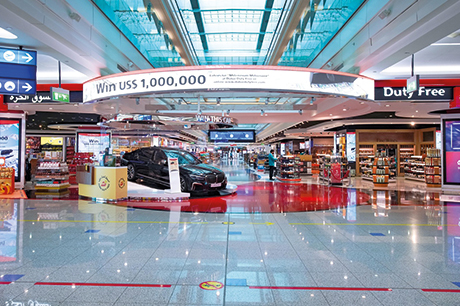
Dubai Duty Free (DDF) has reported a 5.9% lift in year-to-date sales to AED4.734 billion/US$1.3 billion.

The result is expected to outpace passenger traffic growth at Dubai International Airport (DXB) over the same period, after Dubai Airports announced earlier this week a 2.3% uptick in the first half of 2025 to 46 million pax.

July delivered another sales record for the travel retailer, which smashed AED 638 million/$175 million – a rise of 9.7% year-on-year – putting last month’s return among the top 10 earning months in DDF’s history.

DDF says it has recorded sales records in five of the seven months to date in 2025.

The leading five product categories in July were perfumes, liquor, gold, tobacco and confectionery.

Perfume sales increased 10.3% compared with the same month in 2024, liquor sales were up 1.7%, while tobacco generated a 2.2% increase.

Sales of gold jumped 15.5%, watches rose 18.4%, precious jewellery was up 16.8% and confectionery surged 57% on July last year.

Luxury boutiques perform

“We are delighted to report another strong sales month in what is already proving to be an exceptional year,” commented Dubai Duty Free Managing Director Ramesh Cidambi. “This outstanding performance reflects the resilience of our retail operation and the continued demand for world-class shopping experiences. Achieving nearly 10% sales growth in a month when we estimate passenger traffic remained relatively flat is a testament to our team’s dedication and product offering.”

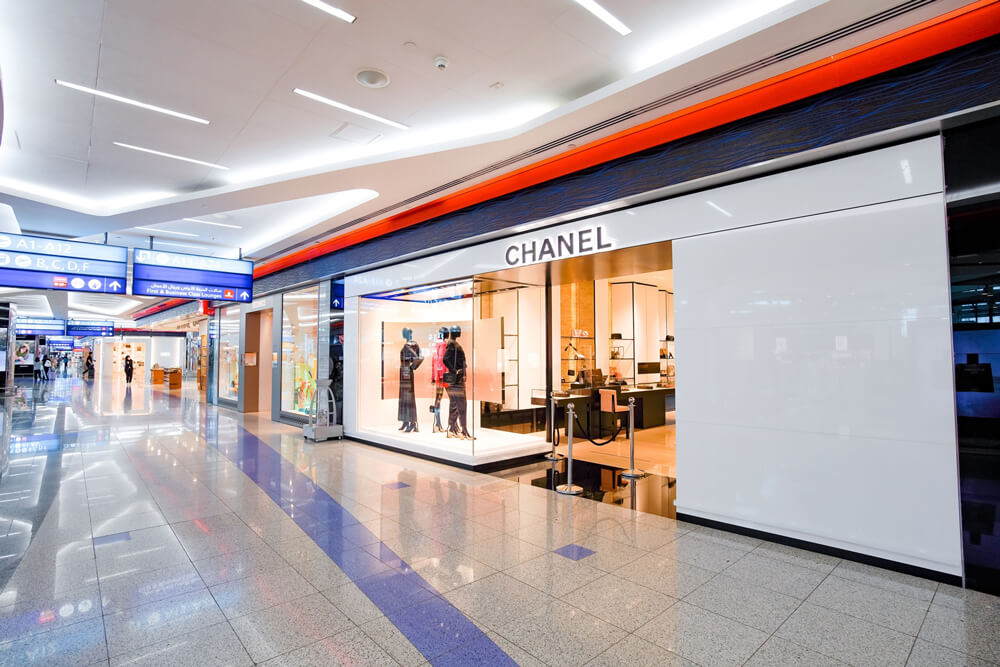
 Boutiques from Chanel (pictured), Cartier and Louis Vuitton helped to deliver an 11.4% uptick in luxury fashion in July.

DDF’s CA and CB fashion boutiques, housing revered luxury labels such as Chanel, Louis Vuitton and Cartier, delivered growth of 11.4% over the same period in 2024.

“Given the recent media reports outlining the difficulties facing global luxury brands, we are happy to buck that trend in our luxury boutiques, where we are seeing continued demand for select brands,” continued Cidambi.

DDF notes growing momentum for pre-loved luxury boutique Reklaim, which launched in December and is situated at Concourse A – including the Emirates First Class Lounge – Concourse B and D.

Reklaim merchandises an assortment of authenticated pre-owned watches and handbags from top-tier luxury labels.

Rolex Watches has sold 176 items since the launch of Reklaim, with 16 sold in July alone.

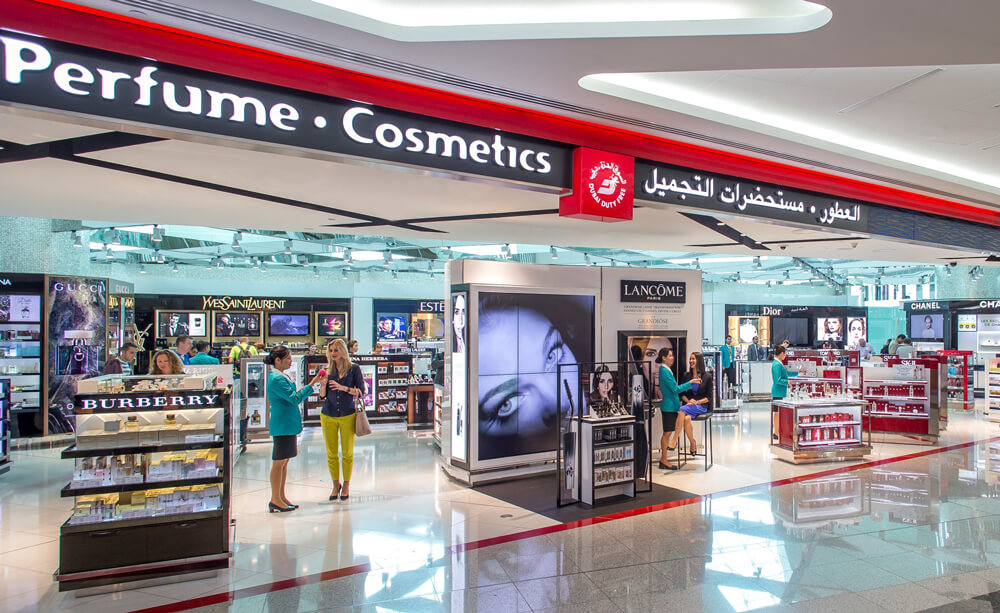
Perfumes, liquor, gold, tobacco and confectionery made up the top five sales categories for DDF in July. Within beauty, perfumes revenue increased 10.3% over the same month in 2024.

As reported, Dubai Duty Free has recently concluded significant refurbishments to its estate at DXB across Concourse B East and West, alongside upgrades to its arrivals shops, including at Terminal 3, with the renovation of Concourse A’s P&C and fashion units and new boutique openings among more recent developments.

“This outstanding achievement is a testament to the hard work and dedication of our entire team and the unwavering support from our Chairman, H.H. Sheikh Ahmed bin Saeed Al Maktoum,” added Cidambi. “We have succeeded in enhancing penetration and spend levels while maintaining business focus, despite a highly competitive and uncertain environment.”

READ MORE: Dubai Duty Free sees double-digit sales increase in May 2025 versus 2024

READ MORE: Dubai Duty Free achieves Q1 2025 sales of US$565 million

READ MORE: Dubai Duty Free unveils major redesign of Arrivals shops

Extime SPH improves as Groupe ADP reports 25% lift in retail revenue in H1

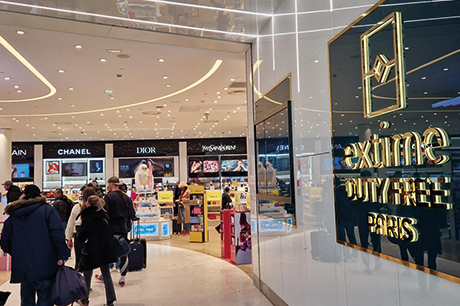
A strong performance from Extime Duty Free Paris spurred retail revenue for Groupe ADP in the first six months to 30 June this year.

Group revenue increased 9.6% to €3,163 million/$3,716 million in the first half, helped by passenger traffic growth and strong momentum in retail activities.

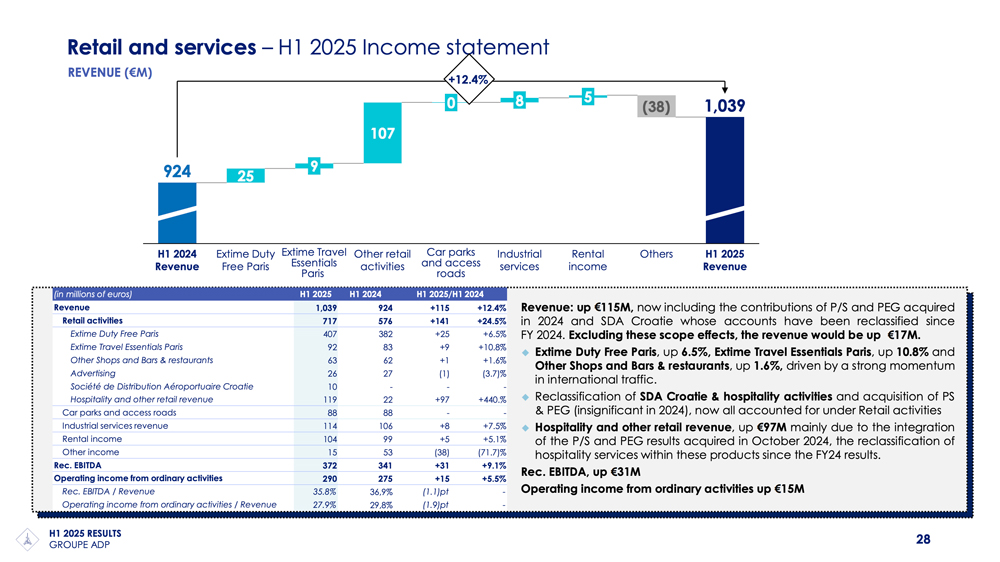
Of that total, revenue from the group’s Retail and Services division, including Extime Duty Free Paris and Extime Travel Essentials Paris at its Parisian hubs (Paris Charles de Gaulle and Paris Orly Airports, grouped under the Paris Aéroport brand) totalled €1,039 million, a rise of 12.4% (€115 million).

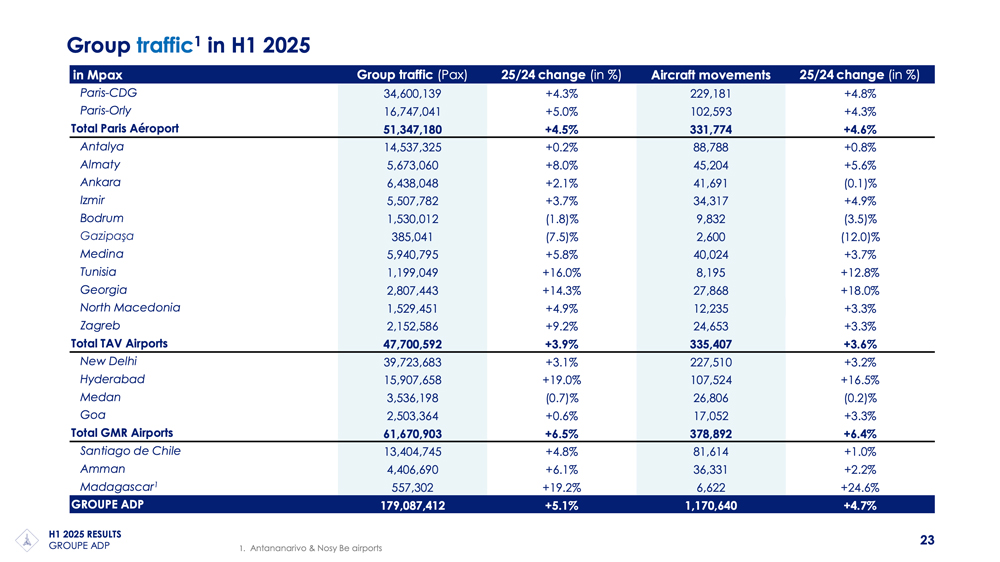
Growth in the segment outstripped passenger traffic of 4.6% to 51.4m passengers in Paris.

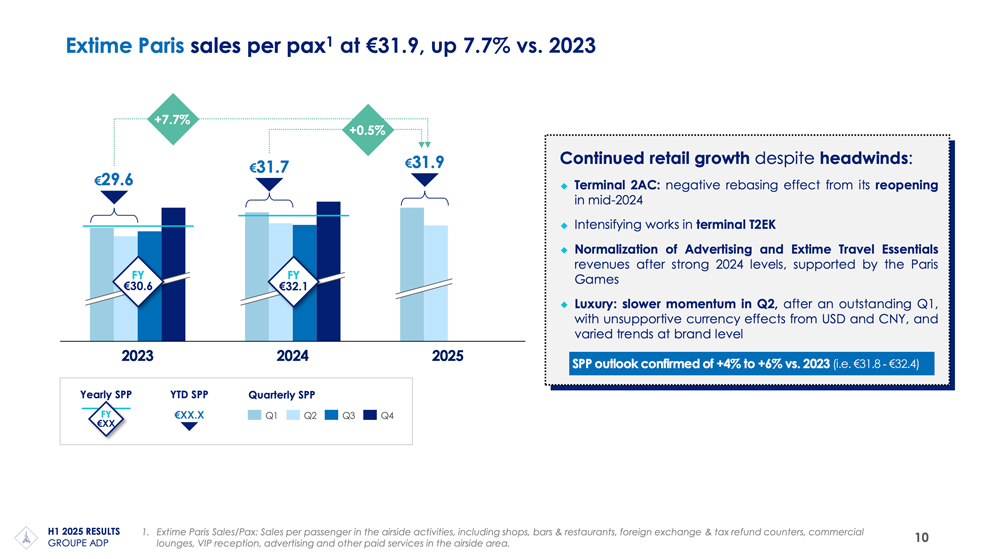
Spend per pax from the Extime Paris joint venture comprising Lagardère Travel Retail (49%) and Groupe ADP (51%) improved marginally (+0.5%) to reach €31.9.

Extime Duty Free: €25m injection

Revenue from retail activities specifically, which cover airside and landside shops, bars and restaurants, banking, forex, car rental fees and advertising income, grew 24.5% year-on-year to €717m.

Extime Duty Free Paris contributed €25m in additional year-on-year sales to the €141m total increase recorded by the segment.

Recurring EBTDA for the retail activities division jumped 9.1% to €372m.

Revenue from Extime Duty Free Paris and Extime Travel Essentials Paris were up €25 million, €9 million, driven by traffic growth, particularly international traffic (+6.5%).

Group recurring EBITDA totalled €1,025 million, a lift of 8.7%, with net debt at €8,702m (as of 30 June) compared with €8,572m as of 31 December 2024 and a net debt/recurring EBITDA ratio of 4.0x.

Factoring in Groupe ADP’s international airports (TAV Airports, GMR Airports), total passenger traffic for the group in H1 was 179.1 million.

Philippe Pascal, Chairman and CEO, Groupe ADP commented: “Groupe ADP delivered a solid operating performance in the first half of 2025 despite a challenging economic environment; our 2025 financial targets have been confirmed.”

Pascal, appointed in his role in February when he succeeded the long-serving Augustin de Romanet, affirmed an “ambitious development strategy” across Groupe ADP’s Paris hubs underpinned by “major projects and a sustainable vision”.

Extime Paris spend per passenger recorded a marginal improvement (0.5%) to €31.9 for the period in question.

Groupe ADP undertook a voluntary public consultation from 8 April – 8 July entitled ‘CDF & VOUS’ around the future development of Paris CDG.

Hub carrier Air France together with Groupe ADP under the auspices of the French state, announced the launch of ‘Connect France’ at the International Paris Air Show in June.

The joint initiative is designed to strengthen the airport’s international competitiveness, connectivity, customer service, and decarbonisation efforts.

As part of this, several projects include a revamp of the terminal names at Paris CDG by the end of 2026 and the transformation of Terminal 2E Hall K.

The operator says it has met six indicators aligned to its 2025 Pioneers roadmap, including deploying the Extime Retail and Hospitality concept in Paris and initiating the execution of the franchise in two terminals outside the Parisian hubs.

As part of its ‘Pioneers’ strategic roadmap, Groupe ADP’s assumptions for traffic growth at Paris Aéroport in 2025 are between 2.5 – 4.0%, with Extime Paris spend per pax growth forecast at 4.0 – 6.0% (between €31.8 to €32.4) compared with 2023.

All graphs source: Groupe ADP.