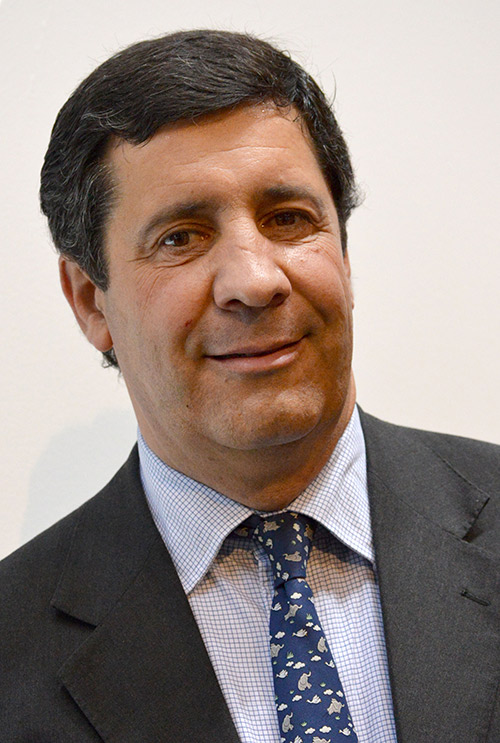
Eugenio Andrades, CEO Operations, Dufry Group.
In a candid and wide-ranging interview*, Eugenio Andrades, CEO Operations at Dufry Group, readily acknowledges that the recovery path from the Covid-19 pandemic remains clouded by the timing of the revival of international passenger traffic – notably Asia Pacific travellers.
However, he speaks optimistically about a new discourse of ‘positive uncertainty’ and characterises what that means for the company – and global travel retail.
You’ve changed job roles since the beginning of the pandemic. For those readers who are unaware, what does your remit involve and how does it differ from your previous position as CEO Europe, Africa and Strategy?
My current role is CEO of Operations for the whole company. I think it’s probably useful to understand the context, because it’s not only a role. I think it’s [about] how the company has been trying to ‘flex’. I would say that the change [part of a group-wide restructure announced in June 2020 – Ed] and ‘flexing’ the company has to do with the pandemic, but it was probably a prior thought to that.
I’ve been in Dufry for [many] years. I’ve been CEO for Northern Europe, coordinating the different regions. What we’ve realised is there are things that we needed to improve, that the organisation will be more fluid and less static because things change very quickly.
We are in 64 countries, different regions… and you need to be local. It’s clear that operations are a local thing. But at the same time you also need to take advantage of your global abilities. It’s not only economies of scale or talent, it’s how you learn different functions and you cannot replicate that with all the talent in four, six or eight divisions.
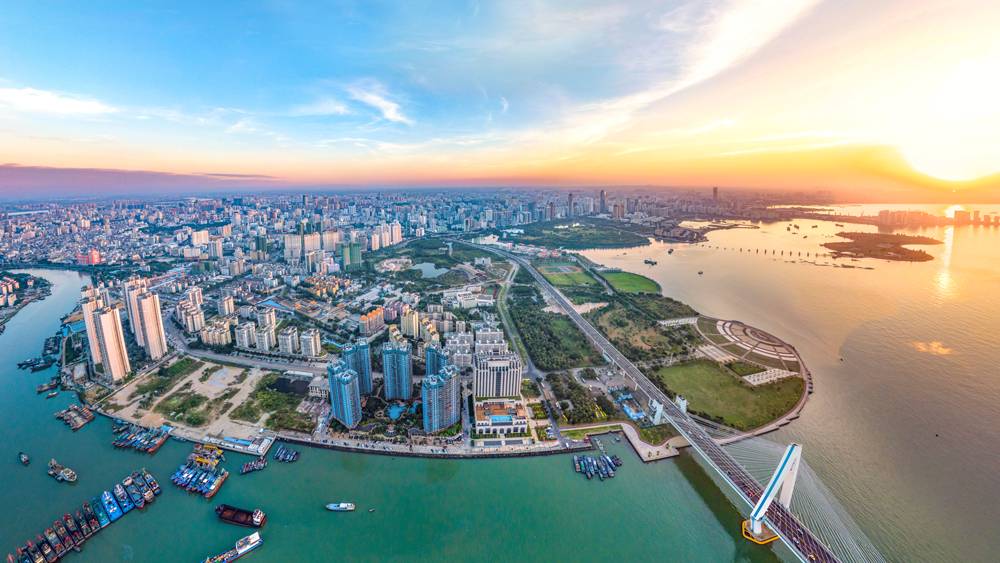
Big things beckon in Hainan island’s capital Haikou, where Dufry has an alliance with Hainan Development Holdings. Both are embarking on the phased opening of a 38,920sq m downtown duty free shop at Mova Mall.
One of the things that we realised is benchmarking and best practices were important and I think that [the creation of] the role was the consequence. The other thing that is important is a faster route to market.
This is conversation that we have with the brands, how long it takes to list a product and how flexible they can be. It’s so important to be fast and flexible these days and we wanted to see how we could bring closer [operations] in the countries. That in the end for me is the critical base in the organisation, but it’s also the airports and landlords that our are partners.
In principle, there was a de-layering. Before, we had headquarters and the countries and we’ve tried to remove part of that layer, where we’ve now eight clusters. That is a way to group countries because of similarity, by geography and then by region. And then we have three areas that I also cover in order to provide support to them and to the company.
The first is retail operations. The central operation is about benchmarking and best practices. The second is business analytics: how we understand the numbers, what is happening on the shop floor, how we can be more efficient and serve customers better and obviously we work very closely with commerce. The last part under my management – and obviously critical for the company – is growth and development.
How would you characterise Dufry’s operational positioning right now?
For me, the situation today is positive uncertainty. Where it is still difficult to predict, is how next month is going to be. H1 [2021] was a tough one and was slower than expected for those in the industry. On the other hand, I would say that we’ve had a strong summer given the current situation with passenger numbers at Heathrow and AENA, for example.
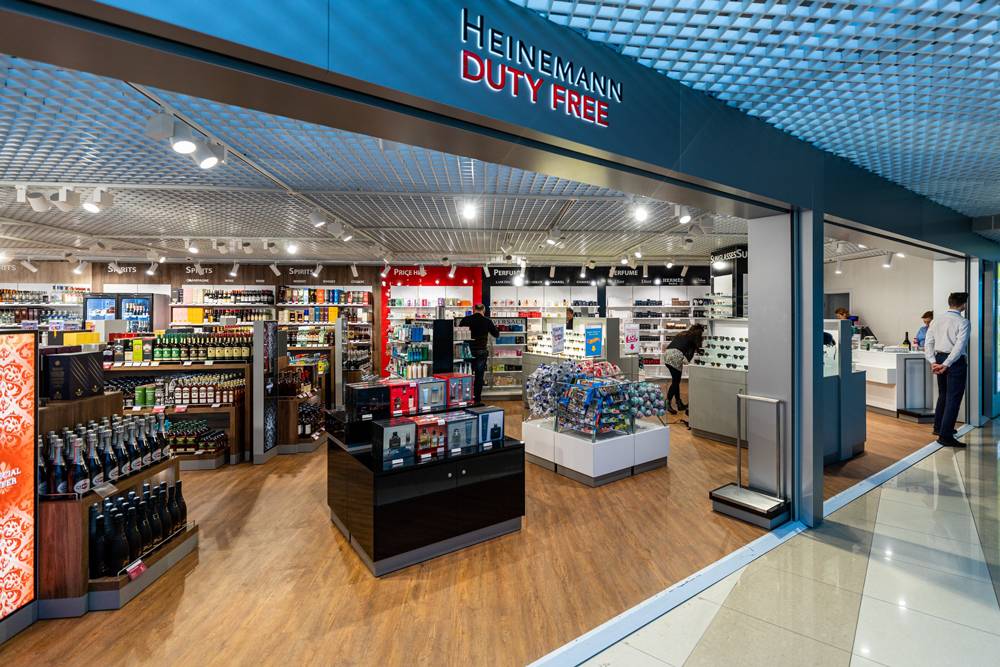
To support that we are obviously doing as much as we can to open and to encompass the openings of our locations according to our expectations. In the past it was very difficult, but now when we open, it’s clear that we are there to stay.

Eugenio Andrades: “The challenges are wider now and I think the pandemic has opened more eyes to that. We are seeing clear examples where some of our partners are more forward thinking into how they can generate further revenues so yes, there is more flexibility [in the concession model]. Is it here to stay? Time will tell.”
What has been clear for us since the very beginning of the pandemic – and I could go back to Summer 2020 – is that once restrictions were lifted, people were eager to travel. Once you remove restrictions, the reaction of people was very fast.
You remember last year we had the start of something promising but then we had further restrictions, especially in the UK.
The most important thing is to try to understand restrictions, because for us, in the sector tracking this is a job in itself and for people who are travelling it is a real complication.
On top of that, I think it’s not only about the restrictions but how you try to standardise how you can travel through the world. In that sense, certificates in my view are fantastic.
There is still a lot to do, but once people can travel with less restrictions and using documents, certificates or green passes that allows you to go to places, I think that is extremely helpful to people.
What is very difficult to answer is the uplift we’ve seen since the Summer. Putting a number on it is impossible, but I think [health certificates] are really supportive.
As I said, the Summer was strong – at some point improving by week – and in my view the certificates and standardising procedures were very important. Not as important as removing the restrictions. That was critical.
We are seeing inflationary pressures across the supply chain resulting in heightened material costs, inventory shortages and impacts on labour and distribution. Are these areas of the business where you are experiencing particular pain points?
It is an important point now and one to watch. It is probably not going to take effect for one, two, or three months [only] – I think it will be longer. We’ve been talking to our brand partners. I would surmise two or three points: first of all, the cost of logistics is higher and it’s a more difficult supply chain. The second is the products. It is clear there are shortages in some products such as liquor and tobacco so there is pressure on the supply chain and we are going to have to work extremely closely with our brand partners.
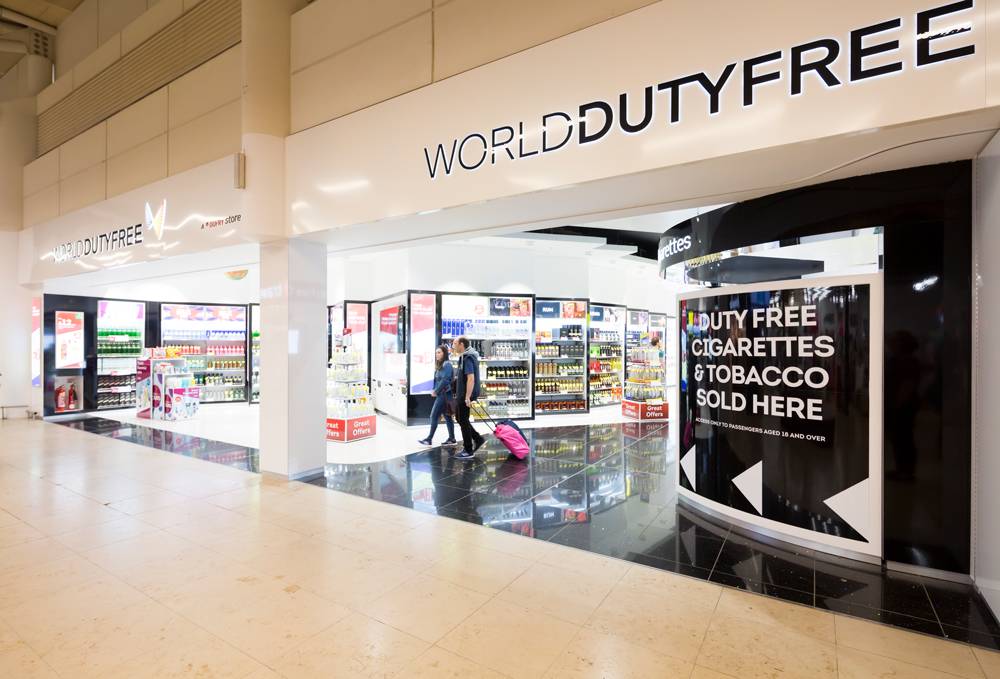
While it remains too early to quantify, Dufry is seeing an uplift in spending following the post-Brexit return of duty free sales between the UK and EU countries. The global travel retailer says it is flagging the importance of attractive liquor and tobacco allowances to UK-bound travellers.
Travel retail has suffered, so what we are asking for is their support to really allocate products to travel retail. I think it is well deserved and really important. We are working really closely with them through our commercial teams in order to make sure we are able to meet demand as best as possible. That will be critical.
Last but not least – and especially stronger in the US – is labour pressure. It’s difficult and very expensive to hire these days. People are coming back to market and there are big changes with salary increases in order to get people back to work.
Given the stratospheric growth being witnessed in Hainan – where Dufry has a partnership with Hainan Development Holdings at the GDF Plaza in the Mova Mall complex – is it more important now than ever to focus on re-opening locations serving Asia Pacific when the time is right?
We have tried to be up-front with our partners. I remember conversations with some of them, such as Heathrow Airport, where we were [one of the] first to open. We wanted to prove to our airport partners and also to our customers that as they are flying they will find something. That has always been a priority and I can tell you Asia will be exactly the same.
 I want to ask you about Spain, where there has been a recent legal change linking concession fees to actual passenger numbers. Have you had time to consider the positive fiscal implications of this decision for Dufry? [Spain’s Congress of Deputies passed a law modifying how MAGs are calculated, affecting Dufry’s duty free and duty paid contracts across AENA’s network of airports. Click here to read the full story – Ed].
Let me start by saying that in general, and in the vast majority of cases, we’re very thankful to our airport partners and partners in other parts of the industry because it has also been very tough times for them. We have had very reasonable conversations and outcomes that actually have been extremely helpful to having a strong company in the future, and to remain in partnership. That’s not always the case and sometimes it’s difficult for different reasons.
On the outcome of Spain, the only thing we can say is that we believe it’s reasonable, that in the end what you pay these days is limited to passengers. This was a matter even before the pandemic to be honest. I think we need to have contracts that are closer to the reality of the markets and where we can serve closer the customers. That means more flexible contracts because the world is changing.
We are competing with different worker strengths, digital… that is the airport [environment]. But in this situation where from one day to the other you simply have no customers, you can do nothing about generating revenues. Obviously, the flexibility of adapting the model to the number of people that you can serve, I would say it’s not only normal, it’s the only thing that you can do about it.
Indeed, are you seeing in your discussions with airports at the moment an openness to pursuing such arrangements at a time when questions have again resurfaced over whether the business model is fit for purpose?
My view from what I’ve seen is not everybody is in the same place. There are different airports, structures – some are state-owned, listed, others are private… In general, the importance of commercial revenue is there and that is increasing.
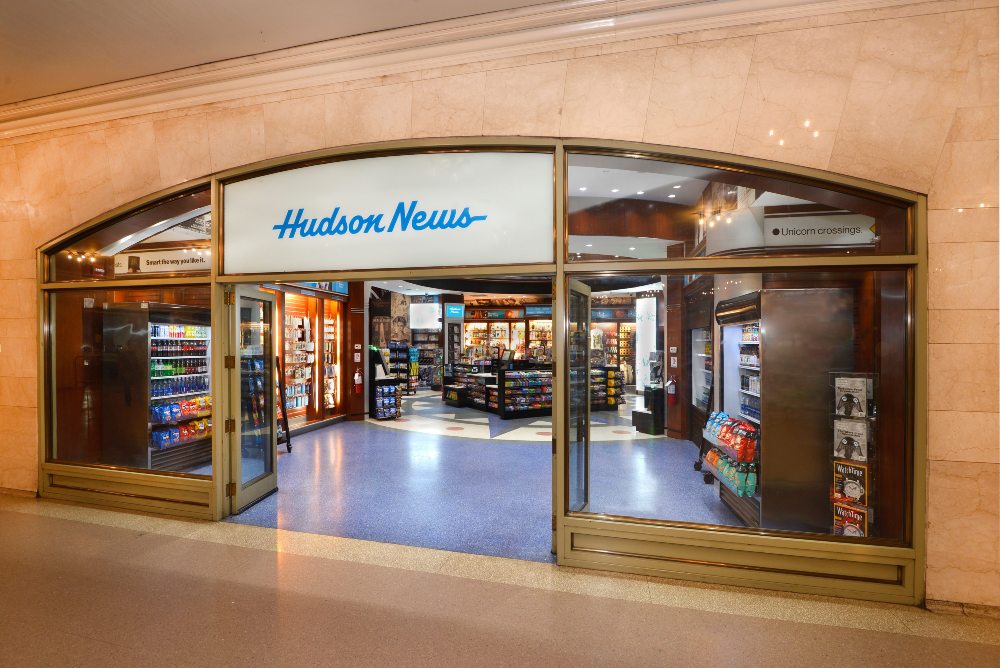
The business is contending with labour pressures in the US market amid the operational restart. Pictured is a Dufry-owned Hudson News outlet.
The challenges are wider now and I think the pandemic has opened more eyes to that. We are seeing clear examples where some of our partners are more forward thinking into how they can generate further revenues so yes, there is more flexibility. Is it here to stay? Time will tell.
I want to ask you specifically about the restoration of UK-EU duty free. Are you seeing a big difference in spending since the beginning of the year, or is any positive impact simply being offset by low pax volumes and the inflated spend-per-passenger behaviour occurring at the moment?
It is a bit early to quantify, but we are seeing an uplift. The UK was one of the last countries in Europe to remove barriers, so the amount of UK travellers we had in the Summer has not been as high to provide a ‘perfect picture’. For us, Brexit is a fantastic opportunity to prove further value to our travellers and customers.
But the only way [to be successful] is with the airports because obviously this is a changed regulation that effects both of us in one way or another. I think the great news is that we’ve been able to work over many months with the UK team, which have done a fantastic job. We decided to try to provide value to our customers and our airport partners agreed with that. We’ve had fruitful conversations. We are not only providing better value, but a better offer, more skus and a wider assortment, especially for liquor.
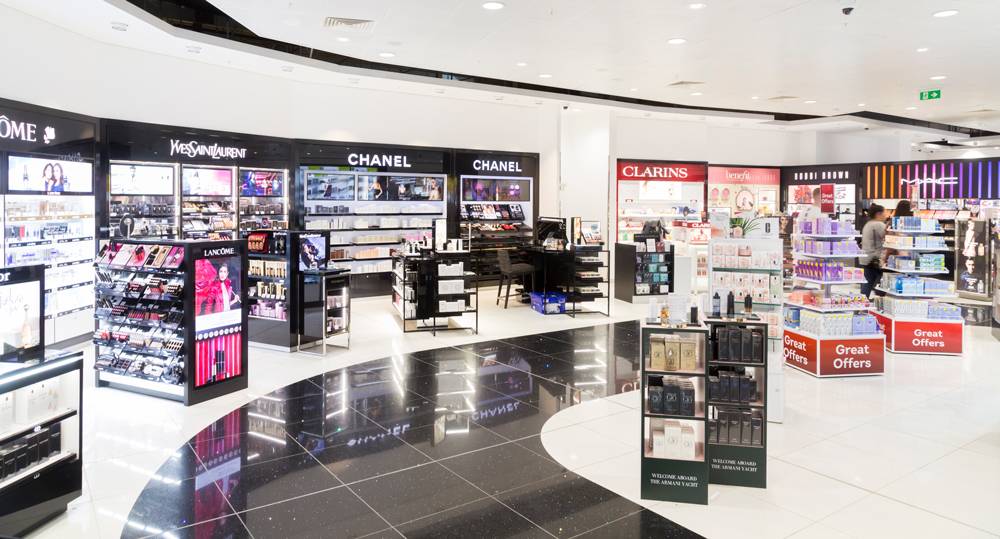
Despite the UK government’s axing of (non-L&T) airside tax free sales at airports, Dufry is sustaining (for now) the same pricing levels on products across categories such as P&C, at the same time as offering customers a wider menu of offers and more skus.
With most of the other skus and categories (i.e. P&C) we remain with the same pricing and through the arrangement with our airport partners we have been able to maintain value. We are still missing many third country passengers to see their reactions, but for the time being we have been able to preserve and in several cases increase spend per head in some of these categories.
Luxury brands are proving a bit tougher when we need to decide pricing versus the High Street. This will be trial and error. I don’t have a definitive position on specific brands as we are missing the main profile for those – Asian, Brazilians, Russians.
How big of an emphasis does Dufry need to place on increasing customer awareness of the duty free proposition given the tax free benefit at UK airports on other categories has now been lost?
Customers will not be worse off, that’s the most important part. Whatever happens, the impact that is there will be for the airports, for ourselves, and I think we are being wise and good in finding the way to balance the issues of tax and duty Free. Obviously, we have to try to highlight the importance of duty free flying to UK. On the rest of the categories, we’ll keep promoting the same way because nothing has changed for the customer.
It sounds like you are absorbing the costs in order to offer value… Is that sustainable?
Let’s see. For the time being we are doing that and at the same time we are also trying to convince the government that there are other routes. As you know, arrivals [duty free] could also be an important road to add value into the business. We are trying to be creative and think outside the box. At the end, regulators make the regulations and we are trying to maximise that.
*The rapid escalation of the Omicron variant in the past month or so means the operational situation for travel retail businesses, including Dufry’s, continues to change. While every care has been taken, some comments or views may have changed since this interview was conducted around the time of Dufry’s nine-month results in late October.
To read a full report of the 9m results, click here.
For more on Dufry, including an exclusive video interview with Group CEO Julián Díaz, see the TRBusiness Top 10 International Operators report.

 Trbusiness. The travel retail Trbusiness. The magazine for global retail and duty free professionals.
 APTRA President, Sunil Tuli has issued a statement which serves to illustrate the association’s ambitions and focus for 2022 as well as a summary of the events concerning the Asia Pacific travel retail industry in 2021.