The ‘Leading through change’ panel discussion took place on Monday morning.
Delivering personalised and meaningful experiences, enhancing storytelling and being more agile – all while finding a balance between premiumisation and price – will help travel retailers stay relevant across the Middle East and Africa (MEA), according to leading voices in the region.
A six-strong powerhouse panel assembled at the 2025 MEADFA Conference in Dubai this morning to discuss how to keep on advancing the business, amid geopolitical uncertainty and shifting market dynamics, with a key talking point being rethinking the value proposition and price promise for a new generation of travellers.
Taking to the stage for the first panel session of the day was Abdeslam Agzoul, CEO Middle East & Africa, Avolta; Nuno Amaral, CEO ARI Middle East & Global COO, Aer Rianta International; Chichi Maponya, Co-founder and Executive Chairperson, Africa Travel Retail; Jack MacGowan, CEO, Al Waha Duty Free Company; Vincent Romet, CEO France & Luxembourg and COO, MEA & South East Asia & Africa, Lagardère Travel Retail; and Bernard Schlafstein, CEO of Middle East & Africa, Gebr. Heinemann, with the conversation moderated by Dermot Davitt, President, The Moodie Davitt Report.
Abdeslam Agzoul kick-started the discussion by highlighting some of the biggest dynamics impacting the market, such as the post Covid era, growing passenger numbers and travelling shoppers being willing to spend (albiet with a growing demand for ‘sense of place’) and the need for retailers and brands to be flexible and agile.
“Volatility, for us, is an opportunity,” he said. “We should not take volatility as a risk, but as an opportunity.”
Amaral took the audience through 35 years of ARI in the region, commenting: “The region reflects a little bit of ARI’s spirit in terms of entrepreneurship, taking risks and constantly trying to evolve.” He underscored that the retailer is looking forwards, rather than backwards.
“We want to continue to grow. Our most recent opening two years ago in Abu Dhabi was really successful. We continue to look at opportunities in the region – we see a lot of potential and resilience.”
Africa Travel Retail’s Maponya added her view on how the element of agility speaks to how travel retailers respond to the market.
“The traveller is more astute. The traveller knows what they want. At the time of Covid, many people were all about self. The new rich don’t care about brands, the house you live in, they car… they want time, freedom and travel – and that element of travel is still there,” she said.
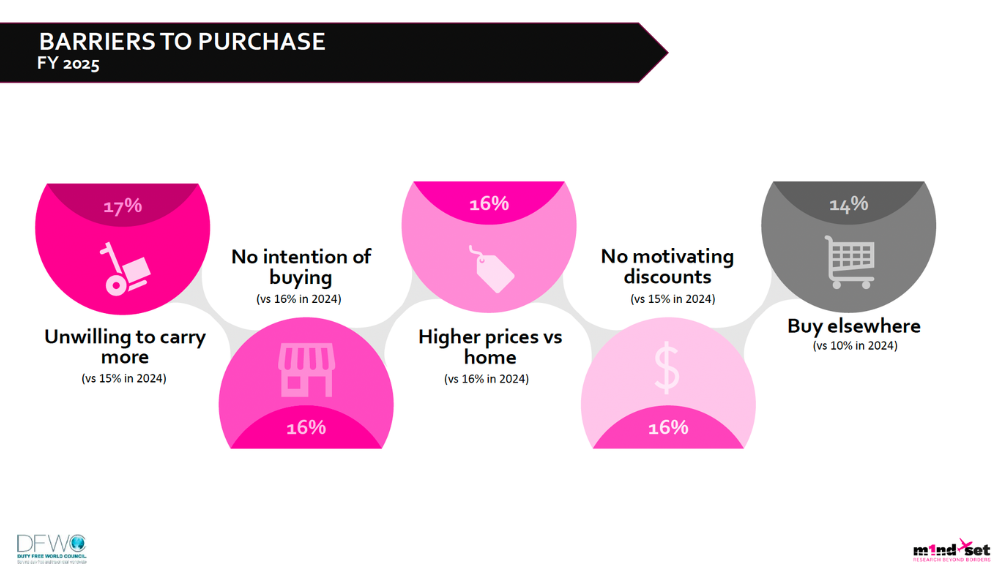
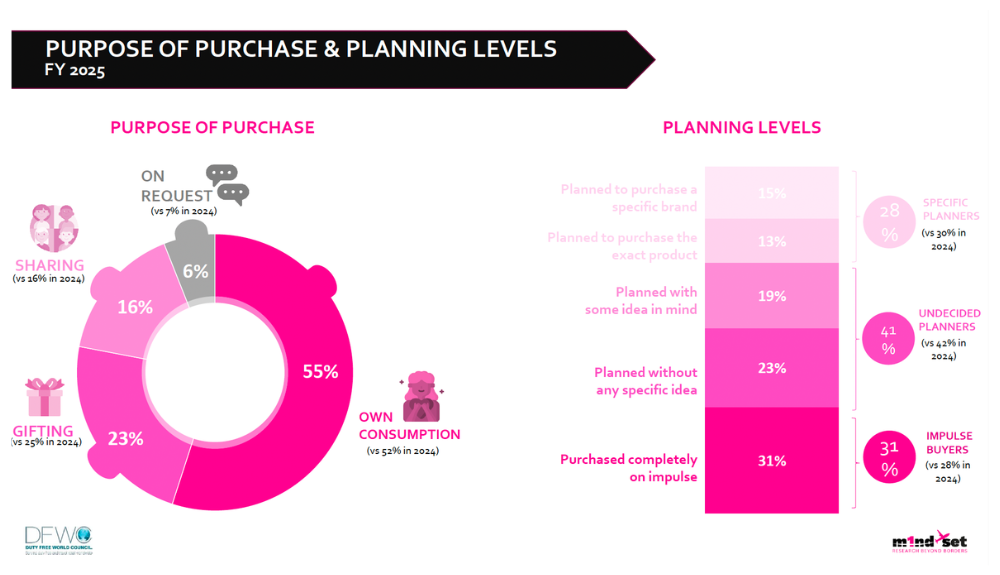
“The [passenger] numbers have increased but spend is still not where it should be. As much as the basket reduces, the ticket [cost of the basket] is increasing. Now, as retailers we need to spend more time on conversion – how do we give the traveller what they want?”
She explained that in order to master this, the traveller’s entire journey needs to be considered, with digital engagement all along the way. Now’s the time, she said, to focus on collaboration.
“Collaboration with airports, airlines…. because all of us are talking to this one traveller,” she said. “How do we share data and information to make sure that we offer a value proposition to the traveller that enhances their journey and their experience?”
While she noted such collaborations are beginning to happen, she stressed that there is still room to “widen the pool” and share information to ensure the traveling consumer’s experience is enhanced. Weaving authentic, local brands into the mix should also be an important part of the strategy.
“Culture is one of the biggest experiences we can present,” she said. “Concessionaires need to be authentic in the way they engage local brands and make the supply chain process without compromising but make it more accessible to local brands.”
She warned against ‘cut and paste’ solutions and reminded stakeholders in the room the importance of giving consumers what they’re asking for.
Romet highlighted how long-term growth requires short-term agility: “There are a lot of things happening – tensions, unfortunately tragic events in the Middle East,” he said. “Despite all this we see a great resilience and we are very confident in the fact that traffic levels in those regions are very strong.”

L-R: Nuno Amaral, CEO ARI Middle East & Global COO, Aer Rianta International; Jack MacGowan, CEO, Al Waha Duty Free Company; Abdeslam Agzoul, CEO Middle East & Africa, Avolta; Chichi Maponya, Co-founder and Executive Chairperson, Africa Travel Retail; Vincent Romet, CEO France & Luxembourg and COO, MEA & South East Asia & Africa, Lagardère Travel Retail; Bernard Schlafstein, CEO of Middle East & Africa, Gebr. Heinemann; Dermot Davitt, President, The Moodie Davitt Report.
He also spoke of how the vision for the future beyond oil revenue for countries in the region is giving rise to diversified economies.
“We see a lot of investment in tourism, backed by investment in infrastructure,” he said. “We see a lot going on in GCC countries and this is accelerating for sure. We, Lagardère, are here to serve those ambitions. To listen to those countries that have a bright vision or themselves.”
He continued: “We see a drastic change here [in the region]. On our side, we see our capacity to listen, empower our people in the different countries to support and deliver is really key for success and this is really our approach in this region.”
Schlafstein also shared a very positive outlook.
“For us MEA is a strategic region,” he said, giving an insight into the retailer’s journey through to one of its most recent high-profile joint venture openings: Jeddah Duty Free.
“We learnt a lot about the consumers there and the trends that are going on there,” he said.
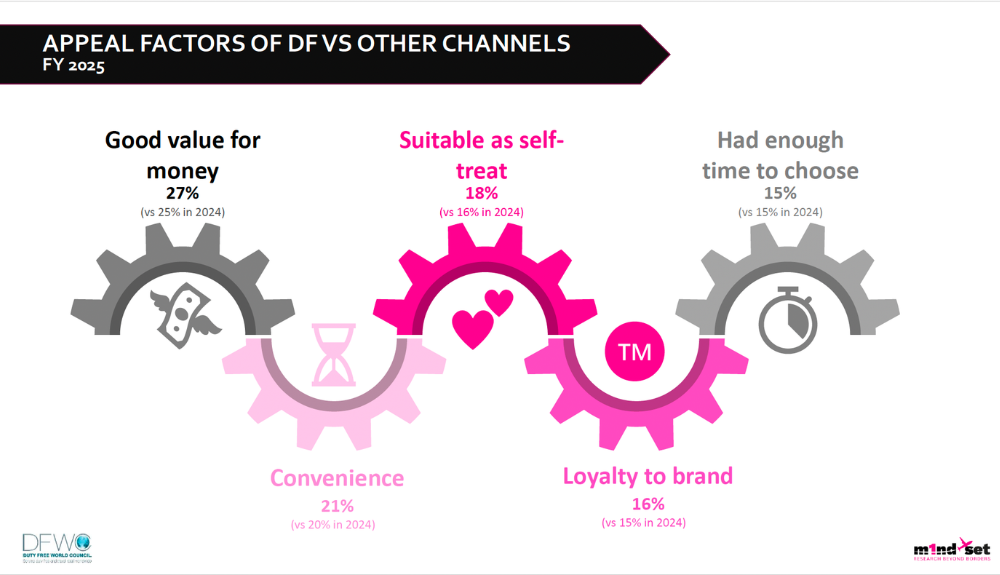
In terms of best performing categories he added: “Tobacco is a big share of the business. Beauty is doing well – not just traditional ones [brands] but also niche brands and local ones.”
Marking his first address at a public forum, Al Waha’s MacGowan explained the story behind the new venture which is a subsidiary of PIF, the sovereign fund of Saudi Arabia, and guided by Vision 2030.
He referenced how, with a 30 million plus population, a different approach is required for The Kingdom to leverage the “enormous untapped opportunity” that awaits.
“PIF have set up Al Waha to compete and win business and transform the airport experience,” he said.
“We will be different because we are so closely aligned with the customer service goals of Vision 2023. We desperately want to improve the tourist experience in the airports and other touchpoints. So how we compete is not going to be on price – it will be on service. Our core focus is about sales, staff, getting the assortment right and underpinning all of that is how deeply we understand our customers.”
He explained how today’s customer is typically younger – Gen Z – and how there is a big opportunity to deliver what they want.
“Our job at Al Waha is to know the Riyadh customer first and the Saudi customer second… better than anyone else so we can edit and change the offer so it’s better for them,” he said.
“We’ve got two-and-a-half-times the Gen Z passengers than the global average. So the question I ask when we are recruiting our staff, is how many of the staff that are serving our Gen Z consumers are Gen Z themselves?”
Schlafstein agreed with MacGowan’s observations, adding how Gebr. Heinemann is seeing a shift away from ‘traditional’ customers and how Gen Z and Gen Alpha customers seeking experiences, are AI driven, and impacted by influencers – and the need to act accordingly.
“We believe there will be drive towards more local brands,” he confirmed. “We already have a big chunk of our business – double-digit percentage of local SKUs we supply to Jeddah or get from Saudi to Jeddah.”
When pressed on whether there is a fixed percentage of local products the retailer aims to have in store, Schlafstein said there was an ‘up to 20%’ target.
Looking at the wider region, Avolta’s Abdsalam said the pattern for introducing local products and brands is “tending to the same target, but the reality of the level of advance is different to one another”, depending on the location.
Looking at Africa, he stressed how passengers need to be treated in a differentiated way either through personalisation or in the offer or proposition a retailer is bringing to the airport.
“This is the case also in the Middle East,” he added. “Personalisation and customer centricity need to be an obsession of the operator – and this is our obsession in Avolta.”
He continued: “You can only achieve that by the data you use… if you use all the data you manage, and the smart use of this data.”
Abdsalam also revealed that Avolta is also thinking in terms of culture ambassadors rather than brand ambassadors to drive this home.
“It brings a lot of value,” he said. “Apart from having product, pricing, etc… the people are key. You have people that really represent and promote this sense of belonging, sense of place and sense of culture.”

The powerhouse panel, deep in discussion.
ARI’s Amaral also recognised the “medium-term challenge is tapping into Gen Z and Gen Alpha” and “staying relevant to them”.
“They not only shop differently but acquire their intention to shop in a different way,” he said.
“Everything is done online – that is where they acquire their information,” adding that it’s how the industry stays relevant is what counts.
He also highlights a polarisation of the offer: “We used to be a very premium channel yet always shout about value and there was a little bit of a disconnect between what you see in our shops.
He continued: “I think all operators have tried different models of showing value and probably going a bit more hard selling. Initially there was a lot of resistance from brands and airports, even internally, but the proof is in the pudding and actually it works.
“I think we are seeing that to connect [with consumers] we need to have both, providing we can differentiate between the two offers, and doing very well the value offer and also still utilising the channel as a premium channel to convey brand awareness, brand building and innovation.”
His point sparked a discussion whether there needs to be a new promise to the consumer, to which Maponya responded: “Absolutely. I think we underplay the importance of the storytelling and the new traveller wanting authenticity in the products and not wanting repetition. Every trip is an experience, and they want to see it and feel it and that gives us an opportunity to engage at that level.”
Linked to this, Lagardère Travel Retail’s Romet noted a clear shift to responsible consumption, linked to authenticity and shoppers understanding where whatever they are consuming is coming from.
On the premiumisation verses price debate, he said: “At Lagardère we have a very strong marketing team so we feel the way we have to combine those two things that may look opposite but in the end are the experience the young generation are looking for,” he said.
Delving deeper into the point, Amaral explained how today’s consumers are more attuned to value and authenticity than aspirational lifestyle aspects when it comes to purchasing decisions.
Al Waha’s MacGowan concurred that there’s “a lot of work to be done” to better understand today’s consumers and how best to serve them.
“We now have a small group of large players and they are not always as fast, as agile or as accepting of the local conditions as could be – both on the brand and operator side and increasingly on the airport side,” he said. “Generally, we are consolidating into a more mature industry where there’s much larger players and the challenge is to be local so the first step in that is to invest in data sharing between airports, airlines, operators and brands – that’s really key to competing with the online channel.”
Ultimately, the panel agreed that staying relevant for the younger generation is both a chief challenge and opportunity moving forward and perhaps one that can perhaps only be solved by stakeholders working more closely together and by sharing data, for instance, to stay a step ahead of trends.
READ NEXT: Collaborative, optimistic spirit giving rise to exciting times ahead in MEA
READ NEXT: NOW LIVE: November/December issue
READ NEXT: ‘We are resilient: by numbers & the behaviour of pax’

Trbusiness. The travel retail Trbusiness. The magazine for global retail and duty free professionals.