 Trbusiness. The travel retail Trbusiness. The magazine for global retail and duty free professionals.
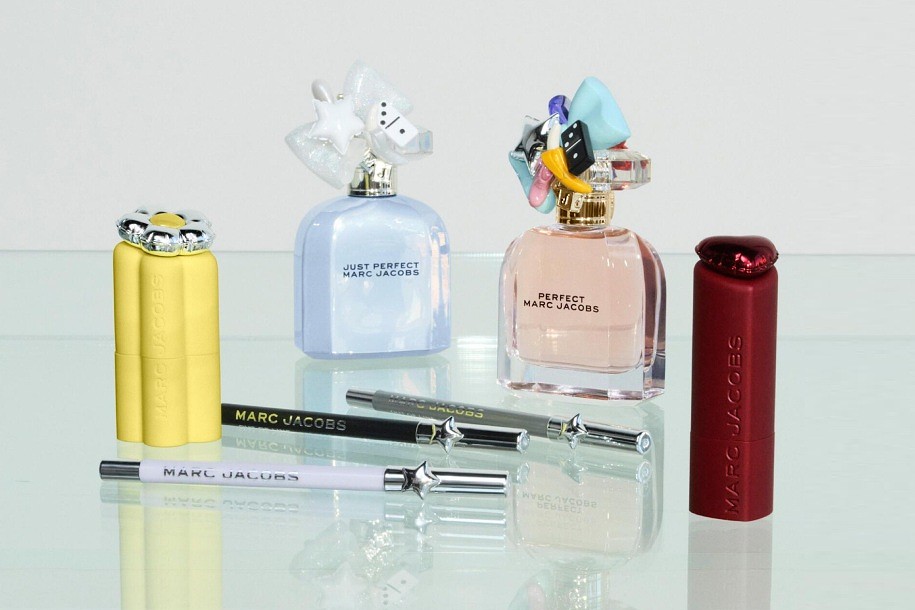
Marc Jacobs makeup has seen a strong start since its debut.
Global beauty house Coty is consolidating marketing investment efforts behind its ‘big six’ brands – Burberry, Hugo Boss, Marc Jacobs, Calvin Klein, Kylie Cosmetics, Chloé – as it continues a strategic review in the wake of the loss of the Gucci licence, which transfers to L’Oréal from July 2027. Five of the six grew in Coty’s fiscal Q1 2027, ending 30 September.
As part of the Coty.Curated framework, which has a strong focus on the Prestige division, the company’s new Chief Financial Officer, Soraya Benchikh, said in an analyst call earlier this month: “Our focus is on returning the business to sustainable quality growth through more disciplined, concentrated investment. In Prestige, we are beginning to see some early evidence of the potential of that approach.”

Strobel: “In Prestige, our launches in the first half of fiscal 2027 are tracking ahead of target to date.”
Markus Strobel, Coty’s Executive Chairman and Interim CEO, added: “In Prestige, our launches in the first half of fiscal 2027 are tracking ahead of target to date. And in Consumer Beauty, we are moving toward fewer, more accretive and focused innovations, to improve overall profitability. We are also evolving the way consumers discover our brands.” For example, Coty has teamed up with Brandlight to strengthen visibility in AI-driven consumer searches.
Some of the key launches in H1 included Boss Bottled Beyond for Her fragrance, Marc Jacobs Beauty makeup, Burberry Goddess Amber Vanilla, and the Mood Stones by Kylie Jenner fragrance collection.
Over the past year, Coty has increasingly concentrated its advertising and consumer promotion (A&CP) investment behind its six core brands. They represent 73% of Prestige sales, Coty’s most important division in travel retail.
Prestige brands return to growth
The proportion of total A&CP investment behind the top six rose from 64% in the first half of fiscal 2026, to 68% in the second half, and to 76% in Q1 2027. “We are beginning to see evidence of stronger performance alongside our increased focus,” states Benchikh, citing a material shift in revenue for the six brands. From a -6% like-for-like (LFL) decline in H1 2026, they were down -1% in H2, and then moved up a gear to +5% growth in Q1 2027, with another rise expected in Q2.
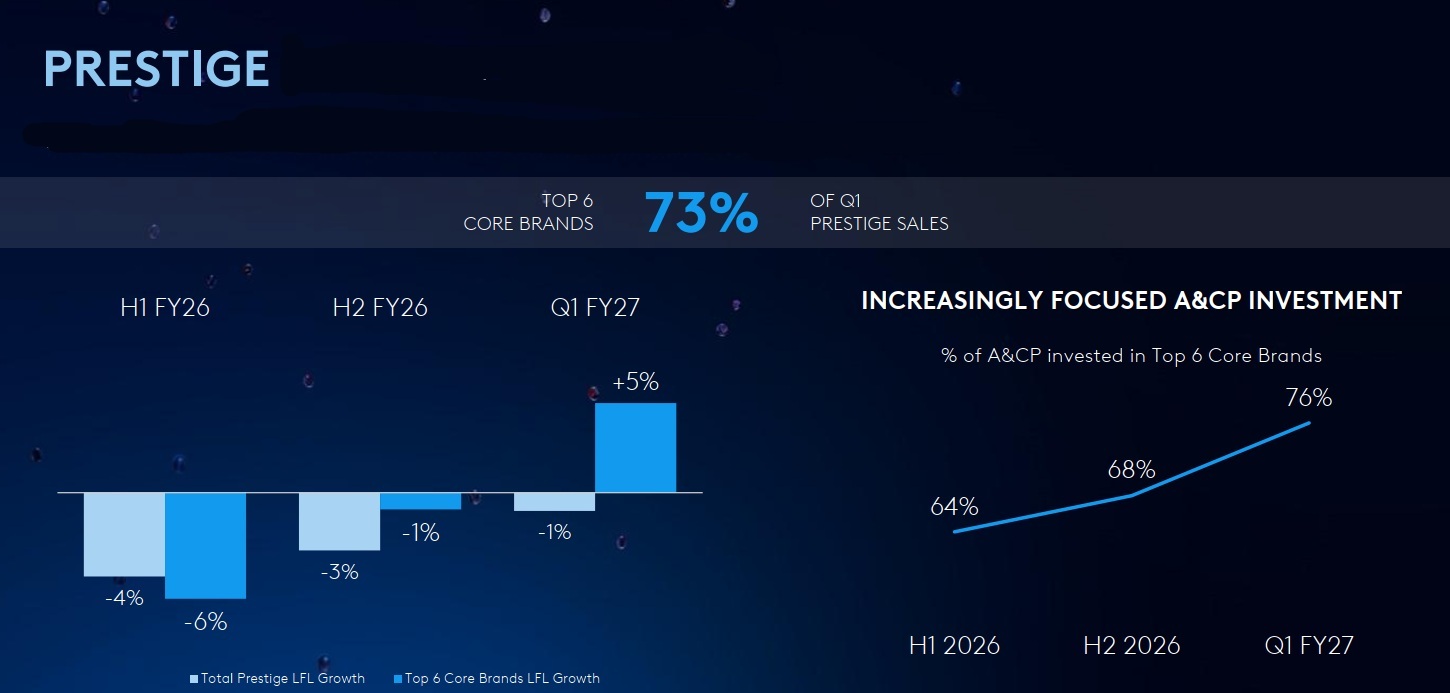
How the Coty Prestige division has progressed.
The CFO stresses that the Q1 upturn was “broad-based” rather than dependent on a single brand or a single initiative, such as the roll-out of Marc Jacobs Beauty. The makeup collection had its travel retail debut with Avolta at New York’s John F. Kennedy (JFK) Airport T8, and Palma de Mallorca Airport (PMI) in Spain this summer.

Benchikh: “Our focus is on returning the business to sustainable quality growth through more disciplined, concentrated investment. In Prestige, we are beginning to see some early evidence of the potential of that approach.”
“As we concentrate, we will shift to fewer and bigger launches,” explains Benchikh. “And that will help us in terms of planning and having less obsolescent stock as we work the inventory down. These benefits will build over time.” She accepts, however, that quarterly progression “will not necessarily be linear” but that the new approach will hold.
The Gucci question
While Gucci is to exit the Coty portfolio next summer, the company still sees it as valuable, but outside of the selected six. Benchikh says: “Gucci is not included among our core brands, but we are continuing to invest behind it in line with our contractual commitments.”
On Gucci’s exit from the portfolio, Strobel comments: “We are addressing this at the moment as part of our overall savings package that we’re also going to come out with before Christmas. Gucci has a low double-digit percentage of our portfolio, and profitability in line with our Prestige portfolio.” The Interim CEO describes the brand’s departure as “a sizeable impact” but said Coty is developing plans to address it. “We’re finalising them and will be back to you with those by January,” he says.
For the full financial data on Coty’s Q1 27 performance, see the earnings release here.
READ MORE: Coty launches Marc Jacobs Beauty at Sydney Airport
READ MORE: Marc Jacobs Just Perfect rolls out globally in travel retail