 Trbusiness. The travel retail Trbusiness. The magazine for global retail and duty free professionals.
Sustainability at airports: “not a nice‑to‑have, a must-have”
By Kevin Rozario |

Coffee shop culture is increasingly entwined with sustainability.
The political pushback against environmental, social and governance (ESG) initiatives in the US – following the wider backlash against diversity, equity and inclusion (DEI) programmes – has raised questions about whether sustainability efforts might lose momentum in the airport sector. A webinar this week from Airports Council International (ACI World) suggests the opposite: sustainability remains firmly on the agenda in the commercial arena.
Titled Last Call: The New Era of Airport F&B and Hospitality, the webinar was hosted by Slava Cheglatonyev, ACI World’s Senior Director, Economic Policy and Airport Business. The focus was on how F&B and hospitality are becoming key drivers of both passenger experience and non-aeronautical revenue.
Successfully tapping spending from travellers – where growth is being driven by Millennials and Gen Z – requires a multiplicity of factors to be in place, and sustainability is one that remains a priority.
Sustainability moves centre stage
Alan Gluck, Principal and Global Airport Commercial Lead, Aviation & Tourism at global strategic and technical advisory consulting firm ICF, says: “Sustainability matters; it drives purchases. It’s not a nice‑to‑have; it’s a must-have. And while Gen Z (born 1997-2012) is important, all generations have sustainability focuses. It’s just a matter of putting it in their specific language and appealing to what matters to them.”

Alan Gluck: “All generations have sustainability focuses. It’s just a matter of putting it in their specific language and appealing to what matters to them.”
Airports are under renewed pressure to align their commercial strategies with rapidly evolving consumer expectations – particularly those of the growing Millennials and Gen Z segments, with the latter reshaping the pace of change the most. But as sustainability directly influences purchase decisions across the board, Gluck argues that airports are missing a trick if they don’t cater to everyone.
He says: “Consumers are willing to pay more… to buy into the belief that they’re helping to save the Earth. It’s an opportunity for airports because the messages saying we’re eco-friendly and we have eco-brands can be presented easily.” Of course, individuals will check and interpret the authenticity of the messaging and act accordingly.
Gen Z specifically prioritise brands that align with their values, including fair pay for workers at the supply-chain source, for example, cocoa growers in the case of chocolate. They demand transparency and expect sustainability to be visible and credible. Over-packaged products are also a turn-off, according to Gluck.
He says: “Sustainability points must be visible, credible, and easy to choose. And airports must make this topic a strength as they grow their commercial programmes.”
Different strokes for different folks
Gluck presented data that showed how different generations approached sustainability, but that the general trend is in the same direction. Some 73% of Gen Z, who are going to be the big consumers for the next couple of decades, will pay more for sustainable products (higher than other generations). Messaging from their favourite influencers can be more effective than from a brand.
Meanwhile, Gen X (born 1965-1980) are the ones with the global spending power, and in 2025 it was estimated at $15.2 trillion. They are now in their peak earning years with high purchasing power. They are brand loyal and will often reward sustainability when they see it paired with quality.
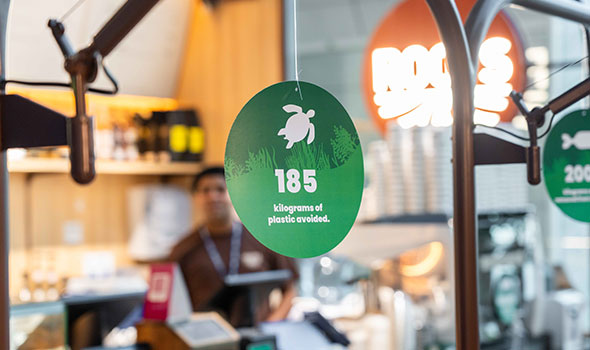
Lagardère Travel Retail UAE partnered with Mybird to introduce sustainable straws across its F&B network at DXB – the initiative marked World Environment Day on 5 June.
For airports and concessionaires, these factors mean rethinking sourcing, packaging, waste management and communication. Both F&B and retail operators are urged to interrogate supply chains: from where it’s grown to how it’s processed and shipped.
Food waste reduction also emerged as a practical and reputational priority. The webinar highlighted simple but effective measures: donating edible surplus, repurposing imperfect produce, and adopting circular‑economy thinking across operations. Airports that demonstrate leadership here can differentiate themselves in competitive markets, particularly where multiple hubs vie for the same catchment.
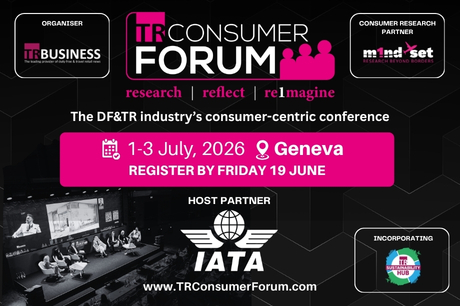
* Next week, on 3 July, at the TRBusiness Travel Retail Consumer Forum, there will be a dedicated session on sustainability. Titled TR Sustainability Hub: ESG Investment: Does Sustainability Drive Revenue or Loyalty?, panellists will include Kreol Arakulath, Executive Manager at Kreol Group; Rebekah Lees, Head of Marketing & Comms at the Eco Beauty Store Association; Michael Barrett, Events & Public Relations Director at travel retail research group m1nd-set; and Lara Schlüter, Director of Travel Retail at Babor Beauty Group.
READ MORE: Mondelēz WTR highlights progress across its sustainability agenda
READ MORE: m1nd-set highlights growth potential of hybrid retail and F&B

Tony’s Chocolonely unveils travel-themed ‘pick and mix’ at Frankfurt
Image Credit: Tony's Chocolonely Tony’s Chocolonely has partnered with Gebr. Heinemann and...
Corona brings Vista Corona to Mexico with Guadalajara debut
Image Credit: Corona Corona has launched its Vista Corona airport hospitality concept in...

Guerlain expands KissKiss franchise with launch of Bee Glow Plump
Image Credit: Guerlain Guerlain is strengthening its KissKiss lip care portfolio with the...
-

-
Sustainability,
Corona brings Vista Corona to Mexico with Guadalajara debut
-

In the Magazine
TRBusiness Magazine is free to access. Read the latest issue now.