Laurence Pardieu-Duthil, Chief Sustainability Officer, Global Travel Retail, L’Oreal.
As the driving force behind L’Oréal’s sustainability efforts in global travel retail, Laurence Pardieu-Duthil – alongside her team – shoulder an important yet heavy responsibility as the vanguard of circular and progressive change within the beauty giant’s highly valuable ‘6th continent’.
Positioned as an integral part of the new-look L’Oréal Travel Retail team helmed by President Emmanuel Goulin, Pardieu-Duthil brings a wealth of experience to the travel retail division from her previous role as Chief Sustainability Officer for L’Oréal Dermatological Beauty Division. She has also served as Chief Sustainability Officer for L’Oréal Germany/Austria in a career spanning more than 30 years with the beauty giant and its brand divisions.
Pardieu-Duthil took the time to speak to TRBusiness recently on camera, sharing her thoughts on the progress made by L’Oréal Travel Retail since she took up the reins as Chief Sustainability Officer around nine months ago – click the play button below to watch the full video.
The company boldly proclaims its commitment to ‘making beauty sustainable and sustainability beautiful’ and this is intended to play through with more vigour within the B2C segment, TRBusiness hears.
“Our focus will be a bit more on consumer-facing initiatives; the product assortment and eco-design POS,” said Pardieu-Duthil.
The future is refillable
As reported, the store architecture for L’Oréal’s recently announced debut unit for skincare, haircare and bodycare brand Aesop in Hainan will take inspiration from local materials.
Meanwhile, Pardieu-Duthil identifies packaging as one area where changes can resonate suitably with consumers.
“It is really about reducing, recycling and reusing. We can be proud that in 2023, already a third of plastic packaging came from either recycled or bio-based sources. We are also pushing the recyclability of our products.
“We now have 43% of products that are either recyclable, reusable or compostable. More concretely, the big change that is happening is refillable beauty. All the innovations are coming with refills because it is the most impactful way to reduce the carbon footprint.
“We can reuse on average the use of materials by 40% by using a refill, so it’s really impactful and brings a dimension of value, which consumers are looking for – not just for sustainability but value for money and the combination of the two is really the best case we can offer in terms of sustainability.”
In a wide-ranging exchange, Pardieu-Duthil addresses (among other topics) the consumer barriers to purchasing more sustainable beauty products across travel retail and why the trend towards mini refillables is coaxing wallet spending.

Skincare, haircare and bodycare brand and Certified B-Corp Aesop is making a big play in travel retail under L’Oreal.
Q&A with Laurence Pardieu-Duthil, Chief Sustainability Officer, Global Travel Retail, L’Oreal
TRBusiness: At a Group level, L’Oréal prioritises ‘Planet, People and Products’ and has set itself a broad series of measurable targets. On fighting climate change, the 2030 target is to reduce the direct emissions (Scope 1 + 2) of strategic suppliers by 50% in absolute terms (versus 2016). How is the travel retail division contributing towards reaching this target?
Laurence Pardieu-Duthil: In travel retail, our ambition is to be at the forefront of sustainable retail and we contribute towards L’Oréal Group’s 2030 climate change targets by focusing on three main levers of decarbonation linked to our specific activity and impact. First, sustainable consumption with a strong focus on circularity by expanding refill products. Second, sustainable point of sale by embarking our POS suppliers on material decarbonation. And third, Sustainable Operations, by driving transportation modal switch from air freight to sea and rail.
Concretely, we have defined three pillars for our travel retail sustainability roadmap: Be exemplary in our operational model (supply, sourcing and POS material), become a key channel for at-home refills, leading a critical consumer behaviour change for the industry, which has a great fit with our channel. Thirdly, lead travel retail sustainability advocacy, hand in hand with brands, retailers and airports.
As we know, climate resilience and defence relies not only on tackling Scope 1 + 2 emissions, but Scope 3. What practical actions is L’Oréal’s travel retail business taking to address these indirect emissions in the upstream through the supply chain and the use of products and services lifecycle in the downstream?
Scope 3 is indeed our priority as we are already very advanced on scope 1 & 2: In 2023 CO2 emissions from our operated sites have decreased by 74% compared to 2019, while production has increased by 12% compared to 2019. On Scope 3 we are working on both upstream and downstream impacts: Upstream we are working closely with our TR suppliers for point-of-sale materials, empowering them to measure the carbon impact and the life cycle analysis of the elements they sell to us thanks to the Eco-Design Cloud. Downstream, we are working with TR retailers on product circularity to facilitate the reuse of our products by allowing them to refill them with ‘at-home refills’.
One of the Group’s targets is 100% of plastic packaging to be refillable, reusable, recyclable or compostable by 2025. Are you on track to reach this target, and broadly speaking what strategy is travel retail pursuing to improve the environmental profile of your products in travel retail, specifically through packaging?
In 2023, already 32% of our plastic packaging came from recycled or bio-based materials and 44% of our plastic packaging was either reusable, refillable, recyclable or compostable. This improvement corresponds to an acceleration of refillable formats and the removal of recyclability disruptors. For example, L’Oréal Paris removed the metal spring from the pump used for its Acid Bond shampoo in Asia.

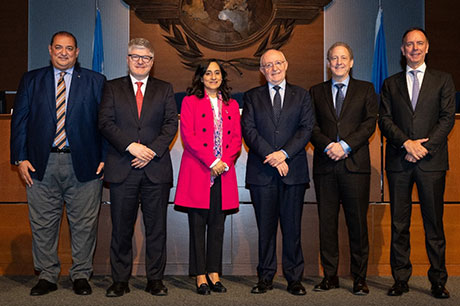
Laurence Pardieu-Duthil, Chief Sustainability Officer, Global Travel Retail, L’Oreal (top right) featured as a panellist during TR Sustainability Week. The ‘Two sides of the same coin? Dispelling greenwashing/greenhushing’ aired on Monday 2 December and confronted the efficacy of green claims through an operational, communicative and regulatory lens.
And another important lever to reduce the impact of packaging is to reduce its intensity, and beyond packaging lightweighting; refills are one the most effective levers to decrease packaging intensity. As you noticed, we’ve been an early mover but now we can have a big impact as more than one third of our assortment at TR will be refillable next year including all our best sellers. So, we have put this change as the N1 sustainability priority for L’Oréal Travel Retail affiliates.
Attitudes and behaviours towards eco-conscious shopping vary by region and demographics. Which territory or nationality group in travel retail are you seeing the strongest demand for sustainable consumption of eco-conscious products? We know Europe for example has been historically more mature versus Asia…
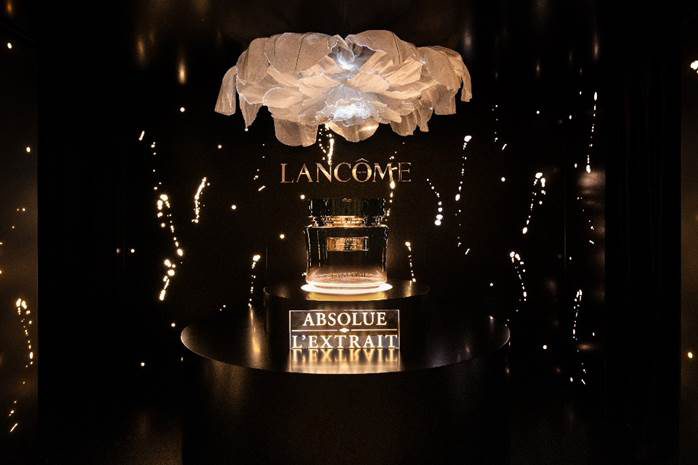
Actually we see the strongest demand for sustainable consumption in both markets Europe and North Asia versus the rest of the world. For instance, refills already represent in some of these markets over 10% of refillable product sales and they are growing double digit growth worldwide at the moment. in travel Retail, we believe we can become a destination channel for refill as value remains the number one reason to buy and refill is a great way to consolidate channel price competitiveness.It also matches perfectly our regional, category and consumer footprint. Consumer research conducted by Lancôme Travel Retail this summer reveals that 90% of travellers said that brand with refills were ‘caring and considerate’ that ‘reflected social responsibility’ and bring better ‘value for money’. So, refills are a real priority for us.
Are there particular channels i.e. airports, cruise ships, airlines where you are witnessing a stronger push for more sustainable product innovation from your retailer partners?
More than channels, I would say the push for more sustainable product innovation comes from specific geographies and airports, especially from Europe and North Asia. More than half of airports are now engaged in a decarbonation process as the ACI 2023 airport carbon accreditation report shows.
In turn, are you finding your retail partners are doing enough to encourage investment in advertising and marketing fixtures and displays for sustainable products and services? (i.e. Eco Aelia in Geneva).
I can testify that our leading retail partners are now really accelerating on giving focus to sustainable products and services and we are partnering with them on the acceleration of refillable products with big ambitions for next year.
With the explosion of beauty tech within global travel retail, what role can this area play – particularly AI and machine learning – in better educating customers and travellers on L’Oréal’s sustainability goals?
Indeed, beauty tech holds strong potential to amplify L’Oréal’s sustainability communication within the dynamic global travel retail environment. As you said, AI and machine learning can personalise the traveller’s journey, transforming how we educate and engage with them on our sustainability commitments. The big opportunity ahead of us is the creation of the Eco Beauty Score, which is an environmental impact scoring system for cosmetic products (labelled A to E) organised by a consortium of over 70 beauty players in the world to enable consumers to make more informed purchasing decisions. Thanks to tech, we will be able to leverage the Eco Beauty Score on all relevant digital consumer touch points.
Flagship Group brand Lancôme opened the Domaine de la Rose by Lancôme store at China Duty Free Group’s Block C in Haitang Bay over the summer and Aesop is planning its first POS in Hainan. Be it through the scientific process or retail architecture, the push in Asia Pacific to reflect L’Oréal Group’s brands’ heritage and commitment to sustainability seems to be greater than ever before…
Indeed, sustainability is becoming fully part of the brand equity and sense of purpose and, beyond the eco-design of the products, each of our big brands now also support a strong brand cause, like ‘Stand Up against Street Harassment’ for L’Oréal Paris or ‘Abuse is not Love’ against domestic violence for Yves Saint Laurent.
L’Oréal recently joined Diageo, Gebr. Heinemann and Tony’s Chocolonely to create an action forum on sustainable practices in travel retail to share learnings, collaborate and test and trial. Why is it important for L’Oréal to be part of this group, and what do you hope to achieve through this brand-retailer alliance?
It is always very interesting to join forces, we meet quarterly to discuss on several topics such as: sustainable supply, product eco design, airport practices, etc. We want to focus on sustainability practices in the travel retail space, initially focusing in on three areas for sharing learnings, collaboration and test and trial: carbon reduction in supply, sustainable product and retail innovation, sustainability consumer content & communication
Finaly, what do you see as the number one challenge and opportunity facing L’Oréal’s travel retail sustainability progress into 2025?
I think our number one sustainability priority in travel retail is both a challenge and an opportunity: it is to really accelerate product circularity by leveraging the full potential of product at-home refills, answering specifically the strong traveller’s expectations on sustainability, innovation, experience and value.
Laurence Pardieu-Duthil, Chief Sustainability Officer, Global Travel Retail, L’Oreal featured as a panellist in the TR Sustainability Week panel session ‘Two sides of the same coin? Dispelling greenwashing/greenhushing’, which took place on Monday 2 December.
To view a repeat of the session, click here for on-demand access.
For more on TR Sustainability Week, click here.

 Trbusiness. The travel retail Trbusiness. The magazine for global retail and duty free professionals.