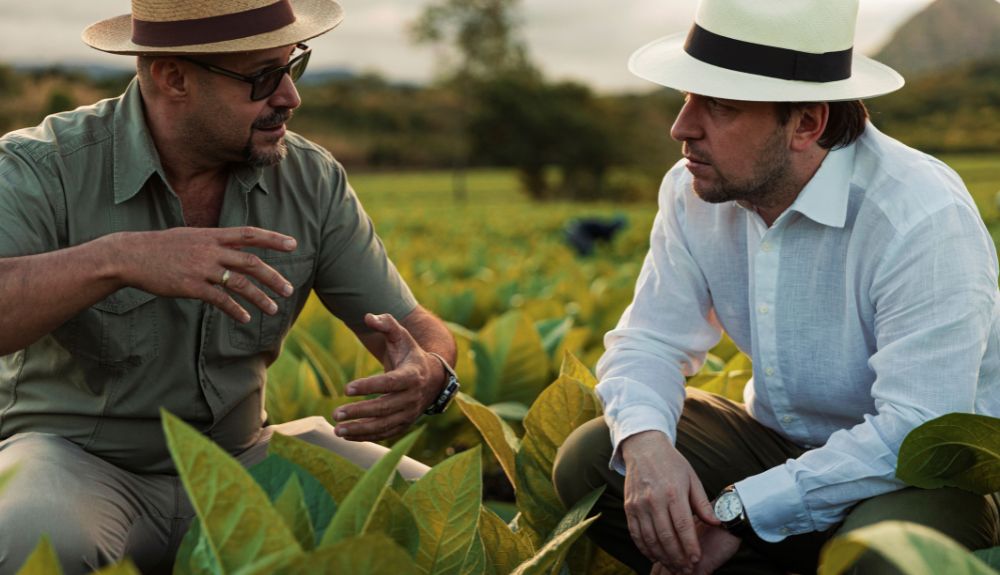
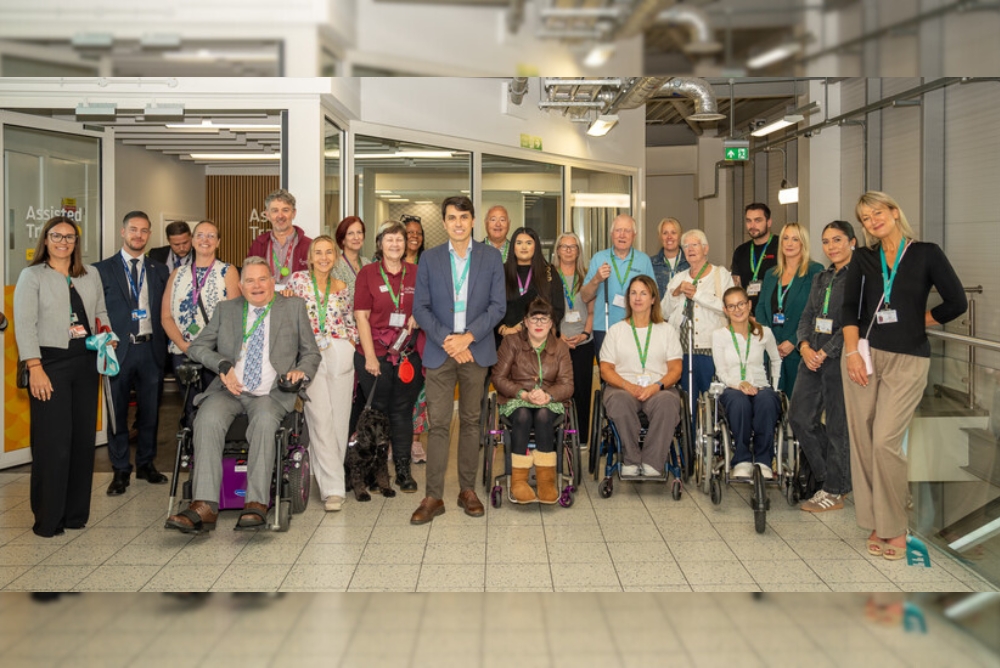
Kreol Arakulath, Executive Director of Kreol Group, Dr. Munif Mohammed, head of the MEADFA Sustainability Committee, and Michele Miranda, Conference Director, TFWA. Photo: EZZ Production House.
Dr. Munif Mohammed, head of the MEADFA Sustainability Committee, and Kreol Arakulath, Executive Director of Kreol Group, took to the stage at the 2025 MEADFA Conference in Dubai to call upon duty free and travel retail (DF&TR) stakeholders in the Middle East and Africa (MEA) to “work together” and “be honest” if there is to be meaningful progress on ESG.
First up, Mohammed, provided an update on the progress of the association’s ESG Charter for Action and how it is designed to address a “critical future business challenge.”
Intended as a roadmap for all its members, paving the way for the DF&TR industry’s sustainable journey and how it can engage with and meet the demands of the new wave of consumers in the channel.
The ESG Charter for Action outlines a shared vision among MEADFA members to promote sustainability and responsible practice.
Key objectives include: harmonised ESG best practices, compliance with law, and development of a responsible offer – all while providing transparent ESG reporting.
“The document sets the stage for collective action,” said Mohammed. “This could be just a starting point for us.”
MEADFA members are being called upon to sign the charter, which is a legal document, to help create an impactful ESG ecosystem in the industry.
Please see here for an update on the Charter provided during the 2025 TFWA World Exhibition in Cannes: ‘We are resilient: by numbers & the behaviour of pax’
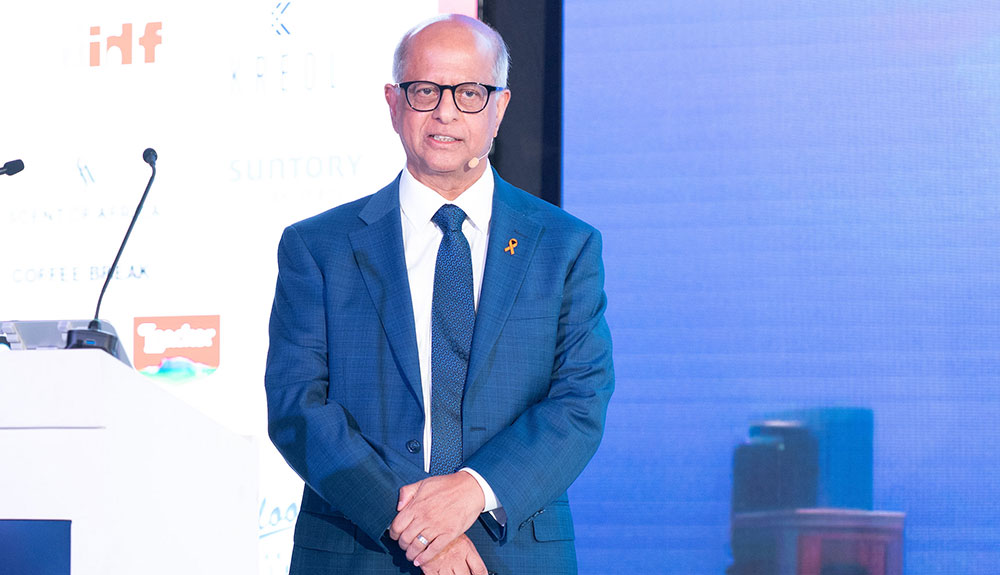
Munif Mohammed, head of the MEADFA Sustainability Committee, provided an update on the MEADFA ESG Charter for Action. Photo: EZZ Production House.
Key issues the industry needs to look at, he said, include how brands are working with retailers to define more responsible products.
“It’s important for the brands to take that on board and then work with the retailers to give priority to making those changes to the products,” said Mohammed.
“Retailers could also engage in the process again to give more prominence to highlighting the benefits of these more responsible products and create space to promote those products in the stores.
“I think, working together, we could scale up a more responsible offer which we know, by the way at least in our study, that 95% of our travel footprint comes from the products we buy. So it’s an issue we need to tackle together. It’s not something that can be done on an individual basis.”
He called out common excuses, such as it not being the right time, or thinking it’s someone else’s problem, or that governments or science will solve these types of problems – and rallied attendees in the room to sit up and take action.
“It’s exactly why this challenge requires leadership,” he said. “But it’s not just about giving directions. It’s about ownership, clarity and courage. Courage to act. Taking responsibility – and being responsible. I encourage you to read the Charter and participate actively in this collaborative way to improve the environmental, social and governance outcomes of our businesses.”
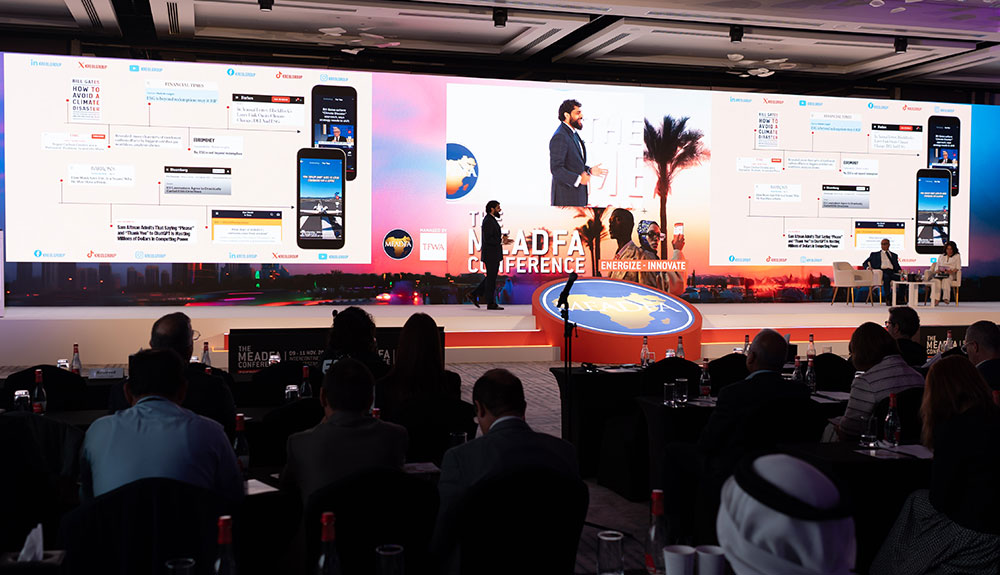
Kreol Arakulath, Executive Director of Kreol Group hammered home how “an important prerequisite for having any sort of serious conversation about this topic is going to be honesty”. Photo: EZZ Production House.
Following up his powerful message, Kreol Arakulath, Executive Director of Kreol Group, took the mic to discuss the company’s own sustainability journey and its impact on the community it serves.
“An important prerequisite for having any sort of serious conversation about this topic is going to be honesty,” he said.
“We have to be very real with ourselves about who we are, what exactly we want to do and how we plan to achieve that. Because if were not honest it can sometimes get a bit burry and a bit confusing.
“On the one hand we are talking about lower carbon emissions, but on the same topic we want more people to get on planes and travel. Is that a contradiction? Or is that something that’s more straightforward than we think?”
He posited that ESG has become “unnecessarily complicated’ with “a lot of mixed messages”.
He spoke of how, for some, chasing ESG kudos has become a matter of doing the least amount of work possible to get there, such as buying carbon credits to offset pollution, double counting credits and the like.
“When you add a number, bad actors tend to gamify it,” he said. “It then becomes more about how you are going to get a higher ESG score without having to do the work.
“Somewhere along the way attention changed from sustainability to tech and AI,” he added. “Now we are at a point where people are sceptical about the AI model and they are not using ESG language like they were before. That creates a lot of mixed messaging.”
Arakulath went on to spell out what this may mean for aviation when you are trying to make sense of it.
“At the core, what we are saying is: If you’re fortunate enough to be able to earn an honest living, reinvest a little bit of that into the betterment of society. That’s the core premise of social responsibility.”
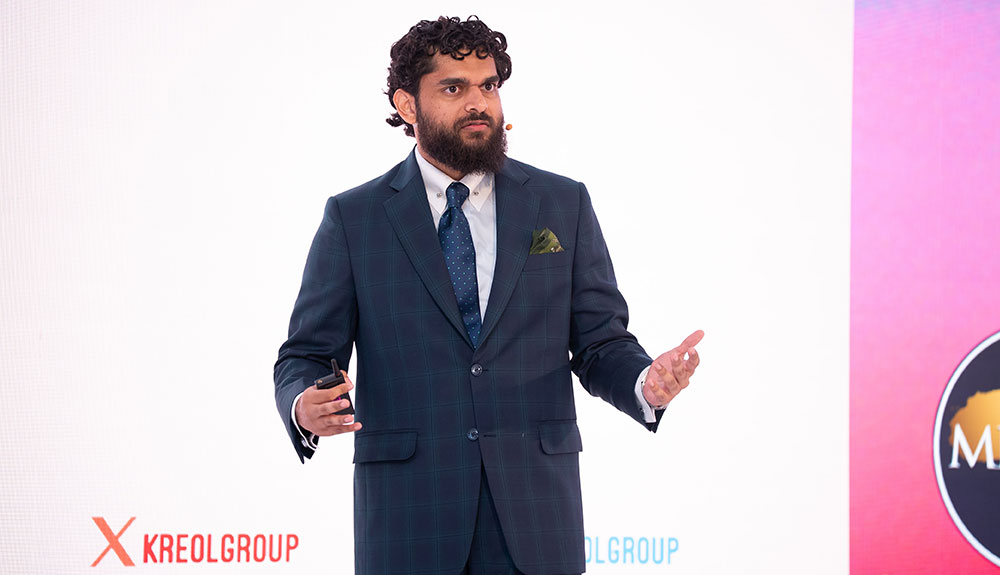
Kreol Arakulath, Executive Director of Kreol Group believes ESG has become “unnecessarily complicated’ with “a lot of mixed messages”. Photo: EZZ Production House.
While he stressed that it’s important for everyone to play that part he stressed that “not everyone can do everything” and that making an impact relies on understanding what your sphere of influence is.
“At the very underlying core, we have to talk to one another. Because if we don’t talk about these things, all of the regulatory initiatives we do are not really going to be that helpful.”
He flagged barriers such as consumers not always willing to pay more for sustainable products when it comes to the crunch, despite indicating they would.
Also key is the need to consider accessibility aspects on top of issues like packaging waste reduction, citing how Kreol Group is working Pringles and NaviLens to assist blind and partially sighted people in shopping more independently by creating a more accessible experience.
He also spoke of what retailer could do, in terms of choice of materials and more, and also how airports “set the temperature for the entire value chain”.
“The industry is bigger though than just the trinity and everyone has a role to play,” he said, highlighting the role of distributors and more.
“There’s actually this tug of war that’s going on when it comes to having this sustainable approach,” he explained, saying how when this happening in the value chain, often the cost to the consumer goes up.
“Sure there may be some cost savings that happen too, but is there enough to really make that much of a difference to the duty-free value proposition? Not really. So, the real support comes from commercial support, when items are passed down the value chain.
“As I said earlier, airports determine the temperature of the value chain. They need to make conscious a decision on which initiatives they want to support… and waive different commercials to highlight or support those. This relieves the pressure on retailers to squeeze everybody else in the chain. And this helps retailers and brands to focus on creating those sustainable offers. Distributors can then focus on sustainable execution .
“Ultimately if we are not in a position to put our money where our mouth is when it comes it sustainability then we are not exactly being honest with ourselves, are we?”
READ NEXT: Al Waha CEO hails “enormous opportunity” for stakeholders in KSA
READ NEXT: Non-aero revenues ‘the heartbeat of a modern, resilient business model’
READ NEXT: MEADFA Conference 2025 welcomes record 736 delegates in Dubai
READ NEXT: Collaborative, optimistic spirit giving rise to exciting times ahead in MEA
READ NEXT: MEA travel retail leaders outline new promise to travelling consumers

 Trbusiness. The travel retail Trbusiness. The magazine for global retail and duty free professionals.