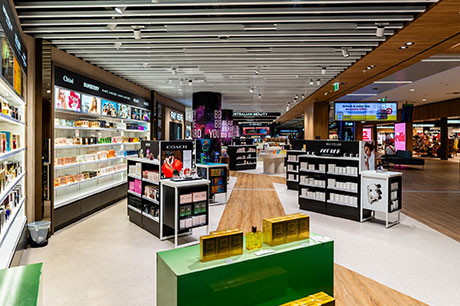
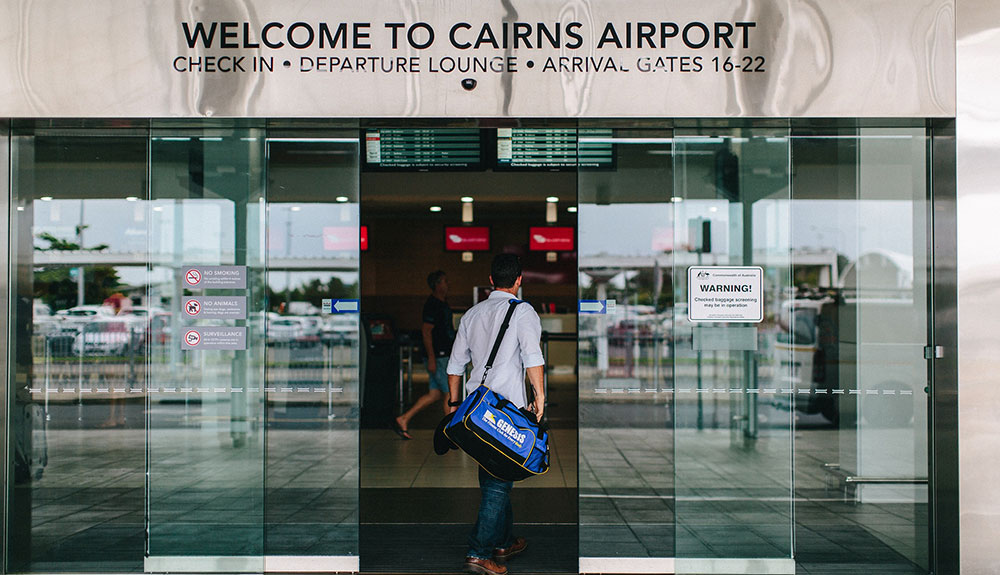
The RFT relates to multiple sites within both the international (T1) and domestic (T2) terminals.
Cairns Airport has launched a major retail tender for the first time in 10 years following a $55 million transformation of its international terminal.
The wide-ranging Request for Tender (RFT) relates to multiple sites within both the international (T1) and domestic (T2) terminals, offering more than 2,500 sqm of space for duty-free, retail, and food and beverage opportunities.
Cairns Airport, which is owned and operated by North Queensland Airports, is a leading regional airport in Oceania, and the seventh largest airport in Australia by passenger volume, welcoming more than five million pax each year.
It is also the gateway to two natural UNESCO World Heritage-listed sites – the Great Barrier Reef and Wet Tropics rainforests – both draw cards for tourists.
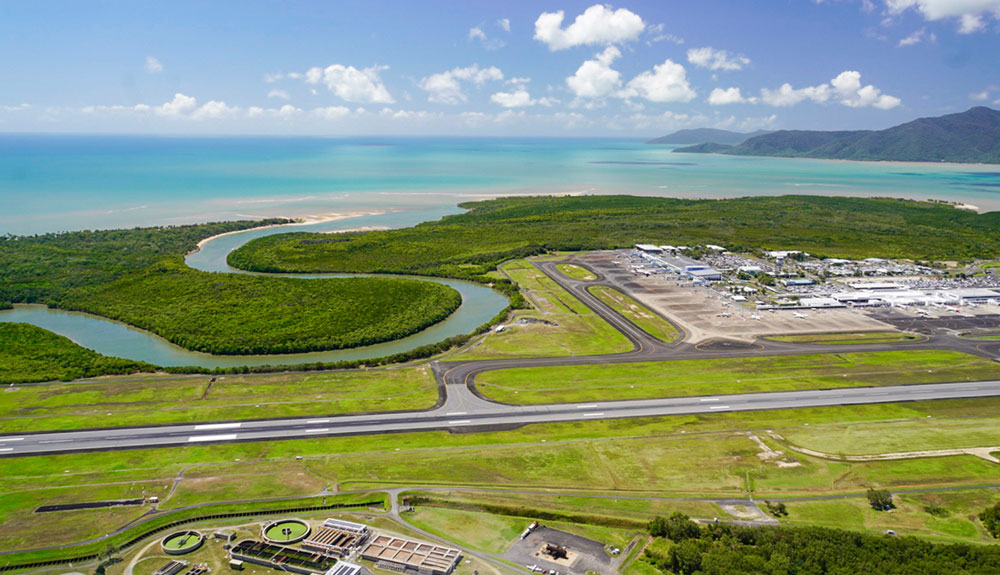
Image Credit: Cairns Airport
Cairns Airport is the gateway to two natural UNESCO World Heritage-listed sites: the Great Barrier Reef and Wet Tropics rainforests.
International passenger figures at Cairns Airport have recovered to levels not seen since 2008, servicing direct flights to Singapore, Japan, Hong Kong, New Zealand, Bali, Port Moresby and Fiji along with a strong domestic network covering capital cities and regions throughout Australia.
Chief Executive Officer Richard Barker said retail operators at Cairns Airport are exposed to an ‘exciting mix of passengers, with enviable dwell times and some of the best performing Passenger Spend Rates (PSR) among Australian airports’.
Image Credit: Cairns Airport
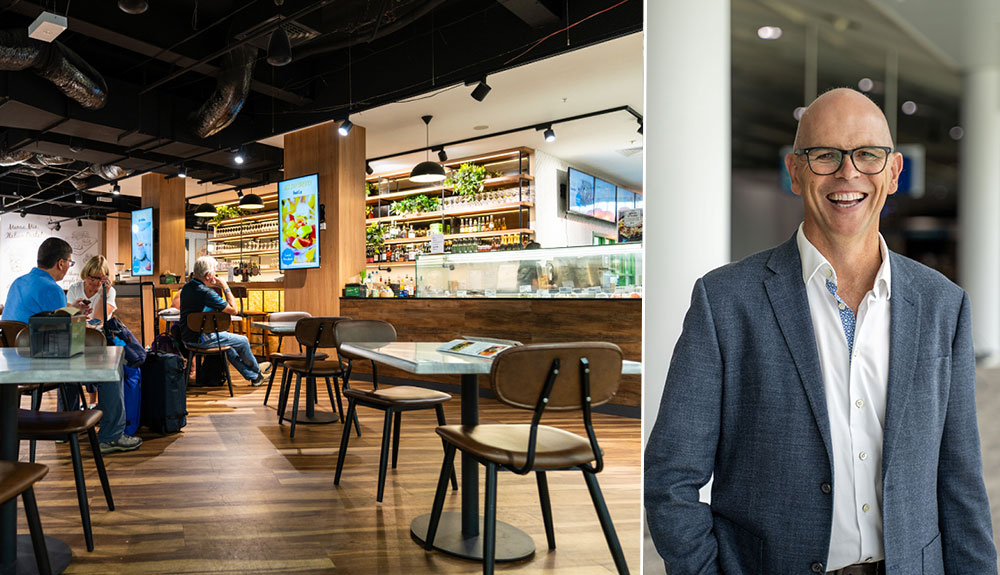
Left: Cairns Airport is seeking partners who can create compelling duty free, retail and dining offers. Right: Cairns Airport Chief Executive Officer Richard Barker.
“Historically, we have always punched above our weight in terms of PSR, outperforming not only our peer regional airports but indeed many of the larger capital city ports,” he said.
“The overhaul of our international terminal has enhanced passenger facilities throughout the entire journey, including in the retail, dining and seating areas. These changes, including the creation of a central dwell zone, will enable 100 percent passenger exposure across the entire retail offer, in a fresh and welcoming environment.
“Our domestic terminal underwent a major expansion in 2023, and it now boasts more than 3,700 sqm of retail and dining space. A few select opportunities are also available in this highly desirable retail environment.
“We are inviting tenders from all interested parties, from individual store and category-level through to full master concession arrangements.”
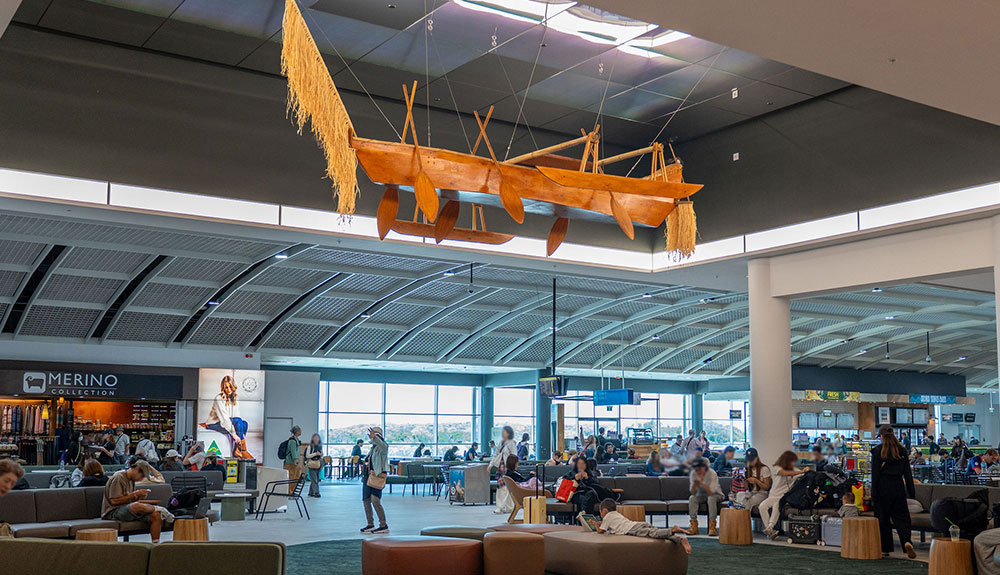
Image Credit: Cairns Airport
Cairns Airport services direct flights to Singapore, Japan, Hong Kong, New Zealand, Bali, Port Moresby and Fiji along with a strong domestic network covering capital cities and regions throughout Australia.
Sites available as part of the RFT
T1 departures and arrivals duty free concession, totalling 1,000 sqm
T1 retail concessions including emporiums, boutiques and pop-ups, totalling 600 sqm
T1 food and beverage concessions, more than 400 sqmacross multiple sites with options for hybrid retailing and optional licensed seating areas
T2 landside food and beverage concession of 228 sqm
Barker added that the vibrancy of Tropical North Queensland was an important cornerstone of Cairns Airport’s retail offer.
“This is a unique, dynamic and picturesque destination with a distinctive identity,” he said.
“We are seeking partners who can create compelling duty free, retail and dining offers that reflect the character of our region while providing the options, variety, and global brands expected in a leading travel retail environment.”
Image Credit: Cairns Airport
Cairns Airport is the seventh largest airport in Australia by passenger volume, welcoming more than five million pax each year.
Interested parties are invited to contact General Manager of Operations and Commercial Alicia Prince to register their interest and learn more about the opportunities – [email protected].
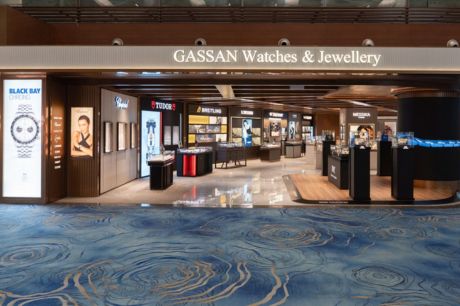
The upgraded multi-brand boutique introduces a refreshed retail concept.
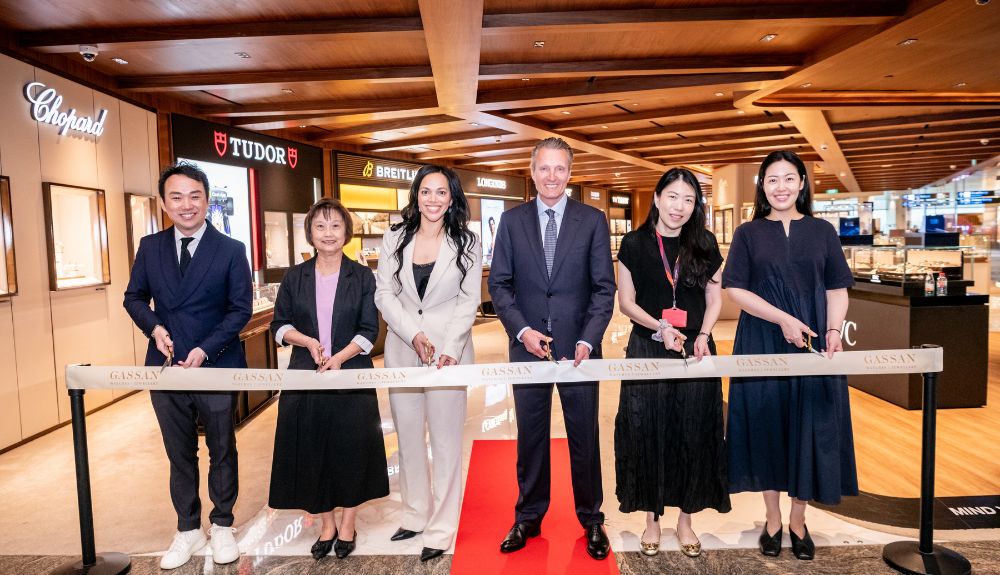
Gassan Singapore has officially reopened its renovated boutique in Singapore Changi Terminal 1, reinforcing its long-term commitment to the airport.
The upgraded multi-brand boutique introduces a refreshed retail concept designed to elevate the passenger experience through a combination of luxury watch and jewellery brands, enhanced shop-in-shop environments, and a stronger emphasis on experiential retail.
Among the key additions are dedicated spaces for brands such as Tudor, Breitling, Chopard, Longines, Tag Heuer, Gigi by Gassan and Messika.
“The re-opening of our boutique in Terminal 1 marks an important milestone for Gassan Singapore,” noted Gassan CCO David Bijlsma. “Having been present at Singapore Changi Airport for over 25 years, this renovation reflects our continued commitment to the location and its international travellers.
“The design is inspired by the success and distinctive identity of our boutiques in the Netherlands, bringing that same level of craftsmanship, luxury, and recognisable Gassan experience to Singapore. We are proud to offer travellers an even more refined and inspiring environment, showcasing some of the world’s most prestigious brands.”
Image Credit: Gassan
Pictured left to right: Gassans’s Luke Ng, Peggy Foo, Wendy von Kriegenbergh and David Bijlsma, alongside Changi Airport’s Samantha Yuan and Gwyn Sin.
The boutique showcases a diverse range of watches, from iconic Swiss brands to contemporary names. Tudor takes a prominent position within the boutique; featured collections include Black Bay and Pelagos.
The boutique also incorporates a new IWC pop-up, which includes travel retail-focused novelties and core collections such as Portugieser, Pilot’s Watches, Portofino, Aquatimer and Ingenieur.
A key jewellery highlight is the Messika brand’s debut in T1, following its successful launch at the airport’s T2 Gassan boutique.
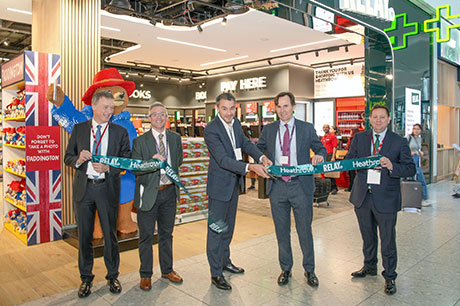
From L-R: Lucio Rossetto, Regional COO Europe, Lagardère Travel Retail; Fraser Brown, Retail Director, Heathrow; Frédéric Chevalier, CEO, Lagardère Travel Retail; Ross Baker, Chief Customer Officer, Heathrow; and Peter Newbould, CEO of UK and Ireland, Lagardère Travel Retail.
Lagardère Travel Retail has opened the first UK airport store for its travel essentials brand Relay at Heathrow Terminal 2 (The Queen’s Terminal).
TRBusiness was on location for the opening of the 420 sqm store today (Friday 22 May), which marks the first of four Relay stores at the London hub that will span a total of 1,360 sqm of space.
The other three will be located in departures (Gate Level), arrivals and in a satellite location, and are set to open progressively over the course of this year.
Today’s ceremonial ribbon cutting event was attended by senior Heathrow executives Ross Baker, Chief Customer Officer, and Fraser Brown, Retail Director, alongside Frédéric Chevalier, CEO, Lagardère Travel Retail with colleagues Lucio Rossetto, Regional COO Europe, and Peter Newbould, CEO of UK and Ireland.
The flagship Relay, situated on the Upper Level, brings the first Waitrose food-to-go and Paydens pharmacy to the UK airport travel retail scene as part of its blended concept of travel essentials, pharmacy products and services, and convenience offerings.
It’s a shining example of Lagardère Travel Retail’s approach to building concepts that are adapted to each different airport environment, yet with a common thread of a recognisable and consistent customer experience for passengers.
“The opening of Relay in T2 reflects our ability to combine global expertise with strong local partnerships to crate retail concepts that resonate with travellers,” said Chevalier, who described the opening as a “vital strategic development” of the UK business.
Image Credit: TRBusiness
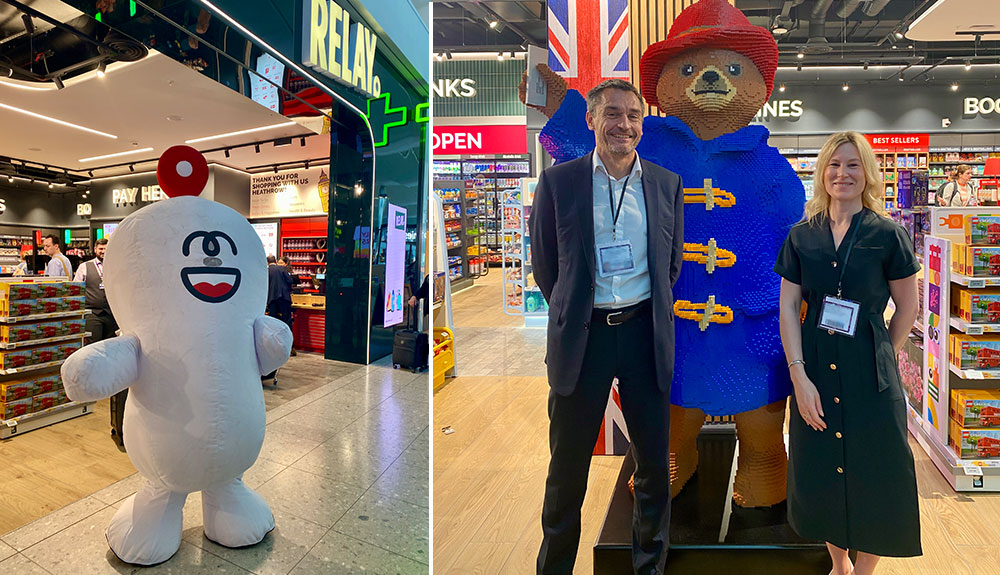
Left: The Relay brand’s playful Hay mascot helps bring ‘warmth, personality and an emotional connection to the travel experience’. Right: Frédéric Chevalier, CEO, Lagardère Travel Retail with TRBusiness Editorial Director Faye Bartle.
For Heathrow, the store marks the second example of a blended travel essentials store in the terminal, following the trial of a blended concept in 2020. The tender for the Upper Level space was issued in 2024, with the new Relay flagship having been two years in the making.
“We are absolutely clear and we validated that blended is the right thing to do in the departure lounges for Heathrow,” said Brown.
He continued: “It allows passengers to have that one-stop shop, so they like it – and we see that in the data.”
Image Credit: TRBusiness
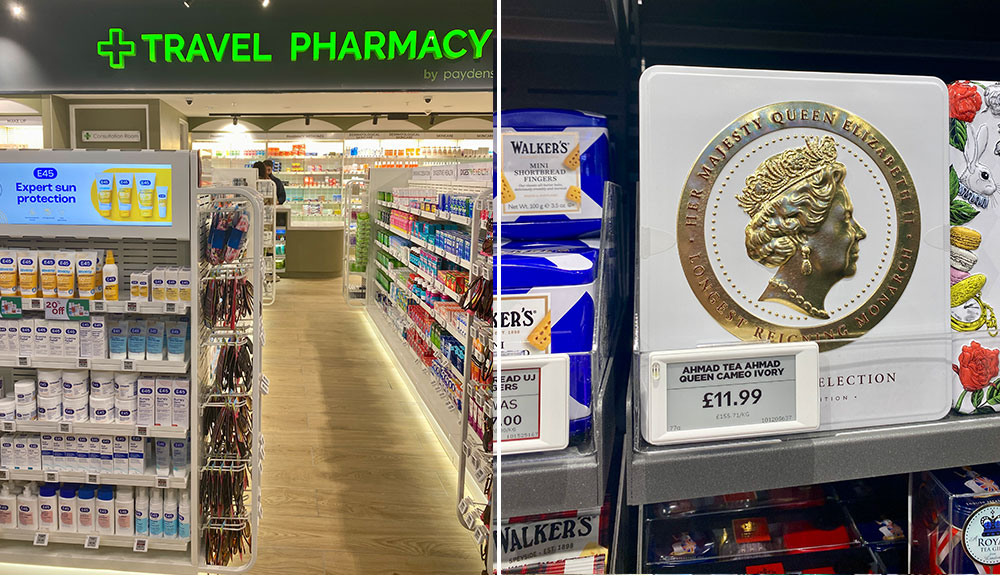
Left: The Paydens pharmacy offers services such as travel vaccinations, with a dedicated consultation room. Right: Products that evoke a sense of London are a key part of the offering.
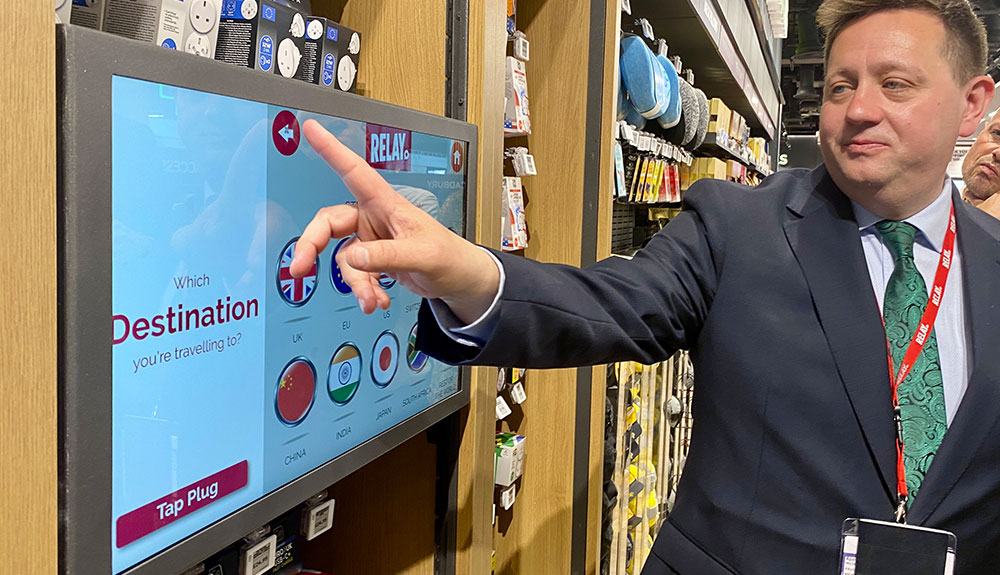
The combination of the efficient use of space, the strong brand names and the savvy use of digital in-store – for example, there’s a touch screen featuring the Lagardère Travel Retail mascot Hay, who can help shoppers find the travel plug they need – aligns perfectly with Heathrow’s Digital, Experience, Space and Offer (DESO) retail strategy.
Image Credit: TRBusiness
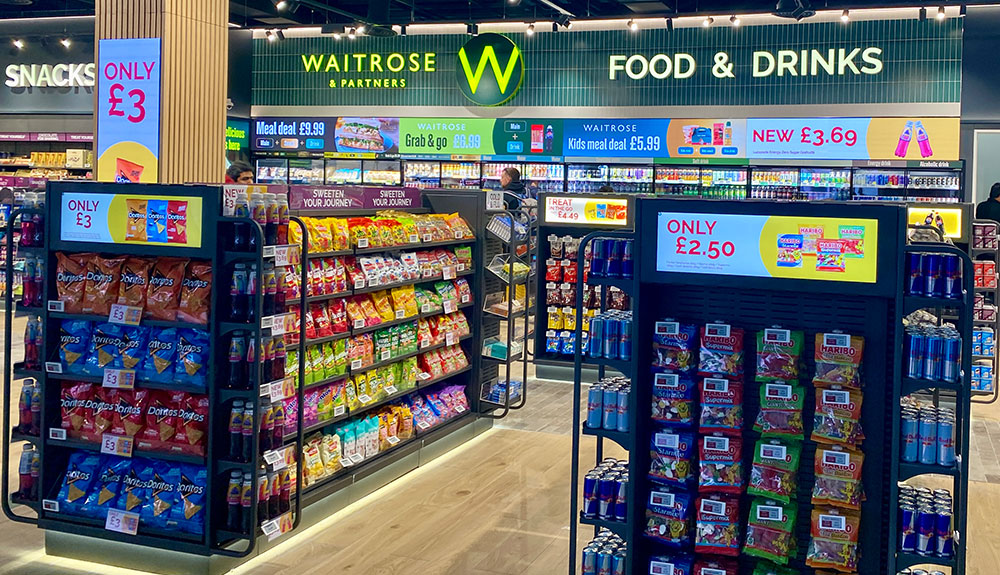
Food-to-go from Waitrose & Partners – its first UK airport outlet.
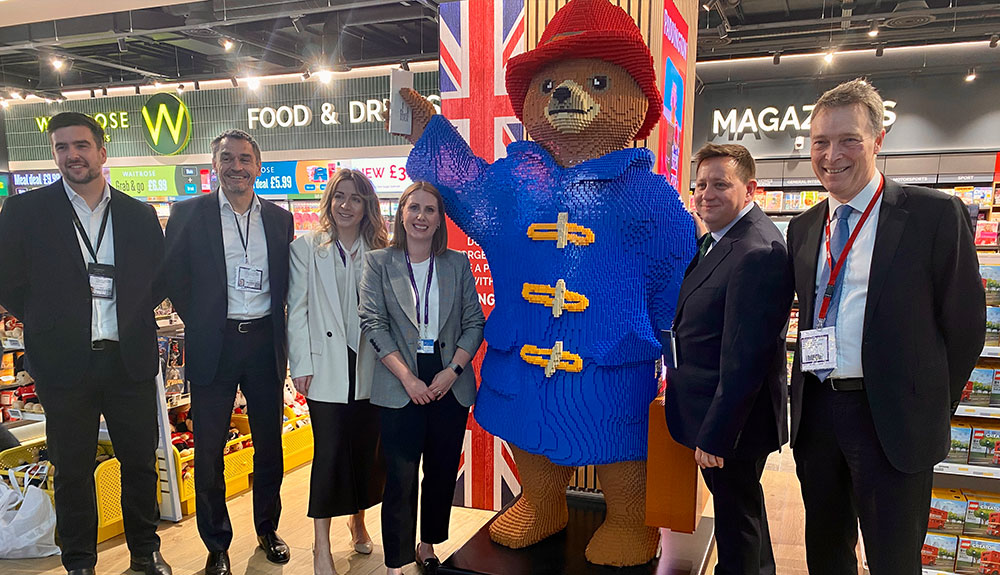
A standout feature is the giant Lego Paddington Bear, which is made from 101,293 bricks, took 418 hours to build and weighs in at a whopping 425kg.
“They have built a beautiful store – the challenge now becomes trading it really hard,” said Brown. “From a commercial point of view, we all know that non-aeronautical income in airports is under pressure and every bit of space at Heathrow needs to pull its weight. But also it needs to deliver, first and foremost, and be a great experience – and you can see by blending everything together, we are using space really intelligently, which is incredibly important at Heathrow.”
Image Credit: TRBusiness
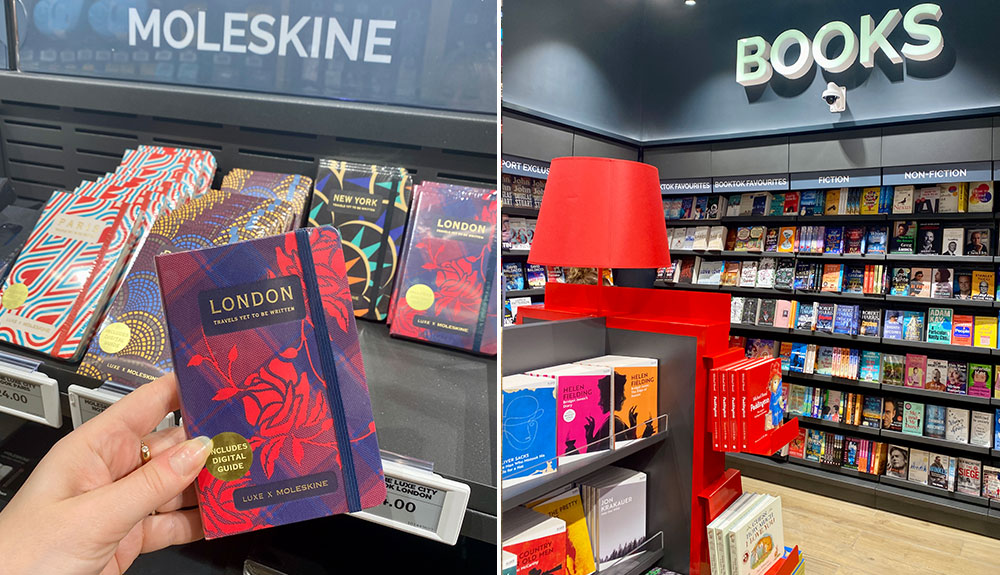
Left: Moleskin notebooks are little luxuries. Right: The flagship houses a vibrant selection of books.
Paydens is a family-run beauty/pharmacy business with a more than 50-year heritage, based in the South East of England.
The company’s travel retail debut sees it offering a selection of products and services, such as travel vaccinations and medications like melatonin, Covid and flu jabs and consultations in a dedicated, private space.
Image Credit: TRBusiness
Peter Newbould, CEO of UK and Ireland, Lagardère Travel Retail, shows us the touchscreen travel plug advice programme.
Chevalier described the flagship as a mini department store that makes it easy for shoppers to move though the categories, from travel accessories to food & drinks, toys, souvenirs, magazines and books, but in a way that’s especially relevant for travellers.
On catering to the large footfall at T2, he said: “If we know the footfall will be high, we build stores that give enough space and freedom for the passengers to navigate the store and have a great experience. We don’t want to have packed stores – in the end it’s detrimental to the mission we are pursuing.”
The Gate Level Relay store at Heathrow is set to be more focused on souvenirs, without a pharmacy, but featuring curated general merchandise that offers an authentic sense of London.
As reported, the Waitrose food-to-go offer will launch in all four stores in the terminal.
Image Credit: TRBusiness
Stakeholders gather around the Lego Paddington, built from more than 100,000 bricks.
The Heathrow opening builds upon the continued growth of the Relay concept at key hubs.
For example, Lagardère Travel Retail launched nine foodservice concepts across 10 locations and six new stores under the Relay brand at Frankfurt Airport’s new Terminal 3 in April.
More recently, Lagardère Travel Retail Germany opened a series of new food and retail experiences at Düsseldorf Airport on 4 May, including several new Relay stores.
Image Credit: TRBusiness
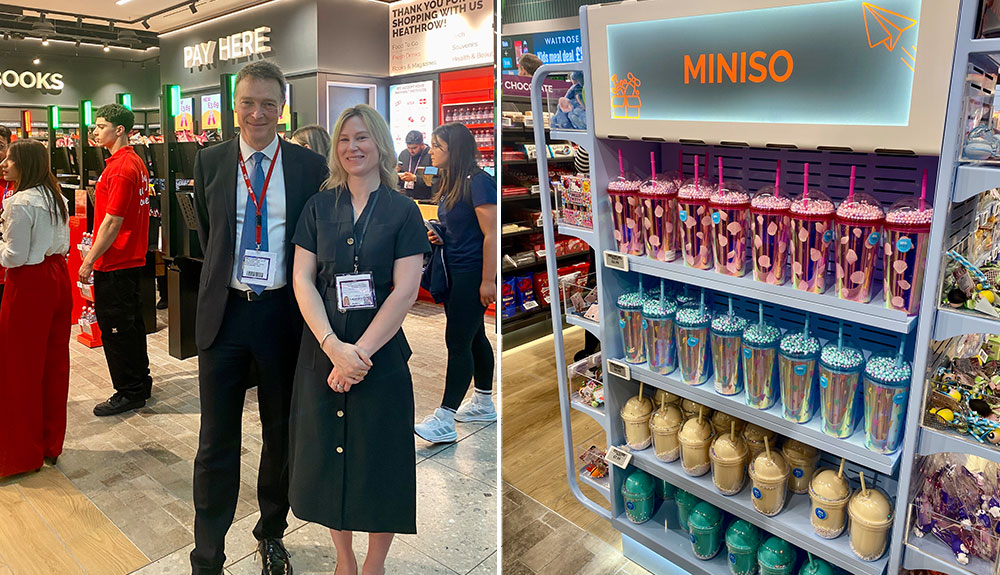
Left: Lucio Rossetto, Regional COO Europe, Lagardère Travel Retail with TRBusiness Editorial Director Faye Bartle. Right: Handy, trendy buys from Miniso.
Stay close to TRBusiness for more news of upcoming openings.
Retail-focused AI company, Sentipede Technologies, has just signed an exclusive partnership with Adani Airport Holdings across its eight airports in India, designed to give the private operator more visibility into its commercial offer.
The startup’s Brand Intelligence Platform now sits across all non-aeronautical data at Adani airports – duty free, retail, F&B, services – offering brands real-time visibility into prices, passenger purchasing, inventory, and promo effectiveness. It builds on Sentipede’s earlier launch of ZAIC, the AI-powered duty-free platform that already tracks pricing and availability of 1,500+ SKUs at more than 55 airports. They include Dubai, Singapore, London Heathrow, Frankfurt, Delhi, and other gateways.
The Adani move is strategic as it accelerates data-driven retailing, with AI reshaping travel retail decision-making at India’s largest private airport operator, with locations such as Mumbai, Navi Mumbai, Ahmedabad, Lucknow, Mangaluru, Jaipur, Guwahati, and Thiruvananthapuram. Adani currently handles approximately 25% of India’s total passenger traffic through these gateways and 33.3% of air cargo volumes.
At the heart of Sentipede’s offering to Adani is a suite of platforms that decode pricing dynamics, customer behaviour, inventory movement, and promotional effectiveness. Adani’s retail business has scale: 10+ categories across 100+ brands and over 14,000 SKUs. However, its customer base tends to have limited dwell time despite a high intent to buy.
Image Credit: Sentipede
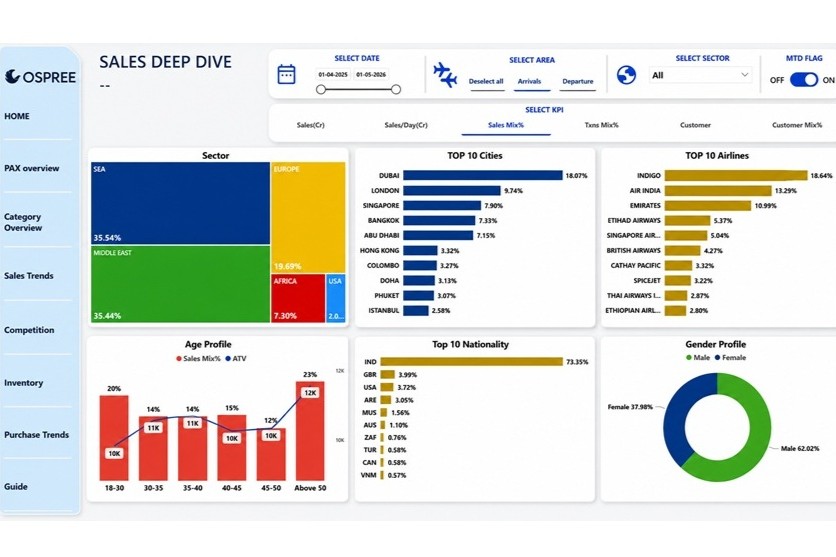
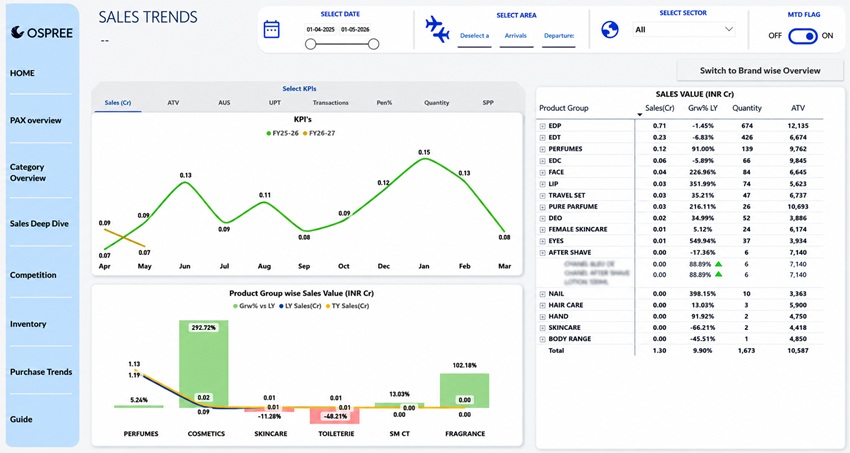
An example of a sales trends dashboard.
Sentipede says its solutions will enable the operator, its duty-free retailers, and brands, “to act with clarity rather than rely on retrospective reporting or intuition”. The tech startup has a strong focus on travel retail and duty-free, and claims to address one of the industry’s most persistent challenges: converting fragmented data into actionable insights in high-value, time-constrained retail settings.
Mumbai sets the standard for Adani
At Ospree (Mumbai Travel Retail), a joint venture between Adani Airports and Flemingo Group, Sentipede’s Brand Intelligence Portal has already integrated multiple commercial elements into a single, connected view, linking what is selling, who is buying, which brands are performing, and what is available on shelf. The platform, says the AI company, “allows stakeholders to identify conversion gaps, optimise assortment and staffing, manage inventory proactively and course-correct new launches in real time”.
Sheel Vora, Managing Director & CEO of Sentipede Technologies, commented: “India’s airports are becoming some of the most valuable commercial environments in the world. We give every brand in duty-free the data they need to make smarter decisions – faster. This is how we are building the next generation of airport commercial performance.”
Image Credit: Sentipede
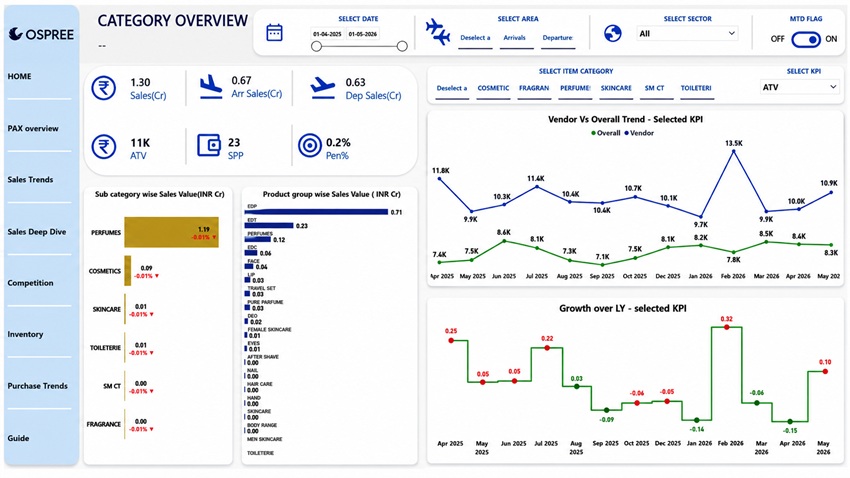
An example of a category trends dashboard.
Vora told TRBusiness that the Adani Airports agreement was signed on 13 April. He added that, beyond dashboards, Sentipede can help organisations shift from static analytics to faster, sharper execution. By identifying patterns and quantifying blind spots, outcomes can range from improved on-shelf availability during peak passenger flows to rethinking animations that fail to deliver.
What can brands expect?
According to Sentipede, its platform can deliver passenger flow information, including traffic trends and demographics, to help brands tailor offerings, and category/product performance data, such as sub-category sales snapshots across liquor, beauty, and confectionery. This enables benchmarking and opportunity mapping.
Transparent competitive rankings, plus sales and penetration trends, can also help track month-on-month growth rates, average transaction values, and penetration percentages. Sentipede stated: “The intelligence would grow as the infrastructure matures.” In Adani’s case this will offer a structured roadmap for long-term growth, noted Sentipede.
Incubated by Voiceback Analytics, a Microsoft Partner for AI, and a leader in travel retail analytics, Sentipede has innovation hubs in Bengaluru and Ahmedabad and is developing plug-and-play AI modules, real-time analytics platforms, and intelligent CRM tools tailored for airports, travel retailers, and brands.
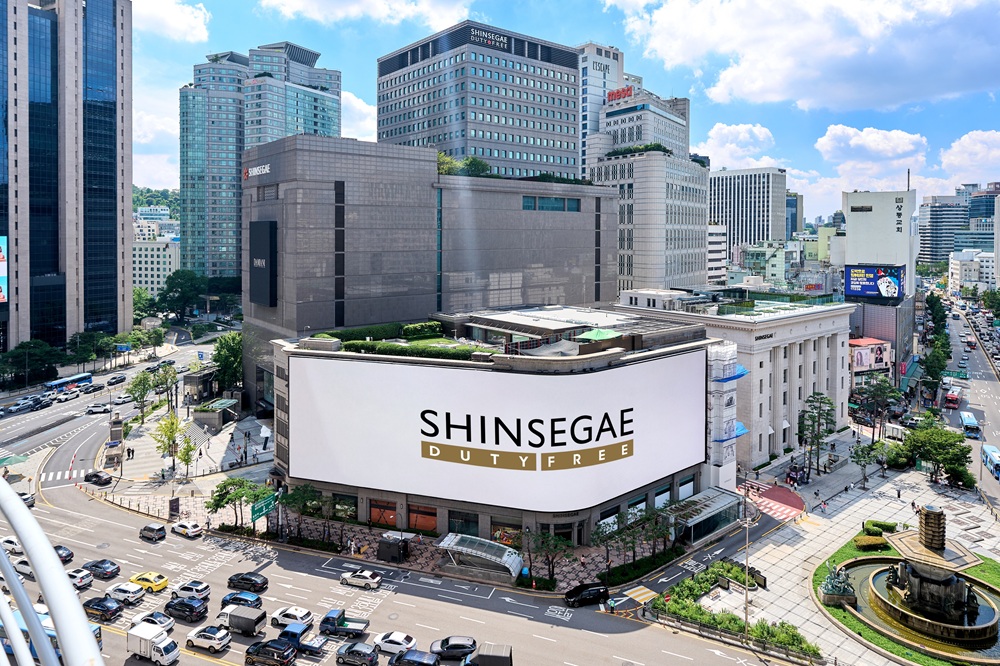
Shinsegae Duty Free is expected to see a profit spurt in Q2.
South Korea’s Shinsegae Duty Free is expecting an improvement in duty-free profitability following its exit from the DF2 concession at Incheon International Airport (ICN) on 28 April.
The travel retailer – part of the larger nationwide department-store group of the same name – pulled out, citing the rent burden as the decisive factor. The concession, covering cosmetics/perfumes and liquor/tobacco, is now with Hyundai Duty Free, which says it is targeting annual airport-wide sales of KRW1tr/$680m now that DF2 is also in its ICN portfolio.
Shinsegae DF still has other concessions at ICN, and its parent company offered a Q2 outlook stating it expected the current improvement in duty-free profitability to “gain traction” now that it has completed adjustments to its concessions and offer at Incheon International.
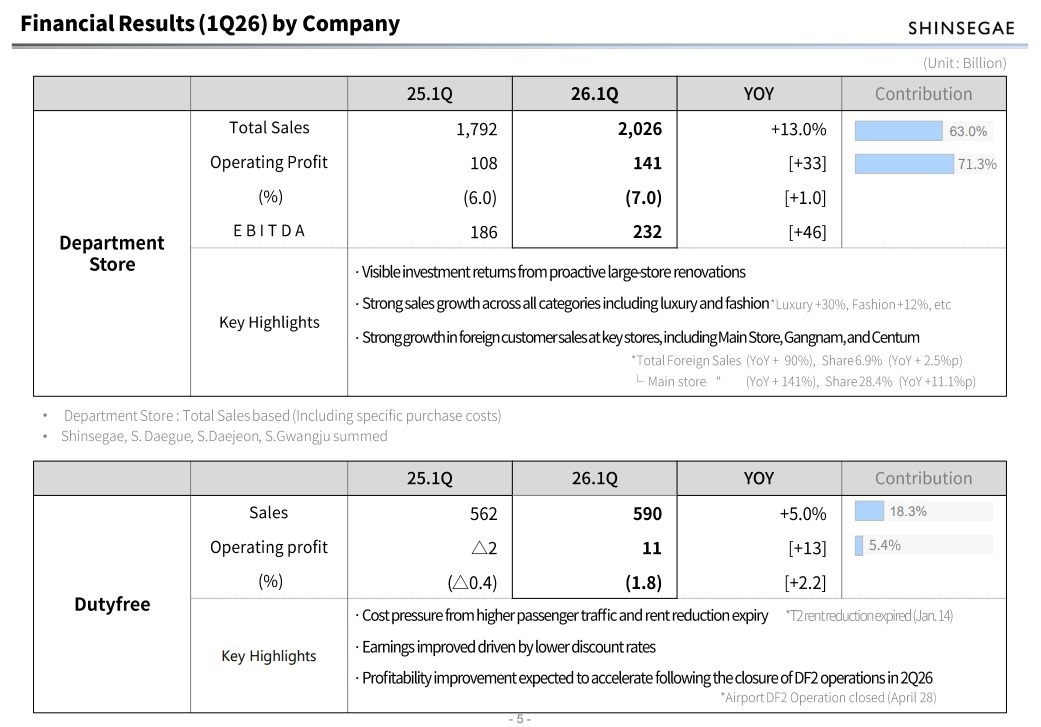
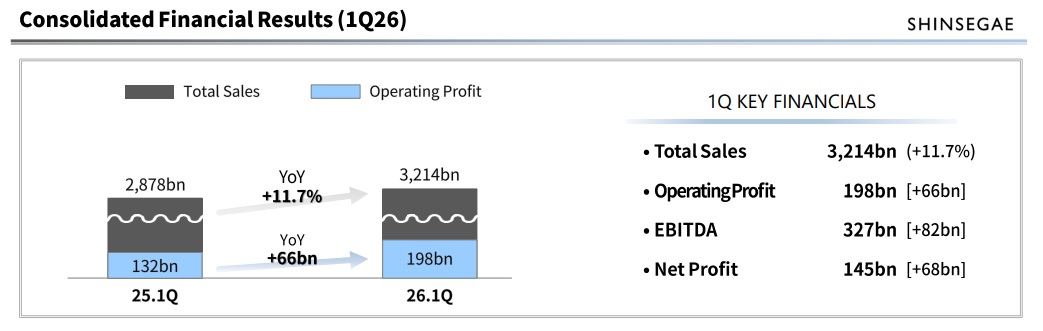
In its Q1 earnings release, Shinsegae noted a healthy rise of +5% in its duty-free business, reaching KRW590bn / $391m and accounting for 18.3% of company-wide revenue (see chart below). This is the second-largest contribution after the department store division’s 63% share. Another four business units – Central, SI, Casa, and Live Shopping – made up the rest of the company’s revenue.
Image Credit: Shinsegae
Shinsegae’s Q1 results for its two core businesses.
Shinsegae DF profits make steady progress
Shinsegae DF also turned a small operating profit in the quarter of KRW11bn / $7.3m. At the group level this amounts to a 5.4% contribution, well below the department store division’s 71.3% share, and the reason the company is pushing for better profitability in Q2.
In Q1, Shinsegae DF suffered from cost pressures due to higher passenger traffic and the expiry of rent reductions on 14 January. However, earnings improved, driven mainly by lower discount rates.
The duty-free business performance was easily outshone by strong department-store sales momentum of +13% in Q1. Operating profit jumped from KRW108bn to KRW141bn / $93.5m year-on-year. Shinsegae noted, too, that April sales to foreign customers soared by +132% YOY and said, in its Q2 outlook, that department-store sales would be “sustained on continued inbound growth”.
For the company’s group-level results, see the chart below:
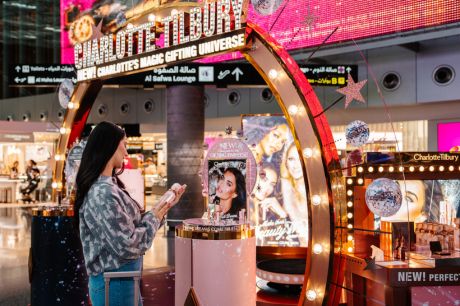
Qatar Duty Free has made the most of activations and pop-ups in FY25/26. Shown here: Charlotte Tilbury.
Qatar Duty Free (QDF) has shown its strength at a turbulent time in the Middle East by generating a sales uplift of +9% year-on-year for the 12 months to March 2026, a month when the country’s airspace was closed due to impacts from the conflict between US-Israel and Iran that started on 28 February.
QDF’s parent company, Qatar Airways Group (QAG), had to significantly curtail its operations and cancel flights in March, but its regional schedules are slowly normalising, and its global network is being restored in phases. QDF was hit hard during its Ramadan festivities, which had just begun.
Without these challenges, QDF may well have reached double-digit growth. According to the company, the +9% rise “reflects higher traveller engagement and spend” driven by many immersive retail activations and its ability to create a seamless travel experience at Doha’s Hamad International Airport (DOH).
In the calendar year 2025, the Qatar Airways hub retained its position as the tenth busiest international airport worldwide with 54.35 million passengers, up +3.1%. However, with the regional conflict affecting March traffic, in the financial year from April 2025 to March 2026, DOH served nearly 51 million passengers according to QAG.
Image Credit: QDF
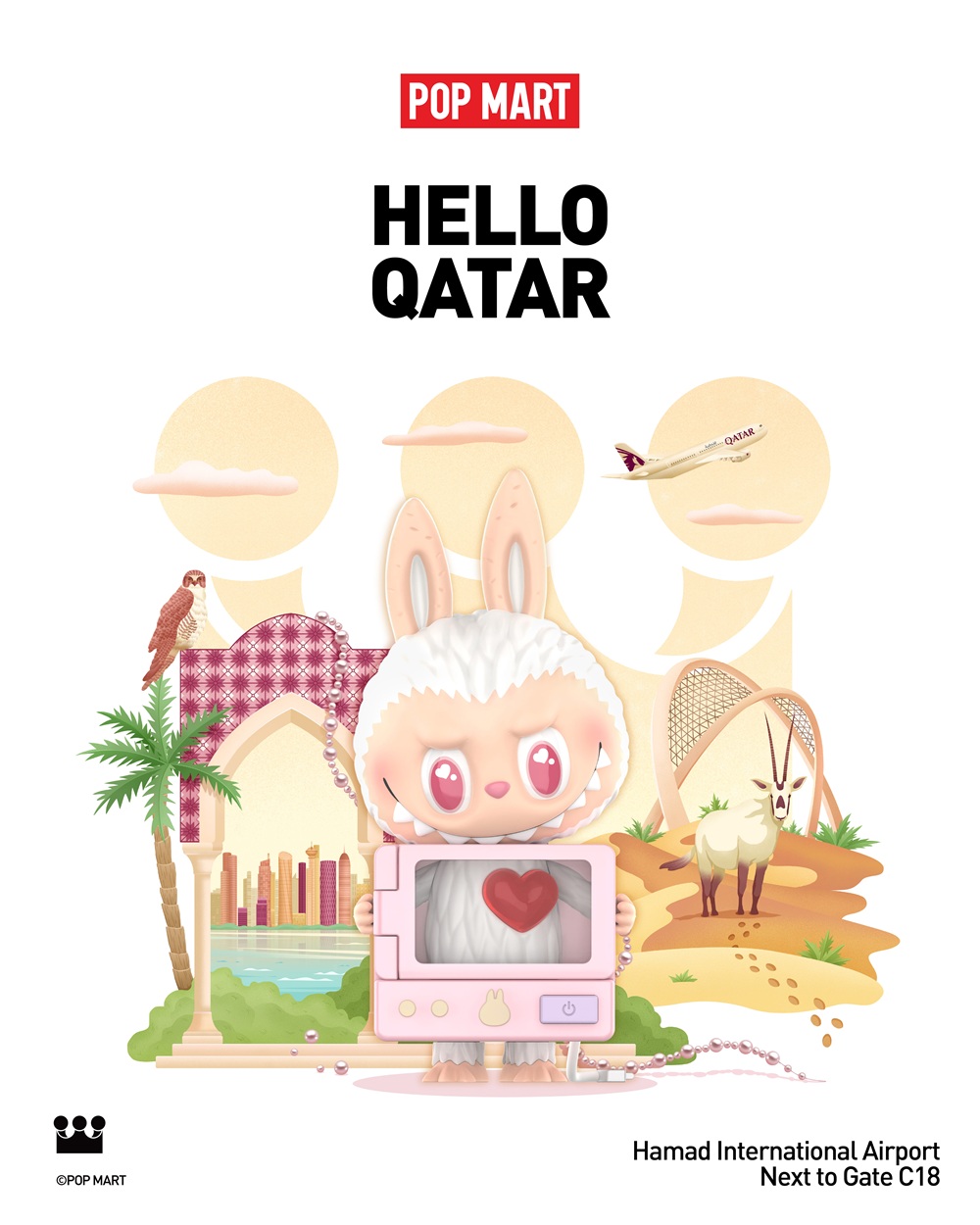
The arrival of Pop Mart and its Labubu dolls caused a stir.
During the financial year, Qatar Duty Free introduced a string of valuable additions to its retail line-up. These included:
• Brunello Cucinelli, Zegna and Tom Ford boutiques
• Lancôme Café de la Rose – a global airport first
• Flat White speciality coffee
• Slicy’s NY-style pizza.
Collaborations with brand partners also shaped the airport experience throughout the year. Brand engagement included a world-exclusive festive beauty takeover with Charlotte Tilbury, delivering +700% sales growth for the brand, and the Louis Vuitton Lounge by Qatar Duty Free at the Formula 1 Qatar Airways Qatar Grand Prix, which hosted over 40 celebrities, influencers, and media representatives.
The expansion of Hamad Airport’s D and E concourses, completed at the end of the 2024/25 financial year, further supported this momentum, increasing retail and dining capacity by 2,700sq m and enabling QDF to welcome new concepts and partnerships.
Hamad Al-Khater: “It is not often that a single financial year asks an organisation to demonstrate both the best of what it can achieve and the depth of what it can withstand. FY2025/26 did both.”
Qatar Airways Group shows resilience
As well as QDF’s strong performance, Qatar Airways Group also delivered a strong financial result for FY25/26. Operating profit reached QAR15.2bn / $4.17bn*, the highest in the group’s history, and group profit reached QAR7.08bn / $1.94bn.
Image Credit: Qatar Airways Group
In the context of the widespread disruption in March, the result reflects the underlying strength of QAG’s businesses, which span Qatar Airways and QDF as well as another 11 units, including Qatar Airways Cargo and Matar, which operates DOH. Hamad Al-Khater, QAG’s CEO, said: “It is not often that a single financial year asks an organisation to demonstrate both the best of what it can achieve and the depth of what it can withstand. FY2025/26 did both.”
He added: “These results speak to the strength of this group across every measure that matters – a strong balance sheet, industry-leading operations, partnerships of real depth, and people who maintained the standards this group is known for, even under the most demanding conditions. We are actively rebuilding our global network with confidence.” Looking ahead, Qatar Airways expects to reach more than 160 destinations by summer 2026 to reestablish its position as a global hub.
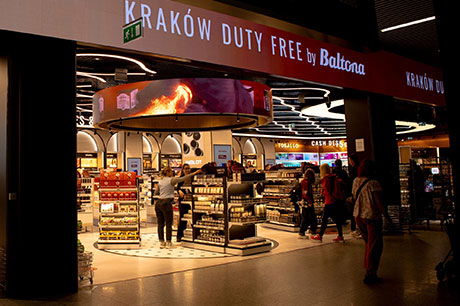
The modern 504 sqm retail space is inspired by the history and rich heritage of Krakow.
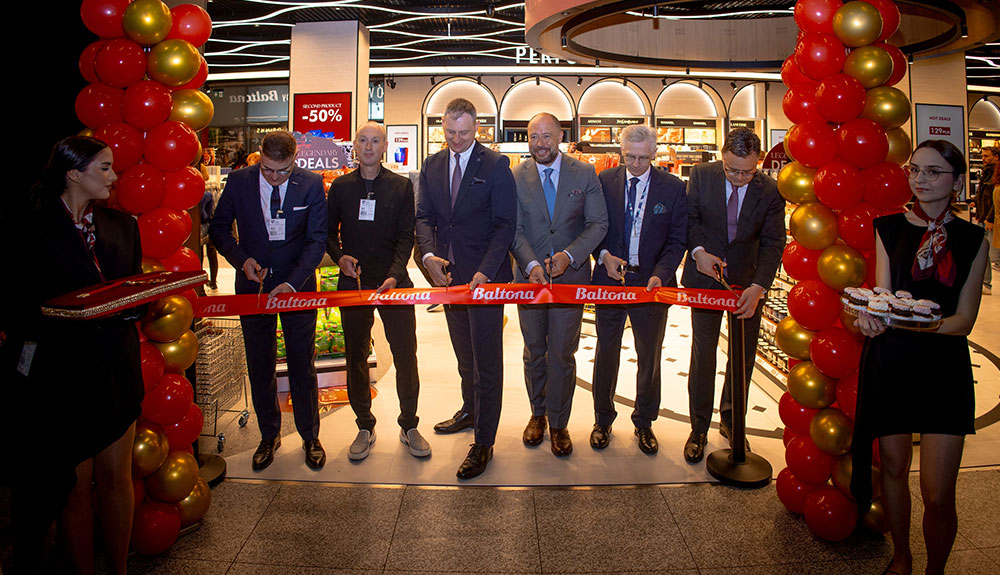
Poland travel retail operator Baltona has unveiled its largest investment of the year so far – a modern 504 sqm retail space at Krakow Airport.
The new Krakow Duty Free by Baltona shop offers travellers a distinctive shopping experience and sense of place, with interiors inspired by the history and rich heritage of Krakow.
The grand opening of the store, which is located in the passenger terminal of John Paul II International Airport Krakow–Balice, was officiated by Wojciech Czernek, CEO of Baltona; Tomasz Marczak, Member of the Management Board of Baltona; Łukasz Chaberski, CEO of Polskie Porty Lotnicze S.A. and Łukasz Strutyński, CEO of Krakow Airport (see photo below).
“We are delighted to announce the opening of the Krakow Duty Free by Baltona shop, a milestone that marks a truly special moment for us,” said Wojciech Czernek, CEO of PHZ Baltona S.A.
“The scale of this project, its local, authentic character and world-class standards make this investment one of the most significant in Baltona’s recent history. We are proud to be present at Krakow Airport – the fastest-growing airport in this part of Europe – which confirms our ambitions and Baltona’s position as the Polish leader in the travel retail market.”
The project was carried out on schedule and completed within 60 days, with Baltona opening a temporary shop just one week after the premises were handed over to ensure that customer service endured during the transition.
Image Credit: Baltona
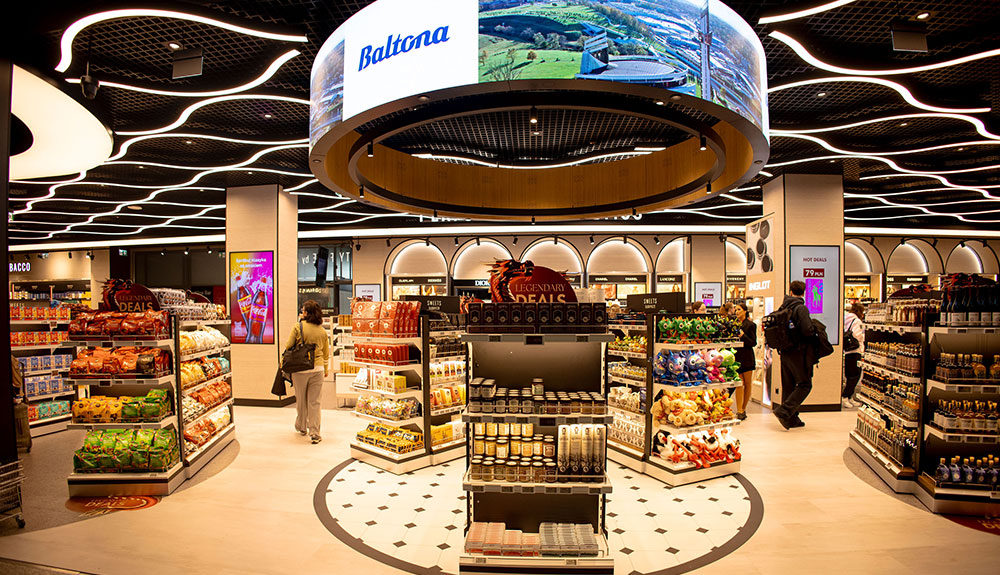
The Krakow Duty Free by Baltona shop mark’s Baltona’s largest investment so far in 2026.
“The opening of the new Baltona shop at Krakow Airport is a special moment for us, as this is an airport in which PPL is the majority shareholder and which we regard as a strategic hub within the network of Polish airports,” said Łukasz Chaberski, CEO of Polskie Porty Lotnicze S.A.
“This investment demonstrates not only the airport’s dynamic growth, but also the potential of Polish companies to deliver world-class projects. We are particularly pleased that Baltona is part of the PPL S.A. Capital Group, thanks to which we are jointly developing modern standards of passenger service and retail infrastructure at Polish airports.”
The sense of place design philosophy of the Krakow Duty Free by Baltona shop has been carried out in collaboration with architectural firm The Design Solution.
The local character of the new venue is expressed through details that draw upon Krakow’s cultural heritage, with the scales of the legendary Wawel Dragon serving as the visual theme.
The space is complemented by lighting elements designed specifically for the location, as well as large-format LED screens displaying content relating to the city and the region.
Image Credit: Baltona
The shop features an intuitive walk-through customer route.
“Our aim was to create a space that is not only functional but, above all, builds a connection with travellers by telling the fascinating story of Krakow,” said Nick Taylor, Director at The Design Solution.
A key feature is the open, intuitive walk-through customer route, which has been conceived to help improve the flow of people and allow shoppers to ‘freely explore’ the full range of products on offer.
The shop is also equipped with electronic price tags and self-service checkouts, whilst the regional zone features an LED display showcasing products from brands such as Krakowski Kredens, Wierzynek, Wawel and Alta Seska.
Customers can also shop a wide range of global brands, including dedicated Dior and Inglot zones.
In April, Krakow Airport handled 1,214,353 passengers, marking a 13% year-on-year increase. Since the start of 2026, the total number of passengers has exceeded 4.25 million.
“Krakow Airport’s record results demand top-class retail infrastructure,” said Łukasz Strutyński, CEO of Krakow Airport. “The new Baltona shop fits perfectly with our development strategy, a key element of which is creating positive passenger experiences.”
Dubai Duty Free’s Michael Schmidt, Senior Vice President – Retail, will retire on 31 May.
Dubai Duty Free’s Michael Schmidt, Senior Vice President – Retail, will retire from the company effective 31 May 2026, concluding a distinguished 26-year career with the organisation.
Currently, Schmidt is responsible for Retail Development, Merchandising and Display across all Dubai Duty Free retail outlets and, says the retailer, has ‘played a central role in shaping the company’s retail operations and customer experience’.
“Michael has made an extraordinary contribution to Dubai Duty Free as reflected in our retail success over the last two and half decades,” said Dubai Duty Free Managing Director, Ramesh Cidambi.
“He successfully led the opening of major retail areas in both airports, oversaw an award-winning 24-hour retail operation whose revenues established us as the largest airport retailer in a single location, and navigated the Covid-19 crisis through to a full recovery, culminating in a record year in 2025.
“Throughout his time with the company, Michael has been a model of steadfastness, dependability and integrity, combined with hard work and dedication. On behalf of the entire Dubai Duty Free team, I would like to thank him and wish him and his family every happiness in the future.”
Schmidt joined Dubai Duty Free in September 2000 and has held several key leadership positions within the Retail division including Duty Manager, Manager – Merchandise, Manager – Retail Sales, Vice President – Retail Sales & Merchandising, and most recently Senior Vice President – Retail.
For the past decade, he has led the Retail division, guiding a team of approximately 4,800 retail employees.
Schmidt also played a pivotal role in the expansion and development of Dubai Duty Free’s retail footprint across both airports, including the opening of Terminal 3 and Concourse B in 2008, Concourse A in 2012, Al Maktoum International Airport in 2013 and Concourse D in 2016, in addition to numerous luxury boutique openings and major refurbishment projects across Terminal 2 and Arrival outlets.
Image Credit: Dubai Duty Free
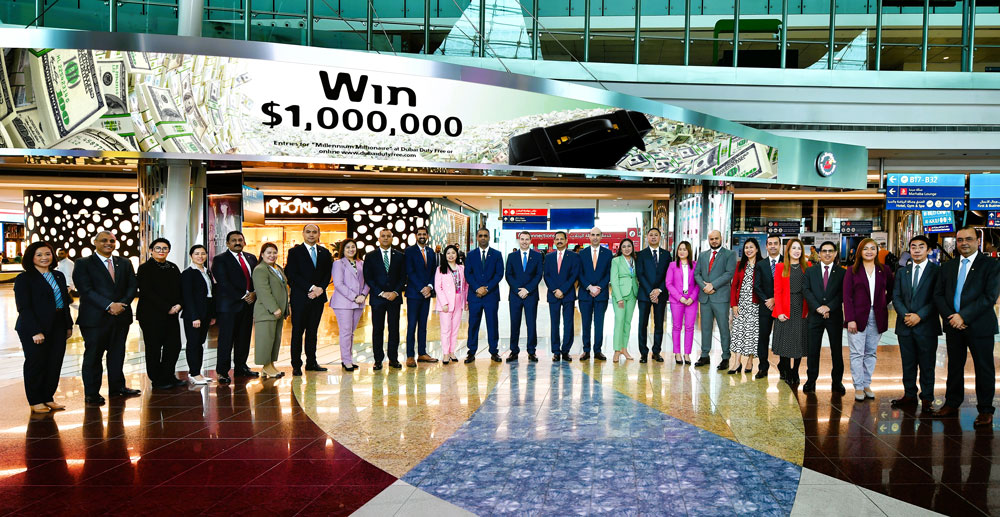
Michael Schmidt with the Operations management team at Dubai Duty Free.
“It has been 26 years since I first joined Dubai Duty Free and 30 years living in Dubai. At that time, under the leadership of Colm McLoughlin, the operation was going through enormous growth and expansion, and I was happy to be part of that,” commented Schmidt.
“During my time, Dubai Duty Free has become more than my place of work, it has been a community, a family, and a place of growth. I am deeply grateful for the opportunities I’ve been given, the trust placed in me and the many lasting relationships I have built here.
“Under the leadership of our Managing Director Mr Ramesh Cidambi and together with all my colleagues we have faced challenges, celebrated successes, and built something that I will always be proud of.”
The announcement follows the retirement of DDF’s Sharon Beecham, Senior Vice President – Purchasing, who stepped down from her role from 8 May 2026, following a more than 28-year tenure.
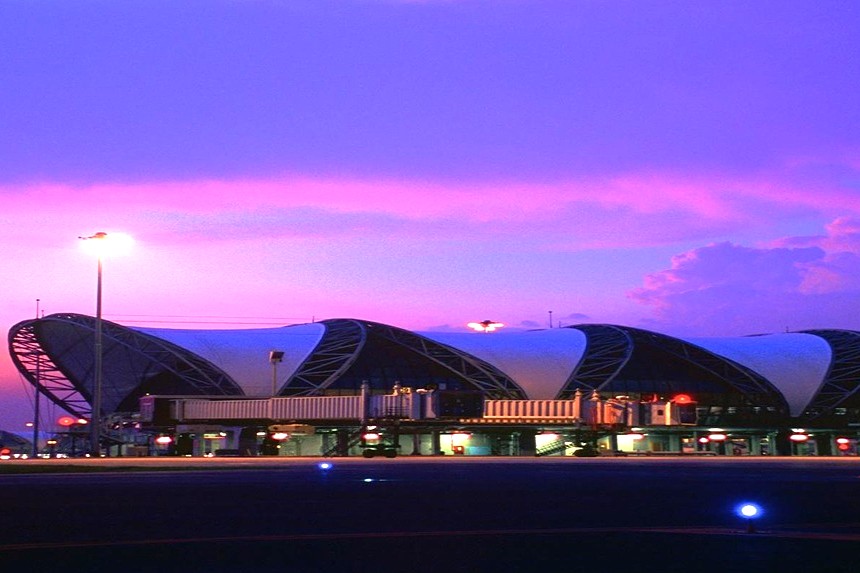
BKK, the flagship airport of AOT, is being expanded.
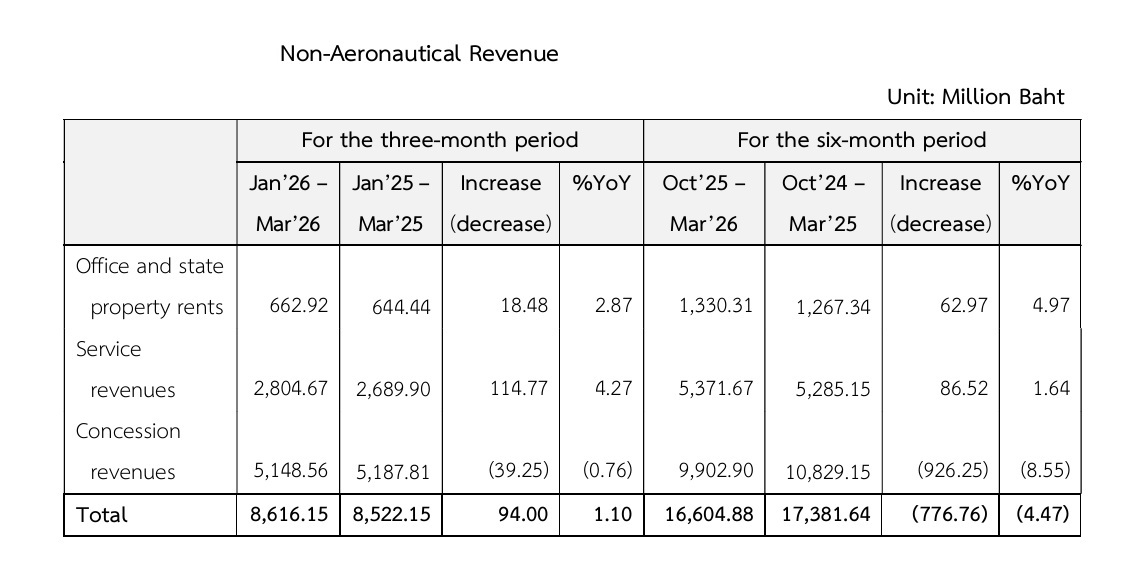
A decline in duty-free revenue in the three months to March 2026 pushed down concession income at Airports of Thailand (AOT) by -0.76%. This was, however, a significant improvement on the six-month contraction of -8.55%, despite a +4.2% increase in passenger numbers to 71.3m (43.3m international and 28m domestic) in the half-year to March.
In figures, concessions – the biggest slice (60%) of non-aeronautical income for the listed company – brought in THB5,148.7m/ $157.7m* in fiscal Q2, which AOT said was down “mainly due to a decrease in duty-free concession revenues”.
Image Credit: AOT
Duty-free was offset by service revenue in the non-aeronautical stream.
Total non-aeronautical income at the 70% state-owned company rose by +1.1% in the quarter to reach THB8,616.2/ $264m, helped into positive territory by a +4.3% rise in service revenue, which offset the duty-free decline.
A dispute over contracts with AOT’score retail operator, King Power Duty Free, was said to be resolved in December through renegotiated terms, but AOT did not allude to this in its latest management discussion.
The six-month view
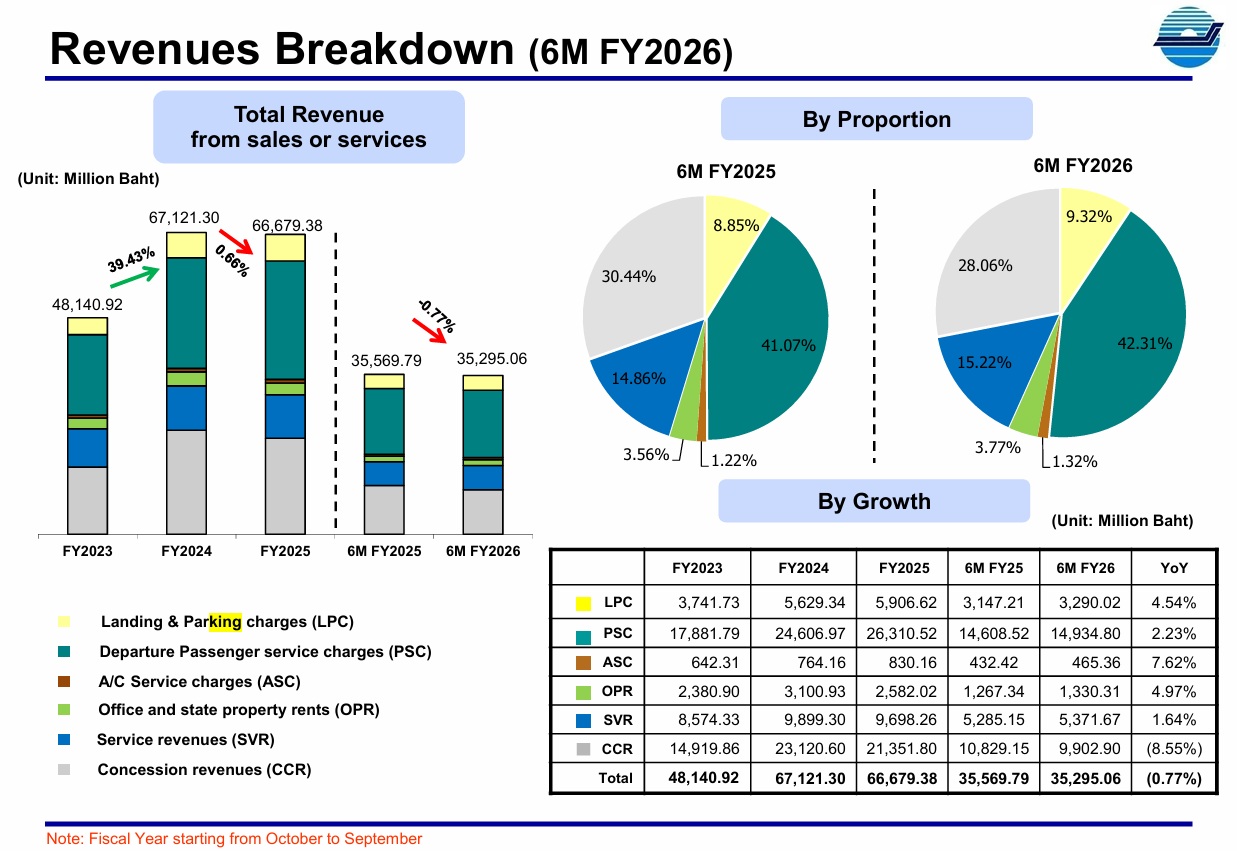
From a revenue perspective, the -8.55% contraction in H1 has meant that its share of AOT’s total revenue has fallen to 28.1% from 30.4% in the same period a year ago.
AOT runs six airports, including Bangkok’s Suvarnabhumi (BKK) and Don Mueang (DMK) in Thailand and the six gateways handle about 90% of Thailand’s total passenger volumes. In the first six months of FY 2026, although the overall passenger numbers rose by +4.2%, this growth was mainly driven by domestic travel.
Image Credit: AOT
The six-month breakdown by segment.
The company admits that it faces “significant challenges” for the remainder of FY26 due to the ongoing conflict in the Middle East, which has significantly impacted airlines’ fuel bills and led to higher ticket prices. “This has affected passenger travel and airline flight cancellations,” noted AOT. “To mitigate these impacts, the airport operator has implemented an incentive scheme for slot management.
The second phase of the project runs for three years from 1 November 2025 to 28 October 2028 and provides a discount on aviation (landing charges, parking charges and boarding bridge charges) of 50% throughout the period.
AOT expansion plans move forward
In addition, AOT has completed the redesign of the construction plans for the East Expansion of BKK. This project is currently awaiting government approval regarding revisions to the project details. The expansion will accommodate an additional 15 million passengers per year. An environmental impact assessment is expected to be completed mid-year, and the project will be finished in 2031.
Regarding BKK’s Development Master Plan, AOT completed its revision in December, and a draft, the 2025 edition, has been approved by the board. The framework envisions expansion primarily in the southern zone, comprising South Terminal, the 4th runway, aircraft maintenance, repair, and overhaul (MRO) centre, cargo, general aviation activities, automated people mover (APM) system, as well as an integrated transportation system and utility infrastructure. This will enable the gateway to accommodate up to 120 million passengers annually.
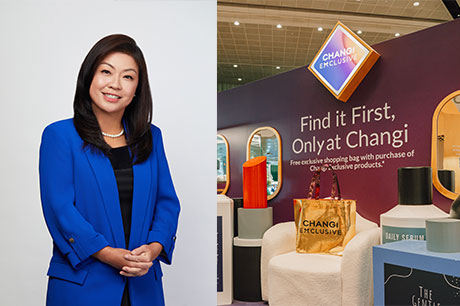
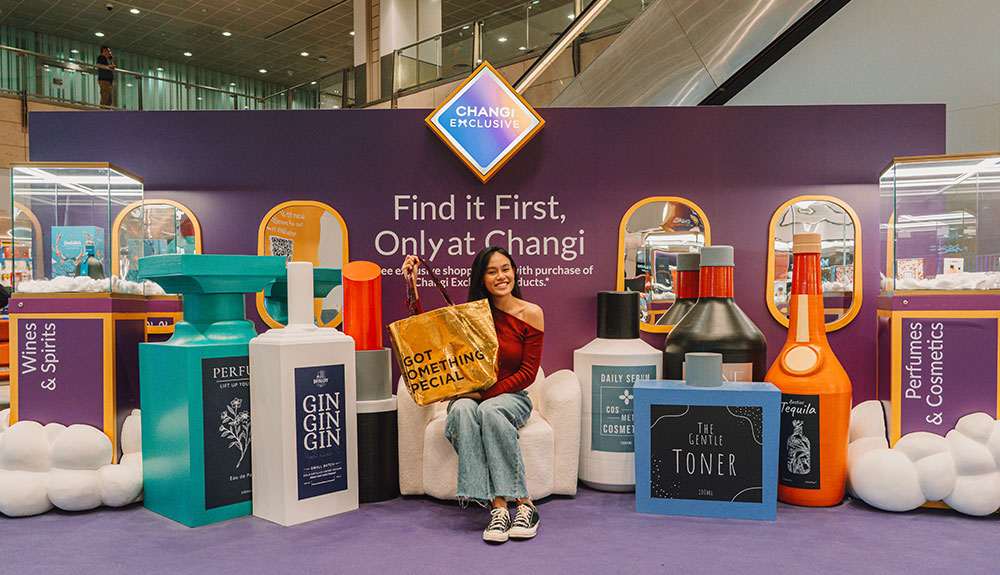
Left: Hung Jean, Managing Director of Airside Concessions, Changi Airport Group. Right: The ‘Find It First, Only at Changi’ event.
From a vibrant pipeline of exclusives to a new duty-free robot and upgrades to T3 on the horizon that will be utilised as test cases for T5 concepts, the power of partnerships is fundamental for CAG. Managing Director of Airside Concessions Hung Jean gives TRBusiness the inside story…
With an average of 120-150 leasing opportunities being processed each year by Changi Airport Group (CAG), there is no shortage of newness for travelling shoppers passing through Singapore Changi Airport and Jewel. The results speak for themselves: Changi Airport Group’s (CAG’s) airport concession and rental income improved by 12% in 2024/25 to reach S$1,167 million (approx. US$877.7m).
CAG’s financial year spans April to March, meaning that (at the time of writing late April) the latest results, for 2025/26, have not yet been released. However, in an exclusive interview with TRBusiness, Hung Jean, Managing Director of Airside Concessions, Changi Airport Group was able to share that CAG closed the period with passengers (pax) exceeding 70 million.
Indeed, pax traffic for the 12 months ended March 2026 rose 2.9% year-on-year (yoy) to 70.4 million, the highest recorded traffic at Changi over a 12-month period. Between January and March 2026, the flow was driven by strong demand to and from North Asia and Europe, underpinning this growth despite the impact from the Middle East geopolitical situation.
“It’s safe to say that Changi is also not insulated from some of the ongoings globally – throughout the year all of our businesses have been affected by some of the external pressures we currently face,” she said, noting the knock-on impact of the Middle East conflict on rising costs and travel. Pax traffic between Singapore and the Middle East fell 80% year-on-year in March 2026, yet this did not stunt the overall growth for the quarter.
Image Credit: Changi Airport Group
Blackpink inpired activations have taken place at Changi and Jewel.
Changi Airport’s top five markets during this period were China, Indonesia, Malaysia, Australia and India. Vietnam and China posted the strongest growth among Changi’s top 10 markets, rising 26.5% and 17.7% yoy respectively. The top five city links for the quarter were Kuala Lumpur, Bangkok, Jakarta, Tokyo and Hong Kong, while Shanghai, Taipei and Tokyo registered the strongest growth among the 10 busiest routes.
The retail mix is constantly evolving to keep shoppers on their toes. In 2025 the Group welcomed 24 new ‘first to Changi airport brands’.
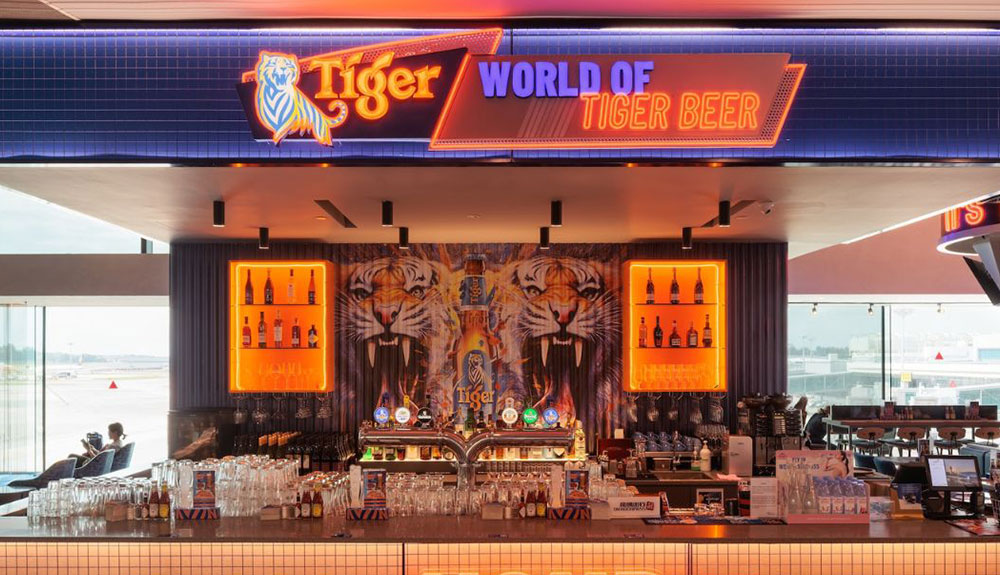
“For us, this is important as we want to have new concepts at Changi Airport so they can test their products and concepts,” said Jean. Among the new additions is the viral chocolate sensation FIX Dessert Chocolatier, which created an exclusive ‘Time to Mango’ flavour for the hub. This is in addition to a new wall of popular homegrown lager Tiger Beer – a bar and restaurant concept that’s the first of its kind in the world. An Asia Pacific-first stand-alone boutique for Lindt also made its debut.
“One of the major renovations that’s been happening in the past year is The Shilla, CAG’s beauty operator, which has been progressively renovating its outlets so passengers are being treated to a new look in the beauty shops with new brands and new products.”
Image Credit: Changi Airport Group
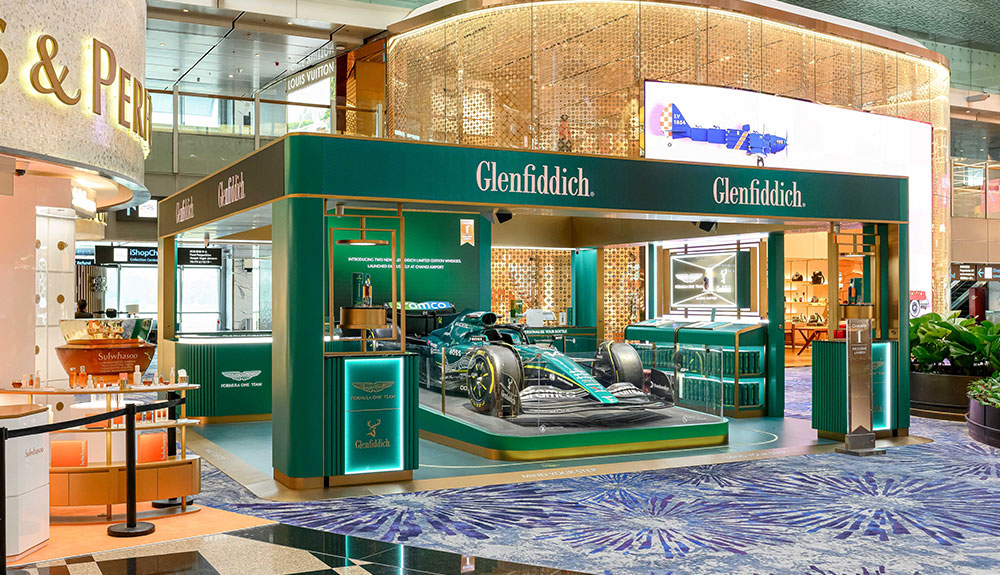
The Glenfiddich x Aston Martin F1 campaign.
The upgrades, said Jean, are helping to ensure the diverse needs and desires of today’s passengers are satisfied. One of the fastest growing pax segments is Indian travellers, so CAG, together with Shilla and Lotte, have funnelled efforts into sourcing products that cater to this group.
Terminal 3 upgrades
In terms of bigger picture moves, CAG will be investing in upgrades to Terminal 3.
“At Changi, we take investing in the future very seriously so by the time we have upgraded one terminal, it will be time to upgrade another,” said Jean.
Though T3 is the relative new ‘kid on the block’ (opening in 2008), Jean says the time is right for a revamp, with plans to introduce more spaces, including expanding some of the floor space for selected retail projects with a view to developing bigger stores where the brands can express themselves with “multi-dimensional” experiences.
In Terminal 2, there will be a food court revamp to more richly reflect the vibrant food court culture of Singapore. Far from a ‘regular’ food court, it will be a chance for CAG to showcase the city’s authentic local flavours.
Image Credit: Changi Airport Group
Bringing Changi exclusives to market is a key part of the strategy.
On the brand partnerships side, bringing Changi exclusives to market is a key part of the strategy.
“As our passengers are well travelled they can find most of the brands [we sell] in their home countries as well,” explained Jean. “So we have to ask what is unique about the product they are buying in Singapore. And we take that very seriously in this new age of shopping.”
In addition to the FIX example mentioned above, Lululemon launched a water bottle featuring the Changi Airport skyline, which “flew off the shelves”, according to Jean.
“We want to make it special so that when you come to Changi you can always find something different,” she elaborated. “It might be like the same store [you may find domestically], but the experiences and the products are different.”
The recent ‘Find It First, Only at Changi’ event, which took place from 8 January to 20 February 2026, exemplifies this. The specially curated activation comprised outposts and events that showcased various Changi-exclusive products, complete with a golden tote as a gift with purchase.
Brand partners who take part in the Changi 1st programme, which showcases exclusive launches and concept pop-ups, benefit from being able to take over a special dedicated outpost located in a high-profile position in the main part of the terminal. The likes of Dior, L’Oréal and Moët Hennessy have participated, plus many more, and the opportunities for this are ongoing with the schedule usually booked up years in advance.
Turning to liquor, a traditionally strong category for CAG, the Glenfiddich x Aston Martin F1 campaign, which launched in September 2025, was a standout event, complete with a replica car and the hub securing one of only five bottles of the ultra-rare Glenfiddich 1959 marking its exclusive travel retail allocation.
“Without working closely with the brands, all of these would not be possible, and I am very grateful for the partnerships we have,” said Jean.
Discerning passengers
Keeping pace with the behaviours and preferences of travellers is a continuous effort.
Image Credit: Changi Airport Group
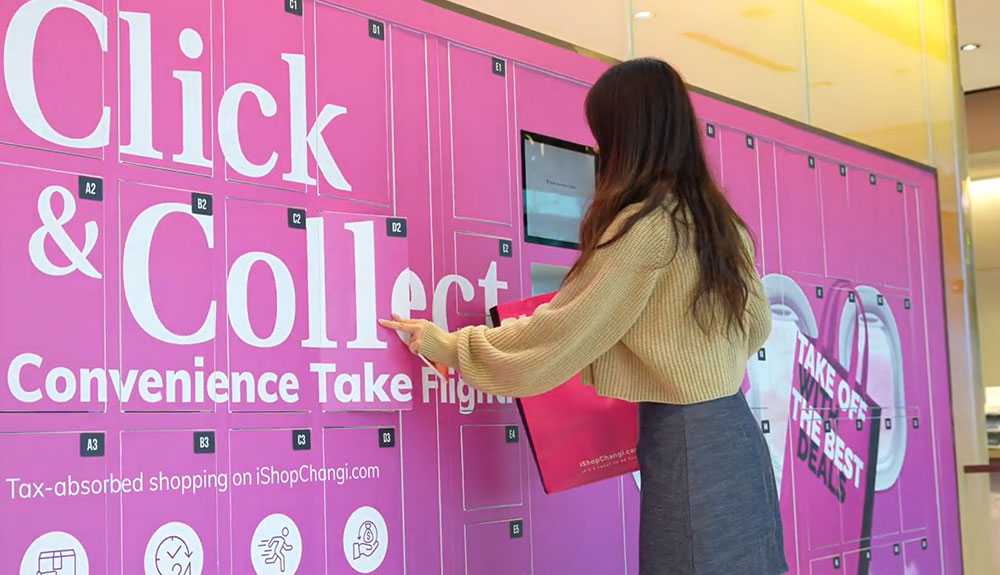
iShopChangi Click & Collect locker.
“Passengers these days are definitely much more discerning. They are well travelled. Shopping across the world can happen at their fingertips – post Covid everyone needed to embrace shopping online. But we see three main areas shoppers are focusing on,” said Jean. “The first is value, as they can compare and shop from so many options. And price competitiveness is a hygiene factor. Gone are days when you can charge a premium just because they have to transit through the airport. They must know that they are getting good value. How do we do that? We must elevate the experience so it’s not just about a transaction.”
This can be as simple as giving shoppers the chance to try touch and feel products, or expressing the brand or products in a different way to how it typically is on the domestic market.
“We are seeing brands investing more in bigger formats, as well as different pockets of space in which to showcase and tell their brand story. There is something behind the brand and the object they are selling and I think passengers and travellers these days really take to that.”
The third factor is exclusivity – products topped off by something special, whether that’s a flavour, engraving or another element of personalisation. All of these play to the increasingly sophisticated tastes of travellers.
As CAG’s source markets have evolved, its marketing has become increasingly deliberate and targeted. Campaigns are delivered in-market, working with the airlines to ensure campaigns are as effective as possible and delivered in the best format – such as social media content on Xiaohongshu (Red Note) for Chinese travellers.
Testing grounds
Moving forward, CAG is going to continue to lean on its fundamental factor, which Jean said is the close relationships between the airport, retailers and brands.
“We want to make sure that between them and us, we continue to invest in the long-term because passengers will travel, especially in APAC, and that will grow, so it’s about building it for the long haul as well,” she said. “While the Chinese economy is affected, we see growth in other economies and strive to make sure there is something for everyone.”
Image Credit: Changi Airport Group
The new wall of popular homegrown lager Tiger Beer – a bar and restaurant concept that’s the first of its kind in the world.
The main categories that are holding well for CAG are luxury, buoyed by an expanded range of products and changes in currency exchange rates meaning passengers in some countries become more affluent (building on an already relatively high-spending traveller mix). Another is deli, as travellers become increasingly lured by F&B.
CAG is also investing in robotics and AI to help streamline operational costs.
“We are using robots to deliver some of the goods between our stores,” said Jean. “Currently you can also pre-order products that you want on iShopChangi before you come to the airport. You can collect them when you arrive at the airport and then spend the rest of your time browsing for other gifts to buy.”
CAG’s e-commerce arm iShopChangi registered double-digit growth last year. Through the online service, passengers can get their hands on products even after they arrive thanks to the home delivery option.
“Another concept robot we will be trialling in our duty-free stores, at The Shilla’s in particular, is one that’s able to give information on any product,” she said. “It’s novel and cool and practically speaking, the robot can speak as many languages as we need it to.”
[Ed – the as yet unnamed ‘duty-free’ robot is designed in a human-like form though is still under development.]
“Manpower will increasingly be a challenge – especially for a small country like us,” said Jean. “So we are heavily investing in this area with trials and innovations.”
In the immediate term, CAG is driving value in collaboration with its partners and is powering forward with exclusivity.
“To always have something fresh requires deliberate ongoing efforts,” said Jean. “And we are getting used to that momentum. Investment in experiential retail, integrated concepts require a long-term view – we need to plan ahead to take this to fruition. We will be testing some of the concepts we have planned for T5 in T3.”
The element of surprise for passengers is important so that even frequent travellers can find something new each time they visit.
When asked for her best piece of advice for brands looking to succeed in airside environments today, she responded: “I would encourage them to tell their brand story, develop exclusive products so the products become relevant to the market and Changi, and take a long-term view of the business because everything takes time. As long as we are proud of the products we are showcasing, and the fact we are offering something different to the passengers, then there are many opportunities for success.
“Travellers will always travel and, as humans, we always look for something new and special. And I think airports and where people travel is the best place to co-create such an environment and these products.”
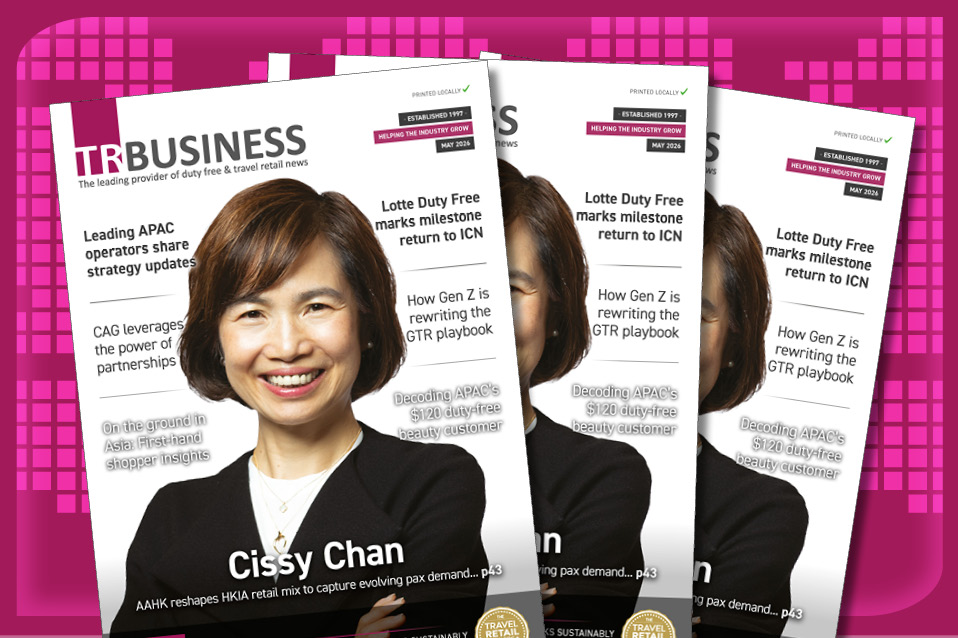
This feature first appeared in the May 2026 issue of TRBusiness magazine.
This website uses cookies and contains content relating to the tobacco and alcohol industry. Click here to view our cookie policy. By continuing to browse this site you are agreeing to our use of cookies, are aged over 18 and permitted to see tobacco and alcohol content intended for a business to business audience.

 Trbusiness. The travel retail Trbusiness. The magazine for global retail and duty free professionals.